.png)
AI technology is advancing rapidly, transforming how software is built and tested across industries. This shift is driving a surge in demand for professionals equipped with specialized skills, especially those who have mastered ai testing courses.
In this article, discover the 7 essential ai testing courses designed to keep you ahead in AI quality assurance for 2025. We highlight top-rated options, unique features, pricing, and the benefits that matter most for your career.
With the AI sector projected to grow at an unprecedented rate, acquiring advanced testing skills opens doors to new career opportunities and industry leadership. Ready to future-proof your expertise? Explore our course recommendations and take the next step in your upskilling journey.
Why AI Testing Skills Matter in 2025
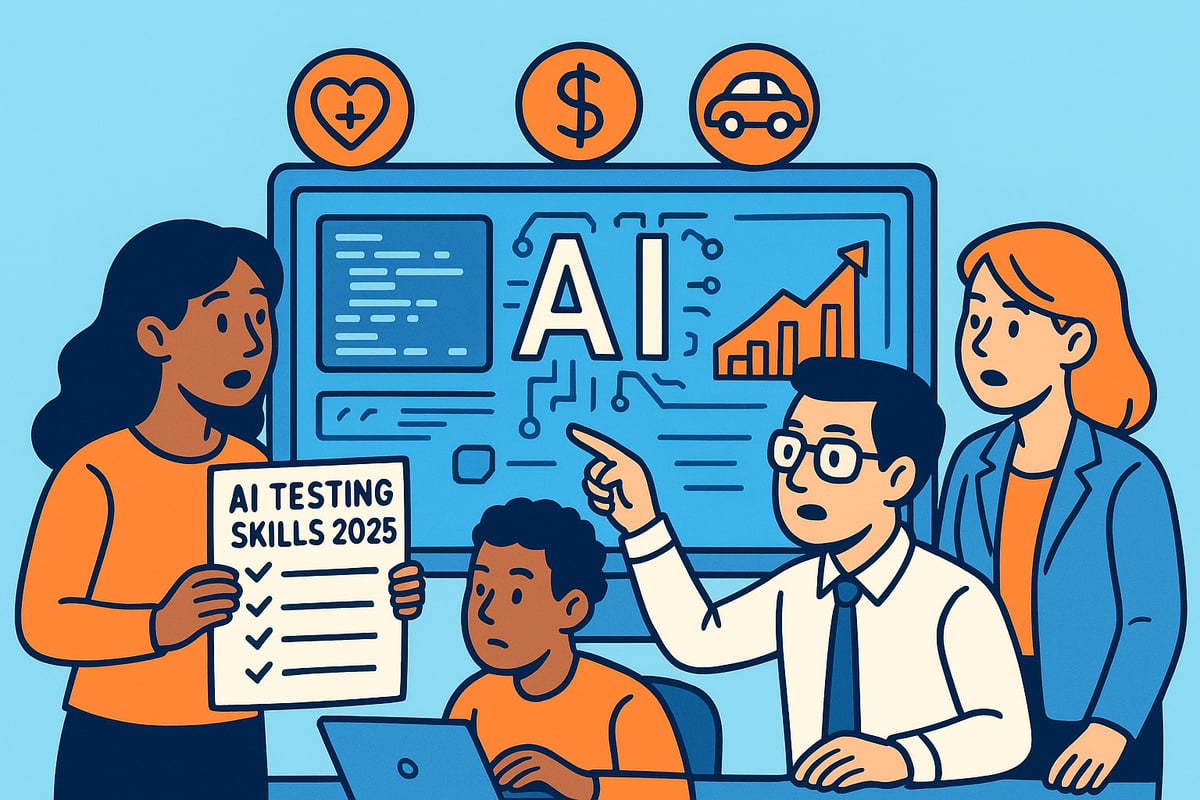
Artificial intelligence is rapidly becoming central to software development across industries. As businesses integrate advanced algorithms into healthcare, finance, and automotive solutions, the need for robust AI quality assurance grows. The expansion of AI-driven applications means that ensuring reliability, safety, and compliance is more critical than ever.
The Growing Importance of AI in Modern Software
AI's role in modern software is expanding at an unprecedented rate. From AI-powered medical diagnostics to autonomous vehicles and fintech platforms, organizations rely on advanced models to deliver critical services. These systems must function safely and accurately, making quality assurance essential. As a result, professionals are turning to ai testing courses to gain the expertise needed for rigorous validation and oversight.
For those seeking foundational knowledge, resources like the AI testing and QA overview provide valuable insights into the evolving landscape of AI software.
Challenges Unique to AI Testing
Testing AI systems presents unique challenges compared to traditional software. Non-deterministic outputs, model drift, and self-learning behaviors complicate validation. Testers must also evaluate explainability, fairness, and bias, issues that have led to real-world consequences, such as biased recruitment tools facing regulatory scrutiny.
This complexity drives demand for specialized ai testing courses that address these advanced topics, ensuring professionals are equipped to tackle ethical and technical obstacles.
Career and Business Impact
The rise of AI is transforming the job market. According to the U.S. Bureau of Labor Statistics, AI and machine learning roles are projected to grow by 22 percent by 2030. Companies prioritize trustworthy AI systems to maintain compliance and customer trust, making expertise in this area highly valuable.
Upskilling through ai testing courses distinguishes QA professionals and developers, positioning them for leadership roles and opening doors to new career opportunities.
Key AI Testing Competencies
Modern AI testing requires a multifaceted skill set. Professionals must master model validation, data integrity checks, performance testing, and ethical evaluation. Familiarity with tools like TensorFlow, PyTorch, pytest, and AI Fairness 360 is vital for effective testing.
Automation plays a crucial role, enabling teams to scale their efforts efficiently. ai testing courses often include hands-on labs and projects to help learners build these competencies in real-world scenarios.
Evolving Standards and Regulations
AI testing is shaped by emerging standards and regulations. Frameworks like ISO/IEC 24029 and the EU AI Act introduce new compliance requirements, while data protection laws such as GDPR demand transparency from AI models.
Staying informed about these evolving standards is essential for organizations operating globally. As regulatory landscapes shift, ongoing education and adaptation become vital for long-term success in AI quality assurance.
7 Essential AI Testing Courses to Boost Your Skills in 2025
Upskilling through ai testing courses is crucial for professionals who want to stay competitive as AI transforms the tech landscape. The right course can help you master the tools, methodologies, and best practices required for modern AI quality assurance. Below, you will find a detailed list of the top ai testing courses for 2025, including their unique features, pricing, and ideal audiences.
AI Testing & Quality Assurance Professional Certificate – Mammoth Club
The Mammoth Club's AI Testing & Quality Assurance Professional Certificate stands out as a comprehensive option among ai testing courses. With a one-time fee of $199 for lifetime access, this course offers over 50 hours of on-demand video content, interactive labs, and real-world projects. Learners benefit from an AI-powered adaptive learning system, ensuring each path is tailored to their needs.
Key Features:
50+ hours of video lectures and interactive labs
Real-world projects simulating enterprise AI system testing
AI-powered progress tracking and adaptive learning
Recognized certification upon completion
Access to a vibrant 24/7 learning community
Who Should Enroll?
QA engineers, developers, data scientists, and IT professionals seeking a holistic approach to ai testing courses
Ideal Use Cases:
Enterprise AI systems, ML model validation, compliance testing
Pros:
Lifetime access to all content and certifications
Personalized, up-to-date curriculum
Practice exams and community support
Cons:
Requires self-discipline for self-paced learning
Advanced modules may be challenging for beginners
Comparison Table:
Feature | Mammoth Club Certificate |
|---|---|
Price | $199 (lifetime) |
Content Hours | 50+ |
Certification | Yes |
Adaptive Learning | Yes |
Community Support | 24/7 |
Progress Tracking | Yes |
Learners can also leverage progress tracking for AI courses to monitor their advancement and stay motivated throughout their journey. This makes the Mammoth Club one of the most robust ai testing courses available for upskilling in 2025.
AI for Testing – Udemy
Udemy’s AI for Testing course is an excellent entry point within the landscape of ai testing courses. Its affordability, with pricing ranging from $19.99 to $129.99, makes it accessible for many learners. The course offers a practical introduction to using AI in software testing, focusing on automation and real-world case studies.
Core Features:
Beginner-friendly video lectures
Real-world examples of AI in testing
Quizzes and assignments for skill reinforcement
Flexible access, learn at your own pace
Best For:
Manual testers, automation engineers, QA analysts looking to integrate AI into their current workflows
Use Cases:
Enhancing automation in existing testing pipelines
Understanding AI-driven test strategies
Pros:
Affordable, often on sale
Clear, concise instruction
Lifetime access after purchase
Cons:
Limited depth for advanced professionals
Less instructor interaction compared to cohort-based ai testing courses
Quick Summary Table:
Feature | Udemy AI for Testing |
|---|---|
Price | $19.99–$129.99 |
Level | Beginner |
Certification | Yes |
Format | Self-paced video |
This course is ideal for those new to ai testing courses who want a gentle introduction to automation and AI-driven testing strategies.
AI Testing Specialization – Coursera (offered by University of Helsinki)
For learners interested in a structured academic experience, the AI Testing Specialization from Coursera and University of Helsinki is a top contender among ai testing courses. Priced at $39 per month, it features a series of university-developed modules covering ethical and explainable AI testing.
Key Features:
Multi-course specialization structure
Peer-reviewed projects and assignments
Instructor feedback and active community forums
Recognized certification from a leading university
Target Audience:
Students, early-career professionals, those seeking academic credentials in ai testing courses
Ideal Use Cases:
Building a strong foundation in AI testing theory and practice
Academic advancement and credentialing
Pros:
Structured learning path
University-backed certification
Academic rigor
Cons:
Time commitment required for completion
Ongoing subscription cost
Summary Table:
Feature | Coursera AI Testing Specialization |
|---|---|
Price | $39/month |
Structure | Multi-course |
Certification | Yes (University) |
Peer Collaboration | Yes |
This option is best for those who value formal education and want to build their expertise through university-led ai testing courses.
Testing Machine Learning Models – Pluralsight
Pluralsight’s Testing Machine Learning Models is designed for those seeking technical depth in ai testing courses. With a $29 monthly subscription, learners access modules focused on ML model validation, performance testing, and deployment best practices.
Key Features:
In-depth technical modules
Focus on ML model validation and performance
Integration with developer tools
Access to Pluralsight’s extensive tech library
Who Should Consider This Course?
Experienced testers, data scientists, ML engineers eager to master production-level AI testing
Use Cases:
Testing production ML systems
Detecting model drift and ensuring reliability
Pros:
Technical rigor and depth
Continuous learning with broad library access
Integration with real-world development workflows
Cons:
Subscription required for access
May be too advanced for beginners in ai testing courses
Comparison Table:
Feature | Pluralsight ML Testing |
|---|---|
Price | $29/month |
Technical Depth | High |
Certification | Yes |
Access | Subscription |
If you want to delve into the nuts and bolts of ai testing courses, especially for machine learning systems, this is a strong choice.
AI Model Testing and Validation – edX (offered by IBM)
The AI Model Testing and Validation course on edX, developed by IBM, provides practical, industry-relevant training in ai testing courses. Learners can audit the course for free or pay $99 for a verified certificate.
Core Features:
IBM-developed curriculum and real-world datasets
Focus on validation, bias detection, and interpretability
Hands-on labs for applied learning
Recognized IBM credential for career growth
Best For:
Professionals seeking practical, job-ready skills in ai testing courses
Those interested in IBM’s approach to AI quality assurance
Use Cases:
Validating AI projects
Meeting regulatory and compliance requirements
Pros:
Free audit option
Recognized certificate from IBM
Real-world, practical focus
Cons:
Limited instructor interaction
Certificate requires a fee
Feature Summary Table:
Feature | IBM edX AI Model Testing |
|---|---|
Price | Free/$99 (certificate) |
Labs | Yes |
Certification | IBM |
Practical Focus | Strong |
This course is a pragmatic option among ai testing courses for those wanting industry validation and a hands-on approach.
Testing AI Systems – LinkedIn Learning
LinkedIn Learning’s Testing AI Systems course is tailored for working professionals who want flexible, on-the-job upskilling through ai testing courses. Priced at $39.99 per month, it offers concise video lessons, practical demos, and downloadable resources.
Key Features:
Video courses with practical demonstrations
Downloadable resources for reference
Integration with your LinkedIn profile to showcase new skills
Up-to-date industry insights
Target Audience:
Working professionals, QA leads, tech managers
Ideal Use Cases:
Team training and leadership development
Staying current with industry trends in ai testing courses
Pros:
Flexible, bite-sized lessons
Professional networking via LinkedIn
Continuous content updates
Cons:
Subscription needed for access
Less technical depth for advanced users
Quick Facts Table:
Feature | LinkedIn Learning AI Testing |
|---|---|
Price | $39.99/month |
Format | Video lessons |
Certification | Yes |
Networking | Strong |
For those seeking accessible ai testing courses that fit into a busy professional schedule, this is a compelling choice.
AI Fairness and Bias Testing – DataCamp
DataCamp’s AI Fairness and Bias Testing course is unique among ai testing courses for its focus on ethical implications, bias detection, and fairness in AI systems. At $25 per month, it combines interactive coding exercises with immediate feedback.
Core Features:
Interactive, hands-on coding tasks
Focus on fairness, bias detection, and ethical AI
Project-based assessments
Immediate feedback to reinforce learning
Who Should Enroll?
Data scientists, AI ethicists, QA professionals concerned with ethical AI
Use Cases:
Ensuring AI systems meet ethical and regulatory standards
Social impact and compliance projects
Pros:
Highly interactive platform
Strong emphasis on ethics
Practical, project-based learning
Cons:
Limited to the DataCamp ecosystem
May require prior Python knowledge for best results
Summary Table:
Feature | DataCamp AI Fairness & Bias |
|---|---|
Price | $25/month |
Coding Exercises | Yes |
Certification | Yes |
Ethics Focus | Strong |
For professionals who want to ensure their ai testing courses cover the critical topics of fairness and bias, DataCamp’s offering is a forward-thinking choice.
How to Choose the Right Course for Your AI Testing Goals
Selecting the right ai testing courses is a strategic step for advancing your quality assurance career. With a growing number of options, making an informed choice requires assessing your needs, comparing features, and understanding the value each course brings.
Assessing Your Current Skills and Career Objectives
Begin by evaluating your current expertise in software testing and AI concepts. Are you a manual tester aiming to automate with AI, or a data scientist seeking to master model validation? Define your career objectives, such as becoming a QA lead, ML engineer, or AI auditor.
Use tools like the AI fluency assessment tool to identify knowledge gaps and readiness for advanced ai testing courses. Outline your desired roles and the competencies required. This clarity helps you select a course that aligns with your professional growth.
Comparing Course Formats and Learning Styles
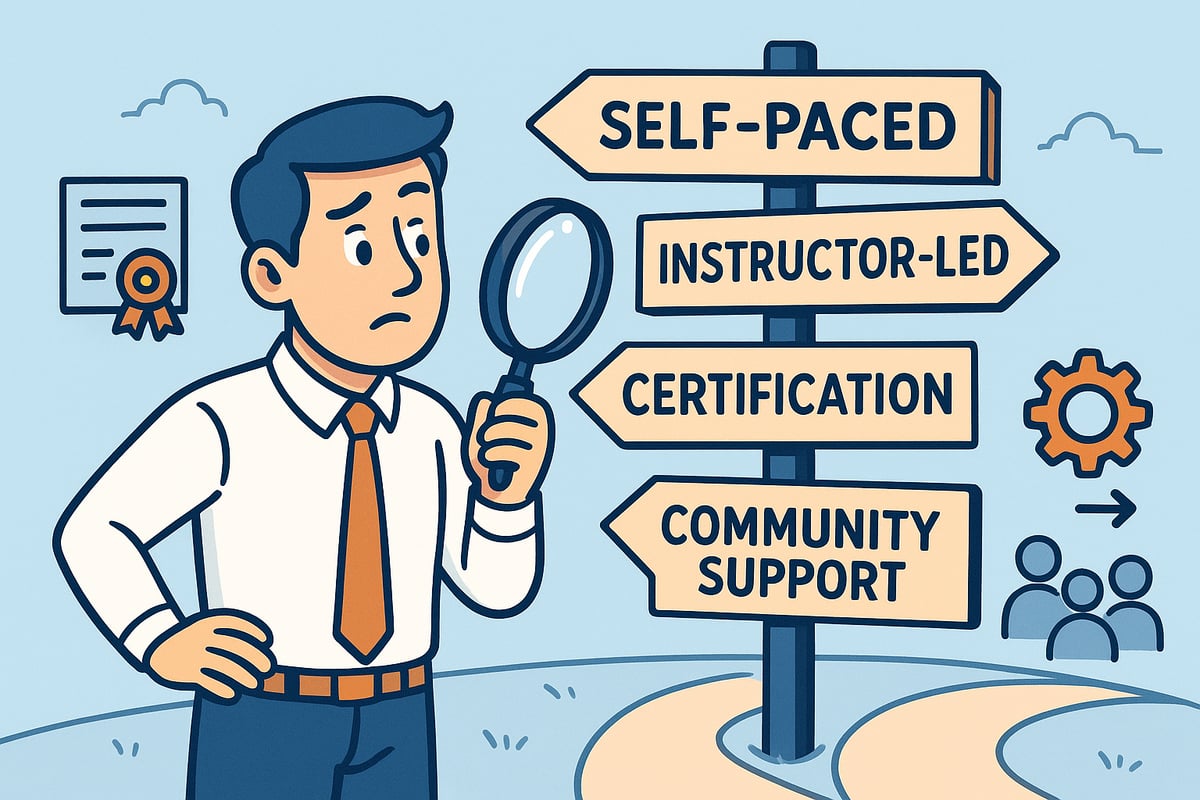
Not all ai testing courses use the same teaching approach. Some are self-paced, letting you learn independently, while others are instructor-led or cohort-based, offering structured schedules and peer interaction.
Consider the following comparison:
Format | Pros | Cons |
|---|---|---|
Self-Paced | Flexible, on-demand | Requires discipline |
Instructor-Led | Expert guidance | Fixed schedules |
Cohort-Based | Peer support, teamwork | Less flexibility |
If you crave hands-on projects or real-world scenarios, explore Udemy alternatives for AI testing to find platforms with strong practical components. Choose the format that aligns with how you learn best for maximum retention.
Certification Value and Industry Recognition
The certification you earn from ai testing courses can significantly impact your career trajectory. Employers often favor recognized credentials from respected organizations such as IBM, universities, or industry leaders like Mammoth Club.
Evaluate the industry reputation of each certificate. For instance, a university-backed credential may appeal to academic employers, while an IBM-issued certificate boosts credibility in enterprise settings. Displaying certificates on your LinkedIn profile can enhance your visibility and job prospects.
Cost, Access, and Support Considerations
Budget is a crucial factor when comparing ai testing courses. Some platforms offer one-time payments, while others use monthly subscriptions. Weigh the total cost against benefits like lifetime access, ongoing updates, and community support.
Look for courses that provide mentorship, active forums, or 24/7 assistance. Strong support networks improve your learning experience and help resolve challenges quickly. Assess the return on investment by considering how the course will help you achieve your professional goals.
The Future of AI Testing Education
The landscape of ai testing courses is rapidly transforming as technology and industry needs evolve. Professionals seeking to stay ahead must understand the latest educational trends, the value of community, and how to prepare for ongoing change in AI quality assurance.
Emerging Trends in AI Testing Training
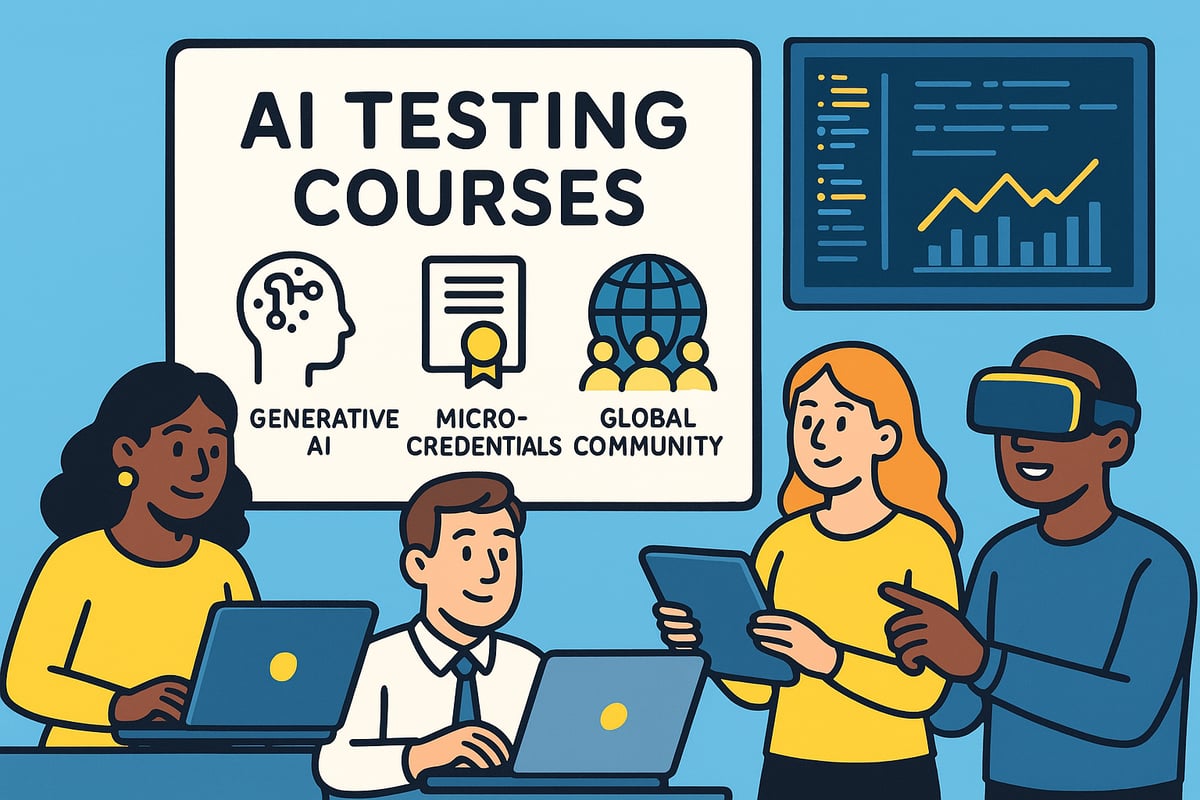
The future of ai testing courses is shaped by rapid innovation in both technology and learning methods. Generative AI and automated test creation tools are streamlining the process of designing and executing tests, reducing manual effort and increasing coverage. Micro-credentials and stackable certifications are becoming more popular, allowing learners to build specialized skills one credential at a time.
Adaptive learning platforms, such as the IBM SkillsBuild program, offer personalized pathways and industry-recognized credentials, making advanced education accessible worldwide. These trends ensure that ai testing courses remain relevant and effective for a broad audience.
The Role of Community and Continuous Learning
Peer networks and collaborative forums are central to the ongoing success of ai testing courses. Engaging in online communities allows professionals to exchange knowledge, solve challenges, and stay updated with the latest tools and best practices. Collaborative projects and mentorship opportunities further enhance learning retention and skill development.
According to Stack Overflow, 74% of tech professionals participate in online learning communities, reflecting the critical role of continuous engagement. This sense of connection and shared purpose empowers learners to maximize the value of ai testing courses and adapt to emerging trends.
Preparing for a Dynamic AI Landscape
The regulatory environment for AI is evolving quickly, making it essential for those enrolled in ai testing courses to anticipate new standards and compliance requirements. Institutions like the AI Safety Institute network are leading efforts to evaluate and ensure the safety of advanced AI models, highlighting the importance of robust quality assurance.
To maintain a competitive edge, professionals must commit to lifelong learning and regularly update their skills. By embracing change and proactively seeking new knowledge through ai testing courses, individuals can thrive in an ever-changing AI landscape.
As you explore the essential AI testing courses highlighted here, remember that continuous learning is key to staying ahead in this fast-evolving field. Whether you’re aiming to deepen your expertise or expand your technical toolkit, investing in your skills now will set you apart in 2025 and beyond. If you’re ready to take the first step toward recognized certification and hands-on experience, you can Become a certified AI Foundation Specilaist. Start for free. This is a great way to build your foundation and confidently pursue more advanced opportunities in AI testing.