A Google machine learning class is most often Google's free Machine Learning Crash Course, a self-paced introduction that teaches core concepts through short videos, interactive visualizations, and browser-based coding exercises. It suits beginners who can handle basic math and some programming, and it gives you a solid foundation, though not a formal credential. This guide explains what the course contains, what you need before starting, how long to plan for, and how to convert the knowledge into something an employer will recognize.
What Is the Google Machine Learning Class?
Google's offering is the Machine Learning Crash Course, a practical introduction that Google describes as using animated videos, interactive visualizations, and hands-on exercises. It sits inside a larger foundational-course sequence that also includes an Introduction to Machine Learning course, which is a sensible first stop if the vocabulary is unfamiliar.
The class is built for people who want to understand how models are trained, evaluated, and deployed, not only how to call a library. That emphasis on reasoning about data and model behavior is what makes it useful for professionals who will work alongside engineers, or who plan to become engineers themselves.
Two points of clarity help set expectations:
- It is a learning resource, not a certification. The course pages do not present proctored credentials.
- It teaches foundations. Cloud-specific tooling and job-role certifications come from separate programs.
What Topics Does the Course Cover?
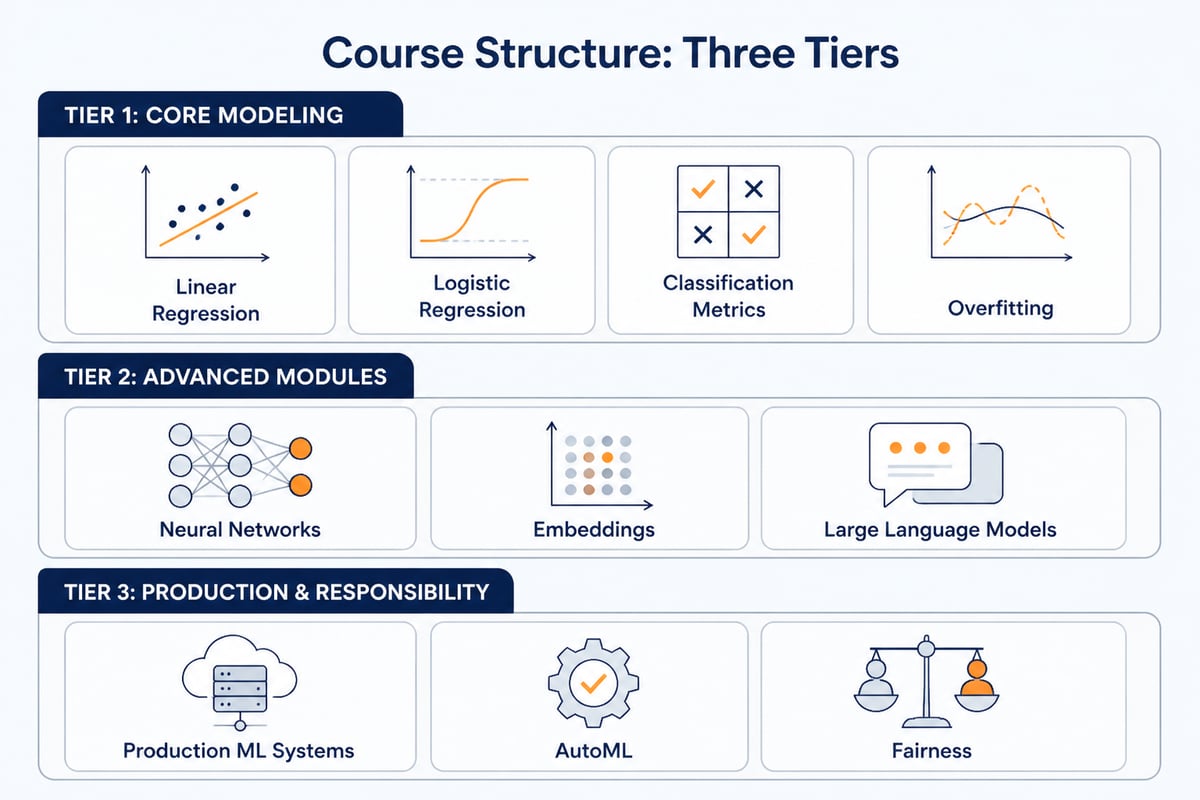
The course moves from fundamentals to modern techniques in a deliberate order, starting with regression and classification and ending with neural networks and large language models. Based on Google's course outline, the material breaks into three tiers.
Core modeling concepts
The opening modules cover linear regression, logistic regression, and classification, including the metrics used to judge classifiers: accuracy, precision, recall, and AUC. You also work with numerical and categorical data, learn how datasets are structured, and study generalization and overfitting, which is the gap between a model that memorizes training data and one that performs on new data.
Advanced modules
Later modules introduce neural networks, embeddings, and a primer on large language models. These sections connect classic machine learning to the generative AI systems most professionals now encounter at work.
Production and responsibility
The course also addresses production ML systems, AutoML, and fairness in machine learning. This is the part many beginners expect to find in an advanced class, and its inclusion here means you learn what happens after a model is trained, including monitoring, data quality, and bias.
For vocabulary support while you study, Google maintains a machine learning glossary covering models, classification, regression, and training concepts. Keeping it open in a second tab prevents small terminology gaps from slowing you down.
What Do You Need Before You Start?
You do not need prior machine learning knowledge, but you do need some quantitative and programming comfort. Google's prerequisites page states that no prior ML knowledge is required, and it recommends familiarity with variables, linear equations, graphs, histograms, and statistical means. Programming ability is also recommended.
A quick self-check before enrolling:
- Can you read a line graph and a histogram and explain what each shows?
- Can you rearrange a simple linear equation such as y = mx + b?
- Can you explain what an average represents and when it misleads?
- Can you read and modify short Python code?
If the fourth answer is no, build that skill first. A structured path such as the Python Programming Fundamentals learning path closes the gap before you attempt the exercises, which saves frustration later.
How Do the Exercises Work?
The coding exercises run in the browser with no installation. Google states that the programming exercises use Colaboratory, so you open a notebook, run cells, and see results without configuring a local environment.
This lowers the barrier considerably. Career switchers who are not yet comfortable with package managers, virtual environments, or GPU drivers can focus on the modeling logic rather than setup problems. Because each notebook is a self-contained document, you can also save a copy, annotate it with your own notes, and return to it later as a reference or as raw material for a portfolio entry.
A practical habit helps here: do not only run the provided cells. Change a hyperparameter, remove a feature, or alter the training split, then predict the effect before you execute. For instance, in a regression exercise you might shrink the training set and write down whether you expect the gap between training and validation error to widen or narrow, then check. In a classification exercise, you might move the decision threshold and note which of precision or recall moves with it. That small discipline turns passive following into actual understanding, and it is the habit interviewers tend to probe.
How Long Does a Google Machine Learning Class Take?
Plan for several weeks of part-time study rather than a weekend. Google does not frame the course as a fixed-length program, and your pace depends on your math background and how thoroughly you work through the exercises. A realistic approach is to schedule three to five short sessions per week and treat each module as a unit with a written summary at the end.
Pacing tips that work for working professionals:
- Study in short blocks. Forty-five minutes of focused work with an exercise beats a three-hour passive session.
- Write one-paragraph summaries. Explain each module in plain language, as if briefing a colleague.
- Revisit metrics. Precision, recall, and AUC are easy to read about and hard to apply, so return to them after the classification modules.

Is the Google Class Enough to Get Hired?
On its own, no. It teaches concepts well, but employers screening for AI roles generally look for verifiable credentials and demonstrated projects, and the crash course provides neither. The course is a strong first layer; what you build on top of it determines your outcomes.
Here is how the pieces compare:
| Element | What it proves | Gap it leaves |
|---|---|---|
| Google Machine Learning Crash Course | You understand core concepts | No proctored assessment or recognized credential |
| Portfolio projects | You can apply concepts to a problem | Needs a clear business framing |
| Proctored certification | Your skills were independently assessed | Requires structured preparation |
A combination of foundation, an applied project, and a certification on a résumé tells a hiring manager more than a course completion alone.
How Does Google's Class Compare With Other Beginner Options?
Google's class is concept-first and free to access, while other routes can add structure, assessment, and credentials. Choosing depends on what you need the learning to do for your career.
- Google Machine Learning Crash Course: best for understanding the logic of models. Self-directed, no formal credential.
- Google Cloud training: Google Cloud's training catalog offers learning paths for those aiming at cloud-based ML work.
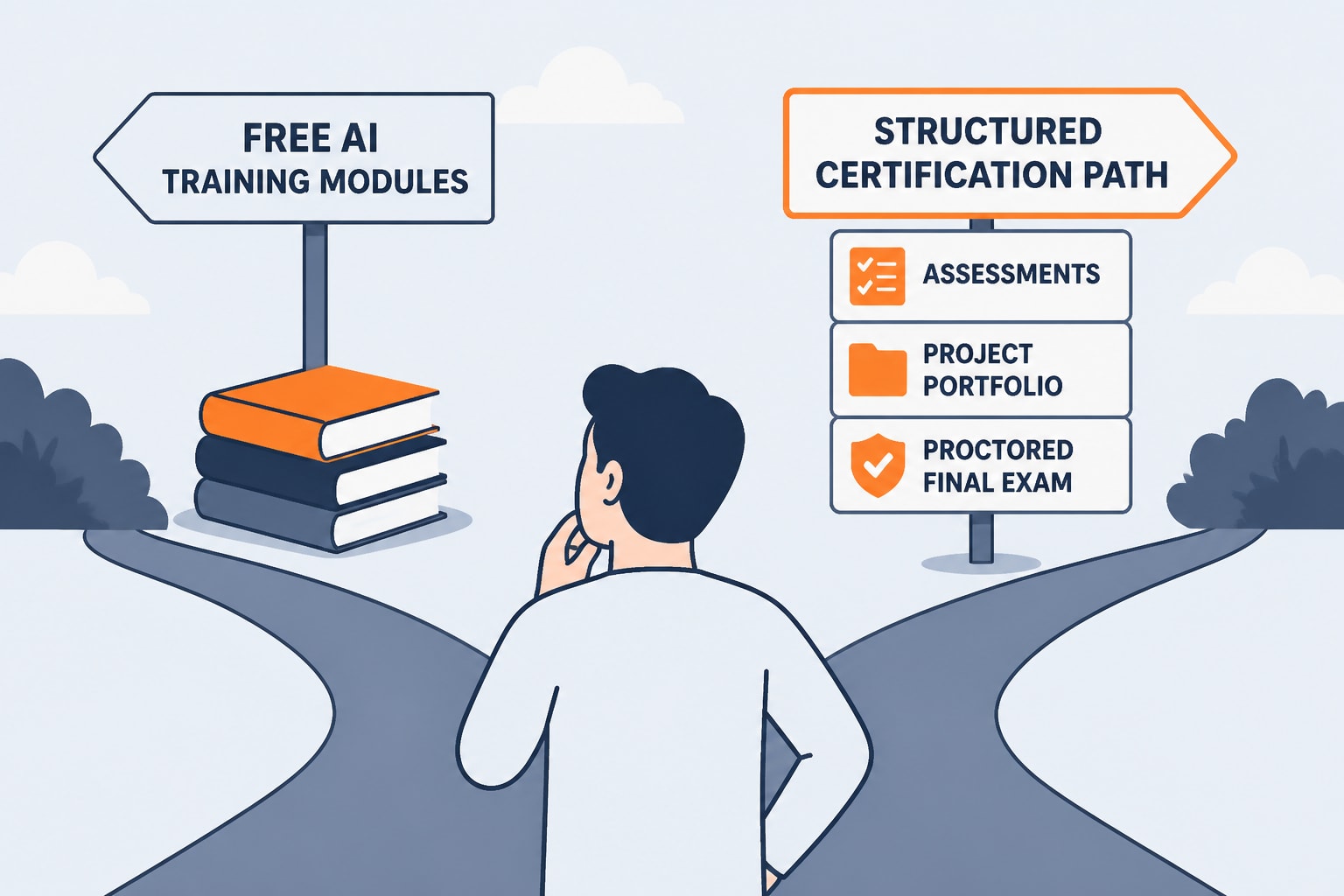
- Structured certification programs: these combine lessons, graded assessments, projects, and a final exam. For example, MammothClub's AWS Certified Machine Learning Specialty preparation pairs course content with ten practice exams for a vendor-recognized credential.
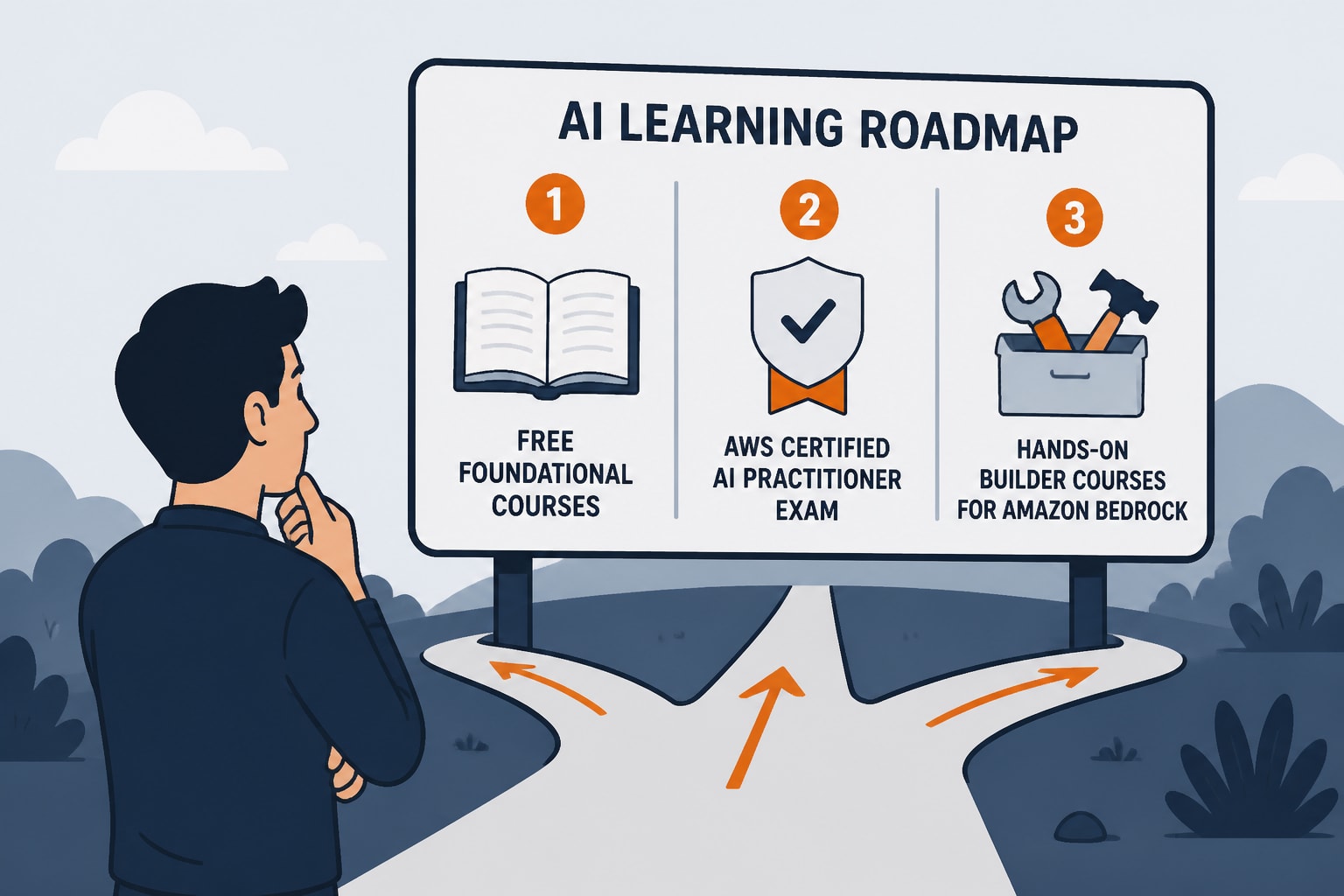
Many learners combine them: Google's material for conceptual grounding, then a certification track for the credential. If you are weighing several routes, the overview of machine learning online class options and the guide to AI certification online lay out what each type delivers.
How Should You Turn the Class Into a Credential?
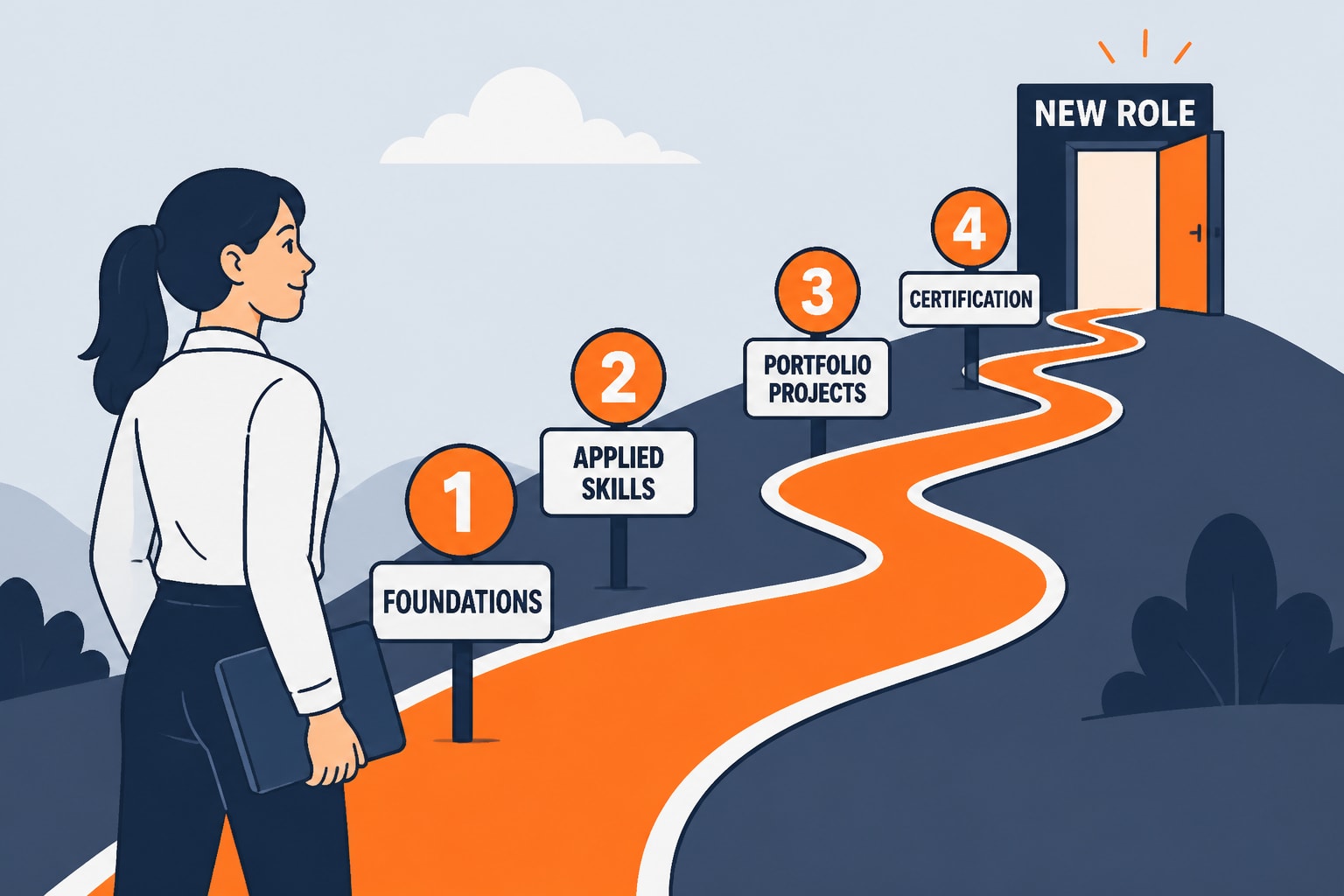
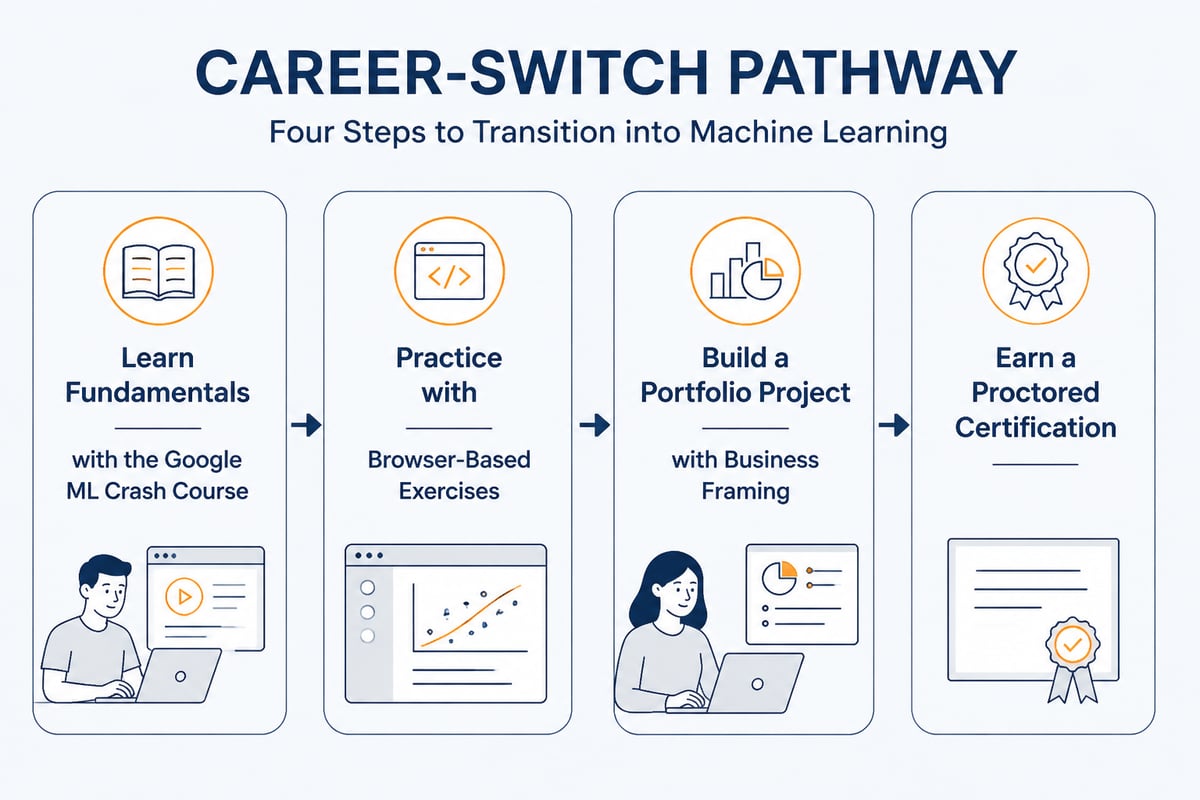
Move from the free material to a structured path with assessment as soon as the core modules feel comfortable. The sequence that works best for professionals and career switchers has four steps.
- Finish the foundations. Complete the regression, classification, and data modules before touching advanced topics.
- Apply the concepts to a work problem. Pick a dataset from your own field, such as sales, support tickets, or operations logs.
- Choose a certification target. Match it to your role: cloud ML, general AI, or a vendor-specific track. The AI engineer certification overview helps compare options.
- Practice under exam conditions. Timed practice questions expose weak areas faster than rereading notes.
For learners who want a single environment for this progression, the Mammoth Club Unlimited Membership bundles 3,000+ courses, certification paths, practice exams, tools and digital assets under one annual membership. Its certification paths include built-in assessments, project portfolios, and proctored final exams, and lessons are text-first and searchable so you can apply them the same day. Courses, labs, and assessments are updated monthly as tools change, which matters in a field where frameworks shift quickly. Anyone looking only for free content, or a single short video, will find the free Google material a better fit.
What Are the Strengths and Limits of the Google Class?
The course is strong at building intuition and offers less to validate it. Weighing both sides keeps expectations accurate.
Strengths
- Clear coverage of the modeling lifecycle, from regression through production systems and fairness, including the classification metrics used to judge models beyond accuracy.
- Browser-based exercises with no setup, so the first coding session starts within minutes of opening a notebook.
- Content published by Google for Developers.
- Zero cost of entry, which makes it low risk to test your interest before committing money or months to a longer program.
Limits
- No proctored assessment, so it carries little weight alone on a résumé. A line reading "completed the Machine Learning Crash Course" tells a recruiter you were exposed to the material, not that anyone verified what you can do with it.
- Self-paced format demands discipline and offers no accountability. Without a deadline, a module that feels hard tends to get postponed, and the later modules on neural networks and embeddings build directly on the earlier ones.
- Limited guidance on translating concepts into business cases, so applying them to a stakeholder's problem is left to the learner.
- No career support, portfolio review, or structured project requirement, so deciding what to build, and whether it is good enough to show, falls entirely to you.
Frequently Asked Questions
Is the Google machine learning class free?
The Machine Learning Crash Course is published openly by Google for Developers, and its exercises run in the browser. Check the course page for the current terms, since offerings can change.
Do I need to know Python?
Programming ability is recommended by Google. You can follow the concepts without it, but the exercises are much more useful if you can read and edit short Python code.
Will the course teach me about large language models?
It includes an introduction to large language models alongside neural networks and embeddings. It is an introduction, not a deep engineering treatment. For applied generative AI skills, a hands-on track such as the 8-hour Google Gemini prompt engineering video bundle offers a practical next step.
Can I get a job after completing it?
The class gives you foundations, but hiring decisions usually depend on credentials and projects. Pairing it with portfolio work and a recognized certification is the more reliable route.
What should I study after the crash course?
Move toward role-specific preparation.
Your next step is to open the first Machine Learning Crash Course module this week, finish one exercise in Colaboratory, and write a short summary of what you learned. When you are ready to turn that foundation into a certification with assessments, projects, and a proctored exam, the Mammoth Club Unlimited Membership gives you courses, practice labs and exams in one place, and MammothClub is where you can start unlimited access to the certification paths that employers recognize.