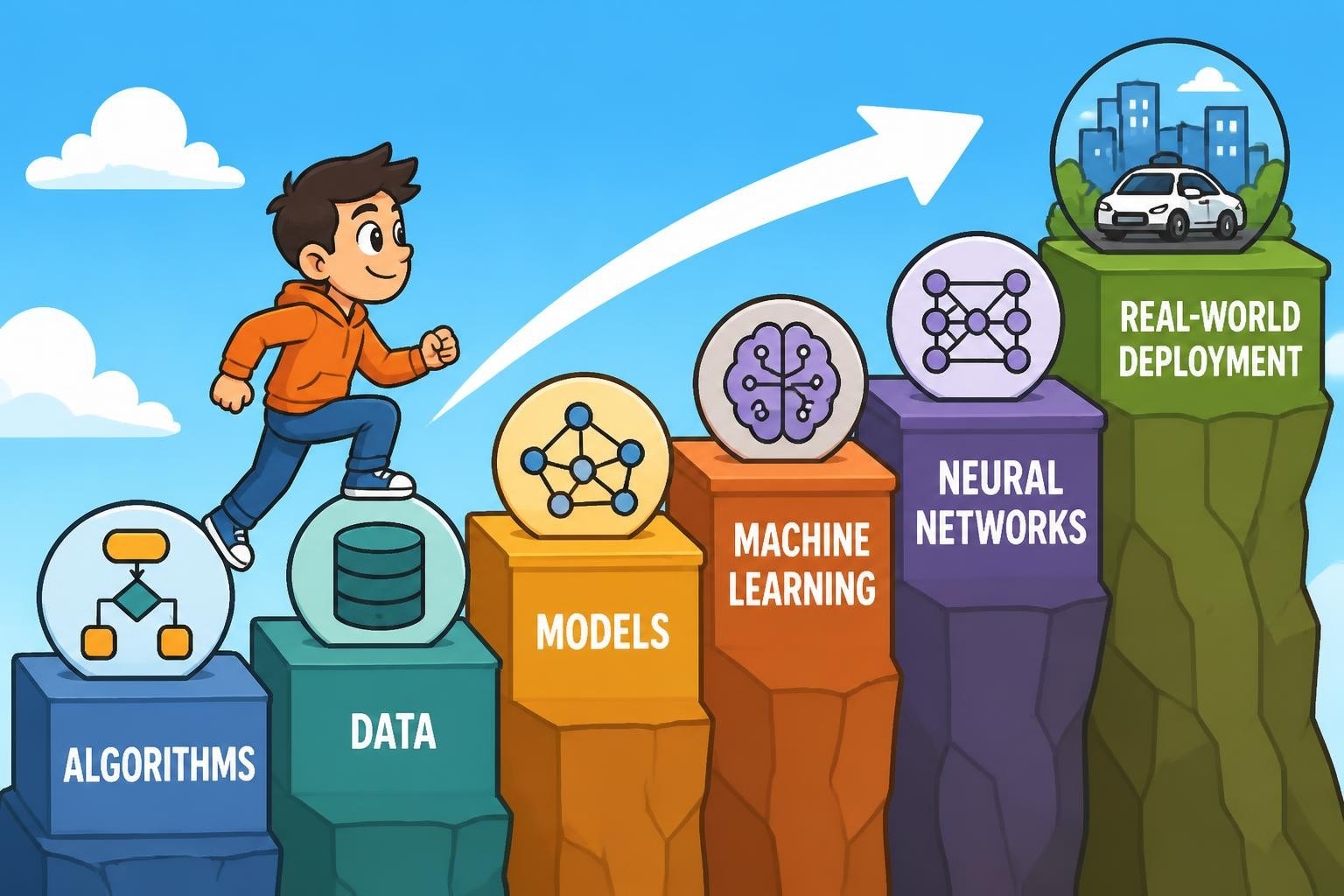
The artificial intelligence industry is experiencing unprecedented growth in 2026, creating massive demand for qualified professionals who can design, build, and deploy AI systems. As organizations rush to implement AI solutions, the need for validated expertise has made ai engineer certification programs essential credentials for both career advancement and organizational credibility. These certifications provide structured learning paths that cover everything from machine learning fundamentals to production deployment, offering measurable proof of competency in an increasingly competitive field.
Understanding the Value of AI Engineer Certifications
Professional certifications in AI engineering serve multiple critical functions in today's technology landscape. They validate your technical skills to employers, provide structured learning frameworks for complex topics, and demonstrate commitment to staying current with rapidly evolving technologies.
The primary benefits of pursuing an ai engineer certification include:
- Enhanced credibility with hiring managers and technical teams
- Systematic coverage of essential AI engineering concepts
- Access to specialized tools and platforms during training
- Networking opportunities with other AI professionals
- Higher salary potential and advancement opportunities
According to The Artificial Intelligence Index Report 2024, AI-related job postings have increased by 58% year-over-year, with certified professionals commanding salary premiums averaging 20-30% above non-certified peers.
Key Competencies Covered
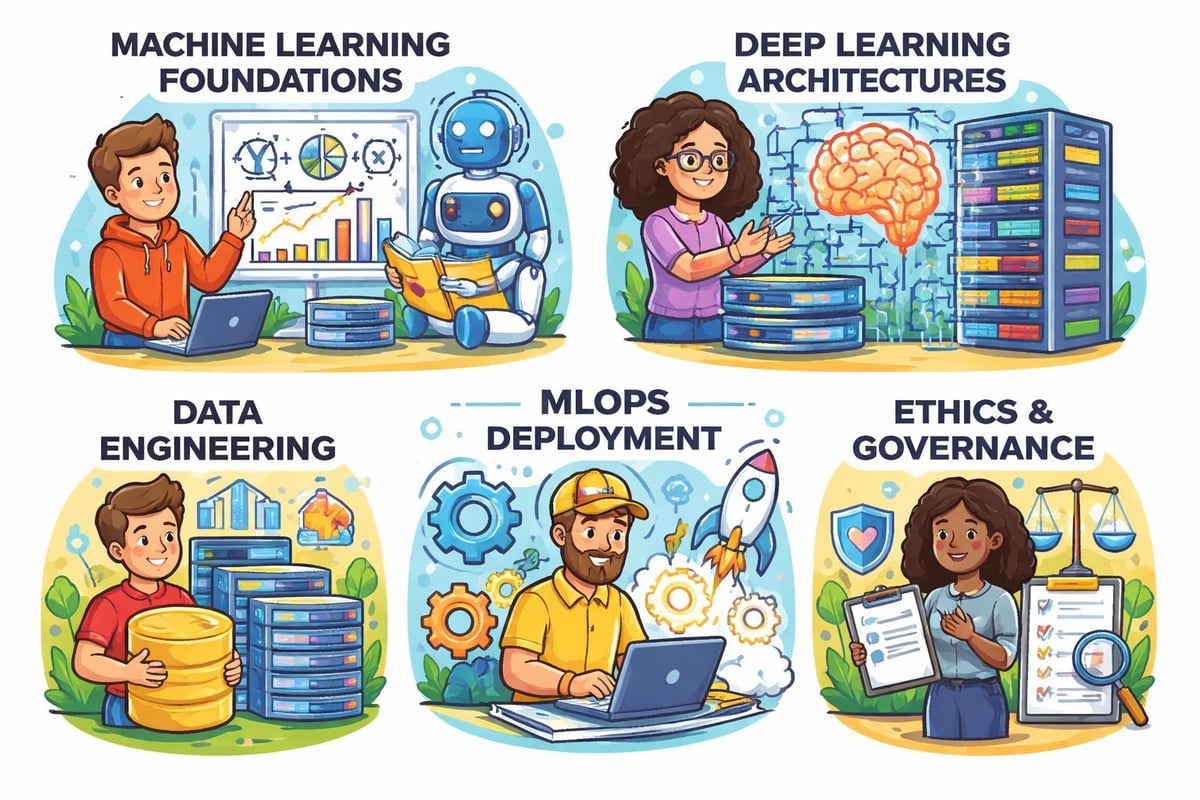
Most comprehensive certification programs address five core competency areas. Machine learning fundamentals form the foundation, covering supervised and unsupervised learning, model training, and evaluation metrics. Neural networks and deep learning build on these basics with architectures like CNNs, RNNs, and transformers that power modern AI applications.
Data engineering skills ensure you can handle the massive datasets AI systems require, including data pipeline construction, feature engineering, and data quality management. Model deployment and MLOps teach production deployment strategies, monitoring, and continuous improvement processes. Finally, AI ethics and governance address responsible AI development, addressing bias, transparency, and compliance requirements detailed in frameworks like AWS's AI safety guidelines.
Comparing Top AI Engineer Certification Programs
The certification landscape offers numerous options, each with distinct advantages depending on your career goals and current skill level. Understanding these differences helps you select the program that aligns with your professional objectives.
| Certification | Duration | Cost Range | Best For | Key Focus Areas |
|---|---|---|---|---|
| AWS Certified Machine Learning | 3-6 months | $300-$500 | Cloud practitioners | AWS ML services, deployment |
| Google Professional ML Engineer | 4-6 months | $200-$400 | Data engineers | TensorFlow, Vertex AI, production ML |
| Microsoft Azure AI Engineer | 3-5 months | $250-$450 | Enterprise developers | Azure Cognitive Services, MLOps |
| IBM AI Engineering | 6-9 months | $400-$800 | Comprehensive learners | Full-stack AI development |
| NVIDIA Deep Learning Institute | 2-4 months | $300-$600 | GPU computing specialists | Deep learning optimization |
When evaluating top AI certifications for 2025, consider your existing technical background and career trajectory. Professionals transitioning from software engineering may find cloud-focused certifications more accessible, while data scientists might prefer programs emphasizing advanced machine learning techniques.
Vendor-Specific vs. Vendor-Neutral Credentials
Vendor-specific certifications like those from AWS, Google, and Microsoft teach you to leverage proprietary platforms and services. These credentials prove particularly valuable when working in organizations already committed to specific cloud ecosystems. They provide hands-on experience with production tools and often include free tier access to expensive cloud resources during training.
Vendor-neutral programs focus on universal principles and frameworks applicable across platforms. These certifications emphasize theoretical foundations, algorithmic understanding, and transferable skills. They're ideal for consultants, researchers, or professionals who need flexibility across different technology stacks.
MammothClub's AI and ML learning paths include both vendor-specific and vendor-neutral courses, allowing learners to build comprehensive expertise regardless of their organizational context.
Essential Prerequisites and Learning Paths
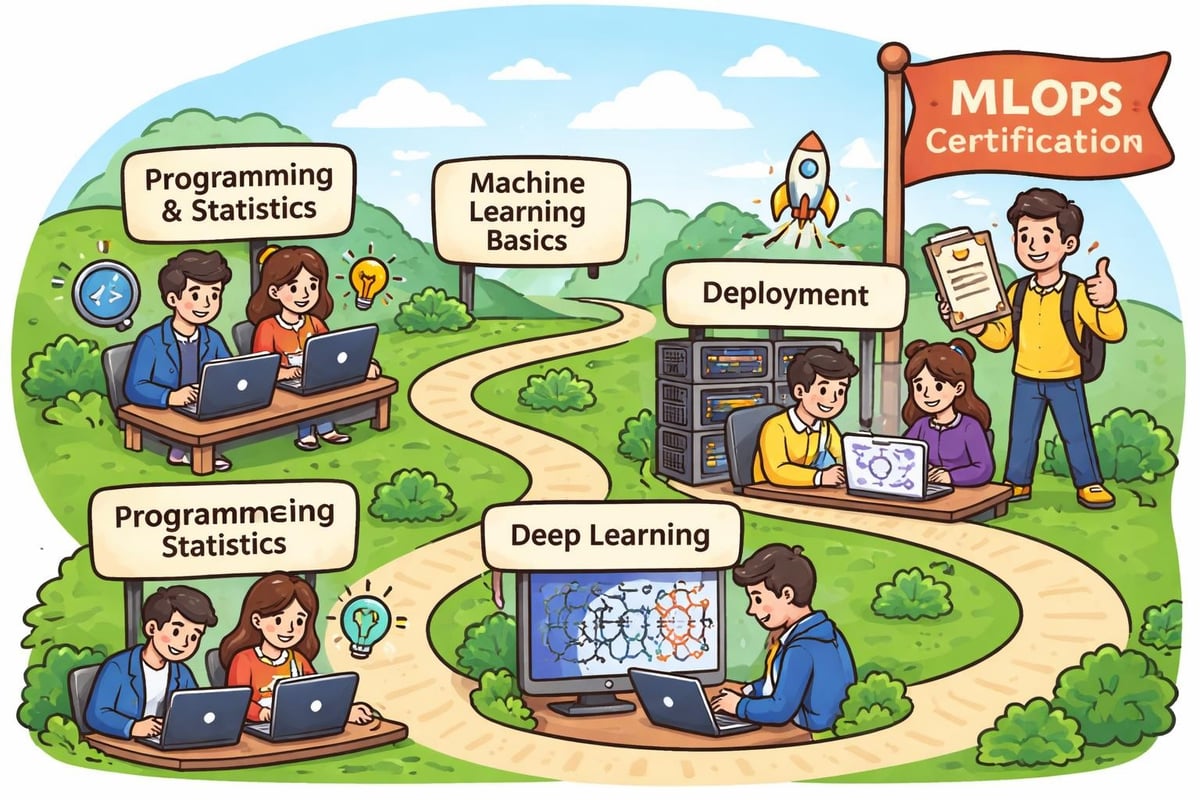
Success in ai engineer certification programs requires foundational knowledge in several technical areas. Most programs assume intermediate programming proficiency, statistical literacy, and basic understanding of software development practices.
Technical Foundation Requirements
Before beginning certification study, you should possess:
- Programming proficiency in Python, including familiarity with NumPy, Pandas, and basic object-oriented concepts
- Statistical knowledge covering probability distributions, hypothesis testing, and regression analysis
- Linear algebra fundamentals including matrix operations, eigenvalues, and vector spaces
- Calculus basics particularly derivatives and gradients essential for understanding optimization
- Software engineering practices including version control, testing, and documentation
For those lacking these prerequisites, starting with an AI beginner course provides the necessary foundation without overwhelming learners. These preparatory programs typically require 100-150 hours of study time before advancing to certification-level material.
Structured Learning Progression
The optimal path to ai engineer certification follows a deliberate progression. Beginners should start with machine learning fundamentals, covering classification, regression, and basic model evaluation. This phase typically requires 200-300 hours of study and hands-on practice.
Intermediate learners advance to specialized topics like deep learning, natural language processing, and computer vision. This stage introduces complex architectures and requires substantial project work applying concepts to real-world datasets. Budget 300-400 hours for this phase.
Advanced practitioners focus on production deployment, scaling, and optimization. This includes containerization, API development, monitoring systems, and continuous integration practices. Mastering these topics demands another 200-250 hours of intensive learning.
Certification Exam Preparation Strategies
Passing ai engineer certification exams requires more than theoretical knowledge. These assessments test practical application, troubleshooting skills, and decision-making under constraints similar to production environments.
Effective Study Techniques
Hands-on practice remains the single most important preparation activity. Build complete projects from data acquisition through model deployment, documenting your decisions and results. Most certification programs provide practice datasets and scenarios; work through every available example multiple times.
Spaced repetition helps retain complex technical concepts. Review key topics at increasing intervals: same day, three days later, one week later, and monthly. This approach particularly benefits memorization of algorithms, hyperparameter effects, and service-specific syntax.
Study groups and peer learning accelerate understanding through discussion and explanation. Teaching concepts to others reveals gaps in your knowledge while reinforcing what you've mastered. Many professionals join online communities or local meetups focused on specific certification programs.
The Care Label Framework for machine learning methods emphasizes systematic quality checks, an approach equally valuable for self-assessment during certification preparation. Create checklists verifying your understanding of each exam objective before scheduling your assessment.
Practice Exam Utilization
Official practice exams provide invaluable insight into question formats, difficulty levels, and time constraints. Take your first practice exam early to establish a baseline, then use subsequent attempts to measure progress and identify weak areas.
- Review every incorrect answer thoroughly, understanding not just why your choice was wrong but why the correct answer is better
- Time yourself strictly during practice, simulating actual exam pressure
- Document patterns in your mistakes to target study efforts efficiently
- Retake practice exams only after addressing identified knowledge gaps
Many certification bodies including those offering IBM AI certification provide detailed score breakdowns by competency area, enabling precise remediation of weaknesses.
Industry Recognition and Career Impact
The tangible career benefits of ai engineer certification extend beyond the credential itself, influencing salary negotiations, job opportunities, and professional credibility throughout your career.
Employer Perspectives and Hiring Preferences
Technical hiring managers value certifications as screening tools in competitive applicant pools. When facing dozens of candidates with similar educational backgrounds, certifications provide objective evidence of specialized knowledge and commitment to professional development.
Three key factors influence how employers assess ai engineer certification credentials:
- Recency: Certifications earned within the past two years carry significantly more weight than older credentials, reflecting the rapid pace of AI technology evolution
- Reputation: Programs from established technology vendors or recognized professional organizations command greater respect than lesser-known providers
- Relevance: Certifications matching the organization's technology stack and business needs receive priority over generic credentials
According to research on FactSheets for AI services, employers increasingly seek professionals who can document and communicate AI system capabilities transparently, a skill emphasized in comprehensive certification programs.
Salary and Advancement Metrics
Professionals holding ai engineer certification typically earn $95,000-$165,000 annually in the United States, with considerable variation based on geography, industry, and experience level. Certified AI engineers with three to five years of experience average 25% higher compensation than non-certified peers with comparable tenure.
| Experience Level | Average Salary (Certified) | Average Salary (Non-Certified) | Premium |
|---|---|---|---|
| Entry Level (0-2 years) | $85,000-$105,000 | $70,000-$85,000 | 21% |
| Mid-Level (3-5 years) | $115,000-$145,000 | $92,000-$115,000 | 25% |
| Senior (6-10 years) | $145,000-$180,000 | $125,000-$155,000 | 19% |
| Lead/Principal (10+ years) | $175,000-$225,000 | $160,000-$200,000 | 13% |
Beyond direct compensation, certifications accelerate advancement into leadership roles. Technical managers and AI team leads typically possess multiple certifications, demonstrating both depth and breadth of expertise across the AI engineering discipline.
Maintaining and Advancing Your Credentials
AI engineering evolves continuously, making credential maintenance essential for sustained career relevance. Most certifications require renewal every two to three years through continuing education or re-examination.
Continuing Education Requirements
Certification bodies mandate ongoing learning to ensure credential holders remain current with technological advances. Typical renewal requirements include:
- Completing 20-40 hours of approved professional development annually
- Participating in relevant conferences, workshops, or webinars
- Publishing technical content or contributing to open-source AI projects
- Passing updated versions of certification exams reflecting new capabilities
Platforms like MammothClub streamline continuing education with constantly updated courses, allowing certified professionals to earn required credits while expanding into emerging specializations. The best certification for artificial intelligence programs integrate seamlessly with professional development tracking systems.
Specialization Pathways
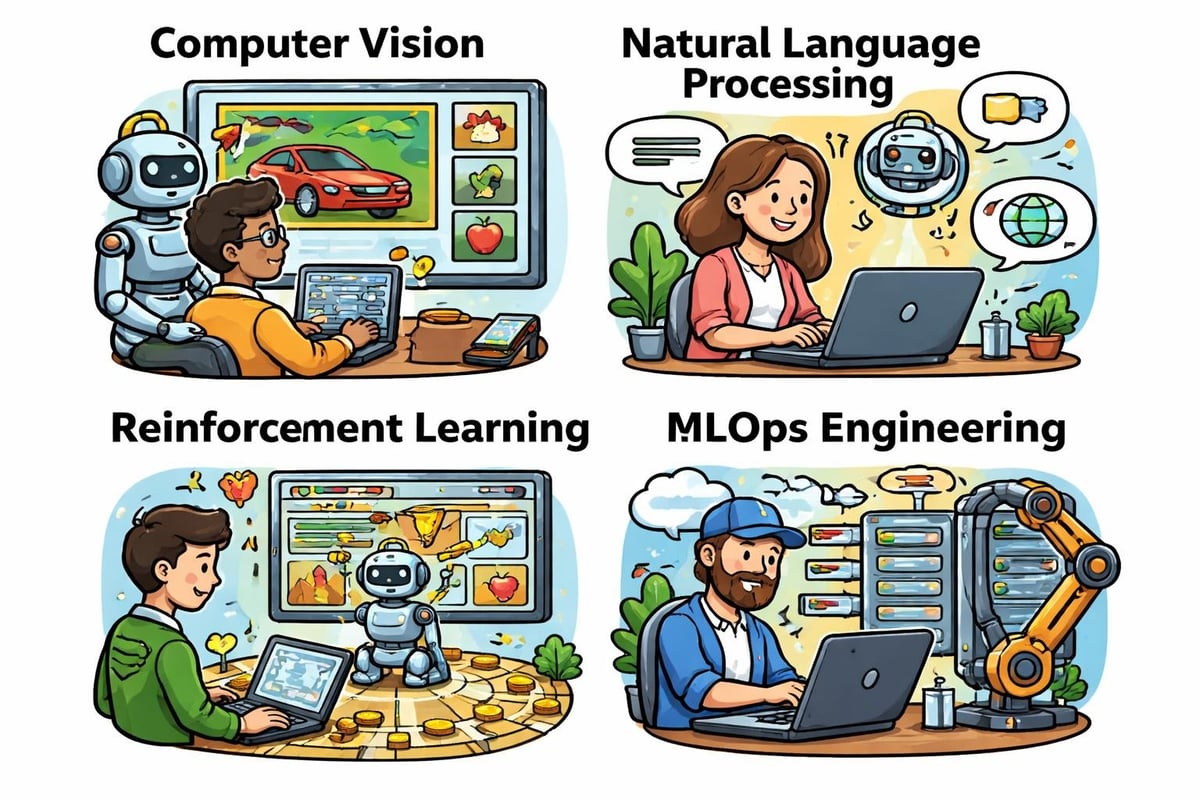
After earning foundational ai engineer certification, many professionals pursue specialized credentials in high-demand subfields. Computer vision specialists focus on image recognition, object detection, and visual understanding systems powering autonomous vehicles and medical imaging applications.
Natural language processing experts specialize in text analysis, language generation, and conversational AI, skills critical for chatbots, content analysis, and translation services. Reinforcement learning practitioners develop decision-making systems for robotics, game playing, and optimization problems.
MLOps engineers concentrate on production deployment, monitoring, and scaling of AI systems, bridging the gap between data science and software engineering. This specialization has experienced 156% growth in job postings during 2025-2026.
Practical Application and Portfolio Development
Certifications prove theoretical knowledge, but employers equally value demonstrated practical skills through portfolio projects showcasing real-world problem-solving abilities.
Building Compelling Project Portfolios
Effective portfolio projects address authentic business problems with measurable outcomes. Rather than following tutorial exercises exactly, modify datasets, adjust objectives, or extend functionality to demonstrate independent thinking and creativity.
Your portfolio should include:
- End-to-end machine learning pipeline showing data acquisition, cleaning, feature engineering, model training, evaluation, and deployment
- Deep learning application implementing neural networks for classification, generation, or prediction tasks
- Production deployment demonstrating containerization, API development, and monitoring capabilities
- Model optimization project showing performance tuning, hyperparameter selection, and computational efficiency improvements
- Ethical AI analysis documenting bias detection, mitigation strategies, and responsible AI practices
Document each project thoroughly with clear problem statements, methodology explanations, results analysis, and lessons learned. Hosting code on GitHub with comprehensive README files makes your work accessible to potential employers and collaborators.
Certification Integration with Portfolio Work
Strategic learners align certification study with portfolio development, using required projects to simultaneously satisfy program requirements and build demonstrable expertise. The AI+ Engineer certification program explicitly structures modules around cumulative portfolio development, ensuring graduates possess both credentials and concrete examples of applied skills.
When preparing for ai engineer certification exams, transform study exercises into portfolio pieces by extending scope, improving documentation, or deploying solutions as accessible web applications. This approach maximizes return on study time while creating artifacts demonstrating your capabilities.
Emerging Trends in AI Engineering Credentials
The ai engineer certification landscape continues evolving rapidly, with new program types and assessment methods emerging to address changing industry needs and technological capabilities.
Micro-Credentials and Stackable Certifications
Traditional comprehensive certifications spanning hundreds of hours increasingly compete with focused micro-credentials targeting specific skills or tools. These shorter programs (20-50 hours) allow professionals to quickly validate expertise in narrow areas like prompt engineering, a skill increasingly critical for working with large language models.
Resources on writing effective AI prompts from institutions like Harvard and OpenAI supplement traditional certifications, providing specialized knowledge that complements broader credentials. Many organizations now pursue "stackable" credential strategies, accumulating multiple focused certifications rather than single comprehensive programs.
AI-Powered Assessment and Adaptive Learning
Certification programs themselves increasingly leverage AI technologies for personalized learning paths and adaptive assessments. These systems analyze individual performance patterns, identifying knowledge gaps and recommending targeted remediation resources.
Adaptive certification exams adjust difficulty based on responses, providing more accurate skill measurement while reducing testing time. Platforms like MammothClab implement AI-powered dashboards that track progress across thousands of learners, identifying optimal learning sequences and predicting certification exam success rates.
Virtual labs and simulation environments replace traditional multiple-choice questions with hands-on performance tasks, requiring candidates to actually build, debug, and deploy AI systems rather than simply answering questions about them. This shift toward competency-based assessment better reflects real-world job requirements.
Cost-Benefit Analysis of Certification Investment
Pursuing ai engineer certification requires significant investments of time, money, and opportunity cost. Evaluating these investments against potential returns helps professionals make informed career development decisions.
Direct and Indirect Costs
Examination fees represent the most visible expense, ranging from $200-$800 per attempt depending on the certification program. Premium programs may include exam costs within comprehensive training packages, while others charge separately for training materials and assessment attempts.
Study materials and courses add $500-$3,000 to total costs. Self-study using free resources minimizes this expense but requires exceptional self-discipline and often takes longer than structured programs. Instructor-led bootcamps accelerate learning but command premium pricing.
Opportunity costs include study time (300-600 hours for comprehensive programs) that could otherwise generate income or advance other career objectives. For working professionals, this often means sacrificing evenings, weekends, and vacation time over 4-8 months.
| Cost Category | Low Estimate | High Estimate | Notes |
|---|---|---|---|
| Exam fees | $200 | $800 | Per attempt; retakes cost additional |
| Study materials | $0 | $3,000 | Free resources available but limited |
| Preparation courses | $500 | $5,000 | Bootcamps most expensive |
| Practice exams | $50 | $300 | Usually optional but recommended |
| Opportunity cost | $4,500 | $15,000 | Based on study time at avg. hourly rate |
| Total Investment | $5,250 | $24,100 | Wide range reflects study approach choices |
Return on Investment Calculations
Despite substantial upfront costs, ai engineer certification typically delivers positive ROI within 12-18 months through salary increases and expanded job opportunities. A professional earning $85,000 annually who receives a 20% raise after certification recovers a $10,000 investment in just seven months.
Career acceleration provides additional value beyond immediate salary impacts. Certified professionals report reaching senior-level positions 18-24 months faster than non-certified peers, resulting in cumulative lifetime earnings increases of $150,000-$300,000.
Non-financial returns include increased confidence, expanded professional networks, and deeper technical understanding enabling more effective problem-solving. These qualitative benefits, while difficult to quantify, significantly influence long-term career satisfaction and progression.
Selecting the Right Certification for Your Goals
With dozens of ai engineer certification options available, matching programs to your specific career objectives, learning style, and constraints requires careful evaluation of multiple factors.
Career Stage and Skill Level Assessment
Career changers entering AI from other fields benefit most from comprehensive programs covering fundamentals through advanced topics, providing structured progression without assuming prior AI knowledge. These professionals should prioritize programs with strong practical components and portfolio development opportunities.
Experienced software engineers adding AI capabilities should focus on certifications emphasizing production deployment, integration, and MLOps rather than programming fundamentals. Their existing technical skills allow faster progression through AI-specific content.
Data scientists seeking formal AI engineering credentials need programs emphasizing software engineering practices, system design, and deployment rather than statistical theory they already possess. Certifications bridging the data science-engineering gap prove most valuable for this audience.
Exploring various best courses in AI before committing to specific certification paths allows you to sample different teaching approaches and identify programs matching your learning preferences.
Organizational and Industry Alignment
Your employer's technology stack and industry vertical should influence certification selection. Professionals in healthcare, finance, or government sectors should prioritize programs addressing industry-specific regulations, compliance requirements, and use cases.
Organizations heavily invested in specific cloud platforms (AWS, Azure, Google Cloud) value corresponding vendor certifications most highly. Conversely, consulting firms and agencies serving diverse clients benefit from vendor-neutral credentials demonstrating broad adaptability.
Time constraints also factor significantly into program selection. Full-time employees may prefer self-paced options accommodating variable study schedules, while those between positions might choose intensive bootcamps providing credentials in 8-12 weeks.
Pursuing an ai engineer certification in 2026 represents a strategic career investment that validates your expertise while providing structured learning across critical AI competencies. The combination of theoretical knowledge, hands-on experience, and industry-recognized credentials positions you for success in one of technology's fastest-growing fields. Whether you're entering AI from another discipline or advancing within the field, MammothClub provides comprehensive certification preparation with over 3,000 courses, interactive bootcamps, and AI-powered learning dashboards that accelerate your path to credential success and career advancement.