The artificial intelligence revolution has created unprecedented demand for verified skills. As organizations race to adopt AI responsibly and effectively, the need for standardized, credible AI expertise has never been greater. An ai certification online offers working professionals the flexibility to validate their skills without disrupting their careers, but the landscape of available credentials ranges from vendor-specific technical certifications to ethics-focused frameworks and regulatory compliance programs. Understanding which certification aligns with your career goals, the rigor of assessment standards, and how employers value different credentials will determine whether your investment delivers meaningful returns.
Understanding the AI Certification Ecosystem in 2026
The ai certification online market has matured significantly over the past three years. What began as a patchwork of vendor marketing programs has evolved into a multi-tiered system that now includes technical competency certifications, ethics and governance credentials, regulatory compliance frameworks, and role-based professional certificates.
Three distinct forces shape today's certification landscape. First, regulatory pressure from frameworks like the EU AI Act has created mandatory conformity assessment requirements for high-risk AI systems. Second, professional organizations such as IEEE have established assessment criteria that blend technical knowledge with ethical considerations through programs like IEEE CertifAIEd. Third, industry demand for practical, role-specific skills has driven the growth of platform-specific certifications from major cloud providers.
Technical Versus Governance Certifications
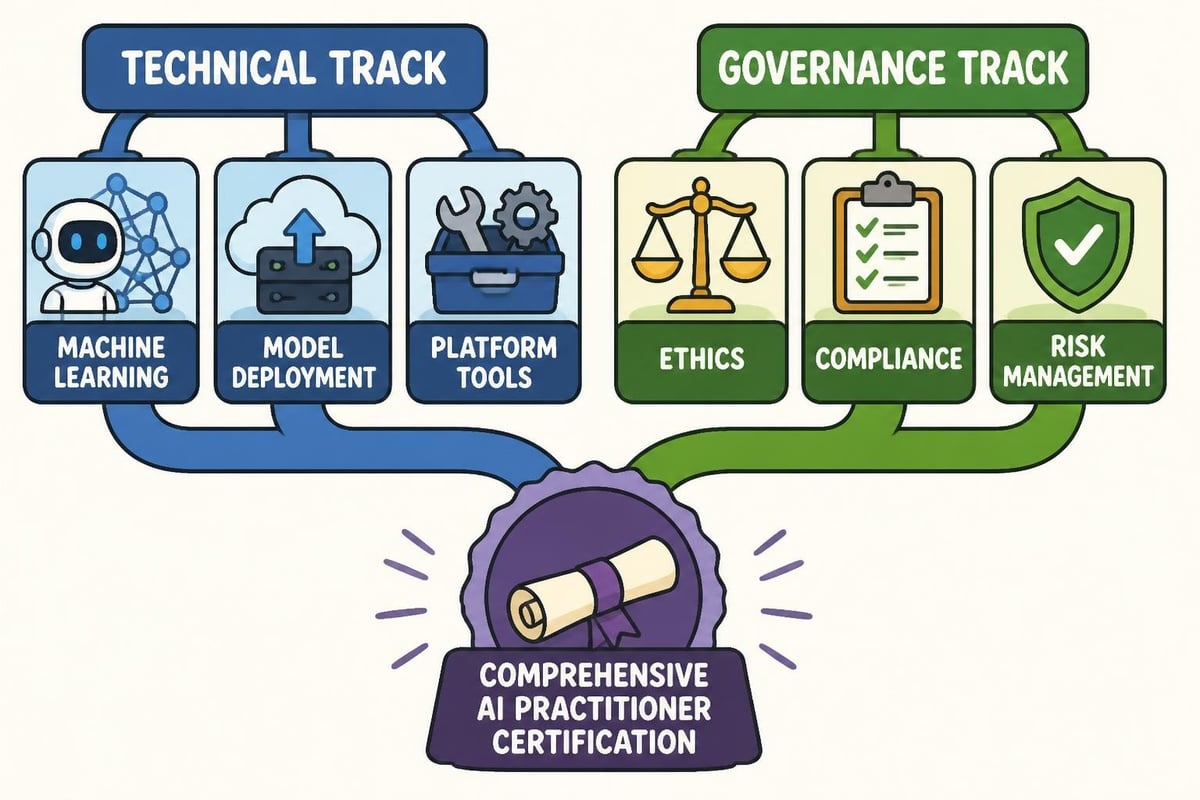
A fundamental distinction separates technical AI certifications from governance and ethics credentials:
Technical certifications validate your ability to:
- Build, train, and deploy machine learning models
- Implement AI solutions using specific platforms or frameworks
- Optimize algorithms for performance and accuracy
- Integrate AI capabilities into production systems
Governance certifications demonstrate competency in:
- Ethical AI design and deployment principles
- Risk assessment and mitigation frameworks
- Regulatory compliance and documentation
- Bias detection and fairness evaluation
Many professionals pursuing an ai certification online will eventually need both types of credentials. The catalog of general ethical requirements for AI certification illustrates how assessment criteria increasingly blend technical and ethical dimensions, reflecting real-world requirements where practitioners must address both capabilities.
Choosing the Right AI Certification for Your Career Goals
Not all ai certification online programs serve the same professional objectives. Your choice should align with your current role, career trajectory, and the specific challenges you face in your organization.
| Certification Type | Best For | Time Investment | Typical Cost Range |
|---|---|---|---|
| Vendor Platform (AWS, Azure, GCP) | ML Engineers, Cloud Architects | 40-80 hours | $300-$600 |
| Role-Based (AI Product Manager) | Product Leaders, Business Analysts | 30-60 hours | $200-$500 |
| Ethics & Governance | Compliance Officers, AI Leads | 20-40 hours | $150-$400 |
| Foundation/General AI | Career Changers, Students | 60-120 hours | $400-$1,200 |
Platform-Specific Certifications
Microsoft's AI certification portfolio exemplifies the vendor-specific approach. These credentials validate your proficiency with particular tools and services, making them valuable when your organization has already committed to a cloud platform.
The AWS Certified Machine Learning Specialty and Microsoft Azure AI certification programs follow similar patterns: they assess your ability to architect, implement, and optimize AI solutions using the platform's specific services and best practices.
Advantages of platform certifications:
- Immediate applicability to current projects
- Recognition from employers using those platforms
- Clear technical skill validation
- Structured learning paths with official resources
Limitations to consider:
- Platform lock-in reduces transferability
- Rapid service updates may outdate credentials
- Focus on implementation over strategy
- Limited coverage of broader AI principles
Role-Based Certifications
Professional certifications targeting specific job functions have gained traction as organizations define AI-related roles more clearly. An AI product manager course addresses different competencies than an ML engineer track, reflecting distinct responsibilities and required expertise.
Role-based ai certification online programs typically emphasize:
- Cross-functional collaboration skills
- Business value identification and measurement
- Stakeholder communication techniques
- Project scoping and prioritization
The best certification for artificial intelligence in your context depends entirely on whether you need technical depth, strategic breadth, or specialized domain knowledge.
Assessment Standards and Certification Rigor
The credibility of any ai certification online depends fundamentally on its assessment methodology and the standards it references. Poorly designed certification programs create false confidence while rigorous programs genuinely validate competency.
What Robust Assessment Includes
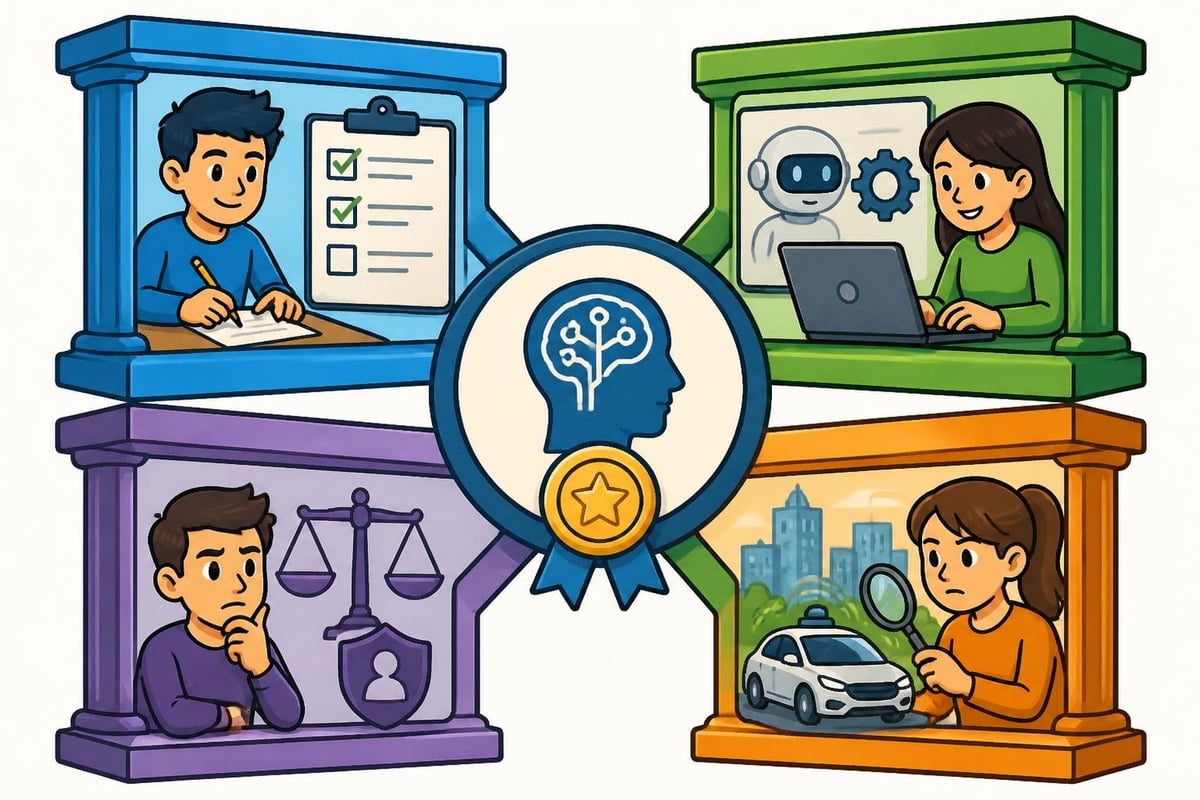
Legitimate certification programs incorporate multiple evaluation methods:
- Knowledge verification through proctored examinations covering theoretical foundations
- Practical demonstration via hands-on projects or simulation environments
- Scenario analysis testing judgment and decision-making in realistic contexts
- Ethics evaluation assessing understanding of responsible AI principles
The NIST public plan for global engagement on AI standards provides insights into how national and international standards bodies are working to establish consistent assessment criteria that certification programs can reference.
Standards Alignment and Third-Party Validation
Certifications gain credibility when they align with recognized standards frameworks. Look for programs that explicitly reference:
- ISO/IEC standards for AI and machine learning
- IEEE frameworks for ethical AI considerations
- National AI strategies and competency models
- Industry-specific regulatory requirements
UNESCO's Recommendation on the Ethics of Artificial Intelligence has influenced how many certification frameworks now incorporate ethics and governance competencies, ensuring graduates understand not just how to build AI but how to deploy it responsibly.
Practical Implementation: Earning Your Certification
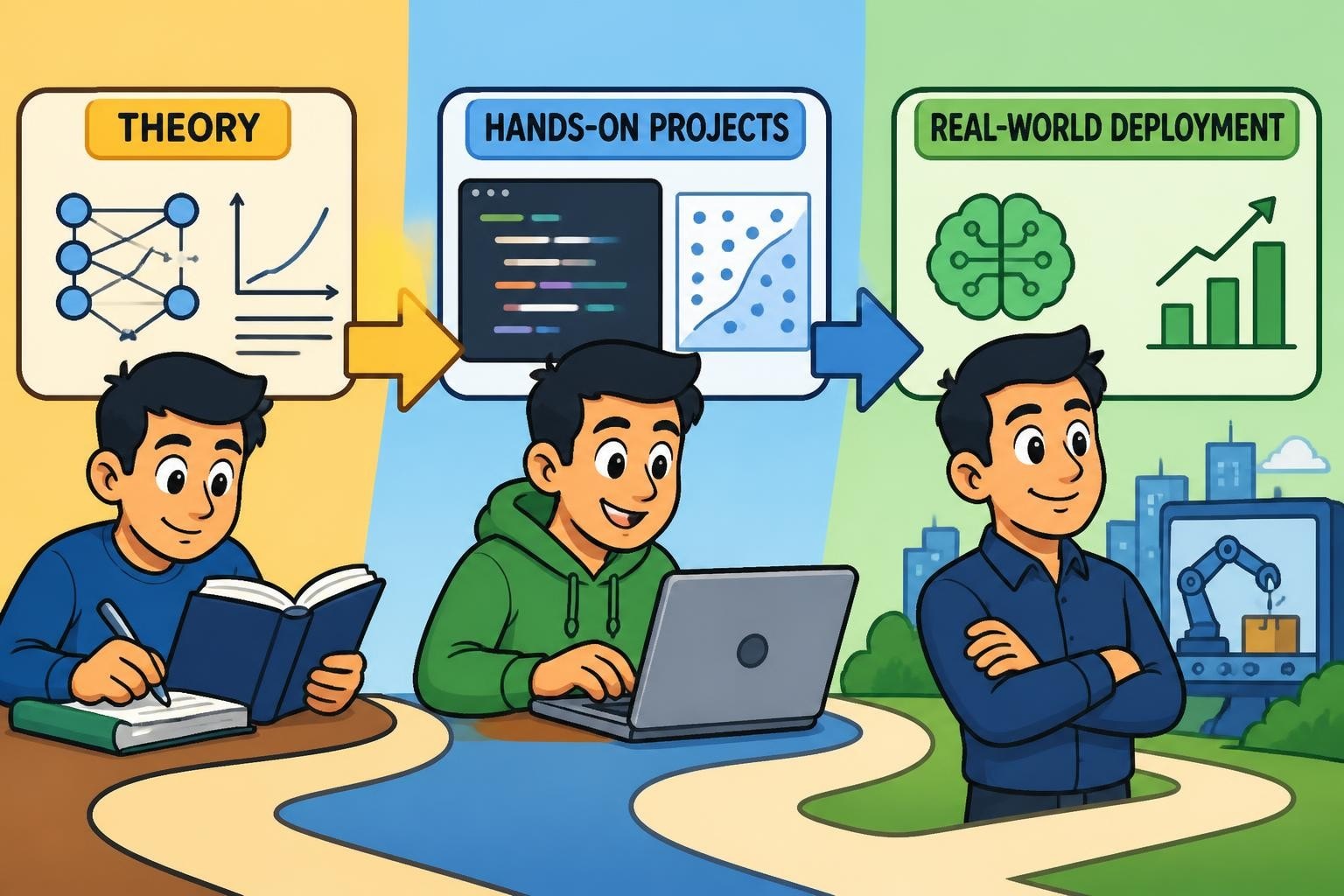
Success with ai certification online requires strategic preparation, efficient time management, and the right learning resources. Most working professionals balance certification study with full-time responsibilities, making your approach as important as the credential itself.
Building Your Study Plan
Effective certification preparation follows a structured progression:
Phase 1: Foundation (Weeks 1-3)
- Complete prerequisite assessments to identify knowledge gaps
- Review core concepts through video courses and reading materials
- Build mental models connecting theoretical concepts to practical applications
Phase 2: Deep Practice (Weeks 4-8)
- Work through hands-on labs and coding exercises
- Build portfolio projects demonstrating key competencies
- Practice with sample questions and timed assessments
Phase 3: Integration (Weeks 9-10)
- Take full-length practice exams under test conditions
- Review weak areas identified in practice tests
- Study exam-specific strategies and time management techniques
The essential machine learning foundations course demonstrates how structured learning paths help students build competency systematically rather than through disconnected topics.
Leveraging AI-Powered Learning Tools
Modern certification preparation increasingly incorporates AI-driven personalization. Adaptive learning platforms identify your specific knowledge gaps and adjust content difficulty dynamically, making study time more efficient.
Interactive tools transform passive learning into active skill-building:
- AI coding assistants provide immediate feedback on implementation exercises
- Conversational AI tutors answer questions and explain complex concepts
- Automated assessment identifies patterns in your mistakes and suggests targeted remediation
- Progress dashboards visualize your readiness across different competency domains
Platforms offering AI-powered learning tools and dashboards demonstrate measurable improvements in both completion rates and exam performance compared to traditional static course materials.
Regulatory Context and Compliance Certifications
The regulatory environment for AI has shifted dramatically since 2024. Organizations deploying AI systems in regulated industries or jurisdictions now face conformity assessment requirements that create demand for compliance-focused certifications.
Understanding the EU AI Act Impact
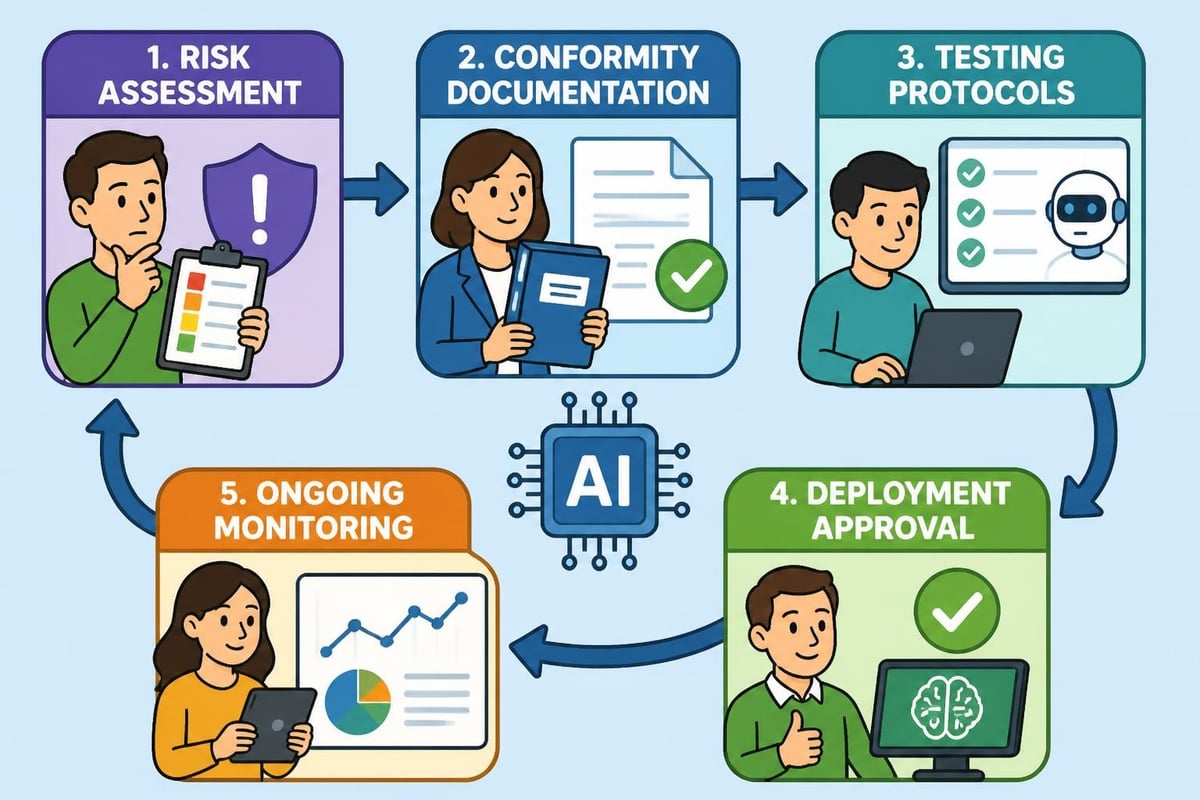
The EU AI Act establishes risk-based obligations for AI systems, with high-risk applications requiring conformity assessment before deployment. This regulatory framework has created new certification categories focused on:
- Risk classification and assessment methodologies
- Technical documentation requirements
- Quality management system implementation
- Post-market monitoring and reporting
Professionals responsible for AI governance in organizations serving European markets increasingly pursue ai certification online programs that specifically address these regulatory requirements.
Cybersecurity and AI Intersection
The ENISA guidance on AI requirements and standards highlights how AI security concerns intersect with broader cybersecurity frameworks. Certifications addressing this intersection validate competencies in:
- Adversarial attack prevention and detection
- Model security and intellectual property protection
- Data privacy in machine learning pipelines
- Secure deployment and operational monitoring
Organizations recognize that AI systems create new attack surfaces and failure modes, driving demand for practitioners who understand both AI capabilities and security implications.
Comparing Popular Online AI Certifications
The Dataquest guide to the best AI certifications provides neutral comparisons across popular programs, but understanding which factors matter most for your situation requires deeper analysis.
Evaluation Criteria That Actually Matter
When comparing ai certification online options, prioritize these factors:
| Criterion | Why It Matters | How to Evaluate |
|---|---|---|
| Industry Recognition | Determines employer value | Check job postings mentioning the certification |
| Assessment Rigor | Validates actual competency | Review exam format, passing scores, retake policies |
| Curriculum Relevance | Ensures current best practices | Check last update date, review committee credentials |
| Hands-On Component | Builds practical skills | Assess lab quality, project requirements, tool access |
| Continuing Education | Maintains credential value | Understand renewal requirements, ongoing learning obligations |
Vendor Versus Vendor-Neutral Programs
The Oracle AI certification represents a vendor-specific approach, while general AI foundation programs offer platform-agnostic knowledge. Neither is inherently superior; the right choice depends on your career context.
Choose vendor certifications when:
- Your organization uses that specific platform extensively
- Job postings in your target role frequently mention the credential
- You need immediate applicability to current projects
- Platform-specific expertise commands salary premiums in your market
Choose vendor-neutral certifications when:
- You work across multiple platforms or tools
- Your role emphasizes strategy over implementation
- You're building foundation knowledge before specializing
- You want maximum career flexibility and credential portability
ROI and Career Impact of AI Certification
Investing time and money in an ai certification online should deliver measurable returns. Understanding realistic outcomes helps set appropriate expectations and select credentials that align with your specific career objectives.
Salary Impact and Promotion Velocity
Data from 2026 salary surveys shows certification impact varies significantly by role and experience level:
- Entry-level professionals (0-2 years experience) see 8-15% salary increases after earning respected AI certifications
- Mid-career practitioners (3-7 years) report 12-22% compensation growth when certifications complement demonstrated project success
- Senior professionals (8+ years) experience modest direct salary impact but report faster promotion to leadership roles
The credential itself rarely drives compensation changes. Instead, certification validates skills that enable you to take on higher-value projects, which in turn drive career advancement.
Building Credibility in Cross-Functional Teams
Non-technical stakeholders often struggle to evaluate AI expertise. Certification provides a credible signal that facilitates:
- Faster trust-building with executives and business leaders
- Increased influence in strategic planning and resource allocation decisions
- Enhanced credibility when recommending technical approaches or vendors
- Stronger positioning for leadership roles in AI initiatives
Multiple professionals report that certification helped them transition from implementation roles to strategic positions where they guide organizational AI adoption rather than just executing projects.
Portfolio Differentiation in Competitive Markets
In markets with many AI practitioners, certification helps you stand out in initial screening processes:
- Applicant tracking systems filter candidates based on listed credentials
- Recruiters use certifications as shorthand for skill verification
- Hiring managers view certifications as evidence of continuous learning commitment
- Interview processes become more focused on advanced topics when baseline competency is pre-validated
The Coursera artificial intelligence course pathway shows how structured learning combined with certification creates documented proof of skill progression that hiring teams value.
Specialized AI Certifications for Emerging Domains
As AI applications expand into new domains, specialized certifications have emerged addressing niche competencies that general programs don't cover adequately.
Conversational AI and LLM Engineering
The explosion of large language models has created demand for practitioners who understand prompt engineering, fine-tuning, and responsible deployment of conversational AI systems.
Specialized programs now cover:
- Advanced prompt engineering techniques for various LLM architectures
- Retrieval-augmented generation (RAG) implementation patterns
- Context management and conversation flow design
- Safety evaluation and jailbreak prevention
The master prompt engineering with Anthropic Claude course illustrates how platform-specific expertise in conversational AI has become a distinct specialization requiring dedicated training.
AI for Game Development and Interactive Media
Game developers integrating AI capabilities need different competencies than traditional ML engineers. Certifications in this domain address:
- AI behavior systems and decision trees
- Procedural content generation with machine learning
- Real-time inference optimization for interactive applications
- Balancing AI difficulty and player engagement
Resources like the checkers 3D game with AI template demonstrate practical AI implementation in gaming contexts that require specialized knowledge beyond general machine learning concepts.
AI Music and Creative Applications
Generative AI for creative work represents another emerging specialization. Professionals in this space need to understand:
- Generative model architectures for audio and visual content
- Copyright and intellectual property considerations for AI-generated work
- Quality evaluation criteria for creative outputs
- Human-AI collaboration workflows in creative processes
The AI music with Udio course shows how creative AI tools require distinct skills from traditional data science or machine learning engineering.
Maintaining and Upgrading Your AI Certification
Most credible ai certification online programs require periodic renewal or continuing education to ensure practitioners stay current with rapidly evolving technology and best practices.
Continuing Education Requirements
Typical renewal requirements include:
- Annual learning hours: 10-20 hours of approved training or conference attendance
- Professional activities: Publishing, speaking, or contributing to AI projects
- Re-examination: Some programs require periodic re-testing on updated material
- Ethics updates: Mandatory training on emerging ethical considerations and regulatory changes
These requirements ensure certifications retain value over time rather than becoming outdated credentials that no longer reflect current competency.
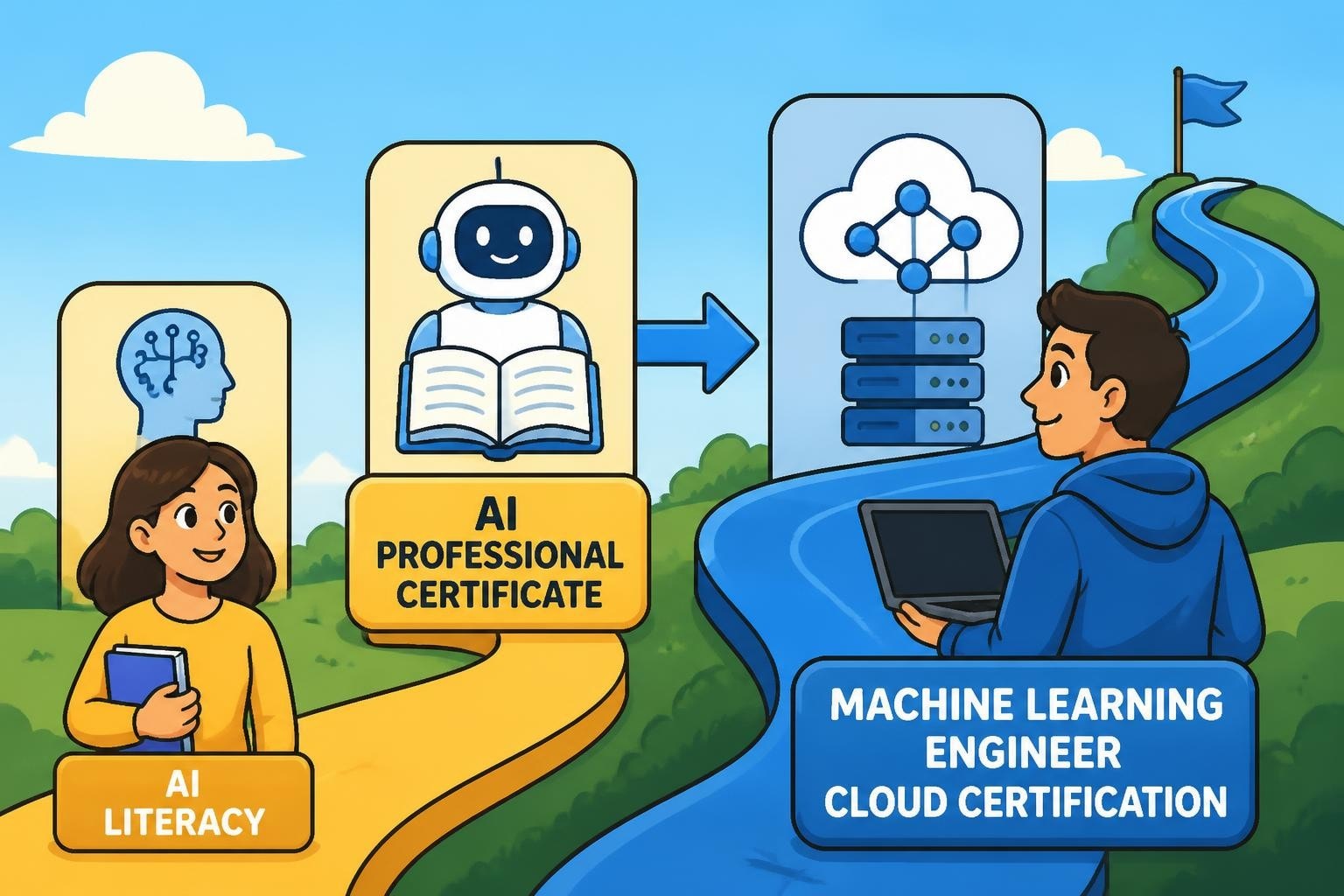
Stacking Credentials for Career Progression
Strategic professionals build certification portfolios that demonstrate breadth and depth:
Foundation Layer
- General AI/ML fundamentals certification establishing baseline knowledge
Specialization Layer
- Platform-specific credentials (cloud providers, ML frameworks)
- Domain-specific certifications (industry applications, use cases)
Leadership Layer
- Ethics and governance certifications
- Strategic AI adoption and transformation programs
This stacked approach provides maximum flexibility while signaling comprehensive competency to employers and clients.
Emerging Certifications to Watch
Several new certification categories are gaining traction in 2026:
- AI Safety and Alignment: Validating competency in building systems aligned with human values
- Explainable AI (XAI): Demonstrating ability to create interpretable models and explain AI decisions
- Edge AI and TinyML: Certifying skills in deploying ML models on resource-constrained devices
- AI for Sustainability: Addressing environmental impact and sustainable AI development practices
Early adoption of emerging certifications can provide competitive advantages before these domains become saturated with credentialed practitioners.
Making Your Certification Investment Pay Off
Earning an ai certification online represents significant time and financial investment. Maximizing returns requires strategic planning beyond simply passing the exam.
Immediate Application Strategies
The gap between certification and career impact closes fastest when you:
Create visible demonstrations of new capabilities through:
- Internal presentations sharing certification insights with colleagues
- Blog posts or articles explaining concepts to broader audiences
- Open-source contributions applying learned techniques
- Portfolio projects showcasing practical implementation skills
Seek stretch assignments that leverage certified competencies:
- Volunteer for AI-related initiatives in your organization
- Propose pilot projects applying new skills to business problems
- Join cross-functional AI working groups or committees
- Mentor others learning foundational AI concepts
Networking and Community Engagement
Certification programs often include access to alumni networks and professional communities. Active participation multiplies certification value through:
- Peer learning from practitioners solving similar challenges in different contexts
- Opportunity awareness about roles, projects, and emerging applications
- Collaborative problem-solving when facing complex technical or ethical dilemmas
- Reputation building that leads to speaking, writing, and consulting opportunities
The strongest ROI from certification comes when you combine credential validation with active community participation and visible knowledge sharing.
Positioning for AI Leadership Roles
Organizations increasingly need AI leaders who bridge technical understanding with business strategy. Your certification becomes a stepping stone to leadership when you:
- Translate technical concepts for non-technical stakeholders clearly and persuasively
- Identify business value opportunities where AI creates competitive advantages
- Navigate ethical considerations proactively rather than reactively
- Build and mentor teams of AI practitioners effectively
- Manage stakeholder expectations realistically about AI capabilities and limitations
Certification validates baseline competency, but leadership roles require demonstrating these broader capabilities through successful project delivery and organizational impact.
The ai certification online landscape in 2026 offers unprecedented opportunities for professionals to validate AI expertise, advance careers, and contribute to responsible AI adoption. Success requires matching certification choice to your specific goals, committing to rigorous preparation, and strategically leveraging credentials through visible application and community engagement. Whether you're pursuing technical depth through platform certifications, demonstrating governance competency, or building comprehensive AI leadership capabilities, the right certification pathway combined with active skill application delivers measurable career returns. MammothClub provides the comprehensive learning platform, interactive practice tools, and certification preparation resources you need to upskill efficiently and achieve your AI career objectives in this rapidly evolving field.