Oracle's push into artificial intelligence infrastructure has created a new professional development opportunity that bridges traditional database expertise with cutting-edge machine learning capabilities. The oracle ai certification validates practical skills in deploying, managing, and optimizing AI workloads on Oracle Cloud Infrastructure (OCI), positioning professionals at the intersection of enterprise data management and generative AI innovation. As organizations invest heavily in AI transformation, credentials that demonstrate hands-on competency with production-grade cloud AI services carry measurable career value. This comprehensive guide examines what the certification entails, who should pursue it, and how to prepare effectively for success in 2026.
Understanding the Oracle AI Certification Landscape
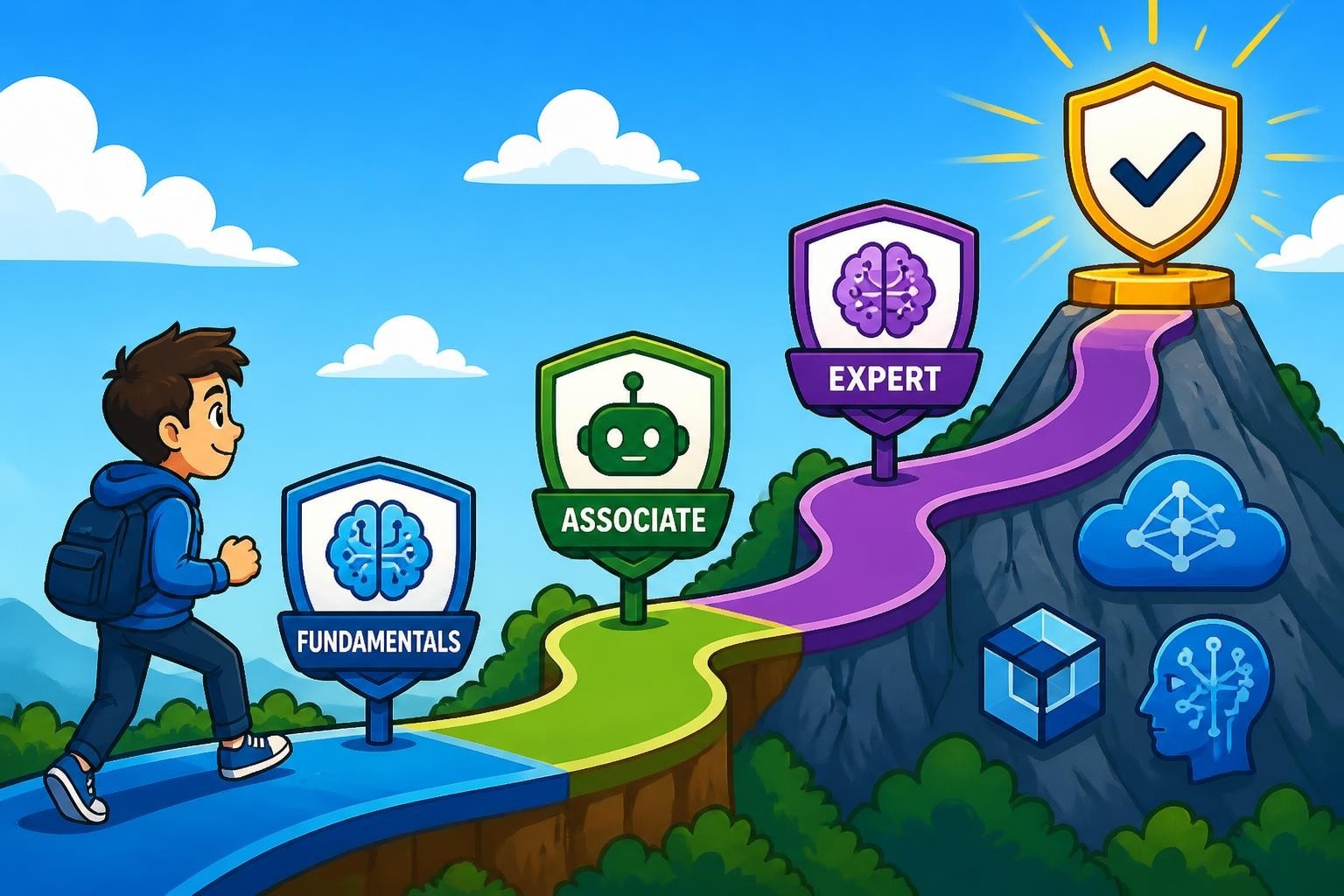
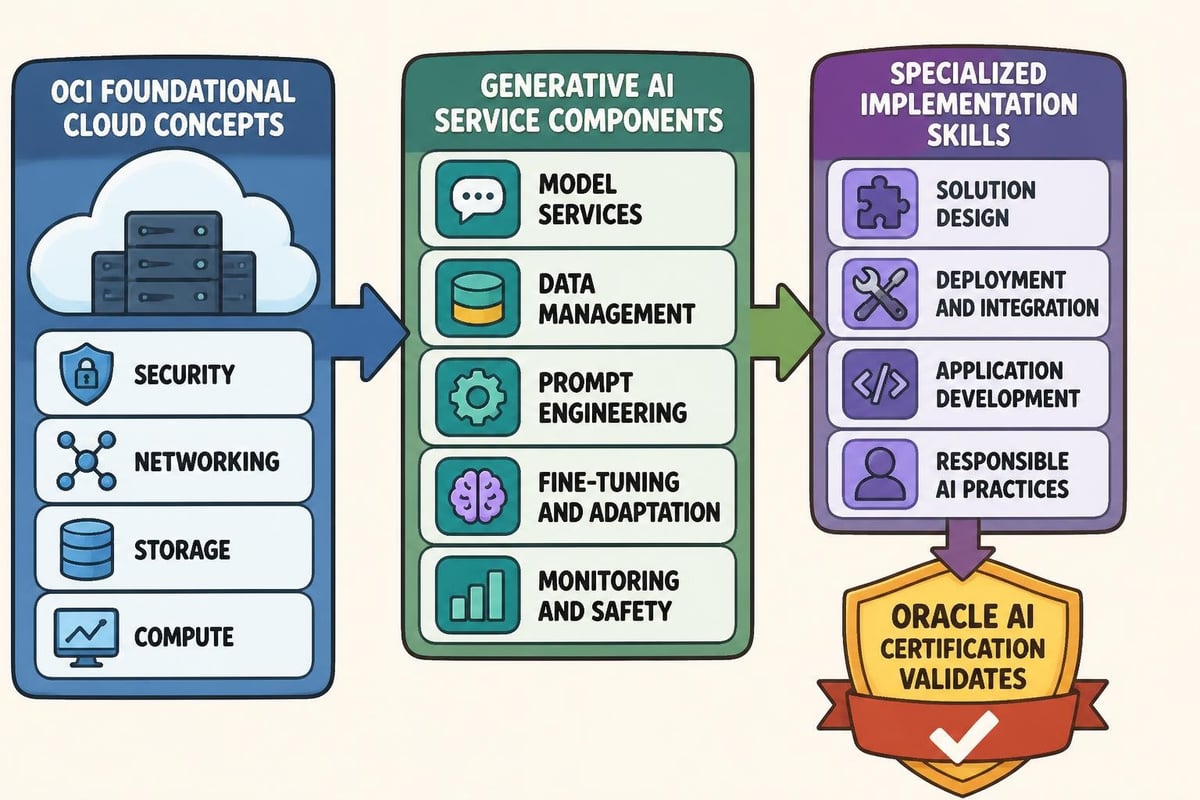
Oracle structures its AI certification offerings around Oracle Cloud Infrastructure, recognizing that modern AI practitioners need both foundational cloud knowledge and specialized AI service expertise. The certification pathway typically begins with OCI Foundations, then progresses to specialized tracks including Generative AI Professional certification.
The OCI Generative AI Professional certification represents Oracle's flagship AI credential for 2026. This exam validates your ability to work with Oracle's managed AI services, including pre-trained foundation models, retrieval-augmented generation (RAG) implementations, and fine-tuning workflows. Unlike purely theoretical certifications, this credential emphasizes practical application scenarios you'll encounter when deploying enterprise AI solutions.
Core Knowledge Domains
The oracle ai certification exam covers several critical competency areas:
- OCI Generative AI service architecture and deployment models
- Foundation model selection and configuration for specific use cases
- Prompt engineering techniques and best practices
- RAG implementation using vector databases and embedding models
- Fine-tuning strategies for domain-specific applications
- Security and governance frameworks for AI workloads
- Performance optimization and cost management
Understanding Oracle Cloud Infrastructure Generative AI service updates becomes essential preparation material, as the exam reflects current service capabilities and recently released features.
Career Value and Market Positioning
The professional value of AI certifications has become a frequent topic in technology circles, with industry analysts questioning whether AI certifications justify the investment. Oracle's approach differentiates itself by tying certification directly to production cloud services rather than abstract theory.
According to the Pearson VUE 2025 Value of IT Certification report, certified professionals report tangible career benefits including salary increases, expanded job responsibilities, and improved hiring outcomes. The report shows that 87% of hiring managers consider certifications when evaluating candidates for technical roles.
Enterprise Demand Drivers
Oracle's unique positioning in the enterprise AI market creates specific demand for certified professionals. The company's architecture combines database, cloud infrastructure, and AI services in ways that appeal to large organizations with complex data governance requirements.
Independent analysis from Omdia highlights how Oracle's approach to generative AI leverages its infrastructure advantages, particularly for organizations already invested in Oracle Database and cloud environments. This creates job opportunities for professionals who can bridge legacy systems and modern AI capabilities.
| Career Benefit | Impact Level | Timeframe |
|---|---|---|
| Salary increase | 8-15% average | 6-12 months post-certification |
| Job mobility | High | Immediate |
| Project leadership | Moderate-High | 3-6 months |
| Vendor credibility | High | Immediate |
Exam Prerequisites and Recommended Experience
While Oracle doesn't enforce strict prerequisites for the oracle ai certification exams, practical success requires foundational knowledge in several areas. The certification assumes you understand cloud computing concepts, basic machine learning principles, and preferably have hands-on experience with OCI services.
Recommended background before attempting the Generative AI Professional exam:
- 6-12 months of OCI experience (compute, storage, networking)
- Familiarity with Python for AI/ML workflows
- Understanding of REST APIs and cloud service integration
- Basic machine learning concepts (supervised/unsupervised learning, neural networks)
- Experience with at least one LLM application (even if not on Oracle)
Many candidates benefit from first obtaining the OCI Foundations Associate certification, which validates baseline cloud knowledge. This creates a logical progression: foundational cloud skills, then specialized AI competencies. Those exploring multiple certification pathways might compare this with NVIDIA AI certification options, which focus more on GPU-accelerated computing and deep learning frameworks.
Learning Path Structure
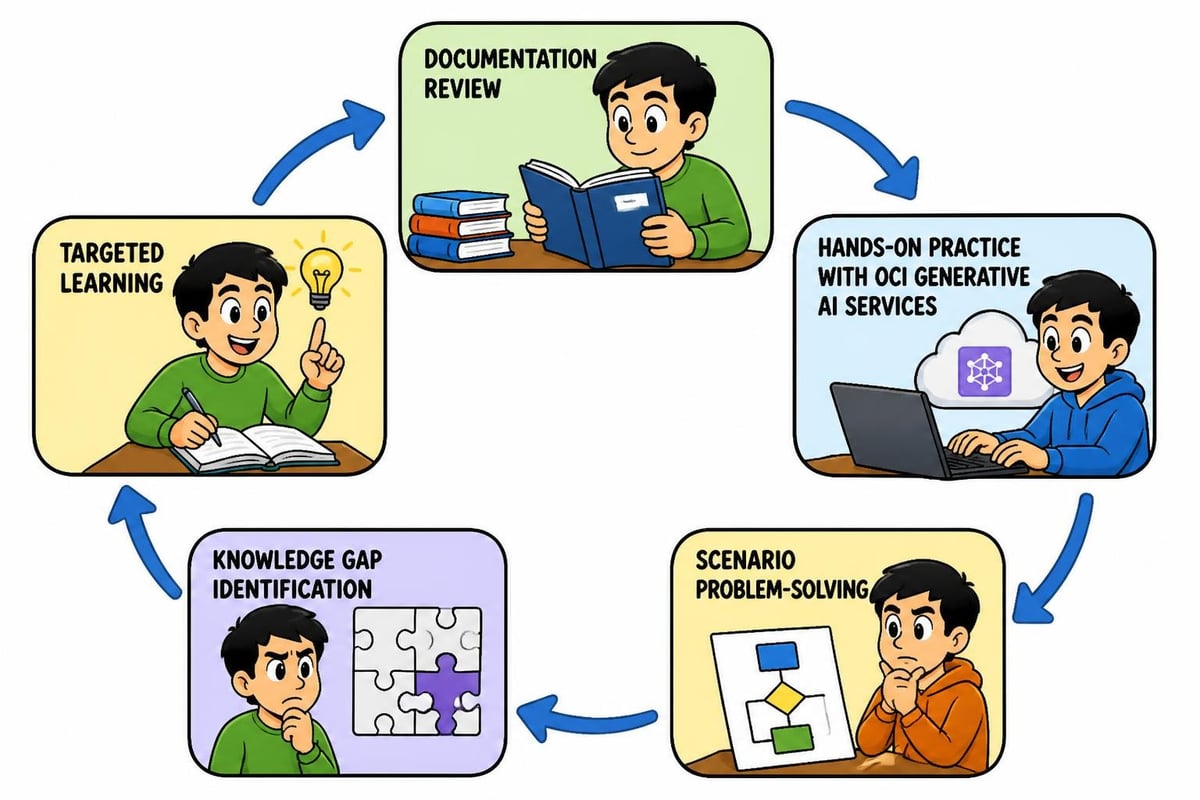
The most effective preparation combines official documentation study, hands-on lab practice, and scenario-based problem solving:
- Review OCI service documentation thoroughly
- Complete at least 20 hours of hands-on practice with OCI Generative AI services
- Study real-world implementation case studies
- Practice prompt engineering across different model types
- Understand cost optimization strategies for AI workloads
Preparing for the Oracle AI Certification Exam
Effective exam preparation requires more than passive reading. The oracle ai certification tests your ability to make architectural decisions, troubleshoot service configurations, and apply AI best practices in realistic scenarios.
Study Resources and Materials
Oracle provides official training courses through Oracle University, but supplementing these with broader AI education accelerates learning. Platforms like MammothClub offer comprehensive AI courses that build foundational understanding before you dive into Oracle-specific implementations.
Essential study materials include:
- Official Oracle University training courses
- OCI documentation and architecture guides
- Hands-on labs using free tier OCI services
- Community forums and discussion groups
- Practice exams and scenario walkthroughs
The exam format typically includes multiple-choice questions, scenario-based problems, and questions requiring you to identify correct implementation approaches. Budget approximately 60-80 hours of total preparation time if you're starting with solid cloud fundamentals, or 100-120 hours if you're building both cloud and AI knowledge simultaneously.
Hands-On Practice Strategies
Theory alone won't prepare you adequately. The certification exam expects practical knowledge of working with Oracle's AI services. Set up an OCI free tier account and complete these essential exercises:
- Deploy and configure a foundation model for text generation
- Implement a RAG solution using OCI services and vector search
- Fine-tune a model for a specific domain or use case
- Set up security policies for AI workloads including data access controls
- Monitor and optimize AI service costs and performance metrics
Exploring AI-related courses that cover prompt engineering, LLM applications, and cloud architecture provides valuable context that makes Oracle-specific concepts easier to grasp.
Implementation Best Practices and Governance
One area where oracle ai certification distinguishes itself is the emphasis on production-ready implementations rather than experimental projects. The exam tests your understanding of enterprise requirements including security, compliance, monitoring, and cost management.
AI Risk Management Framework Integration
Forward-thinking organizations align their AI initiatives with established governance frameworks. The NIST AI Risk Management Framework provides implementation guidance that maps well to Oracle's enterprise positioning. Understanding these frameworks helps you answer exam questions about AI governance, model validation, and risk mitigation.
Research on implementing AI maturity models based on NIST frameworks demonstrates how organizations operationalize AI governance. The oracle ai certification expects candidates to understand how cloud infrastructure choices support these governance requirements.
Key governance topics in the exam:
- Data privacy and access controls for AI training data
- Model versioning and lineage tracking
- Audit logging for AI service usage
- Compliance with industry-specific regulations
- Responsible AI principles and bias mitigation
Cost Optimization Techniques
Enterprise AI deployments can become expensive quickly. The certification tests your ability to optimize costs while maintaining performance and availability. Understanding pricing models, instance selection, and resource scheduling becomes critical.
| Cost Optimization Strategy | Potential Savings | Implementation Complexity |
|---|---|---|
| Model selection (smaller models for simple tasks) | 30-50% | Low |
| Batch processing instead of real-time | 20-40% | Medium |
| Auto-scaling policies | 15-35% | Medium |
| Reserved capacity for predictable workloads | 25-45% | Low |
| Cross-region data transfer optimization | 10-20% | High |
Certification Maintenance and Continuing Education
Oracle certifications require periodic recertification to ensure your knowledge remains current. The oracle ai certification typically requires renewal every 18-24 months, though specific timelines depend on the credential level and Oracle's policies for that year.
Staying Current with OCI AI Services
Cloud AI services evolve rapidly. Oracle CloudWorld 2024 announcements introduced several new capabilities that certification holders need to understand. Staying informed about service updates, new model availability, and feature releases ensures your skills remain relevant between certification cycles.
Effective continuing education strategies:
- Subscribe to OCI release notes and product update feeds
- Participate in Oracle user groups and community forums
- Attend Oracle CloudWorld and regional OCI events
- Complete additional certifications in adjacent areas (security, architecture)
- Build real projects using new features as they're released
The rapid evolution of AI technology means your certification represents a baseline that requires continuous expansion. Platforms offering AI specialization courses help you deepen expertise in specific domains like computer vision, NLP, or MLOps while maintaining your Oracle cloud competencies.
Comparing Oracle AI Certification with Alternatives
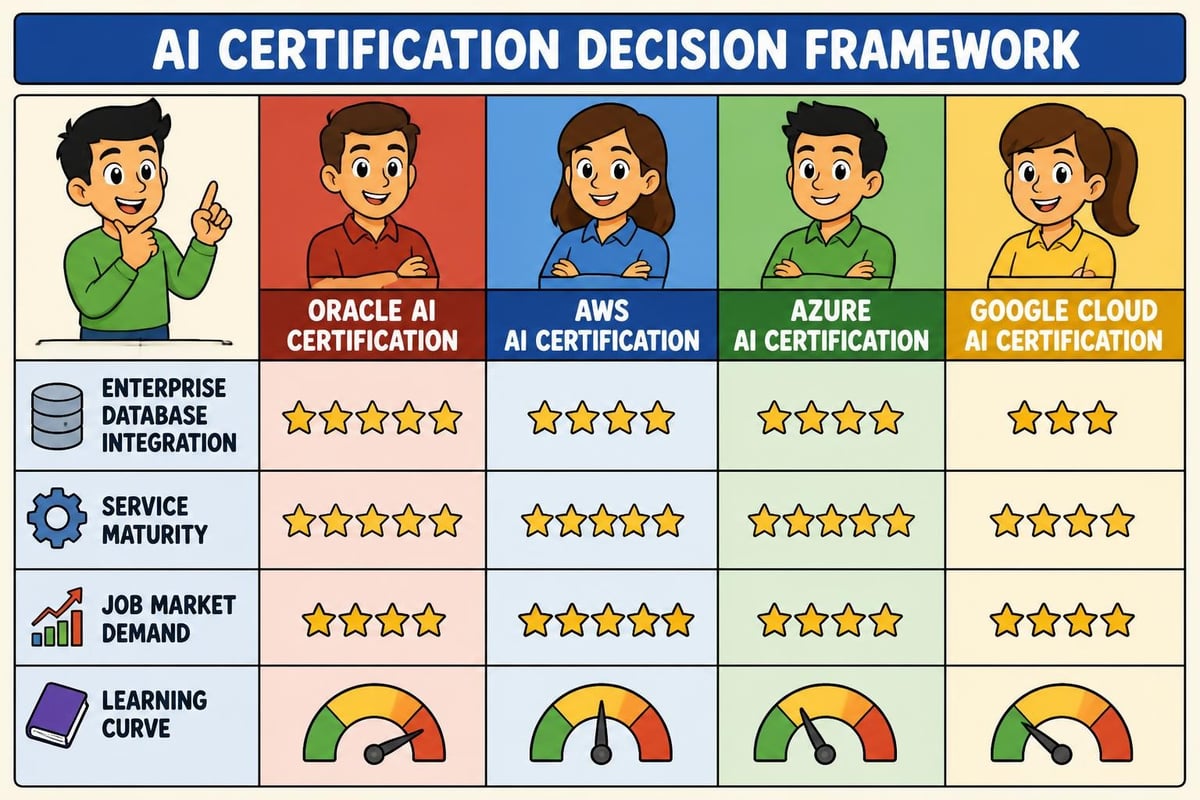
Professionals often evaluate multiple certification pathways before committing time and resources. Understanding how oracle ai certification compares to alternatives helps you make strategic decisions about your learning investment.
Cloud Provider AI Certifications
Each major cloud provider offers AI and machine learning certifications with different focuses:
- AWS emphasizes SageMaker and a broad ML service ecosystem
- Google Cloud focuses on TensorFlow, Vertex AI, and ML engineering
- Microsoft Azure integrates AI services with enterprise Microsoft products
- Oracle specializes in enterprise data + AI integration with strong database ties
Your choice should align with your organization's cloud strategy and the enterprise environments where you want to work. Many professionals pursue multiple certifications to increase flexibility, particularly when combining AI engineer certification credentials across platforms.
Vendor-Neutral AI Certifications
Beyond cloud-specific credentials, vendor-neutral certifications focus on AI principles, ethics, and frameworks applicable across platforms. These complement oracle ai certification by validating broader conceptual knowledge.
The advantage of Oracle's certification is the direct connection to hands-on service expertise. You're not just learning AI theory; you're proving you can deploy production workloads on a specific platform that enterprises actually use.
Real-World Application Scenarios
The oracle ai certification becomes most valuable when you can apply it to solve business problems. Understanding common use cases helps you prepare for scenario-based exam questions and demonstrates the certification's practical value to employers.
Enterprise Use Cases for OCI AI Services
Oracle's AI services are designed for specific enterprise scenarios where data governance, integration with existing systems, and regulatory compliance are critical:
- Financial services fraud detection using real-time transaction analysis
- Healthcare diagnosis assistance with privacy-compliant model deployment
- Supply chain optimization integrating AI with Oracle ERP systems
- Customer service automation using conversational AI and RAG implementations
- Legal document analysis with custom fine-tuned models for contract review
Each scenario requires understanding how to architect solutions that balance performance, cost, security, and integration requirements. The exam tests this multidimensional thinking rather than simple memorization of service features.
Integration with Oracle Database
One unique aspect of oracle ai certification is the emphasis on AI and database integration. Oracle positions its AI services to work seamlessly with Oracle Database, particularly Oracle Autonomous Database, creating opportunities for organizations with substantial Oracle infrastructure investments.
This integration enables scenarios like:
- Vector similarity search using database-native vector capabilities
- In-database machine learning for feature engineering and model scoring
- SQL-based model deployment accessible to database developers
- Unified security models across database and AI services
Professionals with both database and AI skills command premium compensation in the market, as they can bridge traditional data management with modern AI applications.
Building a Portfolio of Certified Skills
Single certifications provide foundation, but career advancement typically requires building a portfolio of complementary credentials and demonstrated expertise. The oracle ai certification works best as part of a broader professional development strategy.
Complementary Certifications
Consider combining your Oracle AI credential with certifications that address adjacent competency areas:
- OCI Architect Professional for infrastructure design expertise
- Oracle Database certifications for deeper data layer knowledge
- Security certifications (CISSP, CCSP) for AI security specialization
- Project management (PMP, Scrum) for AI initiative leadership
This combination makes you valuable for complex enterprise initiatives that require technical depth and implementation leadership. Those interested in comprehensive preparation might explore the best AI courses to build foundational knowledge before specializing in Oracle's ecosystem.
Demonstrating Practical Application
Certifications validate knowledge, but employers also want evidence of practical application. Build a portfolio that showcases your oracle ai certification skills:
- GitHub repositories with OCI AI service implementations
- Technical blog posts explaining solutions you've built
- Conference presentations or webinar participation
- Open source contributions related to Oracle cloud tools
- Case studies from real projects (with appropriate confidentiality protections)
This portfolio demonstrates you can move beyond exam questions to solve real problems, significantly increasing your market value beyond the certification itself.
Exam Registration and Logistics
Once you've completed your preparation, understanding the registration and exam process ensures a smooth testing experience. Oracle partners with Pearson VUE for certification exam delivery.
Registration Process
- Create or log into your Oracle certification account
- Select your desired exam (OCI Generative AI Professional, etc.)
- Choose between online proctoring or testing center delivery
- Schedule your preferred date and time
- Pay the exam fee (typically $245-$295 for professional-level certifications)
Online proctored exams offer convenience but require a quiet space with stable internet, a webcam, and compliance with proctoring requirements. Testing center exams provide a controlled environment but require travel to an approved location.
Exam Day Best Practices
- Arrive 15 minutes early (testing center) or complete check-in process on time (online)
- Bring required identification (government-issued photo ID)
- Review the exam format and question types beforehand
- Use the tutorial time to familiarize yourself with the interface
- Flag difficult questions for review rather than spending excessive time initially
- Manage your time to allow for a final review of all questions
The exam typically allows 90-120 minutes depending on the specific certification level. You receive preliminary pass/fail results immediately upon completion, with official certification issued within a few business days.
Return on Investment Analysis
Investing in oracle ai certification requires time, money, and effort. Understanding the expected return helps you make informed decisions about prioritizing this credential in your professional development plan.
Direct Financial Benefits
Certified professionals typically command salary premiums in the job market. While exact figures vary by region, role, and experience level, Oracle-certified AI professionals generally see:
- Entry-level roles: $75,000-$95,000 (with certification boost of 8-12%)
- Mid-career professionals: $110,000-$145,000 (with certification boost of 10-15%)
- Senior/architect roles: $150,000-$200,000+ (with certification boost of 12-18%)
These figures reflect U.S. market data for 2026 and should be adjusted for your specific location and industry vertical. The certification matters most when combined with hands-on project experience and complementary skills.
Indirect Career Benefits
Beyond immediate salary impact, the oracle ai certification provides less tangible but equally valuable benefits:
- Enhanced professional credibility with clients and stakeholders
- Increased visibility for promotions and high-profile project assignments
- Networking opportunities through Oracle certification communities
- Foundation for thought leadership and speaking opportunities
- Personal confidence in your technical capabilities
Many professionals report that the certification's greatest value came from unexpected opportunities it created rather than the direct salary increase.
Oracle AI certification represents a strategic credential for professionals navigating the intersection of enterprise cloud infrastructure and artificial intelligence applications. The practical focus on OCI Generative AI services, combined with Oracle's strong enterprise positioning, creates clear career pathways for certified individuals. Whether you're advancing your existing Oracle skills or entering the AI field with cloud expertise, the certification provides structured validation of in-demand competencies. MammothClub offers over 3,000 AI and technology courses, interactive bootcamps, and corporate certification programs that help you build the foundational knowledge and specialized skills needed to excel in your oracle ai certification journey and beyond. Our AI-powered learning platform makes upskilling measurable, engaging, and directly aligned with the competencies today's employers demand.