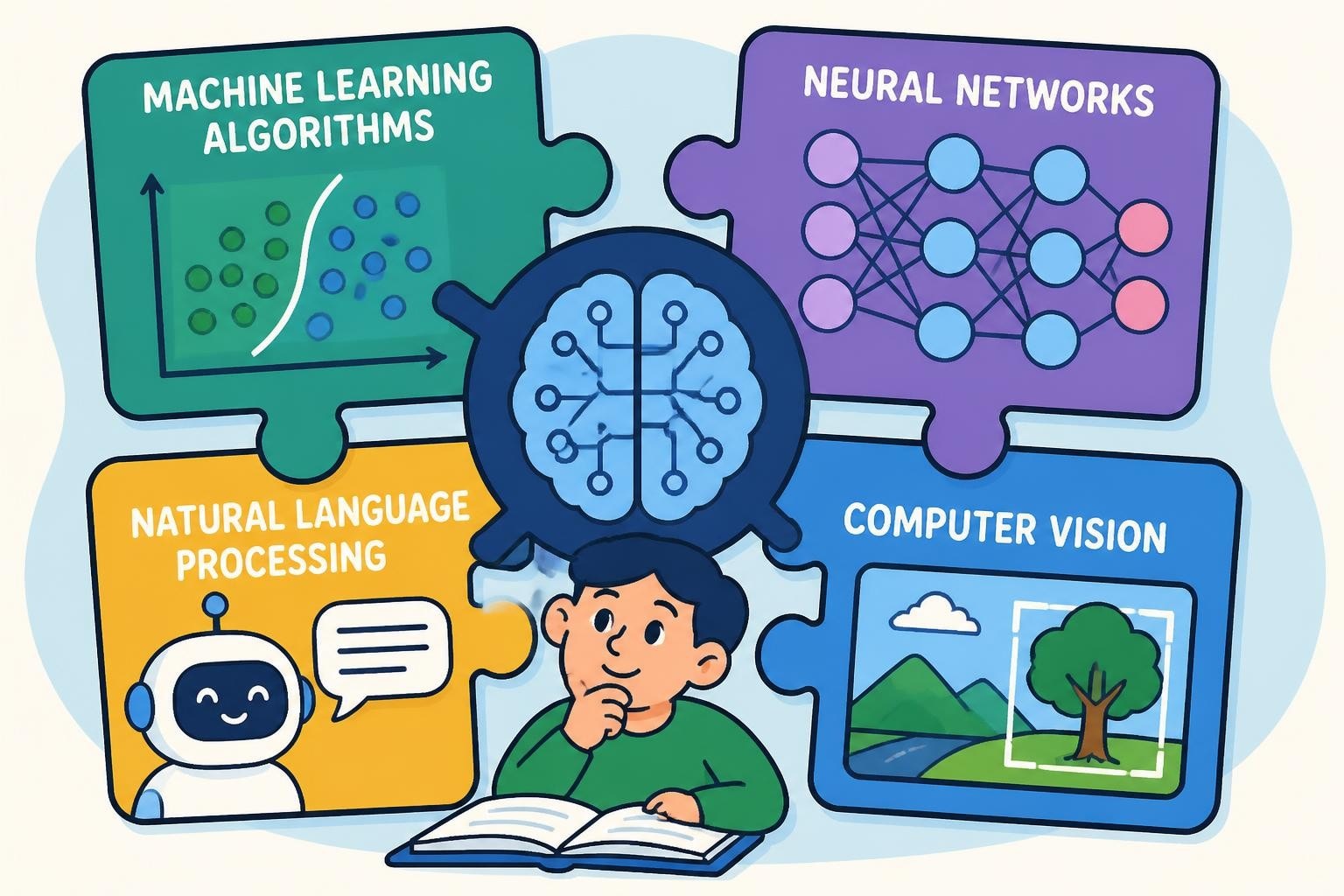
The rapid adoption of artificial intelligence across industries has created unprecedented demand for skilled AI engineers who can design, build, and deploy production-ready machine learning systems. An ai engineer course in 2026 must go far beyond introductory machine learning tutorials, equipping learners with the comprehensive technical stack, operational expertise, and ethical frameworks required to succeed in this evolving field. Whether you're an aspiring professional or an organization designing corporate training programs, understanding what makes an effective AI engineering curriculum is essential for staying competitive in the AI era.
Core Competencies Every AI Engineer Course Must Cover
A robust ai engineer course should address five fundamental competency areas that distinguish production AI engineering from academic machine learning. These domains form the backbone of professional practice and align with industry expectations outlined by major cloud providers and professional organizations.
Programming Foundations and Software Engineering
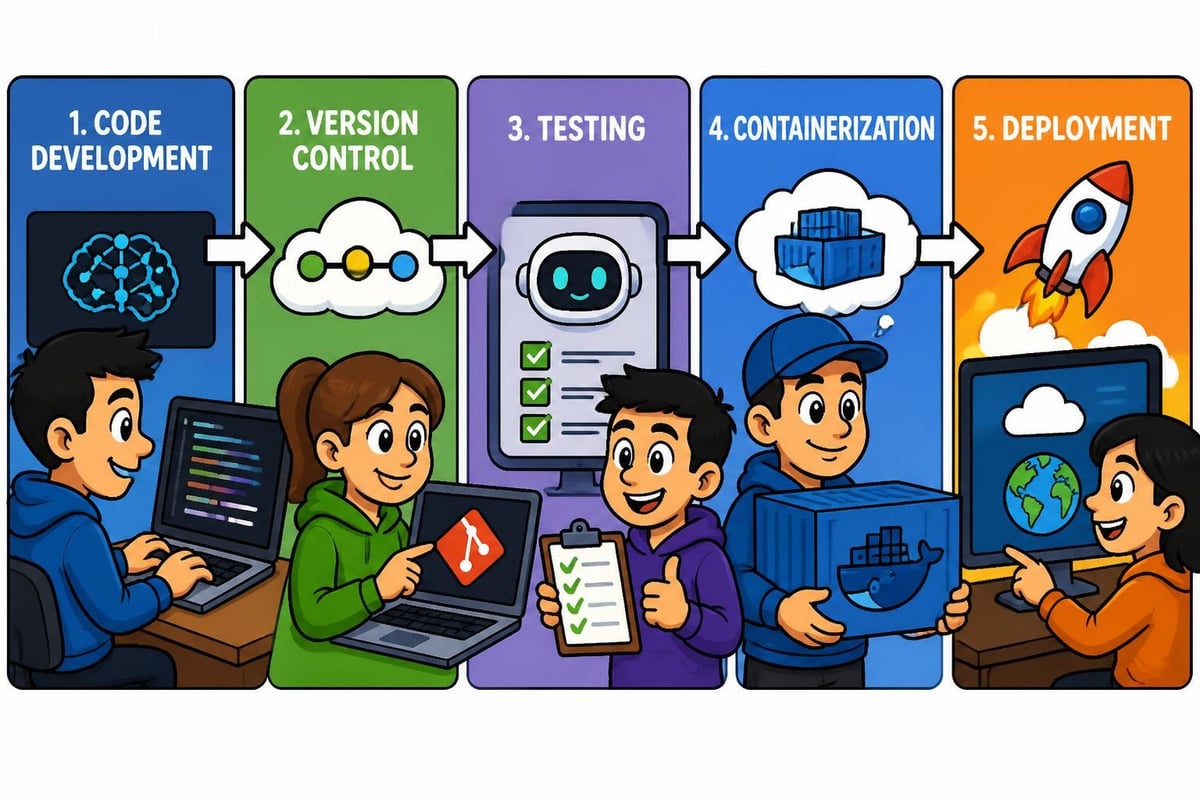
AI engineers need strong software engineering fundamentals before diving into machine learning frameworks. This includes proficiency in Python with emphasis on object-oriented programming, data structures, and algorithms. Course modules should cover version control with Git, collaborative development workflows, and code quality practices including testing and documentation.
Essential programming topics include:
- Advanced Python programming (decorators, generators, context managers)
- Data manipulation with NumPy, Pandas, and data visualization libraries
- Software design patterns and clean code principles
- Unit testing, integration testing, and test-driven development
- API design and RESTful service development
The CS2023 curriculum framework provides excellent guidance on integrating these foundational topics with AI-specific content, ensuring learners develop both computer science fundamentals and specialized AI skills.
Mathematics and Statistical Foundations
Mathematical literacy separates engineers who can implement existing models from those who can innovate, debug complex issues, and optimize systems. An effective ai engineer course dedicates substantial time to the mathematical underpinnings of machine learning algorithms.
| Mathematical Domain | Key Topics | Application in AI |
|---|---|---|
| Linear Algebra | Matrix operations, eigenvalues, vector spaces | Neural network operations, dimensionality reduction |
| Calculus | Derivatives, gradients, optimization | Backpropagation, loss function minimization |
| Probability & Statistics | Distributions, hypothesis testing, Bayesian inference | Model evaluation, uncertainty quantification |
| Information Theory | Entropy, KL divergence | Model compression, generative models |
Courses should emphasize computational implementation of these concepts rather than pure theoretical treatment. Learners gain more by implementing gradient descent from scratch than by memorizing derivations.
Machine Learning Engineering and Model Development
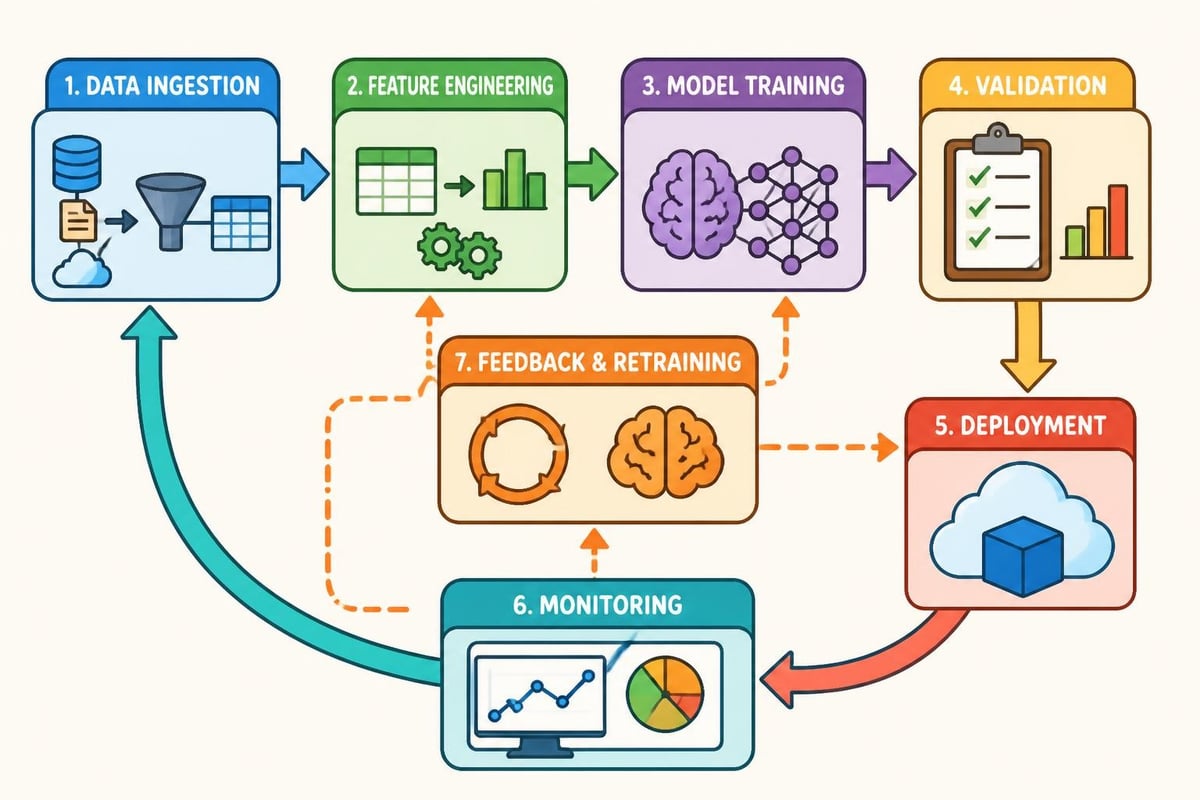
The heart of any ai engineer course lies in comprehensive coverage of machine learning theory and practice. This extends beyond model training to encompass the entire ML lifecycle including data preparation, feature engineering, model selection, hyperparameter tuning, and performance evaluation.
Modern curricula must balance classical machine learning with deep learning approaches. Traditional algorithms like decision trees, random forests, and support vector machines remain highly relevant for many production applications, while neural networks excel at unstructured data tasks.
Core ML engineering topics:
- Supervised learning (regression, classification, ensemble methods)
- Unsupervised learning (clustering, dimensionality reduction, anomaly detection)
- Deep learning architectures (CNNs, RNNs, Transformers, attention mechanisms)
- Reinforcement learning fundamentals
- Transfer learning and foundation model fine-tuning
- Model interpretability and explainability techniques
The Professional Machine Learning Engineer role description from Google Cloud offers valuable insight into industry expectations, including emerging competencies around generative AI and large language models that should be integrated into 2026 curricula.
MLOps and Production Deployment Skills
The gap between training a notebook model and deploying a production system represents one of the biggest challenges for new AI engineers. An ai engineer course must dedicate significant curriculum time to MLOps practices, infrastructure, and operational concerns.
Production ML System Architecture
Professional AI engineers design systems that are scalable, maintainable, and reliable. This requires understanding distributed computing, data pipelines, model serving infrastructure, and monitoring systems. Courses should expose learners to real-world architectural patterns and trade-offs.
The Google Cloud MLOps whitepaper provides an excellent framework for teaching production ML workflows, covering everything from data validation to continuous training pipelines. Learners should gain hands-on experience with tools like Kubernetes, Docker, and cloud ML platforms.
Key MLOps capabilities include:
- Data versioning and pipeline orchestration
- Experiment tracking and model registry management
- Model packaging and containerization
- A/B testing and canary deployments
- Performance monitoring and model drift detection
- Automated retraining and CI/CD for ML
Practical labs should incorporate the Microsoft ML model production checklist, which provides operational readiness criteria covering testing, monitoring, and deployment best practices.
Infrastructure and Scalability Considerations
Understanding computational resources and infrastructure limitations is critical for production AI work. An ai engineer course should cover GPU programming fundamentals, distributed training techniques, and optimization strategies for inference at scale.
Training modules should address hardware acceleration options, including when to use GPUs versus TPUs, and cost optimization strategies for cloud-based ML workloads. For professionals interested in diving deeper into computational infrastructure, exploring resources on GPU requirements for AI training provides valuable context on hardware selection and optimization.
Ethics, Governance, and Regulatory Compliance
As AI systems increasingly impact critical decisions affecting people's lives, AI engineers must understand ethical implications, bias mitigation, and regulatory requirements. A comprehensive ai engineer course in 2026 cannot ignore these crucial topics.
AI Ethics and Responsible Development
Professional AI engineers need frameworks for identifying potential harms, assessing fairness, and implementing responsible AI practices. Course content should cover bias detection and mitigation techniques, fairness metrics, privacy-preserving machine learning, and transparency mechanisms.
The IEEE Standards guidance on AI ethics provides authoritative frameworks for incorporating ethical considerations throughout the development lifecycle. Learners should practice conducting AI impact assessments and developing mitigation strategies for identified risks.
| Ethical Concern | Assessment Approach | Mitigation Strategies |
|---|---|---|
| Algorithmic Bias | Fairness metrics across demographic groups | Resampling, reweighting, adversarial debiasing |
| Privacy Risks | Data minimization analysis, re-identification testing | Differential privacy, federated learning, encryption |
| Lack of Transparency | Model interpretability assessment | SHAP values, LIME, attention visualization |
| Environmental Impact | Carbon footprint calculation | Model compression, efficient architectures |
Risk Management and Regulatory Frameworks
AI engineers must understand how to assess and manage AI risks systematically. The NIST AI Risk Management Framework provides a comprehensive approach to identifying, measuring, and mitigating AI system risks related to trustworthiness, safety, and governance.
Course modules should also cover emerging regulatory requirements, particularly the EU Artificial Intelligence Act, which establishes risk-based obligations for AI systems. Understanding compliance requirements is becoming essential for AI engineers working on products deployed in regulated markets.
For organizations developing corporate AI training programs, integrating governance and compliance topics is critical. Resources on AI management courses can help design curricula that bridge technical and leadership perspectives on responsible AI deployment.
Hands-On Projects and Capstone Development
Theory and isolated exercises provide necessary foundations, but AI engineering competency emerges through substantial project work. An effective ai engineer course should dedicate 30-40% of learning time to hands-on projects that simulate real-world challenges and constraints.
Project-Based Learning Approaches
Well-designed projects force learners to navigate the messy realities of AI development: incomplete data, conflicting requirements, computational constraints, and iterative refinement. Projects should increase in complexity throughout the course, building toward a comprehensive capstone that demonstrates end-to-end system development.
Effective project scaffolding includes:
- Guided mini-projects focusing on specific skills (data preprocessing, model selection, deployment)
- Domain-specific applications across diverse industries (healthcare, finance, retail, manufacturing)
- Team-based challenges developing collaboration and communication skills
- Open-ended capstones requiring problem definition, solution design, and implementation
The MIT Deep Learning course project ideas offer excellent inspiration for pedagogically appropriate challenges that balance complexity with feasibility for learners at different skill levels.
Capstone Project Requirements
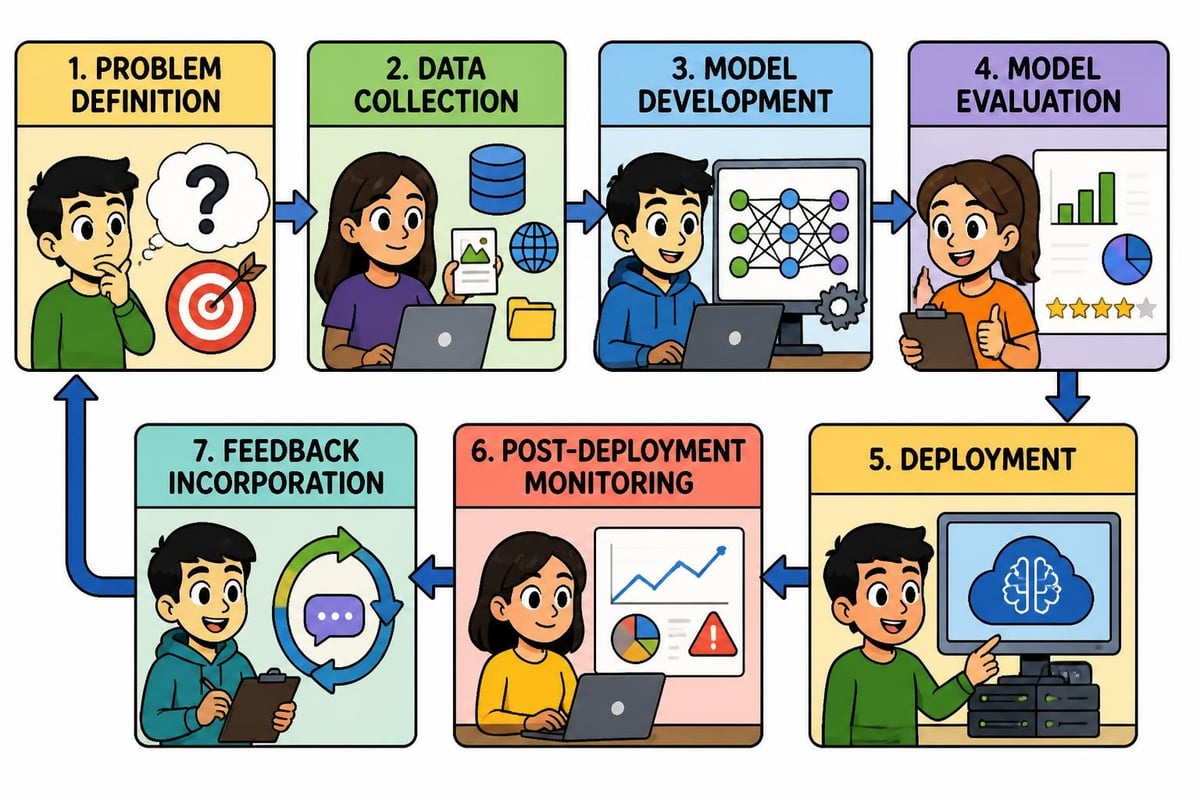
A capstone project in an ai engineer course should demonstrate mastery across multiple competency areas. This typically involves identifying a real problem, acquiring and preparing data, developing and evaluating models, deploying a functional system, and documenting the process comprehensively.
Successful capstones often include:
- Problem statement and success criteria definition
- Data collection, cleaning, and exploratory analysis
- Feature engineering and model architecture design
- Hyperparameter optimization and model selection
- Production deployment with monitoring
- Documentation including ethical considerations and limitations
Projects should be evaluated not just on model performance, but on code quality, system design, documentation clarity, and thoughtful discussion of limitations and potential improvements. This holistic assessment reflects real-world professional expectations.
Certification Pathways and Career Progression
Completing an ai engineer course represents the beginning of a career journey rather than its conclusion. Understanding certification options and continuing education pathways helps learners plan their professional development strategically.
Industry-Recognized Certifications
Professional certifications validate skills and signal competency to employers. Several vendor-neutral and platform-specific certifications align well with AI engineering roles. The landscape in 2026 includes established programs from cloud providers, professional organizations, and specialized AI companies.
Major certification pathways include:
- Cloud platform certifications (AWS ML Specialty, Google Professional ML Engineer, Azure AI Engineer)
- Framework-specific credentials (TensorFlow Developer Certificate, PyTorch Certification)
- MLOps and production-focused certifications (DataRobot, MLflow)
- Ethics and governance certifications (IEEE CertifAIEd program)
For professionals interested in Microsoft's ecosystem, exploring Azure AI certification options provides insight into specific competencies and preparation strategies. Similarly, those pursuing AI engineer certification paths can find comprehensive guidance on multiple credential options.
Continuous Learning and Specialization
AI engineering is a rapidly evolving field requiring continuous upskilling. After completing a foundational ai engineer course, professionals typically specialize in specific domains or technologies based on career interests and market opportunities.
Common specialization paths include:
- Computer vision and image processing
- Natural language processing and large language models
- Recommendation systems and personalization
- Time series forecasting and predictive analytics
- Reinforcement learning and robotics
- AI security and adversarial robustness
The multivocal review of MLOps practices highlights current research gaps and emerging challenges, providing direction for advanced study and specialization. Staying current requires engaging with academic research, industry blogs, conferences, and professional communities.
Choosing the Right AI Engineer Course Format
The optimal learning format depends on individual circumstances, learning preferences, and career stage. Understanding the strengths and limitations of different delivery models helps learners make informed decisions about their educational investments.
Self-Paced Online Learning
Self-paced courses offer maximum flexibility, allowing learners to progress according to their schedules and prior knowledge. This format works well for motivated individuals with strong self-discipline and time management skills. Quality platforms provide interactive coding environments, automated assessment, and peer discussion forums.
Advantages of self-paced learning:
- Flexibility to learn around work and personal commitments
- Ability to spend more time on challenging topics
- Cost-effective compared to instructor-led programs
- Access to global course libraries and diverse perspectives
Platforms like MammothClub offer extensive catalogs of on-demand AI courses covering everything from fundamentals to specialized topics. Learners can construct personalized AI/ML learning paths tailored to specific career goals and skill gaps.
Live Instructor-Led Bootcamps
Intensive bootcamps provide structured learning with expert instructors, real-time feedback, and cohort-based collaboration. These programs typically run 8-16 weeks full-time or 3-6 months part-time, creating immersive learning experiences that accelerate skill development.
| Format Feature | Self-Paced | Instructor-Led Bootcamp | University Degree |
|---|---|---|---|
| Duration | Flexible (3-12 months) | 8-16 weeks intensive | 1-2 years |
| Cost | $500-$2,000 | $8,000-$18,000 | $30,000-$80,000 |
| Flexibility | High | Medium | Low |
| Networking | Limited | Strong cohort connections | Academic/alumni network |
| Career Support | Variable | Often included | Career services |
Bootcamps excel at providing structured accountability, immediate clarification of concepts, and professional networking opportunities. However, they require significant time commitment and higher upfront investment.
Corporate Training Programs
Organizations implementing AI initiatives often develop custom training programs aligned with specific business objectives and technology stacks. Corporate ai engineer course offerings typically combine standardized curriculum with company-specific use cases, tools, and datasets.
Effective corporate programs include:
- Customized content reflecting organizational priorities
- Hands-on projects using internal data and systems
- Mentorship from senior engineers within the organization
- Clear pathways connecting training to role progression
- Measurement frameworks tracking skill acquisition and business impact
Companies can leverage platforms offering corporate certification programs with AI-powered learning tools and dashboards to track progress, identify knowledge gaps, and measure ROI on training investments.
Curriculum Design Considerations for 2026
Designing an effective ai engineer course requires balancing foundational knowledge with cutting-edge techniques, theoretical understanding with practical application, and breadth of coverage with depth in critical areas.
Integrating Emerging Technologies
The AI landscape evolves rapidly, with new architectures, frameworks, and techniques emerging constantly. A 2026 curriculum must address recent developments while avoiding the trap of chasing every trend at the expense of enduring fundamentals.
Critical emerging topics include:
- Generative AI and foundation models (prompt engineering, fine-tuning, retrieval-augmented generation)
- Multimodal learning (vision-language models, cross-modal transfer)
- Efficient AI (model compression, quantization, knowledge distillation)
- AI agents and reasoning systems (tool use, planning, chain-of-thought)
- Federated and privacy-preserving ML (differential privacy, secure computation)
The CS2023 AI integration guidance provides valuable pedagogical frameworks for incorporating these advanced topics without overwhelming learners or sacrificing fundamental knowledge.
Balancing Theory and Practice
Effective AI engineers need both conceptual understanding and practical implementation skills. Curricula should integrate theory and practice throughout rather than treating them as separate phases. Each theoretical concept should be reinforced through coding exercises, and each practical technique should be grounded in underlying principles.
Effective integration strategies include:
- Implementing algorithms from scratch before using libraries
- Deriving mathematical foundations alongside coding implementations
- Debugging exercises that require theoretical understanding
- Architecture design challenges requiring trade-off analysis
- Performance optimization requiring both algorithmic and systems knowledge
This balanced approach produces engineers who can both implement existing solutions effectively and innovate when encountering novel problems.
Assessment and Learning Verification
Robust assessment throughout an ai engineer course ensures learners master essential concepts and can apply them effectively. Multi-modal evaluation approaches provide more accurate measurement than single assessment types.
Formative and Summative Assessment
Effective courses combine frequent formative assessments (quizzes, coding exercises, peer reviews) with comprehensive summative evaluations (projects, exams, capstones). Formative assessments provide ongoing feedback guiding learning, while summative assessments verify competency achievement.
Assessment should evaluate multiple dimensions:
- Knowledge recall (definitions, algorithms, best practices)
- Conceptual understanding (explaining trade-offs, diagnosing issues)
- Implementation ability (coding proficiency, debugging skills)
- System design (architecture decisions, scalability planning)
- Professional judgment (ethical considerations, business alignment)
Automated code evaluation, peer review processes, and expert feedback each play important roles in comprehensive assessment systems.
Portfolio Development
Building a portfolio of projects throughout an ai engineer course serves dual purposes: reinforcing learning through application and creating tangible evidence of competency for employers. Portfolios should showcase diverse skills including data analysis, model development, production deployment, and documentation.
Strong portfolios typically include:
- Exploratory data analysis demonstrating statistical reasoning and visualization skills
- Model development projects showing ML algorithm application and evaluation
- Production deployments with code repositories, documentation, and live demos
- Technical writing explaining approaches, results, and lessons learned
- Open-source contributions showing collaboration and community engagement
These artifacts provide concrete evidence of capability that supplements certifications and course completion credentials.
Building Real-World AI Engineering Skills
Academic knowledge and hands-on projects provide essential foundations, but true professional competency develops through exposure to real-world complexity, constraints, and collaboration patterns.
Working with Messy Data and Incomplete Requirements
Production AI projects rarely begin with clean datasets and clearly defined objectives. An effective ai engineer course should simulate realistic conditions including missing data, label noise, shifting requirements, and ambiguous success criteria.
Exercises should require learners to:
- Conduct stakeholder interviews to clarify requirements
- Clean and validate data from multiple inconsistent sources
- Handle class imbalance and missing values appropriately
- Iterate on model design as business needs evolve
- Make defensible decisions under uncertainty
These skills distinguish engineers who can deliver value in real organizations from those who excel only in controlled academic environments.
Collaborative Development and Communication
AI engineering is fundamentally a team activity requiring effective collaboration with data engineers, software developers, product managers, domain experts, and business stakeholders. Courses should develop both technical collaboration skills (code review, documentation, version control) and cross-functional communication abilities (explaining technical concepts to non-technical audiences, translating business requirements into technical specifications).
Group projects, peer code reviews, and presentation requirements build these essential professional capabilities that often receive insufficient attention in purely technical curricula.
Choosing the right ai engineer course in 2026 requires evaluating curriculum comprehensiveness, hands-on project quality, instructor expertise, certification pathways, and alignment with career goals. The most effective programs balance foundational knowledge with emerging techniques, theoretical understanding with practical implementation, and individual skill development with collaborative project work. Whether you're an individual professional seeking to enter AI engineering or an organization building technical capabilities across your team, MammothClub offers the comprehensive learning platform, expert-designed curriculum, and AI-powered tools to accelerate your journey from fundamentals to production-ready expertise.