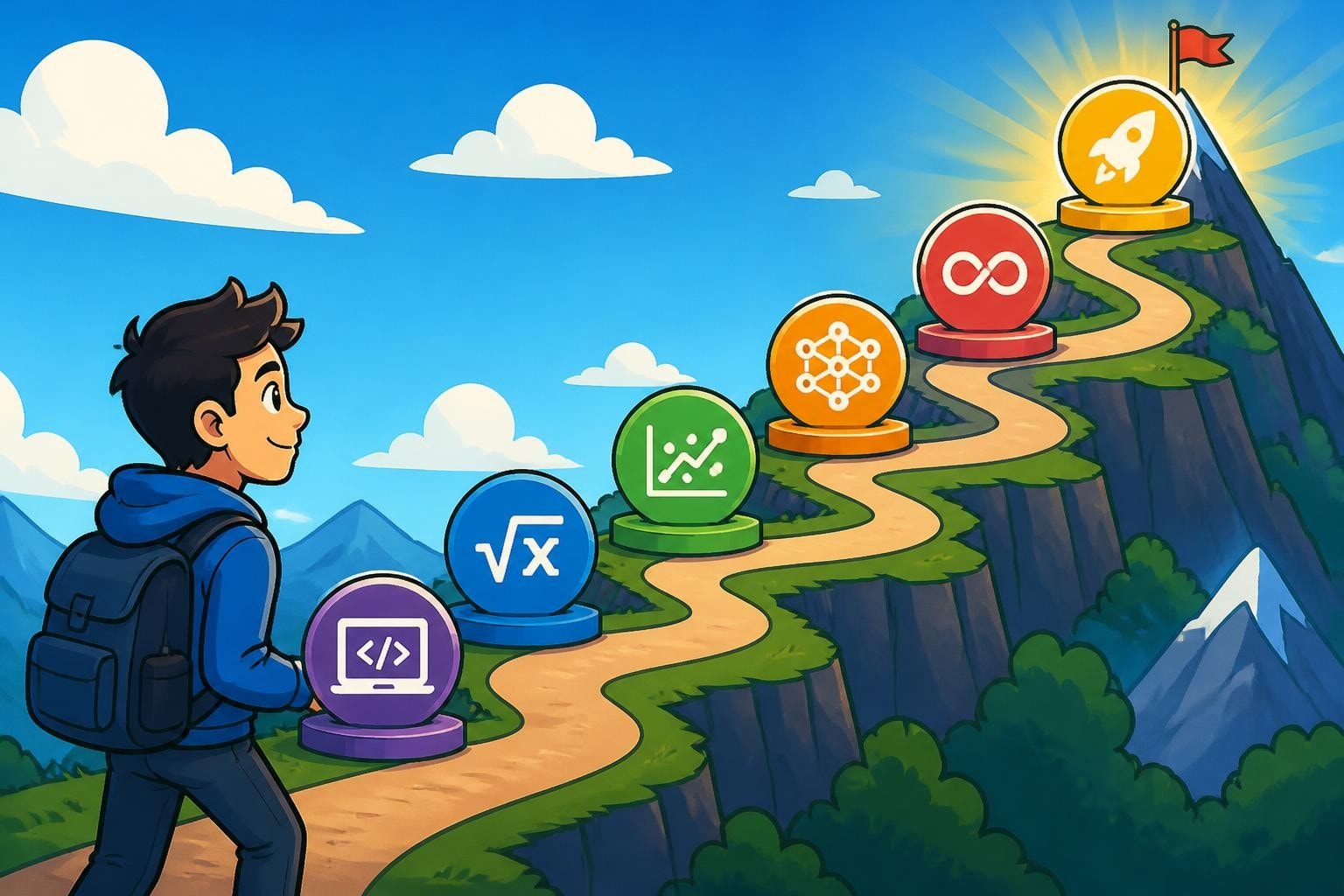
The artificial intelligence course udemy marketplace has exploded in recent years, offering thousands of options for professionals seeking AI skills. With over 10,000 AI-related courses on Udemy alone as of 2026, choosing the right program has become both easier and more challenging. While the platform democratized access to AI education, not all courses deliver the depth, currency, or credibility that modern professionals need. Understanding what separates effective AI training from superficial overviews is essential for anyone investing time and resources into upskilling.
Understanding the Artificial Intelligence Course Udemy Landscape
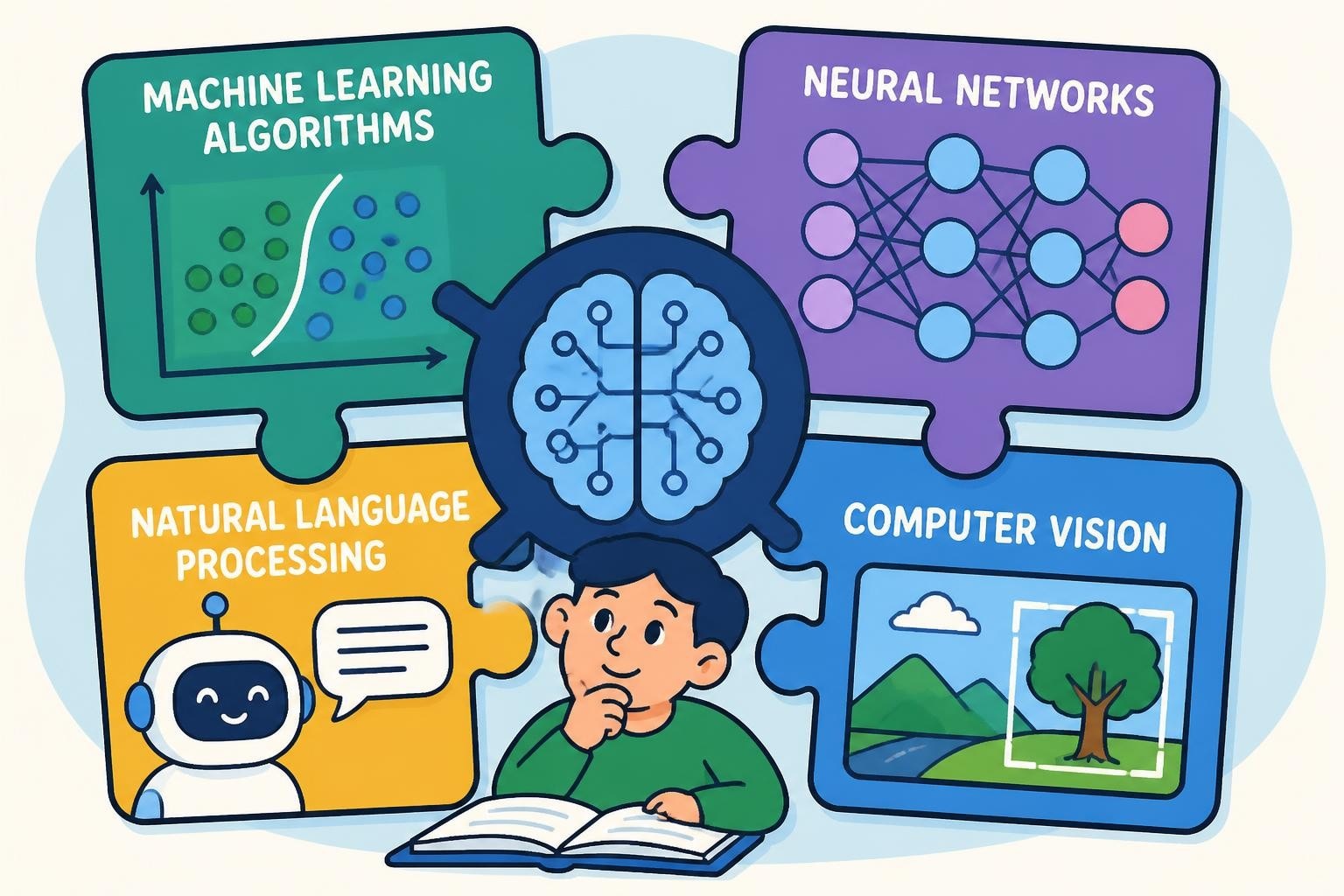
The typical artificial intelligence course udemy offering ranges from introductory overviews to specialized deep dives into machine learning algorithms, neural networks, and generative AI applications. Most courses follow a self-paced, video-based format with downloadable resources and quizzes. Instructors vary widely in background, from working practitioners to academic researchers to self-taught enthusiasts.
What Defines Quality in AI Education
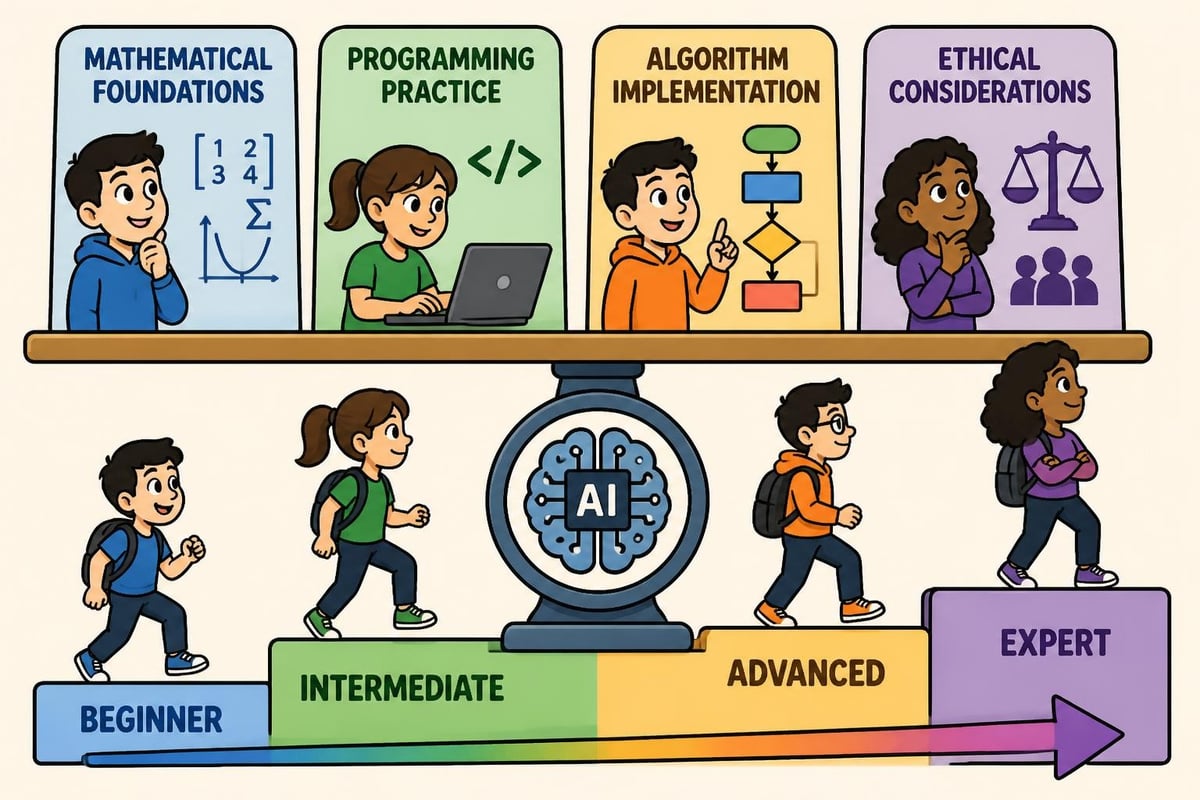
Quality AI courses demonstrate several key characteristics that align with both industry standards for computer science curricula and practical workforce needs. The curriculum should cover foundational mathematics, programming proficiency in Python or R, hands-on implementation of algorithms, and real-world project work.
Essential components of effective AI training include:
- Mathematical foundations (linear algebra, calculus, probability, statistics)
- Programming skills with relevant libraries (NumPy, Pandas, TensorFlow, PyTorch)
- Supervised and unsupervised learning techniques
- Neural networks and deep learning architectures
- Model evaluation and deployment strategies
- Ethical considerations and bias mitigation
Many Udemy courses excel at introductory content but struggle with advanced topics requiring substantial computing resources or extended mentorship. The Stanford AI Index Report 2024 highlights that online course completion rates average just 15%, with quality of instruction and hands-on practice being primary factors in student persistence.
Price vs. Value Analysis
Udemy courses typically range from $10-$200, with frequent promotional pricing bringing most courses under $20. This accessibility is unmatched in the education market. However, price alone doesn't indicate value. A $15 course with outdated content on 2022-era tools delivers less value than current, comprehensive programs that reflect 2026 AI capabilities.
| Pricing Tier | Typical Content | Best For | Limitations |
|---|---|---|---|
| $10-$30 | Introductory overviews, single-topic courses | Complete beginners, topic sampling | Often shallow, limited support |
| $50-$100 | Multi-topic bundles, intermediate depth | Self-directed learners with programming background | Variable instructor quality |
| $150-$200 | Comprehensive programs with projects | Career switchers seeking portfolio pieces | No certification value, minimal accountability |
Compare this to dedicated platforms like MammothClub, which offer structured learning paths with AI-powered dashboards that track progress and adapt to individual learning patterns. The value equation shifts from simple content access to measurable skill development.
Curriculum Gaps in Popular Artificial Intelligence Course Udemy Options
After analyzing dozens of top-rated artificial intelligence course udemy programs in 2026, several consistent gaps emerge. These deficiencies matter because they prevent learners from achieving true AI competency rather than superficial familiarity.
The Generative AI Recency Challenge
Most courses created before mid-2023 lack adequate coverage of large language models, diffusion models, and the transformer architecture that powers modern AI applications. While instructors occasionally add supplemental lectures, retrofitted content rarely integrates coherently with original curriculum design.
The UNESCO guidance on generative AI in education emphasizes that AI literacy now requires understanding both the capabilities and limitations of generative systems. Few marketplace courses adequately address prompt engineering, model fine-tuning, or responsible AI deployment at the depth required for professional application.
Critical generative AI topics often missing:
- Transformer architecture and attention mechanisms
- Retrieval-augmented generation (RAG) implementations
- Model context protocol and API integration
- Hallucination mitigation strategies
- Cost optimization for production deployments
- Fine-tuning techniques for domain-specific applications
Platforms addressing this gap include specialized programs like the Complete Claude Certification Bundle that focus exclusively on current LLM capabilities and production implementation.
Hands-On Computing Resource Limitations
Effective AI learning requires substantial computational resources. Training even modest neural networks demands GPUs, substantial RAM, and appropriate development environments. Most artificial intelligence course udemy programs rely on cloud notebooks with session limits and restricted compute quotas.
This creates a fundamental disconnect: students learn concepts but cannot practice implementation at realistic scales. A course teaching computer vision might demonstrate object detection on toy datasets but never address the engineering challenges of processing thousands of images or optimizing inference latency.
Understanding GPU requirements for AI training becomes essential knowledge that most introductory courses gloss over. Students discover hardware limitations only when attempting to apply course knowledge to real problems.

Evaluating Specific Course Categories
Not all artificial intelligence course udemy options target the same learner or outcome. Breaking down common categories reveals which formats deliver the most value for specific goals.
Machine Learning Fundamentals Courses
These programs typically cover supervised learning (regression, classification), unsupervised learning (clustering, dimensionality reduction), and basic model evaluation. The best courses include substantial Python programming practice and mathematical explanations that build intuition.
Strengths of well-designed ML fundamentals courses:
- Clear progression from simple to complex algorithms
- Jupyter notebook exercises with immediate feedback
- Real datasets from domains like healthcare, finance, retail
- Emphasis on practical validation and overfitting prevention
Common weaknesses:
- Insufficient coverage of feature engineering techniques
- Limited discussion of data cleaning and preprocessing
- Shallow treatment of model selection and hyperparameter tuning
- Minimal exposure to ML workflow tools and version control
Comprehensive AI and ML learning paths address these gaps by sequencing courses intentionally and providing cumulative projects that reinforce earlier concepts.
Deep Learning Specializations
Advanced courses focusing on neural networks, convolutional architectures for computer vision, and recurrent networks for sequence modeling require stronger prerequisites. The artificial intelligence course udemy marketplace includes several high-quality deep learning programs, though they vary significantly in mathematical rigor.
| Course Focus | Typical Duration | Prerequisites | Career Relevance (2026) |
|---|---|---|---|
| Neural Network Fundamentals | 8-15 hours | Python, basic calculus | Moderate (foundational only) |
| Computer Vision with CNNs | 15-25 hours | Linear algebra, Python libraries | High (imaging applications growing) |
| NLP and Transformers | 20-40 hours | Strong Python, attention mechanisms | Very high (LLM integration everywhere) |
| Reinforcement Learning | 25-50 hours | Probability, dynamic programming | Moderate (specialized applications) |
The comparative analysis of AI curricula worldwide shows that university programs dedicate 40-60% more time to deep learning fundamentals than typical marketplace courses, suggesting self-directed learners should supplement with additional resources.
Applied AI for Business and Management
A growing category addresses AI literacy for non-technical professionals. These courses focus on strategic implications, vendor evaluation, team management, and ROI assessment rather than implementation details.
Quality varies dramatically. Some programs offer genuine insights into organizational AI adoption challenges, while others present generic business platitudes with AI buzzwords. For managers seeking practical frameworks, exploring dedicated AI management courses designed for leadership contexts often delivers better outcomes than marketplace options.
Certification and Credential Value
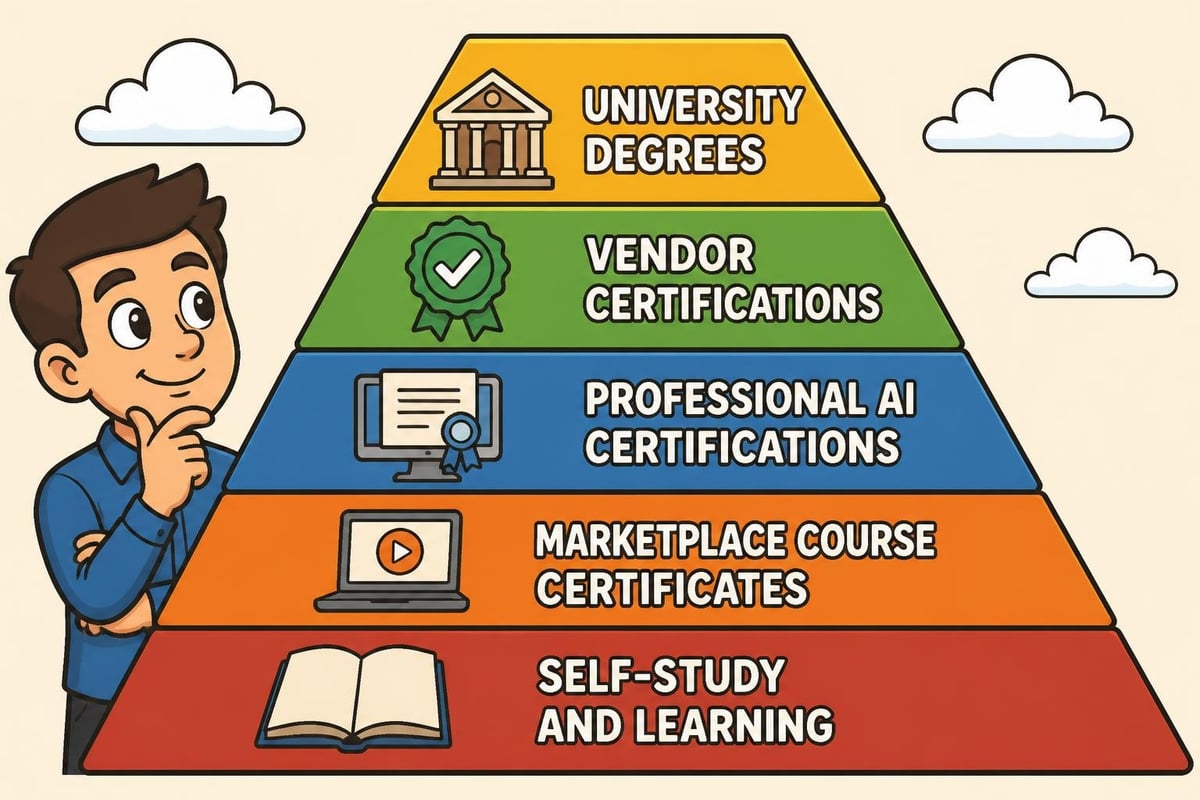
Most artificial intelligence course udemy programs offer completion certificates. However, their professional value remains limited compared to industry-recognized credentials. Employers typically view Udemy certificates as evidence of personal initiative rather than validated competency.
The Certification Hierarchy in AI
Understanding which credentials carry weight helps learners allocate study time effectively:
High recognition (widely valued by employers):
- Cloud provider certifications (AWS ML, Google Cloud AI, Azure AI-102)
- Vendor-specific certifications (TensorFlow Developer, NVIDIA Deep Learning)
- Academic degrees and micro-credentials from accredited institutions
Moderate recognition (context-dependent value):
- Professional bootcamp completion from recognized platforms
- Portfolio projects demonstrating production-ready skills
- Contributions to open-source AI projects
Limited recognition (personal development only):
- Marketplace course certificates without assessment rigor
- Self-reported skills without validation
- Completion badges for introductory content
For professionals seeking career advancement, pursuing AI engineer certification programs with standardized assessments and industry backing delivers higher ROI than accumulating marketplace certificates.
Alternative Learning Platforms and Approaches
While the artificial intelligence course udemy marketplace serves certain learner needs well, evaluating alternatives helps optimize your learning investment. Different platforms emphasize different pedagogical approaches, assessment methods, and community support.
Structured Learning Platforms
Dedicated AI education platforms offer cohort-based learning, project reviews, and career services that marketplace courses cannot match. The NEA Task Force report on AI in education emphasizes that structured support and accountability significantly improve completion rates and skill retention.
Advantages of platform-based learning:
- Curated learning paths that sequence topics logically
- Adaptive assessments that identify knowledge gaps
- Community forums with active instructor participation
- Integration with development tools and computing resources
- Corporate training dashboards for team skill tracking
Programs like those offered through MammothClub's business solutions provide organizations with measurable training outcomes, team analytics, and customization options that individual marketplace courses cannot deliver.
Hybrid Approaches and Learning Strategies
Many successful AI practitioners combine multiple resources: marketplace courses for breadth, specialized programs for depth, academic papers for cutting-edge research, and open-source contribution for practical experience.
Effective hybrid learning strategy:
- Start with fundamentals courses covering programming and mathematics
- Build hands-on experience through project-based learning
- Deep-dive into specializations aligned with career goals
- Stay current with research through ArXiv and conference proceedings
- Contribute to open-source projects to demonstrate practical skills
- Pursue recognized certifications to validate competency
This approach recognizes that no single course delivers complete AI competency. Continuous learning becomes the operational model rather than one-time training.
Making Your Course Selection Decision
With thousands of options available, systematic evaluation prevents wasted time and resources. Apply these criteria when assessing any artificial intelligence course udemy program or alternative.
Essential Evaluation Criteria
Instructor credibility: Research the instructor's background. Do they have relevant industry experience or research credentials? Check for active contributions to AI communities, published work, or production systems they've built.
Curriculum currency: Verify when the course was last updated. AI evolves rapidly; content from 2022 may be obsolete by 2026 standards. Look for explicit coverage of current tools, libraries, and methodologies.
Hands-on components: Quality courses emphasize practice over passive watching. Assess the ratio of lectures to exercises, the complexity of projects, and whether learners build portfolio-worthy implementations.
Student outcomes: Read recent reviews focusing on what students accomplished after completing the course. Did they change careers, implement projects, or pass certification exams? Completion rates and student success metrics matter more than star ratings.
Support infrastructure: Evaluate Q&A responsiveness, community activity, and troubleshooting resources. Courses with active forums and instructor engagement deliver significantly better outcomes.
| Evaluation Factor | Red Flags | Green Flags |
|---|---|---|
| Last Update | >18 months ago | Updated quarterly |
| Practice Projects | Toy datasets, simple tutorials | Production-like complexity, deployment included |
| Prerequisites | Unclear or absent | Specific, testable requirements |
| Instructor Engagement | No recent Q&A responses | Daily interaction in forums |
| Learning Outcomes | Vague "understanding" claims | Specific skills you'll demonstrate |
Beyond Course Selection: Building a Learning System
Selecting the right course matters, but creating a sustainable learning system matters more. Professionals who succeed in AI education establish regular practice schedules, accountability mechanisms, and application opportunities.
Components of an effective learning system:
- Scheduled practice time: Block dedicated hours weekly for hands-on coding and project work
- Progress tracking: Maintain a learning journal documenting concepts mastered and challenges encountered
- Application projects: Identify real problems to solve, applying new skills immediately
- Peer accountability: Join study groups or learning communities for motivation and knowledge sharing
- Resource diversification: Combine courses with documentation, research papers, and expert blogs
The best AI certification courses provide frameworks that support this systematic approach rather than simply delivering content.
Practical Implementation After Course Completion
The true test of any artificial intelligence course udemy program or alternative is whether learners can apply acquired knowledge to real-world challenges. Many students complete courses but struggle with practical implementation, revealing gaps between tutorial knowledge and production competency.
From Tutorials to Production Systems
Course projects typically operate in controlled environments with clean data, unlimited compute time, and simplified constraints. Production AI systems face messy data, latency requirements, cost constraints, security considerations, and integration challenges.
Critical skills rarely taught in marketplace courses:
- Data pipeline engineering and automated preprocessing
- Model monitoring and performance degradation detection
- A/B testing frameworks for model comparison
- Deployment strategies (edge vs. cloud, batch vs. real-time)
- Cost optimization and resource management
- Security, privacy, and compliance requirements
Professionals bridging this gap often pursue specialized training in ML engineering workflows or participate in corporate bootcamps that emphasize production practices over algorithmic theory.
Building an AI Portfolio That Demonstrates Competency
Employers evaluate AI skills through demonstrated capabilities rather than course certificates. A strong portfolio includes:
- End-to-end implementations: Projects showing data collection through deployment
- Problem-solving narratives: Documentation explaining your approach, iterations, and learnings
- Performance metrics: Quantified results demonstrating model effectiveness
- Code quality: Well-documented, tested code using version control
- Domain application: Projects relevant to target industries or roles
Quality beats quantity. Three sophisticated projects demonstrating production-ready skills outweigh dozens of tutorial reproductions. Focus on building implementations that solve genuine problems and showcase your unique problem-solving approach.
Staying Current in a Rapidly Evolving Field
AI capabilities advance faster than educational content can keep pace. Courses published in early 2024 miss developments like extended context windows, improved reasoning models, and new multimodal architectures released later that year. Successful AI practitioners develop strategies for continuous learning beyond formal coursework.
Building a Current Awareness System
Follow research directly: Monitor ArXiv preprints in your specialization area. Many breakthroughs appear in papers months before courses integrate them.
Engage with practitioner communities: Participate in Reddit's r/MachineLearning, Hacker News AI discussions, and specialized Discord servers where practitioners share implementation experiences.
Experiment with new releases: When new models or frameworks launch, allocate time for hands-on exploration. Building small projects with emerging tools develops intuition for their capabilities and limitations.
Track industry applications: Subscribe to AI product announcements from major vendors. Understanding how companies deploy AI reveals practical considerations absent from academic courses.
The artificial intelligence course udemy marketplace serves as a starting point rather than a complete solution. Courses provide structured introduction and fundamental concepts, but staying competitive requires ongoing engagement with the broader AI ecosystem.
Exploring resources like DeepLearning.AI courses from research leaders or OpenAI courses covering cutting-edge capabilities helps maintain currency as the field evolves.
Choosing the right AI education path requires balancing accessibility, comprehensiveness, currency, and credential value. While marketplace options provide convenient starting points, professionals seeking measurable skill development benefit from structured platforms offering adaptive learning, hands-on practice environments, and recognized certifications. MammothClub delivers exactly this combination: 3,000+ current AI courses, interactive bootcamps with real-world projects, AI-powered learning dashboards that track your progress, and corporate certifications that validate your competency to employers. Start building production-ready AI skills today with a platform designed for professionals who need results, not just content.