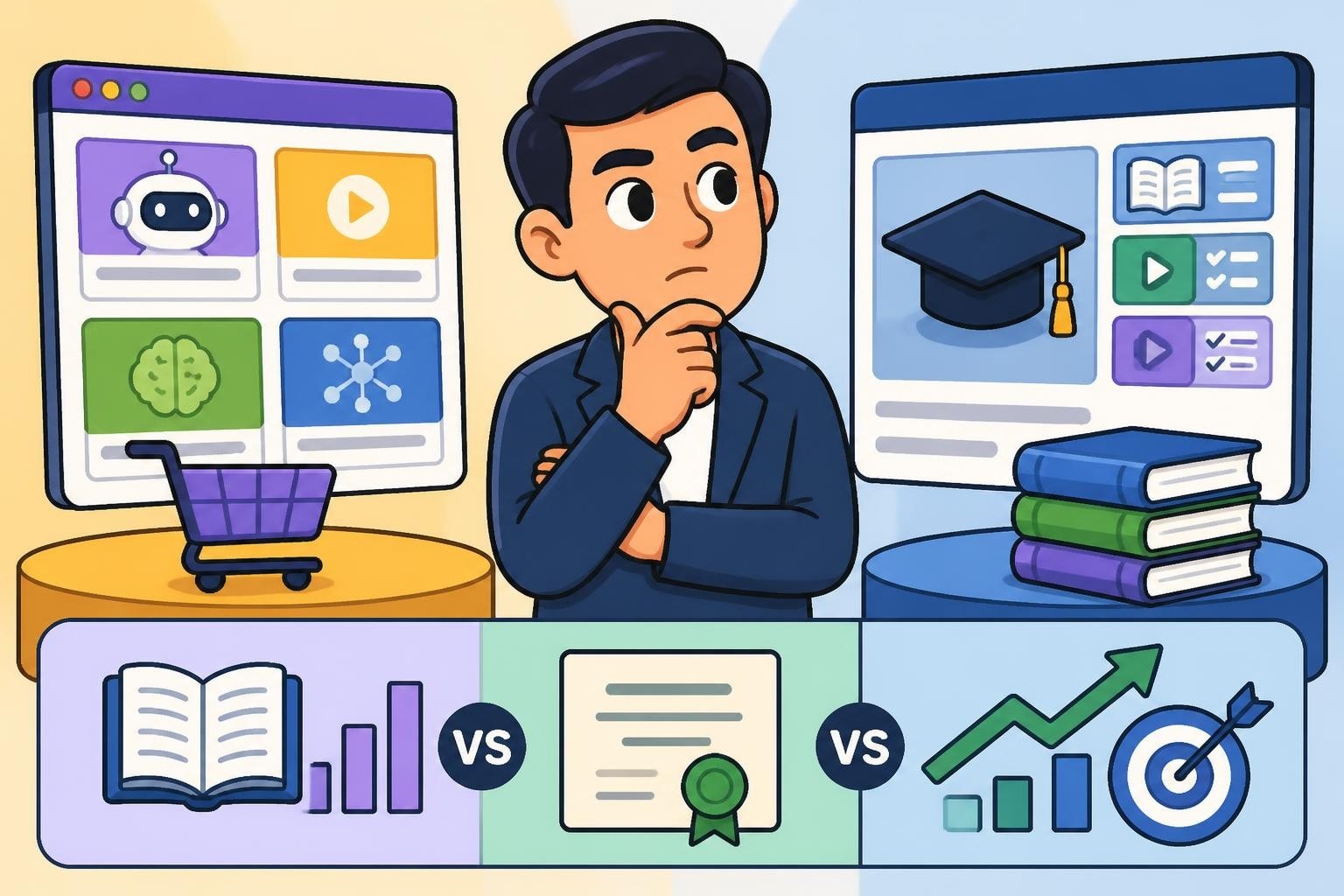
Artificial intelligence has transitioned from a specialized research domain to a fundamental business competency. Professionals across industries now recognize that understanding AI fundamentals is no longer optional-it's essential for career advancement and organizational competitiveness. A basic artificial intelligence course provides the foundation needed to navigate this rapidly evolving landscape, offering structured learning that bridges theoretical concepts with practical applications. Whether you're a business analyst looking to leverage AI tools, a developer preparing to build intelligent systems, or a manager overseeing AI initiatives, starting with foundational education sets the stage for deeper expertise.
What Defines a Basic Artificial Intelligence Course
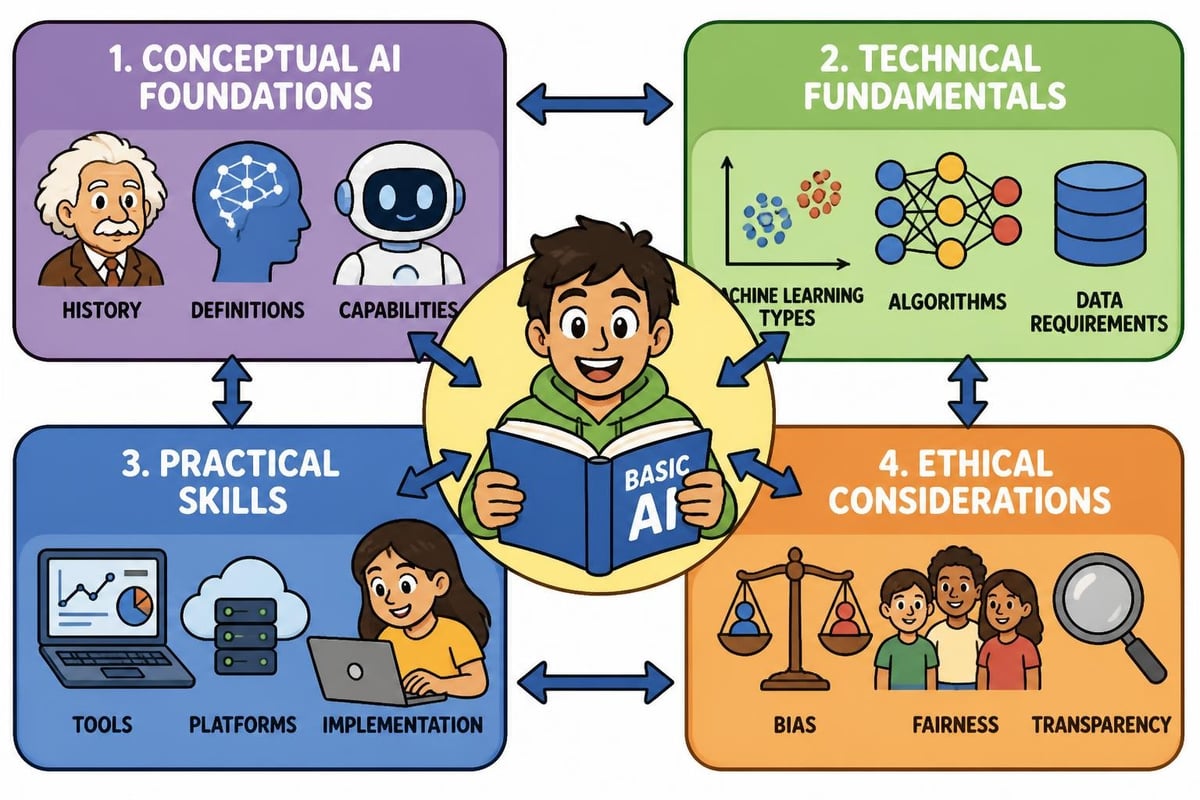
A basic artificial intelligence course introduces learners to core AI concepts without requiring advanced mathematics or programming expertise. These courses typically cover machine learning fundamentals, neural network basics, natural language processing principles, and computer vision essentials. The curriculum balances theoretical understanding with hands-on application, ensuring students grasp both the "what" and the "why" behind AI technologies.
Most foundational programs span 20-40 hours of learning time, structured across 4-8 weeks for self-paced students. The content progression usually follows a logical path: starting with AI history and definitions, moving through data fundamentals and algorithm types, then advancing to practical implementation and ethical considerations.
Core Curriculum Components
The strongest foundational programs share several common elements that distinguish them from superficial overviews:
- Conceptual foundations: Understanding what AI is, isn't, and can realistically accomplish
- Machine learning basics: Supervised, unsupervised, and reinforcement learning paradigms
- Data literacy: How data quality, quantity, and bias affect AI system performance
- Algorithm awareness: Decision trees, linear regression, clustering, and neural networks
- Practical tools: Introduction to Python libraries, cloud AI services, or no-code platforms
- Ethics and responsibility: Bias detection, fairness considerations, and transparency requirements
For professionals without programming backgrounds, courses like DeepLearning.AI's AI for Everyone offer business-focused perspectives that prioritize strategic understanding over technical implementation. Conversely, developers benefit from more hands-on curricula that include coding exercises and model building.
Choosing Between Technical and Non-Technical Tracks
One critical decision when selecting a basic artificial intelligence course involves determining your learning objectives and technical comfort level. The market offers two distinct tracks, each serving different professional needs.
Technical tracks assume basic programming knowledge (typically Python) and emphasize hands-on model building, algorithm implementation, and code-based problem solving. These programs suit software developers, data analysts, and technical professionals who will directly build or modify AI systems. Resources like Google's Machine Learning Crash Course provide practical, visualization-rich learning with real coding exercises.
Non-technical tracks focus on AI strategy, business applications, project management, and responsible implementation. They're designed for executives, product managers, marketers, and business analysts who need to evaluate AI solutions, communicate with technical teams, or oversee AI initiatives without writing code themselves.
| Track Type | Best For | Time Investment | Prerequisites | Outcome |
|---|---|---|---|---|
| Technical | Developers, engineers, data scientists | 40-60 hours | Python basics, statistics | Build simple models, implement algorithms |
| Non-Technical | Managers, strategists, business analysts | 15-25 hours | None | Evaluate solutions, manage AI projects |
| Hybrid | Product managers, technical leads | 30-45 hours | Basic programming helpful | Bridge strategy and implementation |
Many professionals at MammothClub start with non-technical foundations before advancing to coding-intensive programs. This progression allows learners to understand business applications before investing time in technical implementation details.
Industry-Specific Considerations
Different industries prioritize different AI applications, which should influence your course selection. Financial services professionals benefit from courses emphasizing predictive analytics and risk modeling. Healthcare workers need programs covering medical imaging and diagnostic support systems. Manufacturing specialists require curricula addressing robotics, quality control, and predictive maintenance.
A well-designed basic artificial intelligence course acknowledges these industry variations through relevant case studies and examples. Look for programs that include applications from your sector or offer customizable learning paths that align with your organization's AI priorities.
Essential Topics Every Foundational Course Should Cover
Regardless of technical depth or industry focus, certain topics represent non-negotiable components of quality AI education. These core areas provide the conceptual scaffolding necessary for continued learning and practical application.
Machine Learning Fundamentals
Understanding the three primary machine learning paradigms forms the foundation of AI literacy:
- Supervised learning: Training models on labeled data to predict outcomes (classification and regression)
- Unsupervised learning: Finding patterns in unlabeled data (clustering and dimensionality reduction)
- Reinforcement learning: Training agents through reward-based feedback in dynamic environments
Each paradigm addresses different business problems. Supervised learning powers recommendation engines and fraud detection systems. Unsupervised learning enables customer segmentation and anomaly detection. Reinforcement learning optimizes complex sequential decisions in robotics and game-playing systems.
The best courses don't just define these approaches-they provide concrete examples showing when to apply each methodology. For instance, fast.ai's Practical Deep Learning for Coders demonstrates real-world applications through accessible coding examples and deployment workflows.
Neural Networks and Deep Learning Basics
While advanced neural network architectures require specialized study, a basic artificial intelligence course should introduce fundamental concepts:
- How artificial neurons process and transmit information
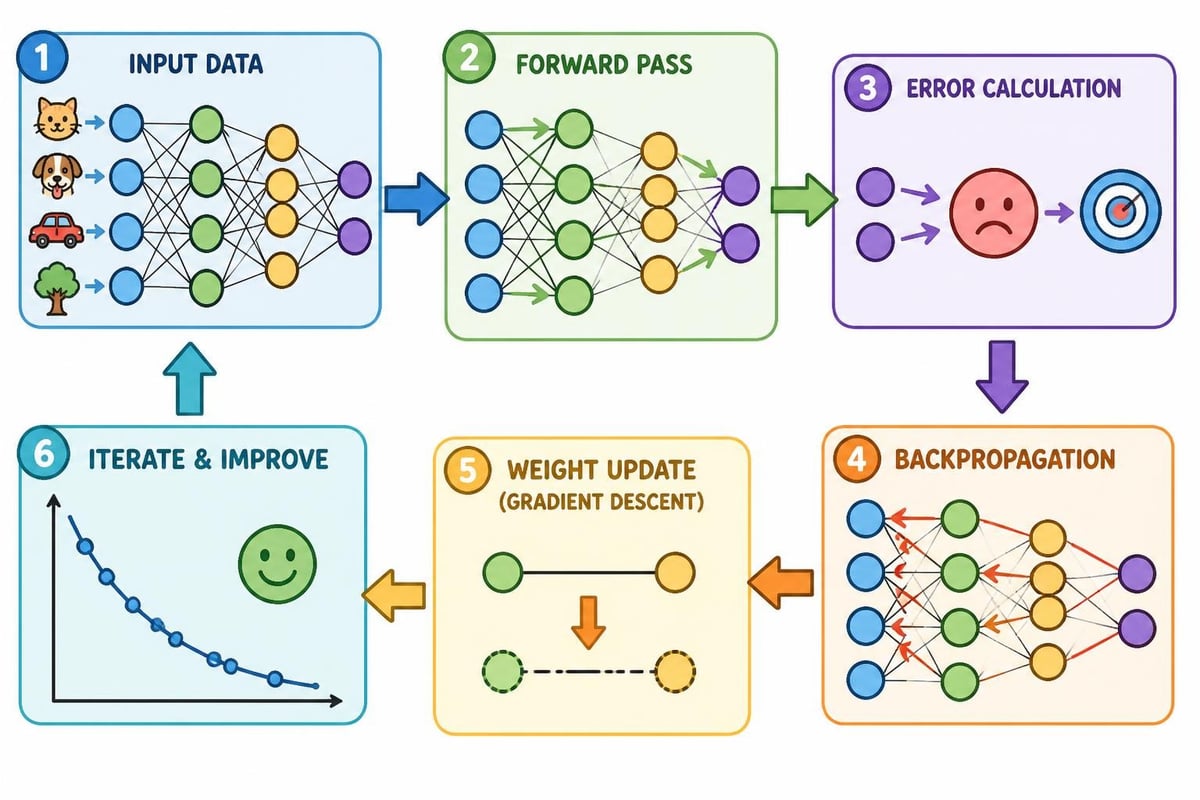
- The role of layers, weights, and activation functions
- Backpropagation and gradient descent for model training
- Common architectures: fully connected networks, convolutional networks (CNNs), recurrent networks (RNNs)
Understanding these building blocks enables professionals to evaluate when deep learning offers advantages over traditional machine learning and when simpler approaches suffice. This judgment becomes crucial during project planning and vendor evaluation.
Data Quality and Preparation
AI systems are only as good as their training data-a reality that makes data literacy essential for all AI practitioners. Foundational courses must address:
- Data collection strategies and quality assessment
- Cleaning techniques for handling missing values, outliers, and inconsistencies
- Feature engineering: transforming raw data into meaningful model inputs
- Train-test splits and validation strategies to prevent overfitting
- The impact of biased or unrepresentative datasets on model performance
These practical considerations often receive insufficient attention in theoretical programs, yet they consume 60-80% of real-world AI project time. Courses that emphasize data workflows prepare students for the realities of implementation rather than idealized scenarios.
Practical Skills Development and Hands-On Learning
Theory without application produces superficial understanding. The most effective foundational programs balance conceptual learning with hands-on practice, allowing students to internalize principles through experimentation.
Tool and Platform Exposure
Modern AI work leverages established tools and platforms rather than building everything from scratch. A comprehensive basic artificial intelligence course introduces students to industry-standard resources:
Programming libraries: NumPy for numerical computing, Pandas for data manipulation, Scikit-learn for traditional machine learning, TensorFlow or PyTorch for deep learning
Cloud AI services: Pre-built models from AWS, Google Cloud, or Azure that enable rapid prototyping without extensive training data or computational resources
No-code platforms: Tools like Google Teachable Machine or Microsoft Lobe that democratize AI development for non-programmers
Visualization tools: Matplotlib, Seaborn, or Plotly for understanding data distributions and model performance
Exposure to these resources accelerates the transition from learning to doing. Students who complete hands-on exercises with real tools gain confidence to tackle workplace projects immediately upon course completion.
Project-Based Learning Approaches
Projects cement understanding by requiring students to integrate multiple concepts toward a practical goal. Effective foundational courses include progressively challenging assignments:
- Exploratory data analysis: Load a dataset, visualize patterns, identify quality issues
- Simple classification: Build a model to categorize data (spam detection, sentiment analysis)
- Regression analysis: Predict numerical outcomes (price estimation, demand forecasting)
- Model comparison: Evaluate multiple algorithms on the same problem, documenting performance trade-offs
- Mini-capstone project: Address a realistic business problem from data acquisition through deployment recommendations
These projects need not involve cutting-edge techniques. The goal is applying foundational concepts to solve real problems, developing the problem-solving frameworks that transfer across AI applications. For learners seeking structured hands-on experience, platforms like MammothClub offer AI-focused courses with interactive labs and automated feedback.
Ethical AI and Responsible Development Principles
As AI systems increasingly influence consequential decisions-from hiring and lending to healthcare and criminal justice-understanding ethical implications becomes as important as technical capabilities. Every basic artificial intelligence course should dedicate significant time to responsible AI principles.
Bias Detection and Mitigation
AI systems can perpetuate or amplify existing societal biases when trained on historical data that reflects past discrimination. Foundational education must help students recognize:
- Data bias: Unrepresentative training sets that skew model predictions
- Algorithmic bias: Design choices that systematically disadvantage certain groups
- Deployment bias: Application contexts that create unfair outcomes even from neutral predictions
Practical exercises should include auditing models for disparate impact across demographic groups and exploring techniques like balanced sampling, fairness constraints, and adversarial debiasing. Resources from IEEE's CertifAIEd program provide valuable frameworks for incorporating ethics into technical curricula.
Transparency and Explainability
Many powerful AI models operate as "black boxes," producing accurate predictions without clear explanations of their reasoning. This opacity creates challenges in regulated industries and high-stakes applications. Students should understand:
- The trade-off between model complexity and interpretability
- Techniques for explaining model predictions (LIME, SHAP, attention visualization)
- When explainability requirements outweigh small accuracy gains
- Documentation standards for AI system capabilities and limitations
Courses that integrate ethical considerations throughout-rather than relegating them to a single module-better prepare professionals to build trustworthy systems.
Certification Value and Credential Recognition
Completing a basic artificial intelligence course often culminates in a certificate or credential. Understanding what these certifications signal to employers helps learners choose programs aligned with their career objectives.
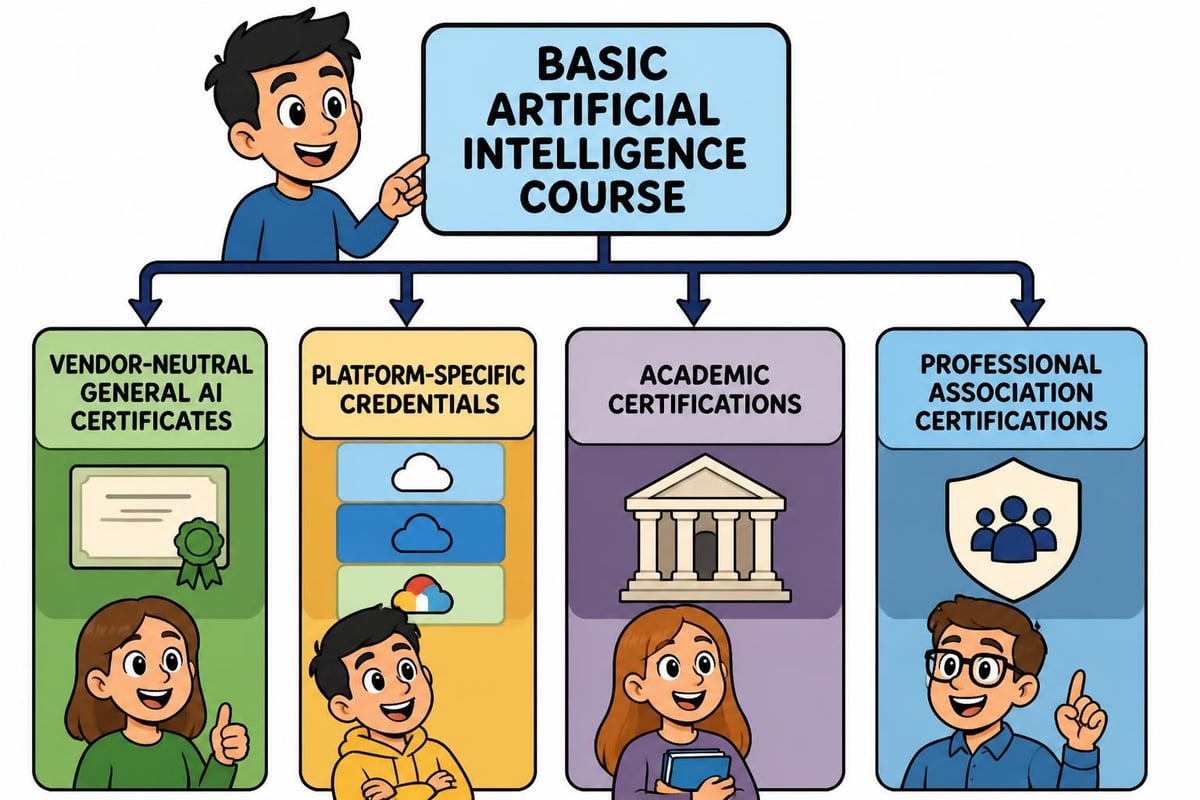
Vendor-neutral certifications demonstrate broad AI literacy without tying knowledge to specific platforms. These credentials suit professionals seeking foundational understanding applicable across technologies and organizations. University-backed programs like MIT's Deep Learning course provide academically rigorous content, though not always formal certification.
Platform-specific credentials validate skills with particular tools or cloud services. These certifications appeal to practitioners who will implement AI solutions using specific vendor ecosystems. For example, professionals pursuing Azure AI certifications demonstrate Microsoft-specific expertise valuable in enterprises standardized on Azure infrastructure.
Professional association certifications from organizations like IEEE or industry-specific bodies carry weight in certain sectors. They often require examinations beyond course completion, verifying competency through independent assessment.
| Certification Type | Completion Time | Cost Range | Best For | Recognition Level |
|---|---|---|---|---|
| Vendor-neutral | 20-40 hours | $0-$500 | General AI literacy | Moderate, broad applicability |
| Platform-specific | 30-50 hours | $100-$300 | Tool expertise | High in ecosystem users |
| Academic | 60-120 hours | $500-$2,000 | Theoretical depth | High in research/education |
| Professional association | 40-80 hours + exam | $300-$1,000 | Industry credibility | High in regulated sectors |
The credential's value ultimately depends on your career trajectory and employer expectations. For most professionals, combining a strong foundational course with specialized follow-up training in relevant application areas yields better returns than pursuing certifications for their own sake.
Learning Paths Beyond Basic AI Foundations
A basic artificial intelligence course represents the beginning, not the culmination, of AI education. Understanding typical advancement paths helps students plan long-term learning investments strategically.
Specialization Tracks
After mastering fundamentals, professionals typically specialize based on career interests and organizational needs:
Computer vision: Image classification, object detection, semantic segmentation for applications in manufacturing quality control, medical imaging, or autonomous systems
Natural language processing: Text analysis, sentiment detection, language translation, and conversational AI for customer service, content analysis, or document automation
Reinforcement learning: Sequential decision-making for robotics, game playing, autonomous vehicles, or optimization problems
AI engineering and deployment: Production systems, model serving, monitoring, and MLOps for professionals focused on operationalizing AI at scale
Each specialization requires 40-100 additional hours of study beyond foundational knowledge. Many learners explore multiple areas before committing to deep expertise in one domain. Platforms offering diverse content libraries, like those available through MammothClub's course catalog, enable efficient exploration across specializations.
Advanced Degree Considerations
Some professionals leverage foundational AI courses as preparation for formal academic programs. Master's degrees in AI, machine learning, or data science provide comprehensive theoretical grounding and research experience. These programs suit individuals pursuing research roles, academic careers, or positions requiring deep mathematical expertise.
However, advanced degrees represent significant time and financial investments (12-24 months, $10,000-$60,000). For many practitioners, targeted professional development through specialized courses and certifications delivers better ROI than full degree programs. The decision depends on career goals, employer requirements, and personal learning preferences.
Comparing Free and Paid Learning Options
The AI education market offers both free and commercial alternatives at the foundational level. Each approach presents distinct advantages and limitations worth considering during program selection.
Free Educational Resources
Numerous high-quality free resources exist, particularly from universities and major technology companies. Stanford's CS221 course materials provide rigorous content covering AI principles and techniques. The Elements of AI course from the University of Helsinki offers an accessible, non-technical introduction backed by academic research.
Advantages of free programs:
- Zero financial barrier to entry
- Often created by leading academic institutions or AI companies
- Flexibility to sample multiple approaches before committing
- Permanent access to materials without subscription requirements
Limitations of free programs:
- Variable quality and currency of content
- Limited or no instructor support
- Lack of structured learning paths across multiple topics
- Inconsistent assessment and certification
- Minimal hands-on labs or interactive elements
Free resources work well for self-motivated learners with strong discipline and clear learning objectives. They're ideal for exploring whether AI interests you before investing in comprehensive training.
Commercial Platform Benefits
Paid platforms like MammothClub justify their cost through enhanced learning experiences and support structures:
- Curated learning paths: Professionally designed curricula that sequence topics logically and build progressively
- Interactive labs: Hands-on environments with real tools, datasets, and automated feedback
- Expert instruction: Video lessons from practitioners with industry experience
- Community support: Peer forums, study groups, and instructor Q&A
- Corporate features: Team dashboards, progress tracking, and skills assessment for organizational training
- Credential recognition: Employer-recognized certifications that validate competency
For organizations upskilling teams or professionals seeking efficient, comprehensive training, commercial platforms typically deliver better outcomes than self-assembled free resources. The structured approach reduces time to competency and ensures consistent baseline knowledge across teams.
Building Practical AI Skills for Business Impact
Technical knowledge alone doesn't create business value. The most effective basic artificial intelligence course programs emphasize translating concepts into organizational impact through strategic thinking and cross-functional collaboration.
Identifying High-Value AI Applications
Students should learn frameworks for evaluating potential AI projects based on:
- Data availability: Does sufficient quality data exist or can it be collected economically?
- Business impact: Will success meaningfully affect revenue, costs, or customer satisfaction?
- Technical feasibility: Can current AI approaches solve this problem effectively?
- Implementation complexity: What resources, timeline, and risks does deployment require?
- Ethical considerations: Does the application raise fairness, privacy, or safety concerns?
Practicing this evaluation process during coursework develops judgment that transfers directly to workplace situations. Case studies showing both successful AI deployments and well-reasoned rejections of inappropriate AI applications provide valuable pattern recognition.
Cross-Functional Communication Skills
AI initiatives require collaboration among data scientists, engineers, domain experts, and business stakeholders. Foundational education should develop communication abilities enabling professionals to:
- Translate technical concepts into business language for non-technical audiences
- Ask informed questions of AI specialists without requiring deep technical expertise
- Recognize when vendor claims exceed current AI capabilities
- Document requirements clearly for technical teams
- Explain AI system capabilities and limitations to end users
These soft skills often determine project success more than technical prowess. Courses incorporating team projects, presentation assignments, and stakeholder role-playing exercises develop these competencies alongside technical knowledge.
For professionals interested in leadership aspects of AI implementation, specialized programs in AI management build upon foundational technical understanding with strategy and organizational change management.
Staying Current in a Rapidly Evolving Field
AI technology advances rapidly, making continuous learning essential for maintaining relevant skills. A quality basic artificial intelligence course should equip students with strategies for ongoing education beyond initial certification.
Following Research and Development
While cutting-edge research papers require significant technical background, several accessible resources track important developments:
- Preprint servers: ArXiv.org's AI and machine learning sections highlight emerging research
- Industry blogs: Major AI companies publish accessible summaries of new techniques and applications
- Conference summaries: NeurIPS, ICML, and CVPR conferences showcase annual progress across AI subfields
- Technology podcasts: Audio content enables learning during commutes or exercise
- Professional networks: LinkedIn groups and Slack communities share news and insights
Dedicating 2-3 hours weekly to following AI developments maintains awareness of important trends without overwhelming time commitments.
Hands-On Experimentation
Reading about new techniques provides surface understanding, but experimentation develops genuine competency. Allocating time for personal projects reinforces learning and builds portfolios demonstrating capabilities to employers:
- Participate in Kaggle competitions to practice on real datasets with peer benchmarking
- Replicate published results from accessible research papers
- Build applications solving personal problems or community needs
- Contribute to open-source AI projects to learn from experienced developers
These activities transform passive learning into active skill development, accelerating the journey from novice to practitioner.
Evaluating Course Quality and Instructor Expertise
Not all basic artificial intelligence courses deliver equivalent value. Distinguishing high-quality programs from superficial overviews requires examining several key indicators.
Curriculum Depth and Structure
Quality courses provide detailed syllabi showing topic progression, learning objectives for each module, and expected time investments. Vague descriptions suggesting "learn AI in one weekend" signal unrealistic expectations or insufficient depth.
Look for programs that:
- Allocate sufficient time to foundational concepts before advancing to applications
- Include multiple assessment types (quizzes, projects, peer review)
- Provide prerequisites and clearly state assumed background knowledge
- Offer supplementary resources for students needing additional support
- Update content regularly to reflect current best practices and tools
Academic institutions and established learning platforms typically maintain higher standards than individual course creators with limited resources for content updates.
Instructor Credentials and Experience
Effective AI instruction requires both theoretical knowledge and practical experience. Evaluate instructor backgrounds through:
Educational qualifications: Advanced degrees in computer science, AI, or related fields indicate strong theoretical foundations
Industry experience: Work history at AI companies or implementing AI systems demonstrates practical knowledge
Teaching track record: Student reviews, course completion rates, and professional recognition signal instructional effectiveness
Current involvement: Active research, publication, or professional practice suggests instructors maintain cutting-edge knowledge
Programs featuring multiple instructors with complementary expertise often provide richer perspectives than single-instructor courses.
Self-Paced vs. Cohort-Based Learning Models
The delivery format significantly impacts learning outcomes and completion rates. Understanding the trade-offs helps students select approaches matching their circumstances and learning styles.
Self-Paced Advantages
Flexibility: Learn according to personal schedules without fixed deadlines or meeting times
Personalization: Spend more time on challenging topics and accelerate through familiar material
Cost efficiency: Often less expensive than instructor-led alternatives
Accessibility: Available globally without time-zone constraints
Self-paced learning suits disciplined students with demanding work schedules or those wanting to explore topics casually before committing to intensive study.
Cohort-Based Benefits
Accountability: Scheduled sessions and group progress create motivation to stay on track
Interaction: Real-time Q&A with instructors and peer discussions deepen understanding
Networking: Connections with fellow students provide professional relationships and learning partnerships
Structure: Fixed timelines prevent indefinite postponement of difficult topics
Higher completion rates: Instructor-led courses typically see 60-80% completion versus 5-15% for self-paced MOOCs
Organizations training teams often prefer cohort models for consistent knowledge development and team building. Individual learners benefit from evaluating their self-discipline honestly before selecting delivery formats.
Starting your AI education journey with a well-designed basic artificial intelligence course establishes the foundation for ongoing skill development in this transformative field. Whether pursuing technical implementation skills or strategic business acumen, foundational knowledge enables informed decisions about AI adoption and application. MammothClub offers over 3,000 on-demand courses spanning AI fundamentals through advanced specializations, supported by interactive labs, corporate certification programs, and AI-powered learning dashboards that make upskilling measurable and results-driven. Explore our comprehensive AI curriculum today to build the capabilities your career and organization need to thrive in the AI era.