The artificial intelligence industry is experiencing unprecedented growth, and professionals who can demonstrate verified AI expertise command premium salaries and leadership roles. Selecting the best AI certification course requires understanding not just curriculum content, but also how employers evaluate credentials, what skills translate to real-world impact, and which certifications maintain relevance as AI technology evolves. This comprehensive guide examines the certification landscape in 2026, helping you navigate vendor-specific credentials, academic programs, and specialized pathways to find the certification that aligns with your career goals and delivers measurable return on investment.
Understanding AI Certification Types and Their Value Proposition
The AI certification landscape divides into distinct categories, each serving different professional needs and career stages.
Vendor-specific certifications validate proficiency in particular platforms and tools. The Google Cloud Professional Machine Learning Engineer certification demonstrates expertise in designing, building, and deploying ML models on Google Cloud Platform. Similarly, the Azure AI Engineer credential confirms skills in implementing Microsoft's AI solutions. These certifications carry significant weight when organizations already use these platforms or plan cloud migrations.
Foundation-level certifications provide broad AI literacy across concepts, ethics, and applications. These programs typically require 40-80 hours of study and suit professionals transitioning into AI roles or managers overseeing AI initiatives who need comprehensive understanding without deep technical implementation skills.
Specialized AI Credentials for Niche Applications
Specialized certifications address specific industry applications or technical domains:
- AI ethics and governance: Programs covering responsible AI frameworks and compliance requirements
- Computer vision specialists: Certifications focused on image recognition, object detection, and visual AI systems
- Natural language processing: Credentials emphasizing text analysis, sentiment detection, and language models
- AI for business strategy: Executive-level programs on AI adoption, ROI measurement, and organizational transformation
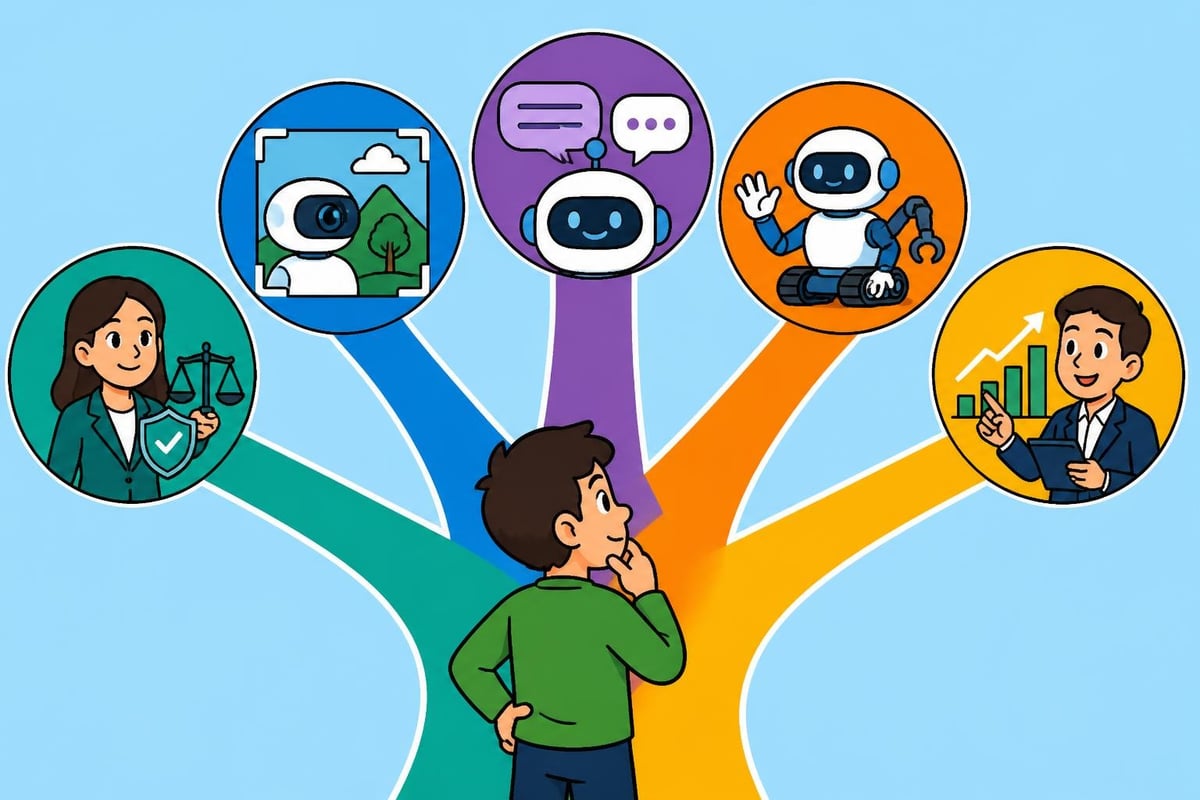
The best AI certification course depends entirely on your current role, target position, and organizational context. A data scientist benefits more from advanced machine learning implementation credentials, while a product manager gains greater value from AI strategy and ethics certifications.
Evaluating Certification Quality and Industry Recognition
Not all certifications carry equal weight with employers and hiring managers. According to the 2025 Workplace Learning Report, organizations increasingly prioritize certifications that demonstrate hands-on skills and project-based competencies over purely theoretical knowledge.
| Evaluation Criteria | What to Look For | Red Flags |
|---|---|---|
| Curriculum Depth | 100+ hours content, capstone projects, real datasets | Generic modules, no practical application, outdated examples |
| Industry Recognition | Accepted by Fortune 500 companies, mentioned in job postings | Unknown provider, no employer partnerships |
| Assessment Rigor | Proctored exams, code reviews, portfolio requirements | Multiple choice only, open-book without projects |
| Renewal Requirements | Annual recertification, continuing education credits | Lifetime validity (technology changes too fast) |
The strongest certifications incorporate hands-on laboratory environments where learners build, train, and deploy models using production-grade tools. Programs that include peer code review, instructor feedback on projects, and real-world case studies deliver significantly higher skill retention than lecture-only formats.
Standards-Based Certification Frameworks
Emerging standards-based certification initiatives like CertifAIEd provide industry-wide benchmarks for AI competency assessment. These frameworks ensure consistent evaluation criteria across providers and establish trustworthiness standards that matter to regulated industries.
When comparing programs, verify whether the certification aligns with recognized competency frameworks. This alignment ensures your credential translates across employers and industries rather than remaining valuable only within a single organization or ecosystem.
Top-Tier AI Certification Programs for Different Career Paths
Selecting the best AI certification course requires matching program content to your specific career trajectory and learning style.
For Technical Practitioners and Engineers
Deep Learning Specializations remain the gold standard for engineers building AI systems. Programs covering neural networks, convolutional architectures, recurrent networks, and transformer models provide the foundation for implementing production AI solutions. Look for certifications that include TensorFlow, PyTorch, or both frameworks, as these dominate enterprise AI development.
Cloud AI Engineering Certifications validate ability to deploy and scale AI solutions in production environments. These programs typically cover:
- Model training infrastructure and distributed computing
- MLOps practices including versioning, monitoring, and retraining pipelines
- Cost optimization for training and inference workloads
- Integration with existing enterprise systems and data warehouses
- Security and access control for AI services
Platforms like MammothClub offer comprehensive paths combining foundational courses with advanced specializations, allowing learners to progress from basics through expert-level implementation without switching providers.
For Business Leaders and Strategists
Executive AI certifications focus on organizational transformation, ROI measurement, and ethical implementation. The best programs for leaders include case studies from companies that successfully deployed AI at scale, frameworks for evaluating AI vendors and solutions, and governance models that balance innovation with risk management.
These certifications typically run 20-40 hours and emphasize decision-making frameworks rather than coding skills. They prepare leaders to ask the right questions during vendor evaluations, assess whether AI solutions align with business objectives, and build teams capable of executing AI strategies.
Curriculum Components That Define the Best AI Certification Course
The most valuable AI certifications share common curriculum elements that ensure comprehensive skill development.
Foundational mathematics and statistics form the bedrock of AI competency. Programs should cover linear algebra for understanding neural network operations, probability theory for working with uncertainty, and calculus for grasping optimization algorithms. The best certifications integrate these mathematical concepts within practical contexts rather than teaching them in isolation.
Hands-On Project Requirements
Project-based assessments differentiate strong certifications from superficial credentials:
- End-to-end ML pipeline projects: Data collection, cleaning, feature engineering, model training, evaluation, and deployment
- Domain-specific applications: Healthcare diagnosis systems, financial forecasting models, or manufacturing quality control
- Ethics and bias assessments: Evaluating models for fairness, documenting potential harms, implementing mitigation strategies
- Production deployment: Containerization, API development, monitoring dashboards, and performance optimization
Programs offering robotics and AI integration provide particularly valuable hands-on experience for learners interested in physical AI systems and autonomous technologies.
Research on ethical requirements for AI certification demonstrates that comprehensive programs must address bias detection, fairness metrics, transparency requirements, and accountability frameworks. The best AI certification course includes substantial coverage of these topics, not as theoretical add-ons but integrated throughout technical modules.
Industry-Specific Customization
Certifications tailored to specific industries deliver higher career impact than generic programs. Healthcare AI certifications cover HIPAA compliance, medical imaging standards, and clinical validation requirements. Financial services programs address regulatory requirements, fraud detection patterns, and risk modeling specific to banking and insurance.
For professionals in trading and quantitative finance, specialized programs like AI trading courses provide domain-specific expertise that general AI certifications cannot match.
Comparing Academic Credentials vs Professional Certifications
The choice between academic programs and professional certifications involves tradeoffs in time investment, cost, credential recognition, and skill depth.
| Credential Type | Time Investment | Typical Cost | Best For |
|---|---|---|---|
| MicroMasters Programs | 6-12 months | $1,000-$1,500 | Career changers seeking credit toward master's degrees |
| Professional Certificates | 3-6 months | $300-$800 | Working professionals needing recognized credentials quickly |
| Vendor Certifications | 1-3 months | $200-$400 | Practitioners working in specific cloud/platform ecosystems |
| Executive Programs | 4-8 weeks | $2,000-$5,000 | Senior leaders driving organizational AI strategy |
MicroMasters programs offer unique value for learners who may pursue full master's degrees later, as completed courses often transfer for academic credit. This pathway provides flexibility to test commitment to advanced study before enrolling in full degree programs.
Professional certifications from platforms like MammothClub balance rigor with accessibility, offering production-grade skills without requiring career breaks or academic prerequisites. The platform's 3,000+ courses allow learners to supplement core certification tracks with emerging topics like generative AI, vision transformers, and large language model fine-tuning.
Certification ROI and Career Impact Metrics
Understanding the tangible career benefits of AI certifications helps justify the time and financial investment.
Salary premiums for certified AI professionals range from 15% to 35% compared to non-certified peers in similar roles, with variation based on certification type and industry. Cloud AI certifications from major vendors (AWS, Google Cloud, Azure) command particularly strong premiums in organizations already invested in those ecosystems.
Promotion velocity increases significantly for certified professionals. Internal mobility data shows employees with relevant AI certifications receive consideration for senior roles 8-12 months faster than uncertified colleagues, particularly in organizations actively expanding AI capabilities.
Measuring Skill Application and Business Impact
The best AI certification course delivers skills that immediately apply to workplace challenges. When evaluating programs, review alumni outcomes:
- Percentage of graduates who deploy AI models in production within 6 months
- Average complexity of projects completed (dataset size, model architecture sophistication)
- Diversity of deployment environments (edge devices, cloud, hybrid architectures)
- Business metrics improved (revenue growth, cost reduction, customer satisfaction)
Programs incorporating real client projects or internship components provide the strongest preparation for immediate workplace contribution. MammothClub's corporate certification programs include company-specific case studies and datasets, ensuring skills transfer directly to organizational contexts.

Emerging Certifications for Generative AI and Large Language Models
The explosion of generative AI capabilities in 2024-2026 created entirely new certification categories addressing prompt engineering, LLM fine-tuning, and responsible deployment of foundation models.
Prompt engineering certifications teach systematic approaches to extracting optimal outputs from language models. Advanced programs cover chain-of-thought prompting, few-shot learning techniques, prompt injection prevention, and output validation frameworks. These skills prove essential for professionals building AI-powered applications without training models from scratch.
LLM application development credentials focus on:
- API integration with GPT-4, Claude, and other foundation models
- Retrieval-augmented generation (RAG) architectures for domain-specific knowledge
- Context window optimization and token management
- Safety filters and content moderation systems
- Cost optimization for production LLM deployments
Organizations implementing generative AI solutions prioritize candidates with verified competency in these areas. Certifications from platforms offering hands-on practice with multiple LLM providers deliver stronger skill development than vendor-locked programs.
Specialized Applications of Generative AI
Industry-specific generative AI certifications address unique requirements in content creation, code generation, drug discovery, and creative applications. For professionals in marketing and content production, programs covering AI in digital marketing demonstrate practical application of generative tools to campaign optimization, audience segmentation, and content personalization.
The rapid evolution of generative AI means certifications in this domain require frequent updates. Select programs with documented curriculum refresh cycles and active practitioner communities sharing emerging techniques and use cases.
Building a Multi-Certification Learning Path
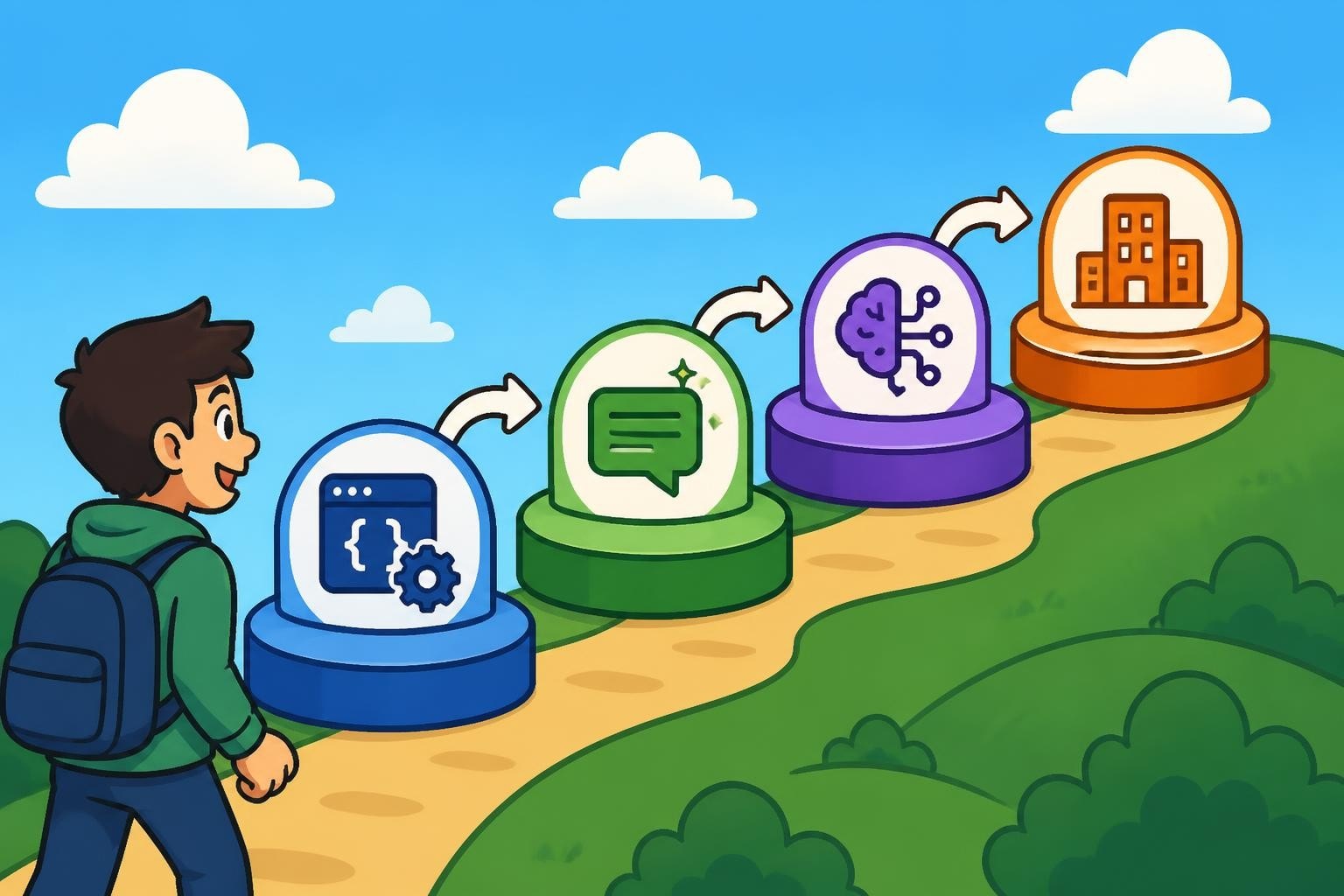
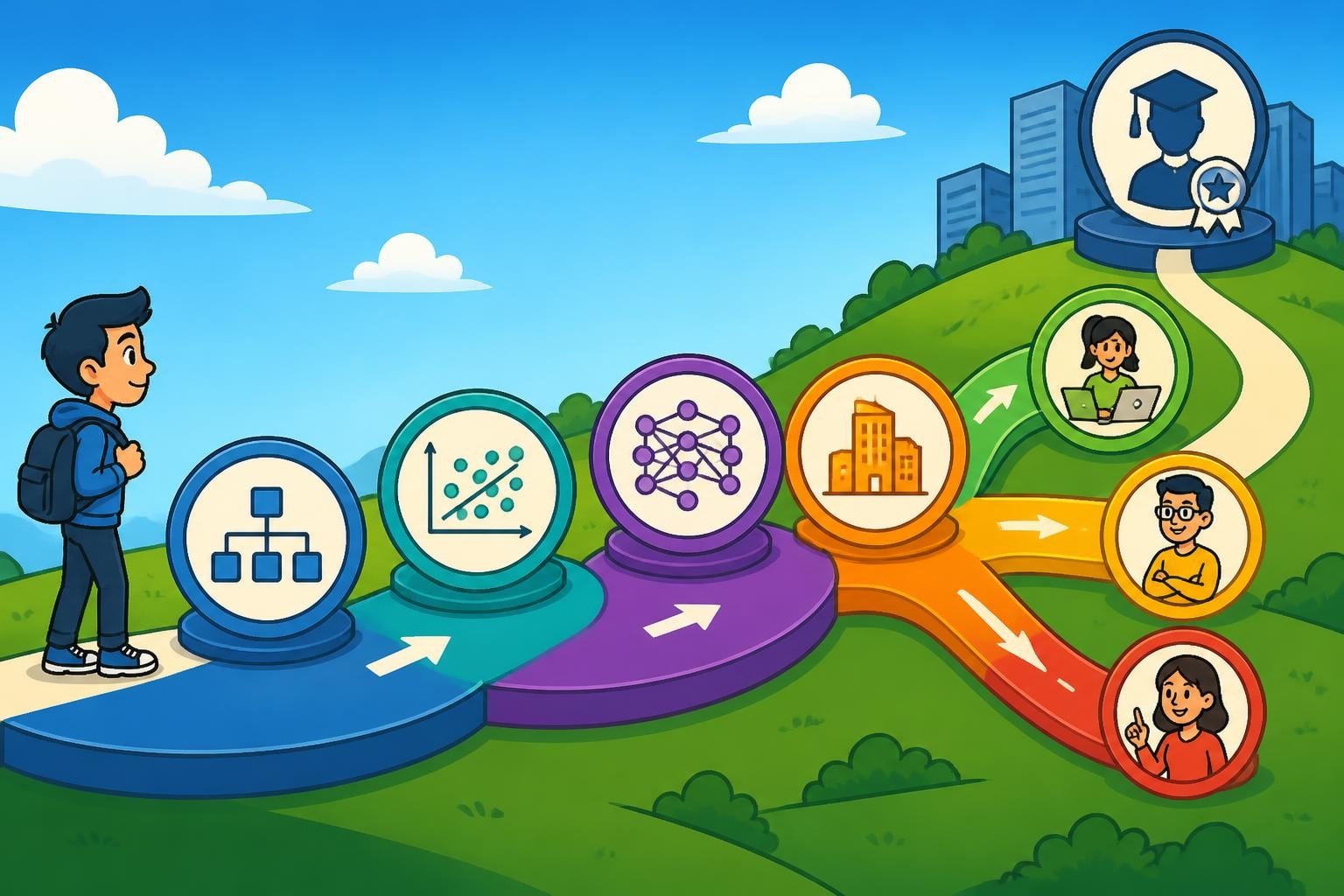
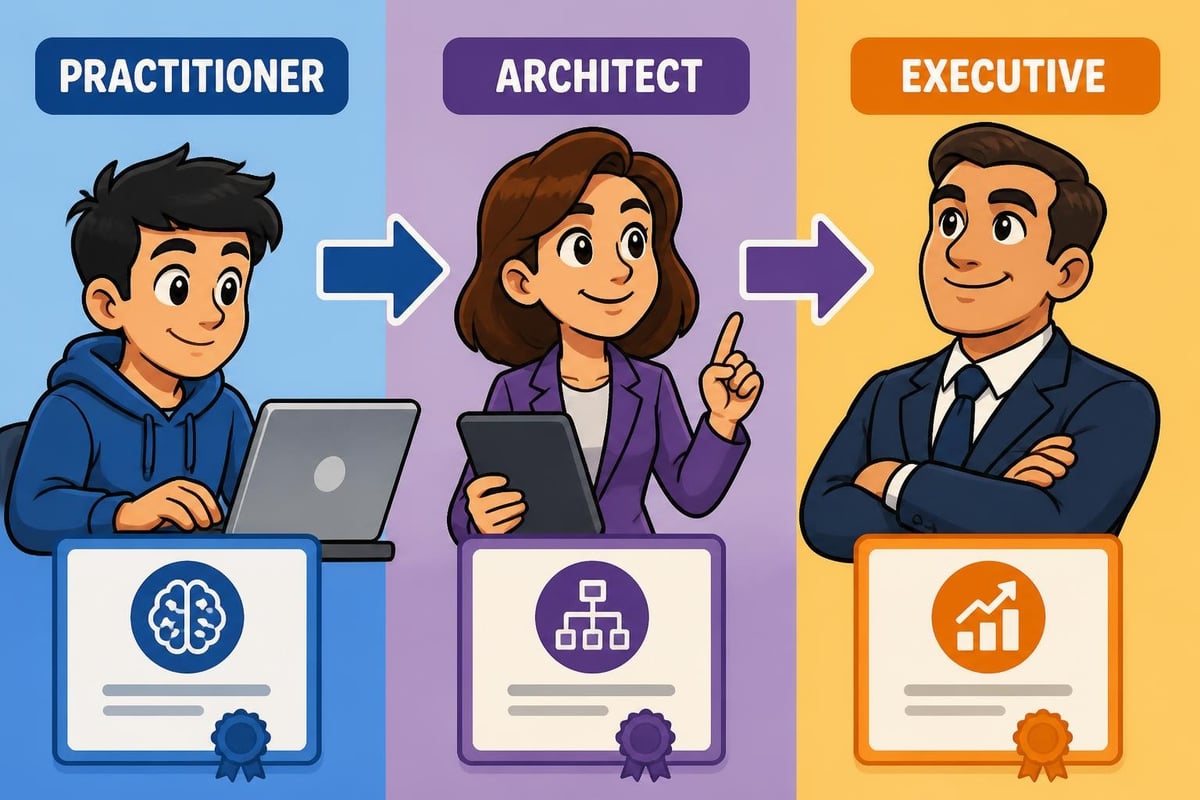
Strategic professionals often pursue multiple complementary certifications rather than relying on a single credential. A well-designed certification path might progress:
Year 1: Foundation-level AI certification covering machine learning basics, data preprocessing, and model evaluation metrics. This establishes core competency and helps identify specific interest areas.
Year 2: Specialized technical certification in chosen domain (computer vision, NLP, reinforcement learning) plus cloud platform credential for deployment skills.
Year 3: Advanced certification in AI ethics and governance, positioning for leadership roles overseeing responsible AI implementation.
This progression builds both technical depth and breadth while demonstrating commitment to continuous learning, a characteristic employers value highly in fast-evolving fields.
Complementary Skills Beyond Core AI Certifications
The most successful AI professionals supplement core certifications with adjacent competencies:
- Data engineering certifications: Understanding data pipelines, warehousing, and quality management
- Software engineering credentials: Production coding practices, version control, testing frameworks
- Cloud architecture certifications: Infrastructure design, security, cost optimization
- Domain expertise: Industry-specific knowledge in healthcare, finance, manufacturing, or other verticals
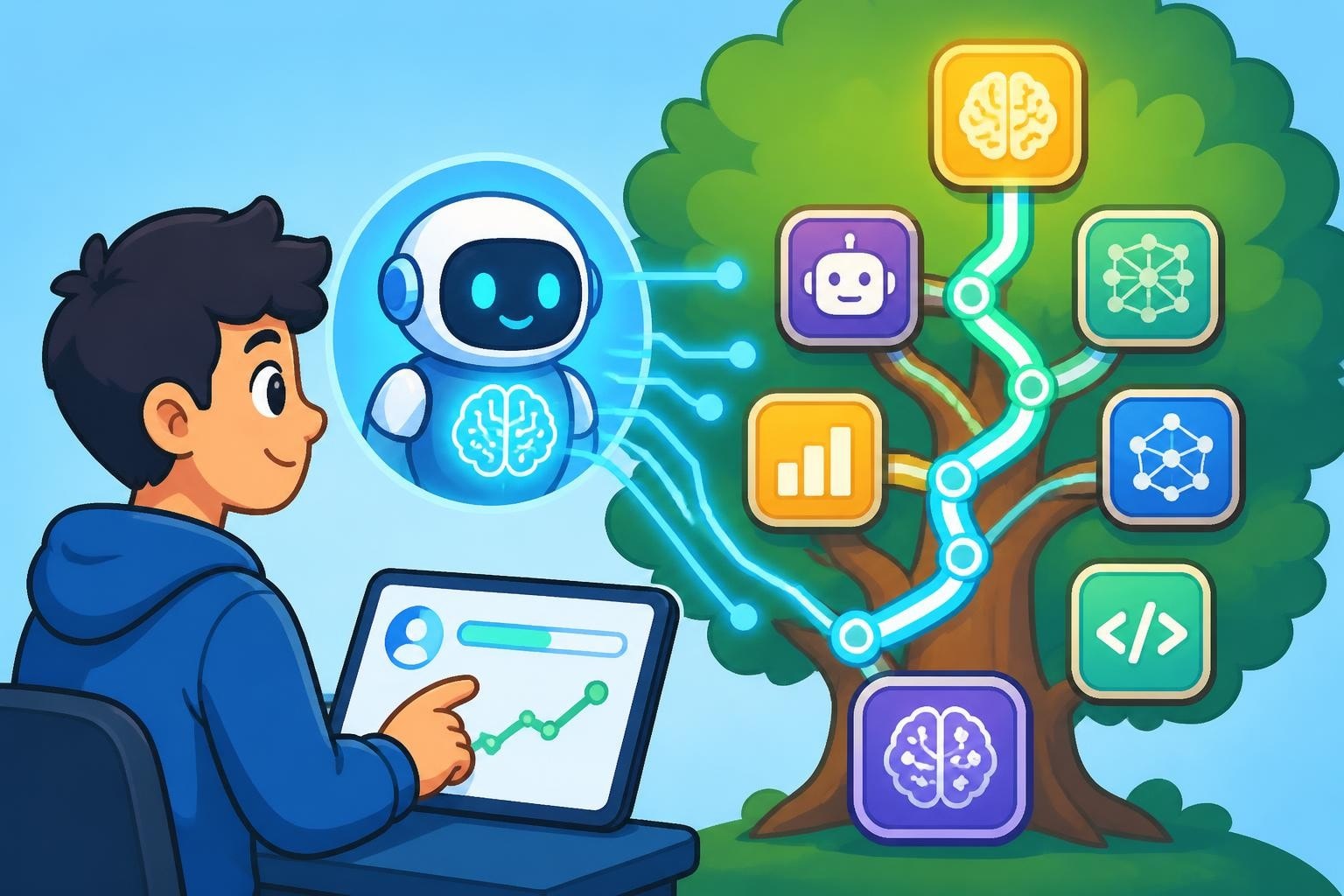
Platforms offering broad course libraries enable efficient skill stacking without managing multiple learning subscriptions. MammothClub's integrated dashboard tracks progress across multiple certification paths, helping learners maintain momentum toward comprehensive AI competency.
Corporate Certification Programs and Team Upskilling
Organizations investing in team-wide AI capabilities require different certification approaches than individual learners pursuing personal development.
Corporate certification programs typically include:
- Customized curriculum aligned with organizational AI strategy and technology stack
- Cohort-based learning with peer collaboration and internal knowledge sharing
- Integration with proprietary datasets and business challenges
- Leadership dashboards tracking team progress and skill acquisition
- Certification tiers (foundation, practitioner, expert) matching organizational role levels
The best AI certification course for enterprise deployment includes measurement frameworks linking skill development to business outcomes. Programs should track not just completion rates but application of learned skills to projects, quality of deployed solutions, and velocity of AI initiative delivery.
Measuring Enterprise Certification ROI
Organizations evaluate corporate AI certification programs against specific metrics:
| Success Metric | Target Benchmark | Measurement Approach |
|---|---|---|
| Skill Application Rate | >75% of learners apply skills within 3 months | Project tracking, manager surveys |
| AI Project Velocity | 30% faster time-to-production | Deployment timeline analysis |
| Model Quality | 20% improvement in accuracy/performance | A/B testing certified vs. non-certified team outputs |
| Innovation Rate | 40% more AI use cases identified | Idea submission and prototype counts |
MammothClub's corporate certification programs include AI-powered dashboards that correlate individual skill development with team project outcomes, providing visibility into certification program effectiveness that traditional learning platforms cannot match.
Choosing Your Optimal Certification Path
Selecting the best AI certification course requires honest assessment of your starting point, clear definition of target outcomes, and realistic evaluation of time and financial resources.
For career changers with limited technical background: Begin with comprehensive foundation programs covering Python programming, statistics fundamentals, and introductory machine learning before pursuing specialized certifications. Programs offering artificial intelligence computer science fundamentals provide the necessary technical base.
For experienced developers adding AI skills: Focus on framework-specific certifications (TensorFlow, PyTorch) and cloud deployment credentials that leverage existing programming competency while adding ML-specific capabilities.
For domain experts in non-technical roles: Pursue business-oriented AI certifications emphasizing strategy, ethics, and AI product management rather than implementation details. These credentials position you to bridge technical teams and business stakeholders.
For senior practitioners seeking leadership positions: Combine advanced technical certifications with executive AI programs covering organizational transformation, team building, and strategic planning.
The strongest certification strategies align with both immediate job requirements and 3-5 year career aspirations. Evaluate whether certifications open doors to specific roles, qualify you for internal promotions, or position you for lateral moves into high-growth AI domains.
Choosing the right AI certification transforms abstract learning goals into concrete career advancement and measurable skill development. The certifications that deliver maximum value combine rigorous technical content, hands-on project experience, industry recognition, and alignment with your specific career trajectory. Whether you're entering AI for the first time, deepening existing expertise, or leading organizational AI initiatives, the right certification path accelerates your journey while ensuring skills remain relevant as technology evolves. MammothClub provides the comprehensive course library, interactive learning tools, and corporate certification programs that help professionals and organizations build AI competency at scale, with AI-powered dashboards that make progress measurable and outcomes demonstrable from day one.