The explosive growth of artificial intelligence is transforming financial markets at a record pace. In 2026, mastering AI trading could be your most valuable investment skill, opening doors to lucrative opportunities and future-proof careers.
This ai trading course guide is designed to demystify the world of AI-driven finance. You will gain the confidence to navigate, select, and excel in the best programs available.
Explore the fundamentals of AI trading, uncover essential course components, and discover the skills top employers demand. Learn about leading learning platforms, career outcomes, and expert strategies for success. Get ready to take the next step toward mastering the future of trading.
Understanding AI Trading: The Future of Financial Markets
Artificial intelligence is reshaping the landscape of financial markets at an unprecedented pace. Understanding what an ai trading course offers is crucial for anyone aiming to excel in this evolving field. AI trading, also known as algorithmic or automated trading, has evolved from rules-based systems to intelligent models capable of self-improvement and adaptation.
The journey began with basic algorithmic trading, where pre-set rules determined buy or sell orders. Today, an ai trading course covers how machine learning models analyze massive datasets, learn from outcomes, and make rapid, data-driven decisions. The shift from manual to AI-driven strategies has increased speed, accuracy, and adaptability across global markets.
AI technology in trading is multifaceted. Machine learning algorithms detect patterns in price movements, while deep learning models handle vast, complex data. Reinforcement learning enables trading systems to optimize strategies through trial and error, and natural language processing (NLP) allows analysis of financial news and social media sentiment. These technologies, all core elements of a robust ai trading course, equip professionals to stay ahead in volatile markets.
Let’s explore practical use cases. AI powers automated portfolio management, enabling dynamic asset allocation based on market shifts. Predictive analytics forecast price trends, while risk management systems identify threats in real time. Sentiment analysis uses NLP to gauge market mood, influencing short-term trading decisions. In a modern ai trading course, students apply these concepts to real-world scenarios.
Real-world examples highlight the impact. AI-driven hedge funds consistently outperform traditional funds by leveraging data and speed. Robo-advisors, powered by machine learning, deliver personalized investment advice to retail clients. Retail trading bots, accessible through platforms like MetaTrader5 or AlphaVantage, empower individual traders to automate strategies once reserved for institutions. To see how these skills translate to finance, explore the Artificial Intelligence for Finance Course.
The demand for expertise is soaring. According to Talent.com, quantitative analyst roles are projected to grow, with 54,350 new jobs expected by 2029. Salaries range from $100,000 to $187,457, reflecting the critical value of skills gained in an ai trading course. The competitive landscape is driving both individuals and organizations to upskill in AI-driven finance.
However, challenges remain. Data quality and integrity are fundamental, as flawed inputs can mislead even the most advanced AI. Model drift, where trading models lose effectiveness as markets change, requires ongoing monitoring and adaptation. Regulatory compliance adds another layer of complexity, making it vital for any ai trading course to address ethical and legal considerations.
Why is 2026 pivotal for AI trading? Advances in AI models, increased computing power, and affordable access to high-quality courses are converging. The financial industry is more competitive than ever, with firms racing to harness AI’s potential. Enrolling in an ai trading course today prepares professionals for roles that will define the future of finance, ensuring they remain relevant and in demand.
In summary, AI trading is revolutionizing financial markets, and the right ai trading course can unlock extraordinary career opportunities. As technology and job markets evolve, mastering these skills is a smart investment for 2026 and beyond.

Core Components of a High-Impact AI Trading Course
Choosing a high-impact ai trading course is critical if you want to stay ahead in the evolving world of finance. Top programs blend rigorous theory with hands-on practice, giving you both foundational knowledge and practical expertise. Let’s explore the essential elements that distinguish an effective ai trading course and set you up for success.
Curriculum Essentials
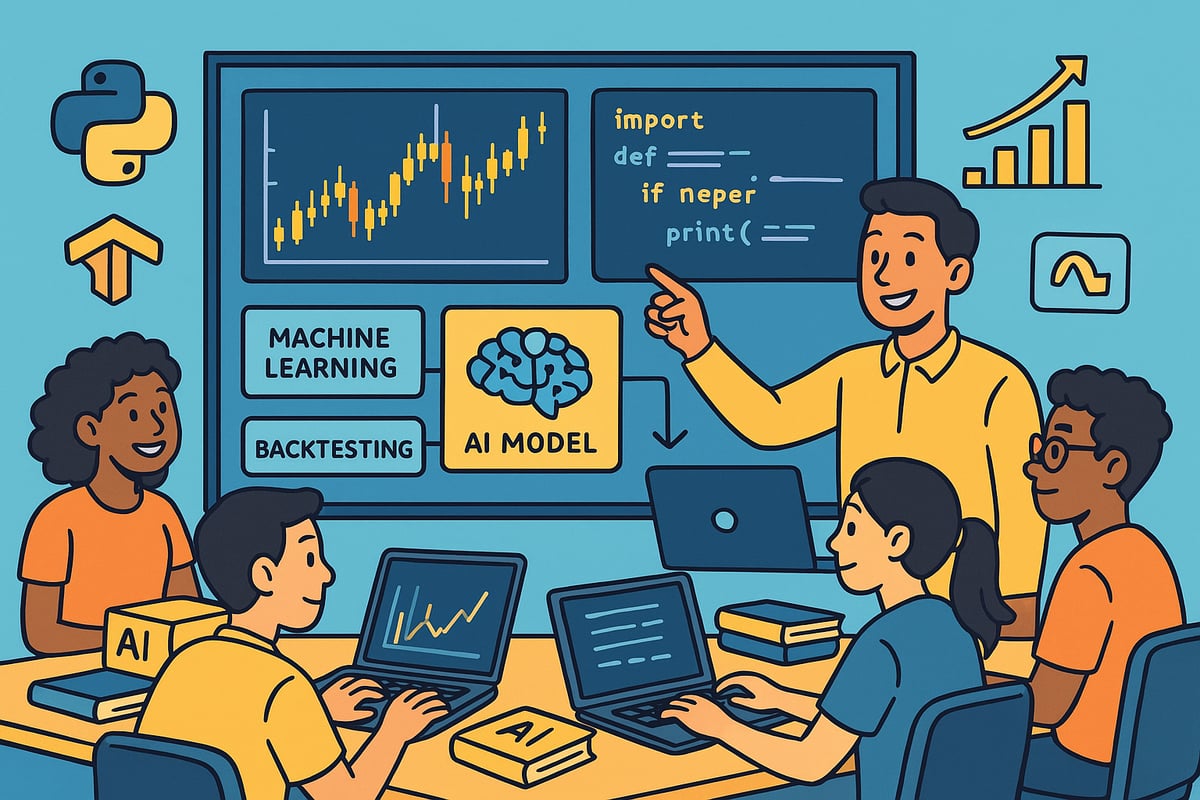
A robust ai trading course begins with a solid curriculum that covers the full spectrum of AI-driven finance. At its core, you’ll study the foundations of machine learning—supervised, unsupervised, and reinforcement learning—all contextualized for financial data.
The curriculum focuses on data acquisition, preprocessing, and feature engineering, which are vital for accurate model predictions. Courses also delve into backtesting strategies, using risk-adjusted metrics like Sharpe, Sortino, and Calmar ratios to evaluate performance. Model optimization, including hyperparameter tuning and regularization, ensures your solutions remain effective and resilient.
Deployment considerations are equally important, such as monitoring for model drift and adapting strategies in real time. For example, the AI Trading Strategies Nanodegree offers a comprehensive ai trading course covering all these areas with practical depth.
Here’s a summary of core curriculum topics:
| Topic | Description |
|---|---|
| Machine Learning | Supervised, Unsupervised, Reinforcement Learning |
| Financial Data Analysis | Data sourcing, preprocessing, feature engineering |
| Backtesting | Historical simulation, risk metrics |
| Model Optimization | Tuning, regularization, overfitting prevention |
| Deployment | Monitoring, adaptation, handling model drift |
By mastering these essentials, you gain the analytical framework needed for advanced ai trading course outcomes.
Practical Skills and Tools
A high-impact ai trading course equips you with the industry tools and coding expertise that power today’s financial innovation. Python is the language of choice, with libraries such as Pandas, NumPy, Scikit-Learn, TensorFlow, and PyTorch forming the backbone of AI model development.
You’ll learn to access real-world data from sources like OHLC, MetaTrader5, AlphaVantage, and Yahoo Finance. Visualization tools—Matplotlib, Seaborn, Plotly—are used for exploratory data analysis and tracking model performance.
Hands-on projects are central. You’ll build and test trading bots in Jupyter Notebooks, construct reinforcement learning agents, and design momentum or classification-based strategies. Each project helps you apply theory to practice, ensuring the ai trading course delivers job-ready skills.
Key practical skills include:
- Writing efficient Python code for AI trading algorithms
- Preprocessing and analyzing large financial datasets
- Backtesting strategies with realistic constraints
- Visualizing results for clear performance insights
- Building and deploying end-to-end trading solutions
These tools and projects make your ai trading course experience directly relevant to real-world roles.
Learning Formats and Support
The most effective ai trading course is designed for flexibility, engagement, and professional growth. On-demand video lectures allow you to learn at your own pace, while interactive labs and capstone projects provide immersive, hands-on experience.
Access to expert instructors from top financial institutions and universities ensures you receive guidance rooted in real industry practice. Many programs offer peer communities, mentorship, and career coaching to support your journey.
Certification is a key component, providing a recognized credential for your resume. Some courses even offer degree credit, such as MSc in AI eligibility, giving your ai trading course additional value for long-term advancement.
A standout example is Udacity’s program, which includes 96 hours of content, personalized feedback, and dedicated career resources. This comprehensive support structure helps you maximize the benefits of your ai trading course, from skill mastery to job readiness.
Step-by-Step Guide: How to Master AI Trading in 2026
Embarking on your journey to master AI trading requires a structured approach. This step-by-step guide will help you navigate the world of AI-driven finance, ensuring you get the most from any ai trading course you choose.
Step 1: Assess Your Background and Prerequisites
Before enrolling in an ai trading course, evaluate your current skills. Most top programs expect you to have proficiency in Python, a solid grasp of calculus, basic statistics, and a general understanding of data science. Familiarity with algorithmic trading concepts is also recommended.
If you find gaps in your knowledge, do not worry. There are many introductory courses for Python, SQL, and data science that can bridge these gaps efficiently. Investing time in these areas will ensure you are prepared for the advanced topics found in an ai trading course.
English proficiency is essential, as most high-quality ai trading course materials and global communities use English as the primary language. Strong communication skills will allow you to participate fully in discussions, projects, and mentorship opportunities.
Step 2: Choose the Right AI Trading Course
Selecting the ideal ai trading course is a critical step. Begin by comparing leading platforms such as Udacity, Udemy, Coursera, and Mammoth Club. Assess each course based on curriculum depth, instructor background, and whether they offer hands-on projects and recognized certification.
Evaluate the time and financial investment required. For example, Udacity’s Nanodegree is $106 per month for 96 hours of content, while Udemy offers shorter, more affordable options. Prioritize courses that update their content regularly, reflecting the evolving demands of AI in finance.
Consider your learning style. Some prefer self-paced video lectures, while others benefit from interactive labs and mentorship. Ensure your chosen ai trading course aligns with your goals, schedule, and preferred learning format.
Step 3: Build Foundational Knowledge
A strong foundation in financial markets and machine learning is essential for success in any ai trading course. Start by studying the basics of stocks, bonds, derivatives, and market mechanics. Next, dive into machine learning fundamentals, including data preprocessing, exploratory data analysis, and feature engineering.
Leverage real-world datasets to practice what you learn, as practical experience cements theoretical knowledge. For those seeking structured guidance, the Artificial Intelligence AI Course Overview provides a comprehensive path to mastering essential AI concepts relevant to trading.
Building this base ensures you can understand and apply advanced AI models within your chosen ai trading course.
Step 4: Develop and Test AI Trading Strategies
Once you have a solid foundation, use your ai trading course to construct and test AI-powered trading strategies. Learn to build models using regression, classification, reinforcement learning, and momentum-based approaches. Each method offers unique advantages in different market scenarios.
Backtesting is a crucial skill. Use historical data to validate your models, focusing on metrics such as annualized returns, volatility, and risk-adjusted ratios. Most ai trading course projects include hands-on assignments like building a Q-learning agent or designing a momentum strategy for indices like the S&P 500.
Hands-on experimentation will deepen your understanding and prepare you for real-world trading environments.
Step 5: Optimize and Deploy Your Models
Optimization and deployment are where theory meets practice. Within your ai trading course, master techniques like hyperparameter tuning and regularization to enhance model performance. Learn to evaluate models rigorously, identifying strengths and weaknesses through robust metrics.
Deployment brings unique challenges, such as model drift and the need for real-time monitoring. A high-quality ai trading course will teach you to implement continuous improvements, ensuring your strategies remain effective as market conditions change.
This phase prepares you for seamless transitions from research to live trading.
Step 6: Leverage Community and Career Resources
Maximizing your ai trading course experience involves tapping into community and career resources. Join forums and peer groups to discuss strategies, share feedback, and stay motivated. Many platforms offer mentorship, career coaching, and resume review to accelerate your professional growth.
Earn industry-recognized certifications and, where available, credits toward advanced degrees. These credentials from your ai trading course can open doors to roles in quantitative finance, data science, and fintech.
Continued engagement with the community ensures you remain updated and connected in the fast-moving AI trading landscape.
Mammoth Club: Your AI Trading Learning Partner
Mammoth Club stands as a leading global platform dedicated to advancing AI education, offering over 3,000 tech and AI courses to learners worldwide. Whether you are a beginner or a seasoned professional, the platform’s specialized curriculum covers every facet you need to master an ai trading course for the evolving finance sector. With a focus on practical skills and real-world results, Mammoth Club attracts thousands seeking to upskill for the future of trading.

Comprehensive AI Trading Course Features
Mammoth Club’s ai trading course portfolio stands out through its focused machine learning, data science, and algorithmic trading content. Learners benefit from interactive bootcamps, certification programs, and an extensive Best Courses in AI resource for comparing industry-leading options. Each course is designed with AI-powered learning tools, including real-time dashboards and adaptive content, ensuring personalized mastery at every step.
Enjoy unlimited access to all courses, premium digital assets, and a thriving global community. Flexible learning formats—video, text, podcasts, and slides—make it easy to fit your ai trading course into any schedule or device. Personalized feedback from expert instructors and robust peer support accelerate your path to proficiency.
Corporate Solutions and a Global Community
For organizations, Mammoth Club delivers tailored corporate solutions to upskill teams and maintain a competitive edge in AI-driven finance. Companies can enroll entire teams in advanced ai trading course tracks, supported by real-time analytics and group mentoring. This approach ensures both individual and organizational growth.
Mammoth Club’s global network connects learners through discussion forums, collaborative projects, and networking events. As the demand for AI trading skills surges in 2026, Mammoth Club empowers both individuals and companies to stay ahead of the curve. Join today to unlock the full potential of your ai trading course journey.
Top AI Trading Courses and Platforms for 2026
Navigating the world of AI trading course platforms in 2026 can feel overwhelming, given the rapid evolution of both technology and financial markets. Selecting the right program is crucial for anyone looking to gain a competitive edge in algorithmic trading and investment analysis. This guide compares top platforms, highlights unique features, and offers practical tips for choosing the best ai trading course for your goals.
Leading AI Trading Course Platforms
The top ai trading course providers for 2026 include Udacity, Udemy, Coursera, and edX, each offering unique strengths. Udacity’s AI Trading Strategies Nanodegree stands out for its advanced curriculum, MSc credit eligibility, and 96 hours of expert-led content. Udemy offers practical Python-based courses such as "AI Algorithmic Trading," ideal for self-paced learners.
Coursera features programs like GenAI for Algorithmic Trading, which focus on the application of generative AI in trading. EdX partners with leading universities to deliver rigorous, research-backed content. Platforms like Mammoth Club also provide comprehensive access to hundreds of AI and finance courses.
| Platform | Hours | Key Features | Certification | Price |
|---|---|---|---|---|
| Udacity | 96 | MSc credit, hands-on projects | Nanodegree | $106/month |
| Udemy | 11.5 | Python focus, lifetime access | Certificate | $19.99 |
| Coursera | Varies | University partners, GenAI focus | Certificate/Degree | Varies |
| edX | Varies | Academic rigor, degree options | Certificate/Degree | Varies |
Comparing Features and Learning Experience
A high-quality ai trading course should offer more than just video lectures. Udacity’s program includes eight courses, 34 lessons, and five hands-on projects, providing deep immersion in machine learning, backtesting, and deployment. Udemy’s courses focus on practical skills, with real-world coding exercises and fast-track modules.
Coursera’s offerings, such as GenAI for Algorithmic Trading, emphasize current industry applications and are often developed with input from finance professionals. For those seeking a broader foundation, Top Machine Learning Courses can supplement trading-focused study.
Look for programs featuring:
- Hands-on capstone projects
- Access to expert instructors
- Peer support and mentorship
- Career coaching and resume reviews
- Flexible formats (on-demand, live, hybrid)
Student Outcomes and Career Impact
Investing in an ai trading course can significantly boost your earning potential and job prospects. Quantitative analysts, algorithmic traders, and AI strategists are in high demand, with salary ranges from $100,000 to $187,457. Many graduates report securing roles at hedge funds, fintech firms, and investment banks.
Alumni testimonials highlight the value of project-based learning, supportive communities, and industry-recognized certifications. Corporate clients also leverage these programs to upskill teams, ensuring competitiveness in AI-driven finance.
Tips for Choosing the Best AI Trading Course
When selecting an ai trading course, consider your career goals, current skill level, and preferred learning style. Evaluate course depth, instructor credentials, and the relevance of projects to real-world trading environments. Compare certification value, pricing, and available discounts.
Seek out programs with strong industry connections and active alumni networks. Prioritize up-to-date content that reflects the latest advances in AI and financial technology.
Discounts, Offers, and Final Thoughts
Many platforms offer limited-time discounts, such as 50 percent off select courses or bundled learning paths. Take advantage of these offers to maximize value. Choosing the right ai trading course is a strategic investment in your future, opening doors to high-paying roles and long-term growth in the evolving world of finance.
Career Pathways and Opportunities After Completing an AI Trading Course
Completing an ai trading course opens doors to some of the most dynamic roles in finance and technology. As the financial sector rapidly evolves, professionals with expertise in AI trading are uniquely positioned to lead innovation and drive results. Whether you aim to work in a global bank, a hedge fund, or the fintech sector, your skills will be in high demand.
Top Roles for AI Trading Course Graduates
Graduates of an ai trading course can pursue a variety of high-impact roles, including:
- Quantitative analyst
- AI trading strategist
- Data scientist
- Algorithmic trader
- Fintech product manager
These positions require a blend of technical, analytical, and financial skills. As AI adoption accelerates, the need for professionals who can bridge finance and machine learning continues to rise.
Industry Trends and Job Demand
The financial industry is experiencing a surge in automation and data-driven decision making. By 2029, demand for quantitative analysts is projected to grow significantly, with an estimated 54,350 new jobs. Organizations are seeking talent who can develop, deploy, and optimize AI-powered trading systems.
To learn more about emerging roles and the future of AI in finance, explore AI careers: top jobs, salaries, and skills for 2025, which offers detailed insights into career pathways after completing an ai trading course.
Salary Insights and Advancement
Compensation is a major attraction for those completing an ai trading course. According to Talent.com, the average salary for a quant analyst is $127,695, with top earners making up to $187,457.
| Role | Average Salary | Top Salary |
|---|---|---|
| Quantitative Analyst | $127,695 | $187,457 |
| AI Trading Strategist | $135,000 | $190,000 |
| Algorithmic Trader | $120,000 | $175,000 |
Real-world outcomes show that professionals with advanced AI trading skills can rapidly progress from junior roles to senior strategist or team lead positions.
Certifications, Ongoing Learning, and Success Stories
Many graduates choose to elevate their profile by pursuing additional credentials, such as an MSc in AI, CFA, or FRM. Continuous learning is essential, as AI technologies and market regulations evolve. Success stories abound, with professionals transitioning from entry-level trading roles to leading AI trading desks or launching fintech startups after completing an ai trading course.
Networking, Professional Growth, and Resources
Building a strong network is vital for career advancement. Engage in industry forums, attend AI finance conferences, and join alumni groups from your ai trading course. These communities provide opportunities for mentorship, sharing best practices, and accessing exclusive job postings.
In summary, an ai trading course is more than a credential—it is a launchpad for a rewarding and future-proof career in AI-driven finance. Stay proactive, keep learning, and leverage every opportunity to grow your expertise.
If you’re ready to take your next step in mastering AI trading for 2026, imagine having unlimited access to the most up-to-date courses, tools, and practical resources at your fingertips. With MammothClub, you can build real-world AI trading skills, connect with a global community, and stay ahead in a rapidly evolving market—all on your schedule. There’s no need to settle for just one course when you can explore over 3,000 expert-led options tailored to your goals. Let’s make your journey to AI trading mastery both accessible and affordable—Get 3000 AI coures for just 50 cents a day!