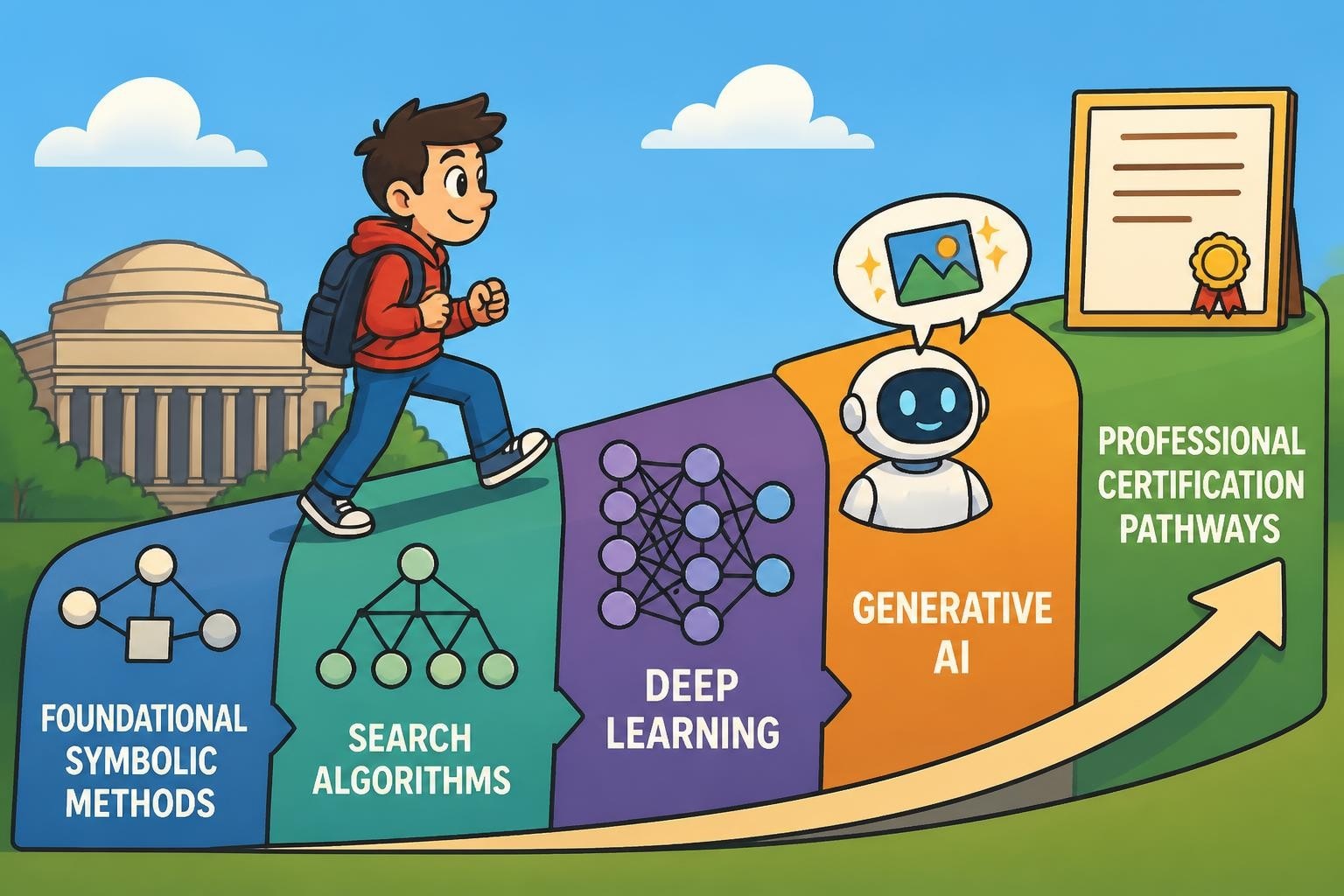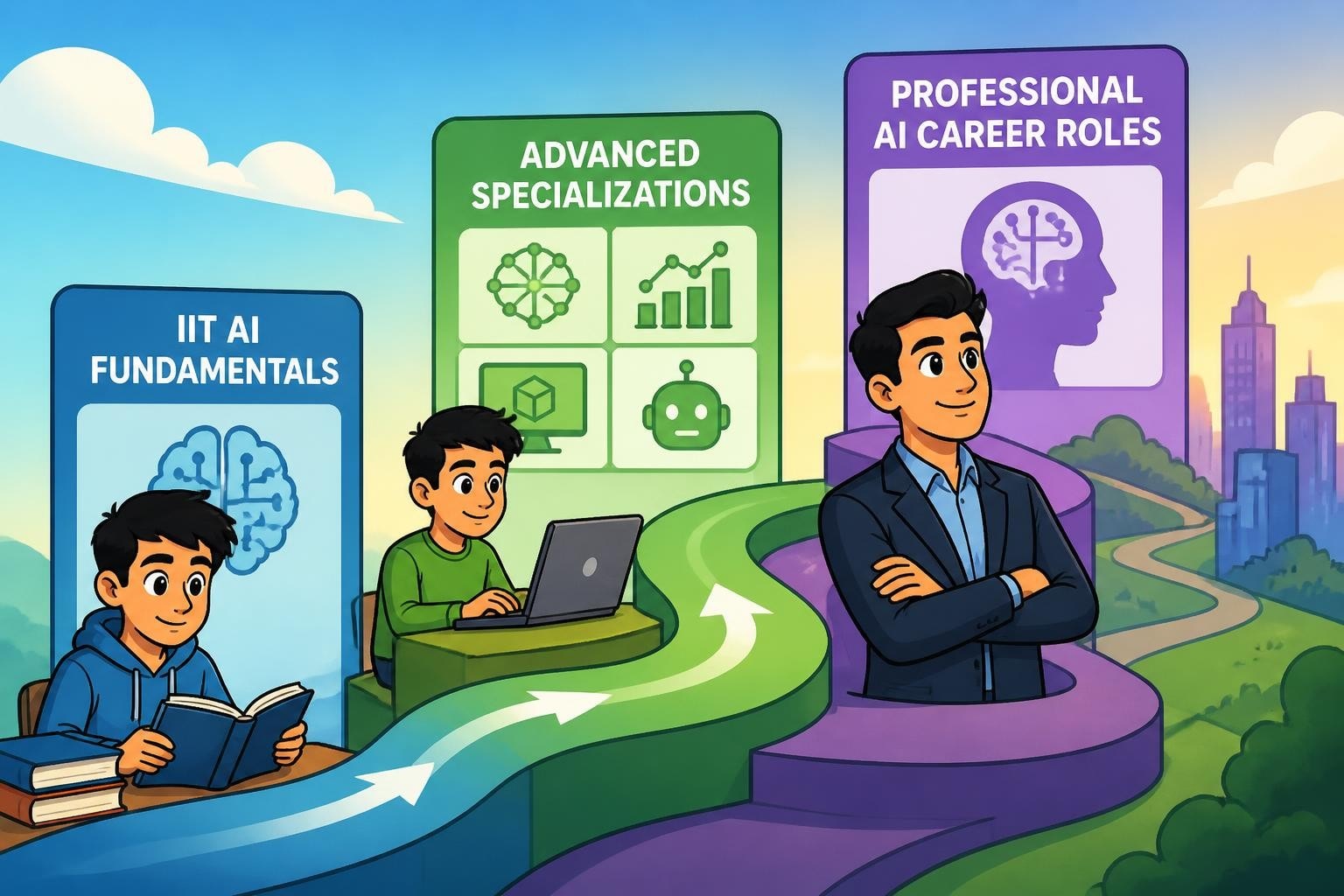
The artificial intelligence skills gap continues to widen in 2026, with businesses racing to adopt generative AI, machine learning automation, and intelligent systems across operations. Professionals who invest in structured AI education now position themselves at the forefront of this transformation. The challenge lies in selecting programs that deliver measurable results rather than superficial overviews. This guide examines the top 10 AI courses that combine rigorous curriculum design, hands-on application, and industry-recognized credentials to accelerate your AI expertise.
What Makes an AI Course Worth Your Time in 2026
The landscape of AI education has evolved dramatically. Generic introductions no longer suffice when organizations need practitioners who can deploy models, fine-tune algorithms, and integrate AI into production workflows.
Quality AI programs share these characteristics:
- Curriculum aligned with current academic standards for AI education from computer science task forces
- Practical projects using modern frameworks (TensorFlow, PyTorch, Hugging Face)
- Coverage of generative AI and large language model applications
- Assessment methods that test actual implementation skills
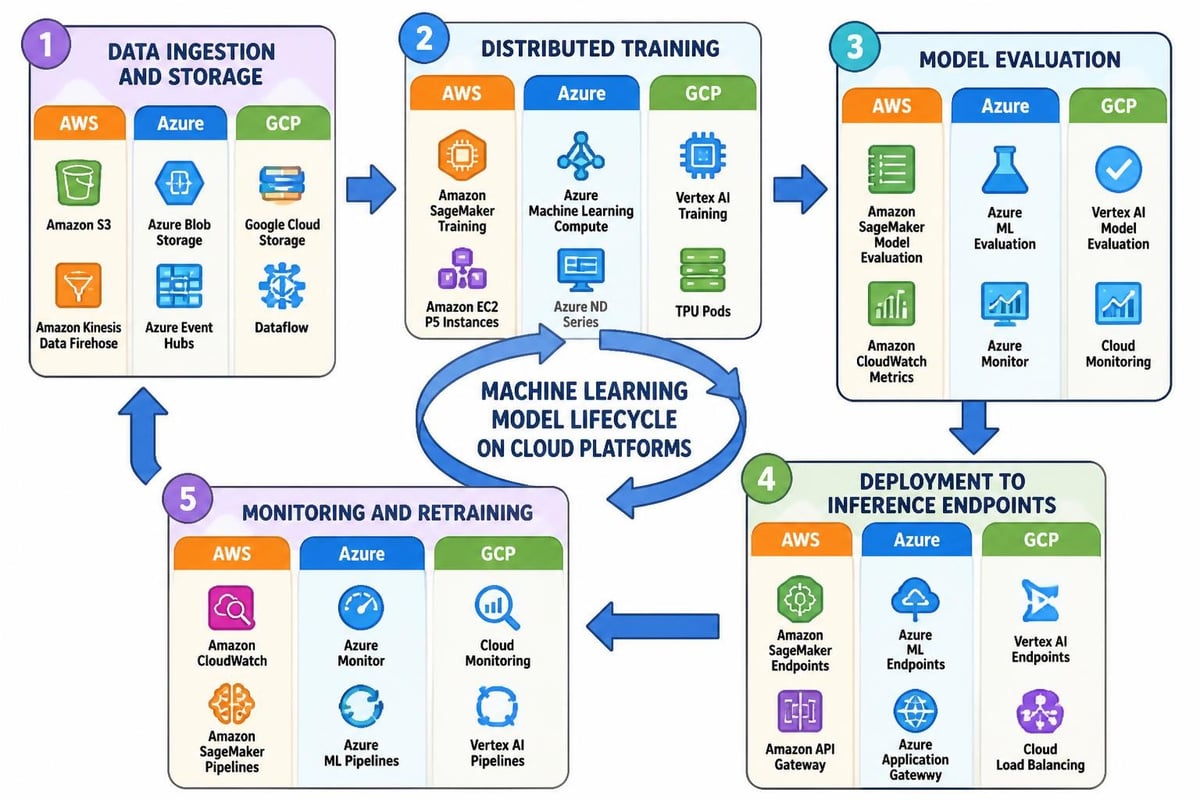
- Integration with cloud platforms (AWS, Azure, Google Cloud)
Recent research on AI in computing education demonstrates that effective courses balance theoretical foundations with applied problem-solving. Students learn faster when they build real systems rather than passively consume lectures.
The distinction between certification mills and substantive programs becomes clear through learner outcomes. Top courses produce graduates who contribute to production systems within weeks, not months.
Understanding Course Formats and Learning Paths
Different professional backgrounds require different approaches. Software engineers transitioning to ML engineering need depth in algorithms and mathematics. Business analysts implementing AI solutions prioritize no-code tools and strategic frameworks. Data scientists expanding into deep learning require specialized neural network training.
| Course Format | Time Commitment | Best For | Typical Outcomes |
|---|---|---|---|
| University MOOC | 10-16 weeks | Strong math background | Theoretical foundations |
| Bootcamp | 8-12 weeks intensive | Career changers | Portfolio projects |
| Certification | 40-80 hours | Working professionals | Vendor-specific skills |
| Corporate Program | Custom duration | Teams | Organizational alignment |
The AI and ML courses at MammothClub demonstrate how adaptive learning paths accommodate different starting points while maintaining rigor.
The Top 10 AI Courses Professionals Choose in 2026
Stanford CS229: Machine Learning
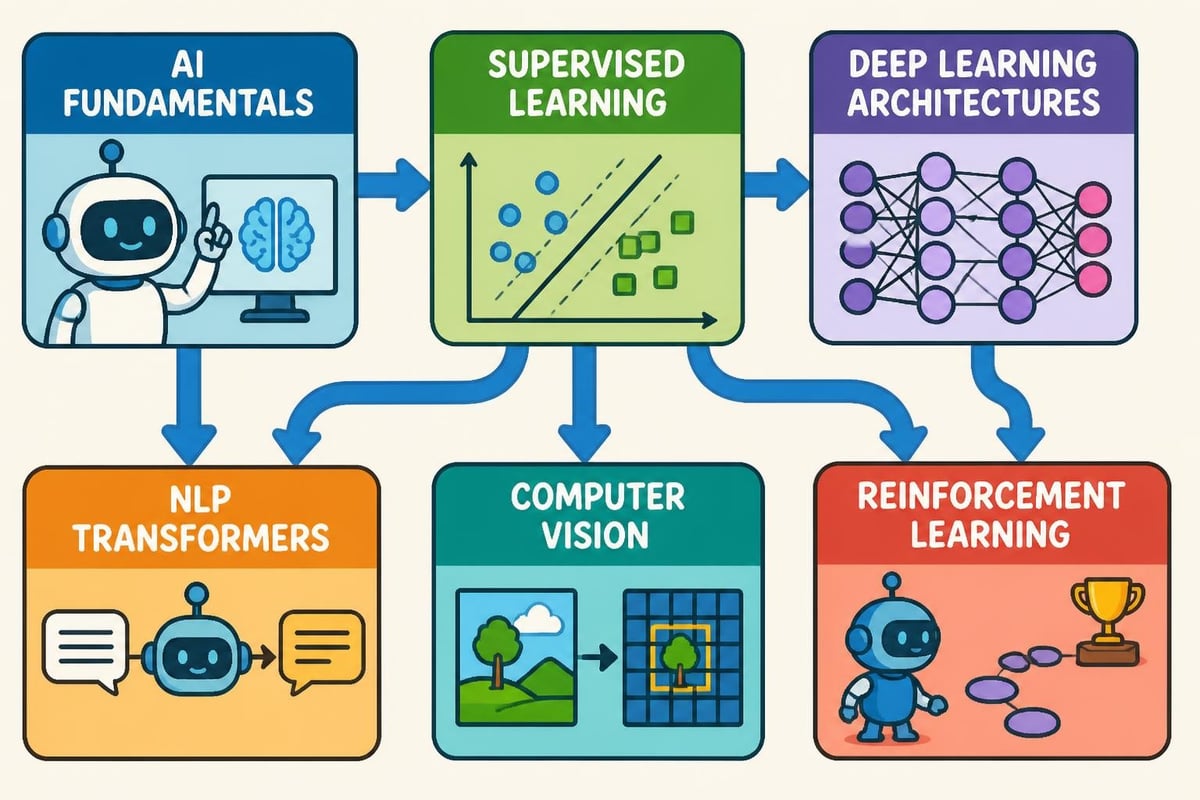
Stanford's CS229 Machine Learning course remains the gold standard for rigorous foundational education. Professor Andrew Ng's curriculum covers supervised learning, unsupervised learning, deep learning, and reinforcement learning with mathematical precision.
The course requires solid calculus, linear algebra, and probability knowledge. Students implement algorithms from scratch in Python before using high-level frameworks. Problem sets challenge learners to derive gradient descent updates, prove convergence properties, and debug optimization failures.
What sets CS229 apart:
- Weekly office hours with PhD students
- Competitive final projects that often become research papers
- Access to Stanford's computational resources
- Alumni network spanning major AI labs
Completion typically requires 15-20 hours weekly over 10 weeks. The investment pays dividends for those pursuing ML engineering roles at research-oriented companies.
MIT 6.036: Introduction to Machine Learning
MIT's 6.036 course through OpenLearning offers campus-level curriculum without enrollment barriers. The program emphasizes mathematical foundations while building practical intuition through coding exercises.
The structure balances lecture videos, interactive problem sets, and Python labs. Students progress from linear classifiers through neural networks, working with real datasets throughout. The course specifically addresses overfitting, regularization, and model selection-concepts that trip up many practitioners.
MIT's approach assumes programming competence but teaches machine learning concepts from first principles. This makes it accessible to software engineers while maintaining academic depth.
Microsoft Azure AI Fundamentals
For professionals entering AI from business or technical management roles, Microsoft's Azure AI Fundamentals certification provides comprehensive cloud-based AI understanding. The curriculum covers AI workloads, computer vision, natural language processing, and conversational AI within the Azure ecosystem.
The program stands out for its practical focus on deploying pre-trained models, configuring AI services, and understanding responsible AI principles. Learners build chatbots, image classifiers, and text analytics solutions using Azure Cognitive Services.
Core modules include:
- AI workload fundamentals and machine learning principles
- Computer vision workloads and Azure Vision services
- Natural language processing and Azure Language services
- Conversational AI and Azure Bot Framework
Certification requires passing the AI-900 exam, which tests both conceptual knowledge and service configuration skills. This credential particularly benefits professionals implementing AI in enterprise environments.
AWS Machine Learning and Generative AI Learning Path
Amazon's AWS AI learning resources provide role-based paths for machine learning engineers, data scientists, and business decision-makers. The platform distinguishes itself through integration with SageMaker, AWS's comprehensive ML platform.
The generative AI track, updated extensively in 2026, covers foundation models, prompt engineering, retrieval-augmented generation (RAG), and model fine-tuning. Students learn to deploy LLMs cost-effectively using SageMaker's distributed training and inference optimization.
Hands-on labs walk through building recommendation systems, forecasting models, and computer vision applications on real AWS infrastructure. The emphasis on production considerations-model monitoring, A/B testing, and scalability-prepares learners for operational ML roles.
Google AI Education and TensorFlow Developer Certificate
Google's AI Education hub aggregates resources from Google Brain, DeepMind, and Google Cloud into coherent learning paths. The TensorFlow Developer Certificate program teaches modern deep learning through hands-on implementation.
Students build and train neural networks for computer vision, time series forecasting, and natural language processing. The curriculum emphasizes transfer learning, using pre-trained models like BERT and EfficientNet to solve complex problems with limited data.
Google's approach integrates theoretical concepts with production best practices. Learners deploy models to TensorFlow Serving, optimize for mobile with TensorFlow Lite, and implement continuous training pipelines. The certification exam requires building and training models within a time limit, testing practical competence rather than memorization.
Deep Learning Specialization
Andrew Ng's Deep Learning Specialization through Coursera has trained over 1 million students since its launch. The five-course sequence progresses from neural network basics through convolutional networks, sequence models, and practical deployment strategies.
Each course combines video lectures with programming assignments in TensorFlow and Keras. Students implement architectures from research papers, understanding not just how to use libraries but why architectures work.
The five courses cover:
- Neural networks and deep learning fundamentals
- Hyperparameter tuning and optimization algorithms
- Convolutional neural networks for computer vision
- Sequence models for NLP and time series
- Structuring machine learning projects
The specialization particularly excels at teaching debugging strategies for deep learning. Learners diagnose high bias versus high variance, select appropriate regularization techniques, and optimize training efficiency.
Fast.ai Practical Deep Learning for Coders
Fast.ai takes a top-down approach, getting students building state-of-the-art models in the first lesson. The philosophy centers on learning by doing, understanding theory through implementation rather than the reverse.
The course uses PyTorch and the fastai library, which abstracts common patterns while maintaining flexibility. Students train image classifiers, text generators, and collaborative filtering systems before diving into the mathematics underlying these techniques.
Jeremy Howard's teaching style emphasizes practical considerations often omitted from academic courses: data augmentation strategies, learning rate scheduling, transfer learning tactics, and computational efficiency. The program particularly benefits practitioners who learn best through experimentation.
Applied AI Course at MammothClub
The applied AI course offerings at MammothClub differentiate through integration of business context with technical implementation. Rather than isolated algorithms, students solve complete business problems from data acquisition through model deployment and monitoring.
Interactive bootcamps combine live instruction with hands-on laboratories using industry-standard tools. The curriculum adapts based on learner performance, using AI-powered dashboards to identify knowledge gaps and recommend targeted practice.
Corporate certification programs align technical training with organizational objectives, ensuring teams develop cohesive AI implementation strategies. Companies report faster time-to-deployment when teams train together on shared business problems.
Full Stack Deep Learning
Full Stack Deep Learning addresses the gap between model development and production deployment. The curriculum covers infrastructure, testing, deployment, and monitoring-skills rarely taught in academic programs but essential for ML engineers.
Students learn to structure ML projects, set up training pipelines, design model APIs, and monitor models in production. The course includes labs on Docker containerization, Kubernetes orchestration, and CI/CD for ML systems.
Production topics covered:
- Data versioning and experiment tracking
- Model serving architectures and latency optimization
- Monitoring for data drift and model degradation
- A/B testing and shadow deployment strategies
This program suits software engineers expanding into ML engineering roles where production reliability matters as much as model accuracy.
IBM Applied AI Professional Certificate
IBM's certificate program targets professionals with limited programming experience who want to implement AI solutions. The curriculum uses low-code tools alongside Python, making AI accessible to business analysts and domain experts.
Students build chatbots with Watson Assistant, create computer vision applications with Watson Studio, and deploy machine learning models without deep coding expertise. The program emphasizes responsible AI, teaching bias detection, explainability techniques, and ethical considerations.
The certificate includes capstone projects applying AI to specific industries-healthcare diagnostics, financial fraud detection, customer service automation. This industry focus helps learners connect technical concepts to business value.
Selecting the Right AI Course for Your Goals
Career objectives should drive course selection more than rankings or brand recognition. A Stanford MOOC serves PhD aspirations differently than it serves a product manager implementing AI features.
| Career Goal | Recommended Course Type | Key Skills to Prioritize |
|---|---|---|
| ML Engineer at tech company | University MOOC + Deep Learning | Algorithm implementation, optimization |
| AI Product Manager | Business-focused certification | Use cases, vendor evaluation |
| Data Scientist (enterprise) | Cloud platform training | Deployment, monitoring, scaling |
| Research Scientist | Academic program | Mathematics, paper implementation |
| AI Consultant | Applied bootcamp | Cross-industry applications |
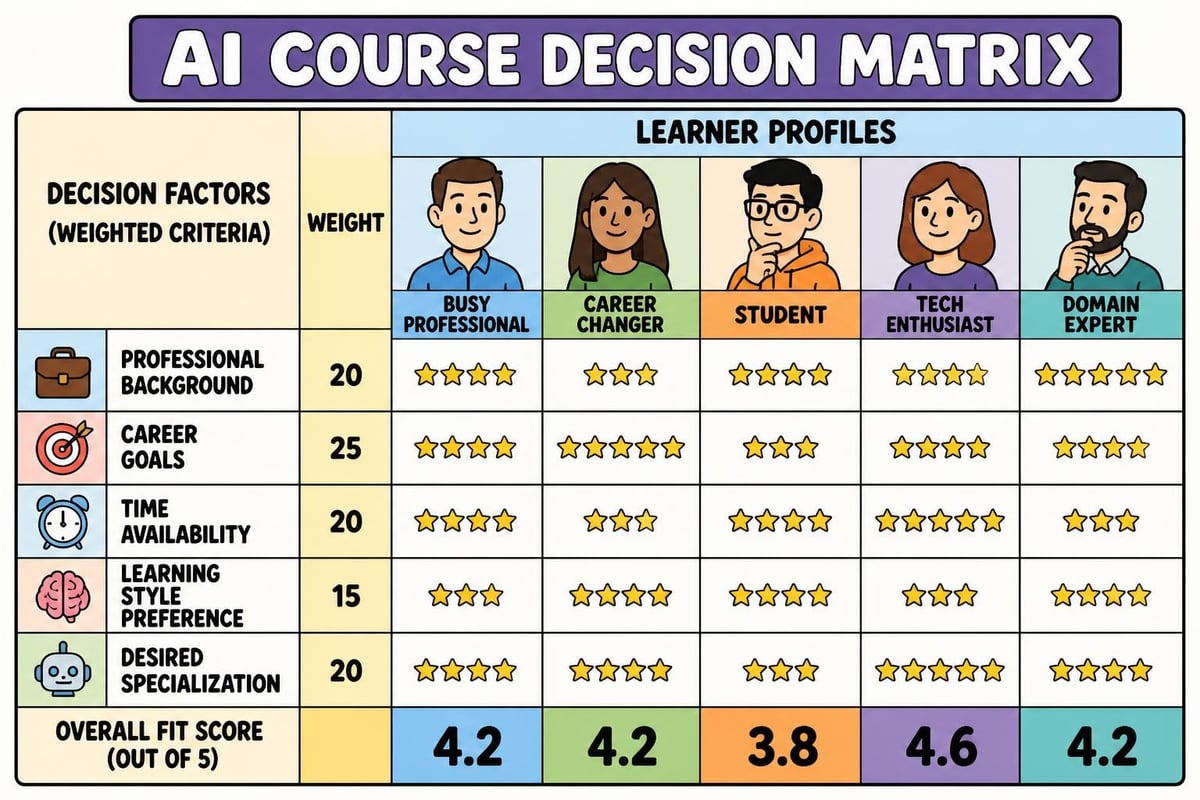
For professionals exploring AI certification options, the decision matrix should weigh time investment against skill depth required. Certifications signal competence to employers but hands-on projects demonstrate capability.
Evaluating Course Quality Beyond Marketing
Course reviews and completion rates reveal instructional effectiveness. Programs with high dropout rates often indicate poor pedagogical design or misaligned difficulty levels.
Quality indicators to assess:
- Instructor credentials and teaching experience
- Student project quality (review capstone work)
- Alumni career progression data
- Curriculum update frequency
- Access to instructor support
The Nature journal's analysis of AI education emphasizes that effective programs integrate assessment strategies beyond multiple-choice quizzes. Look for courses requiring project implementation, code review, and iterative improvement.
Maximizing Learning Outcomes from AI Courses
Passive video consumption yields minimal skill development. Active learning strategies multiply effectiveness, particularly for complex technical subjects like machine learning.
High-impact study approaches:
- Implement concepts before watching solution videos
- Modify assignment code to test edge cases
- Participate in course discussion forums to teach others
- Build supplementary projects applying course concepts
- Document learning in public (blog posts, GitHub repos)
Students who engage with course communities report significantly higher comprehension and retention. Explaining concepts to peers forces clarification of fuzzy understanding.
Building a Learning Portfolio
Employers increasingly evaluate practical capability through GitHub portfolios rather than credential lists. Each course project should demonstrate a distinct skill and solve a realistic problem.
Effective portfolio projects include:
- Well-documented Jupyter notebooks with clear explanations
- Deployed applications (Streamlit, Gradio, or full web apps)
- Model performance analysis and improvement iterations
- Real-world datasets from domains relevant to target roles
- Clear README files explaining problem, approach, and results
The MammothClub platform emphasizes portfolio development throughout its programs, with dedicated project showcase features and peer review systems.
Integration with Professional Development Plans
AI courses deliver maximum ROI when aligned with organizational needs. Professionals should coordinate training plans with managers to ensure immediate application opportunities.
Companies benefit most when multiple team members complete complementary courses simultaneously. A data scientist studying deep learning, a DevOps engineer learning MLOps, and a product manager understanding AI capabilities create synergies that isolated training cannot achieve.
For organizations evaluating corporate AI training programs, consider cohort-based learning that builds shared vocabulary and collaborative problem-solving skills. Teams that train together implement AI solutions 40% faster according to industry benchmarks.
Staying Current in Rapidly Evolving AI Field
AI capabilities advance faster than course content updates. The most valuable programs teach foundational principles that transfer across technologies rather than specific tool interfaces.
Supplement formal courses with:
- Research paper reading groups (start with arXiv summaries)
- Experimentation with new model releases (GPT, Claude, Gemini)
- Conference talk recordings (NeurIPS, ICML, ICLR)
- Open source contribution to ML libraries
- Industry blog posts from practitioners
The investment in understanding fundamentals pays compounding returns as new architectures emerge. Students who grasp attention mechanisms adapt easily to new transformer variants.
Cost-Benefit Analysis of AI Education Options
Course costs range from free university MOOCs to $20,000+ executive programs. Budget constraints matter less than total opportunity cost including time investment.
Cost comparison framework:
| Option | Financial Cost | Time Investment | Career Impact |
|---|---|---|---|
| Free MOOC | $0 | 100-200 hours | Moderate (requires proof) |
| Paid certification | $300-$2,000 | 60-100 hours | High (credential value) |
| Bootcamp | $5,000-$15,000 | 300-500 hours | Very High (career change) |
| Graduate degree | $30,000-$120,000 | 1,000-2,000 hours | Very High (research roles) |
For most working professionals, mid-tier certifications and bootcamps offer optimal value. The pricing at MammothClub reflects this balance, providing comprehensive curriculum at accessible price points with flexible payment options.
Employer-sponsored training programs eliminate financial barriers while signaling organizational commitment to AI adoption. Professionals should exhaust company education benefits before self-funding advanced programs.
The top 10 AI courses outlined here serve diverse learning needs, from mathematical foundations to practical deployment skills, ensuring professionals at any stage find appropriate growth paths. Whether you're building your first neural network or architecting enterprise AI systems, structured education accelerates capability development far beyond self-study. MammothClub delivers exactly this structured acceleration through 3,000+ courses, AI-powered learning tools, and corporate programs designed to transform teams into AI-capable organizations. Start your AI upskilling journey today with personalized learning paths that adapt to your goals and deliver measurable results in weeks, not years.