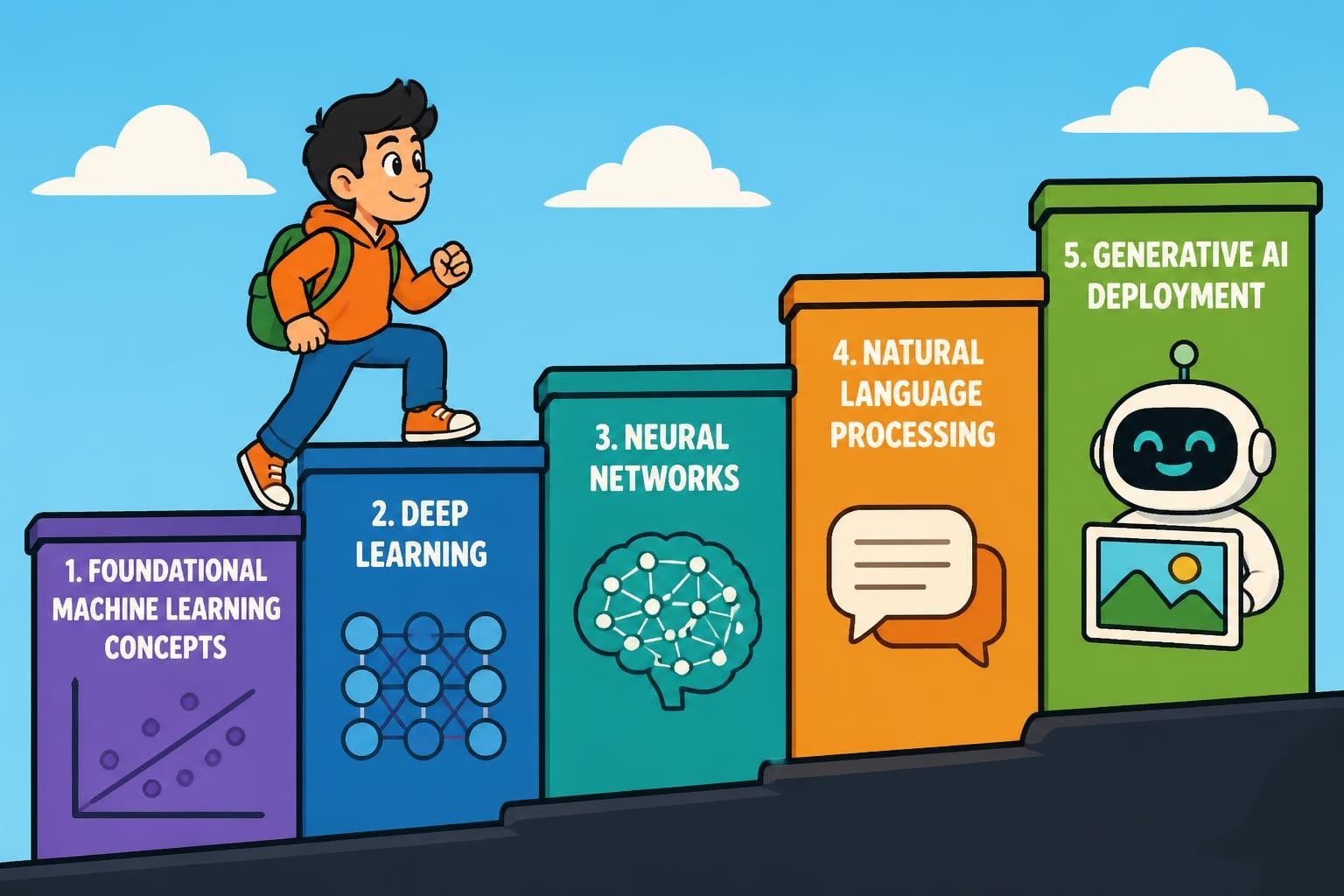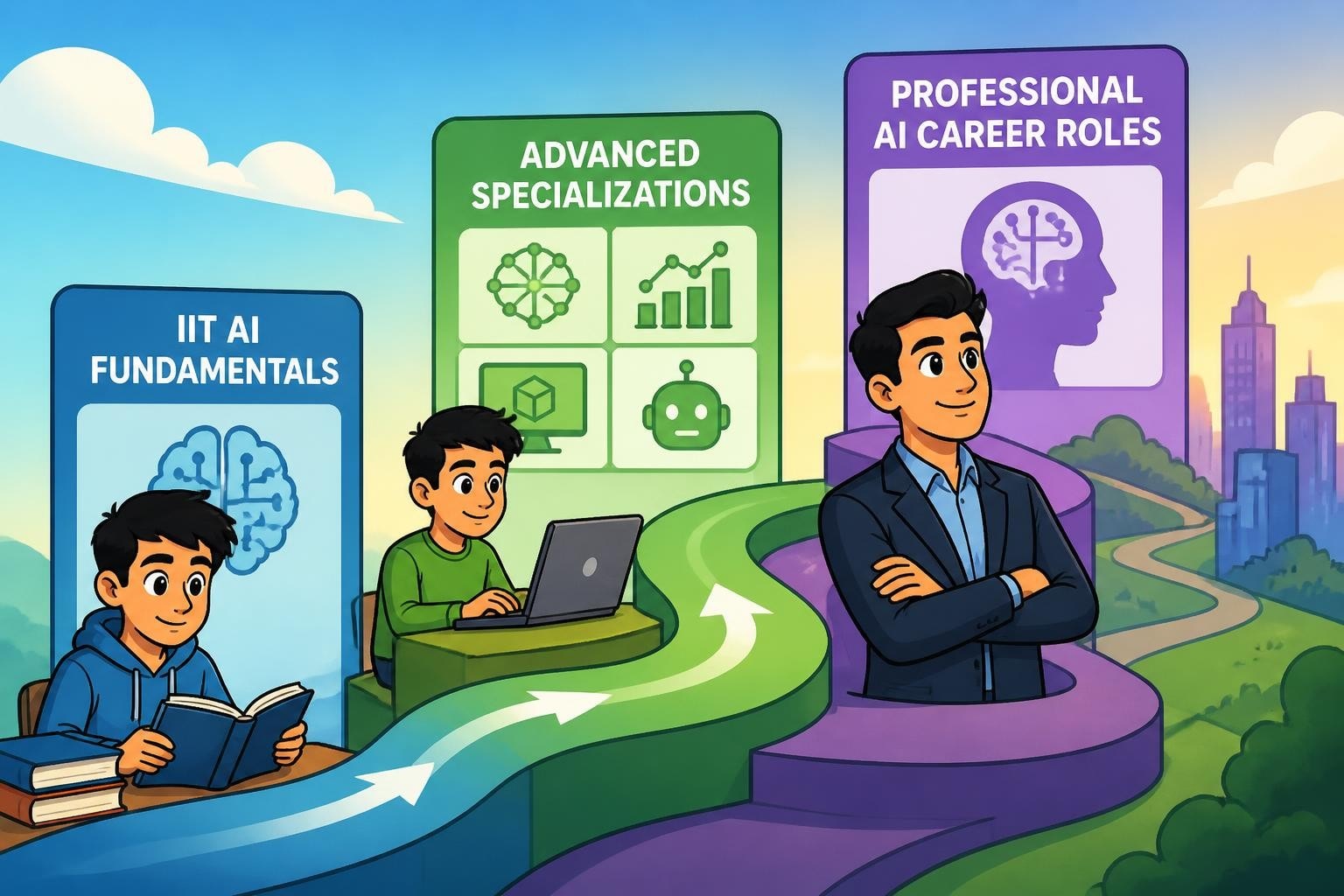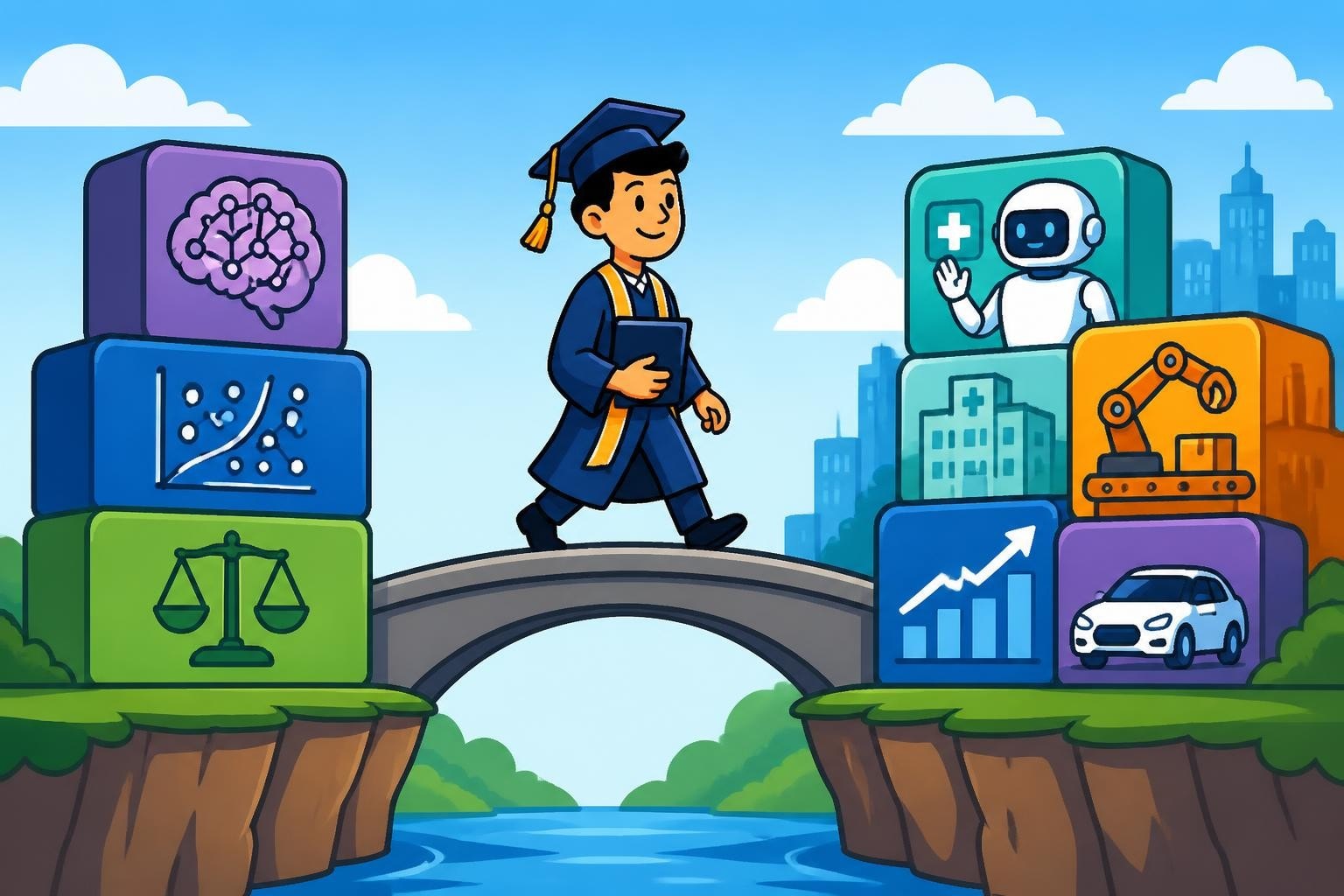
The Massachusetts Institute of Technology has long been recognized as a powerhouse in artificial intelligence education, offering everything from foundational theory to cutting-edge generative AI applications. Whether you're a working professional seeking to upskill, a corporate leader building team capabilities, or someone exploring AI for the first time, understanding what an mit artificial intelligence course actually delivers can help you make informed decisions about your learning path. This guide examines MIT's various AI course offerings, their practical applications, and how they compare to modern learning platforms in 2026.
Understanding MIT's AI Course Ecosystem
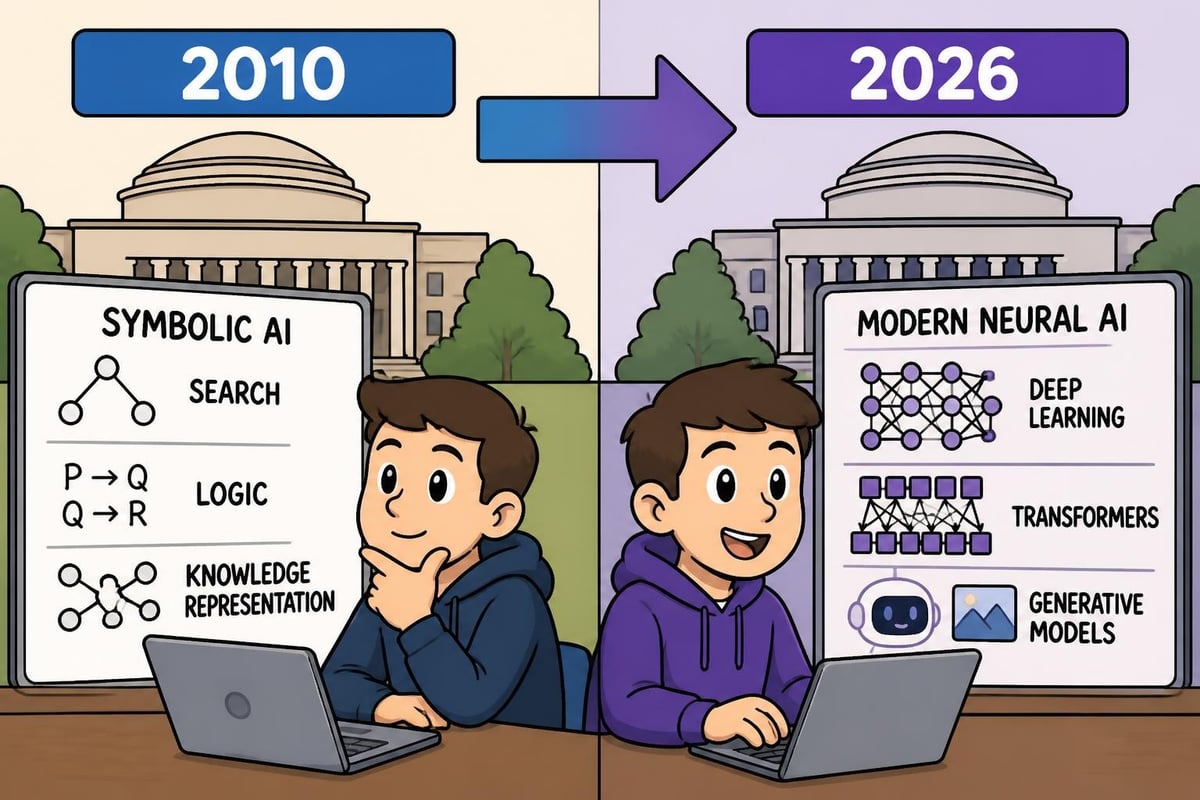
MIT offers several distinct artificial intelligence learning pathways, each designed for different audiences and learning objectives. The most well-known is the 6.034 Artificial Intelligence course, available through MIT OpenCourseWare since 2010. This foundational course covers classical AI methods including search algorithms, knowledge representation, constraint satisfaction, and machine learning basics.
For professionals seeking modern, industry-focused training, MIT xPRO recently launched a Generative AI course specifically designed for working professionals. This program targets business leaders and technical practitioners who need practical skills in prompt engineering, AI strategy, and implementation frameworks.
The Classic OpenCourseWare Foundation
The traditional mit artificial intelligence course (6.034) provides comprehensive coverage of symbolic AI methods. Students work through problem sets covering:
- Search algorithms for pathfinding and optimization
- Game playing using minimax and alpha-beta pruning
- Constraint satisfaction problems and propagation
- Knowledge representation through frames and semantic networks
- Classical planning and logical reasoning
This curriculum remains valuable for understanding AI fundamentals. However, it predates the deep learning revolution and focuses primarily on symbolic approaches rather than neural networks. The course materials are freely available, making them accessible for self-study, though without instructor support or certification.
Deep Learning and Modern AI at MIT
MIT's Introduction to Deep Learning (6.S191) represents the institute's modern AI teaching approach. This intensive course covers neural networks, convolutional architectures, recurrent networks, and increasingly, generative AI technologies. The 2025 curriculum specifically includes modules on large language models, diffusion models, and AI safety considerations.
The course structure emphasizes hands-on implementation:
- Foundational neural networks with TensorFlow and PyTorch frameworks
- Computer vision applications including image classification and segmentation
- Sequential modeling for natural language and time-series data
- Generative models covering GANs, VAEs, and diffusion approaches
- Reinforcement learning for decision-making systems
Practical Applications and Project Work
Unlike purely theoretical courses, the modern mit artificial intelligence course offerings incorporate real-world project components. Students build functioning systems, from image classifiers to language models, gaining experience with production ML workflows. This practical emphasis aligns with how professionals are using and teaching generative AI across higher education.
Research shows that MIT course materials are increasingly valuable beyond the classroom. A recent arXiv study on solving machine learning problems demonstrated how MIT 6.036 course exercises are being used to train automated tutoring systems and develop adaptive learning tools.
Who Should Take an MIT AI Course?
Understanding your learning objectives is crucial before committing to any mit artificial intelligence course. Different pathways serve distinct professional needs and career stages.
| Audience Type | Best MIT Option | Key Benefits | Time Commitment |
|---|---|---|---|
| Beginners | 6.034 OpenCourseWare | Free, foundational, self-paced | 12-15 weeks |
| Technical professionals | 6.S191 Deep Learning | Modern techniques, hands-on | 4 weeks intensive |
| Business leaders | MIT xPRO Generative AI | Strategy-focused, certified | 6-8 weeks online |
| Researchers | Advanced graduate courses | Cutting-edge methods | Semester-long |
For professionals seeking comprehensive training beyond a single course, platforms like MammothClub offer structured learning paths with over 3,000 courses covering the full AI spectrum.
Prerequisites and Technical Requirements
Most mit artificial intelligence course options assume strong programming skills and mathematical foundations. Specifically, you should have:
- Programming proficiency in Python, including data structures and algorithms
- Linear algebra understanding of vectors, matrices, and transformations
- Calculus knowledge of derivatives and gradients for optimization
- Probability and statistics for understanding uncertainty and inference
Without these prerequisites, the learning curve becomes steep. For those building foundational skills first, exploring AI and ML courses with scaffolded learning paths may provide better outcomes.
Comparing MIT Courses to Alternative Learning Platforms
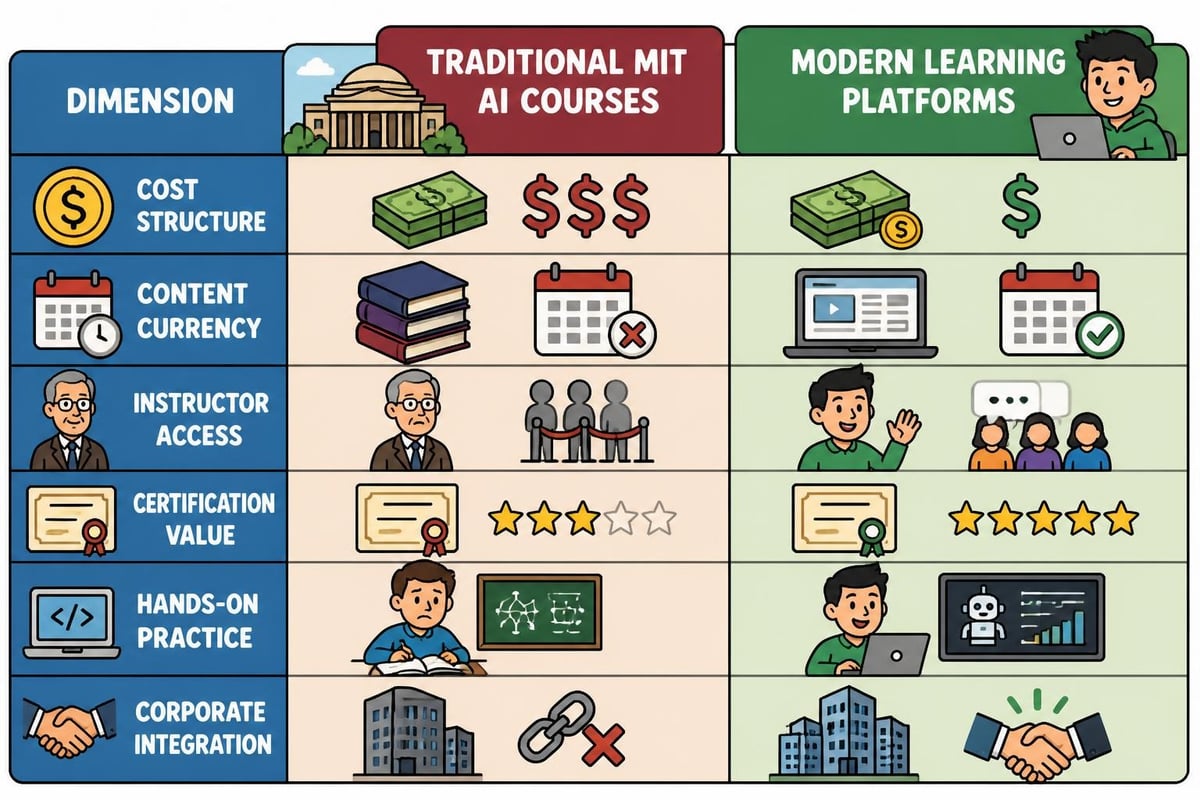
The landscape of AI education has expanded dramatically beyond traditional university offerings. While MIT courses provide academic rigor and prestigious credentials, modern learning platforms offer advantages in accessibility, currency, and breadth.
Cost and Accessibility Factors
MIT OpenCourseWare materials are free but provide no instructor interaction or certification. MIT xPRO professional courses cost several thousand dollars for 6-8 week programs. These price points position them as premium options requiring significant investment.
Alternative platforms operate on different models:
- Subscription-based access to thousands of courses with regular updates
- Corporate licensing for team training with usage analytics
- Flexible scheduling allowing professionals to learn around work commitments
- Interactive elements including AI-powered coaching and peer collaboration
Organizations evaluating applied AI course options increasingly weigh these factors against traditional academic programs.
Content Currency and Update Cycles
A critical challenge with the mit artificial intelligence course materials is update frequency. The flagship 6.034 course was last revised in 2010, making it outdated for modern AI practice. Even the more recent deep learning course updates annually, but cannot match the continuous content refreshment possible on dedicated learning platforms.
AI technology evolves rapidly. Techniques dominant in 2024 become obsolete by 2026. Research on generative AI in higher education highlights how academic institutions struggle to keep curricula aligned with industry practice. Learning platforms purpose-built for professional training can deploy new content within weeks of technological breakthroughs.
Learning Outcomes and Career Impact
What can you actually accomplish after completing an mit artificial intelligence course? The answer depends significantly on which program you choose and how you apply the knowledge.
Technical Competencies Developed
The classical AI course builds strong foundations in:
- Algorithm analysis and complexity reasoning
- Problem formulation and solution design
- Logical inference and knowledge representation
- Search optimization techniques
However, these skills alone are insufficient for modern AI roles. Deep learning courses add:
- Neural network architecture design
- Training pipeline development and debugging
- Model optimization and hyperparameter tuning
- Deployment considerations for production systems
For comprehensive skill development, professionals often need to supplement MIT coursework with practical implementation experience. Programs focusing on DeepLearning.AI courses or similar hands-on training fill this gap.
Certification and Credential Value
MIT xPRO professional certificates carry significant weight in hiring decisions, particularly for leadership roles requiring AI strategy expertise. The institution's reputation provides credibility that helps candidates stand out in competitive markets.
However, professional organizations like IEEE increasingly emphasize demonstrated competence over institutional credentials. Building a portfolio of implemented projects often proves more valuable than certificates alone. This shift favors learning approaches that emphasize applied work over passive content consumption.
Integrating MIT Learning with Corporate Training Programs
Organizations investing in team AI capabilities face a fundamental question: should they sponsor employees through MIT programs or build internal training using comprehensive platforms?
Corporate Learning Requirements
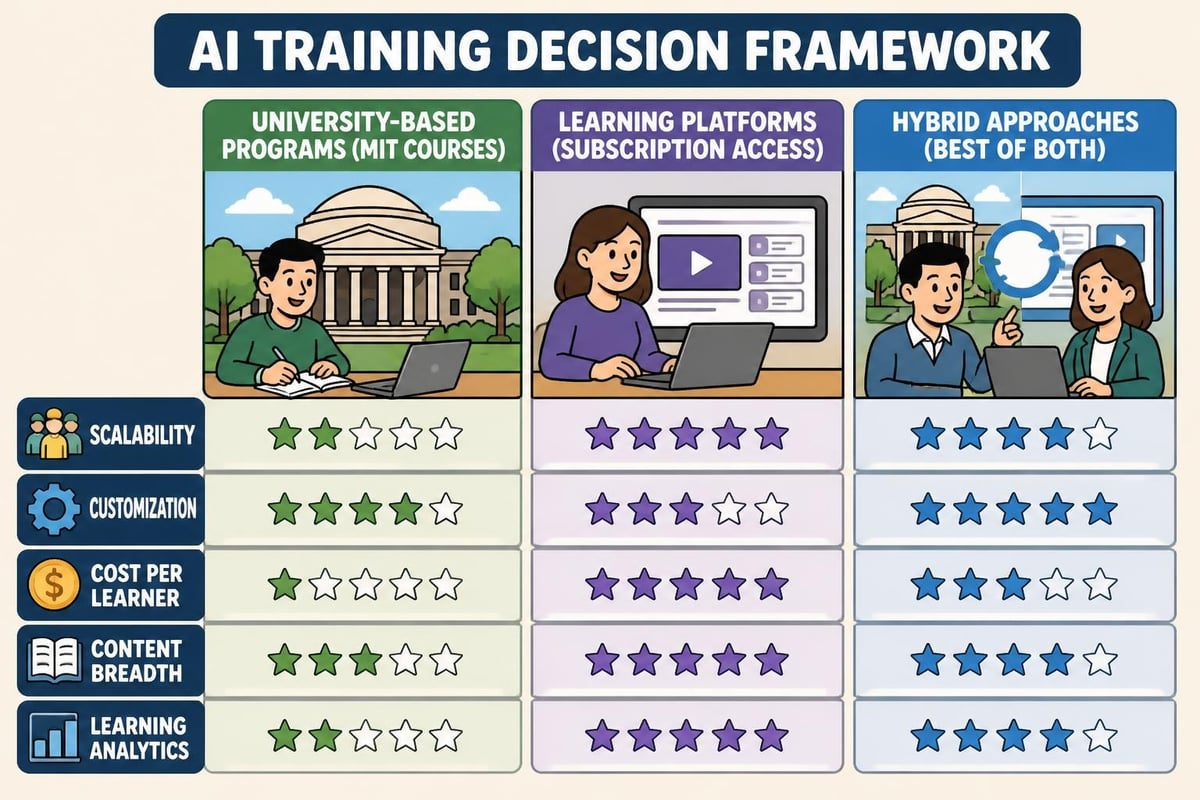
Effective enterprise AI training must deliver:
- Measurable skill development tracked through assessments and projects
- Scalable delivery reaching teams across geographies and time zones
- Customizable content aligned with specific business applications
- Administrative visibility into progress, completion, and competency gaps
- Cost efficiency balancing quality with budget constraints
Traditional mit artificial intelligence course offerings excel in content quality but struggle with scalability and customization. A cohort-based MIT xPRO program works well for leadership teams of 10-20 people but becomes impractical for upskilling hundreds of employees.
Organizations exploring business learning solutions benefit from platforms offering both breadth and depth. A typical Fortune 500 AI transformation requires training spanning:
- Executive workshops on AI strategy and governance
- Technical bootcamps for data science and ML engineering teams
- Domain-specific courses for marketing, finance, and operations professionals
- Tool-specific training for platforms the organization has adopted
No single mit artificial intelligence course addresses all these needs. Comprehensive platforms with thousands of courses enable organizations to build complete learning paths tailored to each role.
Self-Study Strategies for MIT AI Courses
Successfully completing an MIT course through OpenCourseWare requires discipline and strategic planning. Without instructor support or peer cohorts, learners must create their own structure and accountability.
Effective Study Techniques
Research on education in the AI era highlights several evidence-based learning strategies:
- Spaced repetition reviewing concepts at increasing intervals rather than cramming
- Active recall testing yourself before checking answers
- Elaborative interrogation asking "why" and "how" questions about concepts
- Interleaved practice mixing problem types rather than blocking by topic
For the mathematical content in an mit artificial intelligence course, working through proofs by hand and implementing algorithms from scratch significantly deepens understanding compared to passive video watching.
Supplementing with Practical Projects
Theory without application leads to shallow learning. Successful self-study incorporates projects that extend beyond course exercises:
- Build a chess engine using search algorithms from classical AI courses
- Implement a recommender system using collaborative filtering and neural approaches
- Create a chatbot incorporating natural language processing techniques
- Develop an image classifier for a domain you care about
These projects cement understanding while building portfolio pieces demonstrating competence. Platforms offering applied AI course content often include project templates and datasets that accelerate this hands-on learning.
Future Directions in MIT AI Education
MIT continues evolving its AI curriculum to address emerging technologies and pedagogical approaches. The Ithaka S+R report on making AI generative for higher education documents how institutions are integrating generative AI both as subject matter and as teaching tool.
Emerging Course Topics
Future mit artificial intelligence course offerings are likely to emphasize:
- AI safety and alignment addressing risks from increasingly capable systems
- Multimodal learning combining vision, language, and other modalities
- Efficient AI developing models that require less computation and data
- AI governance covering policy, ethics, and societal implications
- Human-AI collaboration designing systems that augment rather than replace humans
These topics reflect both technological advances and societal concerns about AI's growing influence. Professionals staying current need learning platforms that can quickly incorporate emerging topics rather than waiting for academic course revision cycles.
Integration with Other Disciplines
AI is increasingly interdisciplinary, requiring knowledge of domain applications beyond computer science. MIT's curriculum evolution shows growing integration with:
| Field | AI Integration Focus | Example Applications |
|---|---|---|
| Healthcare | Diagnostic systems, drug discovery | Medical imaging analysis, protein folding |
| Manufacturing | Predictive maintenance, optimization | Quality control, supply chain management |
| Finance | Risk modeling, trading systems | Fraud detection, algorithmic trading |
| Climate | Modeling, prediction, optimization | Weather forecasting, emissions reduction |
| Transportation | Autonomous systems, routing | Self-driving vehicles, traffic optimization |
This interdisciplinary shift means that a single mit artificial intelligence course provides only part of the knowledge needed for specialized applications. Professionals benefit from learning paths that combine AI fundamentals with domain-specific content.
Making Your Learning Decision
Choosing the right AI education path depends on your current skill level, career goals, time availability, and budget. MIT courses offer exceptional content quality and prestigious credentials but come with significant constraints around cost, pacing, and breadth.
Before committing to any mit artificial intelligence course, honestly assess:
- Your technical foundation - Do you have the prerequisites or need foundational courses first?
- Your learning style - Do you thrive in self-paced environments or need structure and accountability?
- Your career timeline - Can you wait months for cohort courses or need immediate access?
- Your application context - Does the course content align with your actual work problems?
- Your budget constraints - Can you afford premium pricing or need cost-effective alternatives?
For many professionals, the optimal path combines multiple resources. Use MIT OpenCourseWare for theoretical foundations, supplement with platform courses offering hands-on practice, and join communities providing peer support and accountability.
Organizations building team capabilities increasingly adopt comprehensive learning platforms that provide the breadth, flexibility, and analytics that individual courses cannot match. The question shifts from "which course should we take?" to "which learning ecosystem best supports our transformation goals?"
Maximizing Return on Your AI Education Investment
Whether pursuing an mit artificial intelligence course or alternative learning paths, maximizing value requires strategic engagement beyond passive content consumption.
Building a Learning Portfolio
Document your AI learning journey through:
- GitHub repositories showcasing implemented projects and code
- Blog posts explaining concepts you've mastered to others
- Kaggle competitions demonstrating practical data science skills
- Open-source contributions to AI libraries and frameworks
- Professional presentations sharing insights with colleagues
This portfolio provides tangible evidence of competence that complements formal credentials. Hiring managers increasingly value demonstrated capability over certificates alone.
Creating Accountability Systems
Self-directed learning fails without accountability. Successful strategies include:
- Study groups meeting regularly to discuss concepts and problem sets
- Public commitments announcing learning goals to peers and stakeholders
- Progress tracking using tools to monitor completion and time investment
- Regular assessments testing knowledge retention at intervals
- Teaching others explaining concepts to colleagues or online communities
These mechanisms transform passive course consumption into active learning that drives retention and application.
MIT's artificial intelligence courses represent gold-standard academic content, offering rigorous foundations and prestigious credentials that open career doors. However, the rapidly evolving AI landscape demands learning approaches that combine theoretical depth with practical application, continuous content updates, and flexible access. Whether you pursue MIT OpenCourseWare, professional certificates, or comprehensive platform alternatives, success comes from sustained engagement, hands-on practice, and strategic portfolio building. If you're ready to accelerate your AI skills with access to thousands of courses, interactive learning tools, and measurable outcomes, explore how MammothClub can support your professional development journey with corporate-ready training programs designed for the demands of 2026 and beyond.