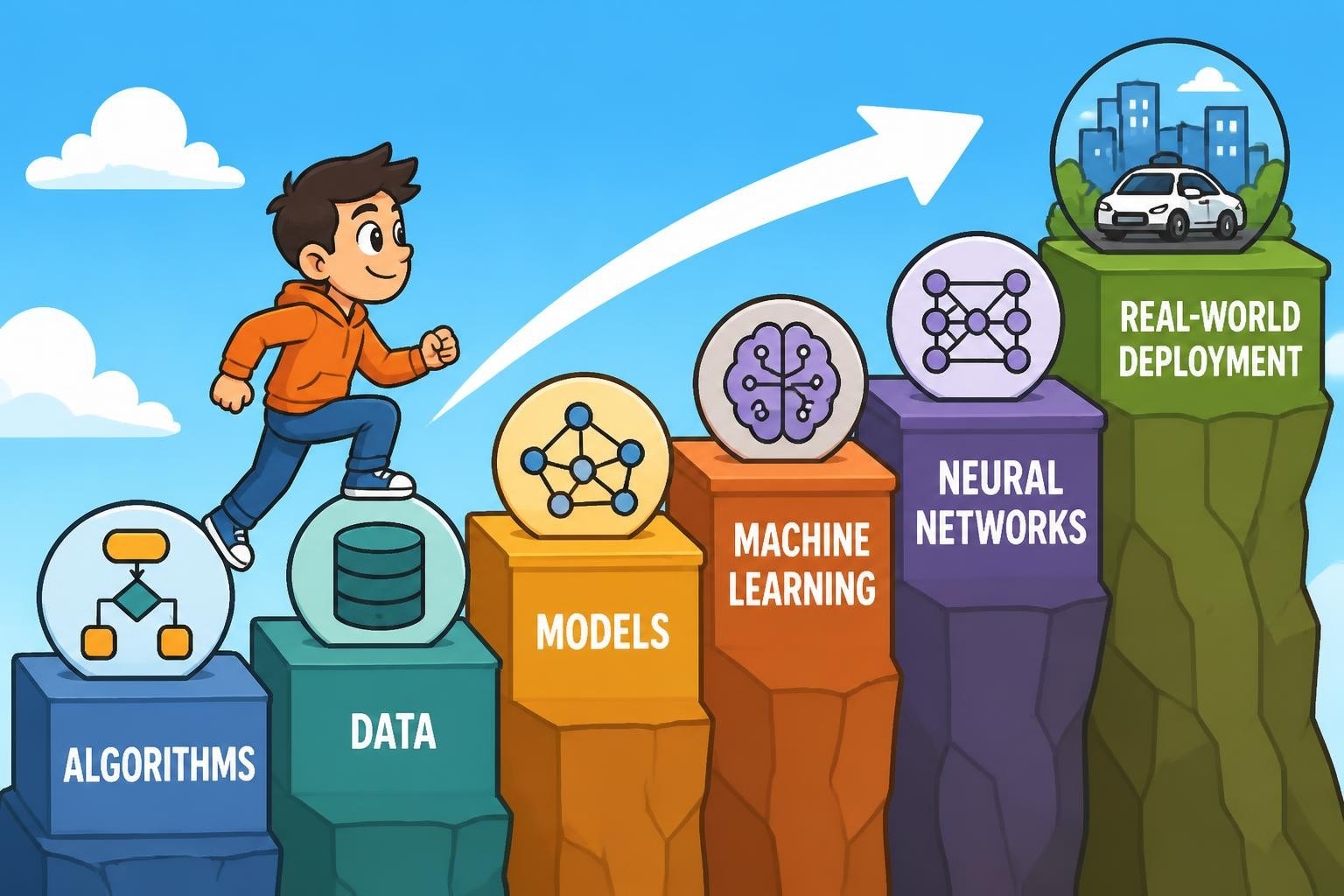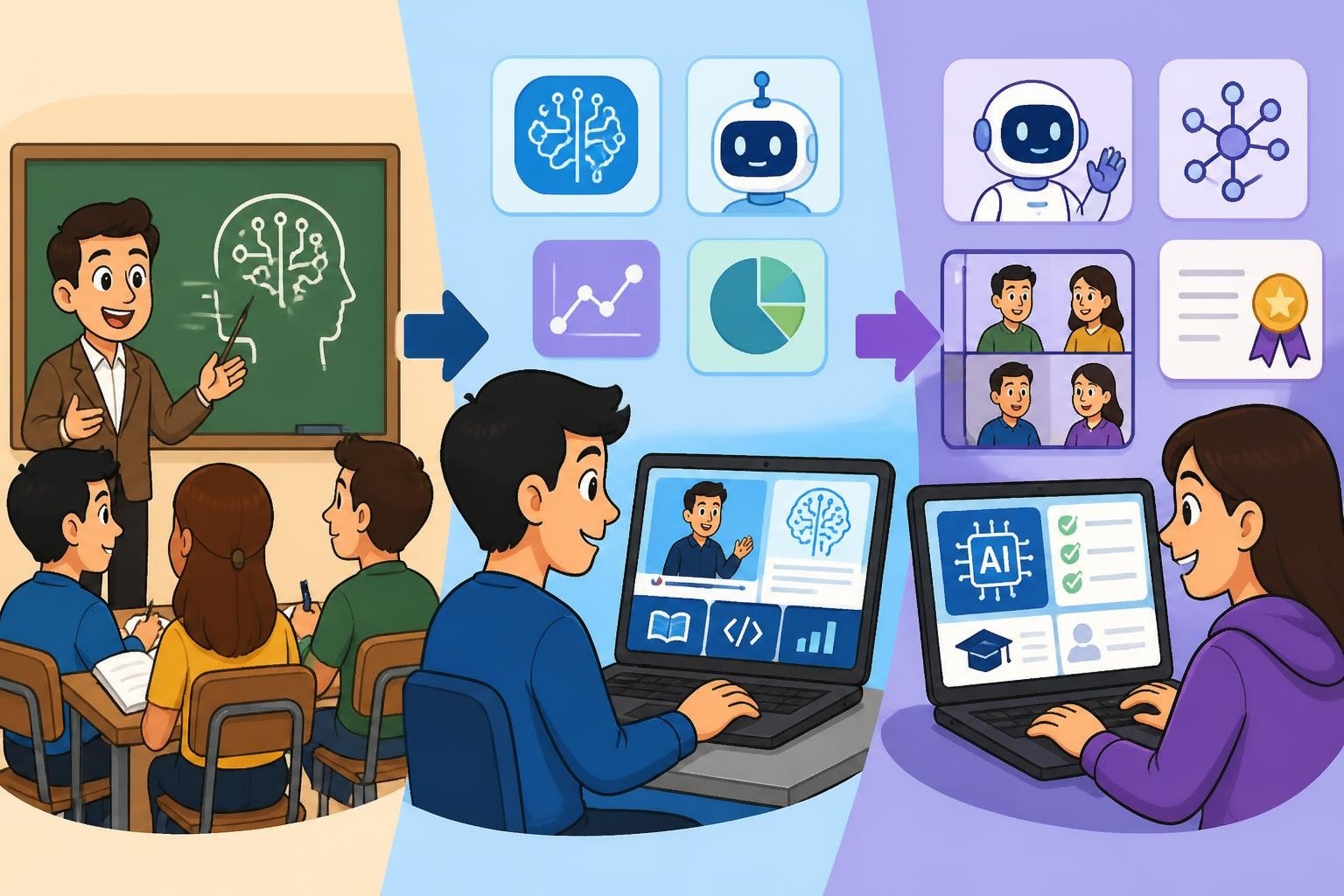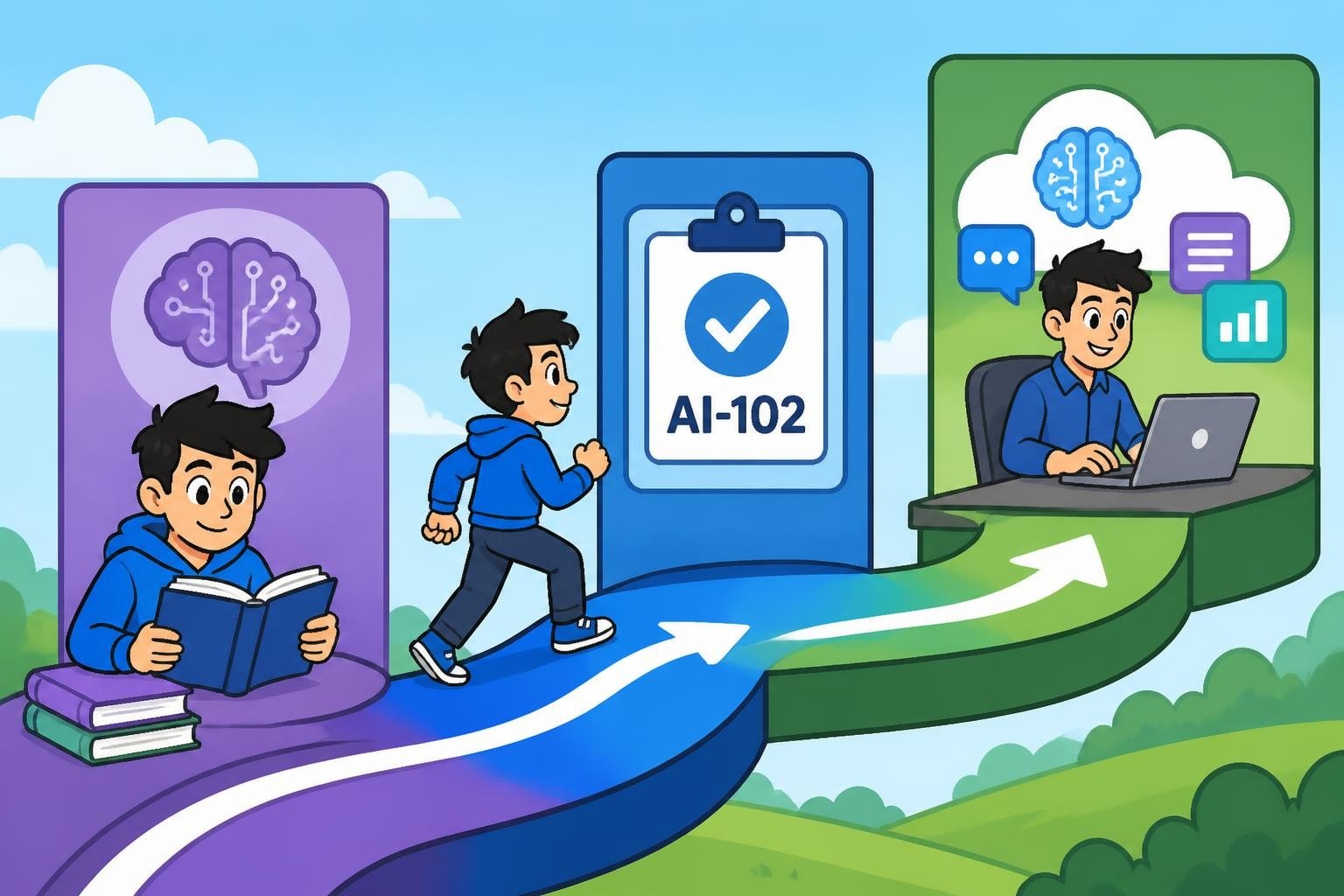
The landscape of artificial intelligence education has shifted dramatically from theoretical foundations to practical implementation. Professionals seeking to transition into AI roles no longer need purely academic programs. Instead, an applied AI course focuses on hands-on skills, real-world projects, and production-ready techniques that employers actively seek. These programs bridge the gap between knowing AI concepts and deploying them in business environments, making them essential for career advancement in 2026.
What Defines an Applied AI Course
An applied AI course emphasizes implementation over theory, teaching students to build, deploy, and maintain machine learning systems in production environments. Unlike traditional computer science programs that focus on algorithms and mathematical proofs, applied programs prioritize coding skills, framework mastery, and end-to-end project completion.
Core Curriculum Components
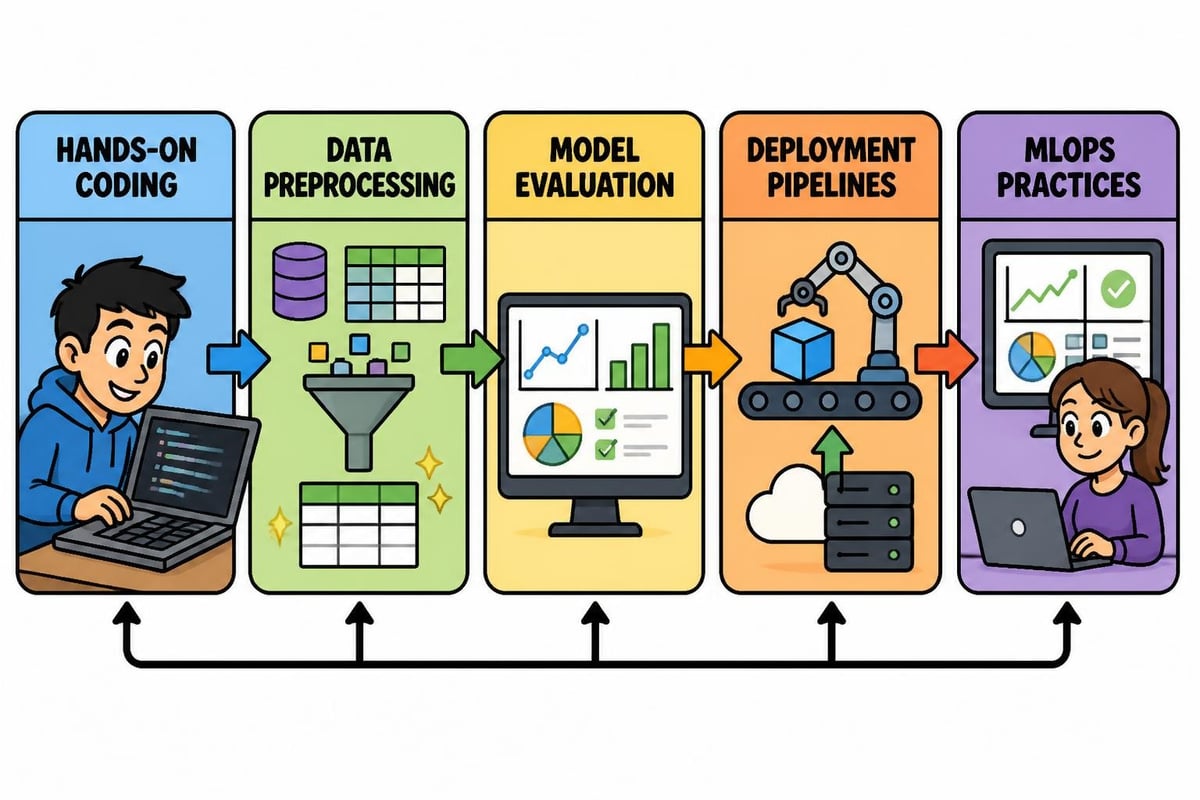
The most effective applied AI programs combine several critical elements that prepare learners for real-world challenges:
- Hands-on coding projects using industry-standard frameworks like TensorFlow, PyTorch, and scikit-learn
- Data preprocessing and feature engineering techniques for messy, real-world datasets
- Model evaluation and validation strategies beyond simple accuracy metrics
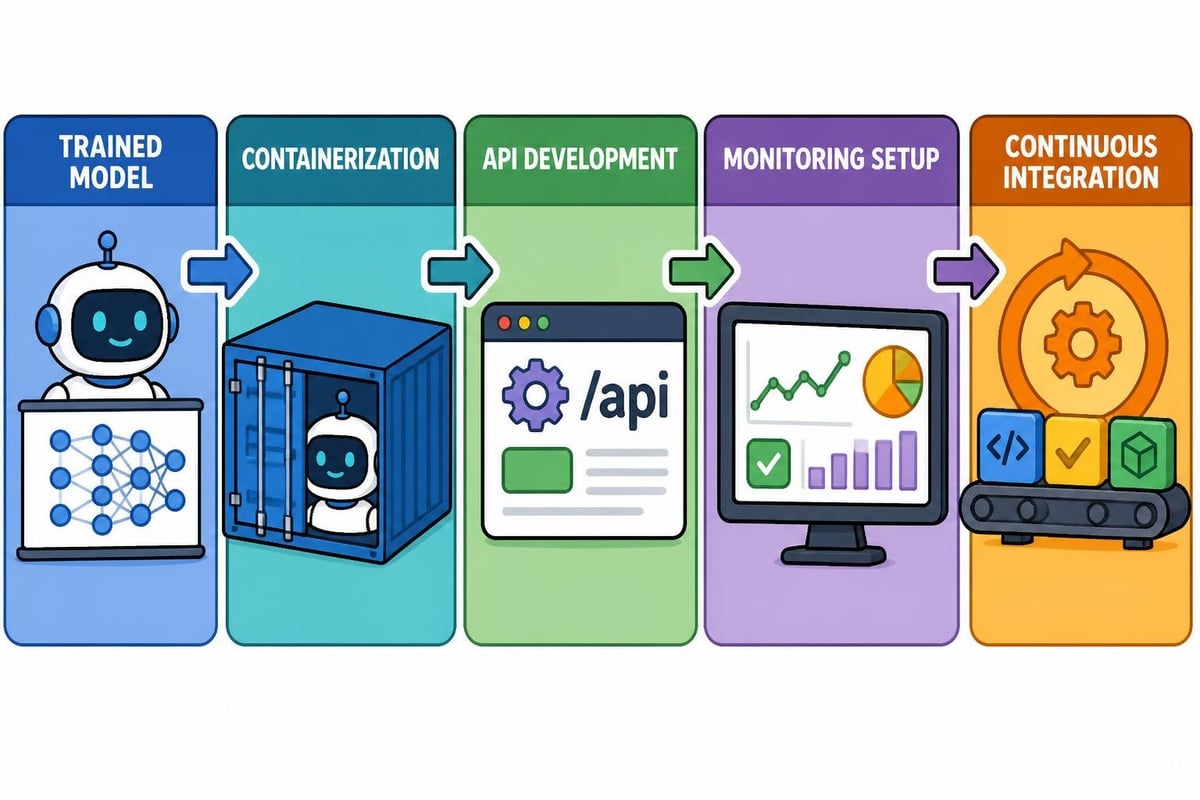
- Deployment pipelines including containerization, API development, and cloud integration
- MLOps practices for monitoring, versioning, and maintaining models in production
These components reflect what organizations actually need from AI practitioners. A curriculum that balances all five areas produces graduates who can contribute immediately to business objectives.
Distinguishing Applied from Academic Programs
Academic AI programs often emphasize theoretical foundations, mathematical rigor, and research methodologies. While valuable for certain career paths, they may not prepare students for immediate industry application. The Stanford CS229 course exemplifies rigorous machine learning education with strong theoretical grounding, but applied programs take a different approach.
| Aspect | Academic AI Course | Applied AI Course |
|---|---|---|
| Primary Focus | Theory and algorithms | Implementation and deployment |
| Projects | Research-oriented | Business problem-solving |
| Assessment | Exams and papers | Working prototypes |
| Timeline | Semester/year-long | Intensive bootcamp or modular |
| Outcomes | Deep understanding | Production-ready skills |
The distinction matters when choosing training aligned with career goals. Software engineers transitioning to ML roles often benefit more from applied programs, while those pursuing research positions may need academic depth.
Key Skills Developed in Applied AI Programs
An applied AI course builds competencies that directly translate to workplace value. These skills extend beyond algorithm knowledge to encompass the full machine learning lifecycle.
Data Engineering and Preprocessing
Real-world data arrives messy, incomplete, and inconsistent. Applied programs teach students to handle these challenges systematically. You learn to identify and fix data quality issues, engineer features that improve model performance, and build automated preprocessing pipelines. Understanding the machine learning lifecycle helps structure this work efficiently.
Critical preprocessing skills include:
- Handling missing values through imputation strategies appropriate to your use case
- Encoding categorical variables using techniques from one-hot encoding to embeddings
- Scaling and normalization to ensure model convergence and performance
- Feature engineering that incorporates domain knowledge into your models
- Data validation frameworks to catch issues before they affect production systems
Model Development and Selection
Students learn to choose appropriate algorithms for specific problems rather than defaulting to complex neural networks for every task. This practical mindset saves computational resources and development time. The Cornell applied machine learning syllabus demonstrates how programs structure this progression from simple to complex models.
An effective applied AI course teaches decision frameworks for model selection based on data characteristics, business constraints, and performance requirements. You practice implementing multiple approaches, comparing results systematically, and documenting decisions for stakeholder communication.
Production Deployment Skills
The gap between a working notebook and a production system defeats many practitioners. Applied programs specifically address this challenge through deployment-focused modules.
You learn to:
- Containerize models using Docker for consistent environments
- Build REST APIs that serve predictions at scale
- Implement monitoring to detect model drift and performance degradation
- Version control models and datasets using specialized tools
- Optimize inference speed through quantization, batching, and caching strategies
The CMU ML in Production course exemplifies comprehensive coverage of these engineering challenges, showing how applied programs prepare students for real deployment scenarios.
Choosing the Right Applied AI Program
With hundreds of options available in 2026, selecting an applied AI course requires careful evaluation of curriculum depth, instructor expertise, and learning format.
Evaluating Curriculum Rigor
A quality program should cover the complete ML pipeline, not just model training. Review course syllabi for modules on data engineering, model deployment, monitoring, and ethics. The UIUC applied machine learning course provides a benchmark for undergraduate-level applied programs with appropriate breadth and depth.
Questions to ask when evaluating programs:
- Does the curriculum include hands-on projects with messy, real-world datasets?
- Are deployment and MLOps covered substantively, not just mentioned?
- Do instructors have recent industry experience, not just academic credentials?
- Are ethics, bias, and fairness integrated throughout, not isolated in one module?
- Does the program update content regularly to reflect current frameworks and practices?
Format Considerations for Working Professionals
The best applied AI course format depends on your learning style, schedule, and career stage. MammothClub's AI certification programs offer flexible options that professionals can complete while working full-time.
| Format | Duration | Best For | Typical Time Commitment |
|---|---|---|---|
| Intensive Bootcamp | 8-16 weeks | Career changers | 40+ hours/week |
| Part-Time Program | 6-12 months | Working professionals | 10-15 hours/week |
| Self-Paced Online | Varies | Self-directed learners | Flexible |
| Corporate Training | 4-8 weeks | Teams upskilling together | Customized |
Self-paced programs provide maximum flexibility but require strong self-discipline. Bootcamps offer structure and peer learning at the cost of time intensity. Corporate programs allow teams to learn together and immediately apply concepts to shared projects.
Instructor and Industry Connections
The best programs employ instructors who actively work in AI roles or have recent industry experience. Theoretical knowledge alone doesn't prepare students for production challenges. Look for programs where instructors share real deployment failures, discuss trade-offs they've navigated, and provide insights from actual projects.
Industry connections manifest through guest speakers from leading AI companies, project partnerships with real organizations, and job placement support. These elements distinguish programs that truly bridge academia and industry from those offering generic content.
Practical Applications Across Industries
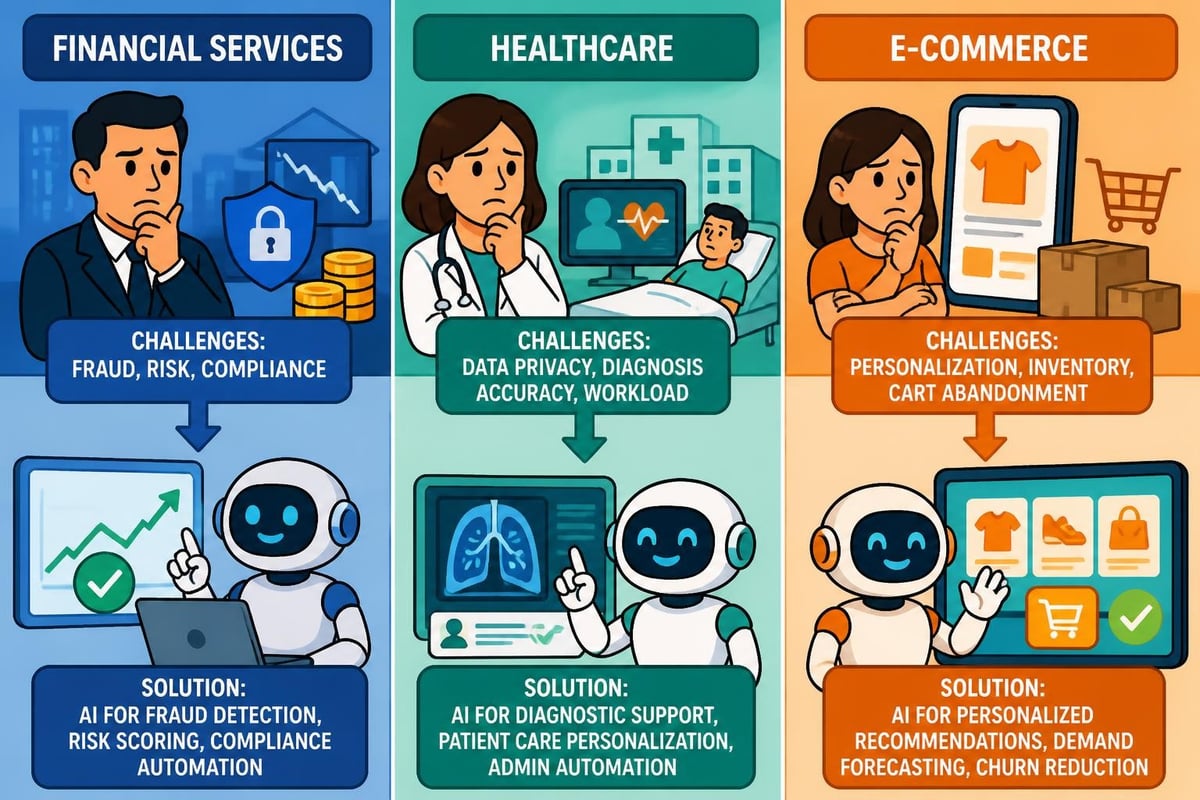
An applied AI course prepares students for diverse industry applications. Understanding how different sectors leverage AI helps you target learning toward specific career paths.
Financial Services and Trading
Financial institutions use applied AI for fraud detection, risk assessment, algorithmic trading, and customer service automation. AI trading applications require specialized knowledge of time-series analysis, anomaly detection, and real-time inference.
Common financial AI projects include:
- Credit scoring models that predict default risk using alternative data sources
- Fraud detection systems processing millions of transactions in real-time
- Portfolio optimization algorithms balancing risk and return across assets
- Sentiment analysis extracting market signals from news and social media
- Chatbots handling routine customer inquiries at scale
These applications demand not just technical skills but understanding of regulatory requirements, explainability needs, and risk management frameworks.
Healthcare and Life Sciences
Healthcare AI applications face unique challenges around data privacy, regulatory approval, and interpretability requirements. An applied AI course with healthcare modules teaches HIPAA-compliant data handling, clinical validation approaches, and collaboration with medical professionals.
Projects might include diagnostic image analysis, patient readmission prediction, drug discovery acceleration, or clinical trial optimization. Each requires domain knowledge integration alongside technical implementation.
E-commerce and Recommendations
Product recommendation systems represent one of the most mature AI applications. Students learn collaborative filtering, content-based approaches, hybrid systems, and cold-start problem solutions. You also address business metrics like click-through rates, conversion optimization, and customer lifetime value.
Beyond recommendations, e-commerce AI includes inventory optimization, dynamic pricing, customer segmentation, and supply chain forecasting. These applications demonstrate how applied AI directly impacts revenue and operational efficiency.
Building a Portfolio Through Project Work
The most valuable outcome from an applied AI course is a portfolio of working projects that demonstrate your capabilities to potential employers or clients.
Selecting Meaningful Projects
Choose projects that solve real problems, not just demonstrate algorithm mastery. Effective portfolio projects share these characteristics:
- Address a specific business question or user need
- Use publicly available datasets or data you've collected ethically
- Include complete end-to-end implementation from data ingestion through deployment
- Document decisions, trade-offs, and lessons learned
- Demonstrate appropriate model evaluation beyond simple accuracy metrics
Avoid tutorial-following projects that hundreds of other learners complete identically. Instead, add unique elements, tackle unusual challenges, or apply techniques to novel domains.
Documentation and Communication
Technical documentation separates strong candidates from average ones. Your projects should include clear README files, well-commented code, architecture diagrams, and performance analysis. Think of documentation as demonstrating your ability to work on teams and communicate with non-technical stakeholders.
Essential documentation components:
- Problem statement explaining business context and success metrics
- Data description covering sources, preprocessing steps, and limitations
- Methodology detailing model selection rationale and experimentation process
- Results with appropriate visualizations and statistical validation
- Deployment instructions and production considerations
- Future work acknowledging limitations and improvement opportunities
This level of documentation mirrors professional ML work and showcases communication skills alongside technical abilities.
Open Source Contributions
Contributing to established ML libraries or tools demonstrates collaboration skills and code quality. Many applied AI programs encourage students to identify issues in popular frameworks, submit bug fixes, or add features. These contributions provide verified evidence of your skills and connect you with the broader ML community.
Continuing Education and Specialization Paths
An applied AI course provides foundational skills, but the field evolves rapidly. Successful practitioners commit to continuous learning through specialization areas and emerging techniques.
Advanced Specialization Options
After completing a foundational applied AI course, consider deepening expertise in specific domains:
- Natural Language Processing for text analysis, chatbots, and language generation
- Computer Vision for image recognition, object detection, and video analysis
- Reinforcement Learning for robotics, game AI, and optimization problems
- MLOps and Production Systems for scalable, reliable AI infrastructure
- AI Ethics and Governance for responsible AI development and deployment
Each specialization builds on core applied skills while introducing domain-specific techniques and challenges. The ACM computing curricula recommendations provide guidance on structuring advanced AI coursework.
Staying Current with Emerging Techniques
The AI field advances faster than formal curricula update. Develop habits for staying current through research papers, industry blogs, conference talks, and experimentation with new frameworks. Resources like research on ML system safety help practitioners understand emerging challenges in production AI.
Effective strategies for continuous learning:
- Follow key researchers and practitioners on social media and blogs
- Implement papers that interest you to understand techniques deeply
- Attend virtual conferences and local meetups
- Participate in Kaggle competitions or similar challenges
- Read release notes for major framework updates
- Experiment with new tools in side projects before production use
MammothClub's library of over 3,000 on-demand courses supports ongoing skill development as new techniques and frameworks emerge.
Certification and Credential Stacking
Professional certifications complement applied coursework by validating skills to employers. Popular options include Azure AI Engineer certifications, Google AI certifications, and IBM AI credentials. Stack certifications strategically to demonstrate both breadth and depth in your target domain.
Hands-On Learning Tools and Platforms
An applied AI course leverages specific tools and platforms that students must master for professional work. Understanding the ecosystem before starting helps you focus learning effectively.
Development Environments and Notebooks
Jupyter notebooks remain the standard for exploratory data analysis and model experimentation. However, production work requires more robust development environments. Applied programs teach students to work in both contexts appropriately.
Key tools in the applied AI stack:
| Tool Category | Common Options | Primary Use Case |
|---|---|---|
| Notebooks | Jupyter, Google Colab, Databricks | Exploration and prototyping |
| IDEs | VS Code, PyCharm, Cursor | Production code development |
| Version Control | Git, DVC, MLflow | Code and model versioning |
| Cloud Platforms | AWS, Azure, GCP | Training and deployment infrastructure |
| Containerization | Docker, Kubernetes | Environment consistency and scaling |
| Monitoring | Prometheus, Grafana, custom tools | Production model tracking |
Proficiency across this stack distinguishes professionals ready for production work from those limited to notebook experimentation.
Framework Selection and Mastery
While an applied AI course typically covers multiple frameworks, professionals eventually specialize. TensorFlow and Keras dominate production deployments at large organizations due to mature tooling and serving infrastructure. PyTorch leads in research and offers more intuitive debugging. Scikit-learn remains essential for traditional ML algorithms and baseline models.
Rather than learning every framework superficially, develop deep competence in one primary framework while maintaining working knowledge of others. This approach allows you to contribute immediately while adapting to team preferences as needed.
Cloud Platform Considerations
Modern AI work happens primarily in cloud environments. Applied programs increasingly incorporate AWS, Azure, or GCP modules teaching managed services for training, deployment, and monitoring. Understanding cloud-native development patterns, cost optimization, and service selection represents essential applied skills.
Practical experience with cloud-based ML workflows differentiates candidates who can start contributing immediately from those requiring extensive onboarding.
Corporate Training and Team Upskilling
Organizations increasingly invest in applied AI courses for entire teams rather than hiring exclusively from external talent pools. This approach builds institutional knowledge and aligns AI capabilities with business strategy.
Designing Internal AI Programs
Corporate applied AI training differs from individual learning paths. Organizations benefit from customized curricula addressing their specific use cases, data environments, and technology stacks. Effective corporate programs include:
- Business context integration using company data and problems (with appropriate privacy protections)
- Cross-functional team composition bringing together data scientists, engineers, and business stakeholders
- Executive sponsorship ensuring organizational support and resource allocation
- Clear success metrics tied to business outcomes, not just course completion
- Post-training support through mentorship, project funding, and community building
MammothClub's corporate certification programs provide frameworks for scaling AI skills across organizations while maintaining quality and engagement.
Measuring Training ROI
Organizations need quantifiable returns on training investments. Track metrics including time-to-productivity for new AI roles, internal project completion rates, reduction in external consulting costs, and revenue generated from AI-enabled products or features.
Key performance indicators for corporate AI training:
- Projects launched using skills from the training program
- Business impact measured in revenue, cost savings, or efficiency gains
- Retention rates for participants compared to general population
- Internal mobility into AI roles from other departments
- Capability assessments showing skill progression over time
These metrics justify continued investment and help refine training approaches based on actual outcomes.
Building AI Centers of Excellence
Applied AI training serves as a foundation for establishing internal centers of excellence. These teams develop best practices, provide consulting to other departments, and maintain shared infrastructure. Starting with a trained cohort creates the nucleus for this organizational capability.
Ethical Considerations and Responsible AI
An comprehensive applied AI course integrates ethics throughout rather than treating it as an afterthought. Understanding fairness, bias, privacy, and accountability matters as much as technical implementation.
Bias Detection and Mitigation
ML models inherit and amplify biases present in training data. Applied programs teach students to audit datasets for representation issues, evaluate models across demographic subgroups, and implement bias mitigation techniques. This work requires both technical skills and awareness of social context.
Practical bias mitigation approaches:
- Data augmentation to balance underrepresented groups
- Fairness constraints during model training
- Post-processing adjustments to equalize outcomes across groups
- Regular auditing of production model behavior
- Diverse team composition to identify blind spots
These techniques don't eliminate bias entirely but reduce harm and improve fairness systematically.
Privacy-Preserving Techniques
Working with sensitive data requires understanding privacy-preserving ML approaches. Applied programs cover differential privacy, federated learning, and secure multi-party computation at an appropriate depth for practitioners. You learn when privacy techniques are necessary, which approaches fit different scenarios, and how to implement them correctly.
Healthcare, finance, and government applications often mandate privacy-preserving approaches. Understanding these techniques expands your applicable domain expertise significantly.
Explainability and Interpretability
Stakeholders increasingly demand explanations for AI decisions, especially in regulated industries. An applied AI course teaches techniques like SHAP values, LIME, attention visualization, and counterfactual explanations. You practice communicating model behavior to non-technical audiences using appropriate visualizations and analogies.
Model interpretability exists on a spectrum:
- Inherently interpretable models like linear regression or decision trees
- Post-hoc explanations for complex models using techniques like SHAP
- Model-agnostic approaches that work across different algorithms
- Example-based explanations showing similar training instances
- Counterfactual explanations describing what would change a prediction
Choosing appropriate interpretability approaches for specific use cases demonstrates maturity beyond basic implementation skills.
Bridging No-Code and Code-Based Approaches
The rise of no-code AI tools creates interesting dynamics in applied education. While some tasks now require minimal coding, understanding underlying concepts remains essential for troubleshooting, customization, and advanced applications.
When No-Code Tools Suffice
Platforms like AutoML services, drag-and-drop ML builders, and pre-trained model APIs enable rapid prototyping and solve common problems effectively. An applied AI course should introduce these tools while explaining their limitations. No-code AI approaches work well for standard classification or regression tasks with clean data and modest performance requirements.
Understanding when to use no-code tools versus custom development saves time and resources. Projects that fit standard patterns benefit from no-code acceleration, while unique requirements or performance constraints demand code-based approaches.
Fundamental Knowledge Requirements
Even when using no-code tools, practitioners need conceptual understanding of ML fundamentals. You must evaluate whether the tool's approach fits your problem, interpret metrics correctly, and debug when results disappoint. Surface-level tool knowledge without foundational understanding leads to misapplication and poor outcomes.
Applied programs balance practical tool usage with sufficient conceptual grounding to make informed decisions. This combination produces professionals who leverage automation appropriately while understanding when deeper customization becomes necessary.
Applied AI education has matured significantly, offering clear pathways from foundational concepts to production-ready skills that employers actively seek. Whether you're transitioning careers, upskilling in your current role, or leading organizational AI initiatives, choosing the right applied AI course accelerates your journey while ensuring practical, deployable capabilities. MammothClub provides the comprehensive learning platform, hands-on projects, and corporate training programs that transform AI knowledge into measurable business results, helping both individuals and organizations stay competitive in the rapidly evolving AI landscape.