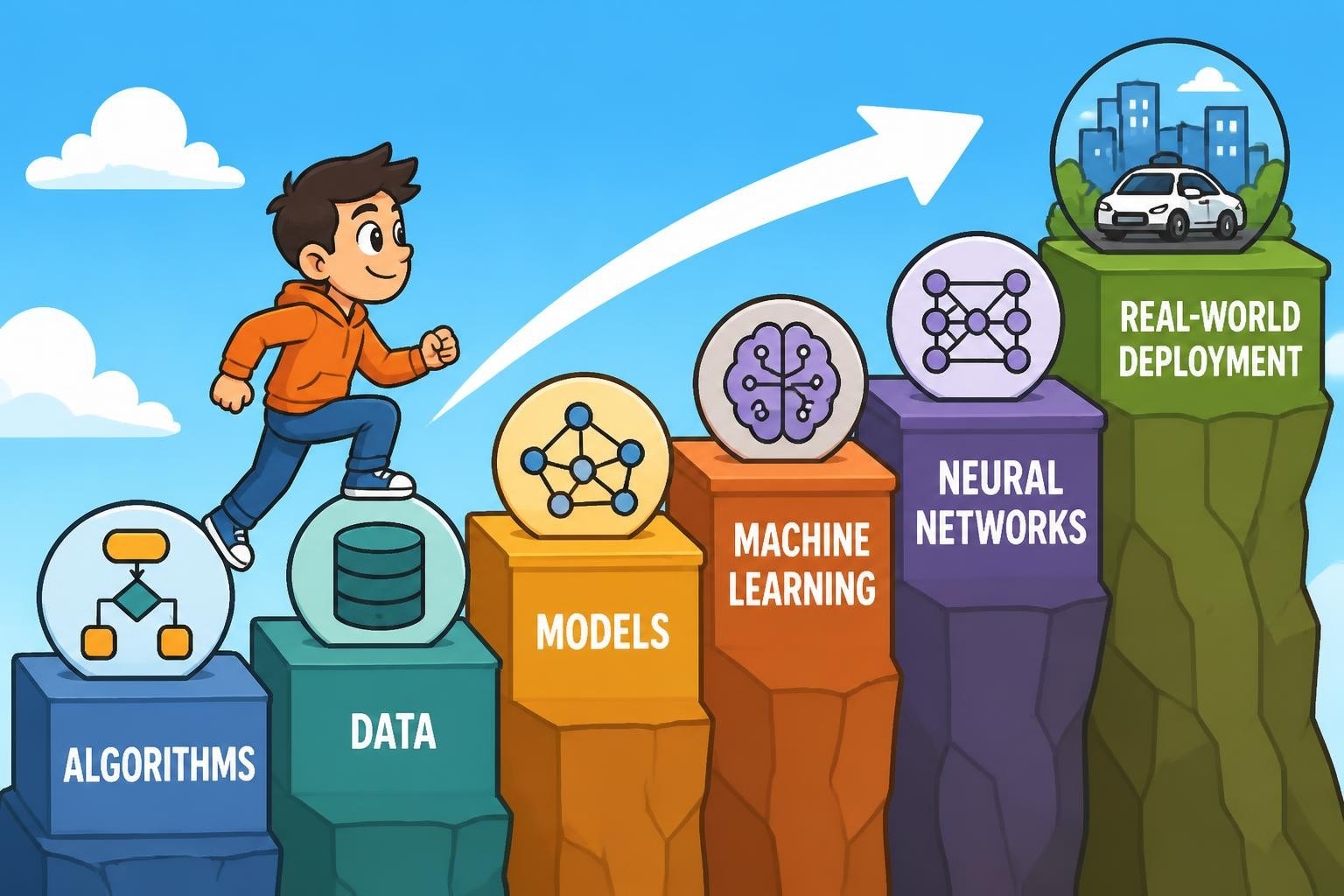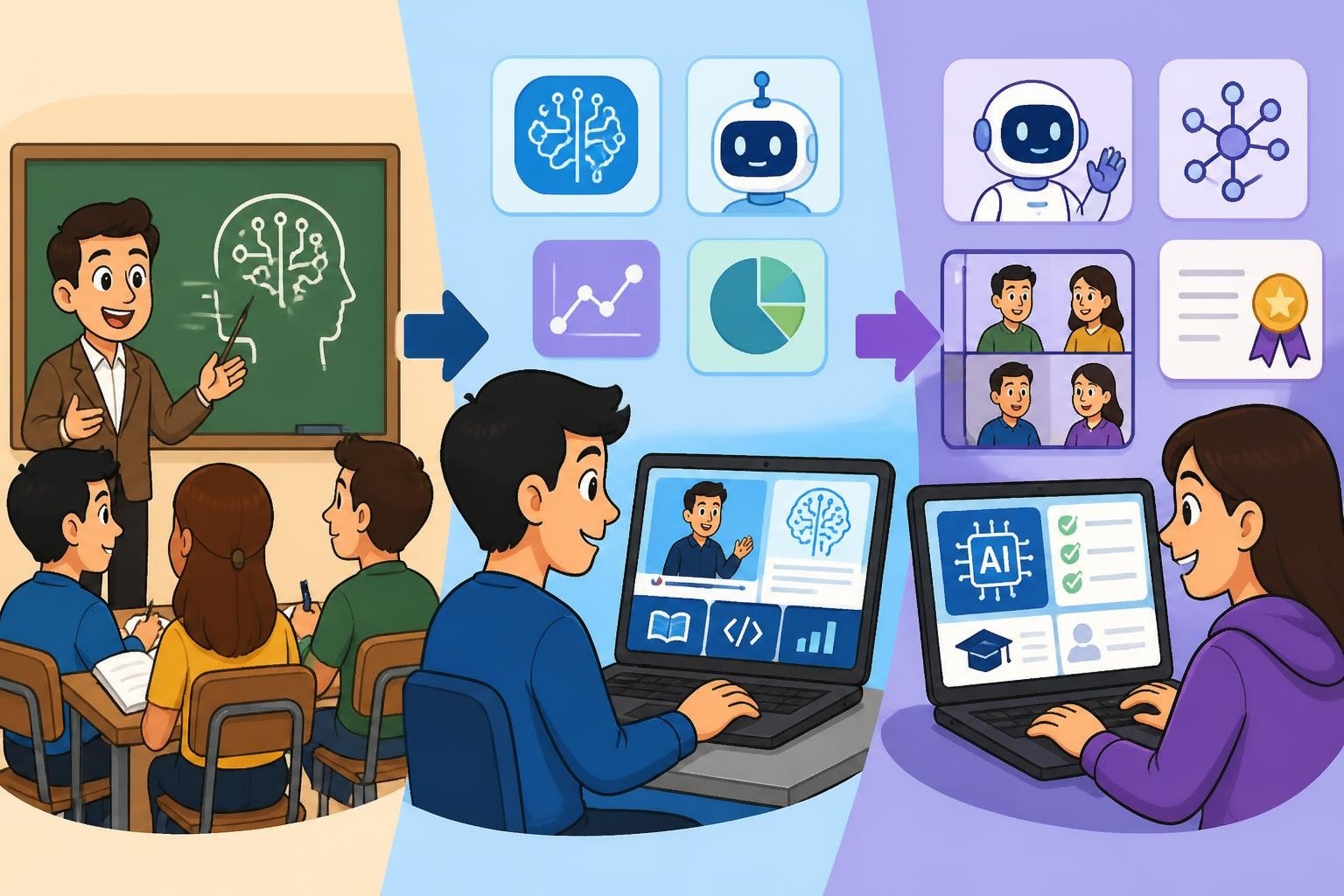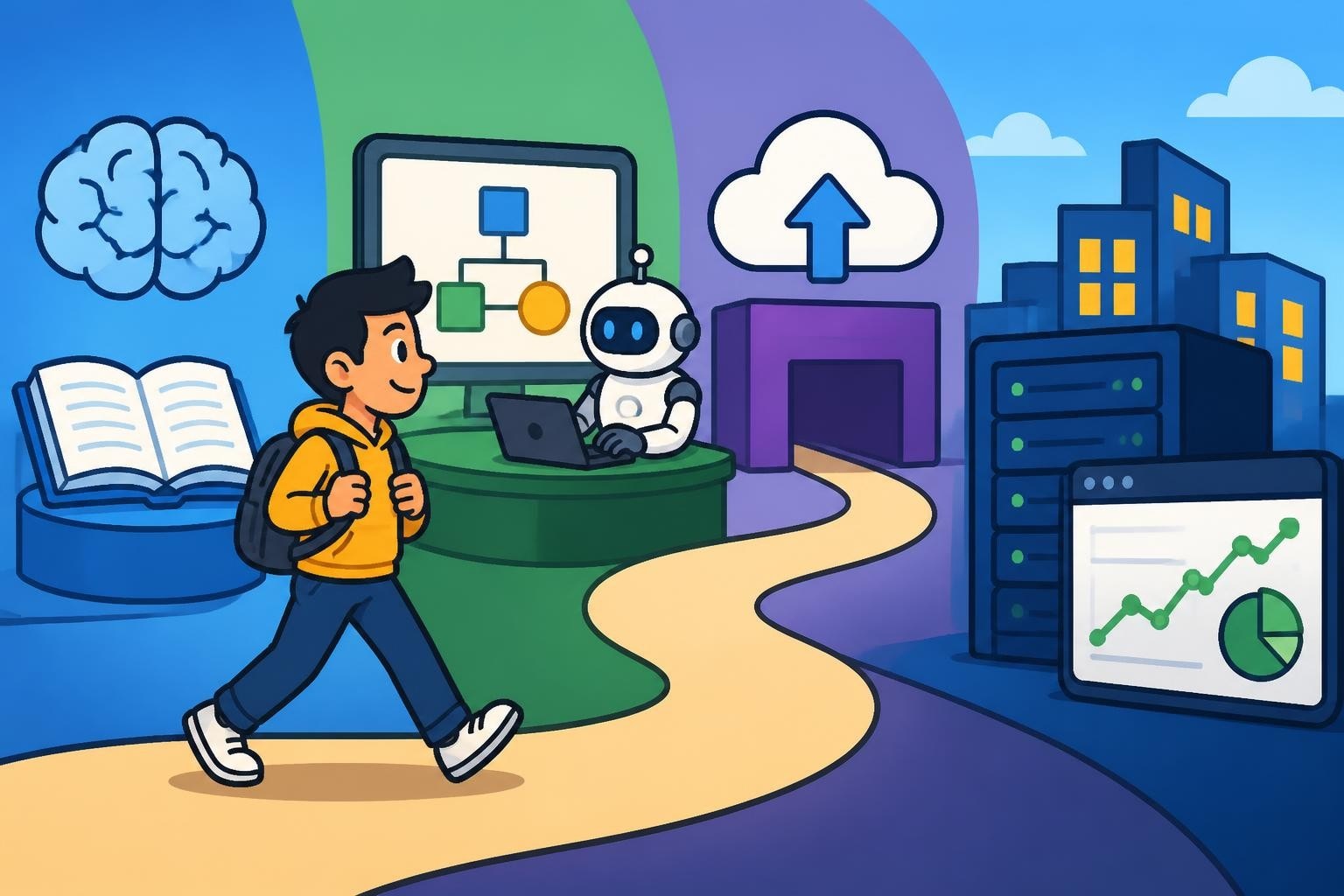
The demand for AI professionals capable of designing, deploying, and managing intelligent systems has reached unprecedented levels in 2026. Organizations across every sector are racing to integrate AI capabilities into their operations, creating a critical need for qualified engineers who can bridge the gap between business requirements and technical implementation. The microsoft certified azure ai engineer credential has emerged as one of the most valuable certifications for professionals seeking to validate their expertise in building production-ready AI solutions on Microsoft's cloud platform.
Understanding the Azure AI Engineer Certification Path
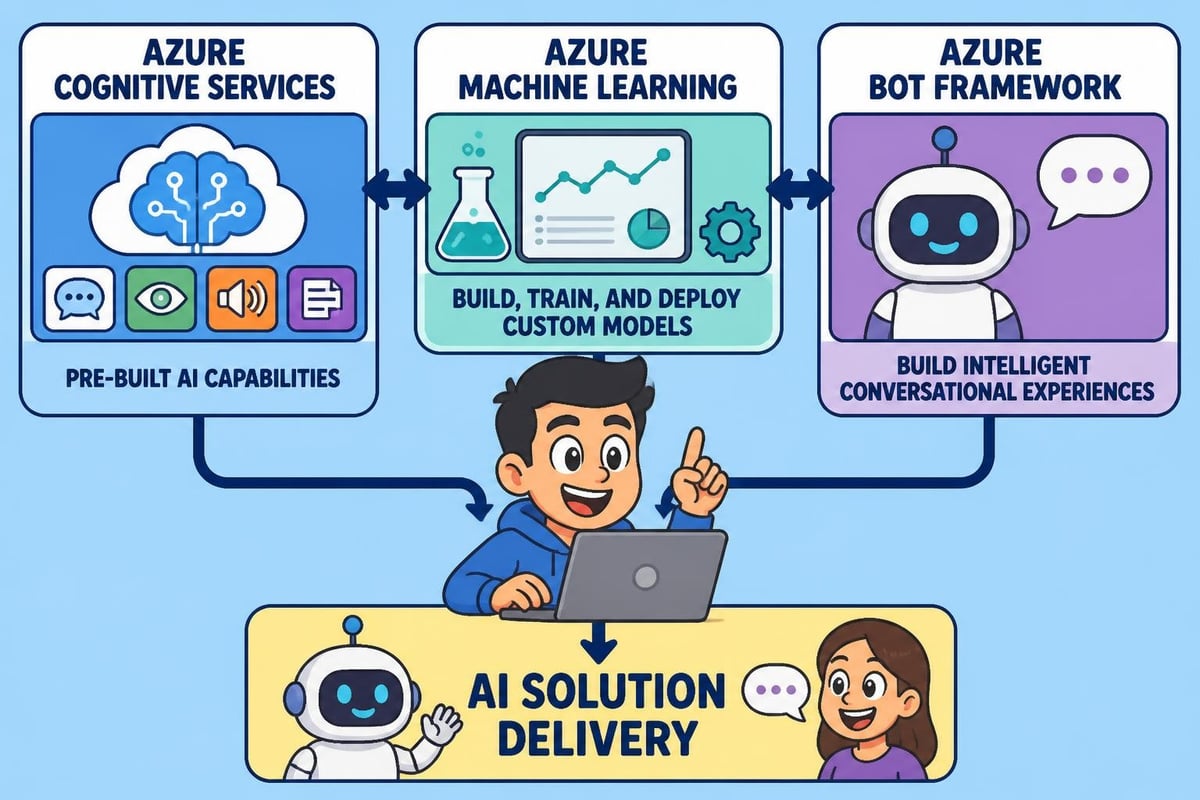
The microsoft certified azure ai engineer certification represents Microsoft's commitment to establishing industry standards for AI implementation expertise. This credential validates a professional's ability to design and implement Azure-based AI solutions that leverage cognitive services, machine learning, and knowledge mining capabilities.
The certification requires passing the AI-102 exam, which tests candidates on their practical knowledge of Azure AI services, natural language processing, computer vision, conversational AI, and responsible AI practices. Unlike foundational certifications that focus on theoretical concepts, this credential demands hands-on experience with Azure's AI toolkit.
Key examination domains include:
- Implementing computer vision solutions
- Processing and analyzing natural language
- Building knowledge mining solutions
- Creating conversational AI solutions
- Implementing generative AI applications
The official Microsoft Learn career path provides comprehensive preparation materials, but successful candidates typically combine self-study with practical implementation experience and structured training programs.
Certification Prerequisites and Recommended Background
While Microsoft doesn't enforce strict prerequisites for the AI-102 exam, candidates benefit significantly from having foundational knowledge in several areas. Professionals attempting this certification should be comfortable with Python or C# programming, understand RESTful API concepts, and possess basic knowledge of Azure services.
Most successful candidates have 6-12 months of hands-on experience working with Azure AI services before attempting the exam. This practical exposure proves invaluable when facing scenario-based questions that test decision-making abilities rather than simple memorization.
| Background Area | Importance Level | Recommended Experience |
|---|---|---|
| Python/C# Programming | Critical | 6+ months active coding |
| Azure Fundamentals | High | AZ-900 certification or equivalent |
| Machine Learning Concepts | Moderate | Understanding of model training and evaluation |
| REST APIs & SDKs | High | 3+ months integration experience |
| Data Engineering Basics | Moderate | Familiarity with data formats and storage |
Technical Skills Developed Through Certification
Earning the microsoft certified azure ai engineer credential transforms professionals into versatile AI practitioners capable of implementing sophisticated solutions across multiple domains. The certification process develops expertise in Azure's comprehensive AI service portfolio, preparing engineers to tackle real-world challenges.
Computer Vision Implementation Mastery
Computer vision capabilities form a substantial portion of the certification content. Engineers learn to implement Azure Computer Vision services for image analysis, object detection, facial recognition, and optical character recognition. These skills translate directly to applications in retail analytics, manufacturing quality control, and security systems.
The practical lab exercises available through Microsoft's official repository provide hands-on experience with Custom Vision projects, Form Recognizer implementations, and Video Indexer integrations. These exercises mirror real production scenarios, ensuring that certified professionals can immediately contribute to enterprise projects.
Natural Language Processing Expertise
Language understanding represents another critical competency area. Certified engineers gain proficiency in implementing Azure Language Services for sentiment analysis, entity recognition, key phrase extraction, and language translation. They also master conversational language understanding for building sophisticated chatbot experiences.
The certification curriculum emphasizes practical applications such as customer feedback analysis, content moderation, document processing automation, and multilingual support systems. Understanding how to properly implement AI services ensures engineers can design scalable, efficient solutions that meet enterprise performance requirements.
Knowledge Mining and Search Solutions
Azure Cognitive Search serves as the foundation for knowledge mining implementations. Certified professionals learn to create custom skills, configure indexers, implement semantic search, and build AI-enriched search experiences that extract insights from unstructured data.
This expertise proves particularly valuable for organizations managing large document repositories, legal firms conducting case research, healthcare providers analyzing medical records, and e-commerce platforms improving product discovery. The ability to design and implement these solutions separates certified professionals from those with only theoretical knowledge.
Career Impact and Market Demand in 2026
The microsoft certified azure ai engineer designation has become a differentiating factor in competitive job markets. Organizations specifically seek this certification when hiring for AI engineering roles, solution architect positions, and technical lead opportunities focused on Azure implementations.
Salary Expectations and Compensation Trends
Current market data for certified Azure AI engineers reveals:
- Entry-level positions: $85,000 - $110,000 annually
- Mid-level engineers: $110,000 - $145,000 annually
- Senior positions: $145,000 - $190,000 annually
- Principal/architect roles: $190,000 - $250,000+ annually
Geographic location, company size, and industry sector significantly influence these ranges. Technology hubs like Seattle, San Francisco, and New York typically offer 20-30% premiums over national averages. Financial services and healthcare organizations often pay at the higher end of ranges due to compliance and security requirements.
Professionals who combine the microsoft certified azure ai engineer credential with other specialized AI certifications position themselves for accelerated career growth and enhanced compensation packages.
Industry Applications and Role Diversity
Certified Azure AI engineers find opportunities across diverse sectors. Healthcare organizations recruit these professionals to build diagnostic assistance systems and patient data analysis platforms. Financial institutions seek expertise for fraud detection models and automated trading systems, similar to those taught in specialized AI trading courses.
Manufacturing companies implement computer vision quality control systems, while retail organizations deploy personalized recommendation engines and inventory optimization solutions. The versatility of Azure AI services enables certified engineers to transition between industries while leveraging transferable skills.
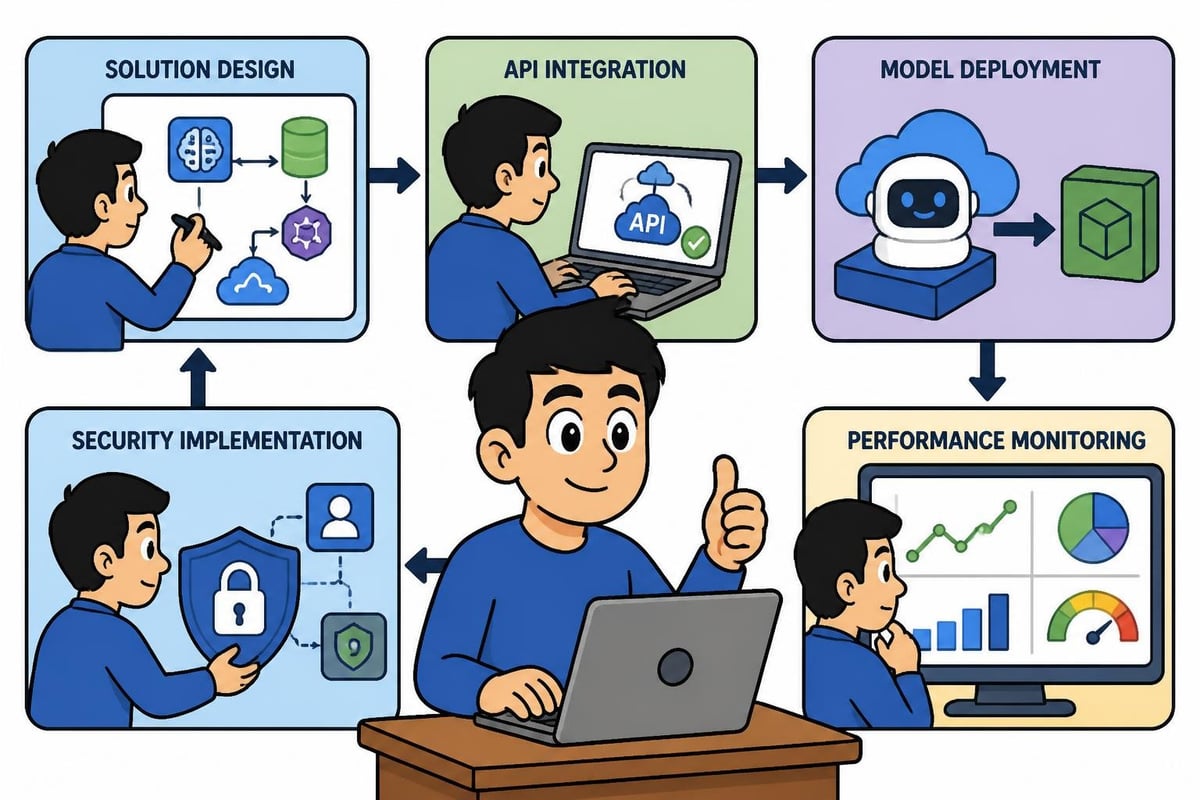
Exam Preparation Strategies That Work
Successfully passing the AI-102 exam requires strategic preparation that balances theoretical knowledge with practical implementation skills. Candidates who approach preparation systematically demonstrate significantly higher pass rates than those relying solely on memorization.
Structured Learning Path Development
Begin with Microsoft's official learning paths, then supplement with hands-on practice using Azure free tier resources. The Azure Architecture Center guidance provides essential context for understanding how individual services combine to create complete solutions.
Recommended preparation timeline:
- Weeks 1-2: Complete Azure AI Fundamentals review and environment setup
- Weeks 3-6: Deep dive into computer vision services with daily lab practice
- Weeks 7-10: Master natural language processing implementations
- Weeks 11-12: Focus on conversational AI and bot framework development
- Weeks 13-14: Study knowledge mining and search solution architecture
- Weeks 15-16: Practice exams, weak area reinforcement, and scenario analysis
This 16-week timeline assumes 10-15 hours of weekly study commitment. Professionals with existing Azure experience may compress this schedule, while career changers might extend it to ensure thorough comprehension.
Hands-On Practice Requirements
Theory without practice rarely translates to certification success. Set up an Azure subscription and systematically work through every service covered in the exam objectives. Build small projects that combine multiple services, simulating real-world integration scenarios.
Create a portfolio of implementations including a custom vision classifier, a language understanding bot, a form processing automation, and a knowledge mining solution. This practical work not only prepares you for exam questions but also provides concrete examples for job interviews and client discussions.
Platforms like MammothClub offer interactive bootcamps that combine video instruction with guided lab exercises, providing structured environments for skill development.
Responsible AI and Security Considerations
The microsoft certified azure ai engineer certification increasingly emphasizes ethical AI development and security best practices. Microsoft recognizes that technical proficiency must be balanced with awareness of AI's societal impact and potential risks.
Implementing Trustworthy AI Frameworks
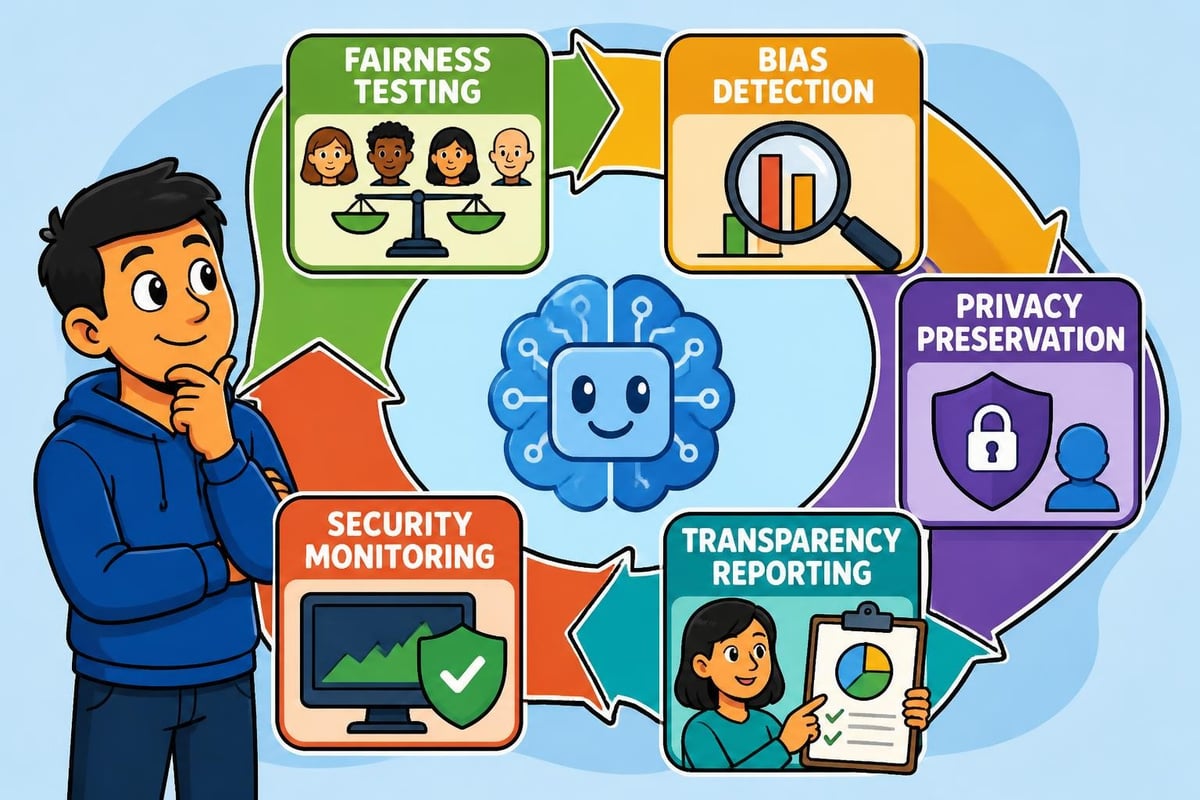
Certified professionals must understand and implement Microsoft's Responsible AI principles: fairness, reliability, privacy, inclusiveness, transparency, and accountability. The exam tests knowledge of bias detection, model interpretability, and privacy-preserving techniques.
The NIST AI Risk Management Framework provides complementary guidance for embedding responsible practices into AI project lifecycles. Understanding these frameworks helps engineers proactively address ethical concerns during solution design rather than attempting remediation after deployment.
Key responsible AI implementation areas:
- Model bias detection and mitigation techniques
- Fairness metrics and evaluation methodologies
- Explainability and interpretability requirements
- Data privacy and differential privacy approaches
- Human oversight and intervention mechanisms
Security Best Practices for AI Systems
AI systems introduce unique security challenges beyond traditional application security concerns. The OWASP Machine Learning Security Top Ten identifies critical risks including adversarial attacks, data poisoning, model theft, and privacy violations.
Certified Azure AI engineers must implement defense-in-depth strategies that protect training data, secure model endpoints, validate inputs, monitor for anomalous behavior, and maintain audit trails. Understanding authentication, authorization, and encryption specifically for AI workloads separates competent practitioners from exceptional ones.
The Cloud Security Alliance's guidance on securing LLM-backed systems becomes particularly relevant as generative AI implementations proliferate. Engineers must design authorization frameworks that prevent prompt injection attacks, unauthorized data access, and model manipulation.
Advanced Topics and Specialization Opportunities
Beyond foundational certification content, successful Azure AI engineers often develop specialized expertise in specific domains or technologies. These specializations increase marketability and enable professionals to command premium compensation.
Generative AI and Large Language Model Integration
The rapid adoption of generative AI capabilities has created demand for engineers who can implement Azure OpenAI Service solutions. This includes designing prompt engineering strategies, implementing retrieval-augmented generation architectures, fine-tuning models for specific domains, and managing cost-effective token usage.
Professionals who master these advanced capabilities position themselves at the forefront of AI innovation. Organizations urgently need expertise in building production-grade chatbots, content generation systems, code assistance tools, and automated summarization services.
Industry-Specific Solution Patterns
Developing deep expertise in particular verticals significantly enhances career prospects. Healthcare AI engineers specializing in medical imaging analysis or clinical decision support systems command premium salaries. Financial services specialists focusing on risk modeling and compliance automation find abundant opportunities.
Manufacturing professionals implementing predictive maintenance and quality control systems leverage domain knowledge combined with technical skills. Understanding industry-specific regulations, data requirements, and operational constraints makes certified engineers invaluable to specialized organizations.
Certification Maintenance and Continuous Learning
The microsoft certified azure ai engineer certification requires renewal every year to maintain active status. Microsoft's certification renewal process ensures professionals stay current with rapidly evolving Azure AI capabilities and industry best practices.
Annual Renewal Requirements
Renewal involves passing a free online assessment covering updates to Azure AI services, new features, and emerging best practices. This lightweight process takes 1-2 hours and tests awareness of major platform changes rather than requiring comprehensive re-examination.
Renewal preparation strategies:
- Subscribe to Azure AI service update announcements
- Review quarterly "What's New" documentation
- Participate in Azure AI community events and webinars
- Experiment with new preview features in development environments
- Complete Microsoft Learn modules covering recent releases
Building Complementary Skills
Certified professionals enhance their value by developing adjacent competencies. Data engineering skills improve ability to design end-to-end AI pipelines. Understanding DevOps practices enables implementation of MLOps workflows for model deployment and monitoring.
Combining the Azure AI engineer certification with credentials like Google AI certification or IBM AI certification demonstrates platform-agnostic expertise. Learning complementary frameworks taught in courses like those from Andrew Ng provides theoretical grounding that transcends specific cloud implementations.
Integration with Enterprise AI Strategies
Organizations don't simply deploy AI solutions in isolation. The microsoft certified azure ai engineer must understand how individual implementations support broader digital transformation initiatives and business objectives.
Aligning Technical Solutions with Business Outcomes
Successful AI engineers translate business requirements into technical architectures. This involves conducting stakeholder interviews, defining success metrics, estimating ROI, and designing solutions that scale with organizational growth.
Understanding the business context for AI implementations separates engineers who simply configure services from those who drive strategic value. This business acumen complements technical expertise, making certified professionals candidates for leadership roles.
| Business Challenge | AI Solution Approach | Key Azure Services |
|---|---|---|
| Customer service scalability | Conversational AI automation | Azure Bot Service, Language Understanding |
| Content moderation at scale | Automated review and flagging | Content Moderator, Custom Vision |
| Document processing inefficiency | Intelligent extraction and classification | Form Recognizer, Cognitive Search |
| Product discovery optimization | Personalized recommendations | Personalizer, Search with semantic ranking |
| Quality control automation | Visual inspection systems | Custom Vision, Azure ML |
Cross-Functional Collaboration Requirements
AI projects rarely succeed without effective collaboration between data scientists, software engineers, product managers, and business stakeholders. Certified Azure AI engineers serve as translators between these groups, ensuring technical implementations align with data science objectives and business requirements.
Developing communication skills, understanding agile methodologies, and learning to manage stakeholder expectations prove as important as technical proficiency. The ability to explain complex AI concepts in business terms accelerates project approvals and secures necessary resources.
Common Implementation Challenges and Solutions
Even certified professionals encounter obstacles when deploying Azure AI solutions to production environments. Understanding common pitfalls and proven solutions accelerates successful implementations.
Performance Optimization and Cost Management
Azure AI services charge based on transaction volume, making cost optimization critical for enterprise deployments. Engineers must implement caching strategies, batch processing where appropriate, and tier selections that balance performance with budget constraints.
Optimization techniques certified engineers employ:
- Implementing request throttling and queuing to manage API limits
- Using Azure CDN for frequently accessed vision/speech results
- Designing fallback patterns for service degradation scenarios
- Monitoring usage patterns to right-size service tiers
- Leveraging reserved capacity for predictable workloads
Data Quality and Model Performance Issues
AI solutions are only as good as the data they process. Certified engineers must implement data validation pipelines, monitor for data drift, and establish retraining triggers when model performance degrades.
Understanding evaluation metrics, conducting A/B testing, and implementing gradual rollout strategies ensures production deployments maintain quality standards. These practices, combined with proper logging and monitoring, enable rapid identification and resolution of performance issues.
Becoming a microsoft certified azure ai engineer represents a significant investment in professional development that yields substantial returns through enhanced career opportunities, increased compensation, and the ability to drive meaningful business impact through AI implementation. The certification validates expertise across Azure's comprehensive AI service portfolio while establishing a foundation for continuous learning in this rapidly evolving field. Whether you're looking to transition into AI engineering or deepen existing Azure skills, structured preparation through platforms like MammothClub accelerates your journey with interactive courses, hands-on labs, and expert guidance designed to help professionals master AI technologies and advance their careers in 2026's competitive landscape.