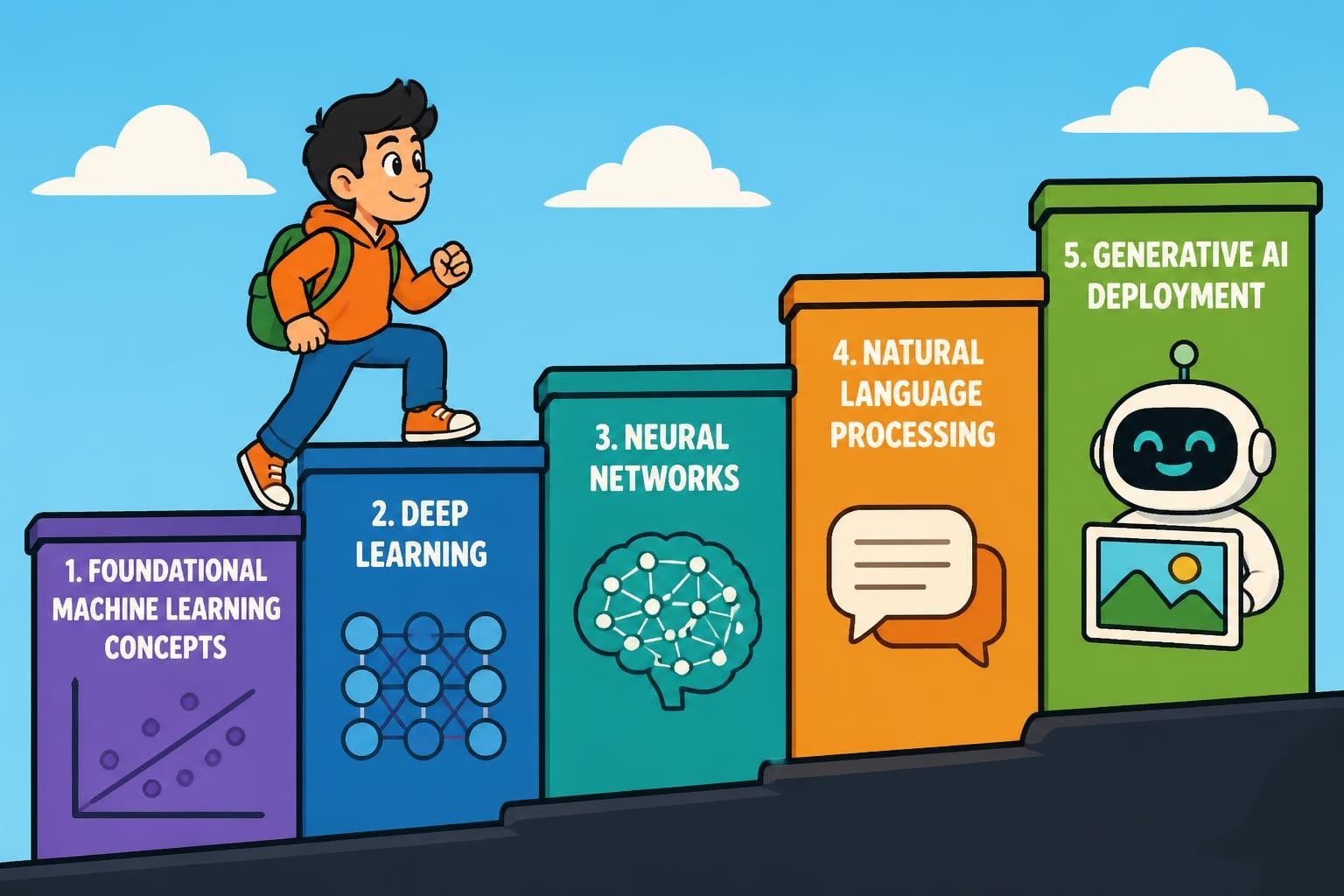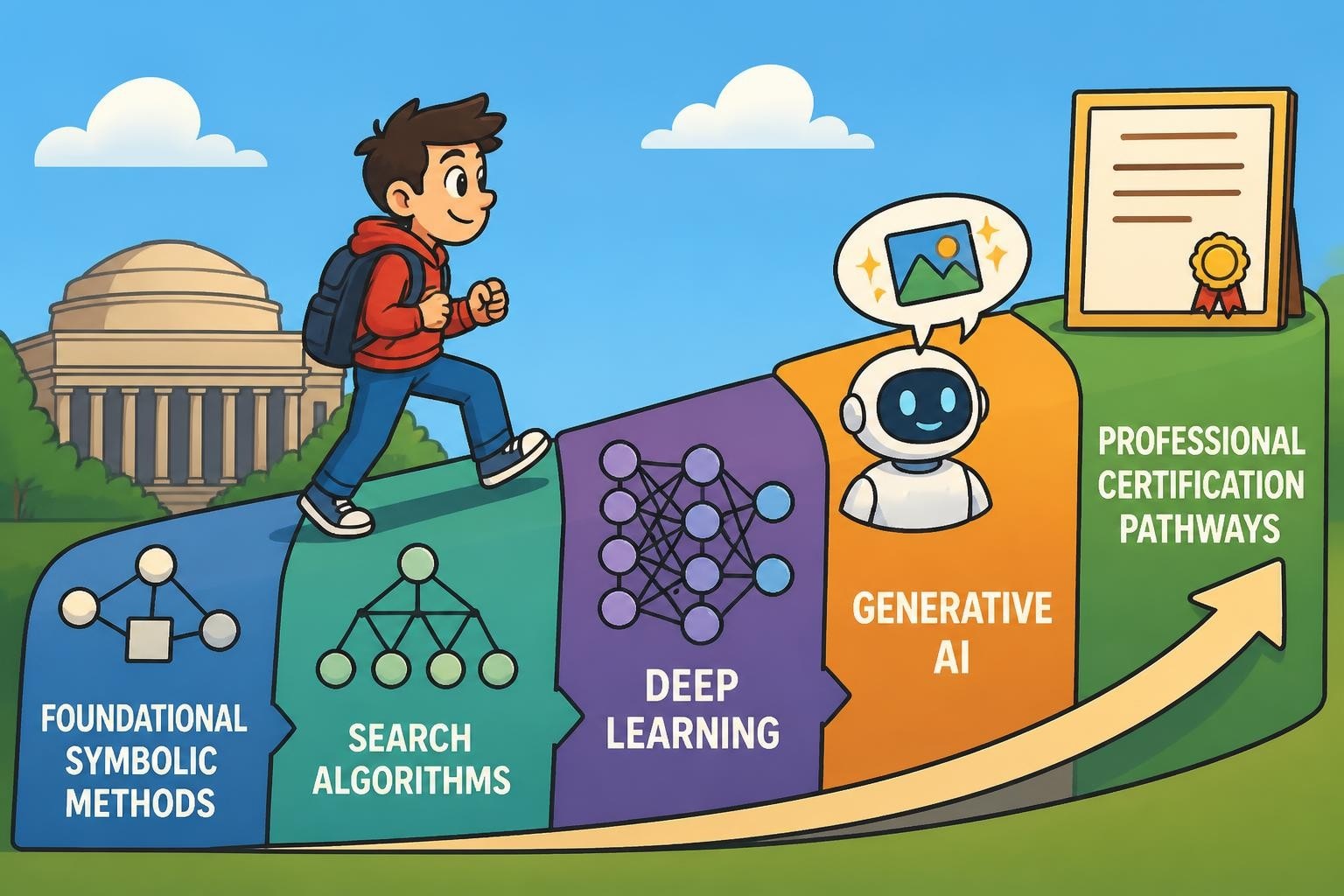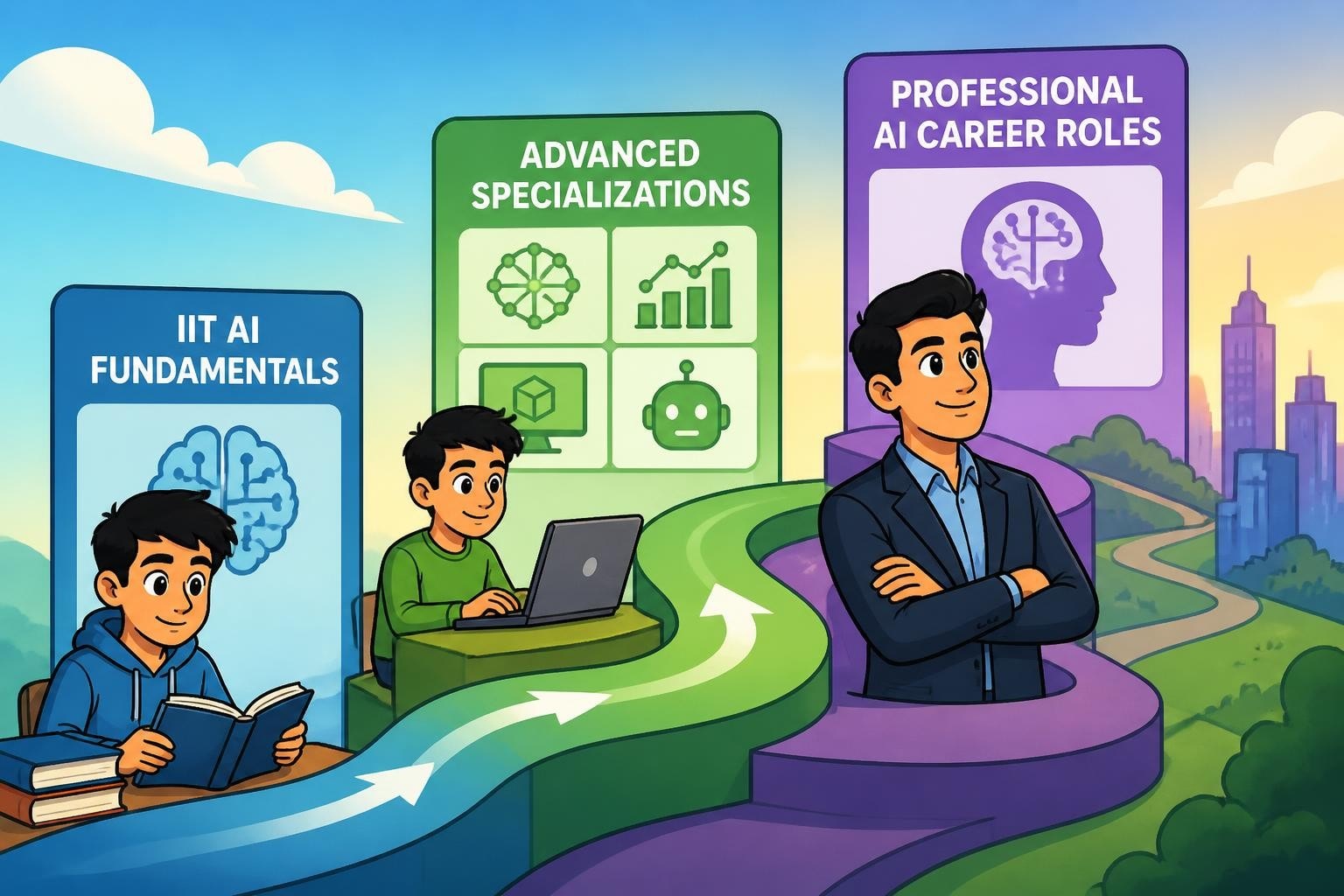
Andrew Ng has revolutionized how millions of professionals approach artificial intelligence education. His courses have become the gold standard for anyone seeking to understand machine learning, deep learning, and AI fundamentals. Whether you're a business leader making strategic AI decisions or a developer building intelligent systems, understanding what the andrew ng ai course offers is essential for staying competitive in 2026. This comprehensive guide examines the curriculum, practical applications, and career impact of Ng's teaching methodology, helping you determine which path aligns with your professional goals.
What Makes Andrew Ng's AI Courses Stand Out
Andrew Ng's teaching approach combines academic rigor with practical application in ways few educators achieve. His courses prioritize conceptual understanding over memorization, enabling learners to apply principles across diverse scenarios rather than simply replicating examples.
The andrew ng ai course curriculum emphasizes hands-on implementation. Students build real algorithms from scratch, understanding not just what works but why it works. This methodology proves particularly valuable for professionals who need to customize solutions for specific business contexts rather than relying solely on pre-built libraries.
Key differentiators include:
- Mathematical foundations explained intuitively without sacrificing depth
- Programming assignments that reinforce theoretical concepts immediately
- Case studies drawn from actual industry applications
- Incremental difficulty that builds confidence systematically
- Community support from millions of global learners
The Educational Philosophy Behind the Curriculum
Ng's courses reflect his belief that AI education should be accessible yet comprehensive. Rather than oversimplifying complex topics, he breaks them into digestible components that students can master sequentially. This approach mirrors how conversational AI course content is structured at advanced platforms, where complexity unfolds gradually.
The emphasis on intuition separates these courses from purely academic programs. Ng dedicates significant time to explaining why algorithms behave certain ways, enabling students to debug problems and optimize solutions independently. This skill proves invaluable when deploying models in production environments where unexpected challenges arise regularly.
Core Course Options and Specializations
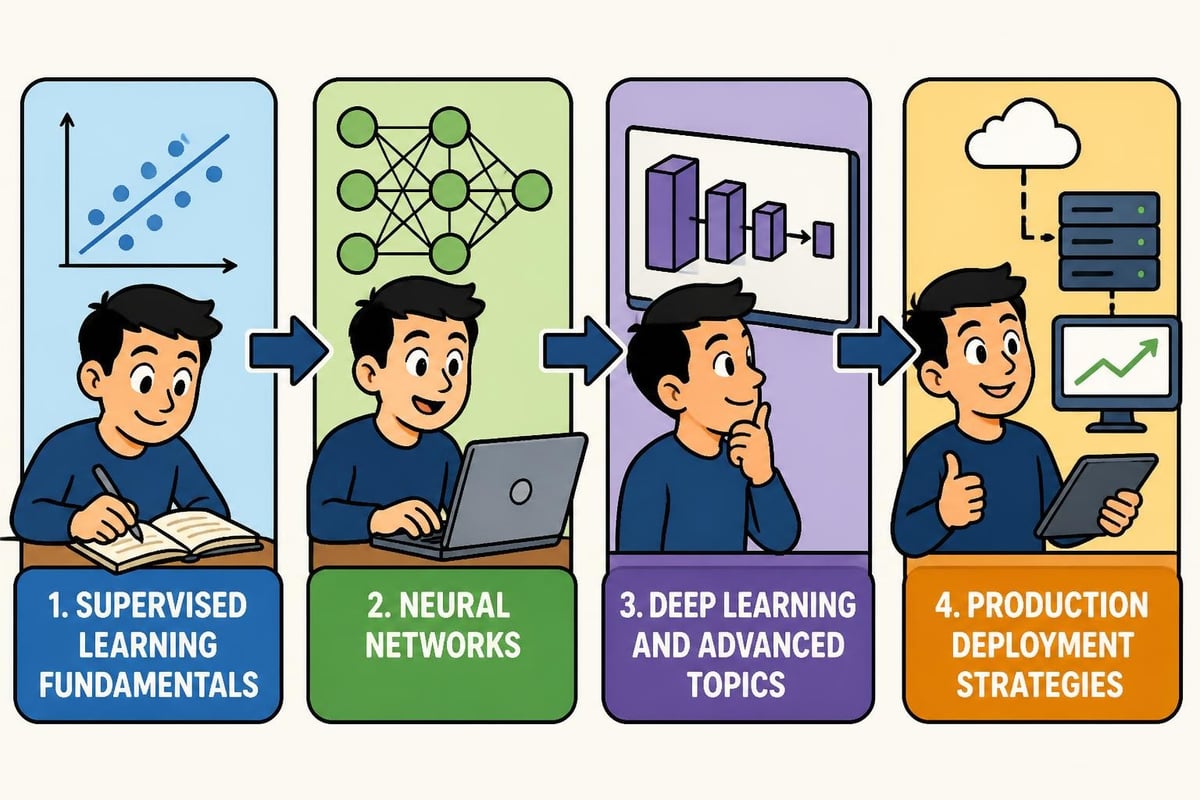
The andrew ng ai course ecosystem encompasses several distinct programs, each targeting specific competency levels and career objectives. Understanding these options helps learners invest time efficiently.
Machine Learning Specialization
The Machine Learning Specialization on Coursera serves as the foundational entry point for most learners. Updated in 2022 with modern Python implementations, this program replaces the original MATLAB-based course that launched Ng's teaching career.
Curriculum coverage:
- Supervised learning fundamentals (regression and classification)
- Advanced learning algorithms (neural networks and decision trees)
- Unsupervised learning and recommender systems
The specialization requires approximately three months at ten hours weekly. Students emerge with practical skills in building, training, and deploying models using contemporary frameworks. This foundation proves essential for professionals exploring AI ML learning paths across different domains.
Deep Learning Specialization
For learners ready to tackle neural networks comprehensively, the Deep Learning Specialization represents the next progression. This five-course sequence explores architectures that power modern AI applications, from computer vision to natural language processing.
| Course | Focus Area | Duration |
|---|---|---|
| Neural Networks and Deep Learning | Foundational architectures | 4 weeks |
| Improving Deep Neural Networks | Optimization and regularization | 3 weeks |
| Structuring Machine Learning Projects | Production best practices | 2 weeks |
| Convolutional Neural Networks | Computer vision applications | 4 weeks |
| Sequence Models | NLP and time series | 3 weeks |
Students build projects including facial recognition systems, machine translation models, and music generation algorithms. These practical implementations demonstrate competencies that employers actively seek when hiring AI specialists.
AI for Everyone
The AI For Everyone course addresses a critical gap in AI education: enabling non-technical professionals to make informed decisions about AI adoption. Business leaders, product managers, and strategic planners comprise the primary audience for this program.
This andrew ng ai course variant requires no programming knowledge. Instead, it focuses on understanding AI capabilities, limitations, and organizational implications. Topics include building AI strategies, managing AI teams, and identifying high-value use cases within specific industries.
Professionals completing this course gain the vocabulary and frameworks needed to collaborate effectively with technical teams. They learn to evaluate AI vendors, assess project feasibility, and avoid common implementation pitfalls. This knowledge proves particularly valuable for executives exploring AI management courses to lead digital transformation initiatives.
Technical Prerequisites and Learning Requirements
Understanding what preparation the andrew ng ai course demands helps learners succeed without unnecessary struggle. The prerequisites vary significantly across different programs.
Mathematical Foundations
Machine learning fundamentally relies on linear algebra, calculus, and probability theory. However, Ng's approach makes these topics accessible even for those with rusty mathematical backgrounds.
Essential concepts include:
- Matrix operations and vectorization
- Partial derivatives and gradient calculations
- Probability distributions and statistical inference
- Optimization techniques and convergence analysis
The courses provide refreshers on necessary mathematics, but students with recent exposure to these topics progress more comfortably. Many learners benefit from parallel mathematics review, particularly for the Deep Learning Specialization where optimization algorithms demand stronger calculus understanding.
Programming Skills
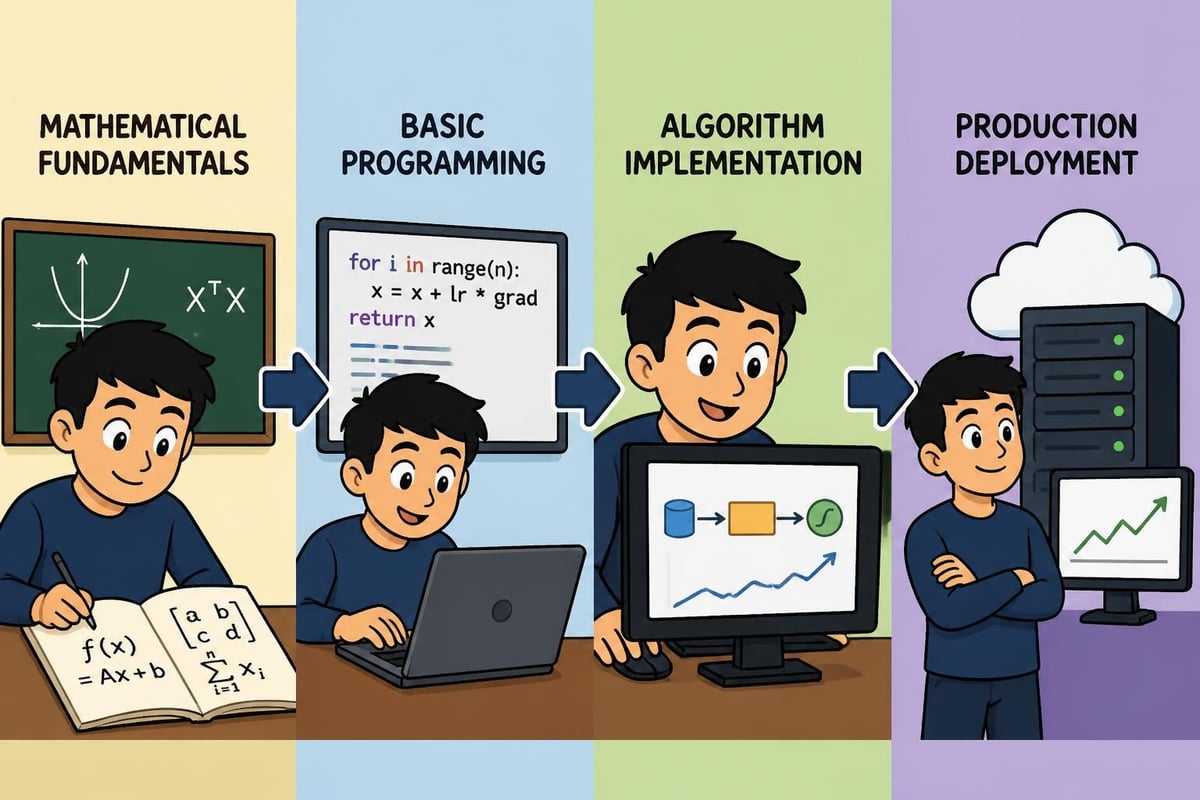
Modern versions of the andrew ng ai course use Python exclusively, reflecting industry standards. Students should understand basic programming concepts before starting, though expert-level Python knowledge is unnecessary.
Recommended competencies:
- Variables, loops, and conditional statements
- Functions and basic data structures
- NumPy array manipulation
- Basic debugging techniques
The assignments provide starter code and clear instructions, allowing learners to focus on implementing algorithms rather than wrestling with syntax. This scaffolding approach accelerates learning while building genuine programming proficiency. Similar structured approaches appear in coursera artificial intelligence course offerings across various specializations.
Practical Applications and Real-World Projects
Theory gains meaning through application. The andrew ng ai course curriculum emphasizes building functional systems that solve authentic problems, preparing learners for professional challenges.
Project-Based Learning Methodology
Each course section concludes with programming assignments that implement concepts from lectures. These assignments progress from guided implementations to more open-ended challenges requiring independent problem-solving.
Students build regression models predicting housing prices, classification systems identifying handwritten digits, and neural networks recognizing objects in images. These projects mirror tasks data scientists handle professionally, creating portfolio pieces that demonstrate practical competency.
The Deep Learning Specialization introduces particularly ambitious projects. Students construct facial recognition systems using convolutional networks, build neural machine translation models, and generate novel music sequences. These implementations showcase capabilities that differentiate candidates in competitive job markets.
Industry Relevance and Case Studies
Ng incorporates extensive real-world examples throughout his teaching. He discusses how companies like Google, Baidu, and numerous startups apply specific algorithms to solve business problems. These case studies help learners understand not just how algorithms work but when to deploy them strategically.
The curriculum addresses practical concerns that academic programs often overlook. Topics include handling imbalanced datasets, debugging learning algorithms, and optimizing model performance for production environments. This pragmatic focus aligns with how Microsoft AI certification courses approach enterprise deployment scenarios.
Career Impact and Professional Development
Completing the andrew ng ai course demonstrably affects career trajectories. The skills gained open doors to roles in data science, machine learning engineering, AI research, and strategic technology leadership.
Job Market Competitiveness
Employers recognize Andrew Ng's courses as credible indicators of foundational AI competency. The certificates serve as conversation starters in interviews, while the knowledge enables candidates to discuss technical concepts confidently.
Career paths enhanced by completion:
- Machine Learning Engineer positions requiring model development and deployment
- Data Scientist roles emphasizing predictive analytics and insights
- AI Product Manager positions bridging technical and business requirements
- Research Scientist opportunities in academic or industry labs
- Technical leadership roles overseeing AI initiatives
The market for AI professionals continues expanding rapidly in 2026. Organizations across healthcare, finance, manufacturing, and technology sectors compete for talent capable of implementing intelligent systems. Completing recognized training like the andrew ng ai course provides competitive advantages in this landscape.
Salary and Compensation Impacts
While individual results vary based on experience and location, professionals with demonstrated machine learning competencies command premium compensation. Entry-level machine learning engineers typically earn between $95,000 and $130,000 annually in major technology markets, with experienced practitioners exceeding $200,000 when including equity compensation.
The credential becomes particularly valuable when combined with domain expertise. Healthcare professionals who complete AI training can transition into medical imaging analysis roles, while finance experts apply machine learning to algorithmic trading and risk assessment. These specialized combinations often command higher compensation than general AI roles.
Learning Path Optimization Strategies
Maximizing value from the andrew ng ai course requires strategic planning. Different learners benefit from different sequencing and supplementary resources.
Recommended Course Sequences
For technical professionals:
- Complete the Machine Learning Specialization as foundation
- Progress to Deep Learning Specialization for advanced techniques
- Pursue MLOps courses for production deployment skills
- Explore specialized topics aligned with career goals
For business leaders:
- Start with AI for Everyone to establish strategic understanding
- Selectively complete Machine Learning Specialization sections for technical awareness
- Focus on case studies and strategic implementation frameworks
- Build cross-functional AI literacy within teams
Supplementary Learning Resources
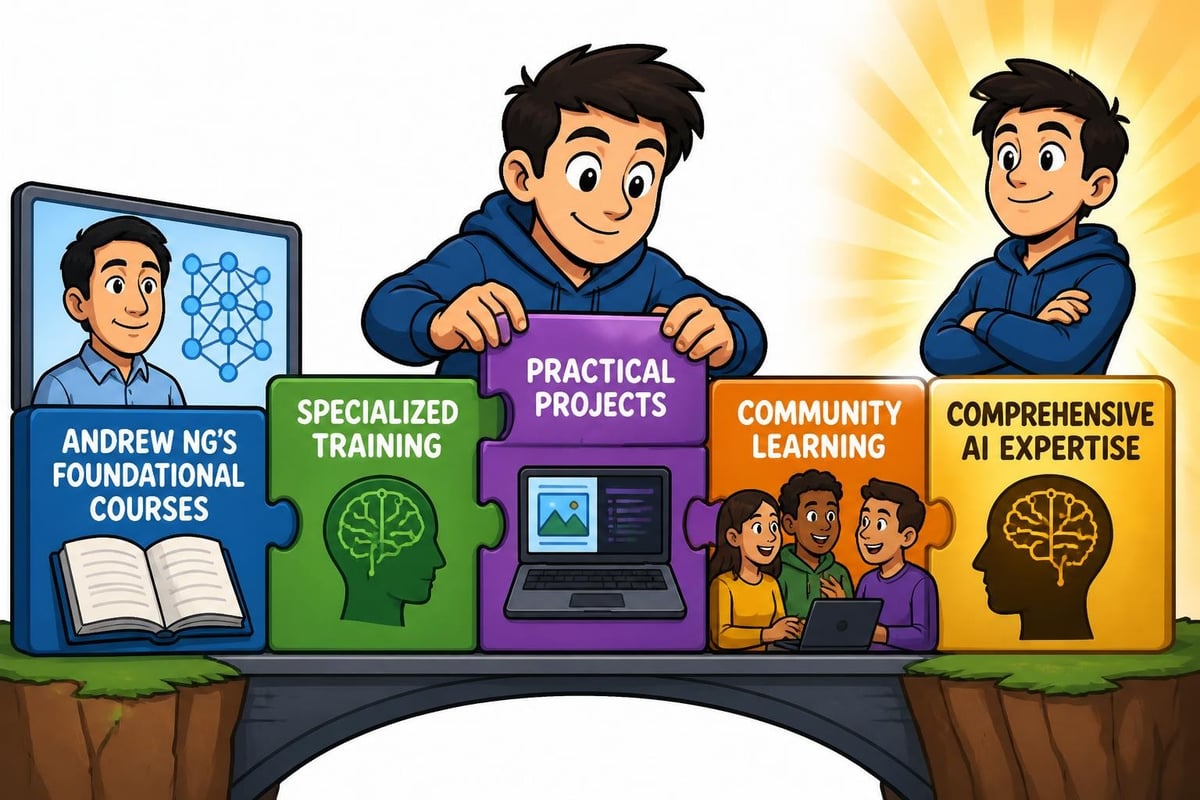
While comprehensive, the andrew ng ai course benefits from supplementation with additional practice and alternative perspectives. Learners often combine Ng's courses with other resources for deeper understanding.
| Resource Type | Purpose | Integration Approach |
|---|---|---|
| Kaggle competitions | Applied practice | Complete after each specialization |
| Research papers | Cutting-edge techniques | Read selectively during advanced courses |
| Open-source projects | Real-world codebases | Contribute after foundational learning |
| Study groups | Collaborative learning | Join community forums throughout |
Platforms like MammothClub offer complementary courses that extend concepts introduced in Ng's curriculum. Exploring topics like AI specialization courses provides exposure to different teaching styles and additional practical applications.
Time Investment and Completion Strategies
Understanding the commitment required helps learners plan effectively. The andrew ng ai course programs demand significant but manageable time investments when approached strategically.
Realistic Completion Timelines
The Machine Learning Specialization spans three courses totaling approximately 90 hours of content. At the recommended pace of ten hours weekly, completion requires three months. However, individual timelines vary based on prior knowledge and available study time.
Factors affecting completion speed:
- Prior programming experience reduces assignment time significantly
- Mathematical background accelerates understanding of derivations
- Available study hours per week determine overall timeline
- Learning style preferences influence optimal pacing
Some learners accelerate through material they find familiar while spending additional time on challenging concepts. This adaptive pacing often proves more effective than rigidly following suggested schedules. The flexibility accommodates working professionals balancing training with job responsibilities.
Retention and Application Techniques
Passive video consumption yields limited long-term retention. Effective learners actively engage with material through multiple techniques that reinforce understanding.
High-impact study practices:
- Take handwritten notes during lectures to improve retention
- Implement algorithms independently before reviewing solutions
- Explain concepts to others through study groups or teaching
- Apply techniques to personal projects beyond course assignments
- Review and refine earlier assignments as skills advance
The andrew ng ai course assignments include optional challenges that extend core concepts. Completing these extras develops problem-solving abilities that distinguish proficient practitioners from those with superficial knowledge. This deeper engagement mirrors approaches recommended in comprehensive AI ML full course programs.
Comparing Andrew Ng's Courses with Alternative Programs
While exceptionally valuable, the andrew ng ai course represents one of many educational pathways. Understanding alternatives helps learners make informed decisions.
University Programs and Degrees
Traditional computer science degrees provide broader coverage including systems design, software engineering, and theoretical foundations. However, they require significantly greater time and financial investment than online specializations.
The andrew ng ai course delivers focused AI competency in months rather than years. For working professionals seeking to transition into AI roles or enhance existing skills, this efficiency proves compelling. University programs better serve those seeking comprehensive computer science education or research-oriented careers.
Competing Online Platforms
Numerous platforms offer machine learning and AI education. Each presents distinct advantages depending on learner preferences and objectives.
| Platform | Strengths | Best For |
|---|---|---|
| Andrew Ng's Courses | Conceptual clarity and foundational depth | Building strong fundamentals |
| Fast.ai | Practical implementation and modern techniques | Rapid prototyping skills |
| DeepMind/Google | Cutting-edge research perspectives | Advanced practitioners |
| MammothClub | Corporate training and certification paths | Team upskilling and compliance |
The optimal choice depends on current skill level, learning objectives, and career context. Many professionals combine resources, using the andrew ng ai course for foundations while exploring specialized content elsewhere. Platforms offering AI certification programs complement Ng's courses by providing industry-recognized credentials.
Cost Considerations and Financial Planning
Understanding the investment required helps learners budget appropriately for their AI education journey.
Pricing Structure and Options
Coursera offers multiple access models for the andrew ng ai course content. The audit option provides free access to video lectures but excludes graded assignments and certificates. This works for learners seeking knowledge without credential verification.
Subscription pricing typically costs $49-79 monthly, providing unlimited access to specialization content. Learners completing courses within suggested timelines invest $150-300 per specialization. This represents exceptional value compared to university courses or intensive bootcamps costing thousands of dollars.
Financial aid options exist for learners unable to afford subscription fees. Coursera evaluates applications and grants free access to qualifying candidates, ensuring financial constraints don't prevent motivated individuals from accessing quality AI education.
Return on Investment Analysis
The andrew ng ai course delivers strong financial returns through career advancement and earning potential. Professionals transitioning into AI roles often see salary increases exceeding $20,000-40,000 annually, recovering course costs within weeks of employment.
Even for those remaining in current roles, AI competency increasingly influences promotion decisions. Organizations prioritize employees who understand how to leverage intelligent systems for competitive advantage. The knowledge gained from completing recognized training positions professionals favorably for advancement opportunities.
Beyond immediate financial returns, the skills provide long-term career insurance. As AI increasingly permeates business operations, professionals lacking AI literacy risk obsolescence. The investment in the andrew ng ai course protects against this risk while opening new career possibilities.
Corporate Training and Team Development
Organizations increasingly recognize the strategic value of building internal AI capabilities. The andrew ng ai course provides scalable frameworks for team development.
Enterprise Learning Programs
Forward-thinking companies sponsor employee participation in Ng's courses as part of professional development initiatives. This approach builds shared vocabulary and understanding across teams, facilitating collaboration on AI projects.
Coursera offers enterprise licensing enabling unlimited employee access to course catalogs. This model works well for organizations upskilling multiple team members simultaneously. Centralized dashboards track progress and completion rates, providing visibility into workforce development initiatives.
Some organizations supplement the andrew ng ai course with internal training addressing company-specific tools and processes. This combination of foundational knowledge and contextual application accelerates capability building. Companies can also explore dedicated platforms for corporate certification programs tailored to organizational needs.
Building AI Literacy Across Functions
Technical teams benefit from deep dives into algorithms and implementation, but broader organizational AI literacy requires different approaches. The AI for Everyone course specifically addresses non-technical staff including marketing, sales, operations, and executive leadership.
Cross-functional learning objectives:
- Understanding AI capabilities and limitations realistically
- Identifying valuable use cases within specific business contexts
- Managing AI projects effectively from conception to deployment
- Evaluating vendor solutions and build-versus-buy decisions
- Addressing ethical implications and risk management
Organizations achieving broad AI literacy across functions innovate more effectively than those concentrating knowledge within technical teams. The andrew ng ai course provides accessible entry points for diverse employee populations, democratizing AI understanding throughout enterprises.
Andrew Ng's AI courses provide exceptional foundations for anyone seeking to understand and apply machine learning and artificial intelligence in 2026. The combination of conceptual clarity, practical implementation, and flexible learning options makes these programs valuable for technical practitioners and business leaders alike. Whether you're building your first neural network or leading organizational AI transformation, MammothClub complements this foundational knowledge with 3,000+ specialized courses, interactive bootcamps, and corporate certification programs designed to accelerate your journey from learning to measurable business impact.