The demand for AI expertise has reached unprecedented levels in 2026, with organizations across every industry scrambling to build internal capabilities. A microsoft ai certification course represents more than just another credential on your resume. It's a strategic investment in becoming fluent with the AI technologies that are reshaping how businesses operate, compete, and deliver value. Microsoft's certification ecosystem now spans from foundational understanding to advanced implementation and strategic leadership, offering clear pathways whether you're a business professional exploring AI adoption or a technical specialist building sophisticated solutions.
Understanding the Microsoft AI Certification Landscape
Microsoft has restructured its AI certification offerings to reflect the rapidly evolving technology landscape. The current framework addresses three distinct professional trajectories: business decision-makers guiding organizational transformation, technical practitioners implementing solutions, and foundational learners establishing core competencies.
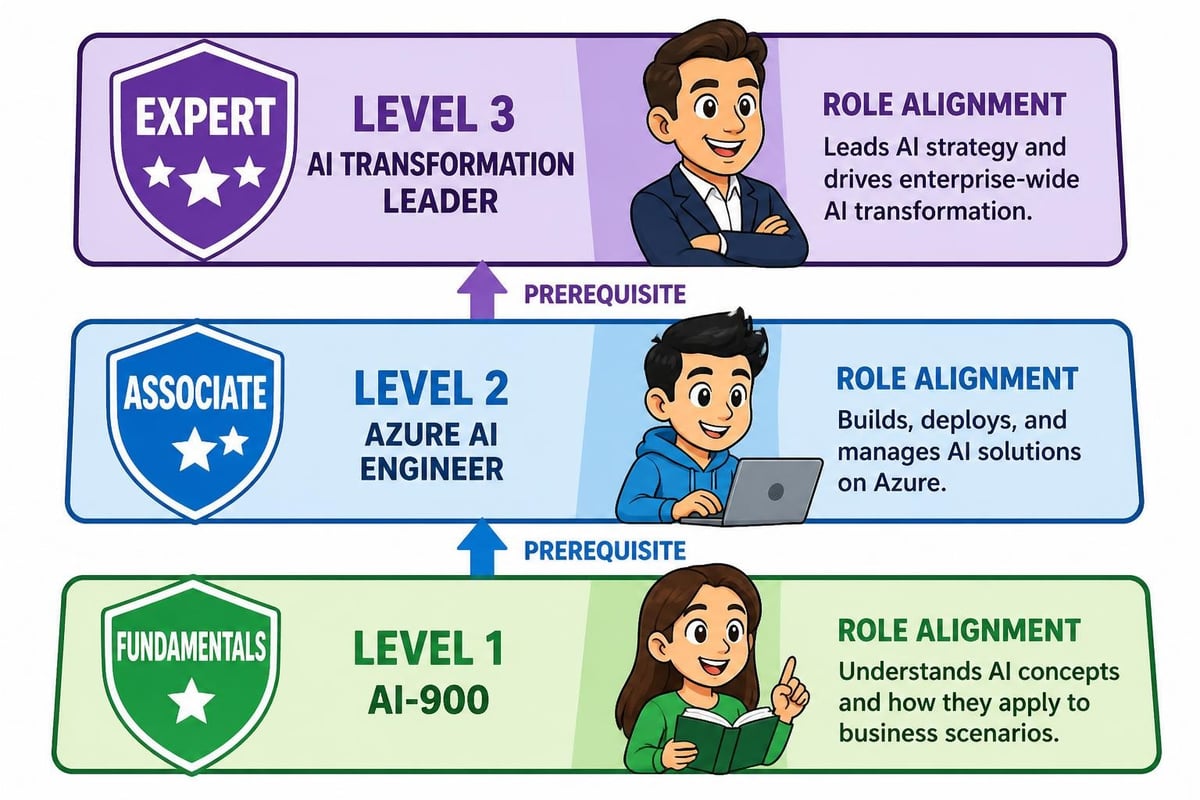
The certification tiers create a logical progression for learners at different career stages. Entry-level certifications validate fundamental knowledge and establish baseline competency. Associate-level credentials demonstrate practical implementation skills and hands-on experience with Azure AI services. Expert and specialty tracks showcase advanced architectural expertise and strategic leadership capabilities.
Key Certification Paths in 2026
Microsoft's AI certification structure includes several primary tracks, each designed for specific roles and skill levels:
- Azure AI Fundamentals (AI-900) - Perfect for business professionals, project managers, and anyone beginning their AI journey
- Azure AI Engineer Associate - Technical implementers designing and deploying AI solutions using Azure services
- AI Transformation Leader - Strategic executives guiding organizational AI adoption and change management
- Specialty certifications - Advanced tracks focusing on specific technologies like conversational AI, computer vision, or natural language processing
The Azure AI Fundamentals certification serves as the entry point for most learners, while the Azure AI Engineer Associate path appeals to developers and data scientists. For executives and senior leaders, the AI Transformation Leader certification provides strategic frameworks for enterprise AI adoption.
Choosing the Right Microsoft AI Certification Course
Selecting the appropriate microsoft ai certification course depends on your current role, technical background, and career objectives. A common mistake is starting with advanced certifications without establishing foundational knowledge, leading to frustration and inefficient learning.
For business professionals and non-technical roles, the AI-900 fundamentals track provides essential AI literacy. This certification covers machine learning concepts, responsible AI principles, computer vision applications, and natural language processing basics without requiring programming expertise. The course material emphasizes practical use cases and organizational implementation rather than technical architecture.
Technical professionals with development or data science backgrounds should consider the Azure AI Engineer Associate path. This microsoft ai certification course requires hands-on experience with Python or C#, familiarity with Azure services, and understanding of software development lifecycle principles. The curriculum covers cognitive services integration, machine learning operations, and building intelligent applications.
Technical Prerequisites and Background Knowledge
Different certification paths require varying levels of technical preparation:
| Certification | Programming Required | Cloud Experience | Recommended Background |
|---|---|---|---|
| AI-900 Fundamentals | None | Helpful but not required | Business or general IT knowledge |
| Azure AI Engineer | Python or C# proficiency | Azure basics essential | Software development or data science |
| AI Transformation Leader | None | Strategic understanding | Executive or senior management role |
Understanding your starting point helps you choose appropriate preparation materials and estimate realistic study timelines. Many professionals benefit from completing related certifications like Azure fundamentals before pursuing specialized AI credentials.
Exam Preparation Strategies That Actually Work
Successfully completing a microsoft ai certification course requires more than passive content consumption. The most effective preparation combines theoretical understanding with hands-on practice and strategic exam readiness.
Active learning techniques dramatically improve retention and application skills. Rather than simply watching video lectures, create your own Azure AI resources and experiment with different services. Build sample projects that solve real problems, document your process, and troubleshoot issues independently. This experiential approach creates deeper understanding than memorization alone.
Structured Study Plans and Time Management
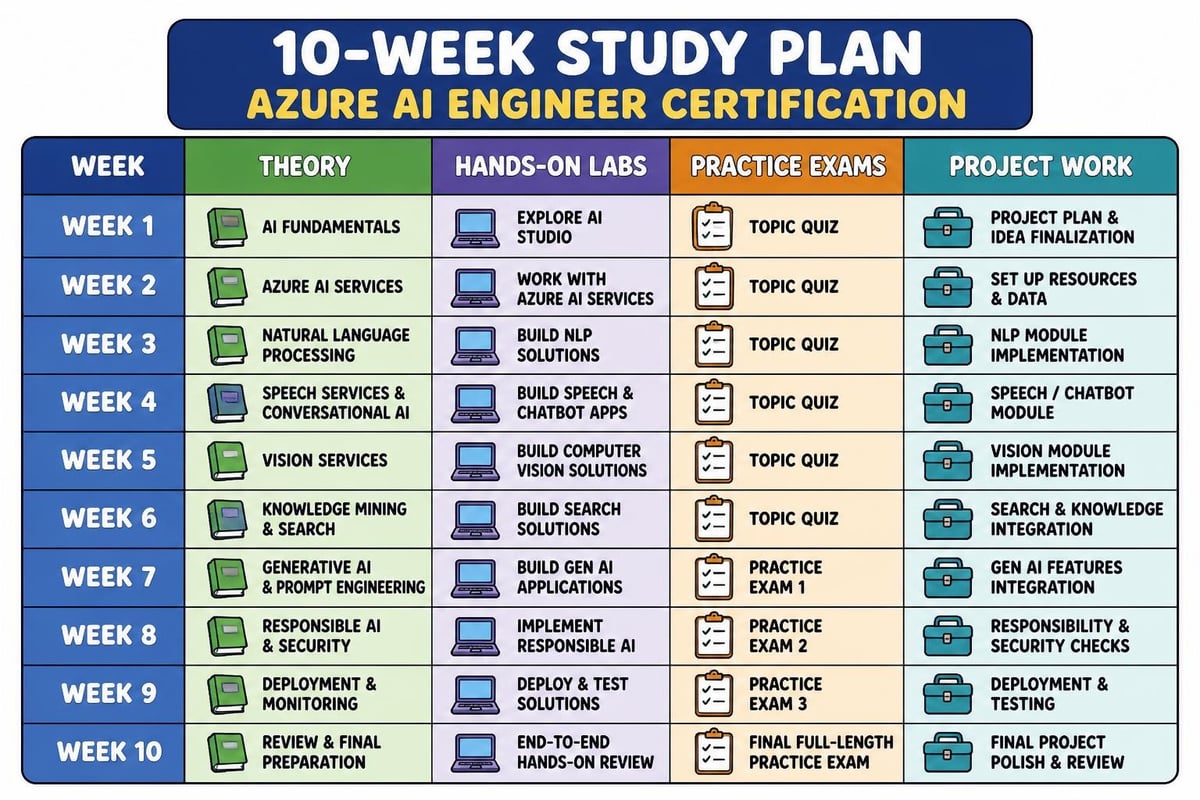
Certification preparation timelines vary based on existing knowledge and weekly study commitment. Here's a realistic framework for different learner profiles:
Beginner track (AI-900): Allocate 4-6 weeks with 8-10 hours weekly study time. Focus on conceptual understanding, Microsoft Learn modules, and practice questions. No lab work required but experimenting with Azure AI services strengthens comprehension.
Associate track (Azure AI Engineer): Plan 8-12 weeks with 12-15 hours weekly commitment. Dedicate equal time to theoretical study and hands-on labs. Build at least three end-to-end projects demonstrating different AI capabilities.
Leadership track (AI Transformation): Structure 6-8 weeks with 6-8 hours weekly focus on strategic frameworks, case studies, and organizational change management principles.
The AI-900 exam tests conceptual knowledge through scenario-based questions, making case study review particularly valuable. Practice exams identify knowledge gaps and familiarize you with Microsoft's question formats and terminology.
Hands-On Practice and Lab Environments
The gap between passing an exam and implementing real solutions closes through practical experience. Microsoft provides Azure free tier resources allowing certification candidates to practice without significant financial investment.
Create a dedicated learning environment where you can experiment safely. Start with simple implementations like sentiment analysis on sample text or object detection in images. Gradually increase complexity by integrating multiple services, handling error conditions, and optimizing performance.
Essential Lab Exercises by Certification Level
Practice scenarios should align with your target certification and mirror real-world applications:
- Fundamentals learners: Explore pre-built cognitive services through API calls, test language understanding models, experiment with computer vision demos
- Engineer candidates: Deploy custom machine learning models, implement conversational interfaces, build document intelligence solutions, create knowledge mining pipelines
- Transformation leaders: Analyze case studies, develop implementation roadmaps, assess organizational readiness, design governance frameworks
Documentation skills prove equally important. Maintain detailed notes on configuration steps, API integrations, troubleshooting processes, and performance observations. These references become invaluable during exam preparation and post-certification implementation work.
Platforms like MammothClub provide structured lab environments with guided projects that complement official Microsoft materials. Interactive bootcamps offer real-time feedback and collaborative learning experiences that accelerate skill development beyond self-paced study alone.
Career Impact and ROI Analysis
Investing time and resources in a microsoft ai certification course delivers measurable professional returns when aligned with clear career objectives. The value manifests through enhanced credibility, expanded opportunities, and increased earning potential.
Certified professionals report 15-25% salary increases within 12 months of certification, particularly when credentials align with organizational technology priorities. Beyond compensation, certifications open doors to specialized roles, consulting opportunities, and leadership positions requiring validated expertise.
Market Demand and Industry Recognition
AI skills rank among the most sought-after competencies in 2026 technology hiring. Organizations increasingly require validated credentials as proof of capability, making Microsoft AI certifications particularly valuable for:
- Career transitions into AI-focused roles from traditional software development or business analysis
- Consulting professionals establishing credibility with enterprise clients
- Internal mobility toward emerging roles in AI centers of excellence
- Freelance specialists differentiating services in competitive markets
The growing workforce skills gap creates urgency around AI upskilling. Organizations that invested early in certification programs report competitive advantages in talent retention and innovation velocity.
| Career Stage | Typical ROI Timeline | Primary Benefits |
|---|---|---|
| Early career (0-3 years) | 6-12 months | First specialized role, 20-30% salary increase |
| Mid-career (4-10 years) | 3-6 months | Senior or lead positions, consulting opportunities |
| Senior career (10+ years) | Immediate | Executive credibility, strategic influence, board positions |
Integrating Certifications With Organizational Strategy
Forward-thinking organizations view microsoft ai certification courses as strategic investments rather than individual training expenses. Building certified teams creates sustainable AI capabilities, reduces consultant dependency, and accelerates solution delivery.
Corporate certification programs yield optimal results when aligned with business transformation initiatives. Identify specific AI use cases your organization plans to implement, then certify team members accordingly. This targeted approach ensures knowledge translates directly to business value.
Building Internal AI Centers of Excellence
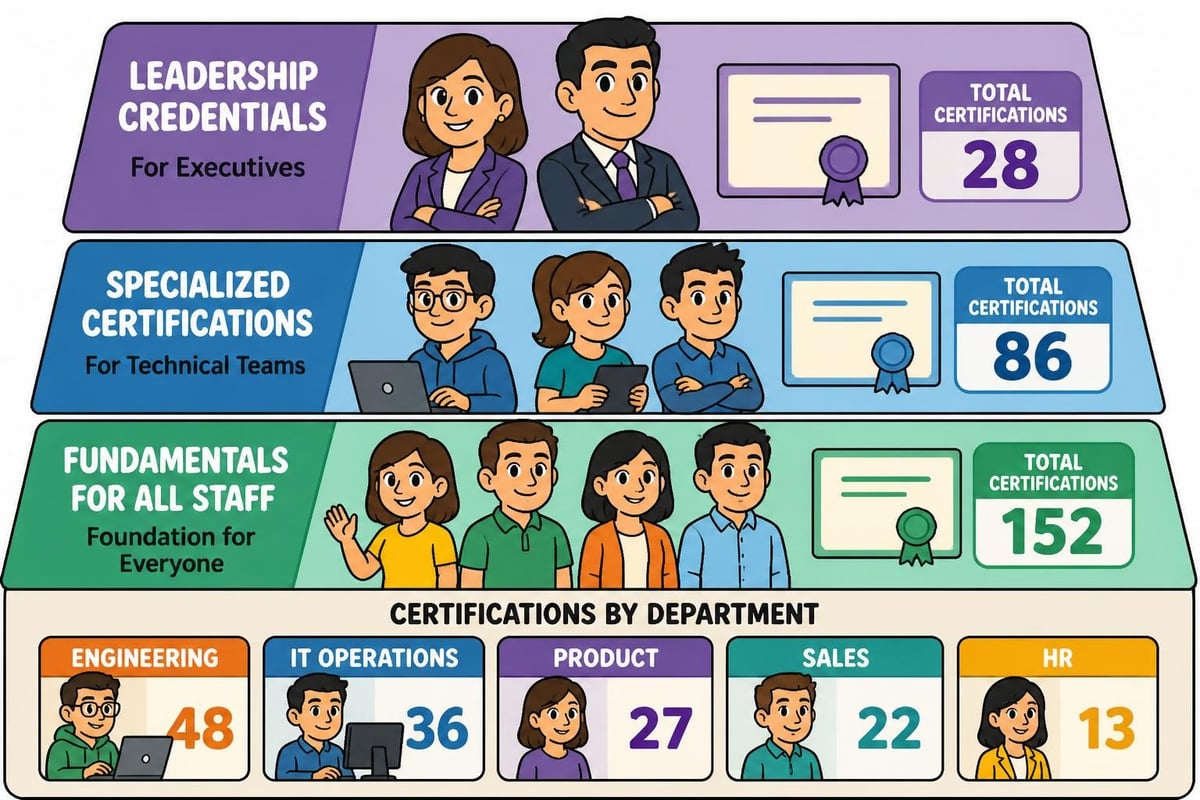
Certification programs form the foundation of effective AI centers of excellence. Start by certifying cross-functional team members representing business, technical, and data perspectives. This diversity ensures solutions address real problems with appropriate technology choices.
Establish communities of practice where certified professionals share experiences, troubleshoot challenges, and develop organizational best practices. These knowledge networks multiply certification value beyond individual contributors.
Consider creating tiered certification requirements based on role definitions. Customer-facing roles might require fundamentals certification, while solution architects need associate-level credentials. Leadership positions could mandate transformation-focused certifications demonstrating strategic thinking.
Programs like those offered through AI management courses complement technical certifications by developing organizational leadership and change management capabilities essential for successful AI adoption.
Maintaining Relevance Through Continuous Learning
Microsoft AI certifications require renewal every 12-24 months, reflecting the rapid pace of technological advancement. This recertification expectation ensures professionals maintain current knowledge rather than relying on outdated credentials.
Treat recertification as an opportunity rather than burden. Microsoft releases significant platform updates quarterly, introducing new services, enhancing existing capabilities, and retiring deprecated features. Staying current through continuous learning maintains your competitive advantage and prevents skill obsolescence.
Emerging Trends Shaping Future Certifications
The AI landscape evolves continuously, with several trends likely influencing certification requirements in coming years:
- Responsible AI and ethics integration across all certification levels
- Multi-modal AI combining vision, language, and speech in unified solutions
- Edge AI deployment for latency-sensitive and privacy-focused applications
- AI governance frameworks addressing regulatory compliance and risk management
- Domain-specific specializations for healthcare, finance, manufacturing, and other regulated industries
Microsoft's partnership with OpenAI and investments in large language models will increasingly influence certification content. Expect expanded coverage of prompt engineering, fine-tuning techniques, and responsible deployment of generative AI systems.
Professionals maintaining multiple certifications demonstrate commitment to comprehensive expertise. Consider complementary credentials like specialized AI courses that deepen knowledge in specific domains beyond general Azure AI services.
Learning Resources Beyond Official Materials
While Microsoft Learn provides comprehensive official content, supplementing with diverse resources creates more robust understanding and different pedagogical approaches that resonate with various learning styles.
Community forums and study groups offer peer support, alternative explanations, and collective problem-solving. Platforms like GitHub contain sample code, reference architectures, and real-world implementation examples demonstrating production-quality solutions beyond basic tutorials.
Curated Resource Categories for Effective Study
Organize your learning resources across multiple formats to maintain engagement and reinforce concepts through different modalities:
Video content: Structured courses providing visual demonstrations of concepts and configurations. Look for instructors with real implementation experience who explain the "why" behind architectural decisions, not just the "how" of clicking through interfaces.
Hands-on labs: Interactive environments providing guided practice with immediate feedback. Priority should go to labs mirroring exam scenarios and realistic business applications rather than abstract exercises.
Documentation and whitepapers: Official Microsoft documentation, architectural frameworks, and best practices guides. These authoritative resources clarify nuanced details and provide definitive answers when conflicting information appears elsewhere.
Community content: Blog posts, podcasts, and discussion forums where practitioners share lessons learned, troubleshooting strategies, and optimization techniques discovered through production implementations.
Platforms offering comprehensive training ecosystems like MammothClub's AI certification programs combine these resource types into structured learning paths with progress tracking and assessment tools.
Common Pitfalls and How to Avoid Them
Even motivated learners encounter obstacles during microsoft ai certification course preparation. Understanding common challenges allows proactive mitigation rather than reactive frustration.
Underestimating hands-on practice requirements represents the most frequent mistake among technical certification candidates. Passing exams requires more than memorizing service names and feature lists. Build actual solutions, encounter real errors, and develop troubleshooting intuition through repeated practice.
Rushing through fundamentals creates knowledge gaps that complicate advanced learning. Take time to thoroughly understand core concepts like supervised versus unsupervised learning, model evaluation metrics, and responsible AI principles. These foundations support all subsequent technical learning.
Time Management and Study Discipline
Certification preparation competes with professional responsibilities, personal commitments, and other priorities. Sustainable success requires realistic scheduling and consistent habits rather than intense cramming sessions.
Block dedicated study time on your calendar treating it as non-negotiable appointments. Early morning or lunch break study sessions often prove more effective than evening attempts when mental energy wanes. Consistency matters more than duration; 45 focused minutes daily outperforms sporadic three-hour sessions.
Create accountability mechanisms increasing commitment. Share goals with colleagues, join study groups with regular check-ins, or enroll in structured programs with deadlines and assessments. External accountability significantly improves completion rates compared to purely self-directed learning.
Avoid the trap of endless preparation without scheduling your exam. Set a target test date 8-12 weeks out, register immediately, and work backward creating milestones. This deadline focus prevents perpetual studying without validation of readiness.
Integration With Broader AI Learning Pathways
A microsoft ai certification course functions best as one component within a comprehensive AI education strategy rather than an isolated credential. Consider how Microsoft certifications complement other learning investments and career development activities.
Technical professionals benefit from pairing Microsoft certifications with platform-agnostic AI knowledge. Understanding theoretical foundations through courses covering machine learning algorithms, neural network architectures, and statistical methods creates flexibility beyond any single vendor's ecosystem. Resources like Coursera's artificial intelligence courses provide this broader theoretical grounding.
Cross-Platform Skills and Vendor Diversity
While specializing in Microsoft's AI stack offers clear career advantages given Azure's market position, organizations often employ multi-cloud strategies requiring broader competency. Familiarity with AWS AI services, Google Cloud AI, or open-source frameworks like TensorFlow and PyTorch enhances versatility.
Consider certification sequences that build progressively deeper expertise:
- Start with platform fundamentals establishing Azure fluency
- Add AI-specific certifications demonstrating specialized capability
- Pursue advanced credentials showcasing architectural expertise
- Supplement with vendor-neutral credentials proving broader knowledge
- Maintain currency through regular recertification and continuous learning
This layered approach creates defensible expertise resilient to technology shifts while maintaining focus sufficient for genuine mastery rather than superficial familiarity across too many domains.
Exploring specialized areas like conversational AI or AI robotics after establishing core certification provides differentiation in competitive talent markets.
Real-World Application and Implementation Success
Certification value multiplies when immediately applied to meaningful projects rather than remaining theoretical knowledge. Identify opportunities within your current role to implement AI capabilities solving actual business problems.
Start small with low-risk pilot projects demonstrating value before proposing enterprise-scale initiatives. Successfully deploying a document classification system or sentiment analysis tool creates credibility for larger investments. Document results quantitatively showing time saved, accuracy improvements, or cost reductions.
Building a Portfolio of AI Implementations
Tangible project portfolios differentiate certified professionals from those holding credentials without demonstrated application. Your portfolio should showcase:
- Problem definition: Clear articulation of business challenges addressed
- Solution architecture: Technology choices and integration approaches
- Implementation details: Code samples, configuration examples, deployment processes
- Results measurement: Quantified outcomes and lessons learned
- Continuous improvement: How solutions evolved based on feedback and changing requirements
Share portfolio projects through GitHub repositories, blog posts, conference presentations, or internal knowledge sharing sessions. This visibility establishes thought leadership and attracts opportunities aligned with your expertise.
Organizations implementing AI capabilities benefit from employees who can bridge technical implementation and business value articulation. Certification combined with communication skills creates powerful professional differentiation beyond pure technical ability.
Successfully navigating the microsoft ai certification course landscape requires strategic planning, disciplined preparation, and practical application focus. Whether you're pursuing fundamentals knowledge, technical implementation expertise, or leadership credentials, these certifications validate capabilities that organizations desperately need in 2026's AI-driven business environment. The certification journey becomes more efficient and enjoyable with the right learning platform supporting your goals. MammothClub provides comprehensive preparation resources, hands-on labs, and expert instruction across 3,000+ courses designed to help professionals master AI technologies quickly and effectively, with corporate programs ensuring your entire team builds the certified expertise needed to compete and win in the AI era.