Artificial intelligence and robotics are transforming the way industries operate, creating new opportunities and challenges every year. As we approach 2025, mastering advanced skills in these fields is becoming essential for anyone aiming to stay ahead in the age of automation.
This article presents the 7 best ai robotics course options for professionals, students, and innovators who want to lead in intelligent automation. Whether you are looking to build a solid foundation or advance your expertise, these top programs are designed to accelerate your growth.
Explore leading platforms, unique course features, pricing, and how each ai robotics course can help you build a future-ready career. The demand for skilled experts is rising, and these courses offer the practical knowledge and credentials employers seek.
Start your journey to mastering AI and robotics now, and position yourself at the forefront of tomorrow’s most exciting technological revolution.
Why AI Robotics Skills Matter in 2025
The landscape of robotics and AI is advancing rapidly, creating new opportunities and challenges for professionals and learners. Understanding why AI robotics skills are critical in 2025 helps you make informed choices about your education and career. Let’s explore the factors driving demand, essential skills, career pathways, and the latest trends in robotics education.
Industry Growth and Demand
The global AI robotics market is projected to surpass $50 billion by 2025, reflecting extraordinary growth across industries. Manufacturing, healthcare, logistics, and service sectors are increasingly adopting robotics to streamline operations, improve efficiency, and reduce costs. This surge in implementation has led to soaring demand for skilled AI robotics engineers and specialists.
Automation is transforming environments such as warehouses, where robots manage inventory, and hospitals, where robotic assistants support surgeries and patient care. According to the World Economic Forum's Future of Jobs Report 2025, the shortage of qualified professionals is creating lucrative roles for those with the right expertise. The expansion of robotics startups and innovation hubs further amplifies the need for individuals who have completed an ai robotics course.
Essential Skills for Modern Robotics Careers
To excel in today’s AI-driven landscape, mastering a range of technical and interdisciplinary skills is essential. Core competencies include machine learning, robot programming, and computer vision. Familiarity with programming languages like Python, C++, ROS, and MATLAB is vital for building and controlling intelligent systems.
Integrating AI with hardware and IoT devices unlocks real-world applications, from autonomous vehicles to smart factories. Modern ai robotics course curricula emphasize topics such as neural networks, motion planning, robotics simulation, and ethical considerations, ensuring graduates are well-rounded and prepared for diverse challenges.
Career Pathways and Opportunities
Completing an ai robotics course opens doors to a variety of rewarding roles. Professionals can pursue careers as AI robotics engineers, automation specialists, R&D scientists, and robotics software developers. Opportunities range from entry-level positions to advanced tracks in top companies like Boston Dynamics, Tesla, and Amazon Robotics.
Certifications gained through reputable courses are highly valued by employers and can significantly improve job placement rates. Freelance and consulting projects in a global market are increasingly accessible, making upskilling through an ai robotics course a strategic move for career changers and tech professionals aiming for advancement.
Trends in AI Robotics Education
The way people learn robotics is evolving quickly. There is a strong shift toward flexible, online, and microcredential-based learning experiences. Interactive bootcamps and project-based ai robotics course options are now widely available, often developed in partnership with leading universities and tech companies.
Modern programs integrate real-world projects and capstone assignments, offering hands-on experience that employers value. Community and peer learning are becoming central, with free and paid courses ranging from short overviews to full degrees. The emphasis is on continuous upskilling, preparing learners to adapt and thrive in the ever-changing field of AI robotics.
How to Choose the Right AI Robotics Course
Selecting the right ai robotics course can be the turning point in your career. With so many options available, it’s essential to evaluate each course carefully before making a decision. Let’s explore the four key criteria that will help you find the perfect fit for your goals and learning style.
Accreditation and Industry Recognition
Accreditation is a critical factor when choosing an ai robotics course. Courses from accredited universities, tech giants, or recognized industry bodies are typically valued more by employers. Look for programs that offer digital certificates, verifiable through platforms like LinkedIn or employer portals.
Industry-recognized certifications, such as those from AWS or Google, can significantly boost your employability. Some employers may specifically request certain credentials, so research what’s preferred in your target field. Weigh the difference between free and paid courses, as paid options often come with higher recognition. A strong certificate can make your resume stand out in a competitive job market.
Curriculum Depth and Learning Outcomes
A high-quality ai robotics course should offer a balanced curriculum that blends theory with hands-on experience. Review the syllabus to ensure it covers essential topics like algorithms, robot programming, machine learning, and real-world projects. Practical elements such as simulations and coding labs are vital for skill development.
For those needing to strengthen fundamentals before diving into robotics, consider starting with a Complete AI Foundations Bootcamp. This can help bridge knowledge gaps and prepare you for advanced robotics content. Make sure the course’s learning outcomes align with your career objectives, and that content is updated to reflect the latest AI advances.
Flexibility, Format, and Support
Flexibility is a major advantage in today’s online learning landscape. When selecting an ai robotics course, consider whether a self-paced or cohort-based format suits your schedule best. Check if the course offers multi-device access, including mobile and desktop, so you can learn anywhere.
Support structures matter too. Look for courses with active instructor support, community forums, or peer networking. Some platforms provide lifetime access, while others limit enrollment windows. Accessible resources and a strong community can make your learning journey smoother and more enjoyable.
Pricing and Value for Investment
The cost of an ai robotics course varies widely, from free options to premium programs. Evaluate what’s included, such as certificates, project access, or mentorship. Some courses offer scholarships, discounts, or trial periods, which can reduce your upfront risk.
Weigh the long-term value: an affordable course with strong outcomes may offer a better return on investment than a costly program with fewer benefits. Always match your budget to your learning goals.
7 Best AI Robotics Course Picks for 2025
Finding the perfect ai robotics course can transform your technical skillset and open doors to future-proof careers. In 2025, the best programs blend hands-on learning, industry recognition, and real-world relevance. Below, we break down the top 7 ai robotics course choices, covering unique features, pricing, audience fit, and more. Whether you are a beginner or a seasoned professional, these options will help you master intelligent automation and robotics.
Mammoth Club: AI Robotics Mastery Pathway
The Mammoth Club ai robotics course pathway offers a comprehensive membership covering over 3,000 tech and AI courses. Priced at $199 for lifetime access, it includes a vast library of interactive bootcamps, AI-powered learning tools, and industry-recognized certifications. Learners benefit from adaptive learning paths that personalize content based on your progress and goals.
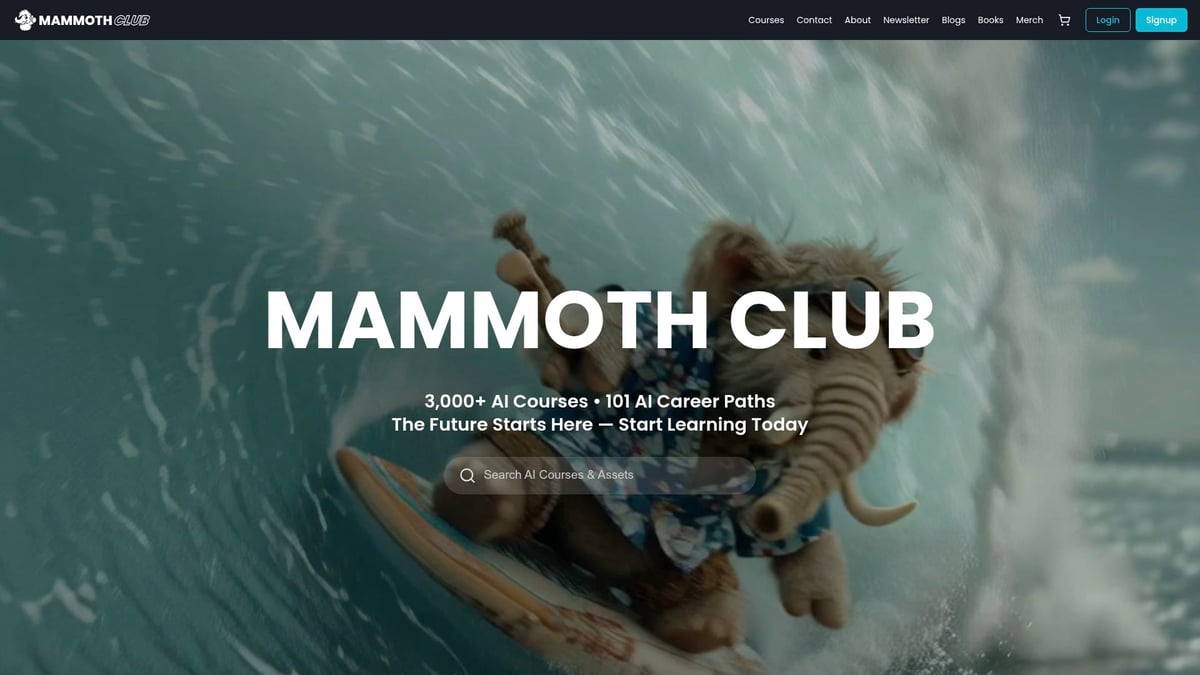
You gain unlimited access to all current and future ai robotics course modules. This is ideal for professionals, students, and organizations seeking to upskill teams or prepare for certifications. The platform’s practice exams and project-based assignments help solidify your expertise.
Key Features:
- 3,000+ tech and ai robotics course options
- Interactive bootcamps and live workshops
- AI-driven adaptive learning tools
- Industry certificates included
Pros:
- Lifetime access and updates
- Multi-format lessons (video, text, quizzes)
- All-in-one membership for multiple ai robotics course needs
Cons:
- The extensive course library may overwhelm absolute beginners
This ai robotics course pathway is perfect for career advancement, certification prep, or organization-wide training. If you want flexible, future-ready learning, Mammoth Club is a standout choice.
Robotics and AI by Great Learning
Great Learning’s Robotics and AI course is an accessible ai robotics course for those just starting out. Offered for free and including a certificate, it covers foundational concepts such as robotics basics, AI fundamentals, neural networks, Python, C++, and ROS.
This ai robotics course is designed for beginners, students, and career changers who want to quickly build foundational knowledge. With concise modules and over 15,000 learners enrolled, the course is structured for rapid upskilling and resume building.
Key Features:
- Free ai robotics course with certificate
- Beginner-friendly content
- Covers essential programming languages and robotics frameworks
Pros:
- No cost to enroll
- Industry-recognized certificate
- Short duration for quick learning
Cons:
- Limited depth for advanced learners
- Not suitable for those seeking in-depth ai robotics course content
For anyone new to the field, this ai robotics course is a fast, low-risk way to start your journey into intelligent automation.
AI & Robotics by FutureLearn
FutureLearn’s AI & Robotics section offers a curated selection of ai robotics course options from renowned universities and industry partners. Learners can audit courses for free or pay for certificates and unlimited access. The platform features interactive modules, peer learning, and real-world industry projects.
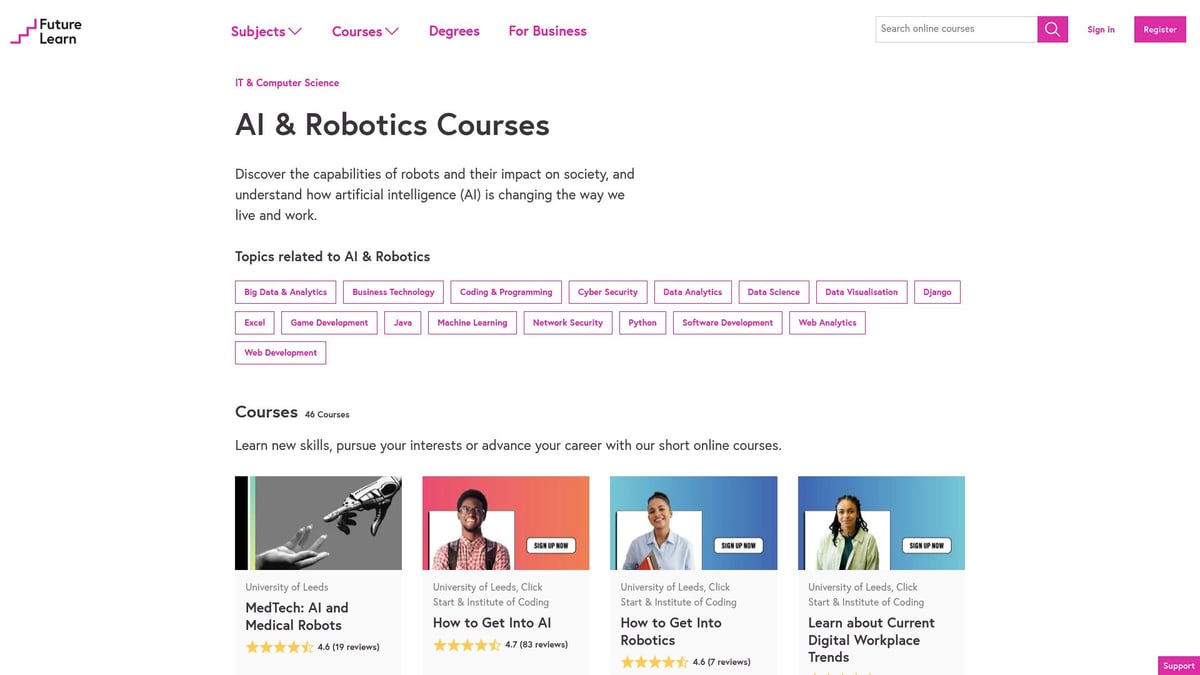
You will find ai robotics course topics ranging from introductory AI to specialized robotics applications. The flexible format suits students, professionals, and those upskilling for new roles.
Key Features:
- University-backed ai robotics course catalog
- Flexible audit or paid certificate model
- Industry project integration
Pros:
- Accredited content from trusted institutions
- Peer support and discussion forums
- Wide variety of ai robotics course subjects
Cons:
- Certificate requires payment
- Some ai robotics course options have fixed start dates
FutureLearn is an excellent ai robotics course resource for academic progression or career transition, with the flexibility to choose your pace and focus.
Robotics Specialization by University of Pennsylvania (Coursera)
This Coursera specialization, offered by the University of Pennsylvania, is a rigorous ai robotics course series comprising six in-depth modules. Priced at $49/month after a free trial, it covers robot kinematics, computer vision, AI integration, and more, with extensive hands-on projects.
The ai robotics course is ideal for intermediate to advanced learners, STEM students, and engineers seeking to build a robust portfolio. Each course includes practical assignments, quizzes, and peer-reviewed projects to ensure real-world skill development.
Key Features:
- Six-part ai robotics course specialization
- Project-based learning
- Ivy League instruction
Pros:
- Prestigious credential for your resume
- Flexible schedule and pacing
- Deep coverage of robotics and AI topics
Cons:
- Ongoing monthly fee
- Demands significant time commitment
If you want an ai robotics course that blends academic rigor with practical experience, this specialization is a top-tier choice.
Artificial Intelligence for Robotics by Georgia Tech (Udacity)
Georgia Tech’s course on Udacity is a project-driven ai robotics course taught by Sebastian Thrun, a leader in the field. The curriculum covers probabilistic robotics, localization, planning, and search algorithms. Learners can access the course content for free or pay for a certificate.
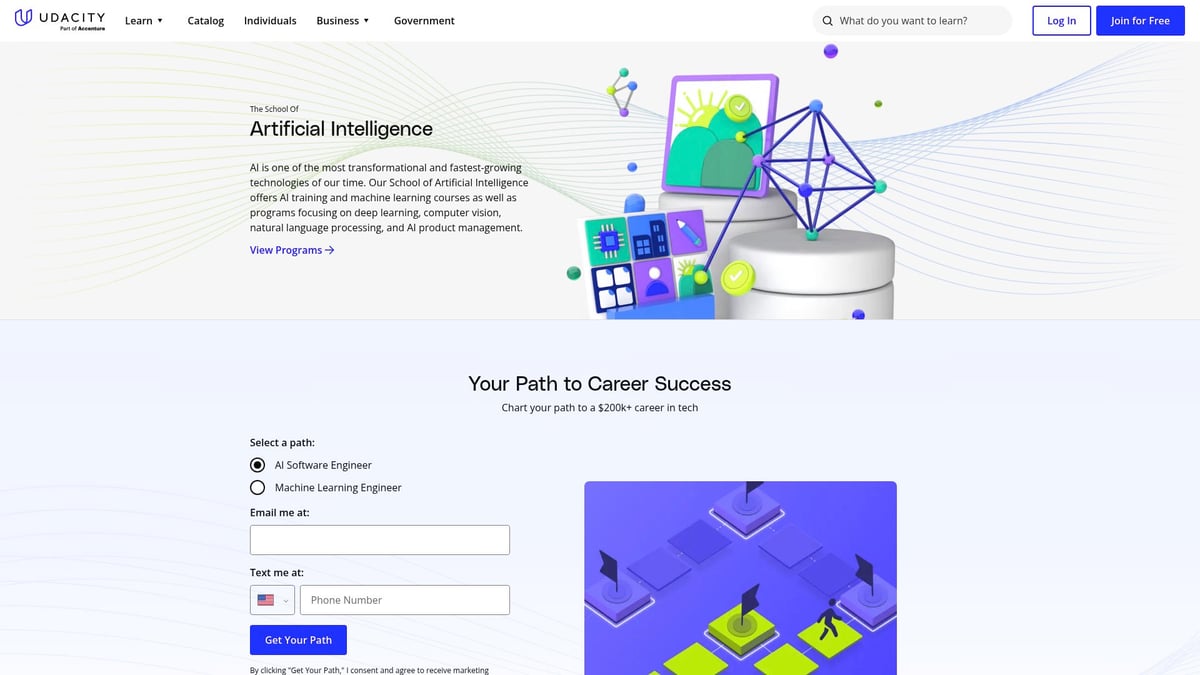
This ai robotics course is designed for intermediate learners, robotics enthusiasts, and engineers interested in real-world robotics applications such as self-driving cars. The practical focus ensures you gain experience with algorithms that power modern automation.
Key Features:
- Taught by a pioneering robotics expert
- Focus on probabilistic robotics and planning
- Real-world ai robotics course projects
Pros:
- High-quality, flexible instruction
- Free content access
- Emphasis on practical, employable skills
Cons:
- Requires prior programming and math knowledge
- No official university credit
For those interested in building AI-driven robots or autonomous vehicles, this ai robotics course delivers hands-on, relevant expertise.
Robotics MicroMasters by University of Pennsylvania (edX)
The Robotics MicroMasters on edX is a graduate-level ai robotics course pathway, spanning five comprehensive modules and costing $1,260 for the full program. Individual courses can be taken separately, and successful completion can earn university credit or serve as a pathway to a master’s degree.
This ai robotics course is tailored for advanced learners, professionals, and those preparing for research or graduate school. The curriculum includes robot mechanics, mobility, AI, and perception, all taught by leading faculty.
Key Features:
- Graduate-level ai robotics course content
- Option to earn university credit
- Rigorous, in-depth instruction
Pros:
- Recognized credential for career and academic advancement
- Credit transfer opportunities
- Challenging, research-focused assignments
Cons:
- Higher cost compared to other ai robotics course options
- Demanding workload and prerequisites
For professionals seeking advanced mastery or a stepping stone to graduate studies, this ai robotics course is a premier choice. If you want to explore alternative learning platforms, consider this Udemy Alternative Robotics Courses resource for more flexible options.
Robotics: Perception by ETH Zurich (edX)
ETH Zurich’s Robotics: Perception is a specialized ai robotics course focused on computer vision, perception, and sensor integration. Students can audit for free or purchase a certificate. The curriculum is hands-on, with assignments that apply cutting-edge AI and robotics concepts.
This ai robotics course is best suited for intermediate to advanced learners, robotics engineers, and those aiming to specialize in vision-based robotics. Instruction is led by world-class faculty from a renowned institution.
Key Features:
- Focus on perception and computer vision in robotics
- Hands-on ai robotics course assignments
- Taught by leading robotics experts
Pros:
- Prestigious institution with a global reputation
- Practical, project-based learning
- Specialized content for in-demand skills
Cons:
- Requires prior knowledge in robotics and AI
- Limited support for beginners
For those targeting roles in computer vision or AI-driven robotics research, this ai robotics course provides unparalleled expertise and practical application.
Comparing the Top AI Robotics Courses
Choosing the right ai robotics course can be challenging with so many high-quality options available. To help, we break down the essentials across curriculum, value, learner fit, and overall strengths. Use this comparison as a roadmap to select the course that aligns with your ambitions and learning style.
Course Features and Content Comparison
Each ai robotics course brings a unique blend of depth, hands-on experience, and specialization. For example, Mammoth Club offers a vast library with adaptive learning and interactive bootcamps, ideal for exploring both foundational and advanced topics. The Penn Robotics MicroMasters, on the other hand, dives deep into mechanics, AI, and perception, appealing to those seeking graduate-level rigor.
Courses like Great Learning and FutureLearn focus on accessible introductions, while Coursera and Udacity emphasize project-based learning and real-world AI applications. Programming languages such as Python, C++, and ROS are commonly featured, ensuring technical relevance. Many programs also include simulation labs, peer learning, and industry-led instruction for robust, up-to-date content.
Pricing, Certification, and Value
Comparing ai robotics course pricing reveals major differences. Some, like Great Learning and Udacity, offer free access with optional paid certificates, while others, such as Mammoth Club, provide lifetime access for a one-time fee. Subscription models (Coursera) and premium programs (edX MicroMasters) cater to those seeking university credits or advanced credentials.
Certification value is critical for career advancement. Accredited certificates, like those from Penn or ETH Zurich, are highly regarded by employers. For those exploring alternatives to traditional platforms, the EdX Alternative for Robotics Learning can help you discover different certification paths and compare features. Evaluate scholarship options, bundled deals, and access duration to maximize your investment.
Ideal Learner Profiles
The perfect ai robotics course depends on your background, goals, and preferred learning style. Beginners and career changers benefit from concise, beginner-friendly courses like Great Learning. Intermediate learners or professionals may find Coursera and Udacity best for building portfolios and job-ready skills. Advanced practitioners, researchers, or those seeking credit should consider the Penn MicroMasters or ETH Zurich’s perception-focused program.
Self-paced structures suit independent learners, while cohort-based models and active communities support collaboration and mentorship. Organizations may prefer all-in-one solutions like Mammoth Club for team upskilling, while students and academics often gravitate toward university-backed options.
Pros and Cons Summary
Below is a quick-reference table outlining each ai robotics course’s major strengths and limitations:
| Course | Pros | Cons |
|---|---|---|
| Mammoth Club | Lifetime access, breadth | Overwhelming for beginners |
| Great Learning | Free, beginner-friendly | Limited depth |
| FutureLearn | Accredited, flexible | Paid certificate, start dates |
| Coursera (Penn) | Deep dive, Ivy League | Monthly fee, time-intensive |
| Udacity (Georgia Tech) | High-quality, real-world focus | Needs prior knowledge |
| edX MicroMasters | Graduate credit, rigorous | Expensive, heavy workload |
| ETH Zurich (edX) | Prestigious, specialized | Advanced, less beginner support |
Use this overview to pinpoint the ai robotics course that best matches your timeline, budget, and aspirations.
Maximizing Success in AI Robotics Learning
Building a Personalized Learning Path
Setting a clear direction is essential before starting any ai robotics course. Begin by identifying your main objectives, such as certification, a career transition, or simply upgrading your existing skills. This approach helps you select the right combination of courses and resources.
Mixing free and paid options can provide a well-rounded foundation. For instance, start with an introductory ai robotics course, then layer in more advanced modules as your confidence grows. Creating a project portfolio along the way will showcase your abilities to employers.
Regularly track your progress and adjust your learning plan as new interests or opportunities emerge. Engaging with mentors and joining learning communities can also make your journey more productive and enjoyable.
Leveraging Course Features for Real-World Impact
Hands-on experience is the bridge between theory and industry needs in any ai robotics course. Apply what you learn by tackling real-world projects, whether through course assignments or personal initiatives. Participating in robotics competitions or hackathons can further sharpen your problem-solving skills.
Networking is equally vital. Connect with peers and industry professionals to exchange ideas and discover emerging trends. Sharing your completed projects on platforms like GitHub or LinkedIn can boost your credibility and attract potential employers.
Take advantage of course certificates by adding them to your professional profiles. This not only validates your expertise but also opens doors to internships, research roles, and job interviews in robotics and AI.
Staying Ahead of Industry Trends
The ai robotics course landscape evolves rapidly, reflecting advances in research and technology. Staying informed is crucial for maintaining a competitive edge. Follow reputable blogs, join webinars, and subscribe to course newsletters for timely updates.
Explore emerging topics such as generative AI or human-robot interaction to diversify your knowledge base. According to the Statista AI Robotics Market Forecast, the industry is set for significant growth, making continuous learning a smart investment.
Engage actively in online forums and communities to discuss challenges, share insights, and adapt your skills to the latest demands. This proactive approach ensures your expertise remains relevant.
Overcoming Common Learning Challenges
Every learner faces obstacles during an ai robotics course journey. Managing your time and staying motivated can be tough, especially with self-paced formats. Address gaps in prerequisite knowledge, like programming or math, by seeking supplemental tutorials or textbooks.
If you are unsure about your readiness for an ai robotics course, consider using an AI Fluency Assessment Tool to evaluate your current strengths and areas for improvement.
Never hesitate to ask questions in discussion forums or reach out to instructors. Celebrate milestones, however small, to maintain momentum and keep your learning experience rewarding.
As you’ve seen throughout this guide, building future-proof AI robotics skills can truly set you apart in a rapidly evolving field. Whether you’re just starting out or aiming to advance your expertise, the right course can be a game changer for your career. If you’re ready to take the next step and earn an industry-recognized credential, you don’t have to wait—why not Become a certified AI Foundation Specilaist. Start for free? It’s a practical way to lay a strong foundation and join a global community of learners shaping tomorrow’s technology.