Microsoft Azure AI Fundamentals is an entry-level certification that proves you understand core AI concepts and how Azure delivers them. The exam most study material still references, AI-900, retired on June 30, 2026, and the credential is now earned through AI-901. This guide explains what changed, what the current exam tests, and how to prepare for it as a working professional or career switcher.
What Is the Microsoft Azure AI Fundamentals Certification?
The Azure AI Fundamentals certification is Microsoft's foundational credential for AI. It validates that you can describe common AI workloads, explain how machine learning, computer vision, language and generative AI work, and recognize the Azure tools that support them.
It requires no prior cloud or data science career. That makes it a practical first credential for several groups:
- Analysts, project managers and consultants who need AI vocabulary they can use with technical teams
- Career switchers building a first verifiable credential in tech
- Developers and administrators adding AI to an existing Azure skill set
- Sales and pre-sales staff who position AI products to customers
Microsoft updated the English version of the certification on April 15, 2026, so any study plan should start from material dated after that point.
Is AI-900 Still Available, or Has It Been Replaced by AI-901?
AI-900 is no longer available. According to the Microsoft Learn exam page, the exam retired on June 30, 2026, and candidates must now pass AI-901 to earn the Azure AI Fundamentals certification.
This matters because many search results, video courses and forum threads still describe AI-900. The old objectives remain useful as background, and Microsoft preserves them in a retired AI-900 study guide. Current preparation, however, should follow AI-901 materials. Microsoft lists no retirement date for AI-901.
If you already hold an AI-900 pass, check your Microsoft Learn profile for the status of your credential rather than assuming either outcome.
What Does the AI-901 Exam Actually Cover?
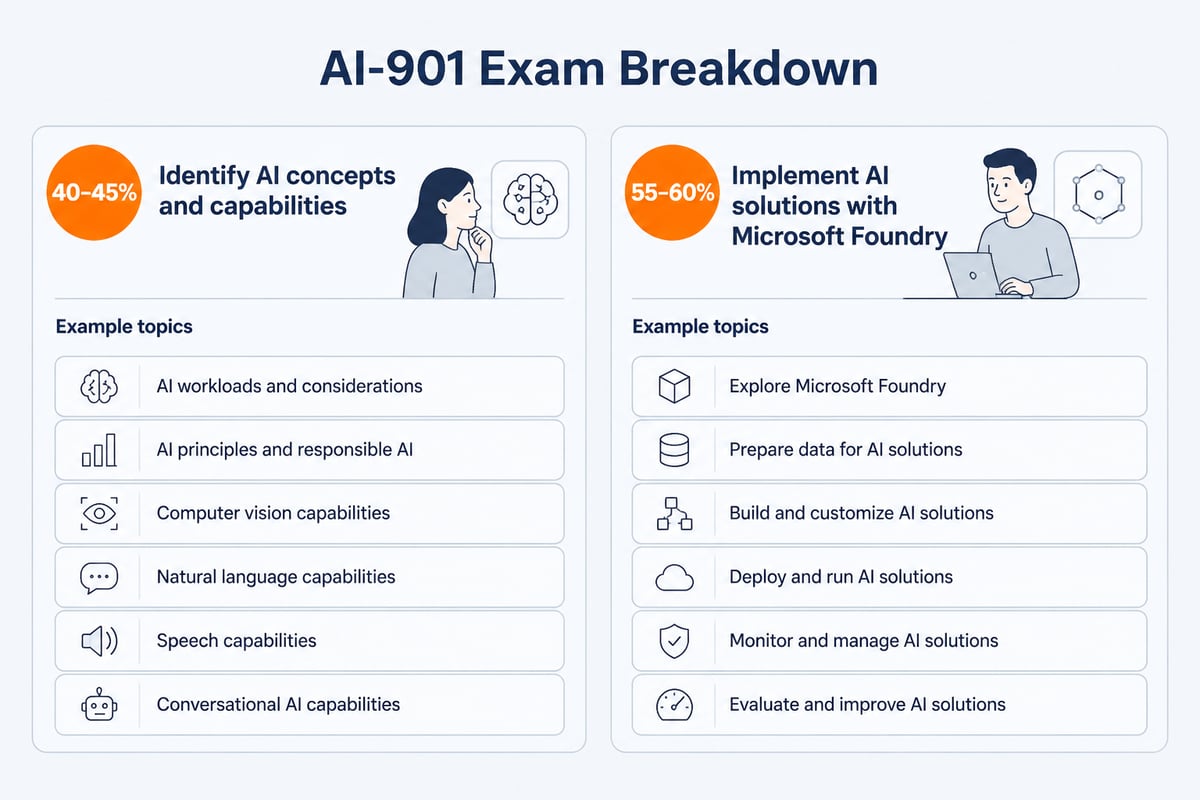
AI-901 assesses two areas, and the second carries more weight than many candidates expect. According to Microsoft's exam page, the weighting is:
| Skill area | Exam weight |
|---|---|
| Identify AI concepts and capabilities | 40–45% |
| Implement AI solutions with Microsoft Foundry | 55–60% |
Microsoft's announcement of the updated certification says the new exam expands coverage to generative AI and agents, Foundry tools and models, responsible AI, and implementing AI solutions.
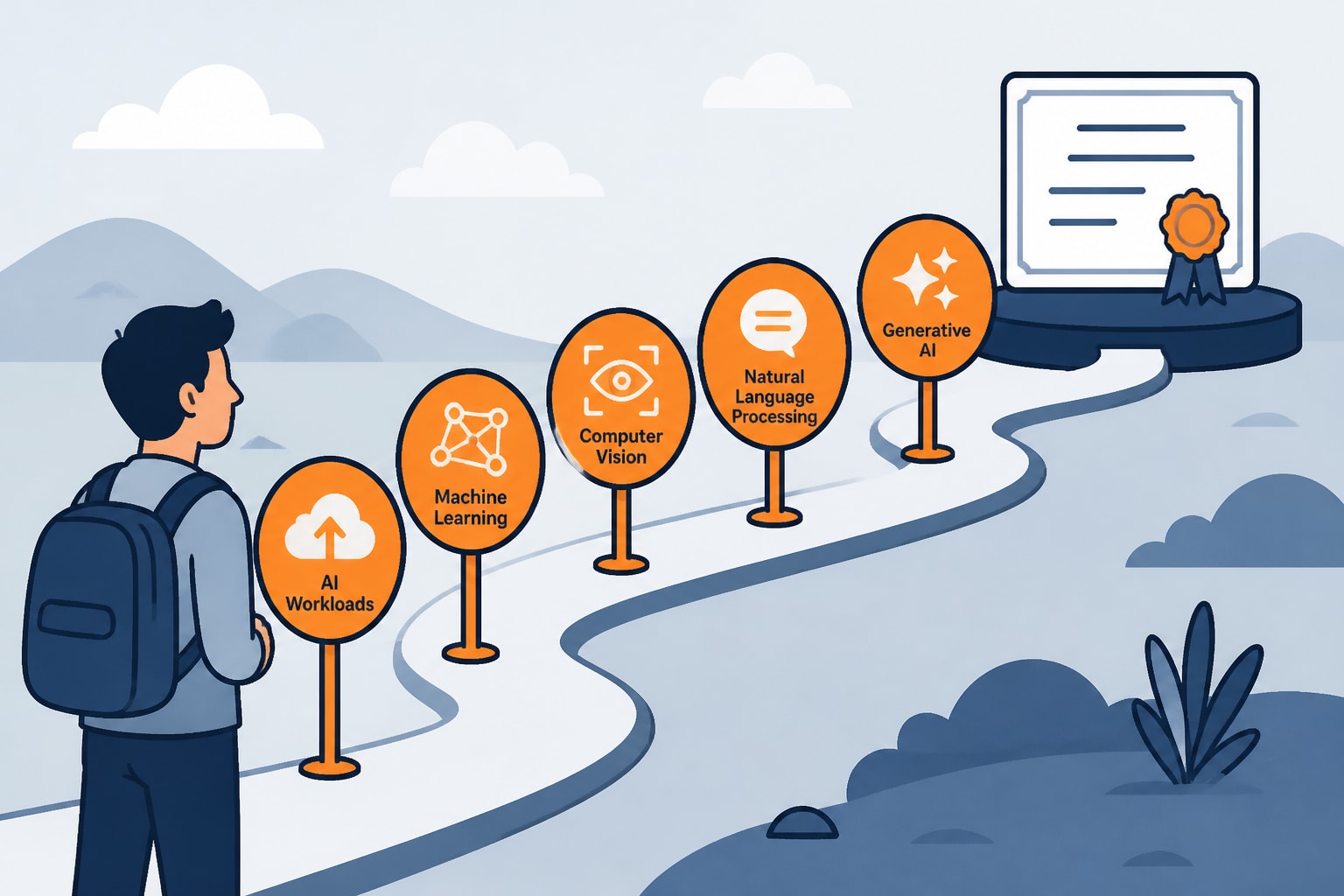
In practical terms, the first area is conceptual. You distinguish machine learning from generative AI, match workloads such as image analysis or speech transcription to the right capability, and explain terms like training data, inference, tokens and prompts.
The second area is applied. It asks how you would build with Microsoft Foundry, the platform Microsoft uses for working with models and AI tools. A majority of the exam therefore rewards candidates who have seen the tooling, not only those who have read about it.
What Prerequisites Does Microsoft Azure AI Fundamentals Require?
Microsoft Azure AI Fundamentals has no formal prerequisites, but AI-901 expects more technical comfort than its "fundamentals" label suggests. Microsoft's AI-901 page states that candidates need conceptual knowledge of Azure AI solutions, foundational technical skills, basic Python syntax and programming techniques, and familiarity with Azure resources.
The certification overview adds that candidates should be familiar with REST APIs, SDKs and command-line interfaces.
For a non-programmer, this is the biggest change from the earlier exam. You do not need to write production code. You do need to read short Python snippets, understand what an API call returns, and recognize what an SDK does. Spending a few focused weeks on Python basics before your AI study will remove the main obstacle. A beginner-level path such as the Python programming fundamentals course is a reasonable place to build that base.
Which Core Topics Should You Master First?
Start with the concepts, because they anchor the applied questions that follow. Work through these topics in order:
- AI workload types. Know the difference between prediction, classification, anomaly detection, computer vision, natural language processing, document intelligence and generative AI.
- Machine learning basics. Understand training versus inference, features and labels, and why data quality limits model quality.
- Generative AI and agents. Be able to explain prompts, grounding, copilots and how an agent differs from a single model call.
- Foundry tools and models. Learn what Foundry provides, how models are deployed, and how applications call them.
- Responsible AI. Memorize the principles and be ready to apply them to scenarios.
For service-level detail, Microsoft's Azure AI services documentation is the authoritative reference, and it is free to read.
How Does Responsible AI Appear on the Exam?
Responsible AI appears as scenario questions that ask you to identify which principle applies. Microsoft names six responsible AI principles: fairness, reliability and safety, privacy and security, inclusiveness, transparency, and accountability.
The most common mistake is memorizing the list without practicing the mapping. A hiring model that scores one demographic group lower is a fairness issue. A chatbot that cannot be used by people with disabilities points to inclusiveness. A system that gives no explanation of how it reached a decision raises transparency. A team with no named owner for AI outcomes has an accountability gap.
To see how these principles translate into design decisions, the Azure Well-Architected guidance on responsible AI in workload design is a useful companion read.
How Should You Study for Microsoft Azure AI Fundamentals?
A sound study plan for Microsoft Azure AI Fundamentals combines concept review, hands-on practice and timed question drills over roughly three to six weeks, depending on your starting point. Microsoft does not prescribe a study duration, so treat this as a planning guide rather than an official requirement.
A structure that works for busy professionals:
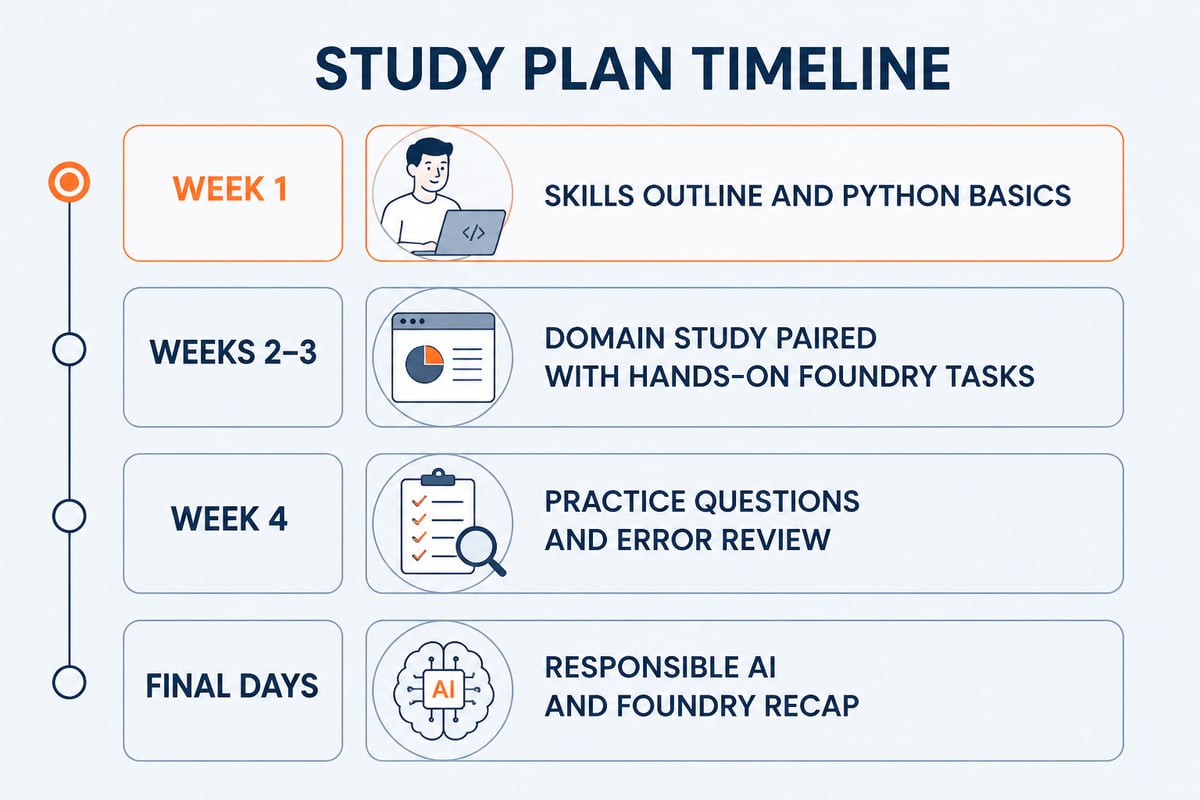
- Week 1: Read the official skills outline. Close any Python and API gaps.
- Weeks 2 to 3: Study each domain, then immediately open Azure or Foundry and perform the matching task. Practice creates recall that reading does not.
- Week 4: Take practice questions, review every wrong answer, and write a one-line explanation for each correction.
- Final days: Re-read the responsible AI principles and the Foundry material, since these are the highest-yield areas.
One habit separates efficient candidates from slow ones. After every practice session, sort your errors into three buckets: concept gaps, tooling gaps and misread questions. Each bucket needs a different fix, and tracking them tells you whether to read more, build more or slow down.
Which Study Resources Are Worth Paying For?
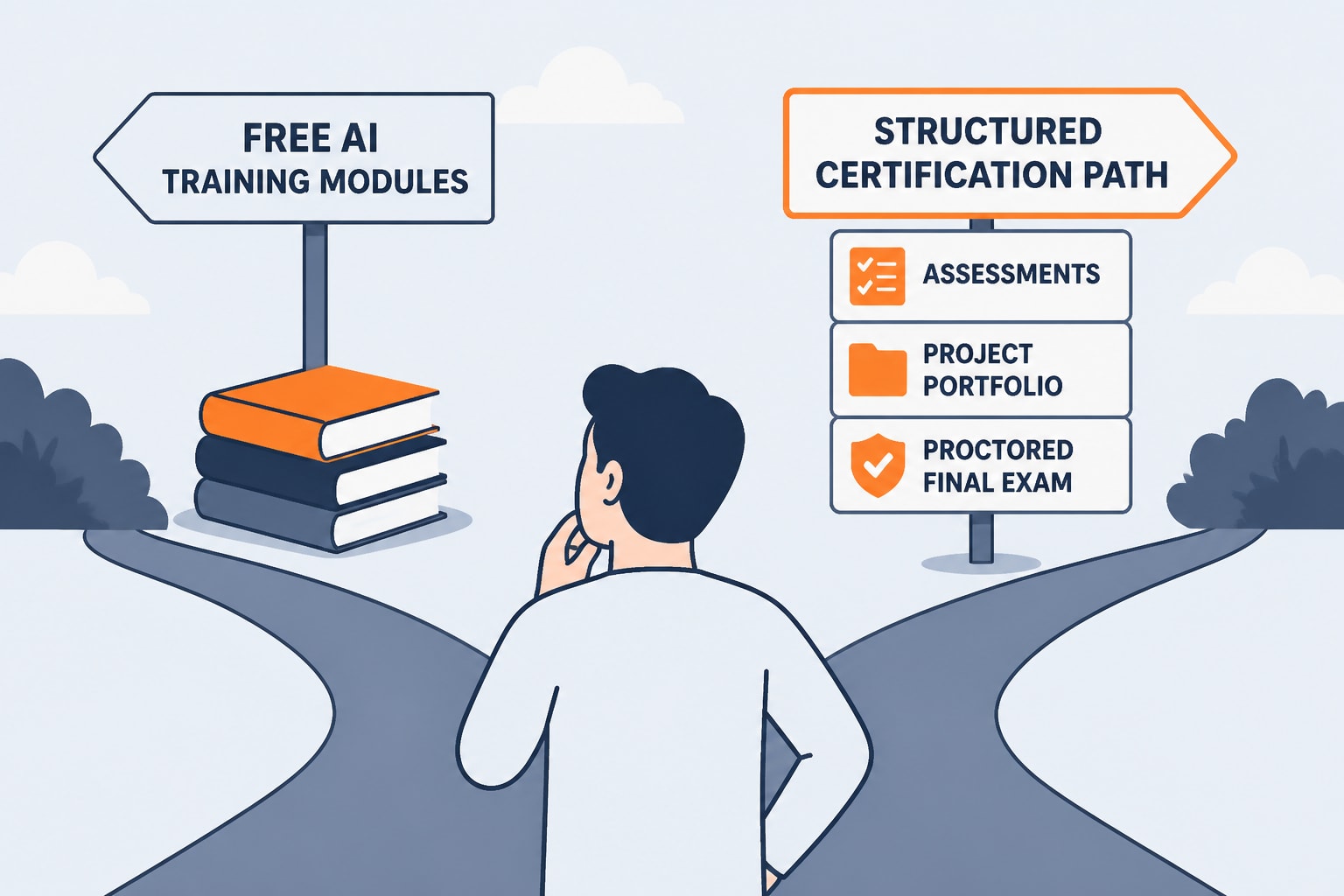
The best resource is the one that matches the current exam and includes practice. Microsoft Learn is free and authoritative, so start there for the official skills outline and service documentation. Paid material earns its cost only if it adds structure, hands-on labs and realistic questions.
When comparing options, check these points:
- Is the content explicitly aligned to AI-901 and dated after the April 2026 update?
- Does it include Foundry and generative AI practice, not just classic machine learning?
- Are there lab environments, or only video?
- Does it offer a large bank of practice questions with explanations?
If you want one structured option, Mammoth Club Unlimited Membership gives annual access to 3,000+ courses, certification paths, practice exams, tools and digital assets. MammothClub's lessons are text-first and searchable, and courses are updated monthly as tools change. Check the catalog for AI-901 specific content before you commit. If you only want free material, Microsoft Learn alone is a legitimate route, though it will not supply a large question bank.
For wider context on the credential landscape, MammothClub's overview of Microsoft AI certifications and its guide to AI certifications you can take online help you decide where this exam fits.
What Is the Exam Format and Passing Score?
The passing score for AI-901 is 700, per Microsoft's exam page. Microsoft scores on a scale of 1 to 1,000, and 700 is not a raw 70 percent, so do not use percentage-correct as your readiness test.
Question formats on Microsoft fundamentals exams typically include multiple choice, multi-select and scenario items, though you should confirm the current format, duration and fee on the exam page, since pricing varies by country and changes over time. Microsoft also offers an exam sandbox so you can try the interface before test day. If you need accommodations, request them when you schedule.
Two tactical points help on the day. Answer every question, because there is no benefit to leaving items blank. For multi-part scenarios, read the final sentence first so you know what is being asked before reading the details.
What Happens After You Pass?
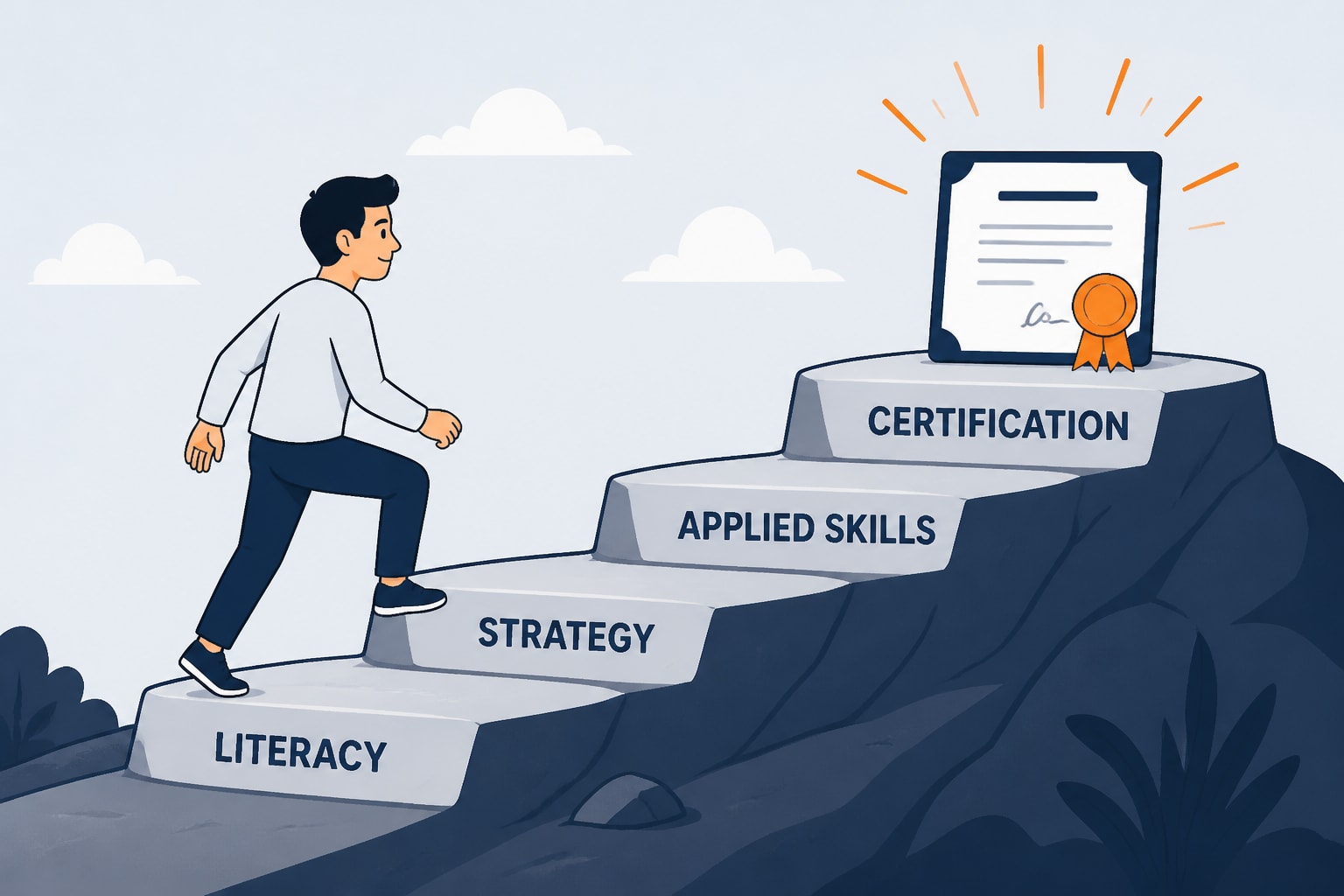
Passing earns the Azure AI Fundamentals credential, which you can share through your Microsoft Learn profile and professional networks. It signals credible foundational knowledge, but it is an entry point, not a destination.
Next steps depend on your goal:
- Technical builders: Move toward an associate-level Azure AI credential. MammothClub's guide to the Azure AI associate path outlines the progression.
- Programming-focused learners: Add applied skills through a Python AI certification route.
- Career switchers: Pair the certificate with a small portfolio project built in Foundry, so interviewers see applied skill alongside the badge.
Hiring managers respond to demonstrated work. A fundamentals credential plus one documented project, such as a simple document-analysis or chatbot prototype, tells a stronger story than the credential alone.
Frequently Asked Questions
What is the Azure Fundamentals certification?
Azure fundamentals certifications are Microsoft's entry-level credentials. Azure AI Fundamentals focuses on AI concepts and Azure AI tooling, while a separate Azure Fundamentals credential covers general cloud concepts. They are different exams, and neither requires prior experience.
Which Azure AI certification is the best?
The best one depends on your role. Azure AI Fundamentals suits beginners and non-engineers who need a recognized starting point. Engineers who build solutions usually progress to an associate-level certification afterward. Start with the fundamentals exam if you are new to AI, since it builds the vocabulary the higher exams assume.
Where can I find free AI certifications?
Microsoft Learn offers free learning paths, though the proctored certification exam itself carries a fee. Free paths are well suited to concept study. If you want a verified credential, budget for the exam and consider whether structured practice material is worth adding.
How much does the AZ-204 exam cost?
AZ-204 is a separate, developer-level Azure exam, not part of AI Fundamentals. Microsoft sets exam prices by country and changes them over time, so check the official exam page for your region before you plan a budget.
Can I pass without knowing Python?
It is risky. Microsoft lists basic Python syntax among the AI-901 requirements, so learn enough to read short code samples and understand API calls before you sit the exam.
Your next step is to open the official AI-901 skills outline on Microsoft Learn and mark every topic you could not explain aloud today; that list becomes your study plan. When you are ready for structured practice, Mammoth Club Unlimited Membership combines certification paths, practice labs and exam questions in one place, with courses refreshed monthly as Azure tools change. MammothClub lets you start unlimited and build toward your AI credential at your own pace.