The artificial intelligence revolution has fundamentally transformed how professionals approach their careers in 2026. As organizations race to integrate AI into their operations, the demand for skilled practitioners has never been higher. Whether you're a software engineer looking to pivot into machine learning, a business analyst exploring AI applications, or a seasoned data scientist seeking advanced specialization, selecting the right educational pathway is crucial for success. The landscape of AI education has expanded dramatically, offering everything from weekend bootcamps to comprehensive certification programs. This guide examines the best AI courses available today, helping you identify which programs align with your career goals, learning style, and skill level.
Understanding the AI Education Landscape in 2026
The AI training ecosystem has matured significantly over the past few years. What once consisted primarily of university programs and scattered online tutorials has evolved into a sophisticated marketplace of specialized courses, bootcamps, and certification tracks. According to research on undergraduate AI programs, educational institutions are rapidly expanding their offerings to meet market demands.
Today's best AI courses fall into several distinct categories:
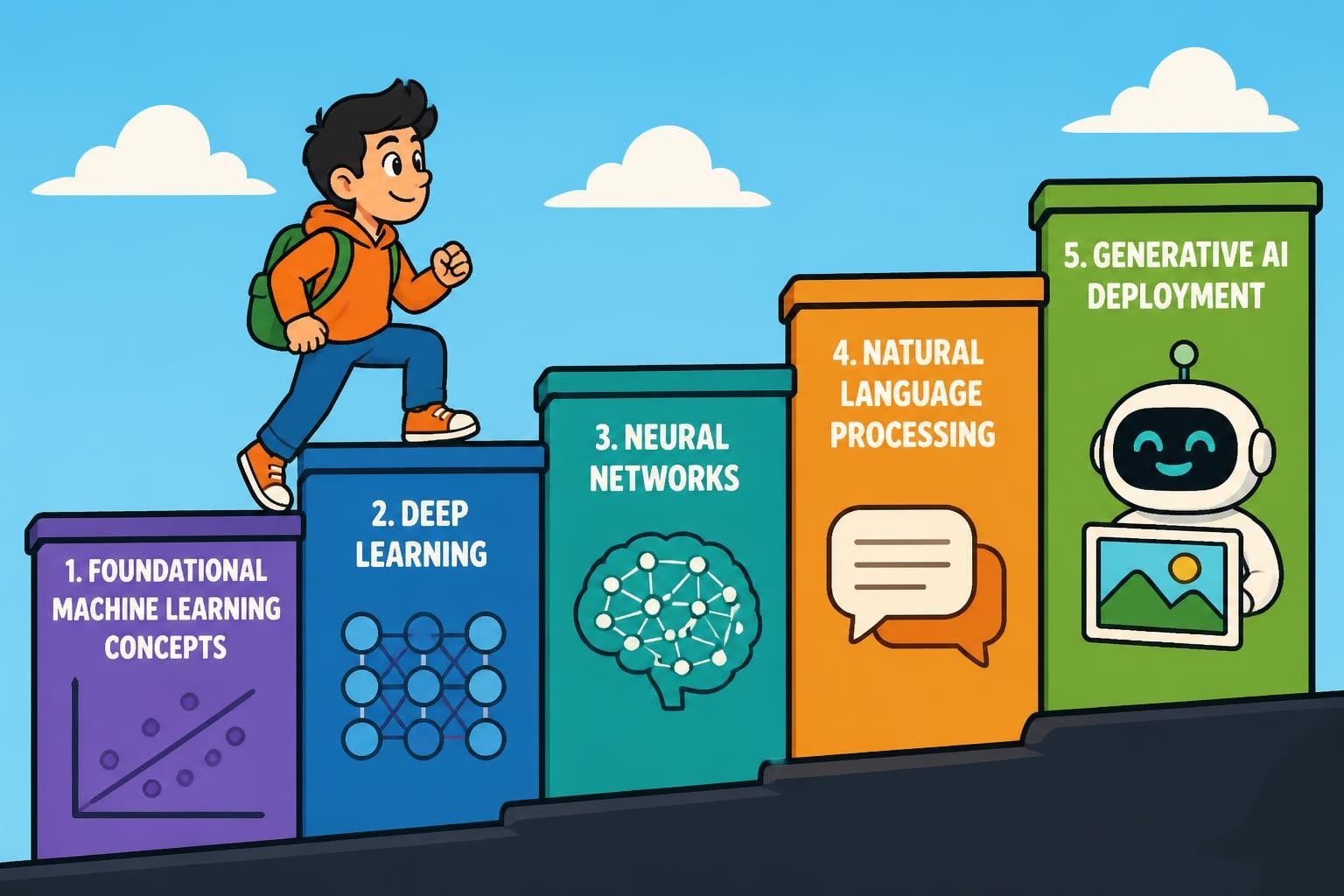
- Foundational courses that introduce core concepts like machine learning, neural networks, and data preprocessing
- Specialized tracks focusing on areas such as computer vision, natural language processing, or reinforcement learning
- Tool-specific training for platforms like TensorFlow, PyTorch, or cloud AI services
- Applied programs that emphasize real-world project implementation and business applications
- Executive and leadership courses designed for decision-makers who need strategic AI understanding
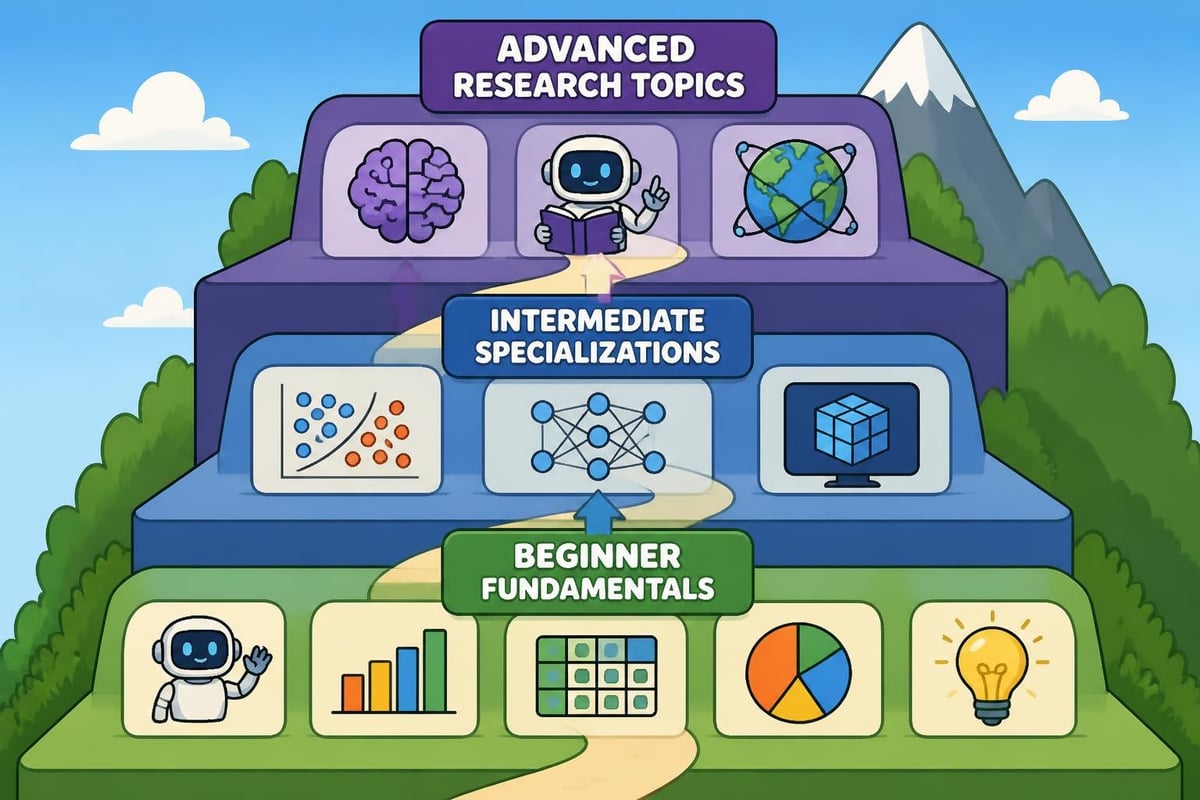
The quality gap between programs has widened considerably. While some courses deliver hands-on experience with cutting-edge models and architectures, others remain stuck teaching outdated techniques. The best AI courses in 2026 emphasize practical application, incorporate recent breakthroughs like transformer architectures and multimodal models, and provide opportunities to build portfolio-worthy projects.
Key Selection Criteria for AI Training Programs
Choosing the right program requires evaluating several critical factors beyond marketing promises. Instructor credibility matters significantly-courses taught by active practitioners and researchers typically provide more current, nuanced instruction than those created years ago. Look for educators who contribute to open-source projects, publish research, or work at leading AI organizations.
Hands-on project work separates exceptional programs from mediocre ones. The best AI courses require students to build and deploy actual models, not just watch videos and complete multiple-choice quizzes. Quality programs include Kaggle-style competitions, capstone projects, or real-world case studies that force you to grapple with messy data and ambiguous problems.
Curriculum recency directly impacts career relevance. AI advances so rapidly that courses more than 18 months old may omit critical developments. Verify that programs cover contemporary topics like large language models, diffusion models, and responsible AI practices. Many professionals find value in exploring deep learning AI courses that specifically address modern architectures.
Top-Tier Certification Programs and Their Value
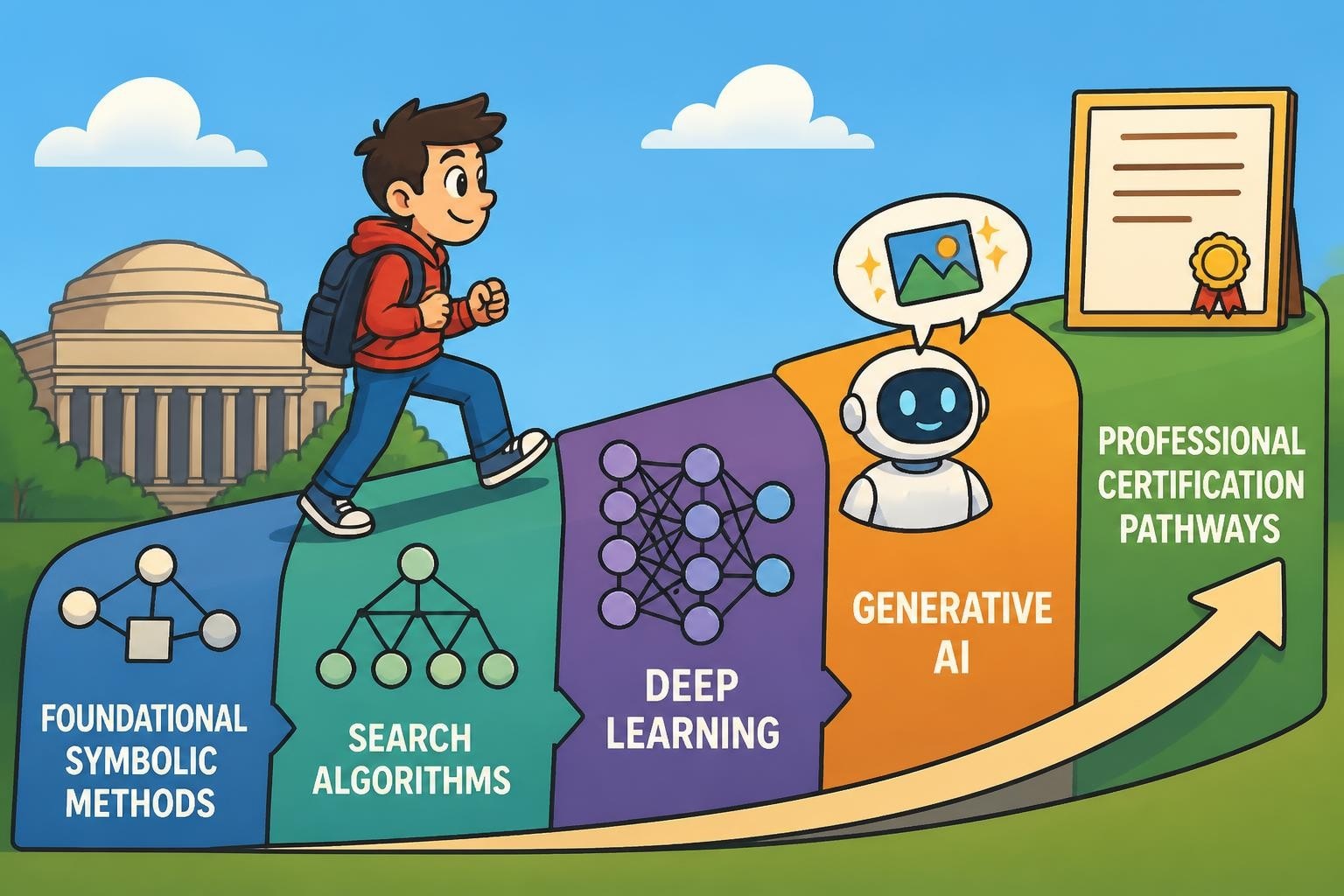
Professional certifications have become increasingly important as employers seek verifiable proof of AI competency. However, not all certificates carry equal weight in the job market. Industry-recognized credentials from established institutions or major technology companies typically command more respect than generic completion certificates from unknown platforms.
Cloud provider certifications from AWS, Google Cloud, and Microsoft Azure have gained substantial traction. These programs validate your ability to deploy and manage AI solutions using enterprise-grade infrastructure. The practical focus on implementation makes these particularly valuable for engineers and solutions architects. Many professionals pursue artificial intelligence classes that align with these certification paths.
| Certification Type | Best For | Typical Duration | Market Value |
|---|---|---|---|
| Cloud AI (AWS, Azure, GCP) | ML Engineers, Solutions Architects | 3-6 months | High |
| Academic Certificates (Stanford, MIT) | Career changers, researchers | 6-12 months | Very High |
| Framework Certifications (TensorFlow, PyTorch) | Deep Learning Engineers | 2-4 months | Medium |
| Vendor-Specific (NVIDIA, DataRobot) | Specialized roles | 1-3 months | Medium-High |
Academic institutions continue to offer robust certificate programs that combine theoretical rigor with practical application. These typically cost more and require greater time investment, but they provide comprehensive coverage and networking opportunities with peers and faculty. The reputation of the issuing institution significantly influences how hiring managers perceive the credential.
Specialized Tracks for Advanced Practitioners
Beyond foundational training, professionals need specialized knowledge in specific AI domains. Computer vision specialists require deep expertise in convolutional architectures, object detection frameworks, and image segmentation techniques. The best AI courses in this domain include extensive practice with datasets like ImageNet, COCO, and domain-specific collections.
Natural language processing has undergone revolutionary changes with transformer models and large language models. Quality NLP courses now emphasize attention mechanisms, fine-tuning pre-trained models, and prompt engineering rather than outdated techniques like bag-of-words or basic RNNs. Look for programs that include projects involving BERT, GPT architectures, or specialized models like those used in translation or summarization.
Reinforcement learning remains one of the most challenging AI specializations. Exceptional programs in this area provide simulation environments, guide students through implementing algorithms like Deep Q-Learning and PPO, and address the unique challenges of reward engineering and exploration-exploitation tradeoffs.
Bootcamps Versus Self-Paced Learning Paths
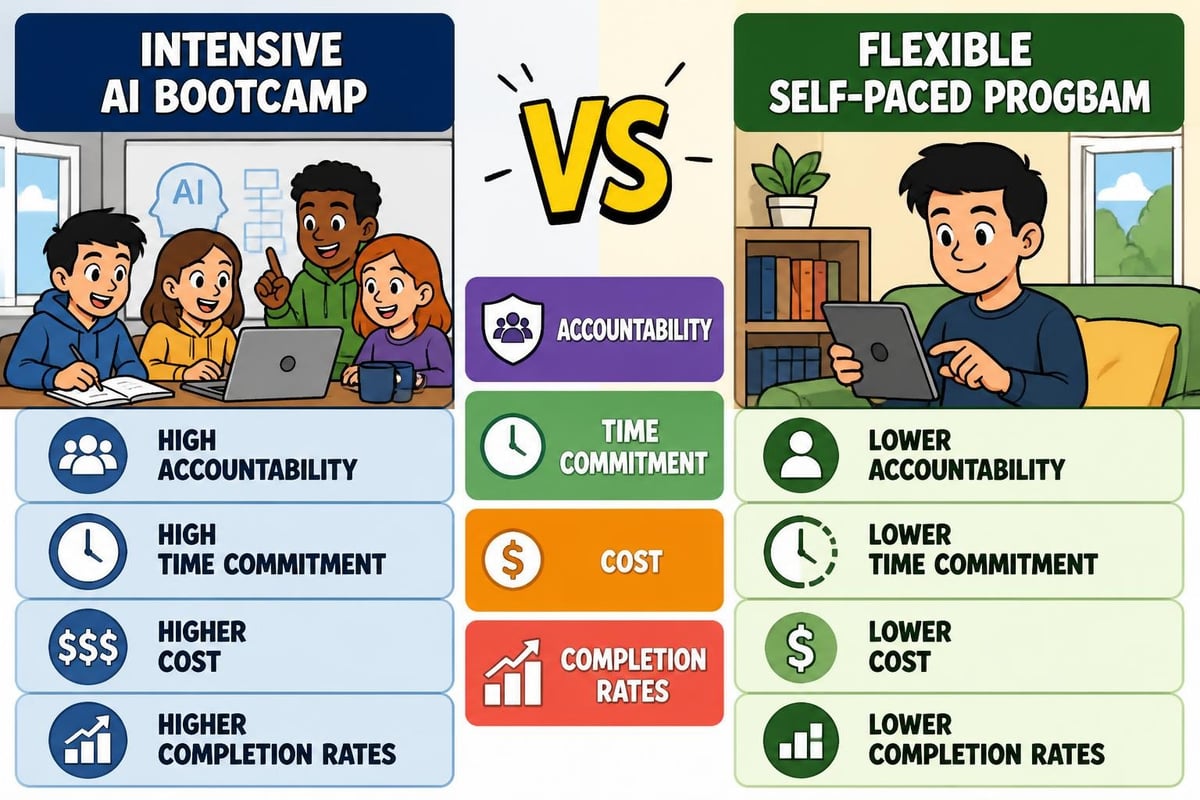
The debate between intensive bootcamps and self-paced courses continues to evolve as both models improve. Bootcamps offer structure, accountability, and cohort-based learning that many professionals find valuable. The compressed timeline forces rapid skill acquisition, while instructor support and peer interaction enhance comprehension of complex topics.
Typical bootcamp benefits include:
- Structured curriculum that eliminates decision paralysis about what to learn next
- Live instruction allowing real-time questions and clarification
- Career support including resume reviews, interview preparation, and networking
- Project deadlines that prevent the procrastination common in self-paced programs
However, bootcamps demand significant upfront time commitment and higher costs. The intensive pace doesn't suit everyone, particularly working professionals with limited availability. Many participants struggle to retain information when material is presented too rapidly.
Self-paced programs offer maximum flexibility but require exceptional self-discipline. The best AI courses in this format provide clear learning paths, checkpoints to assess progress, and community forums for peer support. Without external accountability, completion rates tend to be lower, but those who finish often demonstrate stronger intrinsic motivation.
Emerging hybrid models combine the best elements of both approaches. These programs provide structured modules and milestones while allowing flexible scheduling. Many include optional live sessions, office hours, and cohort start dates that create some accountability without rigid schedules. For comprehensive options, consider exploring best AI ML courses online that offer various learning formats.
Platform Comparison and Course Selection Strategies
The fragmentation of AI education across dozens of platforms creates both opportunity and confusion. Leading providers each offer distinct advantages. According to comprehensive AI course catalogs, there are now over 767 verified programs across 37 providers, making informed selection increasingly challenging.
University-affiliated platforms like Coursera and edX provide academically rigorous content from respected institutions. These courses typically emphasize theoretical foundations alongside practical skills, making them suitable for learners who want comprehensive understanding rather than just tool proficiency. The credential recognition from Stanford, MIT, or other top universities adds significant resume value.
Professional training platforms focus more narrowly on job-ready skills. These programs often move faster through theory to reach practical implementation quickly. The best versions include extensive hands-on labs, real-world datasets, and projects that mirror actual workplace challenges. Many professionals exploring top machine learning courses find these platforms particularly effective for rapid upskilling.
Specialized AI platforms have emerged to address specific needs. Some focus exclusively on certain domains like computer vision or NLP, while others target particular industries such as healthcare AI or financial modeling. These niche providers often deliver more depth than generalist platforms but require learners to already have foundational knowledge.
Evaluation strategies should include:
- Review actual course syllabi rather than marketing descriptions
- Watch preview videos to assess teaching style and content quality
- Read recent student reviews on independent sites, not just platform testimonials
- Verify instructor credentials through LinkedIn or academic profiles
- Check project requirements to ensure sufficient hands-on practice
Independent reviews from sources like the AI Intel Report's course evaluation provide valuable third-party perspectives on program quality and outcomes.
Beginner-Friendly Entry Points into AI
Starting AI education without a technical background can feel overwhelming. The best AI courses for beginners recognize this challenge and scaffold learning appropriately. Effective introductory programs establish foundational concepts in mathematics, statistics, and programming before diving into machine learning algorithms.
Programming prerequisites represent the first hurdle. While some courses claim "no coding required," genuine AI competency demands programming proficiency, typically in Python. Quality beginner programs either assume basic Python knowledge or include preparatory modules covering essential programming concepts, data structures, and libraries like NumPy and Pandas.
Mathematical foundations cannot be completely avoided, but the best introductory courses explain concepts intuitively before introducing formal notation. Key areas include:
- Linear algebra (vectors, matrices, transformations)
- Calculus (derivatives, gradients, optimization)
- Probability and statistics (distributions, hypothesis testing, Bayes' theorem)
- Basic optimization theory
Several programs designed for career changers provide this mathematical review integrated with AI concepts, helping students understand why these topics matter rather than treating them as abstract prerequisites. For those seeking structured guidance, consider exploring an AI ML learning path that sequences foundational topics appropriately.
Building Practical Skills Through Project-Based Learning
Theory without application rarely translates into job-ready skills. The best AI courses incorporate progressively complex projects that mirror real-world scenarios. Early projects might involve building simple classifiers with clean datasets, while advanced assignments tackle messy data, ambiguous objectives, and deployment challenges.
Portfolio development should be an explicit course outcome. Hiring managers increasingly expect candidates to demonstrate practical experience through GitHub repositories, deployed applications, or documented case studies. Quality programs guide students in creating polished, professional projects that showcase their capabilities.
Effective project structures include:
- Guided tutorials that walk through complete implementations with explanation
- Scaffolded assignments providing partial code and requiring students to complete specific components
- Open-ended challenges with defined objectives but freedom in approach and tools
- Capstone projects that synthesize multiple concepts into comprehensive applications
The progression from structured to independent work helps build confidence while ensuring students develop problem-solving abilities rather than just copying code.
Advanced Programs for Experienced Practitioners

Professionals with existing AI experience face different educational needs. The best AI courses for this audience assume foundational knowledge and dive quickly into cutting-edge techniques, research papers, and complex implementations. These programs often require participants to read and implement methods from recent academic papers rather than following pre-built tutorials.
Research-oriented courses prepare students to work at the frontier of AI capabilities. These typically include extensive paper reading, implementing novel architectures, and conducting original experiments. Students learn to critically evaluate new methods, reproduce published results, and identify promising research directions. Such programs are essential for those targeting roles at research labs or pursuing PhDs.
Production AI and MLOps focuses on the engineering challenges of deploying models at scale. Topics include model serving, monitoring, versioning, A/B testing, and maintaining performance in production environments. These practical concerns often receive insufficient attention in academic programs but are critical for industry success. Understanding requirements like those discussed in GPU for AI training becomes essential at this level.
Domain specialization allows practitioners to apply AI within specific industries. Healthcare AI requires understanding of medical imaging, regulatory compliance, and clinical workflows. Financial AI emphasizes time-series analysis, risk modeling, and fraud detection. The best domain-focused courses combine AI techniques with industry-specific context and constraints.
Corporate Training and Team Development
Organizations face unique challenges when upskilling entire teams. The best AI courses for corporate contexts provide standardized curricula, progress tracking, and customization options that individual consumer courses typically lack. Enterprise programs often include dedicated support, private cohorts, and content tailored to specific business objectives.
Scalability becomes paramount when training dozens or hundreds of employees. Leading corporate programs offer:
- Learning management system integration for seamless deployment
- Role-based learning paths matching different job functions
- Analytics dashboards showing team progress and skill gaps
- Flexible licensing that accommodates varying team sizes and timelines
Business alignment distinguishes corporate training from individual learning. Rather than teaching AI in isolation, enterprise programs emphasize how these skills support strategic objectives. Case studies drawn from similar industries, projects using company data (when permissible), and focus on measurable business outcomes increase relevance and engagement.
Many organizations implementing comprehensive AI initiatives benefit from platforms offering both technical training and leadership education. Executives need strategic understanding without necessarily requiring implementation skills, while engineers need deep technical competency. Coordinated programs ensure everyone shares common vocabulary and understanding while developing role-appropriate expertise.
Evaluating Course Outcomes and ROI
The true test of any educational program is its impact on career trajectory and capabilities. The best AI courses demonstrate clear outcomes through graduate placement data, salary changes, or skill assessments. However, marketing claims often exceed reality, making independent verification essential.
Completion rates provide initial insight into program quality and difficulty. Courses with extremely low completion rates may indicate poor instructional design, insufficient support, or unrealistic expectations. However, very high completion rates in supposedly rigorous programs may suggest diminished standards or excessive hand-holding that limits deep learning.
Time to competency varies dramatically across programs. Some bootcamps claim to produce job-ready AI engineers in 12 weeks, while others suggest 6-12 months of study. Realistic timelines depend heavily on starting skill level and time commitment. Detailed comparisons like those found in curated AI course reviews help set appropriate expectations.
| Success Metric | How to Verify | Red Flags |
|---|---|---|
| Job placement rate | Request data for specific cohorts | Only showing "best case" examples |
| Salary increases | Independent alumni surveys | Unverified testimonials |
| Skill assessments | Pre/post testing with standardized measures | Self-reported competency claims |
| Project quality | Review actual student portfolios | Generic template projects |
Career services accompanying the best AI courses extend beyond course content. Resume reviews, interview preparation, networking events, and employer partnerships significantly impact job search success. Programs with established hiring partnerships or strong alumni networks provide concrete advantages over purely content-focused offerings.
Cost Analysis and Financial Planning
AI education pricing spans from free resources to programs costing $20,000 or more. Understanding the value proposition requires looking beyond sticker prices to consider outcomes, opportunity costs, and alternative uses of funds.
Free and low-cost options have proliferated, with quality varying enormously. Some free courses from major universities or tech companies deliver exceptional value, while others provide outdated or superficial coverage. The best free AI courses typically come from established institutions or platforms subsidizing content to build market presence. Resources like AI course directories help identify high-quality free alternatives.
Mid-range programs ($500-$5,000) often provide the best value for self-directed learners. These typically include comprehensive curricula, projects, and some support without the premium pricing of bootcamps or university certificates. At this tier, assessment becomes critical-verify what specifically justifies costs beyond free alternatives.
Premium programs command high prices through some combination of:
- Intensive live instruction and mentorship
- Strong job placement support and employer networks
- Prestigious institutional credentials
- Extensive capstone projects and portfolio development
- Small cohort sizes enabling personalized attention
The return on investment calculation must consider not just direct costs but also time commitment and opportunity costs. A $15,000 bootcamp requiring three months of full-time commitment carries significantly higher total cost than the sticker price suggests. Conversely, a $3,000 part-time program allowing continued employment may represent better overall value despite longer duration.
Income share agreements and deferred payment options have emerged as alternatives to upfront payment. These reduce initial barriers but warrant careful evaluation of total repayment costs and terms.
Emerging Trends in AI Education
The AI learning landscape continues evolving rapidly as both the technology and teaching methods advance. The best AI courses in 2026 incorporate several key trends that distinguish them from earlier offerings.
Generative AI integration has fundamentally changed how AI is taught and used. Modern programs treat large language models and diffusion models as essential tools rather than exotic specializations. Students learn prompt engineering, fine-tuning, and responsible deployment of generative systems alongside traditional discriminative models.
Responsible AI and ethics receive growing emphasis as real-world AI systems create societal impacts. Quality programs now integrate discussions of bias, fairness, transparency, and accountability throughout rather than treating ethics as an afterthought. Some platforms offer dedicated responsible AI courses addressing these critical concerns.
Key contemporary topics include:
- Multimodal learning combining vision, language, and other modalities
- Few-shot and zero-shot learning techniques for data-scarce scenarios
- Federated learning and privacy-preserving AI methods
- AutoML and neural architecture search automating model design
- Explainable AI techniques for model interpretability
Micro-credentials and modular learning allow professionals to acquire specific skills without committing to lengthy programs. Rather than taking a six-month comprehensive course, learners can complete targeted modules on specific techniques or tools, earning stackable credentials that demonstrate focused expertise.
The integration of AI into learning platforms themselves creates increasingly personalized educational experiences. Adaptive curricula adjust difficulty and pacing based on individual progress, while AI tutors provide 24/7 assistance with coding challenges and conceptual questions.
Building Long-Term Learning Strategies
AI's rapid evolution means initial training represents the beginning rather than end of learning. The best AI courses explicitly develop skills for continued learning and adaptation. This includes teaching students how to read research papers, implement algorithms from descriptions, and stay current with new developments.
Community engagement amplifies course value significantly. Active participation in forums, study groups, and local meetups helps students maintain momentum, get unstuck on difficult concepts, and build professional networks. Programs that foster strong communities deliver benefits extending far beyond course completion.
Progressive specialization allows learners to build expertise strategically. Rather than trying to master all AI domains simultaneously, effective strategies involve:
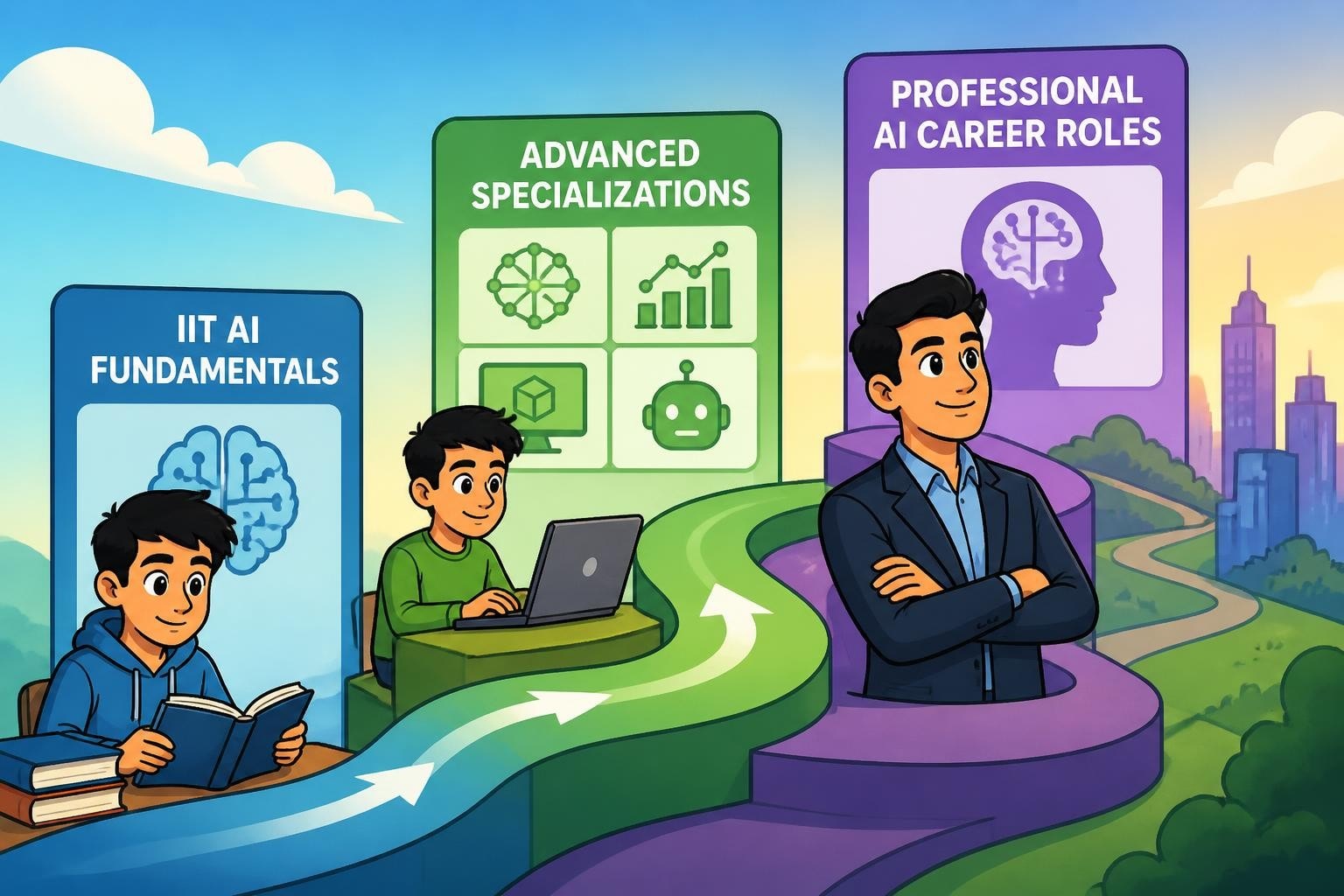
- Establishing broad foundational knowledge across key concepts
- Developing intermediate competency in 2-3 complementary areas
- Achieving deep expertise in one specific domain or application
- Maintaining awareness of developments in adjacent fields
This approach balances breadth and depth while remaining feasible given time constraints. The specific areas chosen should align with career goals and market opportunities.
Practical application between courses solidifies learning and reveals knowledge gaps. The best long-term strategies interleave formal education with hands-on projects, Kaggle competitions, or contributions to open-source AI projects. This creates feedback loops where practical challenges inform learning priorities.
For those seeking comprehensive platforms supporting sustained development, examining reviews of diverse AI training programs can reveal options offering extensive course libraries and continuous learning paths.
Matching Courses to Career Objectives
Different career trajectories require distinct educational approaches. The best AI courses for a data scientist differ substantially from those ideal for a product manager incorporating AI features or an executive developing AI strategy.
Research scientists need deep theoretical foundations, extensive mathematics, and experience implementing novel algorithms. Suitable programs emphasize academic rigor, paper reading, and original research projects. These typically come from university programs or research-oriented platforms.
Machine learning engineers require strong software engineering skills alongside AI knowledge. Ideal courses cover model development and deployment, MLOps practices, and production system design. Emphasis on coding quality, testing, and scalability distinguishes these from research-focused alternatives.
Data scientists need broader analytical skills including statistics, visualization, and domain knowledge alongside machine learning. The best programs balance algorithmic understanding with data wrangling, exploratory analysis, and communicating insights to non-technical stakeholders.
AI product managers and business leaders need strategic understanding without necessarily requiring implementation capabilities. Suitable programs focus on AI applications, limitations, team management, and ROI assessment rather than coding and algorithms.
Clearly defining your target role before selecting courses prevents wasting time on irrelevant content. Resources like outcome-focused AI program rankings help match educational options to specific career paths.
Selecting among the best AI courses requires careful evaluation of your objectives, learning style, and resource constraints. The right program balances theoretical foundations with practical application, offers credible credentials, and provides ongoing support throughout your learning journey. Whether you choose intensive bootcamps, self-paced platforms, or university certificates, commitment to continuous learning remains essential as AI capabilities advance. MammothClub provides access to over 3,000 AI and tech courses with interactive bootcamps and corporate programs, offering the flexibility and depth needed to build lasting expertise in this transformative field.