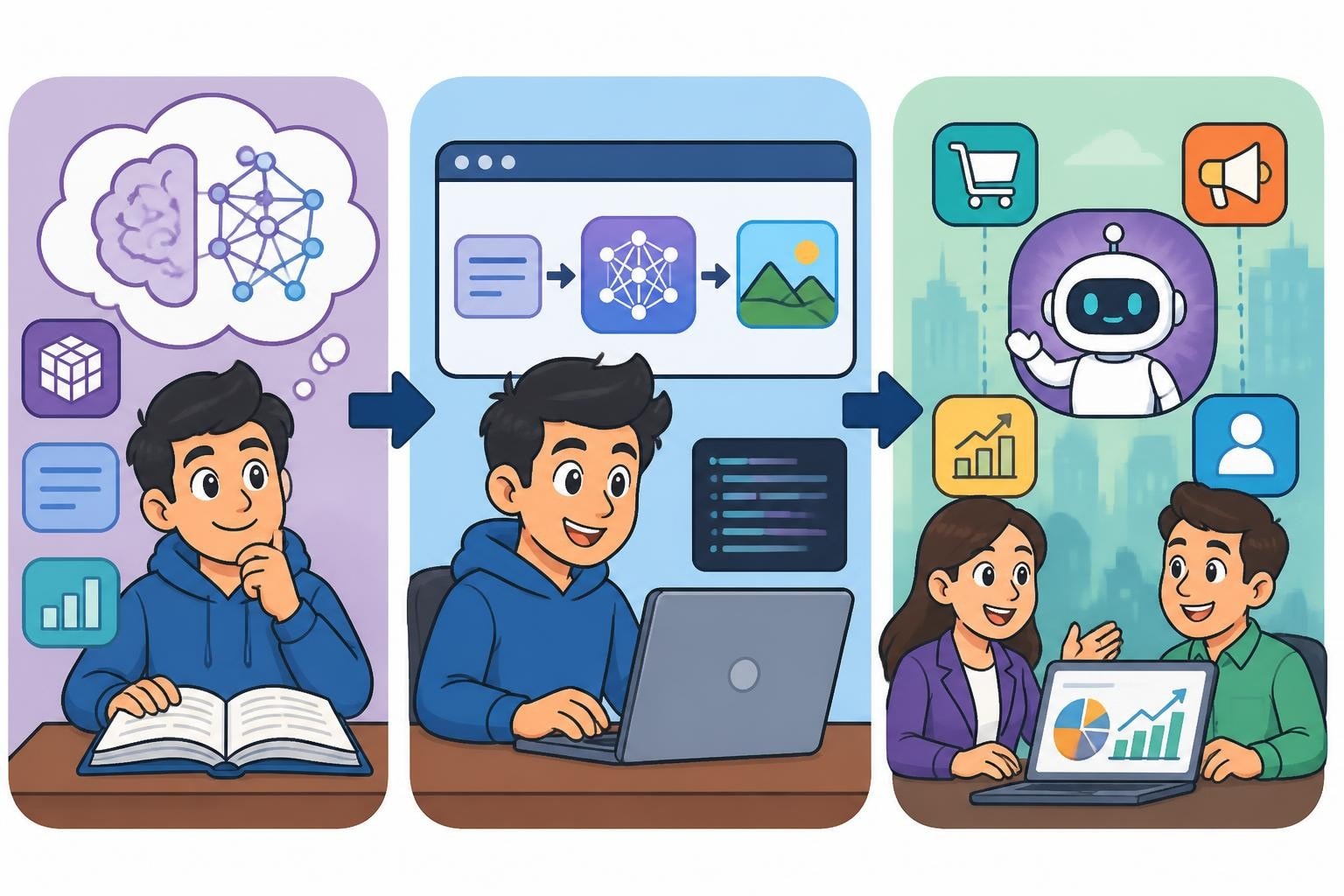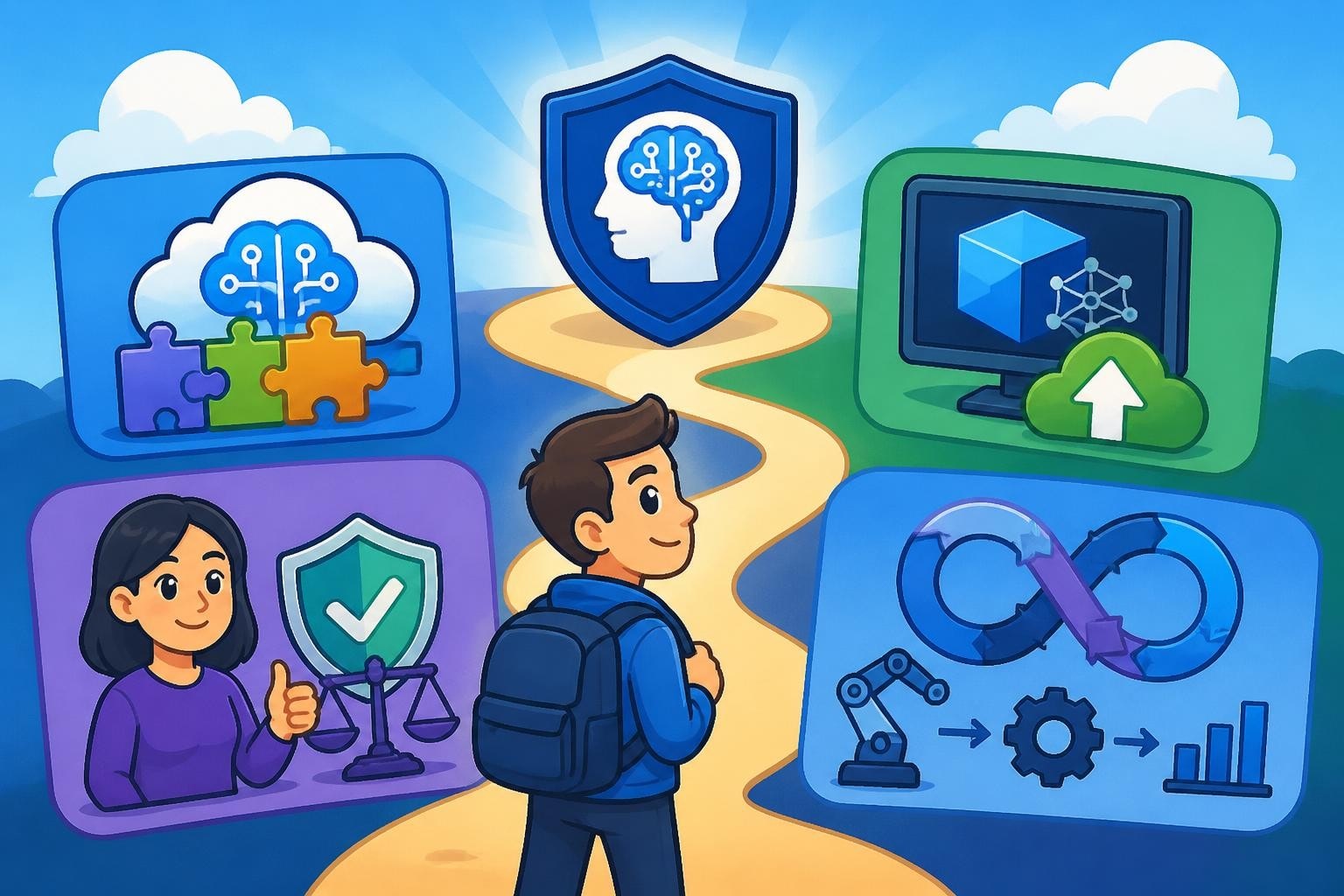
The demand for deep learning expertise has reached unprecedented levels in 2026, with organizations across every sector racing to implement AI-driven solutions. Deep learning AI courses have become essential for professionals who want to remain competitive in this rapidly evolving landscape. Whether you're a software engineer looking to specialize, a data scientist expanding your toolkit, or a business leader seeking to understand AI capabilities, choosing the right educational path makes the difference between theoretical knowledge and practical implementation power.
What Makes Deep Learning Different from Traditional Machine Learning
Deep learning represents a fundamental shift in how machines process and learn from data. Unlike traditional machine learning algorithms that require manual feature engineering, deep learning models automatically discover hierarchical representations through multiple layers of artificial neural networks.
This distinction matters for professionals entering the field. Traditional machine learning excels with structured data and clearly defined features, while deep learning thrives on unstructured data like images, audio, video, and text. The practical implications are significant: deep learning powers facial recognition systems, language translation services, medical image diagnosis, and autonomous vehicle perception.
Core Architecture Components You'll Master
Deep learning AI courses typically cover several foundational architectures, each designed for specific problem domains:
- Convolutional Neural Networks (CNNs) for computer vision tasks including object detection, image classification, and facial recognition
- Recurrent Neural Networks (RNNs) and Long Short-Term Memory (LSTM) networks for sequential data and time-series analysis
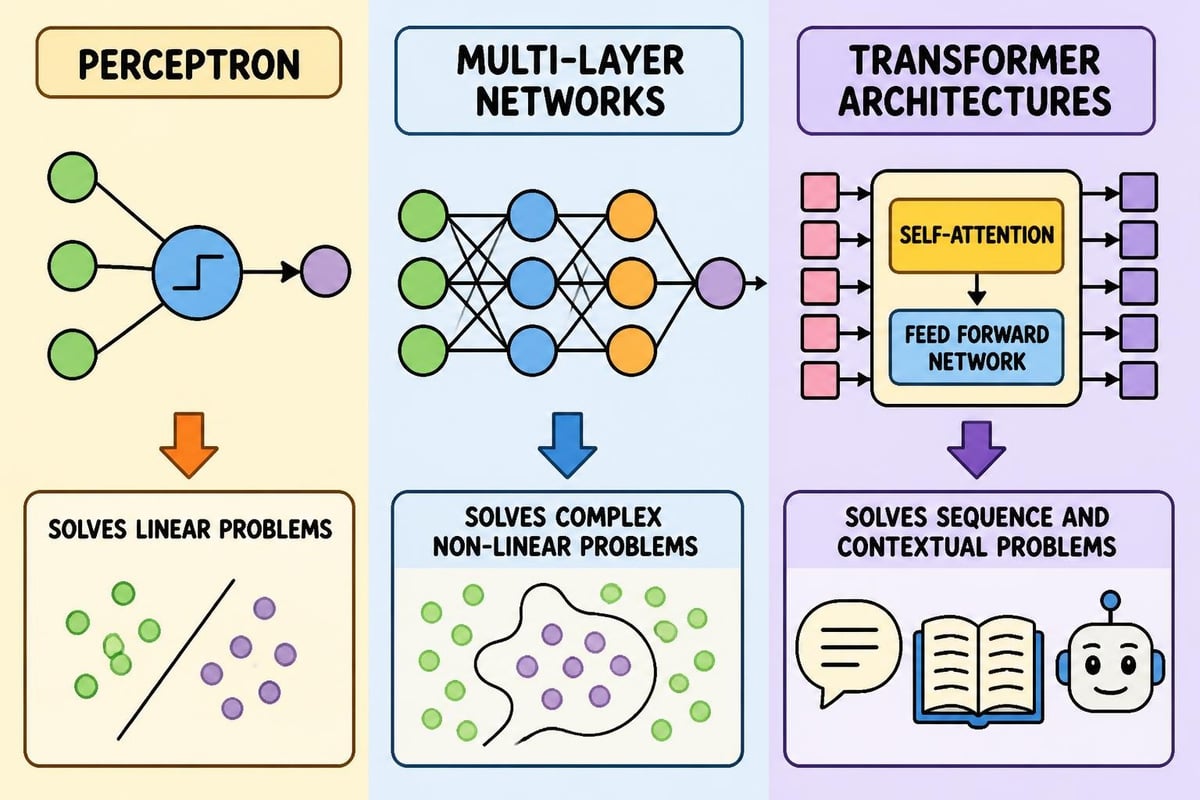
- Transformer architectures that revolutionized natural language processing and now extend to computer vision
- Generative Adversarial Networks (GANs) for creating synthetic data and image generation
- Autoencoders for dimensionality reduction and anomaly detection
Each architecture requires understanding both the mathematical foundations and practical implementation considerations. Quality courses balance theory with hands-on projects that mirror real-world challenges.
Evaluating Deep Learning AI Courses: Critical Selection Criteria
The proliferation of AI education has created a paradox of choice. Not all deep learning AI courses deliver equivalent value, and selecting the wrong program can waste months of effort and thousands of dollars.
Framework Prerequisites and Technical Stack
Different programs assume varying levels of prerequisite knowledge. Entry-level courses might start with Python programming fundamentals, while advanced programs expect fluency in linear algebra, calculus, and probability theory.
Technical stack alignment determines your ability to apply learned skills immediately. NVIDIA's Deep Learning Institute focuses on GPU-accelerated computing and frameworks optimized for their hardware, making it particularly valuable for professionals working with large-scale models. Meanwhile, courses emphasizing TensorFlow or PyTorch each offer different ecosystem advantages.
| Consideration | Why It Matters | Questions to Ask |
|---|---|---|
| Prerequisites | Prevents frustration and ensures pace matches skill level | What math background is required? Do I need prior ML experience? |
| Framework Focus | Aligns with industry demand and your career goals | Which frameworks are taught? Are they currently used in production? |
| Project Complexity | Bridges gap between tutorials and real applications | Do projects use production-scale datasets? Are they portfolio-worthy? |
| Credential Recognition | Impacts career advancement and hiring decisions | Is certification valued by employers in my target industry? |
Instructor Expertise and Curriculum Updates
The field evolves at breakneck speed. Courses developed even two years ago may teach outdated approaches or miss critical developments like attention mechanisms or efficient transformer variants.
Instructor credentials matter significantly. Academic researchers bring theoretical depth and exposure to cutting-edge developments. Industry practitioners contribute production deployment experience and practical optimization techniques. The ideal program combines both perspectives, and platforms offering comprehensive AI learning paths typically curate faculty from diverse backgrounds.
University Programs Versus Online Platforms
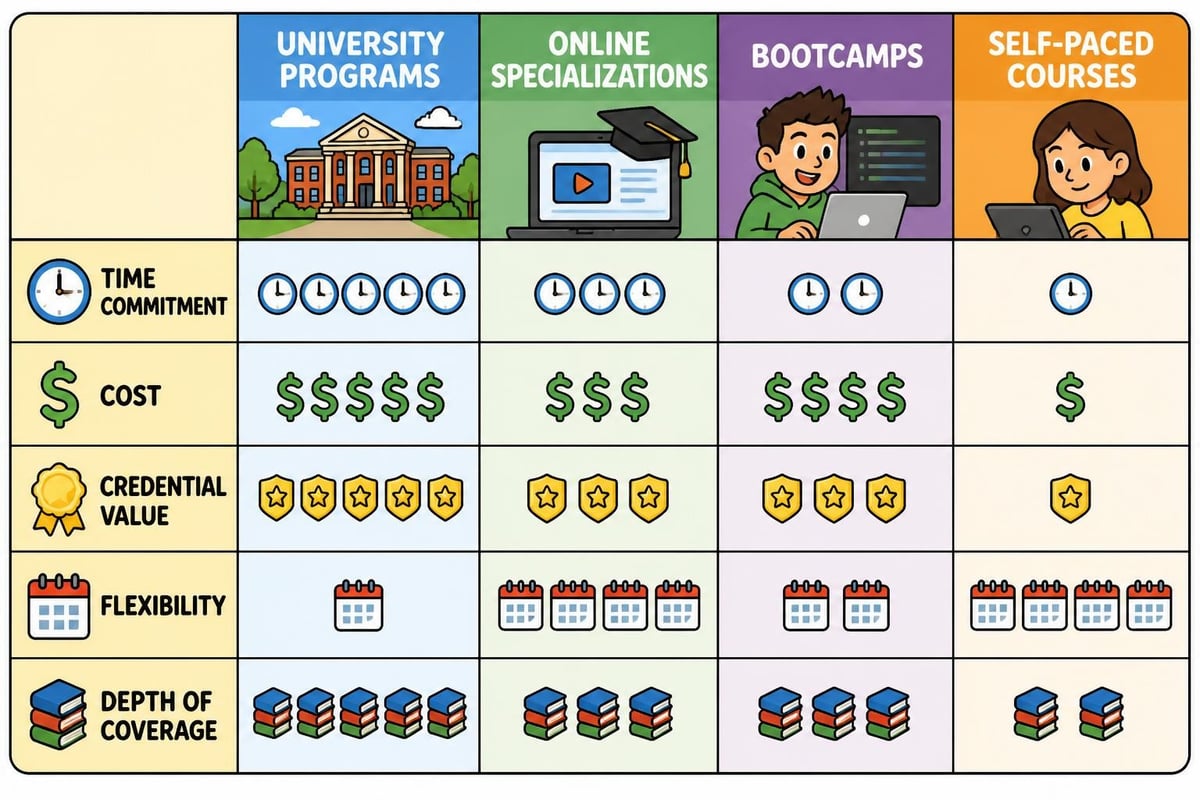
The choice between traditional university offerings and online platforms involves tradeoffs in structure, cost, networking opportunities, and pace flexibility.
Academic Deep Learning Programs
Northwestern University's deep learning course exemplifies the academic approach: rigorous theoretical foundations, structured progression through complex topics, and research-oriented projects. Similarly, Harvard's deep learning offerings include specialized tracks like medical image interpretation that connect fundamental concepts to domain-specific applications.
University advantages include:
- Credential weight in traditional hiring processes
- Peer cohorts for collaborative learning and networking
- Research access to latest developments before publication
- Structured accountability through grades and deadlines
- Faculty mentorship for complex questions
The primary constraints are cost (often $5,000-$15,000 per course) and scheduling inflexibility that conflicts with full-time work commitments.
Online Learning Platforms and MOOCs
Online platforms have democratized access to world-class instruction. DeepLearning.AI offers specializations taught by Andrew Ng and other field leaders, combining video lectures with hands-on programming assignments and community forums.
The University of Washington's deep learning course represents a hybrid model: university-developed curriculum delivered through continuing education with flexible scheduling. This approach suits working professionals who need recognized credentials without campus requirements.
Organizations like Fast.ai prioritize practical implementation over mathematical formalism, teaching students to achieve state-of-the-art results quickly. Their "Practical Deep Learning for Coders" philosophy emphasizes building intuition through experimentation rather than theoretical completeness first.
Essential Topics Every Deep Learning Course Should Cover
Regardless of delivery format, comprehensive deep learning AI courses must address both foundational concepts and practical implementation skills.
Mathematical Foundations and Optimization
You cannot effectively troubleshoot deep learning models without understanding the underlying mathematics. Quality programs dedicate significant time to:
- Linear algebra operations that define how data flows through networks
- Backpropagation algorithms for calculating gradients efficiently
- Optimization techniques including Adam, RMSprop, and gradient descent variants
- Regularization methods like dropout, batch normalization, and weight decay
- Loss function design for different problem types
These concepts connect directly to practical challenges. When a model fails to converge, understanding optimization dynamics helps diagnose whether you're facing vanishing gradients, poor learning rate selection, or inadequate regularization.
Data Preprocessing and Augmentation Strategies
Real-world data is messy, imbalanced, and insufficient. Professional deep learning work requires mastery of data engineering techniques:
- Normalization and standardization to stabilize training
- Augmentation techniques that expand limited datasets
- Handling class imbalance through oversampling, undersampling, or loss weighting
- Transfer learning to leverage pre-trained models
- Data pipeline optimization for training efficiency
Programs incorporating real datasets rather than cleaned academic benchmarks provide more valuable preparation. The difference between working with MNIST digits and production medical images is vast.
Specialization Paths Within Deep Learning
After mastering fundamentals, professionals typically specialize in application domains that align with career objectives.
Computer Vision and Image Processing
Computer vision remains the most mature deep learning application area. Specialized courses cover:
- Object detection architectures like YOLO, R-CNN variants, and RetinaNet
- Semantic segmentation for pixel-level classification
- Face recognition systems and biometric applications
- Medical image analysis for diagnostic assistance
- Generative models for image synthesis and style transfer
Career opportunities in autonomous vehicles, surveillance systems, medical diagnostics, and augmented reality all require computer vision expertise. Those pursuing AI and robotics specialization often emphasize this domain.
Natural Language Processing and Transformers
The transformer revolution has made NLP the fastest-growing deep learning specialization. Modern courses emphasize:
- Attention mechanisms and self-attention architectures
- Pre-trained language models including BERT, GPT variants, and T5
- Fine-tuning strategies for domain-specific applications
- Prompt engineering for large language models
- Multilingual models and cross-lingual transfer
Organizations implementing chatbots, document analysis systems, sentiment analysis, or content generation require these skills. The complete AI prompt engineering bundle represents an accessible entry point for professionals focusing on language model applications.
Time Series Analysis and Forecasting
Businesses in finance, energy, manufacturing, and logistics need professionals who can apply deep learning to temporal data:
- LSTM and GRU networks for sequence modeling
- Temporal convolutional networks as alternatives to RNNs
- Attention-based time series models
- Multivariate forecasting with external variables
- Anomaly detection in streaming data
This specialization bridges traditional statistics and modern deep learning, requiring understanding of both classical time series analysis and neural architecture design.
Hands-On Projects That Demonstrate Mastery
The gap between completing tutorials and building production systems is substantial. Employers value candidates who can demonstrate practical implementation experience through portfolio projects.
Portfolio-Building Project Categories
Effective deep learning AI courses incorporate progressively complex projects:
| Project Type | Skill Demonstration | Industry Relevance |
|---|---|---|
| Image Classification | Data preprocessing, architecture selection, hyperparameter tuning | Content moderation, quality control |
| Object Detection | Real-time processing, model optimization, deployment | Surveillance, autonomous systems |
| Text Generation | Language model fine-tuning, prompt engineering, coherence evaluation | Content creation, chatbots |
| Recommendation Systems | Collaborative filtering, embedding spaces, cold start handling | E-commerce, streaming platforms |
| Anomaly Detection | Unsupervised learning, threshold selection, false positive management | Fraud detection, predictive maintenance |
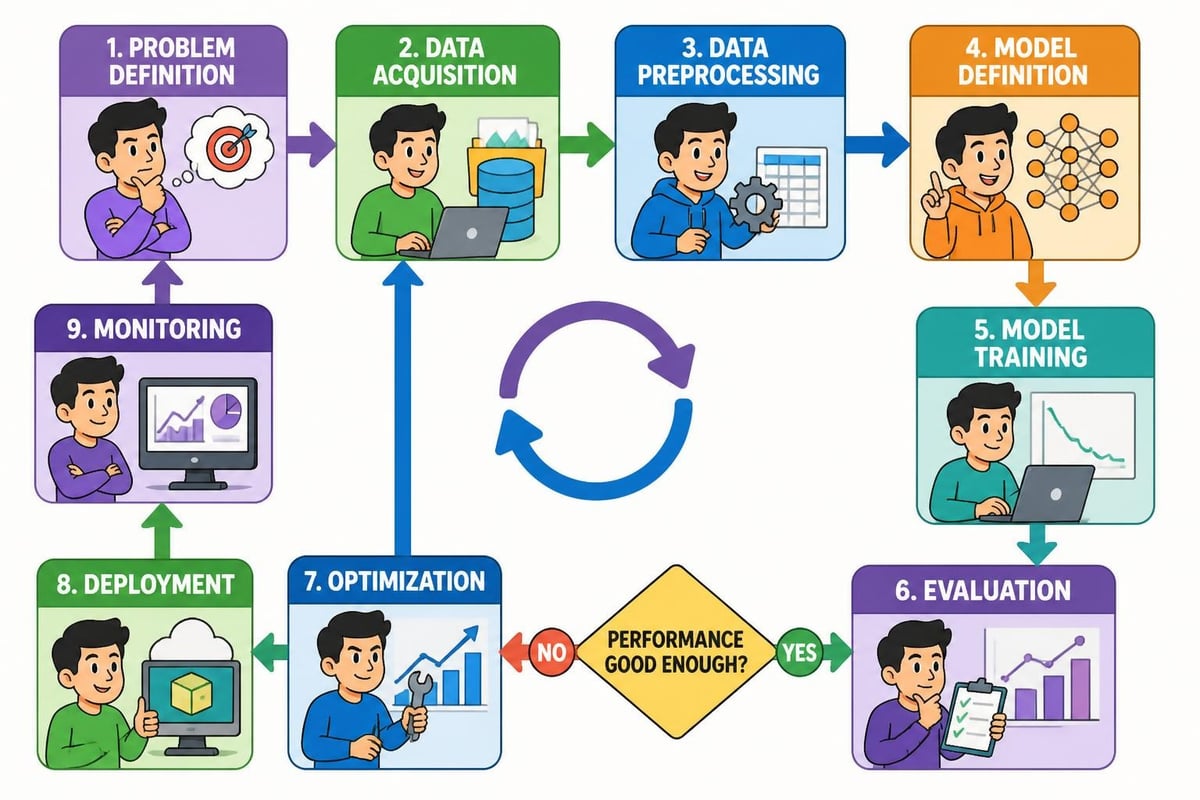
Projects should involve end-to-end workflows: data collection and cleaning, exploratory analysis, model development, evaluation, and deployment considerations. Simply training a model on a prepared dataset demonstrates limited practical capability.
Deployment and Production Considerations
Academic courses often neglect deployment, yet production concerns dominate professional work. Advanced programs address:
- Model optimization for inference speed and memory efficiency
- Containerization using Docker for reproducible environments
- API development for serving predictions
- Monitoring systems to detect model degradation
- A/B testing frameworks for comparing model versions
Understanding GPU requirements for AI training becomes critical when scaling from experimentation to production workloads. Cost optimization through efficient resource utilization often determines project viability.
Corporate Training and Team Upskilling Programs
Individual learning addresses personal career development, but organizational AI transformation requires coordinated team education. Corporate deep learning AI courses address different constraints and objectives than individual programs.
Customized Learning Paths for Different Roles
Organizations need multiple stakeholder groups to understand deep learning at varying depths:
- Data scientists and ML engineers require comprehensive technical training
- Software engineers need practical implementation skills without excessive theory
- Product managers benefit from understanding capabilities and limitations
- Business leaders require strategic perspective on AI applications and ROI
Platforms offering AI management courses alongside technical tracks enable organizations to upskill entire product teams cohesively. This coordinated approach prevents the common scenario where data scientists build sophisticated models that engineering teams cannot deploy or business stakeholders cannot effectively utilize.
Measuring Training ROI and Skill Development
Corporate programs must demonstrate measurable impact. Effective approaches include:
- Pre and post-assessment testing to quantify knowledge gain
- Project-based evaluation measuring application to business problems
- Certification tracking for credential verification
- Performance metrics connecting training to productivity improvements
- Retention analysis showing impact on employee satisfaction
Organizations should establish baseline competencies before training and track progression through specific skill milestones. This data-driven approach justifies training investment and identifies where additional support is needed.
Staying Current in a Rapidly Evolving Field
Deep learning research produces breakthrough developments monthly. A course teaching state-of-the-art techniques in early 2026 may feel dated by year-end. Professionals need strategies for continuous learning beyond formal coursework.
Research Paper Reading and Implementation
The most capable practitioners regularly read papers from conferences like NeurIPS, ICML, and CVPR. Resources like arXiv's deep learning section provide free access to cutting-edge research before peer review completion.
However, reading papers requires practice. Effective strategies include:
- Skimming abstracts to identify relevant work quickly
- Focusing on methodology rather than getting lost in mathematical notation
- Attempting reimplementation of interesting techniques
- Joining reading groups for collaborative discussion
- Following key researchers on social media for context
Many professionals dedicate 2-3 hours weekly to paper reading, treating it as essential professional development rather than optional enrichment.
Community Engagement and Knowledge Sharing
The deep learning community actively shares knowledge through multiple channels. Engaging with these resources accelerates learning:
- GitHub repositories with implementations of recent papers
- Technical blogs from companies like Google AI, Meta AI, and OpenAI
- Podcast interviews with researchers discussing their work
- Conference recordings from major AI events
- Local meetups for networking and knowledge exchange
Contributing to open source projects provides hands-on experience with production code quality standards while building professional reputation. The community-based learning approach emphasizes how collaborative knowledge construction enhances individual understanding.
Certification Value and Career Impact
Professional certifications signal competency to employers, but their value varies significantly by issuer, recency, and specificity.
Industry-Recognized Credentials
Certain certifications carry particular weight in hiring decisions:
- Cloud provider certifications (AWS, Google Cloud, Azure) demonstrate platform-specific expertise
- Vendor certifications from NVIDIA, TensorFlow, or PyTorch validate framework mastery
- University credentials provide academic rigor verification
- Bootcamp completion signals intensive practical training
Those pursuing Microsoft AI certification benefit from the credential's recognition in enterprise environments, while specialized AI certifications may better serve niche industry applications.
The key question isn't whether certifications matter, but which ones align with your target roles and industries. Research job postings in your desired field to identify commonly requested credentials.
Building Credibility Beyond Certificates
Certificates open doors, but demonstrated capability closes deals. Strengthen your professional profile through:
- Technical blog posts explaining complex concepts or implementations
- Open source contributions to popular deep learning libraries
- Kaggle competitions showing problem-solving ability
- Conference presentations at local or regional events
- Published case studies describing business impact of your work
Employers increasingly value provable skills over credentials alone. A strong GitHub profile with well-documented projects often outweighs multiple certificates from unknown providers.
Cost Considerations and Financial Planning
Deep learning education represents a significant investment. Understanding the full cost structure helps professionals make informed decisions.
Direct and Indirect Educational Costs
Beyond tuition, consider the complete financial picture:
| Cost Category | Typical Range | Considerations |
|---|---|---|
| Course Tuition | $50 - $15,000 | Platform, credential type, university affiliation |
| Computing Resources | $50 - $500/month | GPU access, cloud credits, local hardware |
| Books and Materials | $100 - $500 | Textbooks, reference materials, supplementary courses |
| Time Investment | 10-40 hours/week | Opportunity cost of reduced work hours or personal time |
| Certification Exams | $100 - $400 | Optional credentialing beyond course completion |
Many platforms offer subscription models providing access to multiple courses for a monthly fee, dramatically improving cost efficiency for those pursuing comprehensive upskilling. Comparing options through MammothClub's course catalog helps identify the most cost-effective path for your specific goals.
Employer Sponsorship and Education Benefits
Many organizations offer education benefits that professionals underutilize. Investigate:
- Tuition reimbursement programs covering accredited courses
- Professional development budgets for skill enhancement
- Paid learning time dedicated to training during work hours
- Conference attendance funding for networking and learning
- Internal training programs leveraging existing expertise
Present a clear business case connecting your desired training to organizational needs. Employers more readily approve education requests that directly impact current projects or strategic initiatives.
Self-Paced Learning Versus Structured Programs
Learning style and personal circumstances significantly influence optimal program format.
Advantages of Self-Directed Study
Self-paced deep learning AI courses offer maximum flexibility:
- Schedule control for balancing work, family, and education
- Pace adjustment to spend more time on challenging topics
- Cost efficiency through free resources and targeted paid content
- Topic selection focusing exclusively on relevant material
- Immediate application of learned concepts to current projects
This approach demands strong self-discipline and the ability to structure your own learning journey. Without external accountability, many students struggle to maintain momentum through difficult material.
Benefits of Cohort-Based Learning
Structured programs provide frameworks that keep students progressing:
- Regular deadlines preventing procrastination
- Peer interaction for collaborative problem-solving
- Instructor availability for clarifying confusion quickly
- Curated progression through topics in optimal sequence
- Networking opportunities with fellow students and instructors
Bootcamps and intensive programs compress learning into focused periods, creating immersive environments where participants make rapid progress. This intensity suits professionals targeting career transitions who can dedicate full-time attention temporarily.
Integration with Broader AI and ML Knowledge
Deep learning represents one component of comprehensive AI expertise. Understanding how it fits within the larger landscape prevents over-application to unsuitable problems.
When Deep Learning Is the Wrong Tool
Despite impressive capabilities, deep learning isn't always optimal. Situations favoring traditional approaches include:
- Limited training data (fewer than thousands of examples)
- Need for model interpretability in regulated industries
- Computational constraints prohibiting large model training
- Stable problem domains where simpler models achieve adequate performance
- Real-time inference requirements with strict latency budgets
Professionals should develop judgment about tool selection. Those pursuing comprehensive AI/ML courses gain perspective on the full toolkit, enabling better architectural decisions.
Complementary Skills for Deep Learning Practitioners
Effective deep learning work requires supporting competencies:
- Software engineering for production code quality
- DevOps practices for reproducible experimentation
- Data engineering for pipeline construction
- Statistical analysis for proper evaluation
- Domain expertise in application areas
- Communication skills for explaining technical work to non-specialists
The most valuable professionals combine deep learning expertise with strong fundamentals in these supporting areas. Narrow specialization limits career flexibility as technology trends shift.
Emerging Topics in 2026 Deep Learning Curricula
Forward-looking deep learning AI courses incorporate recent developments that will shape the field's next phase.
Efficient and Sustainable AI
Growing awareness of AI's environmental impact has prioritized efficiency:
- Model compression techniques reducing size without sacrificing performance
- Knowledge distillation transferring large model capabilities to smaller architectures
- Neural architecture search automating efficient model design
- Quantization methods enabling deployment on edge devices
- Carbon-aware training scheduling compute for renewable energy availability
Organizations face increasing pressure to demonstrate AI sustainability. Practitioners who can deliver comparable results with reduced resource consumption create competitive advantages.
Federated Learning and Privacy-Preserving AI
Regulatory environments increasingly restrict data movement and usage. Privacy-preserving techniques enable AI applications while protecting sensitive information:
- Federated learning training models across distributed datasets
- Differential privacy quantifying and limiting privacy leakage
- Homomorphic encryption computing on encrypted data
- Secure multi-party computation for collaborative model training
- Synthetic data generation preserving statistical properties while removing identifying information
Healthcare, finance, and government applications particularly value these capabilities. Specialists in privacy-preserving deep learning command premium compensation due to scarcity.
Multimodal Models and Foundation Models
The trend toward general-purpose models trained on diverse data types reshapes application development:
- Vision-language models understanding relationships between images and text
- Audio-visual fusion for richer multimedia understanding
- Cross-modal retrieval finding related content across modalities
- Unified architectures handling multiple data types
- Prompt-based adaptation customizing general models to specific tasks
Rather than training task-specific models from scratch, practitioners increasingly fine-tune or prompt large foundation models. This paradigm shift changes skill requirements, emphasizing transfer learning and prompt engineering over architecture design.
Mastering deep learning requires more than completing courses-it demands continuous learning, practical application, and strategic skill development aligned with career objectives. The right educational path depends on your background, goals, timeline, and learning preferences, whether that's university credentials, specialized bootcamps, or comprehensive online programs. MammothClub provides the complete ecosystem for this journey with 3,000+ courses, interactive learning tools, and corporate programs that transform technical knowledge into measurable business results. Start building the deep learning expertise that will define your next career chapter today.