Choosing the best AI certification can transform your career trajectory in 2026, but the proliferation of programs makes selection increasingly complex. With artificial intelligence reshaping every industry from healthcare to finance, professionals need credentials that signal genuine expertise to employers while building practical skills that translate to real-world applications. The right certification validates your knowledge, opens doors to higher-paying roles, and positions you as a valuable asset in an AI-driven economy. Understanding which programs deliver the strongest return on investment requires examining curriculum depth, industry recognition, hands-on components, and alignment with your specific career goals.
Understanding the AI Certification Landscape
The AI certification market has matured significantly, with major technology companies, universities, and independent organizations now offering structured learning paths. According to comprehensive AI certification rankings, the most valuable credentials balance theoretical foundations with practical implementation skills.
Types of AI Certifications Available
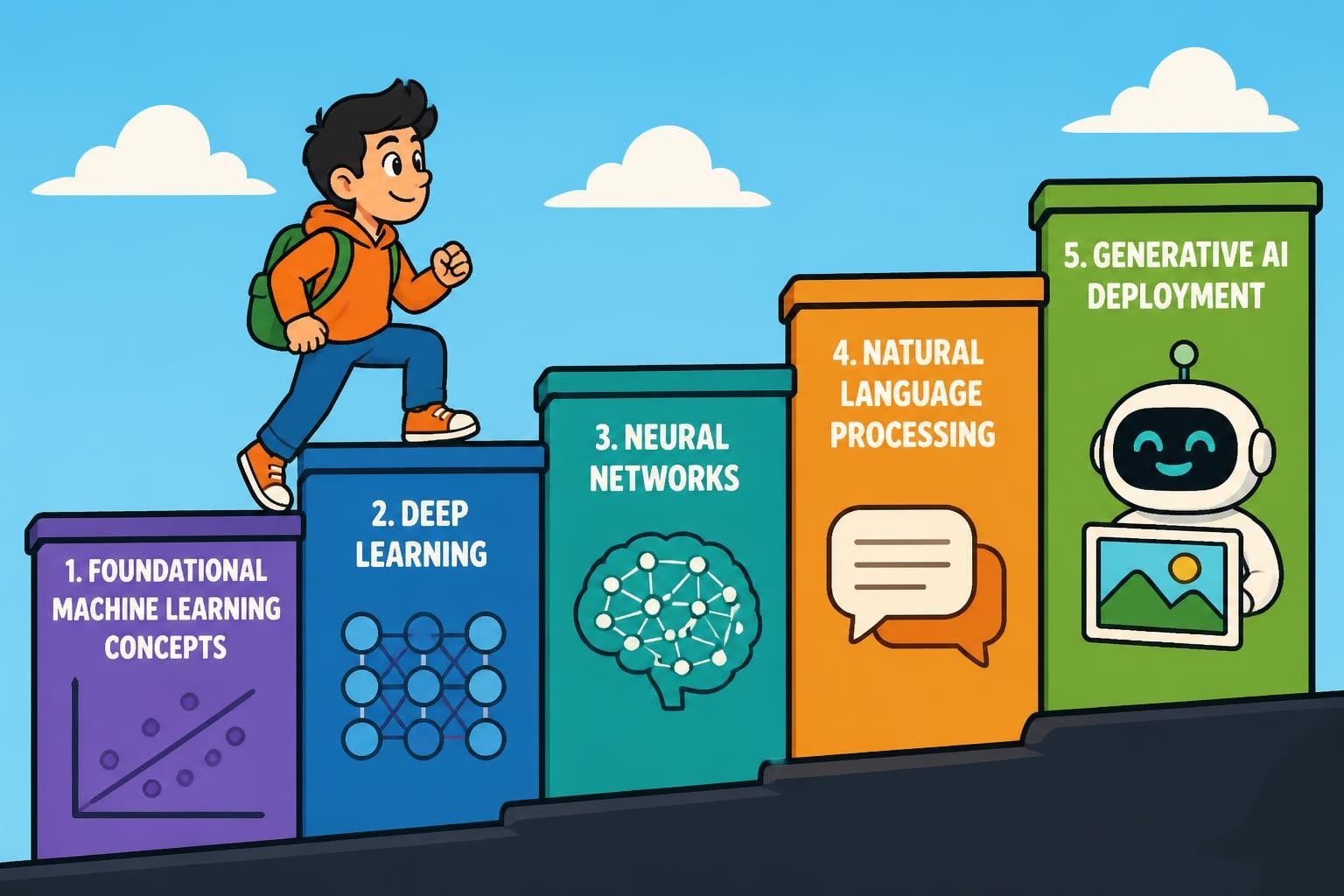
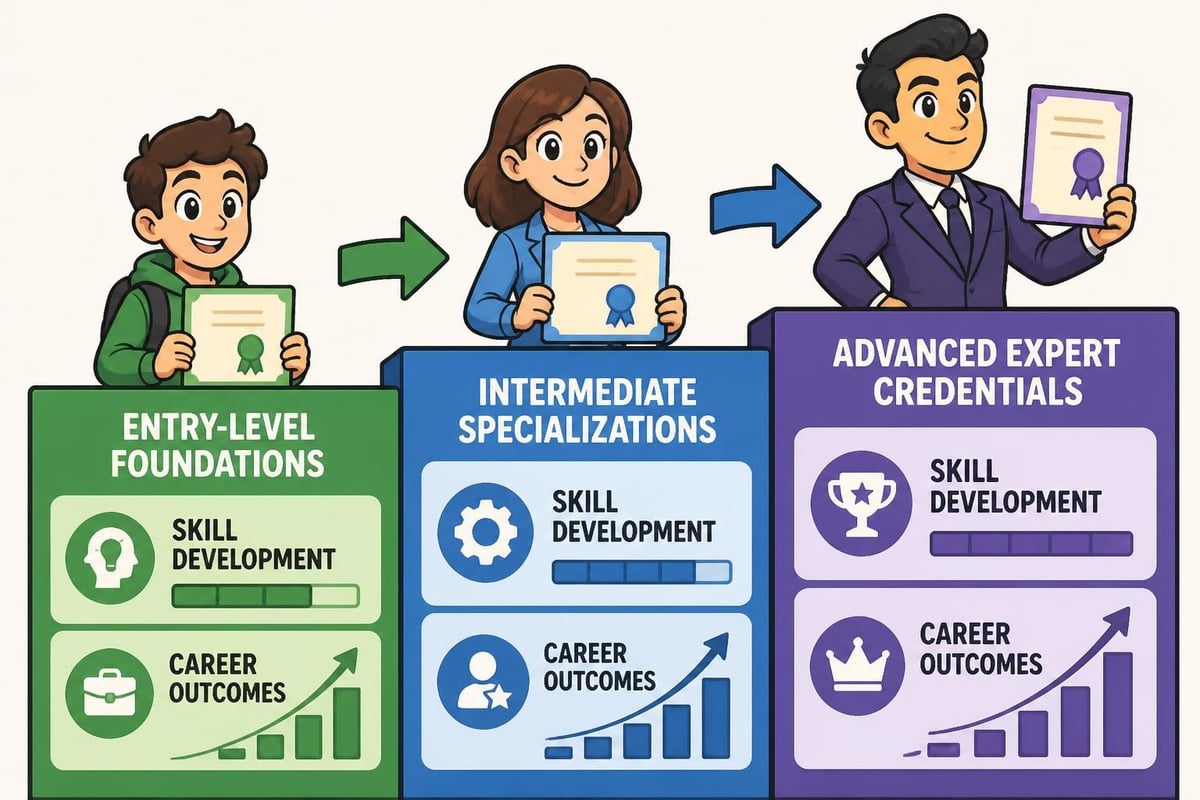
Foundational certifications introduce core concepts like machine learning algorithms, neural networks, and data preprocessing. These programs typically require 20-40 hours of study and serve professionals transitioning into AI roles or managers needing literacy without deep technical implementation.
Specialized certifications focus on specific domains:
- Machine learning engineering and model deployment
- Natural language processing and conversational AI
- Computer vision and image recognition systems
- AI ethics and responsible AI implementation
- Enterprise AI strategy and transformation
Platform-specific credentials validate expertise in proprietary ecosystems. AWS, Microsoft Azure, Google Cloud, and NVIDIA each offer certifications tied to their AI services and tools, which proves valuable when organizations already use these platforms.
The comprehensive comparison of major AI certifications reveals significant variation in preparation time, costs ranging from $100 to $600, and validity periods spanning one to three years.
Evaluating the Best AI Certification Options
Criteria for Selecting Quality Programs
When identifying the best AI certification for your needs, prioritize programs offering hands-on projects over purely theoretical coursework. Employers value demonstrated ability to build, deploy, and optimize AI systems more than memorized concepts.
Key evaluation factors include:
| Criterion | Why It Matters | What to Look For |
|---|---|---|
| Industry Recognition | Employer awareness drives hiring decisions | Credentials from established tech companies or universities |
| Practical Components | Builds applicable skills | Real datasets, coding exercises, deployed projects |
| Curriculum Currency | AI evolves rapidly | Updated content reflecting 2025-2026 advances |
| Support Resources | Improves completion rates | Mentorship, community forums, office hours |
| Cost-to-Value Ratio | ROI affects career investment | Salary increases versus program expenses |
The detailed analysis of AI skills certifications demonstrates that completion rates vary from 45% to 78% depending on program structure and support systems.
Top-Tier Professional Certifications
Google Cloud Professional Machine Learning Engineer stands out for its comprehensive coverage of the ML lifecycle. This certification requires candidates to design, build, and productionize ML models using Google Cloud technologies. The exam costs $200 and demands 100+ hours of preparation, but validates skills employers actively seek when hiring ML engineers.
Microsoft Certified: Azure AI Engineer Associate combines fundamental AI concepts with Azure-specific implementation. As covered in our guide to Microsoft AI certification courses, this credential proves particularly valuable for enterprise environments already using Microsoft's ecosystem.
AWS Certified Machine Learning - Specialty focuses on data engineering, exploratory data analysis, modeling, and ML implementation on AWS. Organizations heavily invested in Amazon's cloud infrastructure prioritize this credential when evaluating candidates.
TensorFlow Developer Certificate from Google demonstrates practical proficiency in building neural networks using TensorFlow. Unlike platform-specific certifications, this credential validates transferable skills applicable across cloud providers.
Emerging Certifications for Specialized Roles
The best AI certification for your situation depends heavily on your target role. According to expert rankings of AI certifications, specialized credentials increasingly outperform generalist options in competitive job markets.
- NVIDIA Deep Learning Institute Certifications: Ideal for professionals working with GPU-accelerated computing, computer vision, or conversational AI applications
- IBM AI Engineering Professional Certificate: Strong choice for enterprise professionals focusing on scalable AI solutions
- Stanford Graduate Certificate in Artificial Intelligence: Rigorous academic program for those seeking theoretical depth alongside practical application
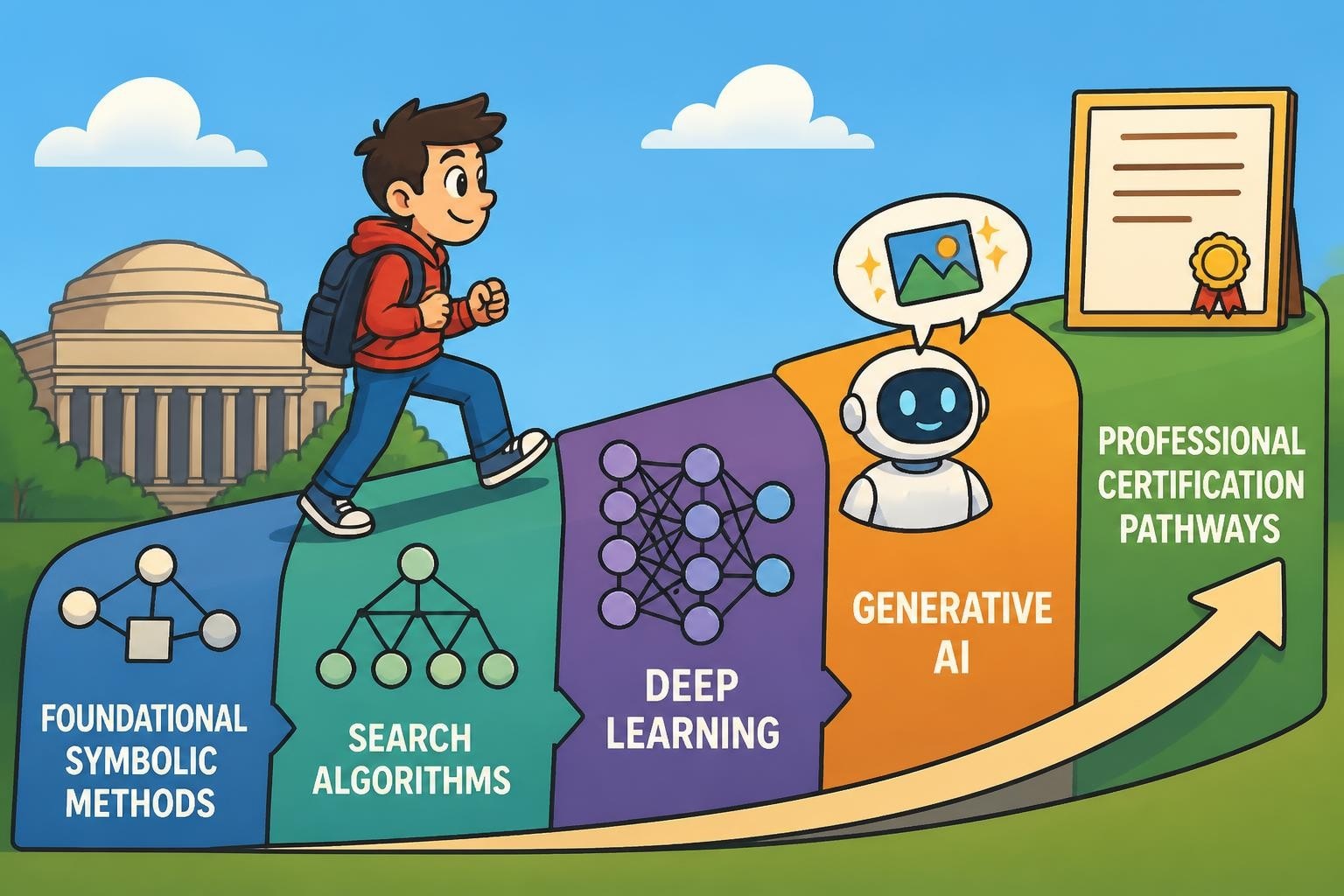
For professionals exploring AI and ML learning paths, starting with foundational certifications before advancing to specialized credentials typically produces better outcomes than attempting expert-level programs without prerequisite knowledge.
Certification Impact on Salary and Career Progression
Quantifying Return on Investment
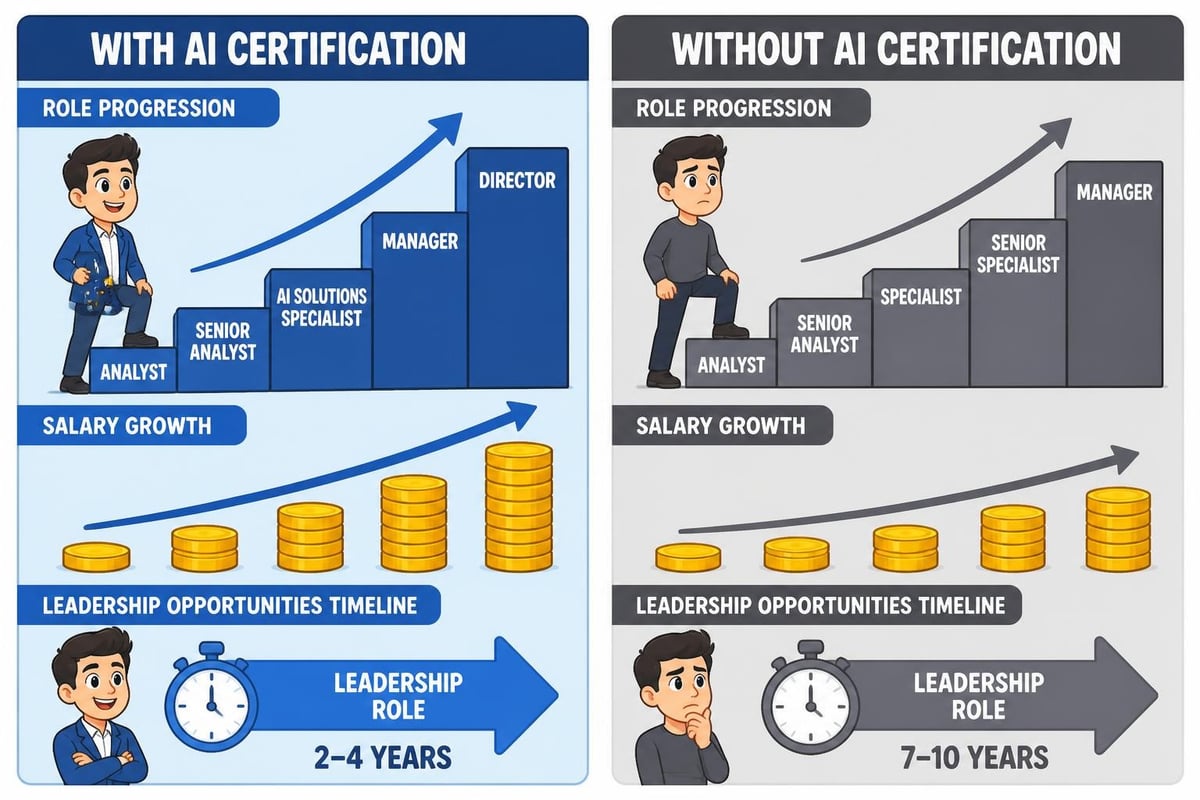
Data from salary impact analysis of AI certifications reveals that certified AI professionals earn 15-30% more than non-certified peers in equivalent roles. The specific premium varies by certification type, experience level, and geographic market.
Average salary increases by certification tier:
- Entry-level AI certifications: $8,000-$15,000 annual increase
- Intermediate specialist certifications: $18,000-$28,000 annual increase
- Expert-level credentials: $30,000-$50,000 annual increase
These figures represent averages across major U.S. metropolitan areas. Professionals in high-demand markets like San Francisco, New York, and Seattle often see higher premiums, while those in emerging markets may experience more modest gains.
Career Acceleration Beyond Compensation
The best AI certification programs open opportunities beyond immediate salary bumps. Certified professionals report higher interview callback rates, faster promotion timelines, and increased access to strategic projects that build portfolio value.
Certifications particularly impact career progression by:
- Validating expertise to non-technical stakeholders who approve hiring and promotions
- Providing structured networking through alumni communities and professional groups
- Demonstrating commitment to continuous learning, a critical trait for AI leadership roles
- Creating portfolio projects that serve as tangible evidence of capabilities
Organizations increasingly require certifications for internal AI initiatives. Our corporate training programs for AI management help teams standardize skills across departments while earning recognized credentials.
Matching Certifications to Career Stages
Certifications for Career Changers
Professionals transitioning into AI from other fields benefit most from foundational programs that don't assume prior machine learning knowledge. The beginner-focused AI certification guide identifies credentials designed specifically for career pivots.
Recommended starting points:
- Google AI Essentials: 10-hour introduction covering AI fundamentals, practical applications, and responsible AI principles
- Microsoft AI-900 (Azure AI Fundamentals): Entry-level certification requiring no coding prerequisites
- IBM AI Foundations for Business: Business-oriented introduction focusing on AI strategy rather than implementation
These programs typically cost $99-$300 and can be completed in 2-4 weeks with part-time study. They establish baseline knowledge before advancing to more technical certifications requiring programming proficiency.
Mid-Career Professional Advancement
Experienced professionals with 3-10 years in technology roles should target the best AI certification options that validate specialized expertise rather than covering introductory material. This cohort benefits from credentials demonstrating ability to lead AI projects, not just participate in them.
Platform-specific certifications make particular sense for mid-career professionals already working within specific ecosystems. If your organization uses AWS infrastructure, the AWS Machine Learning Specialty certification aligns perfectly with daily responsibilities while adding credential value.
Our comprehensive AI engineer certification resources help mid-career professionals identify programs matching their existing skill foundation and career trajectory.
Senior-Level Strategic Certifications
Senior professionals and executives need credentials emphasizing AI strategy, ethics, governance, and organizational transformation rather than hands-on implementation. These programs typically cost more ($2,000-$5,000) but deliver frameworks for enterprise-wide AI adoption.
Executive-level options include:
- MIT Professional Certificate in Machine Learning & AI
- Stanford Graduate Certificate in Artificial Intelligence
- Carnegie Mellon Executive Education in AI Strategy
These programs feature cohort-based learning, executive networking, and strategic frameworks rather than coding exercises. They prove valuable when leading digital transformation initiatives or advising boards on AI investments.
Certification Preparation Strategies
Creating Effective Study Plans
The best AI certification preparation balances structured learning with hands-on practice. Most successful candidates report spending 60-70% of study time on practical exercises rather than passive content consumption.
High-impact preparation approach:
- Assessment phase (Week 1): Take practice exams to identify knowledge gaps
- Foundation building (Weeks 2-4): Study core concepts with emphasis on weak areas
- Hands-on practice (Weeks 5-8): Complete projects using real datasets
- Review and reinforcement (Weeks 9-10): Revisit challenging topics, take full practice exams
- Final preparation (Week 11): Simulate exam conditions, refine time management
This timeline assumes 10-15 hours weekly study commitment. Professionals with existing AI experience may compress timelines, while career changers might extend preparation periods.
Leveraging Practice Projects
Building portfolio projects during certification preparation serves dual purposes: it reinforces learning and creates artifacts demonstrating capabilities to employers. The most effective projects solve real problems using publicly available datasets.
Strong project examples:
- Customer churn prediction model using telecommunications data
- Sentiment analysis system for product reviews
- Image classification pipeline for medical diagnostics
- Recommendation engine using collaborative filtering
- Natural language chatbot with context awareness
Document these projects on GitHub with clear README files explaining problem statements, methodologies, results, and lessons learned. These repositories become valuable supplements to certification credentials during job searches.
For professionals seeking structured project guidance, MammothClub's AI specialization courses include project templates, datasets, and mentor feedback to build portfolio-ready work.
Alternative Credentials and Complementary Learning
Bootcamps Versus Certifications
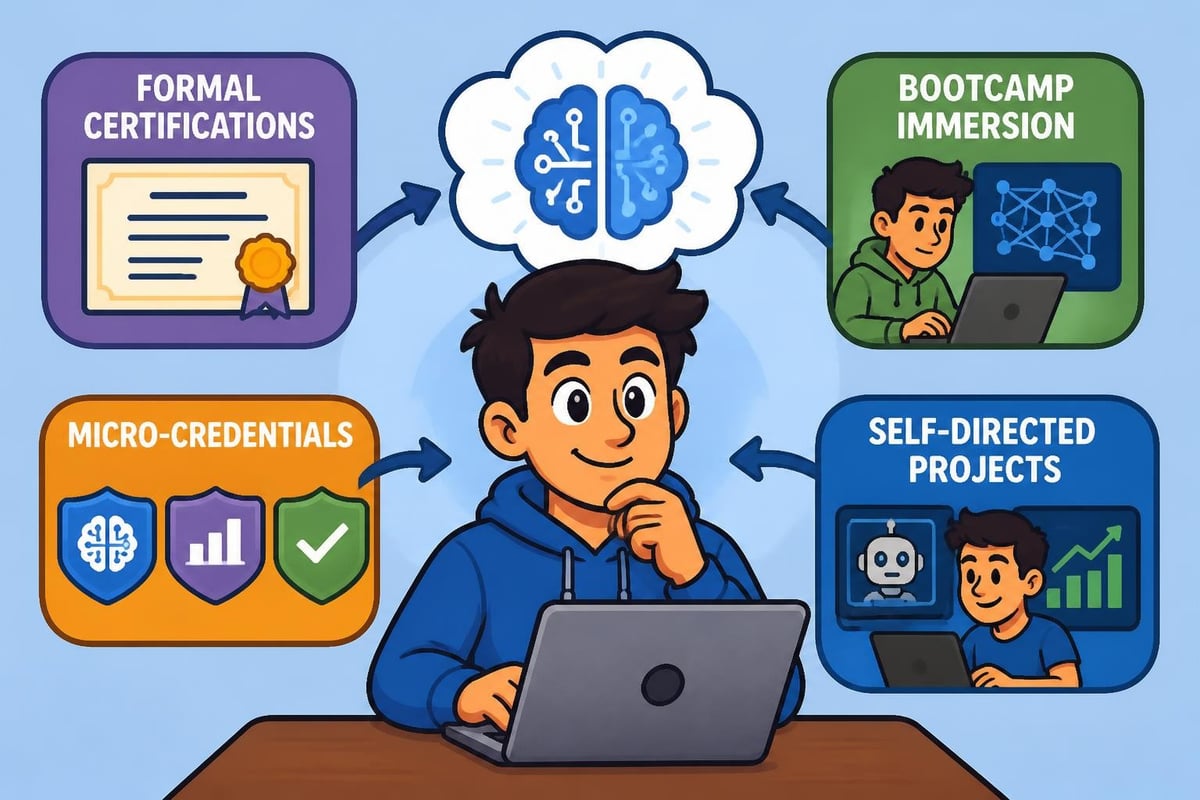
While certifications validate specific competencies, intensive bootcamps offer immersive learning experiences that may better suit certain professionals. Bootcamps typically run 12-24 weeks full-time or 6-9 months part-time, combining curriculum coverage with career services.
| Aspect | Certifications | Bootcamps |
|---|---|---|
| Time Commitment | 40-150 hours | 400-600 hours |
| Cost | $100-$600 | $8,000-$20,000 |
| Depth | Focused validation | Comprehensive skills |
| Career Support | Limited | Job placement assistance |
| Flexibility | Self-paced | Structured schedule |
| Recognition | Industry-specific | Emerging acceptance |
The best AI certification strategy for career changers often combines both approaches: complete a bootcamp to build foundational skills, then pursue certifications to validate specific competencies employers prioritize.
Micro-Credentials and Digital Badges
Micro-credentials represent focused achievements in specific AI topics like prompt engineering, computer vision, or AI ethics. While less comprehensive than full certifications, they signal continuous learning and targeted expertise.
Platforms increasingly offer stackable credentials that combine into more comprehensive certifications. This approach allows professionals to demonstrate progress while working toward larger credentials.
Our no-code AI courses provide accessible entry points for professionals who need AI literacy without deep technical implementation skills, complementing more technical certifications.
Trust and Credibility in AI Certifications
Evaluating Program Legitimacy
Not all certifications carry equal weight with employers. Research from academic analysis of AI certification trustworthiness indicates that credential credibility depends on issuing organization reputation, curriculum rigor, and assessment quality.
Red flags indicating questionable programs:
- Guaranteed passage promises regardless of preparation
- No prerequisite requirements for advanced certifications
- Extremely short completion timelines for complex topics
- Limited or no hands-on components
- Absence of proctored examinations
- Minimal industry recognition or employer awareness
Conversely, the best AI certification programs require demonstrated competency through rigorous assessments, typically including both multiple-choice exams and practical projects or case studies.
Industry-Recognized Standards
Certifications from major technology companies (Google, Microsoft, AWS, IBM, NVIDIA) and established educational institutions benefit from existing brand recognition. Employers familiar with these organizations automatically assign credibility to associated credentials.
The evaluation of over 30 AI certification programs reveals that employer recognition correlates strongly with certification value, often mattering more than curriculum comprehensiveness when credentials appear equivalent.
Professional organizations like IEEE and ACM also offer AI certifications with strong academic rigor, though corporate credentials currently enjoy higher employer awareness in hiring contexts.
Maintaining and Renewing Certifications
Continuing Education Requirements
Most AI certifications expire after 2-3 years, requiring renewal through continuing education or re-examination. This structure acknowledges the rapid evolution of AI technologies and ensures certified professionals maintain current knowledge.
Typical renewal pathways:
- Complete designated continuing education courses (15-30 hours)
- Pass a renewal examination covering updated content
- Demonstrate professional AI work through portfolio submissions
- Attend approved conferences or workshops and accumulate credits
Understanding renewal requirements before pursuing certifications helps avoid unexpected future commitments. Some professionals strategically time certifications to align with career milestones or job searches, then allow credentials to lapse if renewal costs exceed career benefits.
Staying Current Beyond Certification
The best AI certification provides a foundation, but ongoing learning remains essential in this rapidly evolving field. Successful AI professionals supplement certifications with regular engagement in AI communities, research paper reading, and experimental projects using emerging tools.
Effective strategies for maintaining relevance include subscribing to leading AI research journals, participating in Kaggle competitions, contributing to open-source AI projects, and attending industry conferences like NeurIPS or CVPR.
Making Your Final Certification Decision
Assessment Framework
Choose the best AI certification for your situation by systematically evaluating options against your specific circumstances:
Career alignment: Does the certification match roles you're targeting? Review job postings in your desired positions to identify frequently mentioned credentials.
Skill gaps: Which certifications address your specific knowledge deficiencies rather than covering material you already know?
Learning style: Do you prefer self-paced study or structured timelines? Asynchronous content or live instruction? Text-based or video-heavy materials?
Budget constraints: Beyond certification costs, factor in study materials, practice exams, and potential retake fees if you don't pass initially.
Time availability: Can you realistically complete preparation within program timelines while managing work and personal commitments?
Building a Certification Roadmap
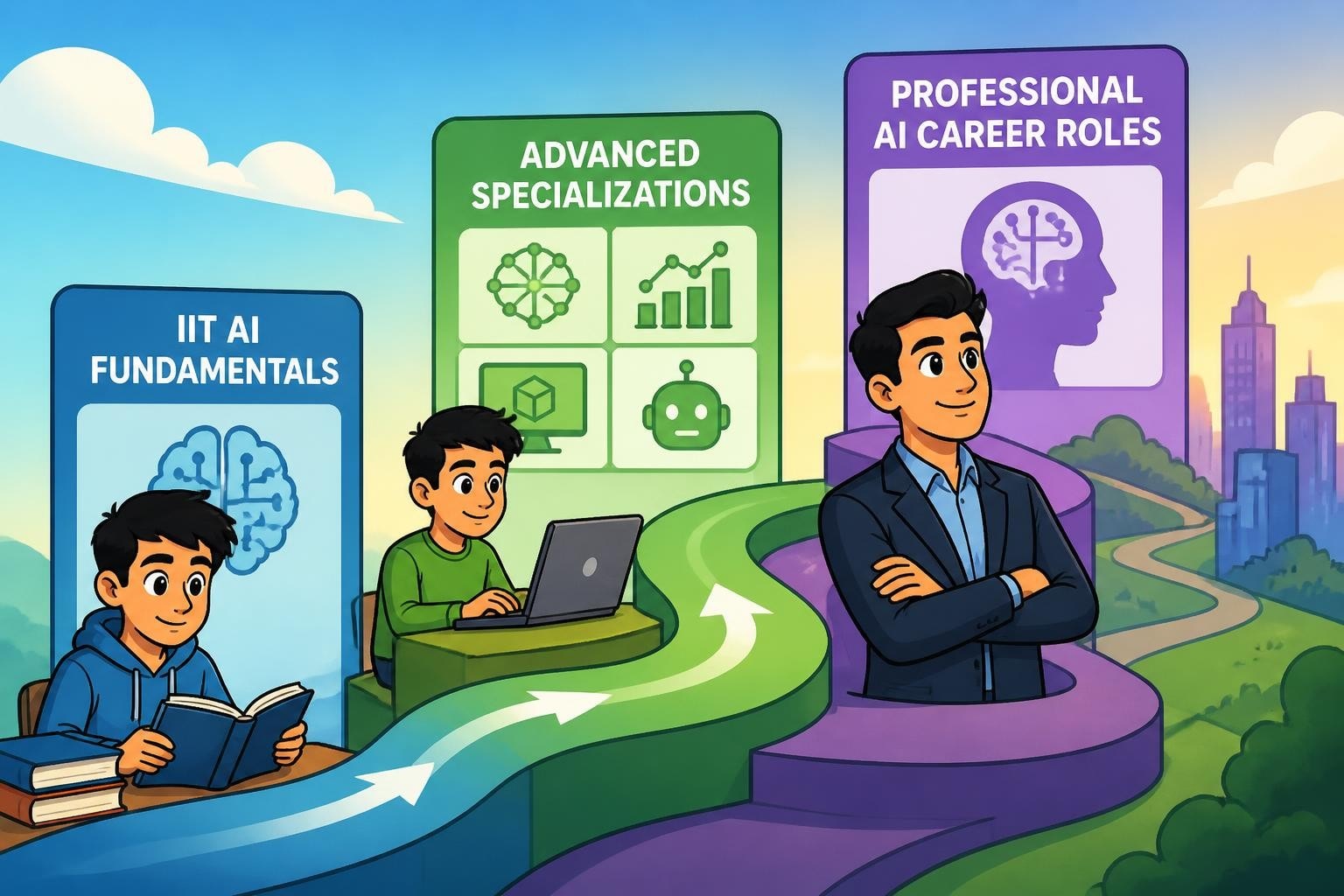
Rather than pursuing a single credential, develop a multi-year certification strategy that progressively builds expertise. According to top AI certification programs for 2025, professionals with certification pathways demonstrate stronger career progression than those with isolated credentials.
Sample three-year roadmap:
Year 1: Foundation certification (Azure AI Fundamentals or Google AI Essentials) plus hands-on project portfolio development
Year 2: Specialized certification aligned with emerging interests (Machine Learning Engineering, NLP, or Computer Vision) plus conference attendance
Year 3: Advanced or platform-specific certification (AWS ML Specialty or Google Professional ML Engineer) plus thought leadership through blog posts or presentations
This progressive approach builds both credentials and practical experience, creating compound career benefits that exceed any single certification's impact.
Selecting the best AI certification requires balancing your current skill level, career objectives, budget, and learning preferences against the landscape of available programs. The most valuable credentials combine industry recognition with hands-on components that build practical skills employers actively seek. Whether you're transitioning into AI roles, advancing your technical expertise, or leading organizational AI initiatives, the right certification accelerates your journey by validating knowledge and opening doors to new opportunities. MammothClub provides comprehensive AI certification preparation through 3,000+ on-demand courses, interactive bootcamps, and AI-powered learning tools designed to help you master the skills behind leading credentials while tracking your progress toward career goals.