The artificial intelligence revolution has created an unprecedented demand for certified AI professionals across industries. As organizations race to implement AI solutions, professionals with validated expertise command premium salaries and leadership opportunities. Selecting the right top artificial intelligence certification can accelerate your career trajectory, whether you're transitioning into AI roles or advancing your existing technical skills. With hundreds of programs available, understanding which certifications deliver genuine value requires careful analysis of curriculum depth, industry recognition, and alignment with your career objectives.
Understanding AI Certification Categories
AI certifications span multiple specializations, each targeting distinct skill sets and career paths. The landscape includes foundational programs for beginners, specialized tracks for practitioners, and advanced credentials for architects and strategists.
Foundational AI Certifications
Entry-level certifications establish core concepts without requiring extensive programming backgrounds. These programs typically cover:
- Machine learning fundamentals and algorithms
- Data preparation and feature engineering basics
- Ethical AI principles and responsible deployment
- Introduction to neural networks and deep learning
- Business applications of AI technologies
Programs like Microsoft's AI-900 Azure AI Fundamentals provide vendor-specific introductions, while vendor-neutral options offer broader perspectives. The ideal starting point depends on whether you're pursuing cloud-specific implementation skills or platform-agnostic knowledge.
Time investment: 20-40 hours of study Cost range: $99-$300 Prerequisites: Basic computer literacy
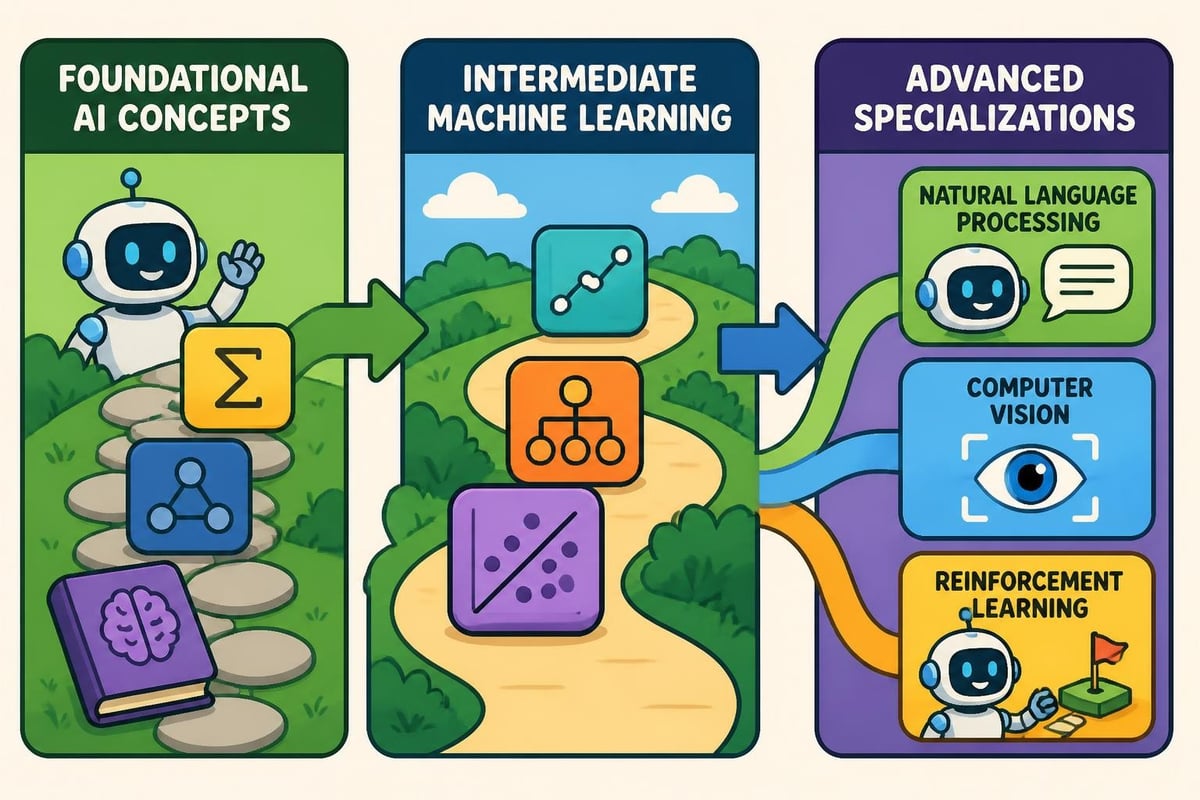
Intermediate Practitioner Credentials
Mid-level certifications target professionals with programming experience ready to implement AI solutions. These programs emphasize hands-on projects and practical application.
According to Computerworld's analysis of AI certifications, employers increasingly value certifications demonstrating project completion over theoretical knowledge alone. Intermediate programs typically require:
- Proficiency in Python or R programming
- Understanding of statistical concepts and probability
- Familiarity with data structures and algorithms
- Experience with SQL and database fundamentals
- Basic cloud platform knowledge
The AI engineer certification pathway prepares professionals to design, develop, and deploy production AI systems. These credentials validate abilities to work with frameworks like TensorFlow, PyTorch, and scikit-learn while implementing MLOps best practices.
Leading Cloud Platform AI Certifications
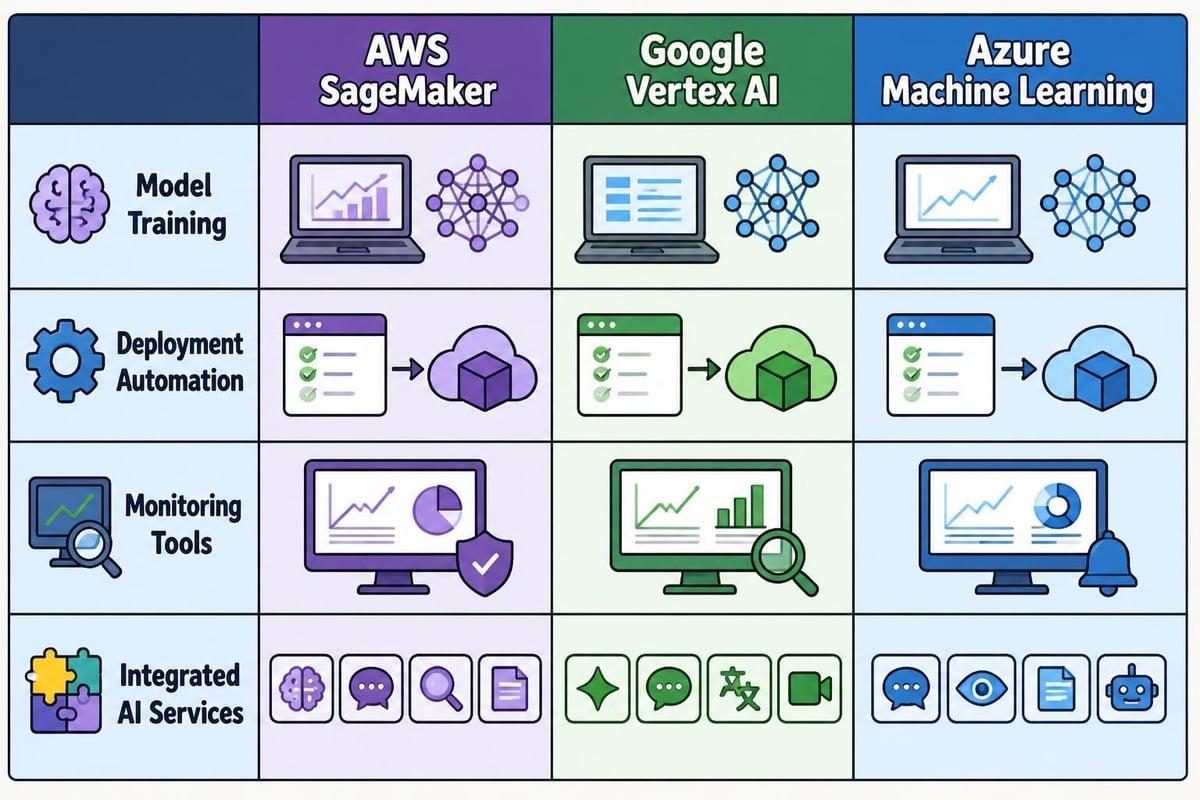
Major cloud providers offer certification tracks that combine AI knowledge with platform-specific implementation skills. These credentials signal proficiency in enterprise-grade AI deployment.
AWS Machine Learning Specialty
Amazon Web Services' ML certification validates expertise in designing, implementing, and maintaining machine learning solutions on AWS infrastructure. The program covers:
| Topic Area | Coverage Percentage |
|---|---|
| Data Engineering | 20% |
| Exploratory Data Analysis | 24% |
| Modeling | 36% |
| ML Implementation & Operations | 20% |
Exam details: 170 minutes, 65 questions, $300 Renewal: Every 3 years Average preparation: 3-6 months
This top artificial intelligence certification requires hands-on experience with SageMaker, comprehension of algorithm selection criteria, and understanding of model optimization techniques. Candidates should demonstrate proficiency in selecting appropriate instance types, implementing security best practices, and troubleshooting deployment issues.
Google Cloud Professional ML Engineer
Google's certification emphasizes end-to-end ML workflow design using Google Cloud Platform services. The credential validates abilities to:
- Architect scalable ML solutions using Vertex AI
- Implement responsible AI practices and governance
- Optimize model performance and cost efficiency
- Design data pipelines for ML workloads
- Deploy and monitor production ML systems
The examination tests both theoretical understanding and practical problem-solving. TechTarget's review of top AI certifications highlights this credential's strong industry recognition, particularly for roles involving Google Cloud infrastructure.
Microsoft Azure AI Engineer Associate
The Azure AI certification validates skills in designing and implementing AI solutions using Azure Cognitive Services, Azure Machine Learning, and Azure Applied AI services. This certification suits professionals working in Microsoft-centric environments.
Key competencies tested:
- Natural language processing implementation
- Computer vision solution development
- Conversational AI deployment using Azure Bot Service
- Knowledge mining with Azure Cognitive Search
- Responsible AI principle application
Prerequisites: Azure Fundamentals (AI-900) recommended Exam code: AI-102 Cost: $165
Specialized AI Domain Certifications
Beyond platform-specific credentials, specialized certifications target particular AI applications and methodologies. These programs demonstrate deep expertise in focused areas.
Deep Learning Specialization
Deep learning certifications validate advanced neural network knowledge. Programs typically explore:
- Neural network architectures: CNNs, RNNs, transformers, and attention mechanisms
- Optimization techniques: Gradient descent variants, regularization, and hyperparameter tuning
- Framework mastery: TensorFlow, Keras, PyTorch implementation patterns
- Specialized applications: Computer vision, NLP, generative models
- Production deployment: Model serving, scaling, and monitoring
Professionals pursuing this top artificial intelligence certification should have solid calculus, linear algebra, and probability foundations. The technical depth requires significant hands-on experimentation with model architectures and training procedures.
Natural Language Processing Certifications
NLP-focused credentials address the exploding demand for language AI expertise. With transformer models revolutionizing text processing, these certifications cover:
- Language model fine-tuning and prompt engineering
- Named entity recognition and information extraction
- Sentiment analysis and text classification
- Machine translation and multilingual models
- Conversational AI and dialogue systems
Organizations implementing chatbots, content analysis, or document processing increasingly require validated NLP skills. The AI in business course perspective helps professionals understand practical NLP applications in enterprise contexts.
Computer Vision Credentials
Computer vision certifications prepare professionals to develop image and video analysis solutions. Core topics include:
| Competency Area | Applications |
|---|---|
| Object Detection | Autonomous vehicles, surveillance, quality control |
| Image Segmentation | Medical imaging, agriculture, urban planning |
| Facial Recognition | Security systems, authentication, retail analytics |
| Video Analysis | Sports analytics, traffic monitoring, behavior analysis |
Advanced programs explore generative adversarial networks (GANs), diffusion models, and multimodal learning. Hands-on projects typically involve real-world datasets and production deployment scenarios.
Professional AI Certification Bodies
Independent certification organizations offer vendor-neutral credentials recognized across industries. These programs emphasize transferable skills applicable to any technology stack.
IBM AI Engineering Professional Certificate
IBM's comprehensive program combines theoretical foundations with practical implementation skills. The multi-course sequence covers:
- Machine learning with Python using scikit-learn
- Deep learning fundamentals with TensorFlow and Keras
- Computer vision and image processing techniques
- Recurrent networks and natural language processing
- Capstone project demonstrating end-to-end ML workflow
Duration: 3-6 months at 10 hours/week Cost: Subscription-based ($39-49/month) Projects: 6 hands-on applications
This top artificial intelligence certification suits professionals seeking comprehensive coverage without cloud platform lock-in. The credential demonstrates practical abilities valued by employers across technology ecosystems.
CertNexus Certified Artificial Intelligence Practitioner
The CAIP credential validates job-ready AI implementation skills through a performance-based examination. Unlike multiple-choice tests, candidates complete actual tasks:
- Preparing datasets for machine learning workflows
- Training and evaluating classification models
- Implementing regression and forecasting solutions
- Deploying neural networks for complex patterns
- Applying ethical AI principles to project decisions
Exam format: Performance-based scenarios (90 minutes) Passing score: 70% Validity: 3 years with continuing education
According to Built In's comprehensive AI certification overview, performance-based credentials increasingly influence hiring decisions as employers seek demonstrable skills over theoretical knowledge.
Industry-Specific AI Certifications
Vertical-focused certifications address AI applications within particular industries, combining domain expertise with technical skills.
Healthcare AI Certifications
Medical AI certifications prepare professionals to navigate healthcare's unique regulatory, ethical, and technical requirements. Programs address:
- HIPAA compliance and patient data protection
- Medical imaging analysis using deep learning
- Clinical decision support system development
- Drug discovery and genomics applications
- FDA regulatory frameworks for AI/ML devices
These specialized credentials require understanding both AI techniques and healthcare workflows, making them valuable for professionals bridging technical and clinical roles.
Financial Services AI Credentials
Finance-focused certifications explore AI applications in trading, risk assessment, and fraud detection. Key areas include:
- Algorithmic trading strategy development
- Credit risk modeling and loan underwriting
- Fraud detection using anomaly detection techniques
- Regulatory compliance and model explainability
- Portfolio optimization using reinforcement learning
The intersection of finance domain knowledge and AI expertise commands premium compensation in banking, fintech, and investment management sectors.
Choosing the Right AI Certification Path
Selecting an appropriate top artificial intelligence certification requires evaluating multiple factors aligned with your career objectives and current skill level.
Assessing Your Current Position
Begin by honestly evaluating your existing knowledge:
Technical skills inventory:
- Programming proficiency (Python, R, Java)
- Mathematics foundation (calculus, linear algebra, statistics)
- Database and SQL experience
- Cloud platform familiarity
- Software engineering practices
Professional context:
- Current role responsibilities and future aspirations
- Industry sector and company technology stack
- Available study time and learning preferences
- Budget for certification and preparation materials
AI specialization courses offer structured pathways for professionals at different starting points, from complete beginners to experienced developers adding AI capabilities.
Evaluating Certification Value
Not all certifications deliver equal career impact. Assess programs using these criteria:
| Evaluation Factor | Questions to Ask |
|---|---|
| Industry Recognition | Do employers in target sectors value this credential? |
| Curriculum Relevance | Does content align with current AI technologies? |
| Hands-on Component | Does certification require practical project work? |
| Exam Rigor | What percentage of candidates pass on first attempt? |
| Community Support | Are study groups and resources readily available? |
| Renewal Requirements | Does certification require ongoing learning? |
Research trending AI certifications by role to understand which credentials align with specific career trajectories. Job postings in your target role provide valuable insight into which certifications employers actively seek.
Time and Cost Considerations
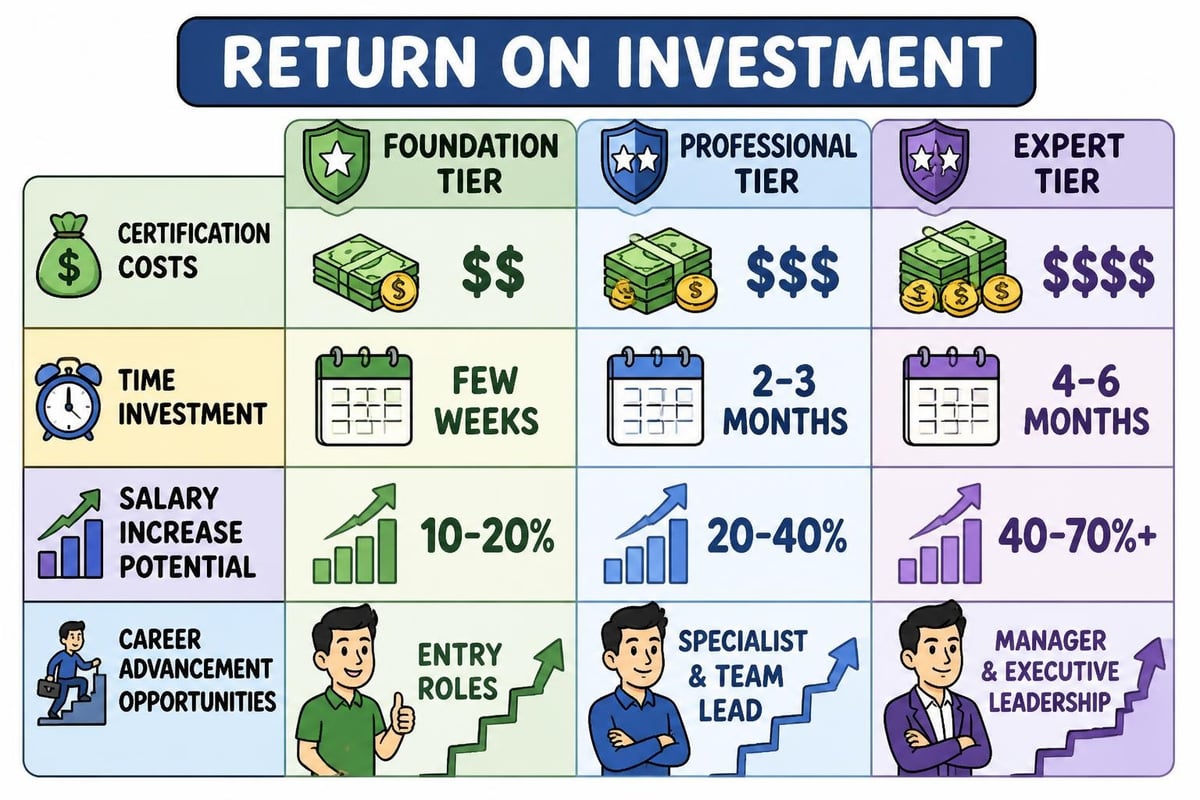
Certification investment extends beyond exam fees. Calculate total commitment including:
- Preparation time: 50-300 hours depending on program complexity
- Study materials: Books, practice exams, video courses ($100-500)
- Exam fees: $99-500 per attempt
- Renewal costs: Continuing education or re-certification expenses
- Opportunity cost: Time unavailable for other activities
Budget-conscious learners should explore employer sponsorship programs, many organizations cover certification costs for relevant credentials. Additionally, comprehensive platforms offering best AI courses on Coursera and similar services often include certification preparation within subscription models.
Maximizing Certification Benefits
Earning a top artificial intelligence certification represents just the beginning. Strategic approaches multiply credential value.
Building Portfolio Projects
Certifications validate knowledge, but portfolios demonstrate application. Develop projects that:
- Solve real business problems with measurable outcomes
- Showcase diverse AI techniques and methodologies
- Include documentation explaining design decisions
- Demonstrate end-to-end workflow from data to deployment
- Highlight ethical considerations and bias mitigation
Quality projects differentiate candidates in competitive markets. GitHub repositories with well-documented code, comprehensive README files, and reproducible results signal professional competence beyond certification alone.
Continuous Skill Development
AI evolves rapidly, making continuous learning essential. Successful professionals:
- Follow academic research through arXiv and conference proceedings
- Participate in Kaggle competitions to sharpen practical skills
- Contribute to open-source AI projects and frameworks
- Attend industry conferences and local meetup groups
- Experiment with emerging tools and model architectures
The AI ethics course perspective remains increasingly critical as AI systems influence consequential decisions. Professionals who combine technical expertise with ethical awareness position themselves as responsible AI leaders.
Leveraging Certification for Career Growth
Strategic credential deployment accelerates advancement:
Resume optimization: Feature certifications prominently with issue dates and credential IDs employers can verify. Quantify achievements in previous roles using AI skills.
LinkedIn visibility: Add certifications to your profile, join relevant groups, and share insights demonstrating expertise. Recruiters actively search certification keywords when sourcing candidates.
Networking opportunities: Certification alumni networks provide valuable connections. Engage authentically, offering help before requesting favors.
Salary negotiation: Career advancement data from Dice indicates certified AI professionals command 15-25% salary premiums over non-certified peers. Document market rates and present certification as evidence of commitment and capability.
Emerging Certification Trends
The AI certification landscape continues evolving alongside technological advancement and market demands.
Generative AI Certifications
Large language models and diffusion models created entirely new certification categories. Programs now address:
- Prompt engineering and optimization techniques
- Fine-tuning foundation models for specific domains
- Responsible generative AI deployment and content policy
- Multimodal model implementation and applications
- Cost optimization for API-based and self-hosted solutions
Organizations implementing ChatGPT, DALL-E, Midjourney, or similar tools need professionals who understand both capabilities and limitations. These certifications demonstrate practical expertise with cutting-edge technologies.
MLOps and AI Engineering
DevOps principles applied to machine learning created specialized certification tracks. MLOps credentials validate abilities to:
- Design CI/CD pipelines for model training and deployment
- Implement model versioning and experiment tracking
- Monitor model performance and detect drift
- Orchestrate automated retraining workflows
- Manage infrastructure as code for ML systems
The AI management courses perspective helps professionals understand organizational integration of MLOps practices. Technical excellence alone proves insufficient without effective collaboration frameworks.
Responsible AI Certifications
Ethical AI deployment concerns drive dedicated certification programs addressing:
| Focus Area | Key Topics |
|---|---|
| Bias Detection | Identifying and mitigating algorithmic bias across protected classes |
| Explainability | Implementing interpretable models and explanation techniques |
| Privacy Preservation | Differential privacy, federated learning, secure multi-party computation |
| Governance Frameworks | Model cards, datasheets, audit trails, compliance documentation |
| Impact Assessment | Evaluating societal implications before deployment |
Organizations facing regulatory scrutiny value professionals who can navigate technical implementation while ensuring ethical compliance. This emerging top artificial intelligence certification category addresses growing market needs.
Selecting the right AI certification accelerates professional growth by validating expertise, expanding capabilities, and signaling commitment to continuous learning in this rapidly evolving field. Whether you're pursuing foundational knowledge, specialized technical skills, or industry-specific applications, strategic certification choices position you for success in the AI-driven economy. MammothClub provides comprehensive AI training resources, interactive bootcamps, and certification preparation programs that help professionals master in-demand skills efficiently. Our AI-powered learning platform offers 3,000+ courses with measurable outcomes, making it easier to achieve your certification goals and advance your career in artificial intelligence.