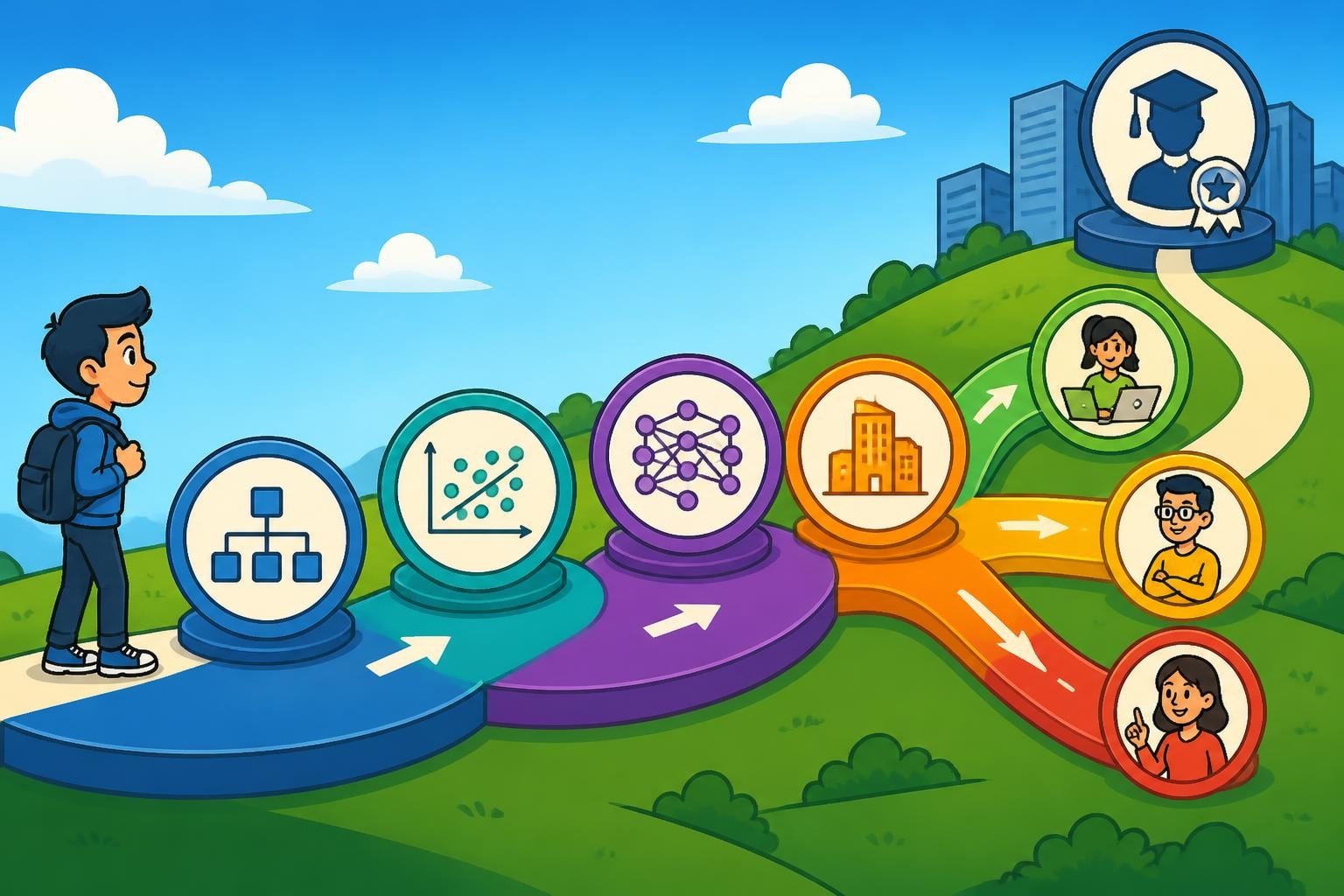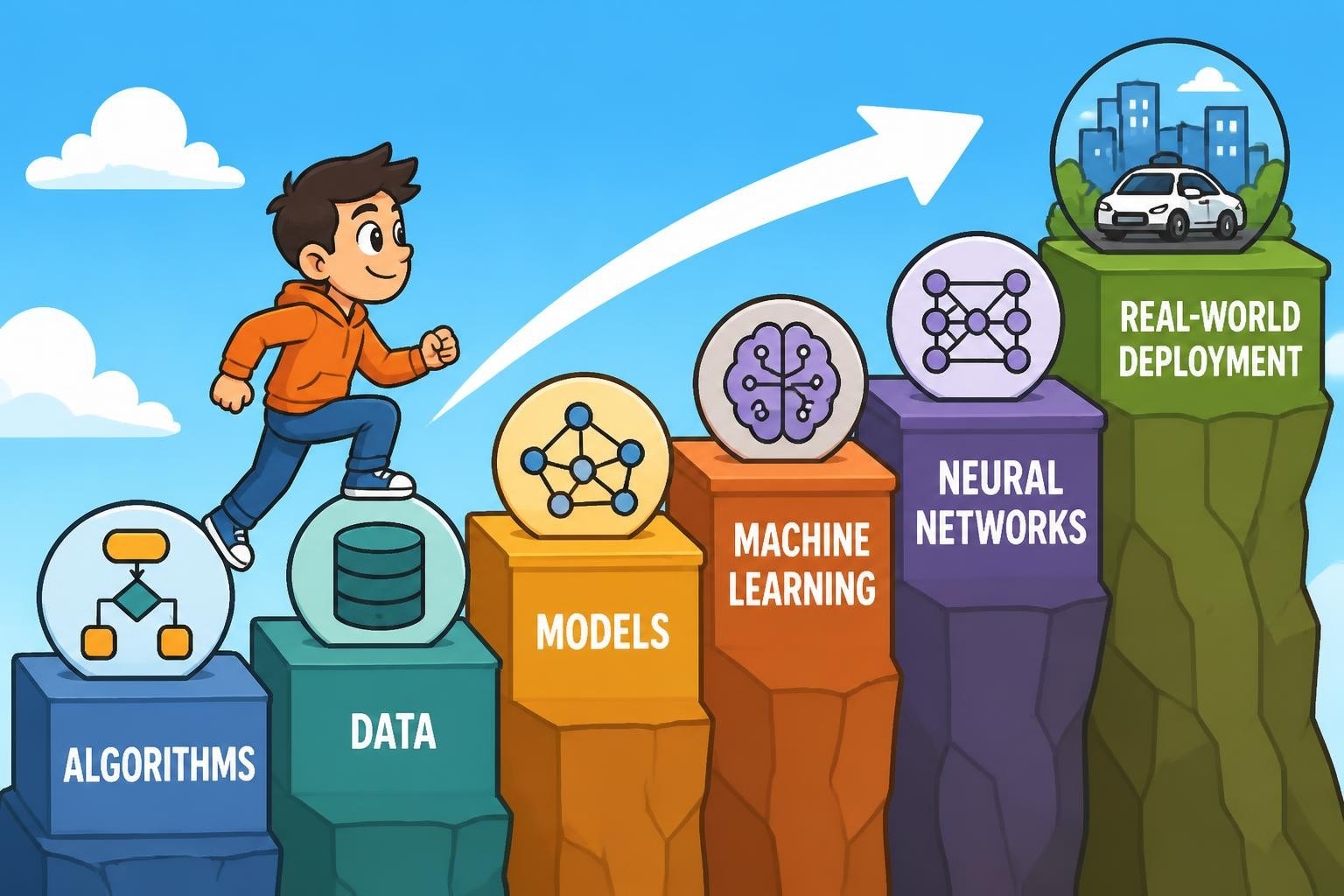
Organizations across every sector face mounting pressure to integrate artificial intelligence into their operations, yet many lack the foundational knowledge to deploy these technologies effectively. Pursuing an ai in business course has become essential for companies seeking to bridge this capability gap while maintaining competitive advantage in an increasingly automated marketplace. The right training program equips decision-makers, managers, and entire teams with practical skills to evaluate AI opportunities, implement solutions responsibly, and measure business impact through data-driven frameworks.
Understanding the Strategic Value of AI Business Training
The transformation happening across industries demands more than surface-level awareness of artificial intelligence. Companies need structured education that connects technical concepts to tangible business outcomes. An ai in business course addresses this requirement by building competency across multiple organizational layers.
Business leaders gain critical advantages through formal AI education:
- Strategic vision for identifying high-impact use cases within existing operations
- Risk assessment capabilities for evaluating implementation costs and potential failures
- Communication frameworks for translating technical requirements to cross-functional teams
- Competitive intelligence about industry-specific AI adoption patterns
Professional development in this domain extends beyond individual skill-building. When organizations invest in comprehensive training, they create shared vocabulary and aligned expectations across departments. Marketing teams understand what data scientists require. Operations managers recognize realistic timelines for automation projects. Finance executives evaluate AI investments with informed skepticism rather than hype-driven enthusiasm.
Bridging Technical Concepts and Business Applications
Most executives don't need to write machine learning algorithms, but they must comprehend what these systems can and cannot accomplish. Quality training programs translate complex technical concepts into business-relevant frameworks. Harvard's AI courses for business professionals demonstrate this approach by focusing on strategic decision-making rather than coding skills.
The curriculum typically covers predictive analytics, natural language processing, computer vision, and generative AI through case studies drawn from real implementations. Participants learn to ask the right questions during vendor evaluations, recognize when internal development makes more sense than third-party solutions, and identify ethical considerations before they become public relations crises.
Selecting the Right AI Business Training Program
The market offers hundreds of options ranging from weekend workshops to year-long certificate programs. Making an informed selection requires clarity about organizational needs, learner profiles, and expected outcomes.
| Program Type | Duration | Best For | Typical Cost Range |
|---|---|---|---|
| Executive Workshops | 2-5 days | C-suite awareness | $3,000-$8,000 |
| Professional Certificates | 3-6 months | Mid-level managers | $2,000-$6,000 |
| Graduate Certificates | 9-12 months | Career transformation | $8,000-$25,000 |
| Corporate Bootcamps | 6-12 weeks | Team-wide deployment | Custom pricing |
Universities and business schools have developed specialized offerings that balance academic rigor with practical application. The University of Cincinnati's AI in Business graduate certificate focuses specifically on developing AI-based solutions for business problems while enhancing managerial productivity through hands-on projects.
Evaluating Curriculum Quality and Relevance
Not all ai in business course offerings deliver equal value. Scrutinize the curriculum for these essential components:
Technical foundations that explain how algorithms learn from data without requiring programming expertise. Professionals should understand the difference between supervised and unsupervised learning, grasp why neural networks excel at certain tasks, and recognize the data requirements for training effective models.
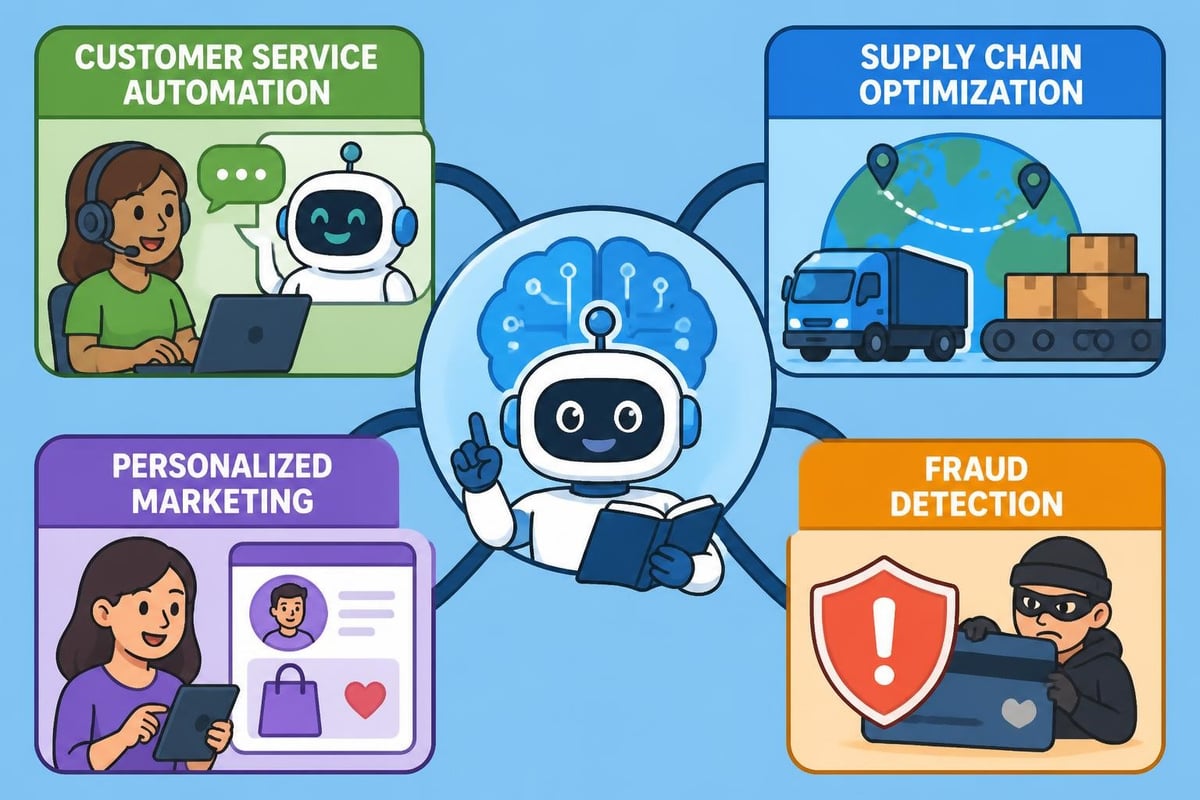
Industry applications that go beyond generic examples. Healthcare organizations need case studies about diagnostic assistance and patient outcome prediction. Retail companies benefit from inventory optimization and demand forecasting scenarios. Financial services require deep dives into fraud detection and algorithmic trading considerations.
Ethical frameworks that address bias, transparency, and accountability. Coursera's Trust and Ethics in AI course provides structured approaches for building fairness into AI systems and establishing governance protocols that protect both organizations and customers.
Change management strategies that acknowledge the human dimension of technology adoption. The most sophisticated AI implementation fails without employee buy-in, process redesign, and cultural adaptation.
Building Practical Skills Through Hands-On Learning
Reading about AI capabilities differs fundamentally from actually deploying these technologies to solve business challenges. Effective training incorporates experiential components that move beyond theoretical knowledge.
Leading programs provide access to real datasets, cloud-based AI platforms, and simulation environments where participants build and test models. Bellevue University's AI for Business program introduces learners to Large Language Models and other cutting-edge technologies through practical exercises that mirror workplace scenarios.
Implementing Project-Based Learning
The most valuable ai in business course structures include capstone projects where participants address actual organizational challenges. These projects typically span several weeks and require learners to:
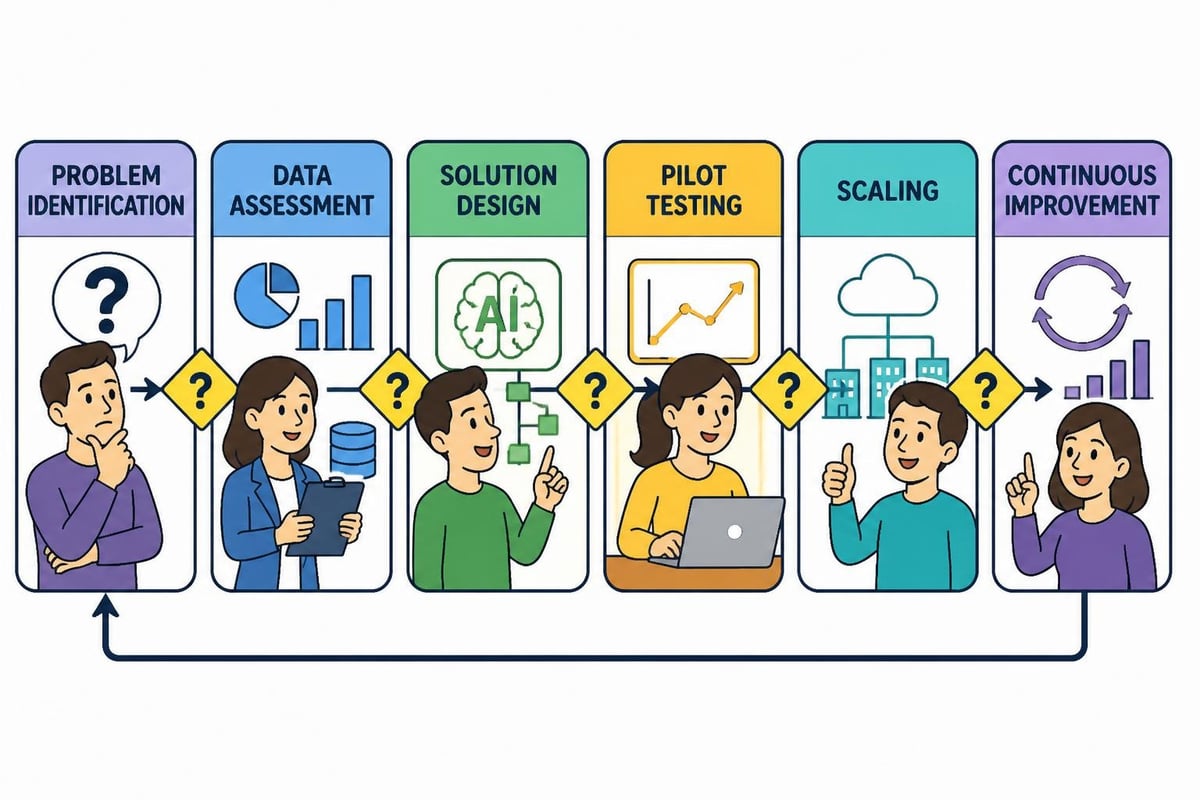
- Define a business problem with measurable success criteria
- Identify appropriate AI approaches based on available data and resources
- Design an implementation roadmap including timeline, budget, and team requirements
- Present recommendations to stakeholders using business language rather than technical jargon
- Develop monitoring frameworks for tracking performance after deployment
This methodology transforms passive learning into active problem-solving. Participants emerge with portfolio pieces demonstrating their ability to translate business needs into AI solutions. Organizations benefit from preliminary analysis of potential projects that may warrant full implementation.
Addressing Industry-Specific Use Cases
Generic AI training provides foundational knowledge, but industry-specific applications create immediate value. Organizations increasingly seek programs tailored to their sector's unique challenges and regulatory environments.
Manufacturing operations require specialized understanding of predictive maintenance, quality control through computer vision, and supply chain optimization. Training should address industrial IoT integration, sensor data interpretation, and production line automation without disrupting existing workflows.
Financial services professionals need expertise in algorithmic trading, risk modeling, customer segmentation, and fraud detection. Programs must cover regulatory compliance requirements, model explainability for auditors, and stress testing methodologies that satisfy supervisory bodies.
Healthcare organizations demand knowledge about diagnostic assistance, treatment personalization, administrative automation, and clinical decision support systems. Training must emphasize HIPAA compliance, patient privacy protection, and the ethical implications of AI in life-critical decisions.
Wharton's AI for Business program demonstrates how leading institutions incorporate real-life examples from multiple industries, allowing participants to extract relevant insights regardless of sector while understanding cross-industry patterns.
Leveraging Industry Partnerships and Labs
Forward-thinking educational institutions have established applied research labs where businesses collaborate with faculty and students on cutting-edge challenges. The University of Cincinnati's Applied AI Lab exemplifies this model by empowering learners to solve real-world problems while building expertise that immediately transfers to workplace environments.
These partnerships create unique opportunities for organizations to access emerging research, prototype innovative solutions at reduced cost, and evaluate potential hires through project collaboration. For learners, lab participation provides resume-building experience with tangible business impact.
Measuring Training ROI and Business Impact
Investing in professional development requires justification through measurable outcomes. Organizations pursuing an ai in business course should establish clear metrics before enrollment and track results systematically after completion.
| Success Metric | Measurement Approach | Timeline |
|---|---|---|
| Knowledge Retention | Pre/post assessments | Immediate |
| Project Completion | Implemented AI initiatives | 6-12 months |
| Efficiency Gains | Process automation metrics | 3-18 months |
| Revenue Impact | Attribution modeling | 12-24 months |
| Team Confidence | Employee surveys | Quarterly |
Immediate indicators include assessment scores, project completion rates, and participant feedback about relevance and applicability. These metrics confirm that learning objectives were met and content resonated with the target audience.
Medium-term outcomes track how many pilot projects emerge from training cohorts, what percentage advance to full implementation, and whether participants apply learned frameworks to business decisions. Organizations should document specific instances where training influenced strategic choices or prevented costly mistakes.
Long-term value manifests through competitive advantages, operational efficiencies, and innovation capabilities that compound over time. Companies may not attribute every success directly to training, but patterns emerge when educated teams consistently outperform peers in AI adoption and value creation.
Integrating AI Training With Organizational Change
Even the most comprehensive ai in business course delivers limited value without supporting organizational infrastructure. Successful companies embed learning within broader transformation initiatives that address culture, processes, and incentive structures.
Leadership commitment starts at the executive level, where visible participation in training programs signals importance to the entire organization. When C-suite members complete coursework alongside their teams, they gain credibility when championing AI initiatives and demonstrate that continuous learning applies to everyone.
Cross-functional collaboration breaks down silos that traditionally separate IT, operations, marketing, and finance. Organizations create innovation committees or AI steering groups that bring together trained professionals from different departments to identify opportunities and coordinate implementations.
Resource allocation follows education with budget, personnel, and technology infrastructure to support application of new skills. Training without implementation opportunities creates frustration and talent attrition as educated employees seek organizations ready to leverage their capabilities.
George Washington University's Business School emphasizes integrating AI with critical thinking and hands-on business experience, recognizing that technology deployment requires more than technical knowledge.
Building Internal Communities of Practice
After completing formal training, organizations benefit from establishing internal forums where practitioners share insights, troubleshoot challenges, and collaborate on projects. These communities might resemble the collaborative approach found at Talk Shop, where eCommerce professionals connect through Discord channels to solve problems and share real-world experience.
Regular knowledge-sharing sessions, internal case study presentations, and mentorship programs help sustain momentum after initial training concludes. Organizations might also encourage participation in external professional networks and conferences where employees encounter fresh perspectives and emerging best practices.
Navigating Ethical Considerations and Governance
Responsible AI deployment requires understanding far beyond technical capabilities. Training must address the ethical implications of algorithmic decision-making, bias in machine learning models, and governance frameworks that protect organizations while serving customers fairly.
Modern curricula incorporate these topics through dedicated modules on trustworthy AI principles. Programs examine real cases where inadequately governed AI systems produced discriminatory outcomes, privacy violations, or reputational damage. Harvard's AI Essentials for Business explores applications while emphasizing ethical implementation and risk management throughout the learning journey.
Establishing AI Governance Frameworks
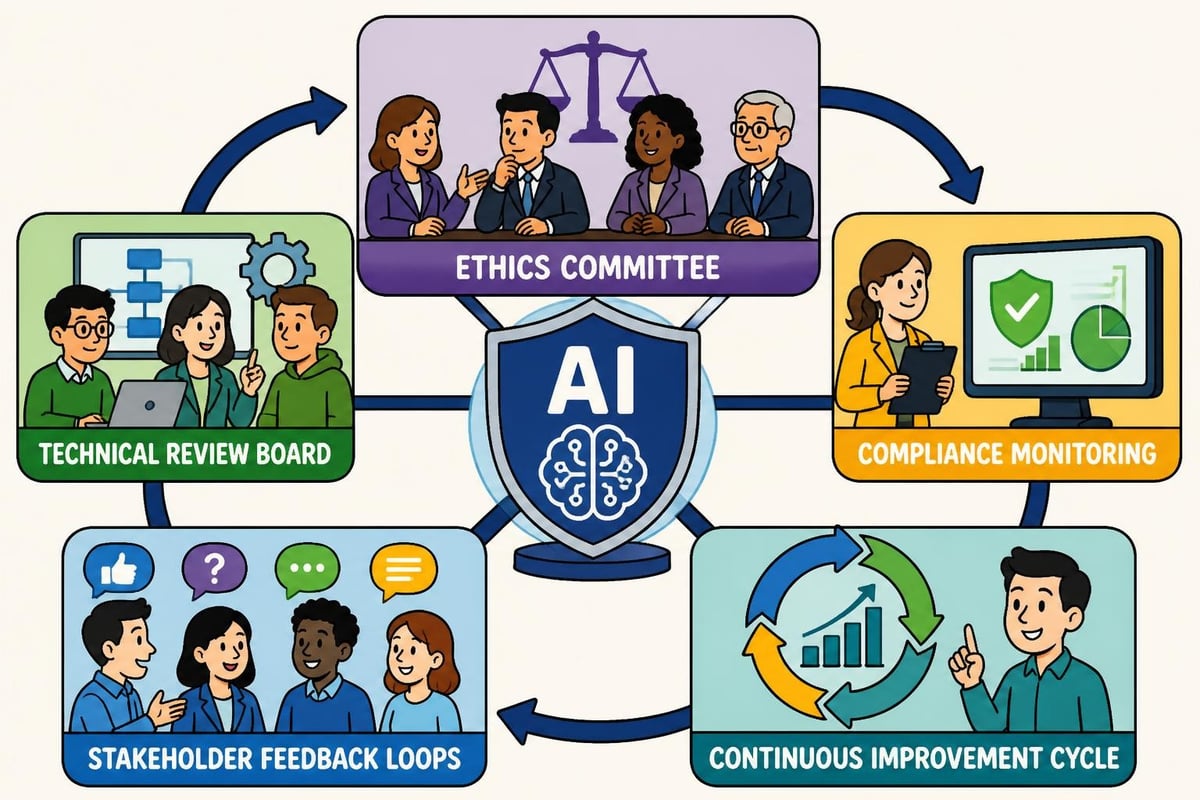
Organizations need structured approaches for evaluating AI projects before deployment, monitoring systems after launch, and responding when issues emerge. An effective ai in business course prepares participants to:
- Conduct algorithmic impact assessments that identify potential harms before systems go live
- Implement explainability requirements so stakeholders understand how decisions are made
- Design human oversight protocols that maintain accountability for automated processes
- Create feedback mechanisms allowing affected parties to challenge questionable decisions
- Document compliance with industry regulations and evolving legal standards
These governance capabilities become increasingly critical as AI touches more sensitive domains. The AI Assessment Catalog research provides guidelines for developing trustworthy AI applications with quality standards appropriate for business contexts.
Scaling AI Capabilities Across the Organization
Individual training creates pockets of expertise, but organizational transformation requires systematic capability-building across multiple layers. Companies pursuing competitive advantage through AI adopt multi-tier education strategies that reach everyone from the C-suite to front-line employees.
Executive education focuses on strategic vision, investment prioritization, and organizational change management. These condensed programs typically span several days and equip senior leaders to make informed decisions about AI direction without technical implementation details.
Managerial training provides the depth covered in most comprehensive business AI courses, preparing mid-level leaders to evaluate vendors, manage projects, and integrate AI into departmental operations. These programs balance technical understanding with practical application over weeks or months.
Technical upskilling serves employees who will work directly with AI tools, requiring hands-on experience with specific platforms and technologies. Data analysts, marketing specialists, and operations managers benefit from role-specific training that builds on general AI literacy.
Organization-wide awareness ensures every employee understands basic AI concepts, recognizes opportunities for automation, and adapts to changing workflows as intelligent systems augment human capabilities.
For those seeking comprehensive learning ecosystems, exploring MammothClub's extensive AI course catalog reveals the breadth of options available for different roles and skill levels, from foundational awareness to advanced technical specialization.
Leveraging Certification Programs for Credibility
Professional certifications provide third-party validation of AI business competencies, supporting career advancement while giving organizations confidence in employee capabilities. The certification landscape has matured considerably, with offerings from universities, technology vendors, and professional associations.
University certificates typically require completing multiple courses over several months, culminating in projects or exams that demonstrate mastery. These credentials carry academic weight and often satisfy continuing education requirements for professional licenses.
Vendor certifications focus on specific platforms and technologies, preparing professionals to implement solutions using particular tools. While narrower in scope than academic programs, these credentials prove valuable for organizations committed to specific technology stacks.
Professional association certifications often emphasize governance, ethics, and strategic application rather than technical implementation. These credentials appeal to consultants, executives, and policy professionals who shape AI adoption without hands-on development work.
Organizations should consider how various credentials align with career paths and strategic objectives. Some roles benefit from broad business-focused certifications, while specialized positions require platform-specific technical credentials. For comprehensive certification guidance, resources like best AI courses available help navigate the crowded marketplace.
Staying Current in a Rapidly Evolving Field
Artificial intelligence advances at extraordinary speed, with new capabilities, tools, and best practices emerging continuously. One-time training becomes outdated quickly without commitment to ongoing learning and skill refreshment.
Leading organizations establish continuous learning cultures where AI education never truly concludes. This might include:
- Quarterly updates covering new developments, emerging tools, and evolving regulatory requirements
- Learning stipends allowing employees to pursue additional courses, conferences, or certifications
- Internal innovation time for experimenting with new technologies and sharing discoveries
- External speaker series bringing practitioners and researchers to share cutting-edge insights
- Cross-industry study groups where professionals from different sectors exchange perspectives
The personal development approach exemplified by platforms like DoReset demonstrates how structured, ongoing learning creates lasting transformation rather than temporary skill acquisition. Organizations can apply similar principles to professional development, creating systematic 90-day learning cycles that build upon previous knowledge while introducing new competencies.
Addressing Common Implementation Challenges
Even well-educated teams encounter obstacles when translating training into business results. Recognizing common challenges allows organizations to proactively develop mitigation strategies.
Data availability and quality often present the first major hurdle. AI models require substantial training data, yet many organizations lack the data infrastructure, governance, or cleanliness necessary for effective implementations. An ai in business course should prepare participants for these realities while teaching techniques for working with imperfect datasets.
Legacy system integration complicates AI deployment in established organizations where decades-old infrastructure must communicate with modern intelligent systems. Training should address architectural considerations, API strategies, and phased migration approaches that minimize disruption.
Talent competition intensifies as every organization pursues AI capabilities simultaneously. Smaller companies struggle to compete with technology giants for specialized talent. Education helps by enabling organizations to develop capabilities internally rather than relying entirely on external recruitment.
Change resistance emerges when employees fear that automation threatens their roles. Effective training addresses these concerns directly, positioning AI as augmentation rather than replacement and identifying how human-machine collaboration creates new opportunities.
Research examining AI's impact on business models provides academic grounding for understanding how these technologies reshape industries, offering frameworks that help organizations anticipate changes rather than merely reacting to disruption.
Comparing Top AI Business Training Providers
Organizations evaluating options should compare providers across multiple dimensions beyond curriculum content. Delivery format, instructor credentials, peer quality, and post-completion support significantly influence learning outcomes.
University programs offer academic rigor, research access, and networking with diverse professionals pursuing similar goals. The credential carries institutional prestige but typically requires greater time commitment and higher cost than alternative formats.
Business school executive education compresses learning into intensive formats designed for busy professionals. These programs emphasize practical application and peer learning among experienced managers facing similar challenges.
Online platforms provide flexibility and affordability while sacrificing some networking benefits. Quality varies enormously, from world-class institutions offering degree programs remotely to superficial courses providing certificates without meaningful skill development.
Corporate training providers customize content for specific organizational needs, delivering programs on-site or through dedicated cohorts. This approach maximizes relevance but may limit exposure to external perspectives and cross-industry insights.
Organizations should evaluate sample syllabi, instructor backgrounds, alumni outcomes, and preview materials before committing resources. Platforms like MammothClub's AI course offerings aggregate options from multiple providers, helping decision-makers compare alternatives efficiently.
Future-Proofing Skills for the AI Era
The artificial intelligence landscape of 2026 differs dramatically from even three years ago, and the next three years will bring equally profound changes. Organizations investing in an ai in business course today must ensure the learning provides durable frameworks rather than soon-obsolete technical details.
Foundational concepts like supervised learning, neural network architectures, and natural language processing remain relevant even as specific tools evolve. Training emphasizing these fundamentals creates adaptable professionals who can incorporate new technologies as they emerge.
Strategic thinking skills transcend particular AI implementations, enabling leaders to evaluate opportunities, assess risks, and make informed decisions regardless of which specific technologies dominate any given moment.
Ethical frameworks become increasingly important as AI touches more sensitive domains and regulatory scrutiny intensifies. Professionals grounded in governance principles can navigate future compliance requirements more easily than those focused solely on technical capabilities.
Learning agility matters more than static knowledge in rapidly evolving fields. The most valuable training teaches people how to learn continuously, evaluate new information critically, and experiment productively with emerging tools.
Organizations should view initial training as the foundation for ongoing development rather than a complete solution. Combining structured programs with continuous learning opportunities creates teams capable of sustained innovation and adaptation.
Pursuing an ai in business course represents strategic investment in organizational capability, competitive positioning, and future readiness. The right program builds practical skills while establishing frameworks for ethical deployment and continuous improvement. Whether your organization needs executive awareness, managerial competency, or team-wide transformation, MammothClub offers 3,000+ on-demand courses, interactive bootcamps, and corporate certification programs that make AI training engaging, measurable, and results-driven for professionals at every level.