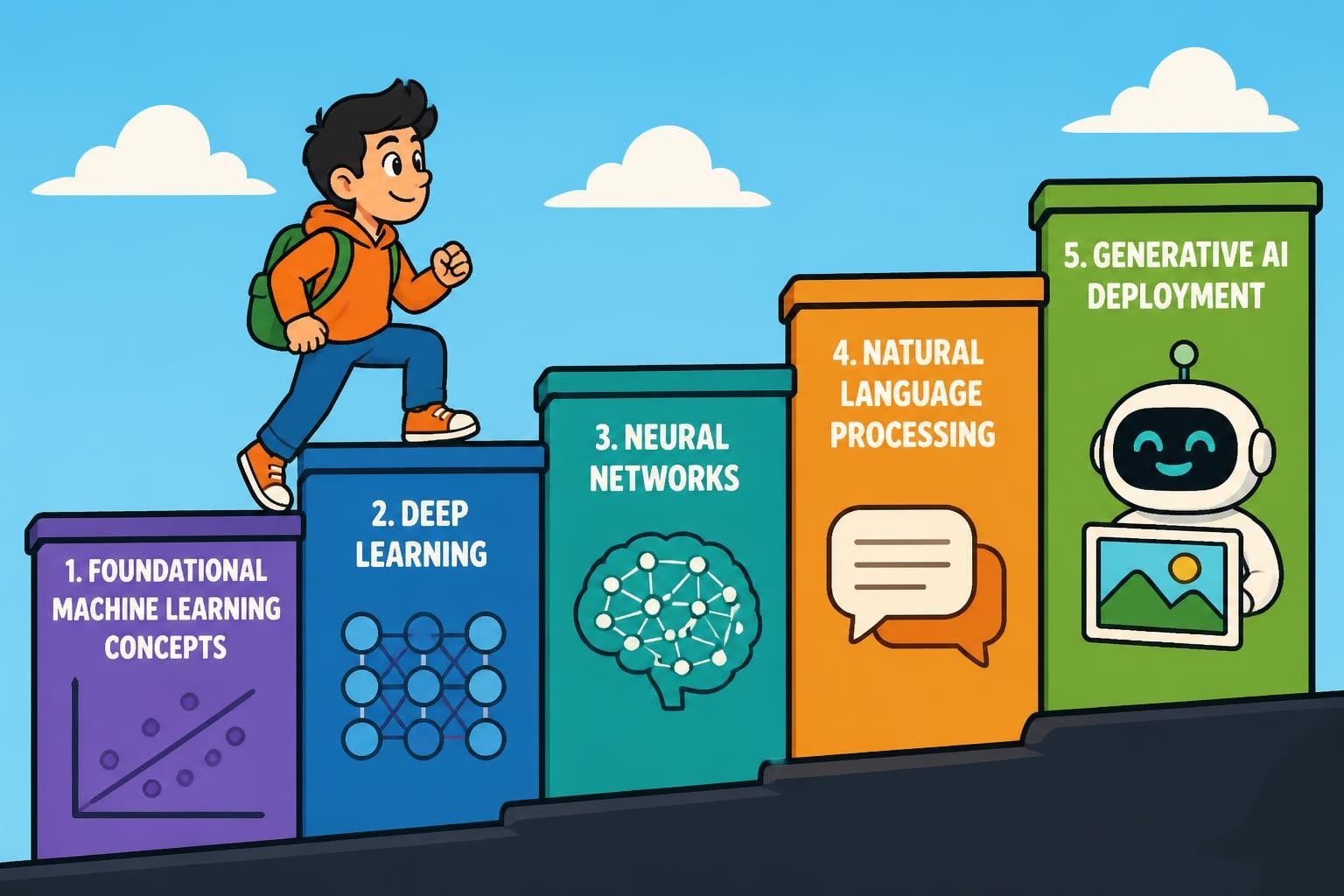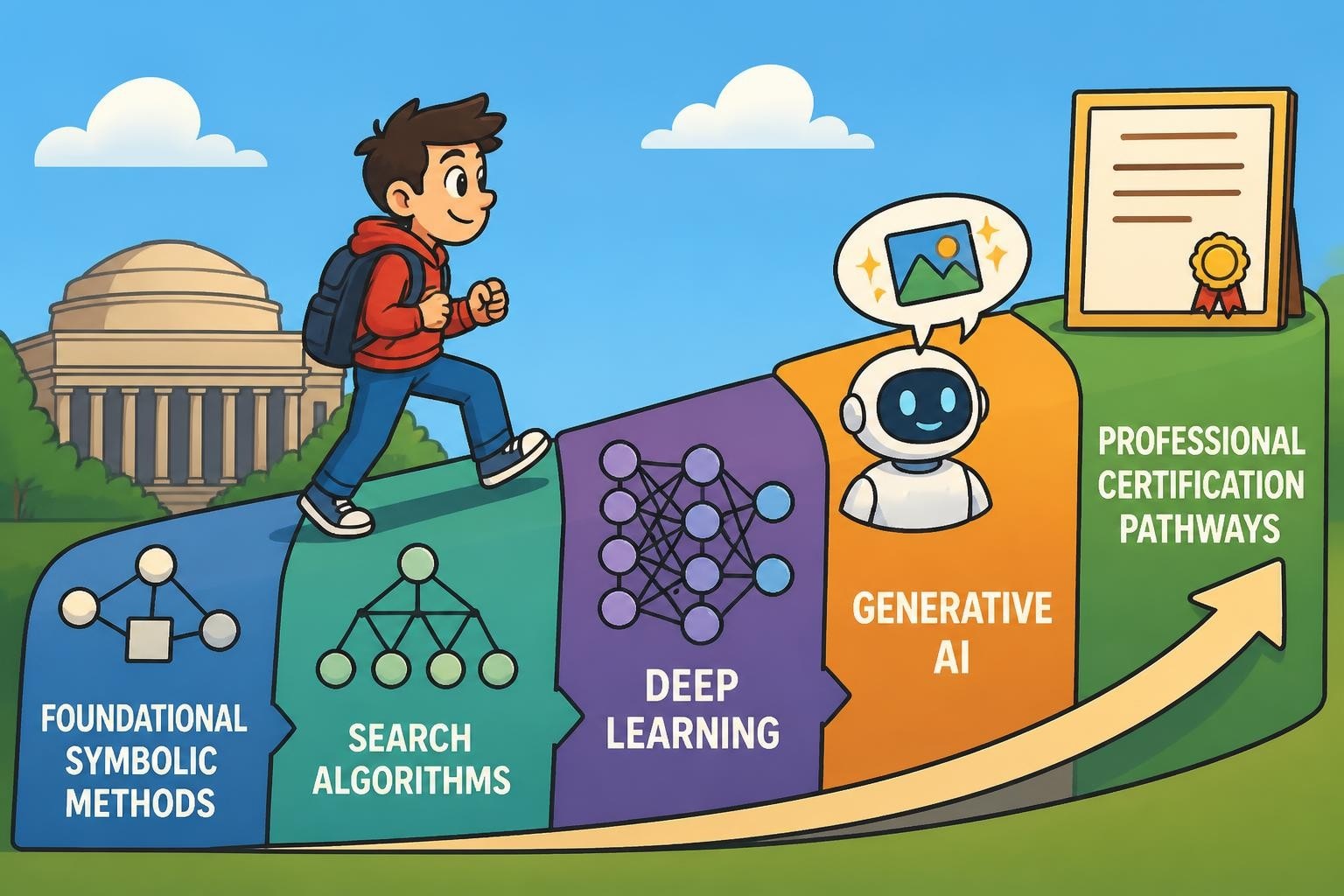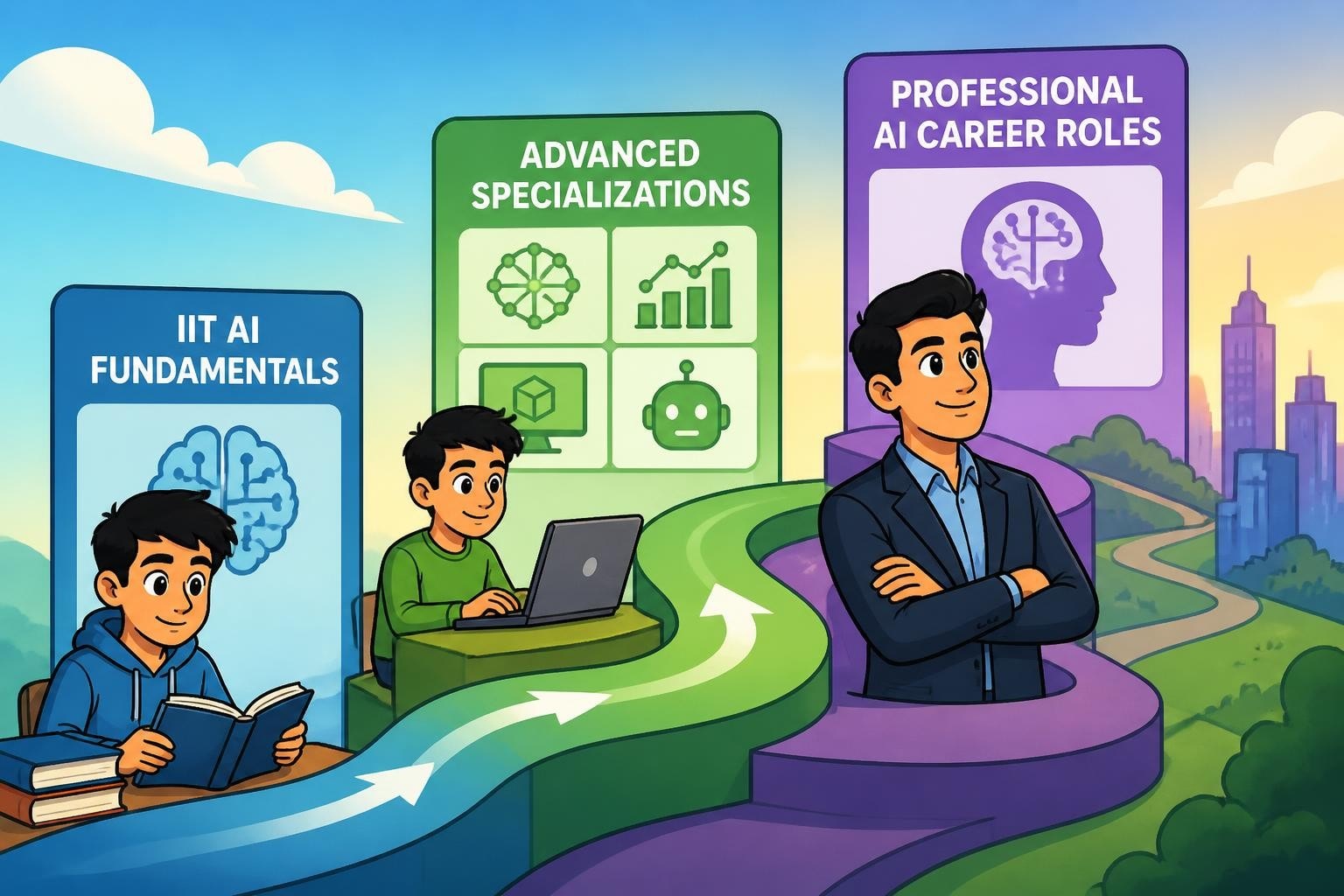
The artificial intelligence and machine learning landscape has transformed dramatically, creating unprecedented demand for skilled professionals who can build, deploy, and manage intelligent systems. As organizations race to integrate AI into their operations, finding the right aiml course online has become a critical career decision that can determine your trajectory in this rapidly evolving field. Whether you're a software developer expanding into AI, a data analyst transitioning to machine learning, or a business professional seeking to understand AI's strategic implications, online learning platforms now offer comprehensive pathways that can take you from foundational concepts to advanced implementation skills.
Understanding the AIML Learning Landscape in 2026
The artificial intelligence and machine learning education ecosystem has matured significantly, with online platforms offering structured curricula that rival traditional university programs. An effective aiml course online combines theoretical foundations with hands-on practice, covering everything from supervised and unsupervised learning to neural networks, natural language processing, and computer vision.
What Makes a Quality AIML Course
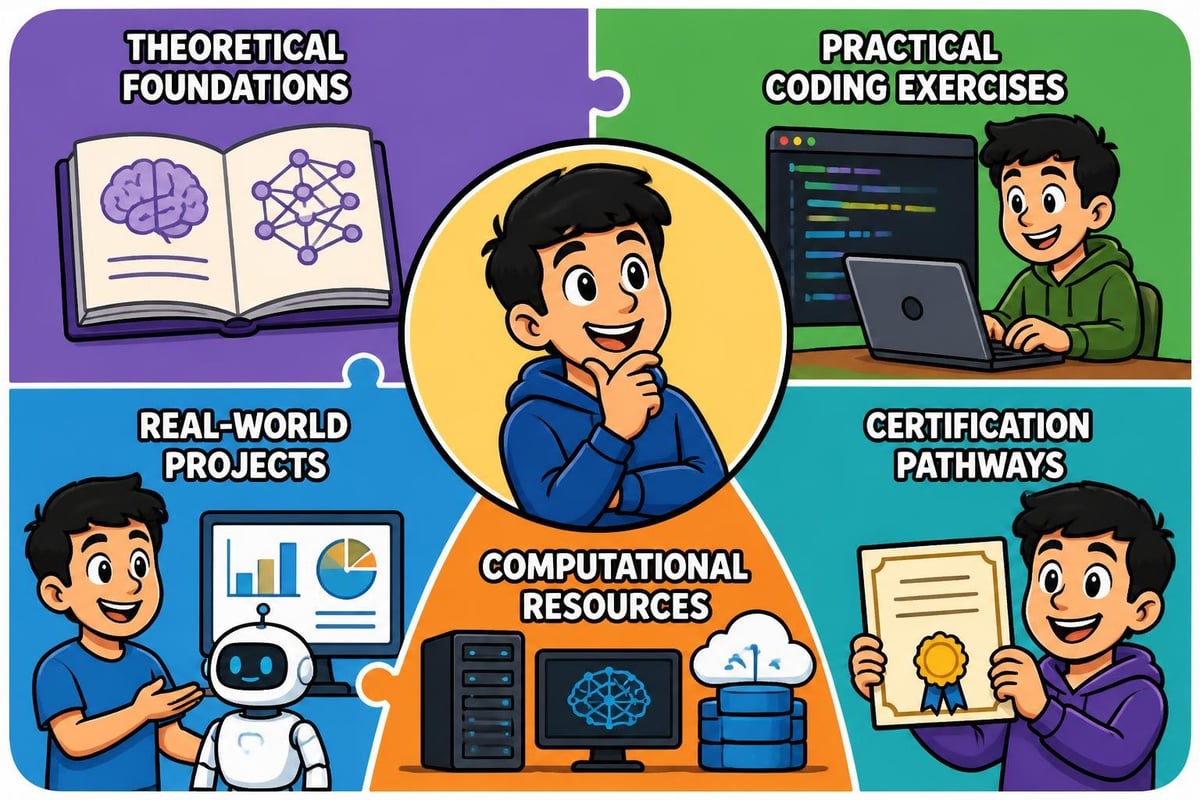
Quality AIML education requires more than video lectures and multiple-choice quizzes. The best programs integrate several critical components that ensure you develop job-ready skills:
- Project-based learning that mirrors real-world challenges
- Access to computational resources including cloud-based environments and GPU infrastructure
- Current frameworks and tools like TensorFlow, PyTorch, scikit-learn, and Keras
- Industry-recognized certifications that validate your competencies to employers
- Community support through forums, peer collaboration, and mentor access
Modern platforms have evolved beyond static content delivery. Interactive coding environments, automated feedback systems, and AI-powered learning assistants now personalize the educational experience based on your progress and learning style.
Core Topics Covered in Comprehensive Programs
When evaluating an aiml course online, examine the curriculum depth across fundamental and advanced topics. A complete learning path typically progresses through these stages:
| Learning Stage | Key Topics | Typical Duration |
|---|---|---|
| Foundations | Python programming, statistics, linear algebra, calculus | 4-8 weeks |
| Machine Learning Basics | Regression, classification, clustering, model evaluation | 6-10 weeks |
| Advanced ML | Ensemble methods, dimensionality reduction, feature engineering | 4-6 weeks |
| Deep Learning | Neural networks, CNNs, RNNs, transformers, GANs | 8-12 weeks |
| Specialization | NLP, computer vision, reinforcement learning, MLOps | 6-10 weeks |
The AI ML learning path varies based on your background and goals, but understanding this progression helps you select courses that match your current skill level and career objectives.
Selecting the Right AIML Course for Your Career Goals
Not all aiml course online options serve the same audience or professional objectives. Your choice should align with your current role, target position, and learning preferences.
For Career Switchers and Beginners
If you're new to programming or technical fields, seek courses that start with programming fundamentals before diving into algorithms. Programs like The Elements of AI provide accessible introductions that build confidence before tackling mathematical concepts.
Beginner-friendly courses typically include:
- Extended programming modules with step-by-step guidance
- Visual explanations of complex mathematical concepts
- Gradual progression from simple to complex algorithms
- Career counseling and transition support
- Extended timelines that accommodate full-time work schedules
MammothClub's AI beginner course offerings provide structured onboarding for professionals without technical backgrounds, using scaffolded learning that builds competence systematically.
For Technical Professionals Upskilling
Software engineers, data analysts, and IT professionals often need focused training that accelerates through basics and emphasizes implementation. Universities like MIT and Stanford offer rigorous programs that assume programming proficiency and dive directly into algorithmic complexity.
These intensive programs feature:
- Advanced mathematical treatments of optimization, probability, and information theory
- Research paper discussions covering cutting-edge developments
- Scalability considerations for production deployment
- Architecture patterns for building robust ML systems
Technical professionals should also consider specialized AI certifications that validate expertise in specific technologies like Azure, AWS, or Google Cloud AI services.
Platform Comparison and Learning Modalities
The delivery format significantly impacts learning outcomes. Different platforms excel in different areas, and understanding these strengths helps you make informed choices.
University-Affiliated Programs vs. Commercial Platforms
Academic institutions like Harvard Extension School and UC San Diego Extended Studies offer rigorous, research-informed curricula with credentialing that carries academic weight. These programs typically feature:
- Faculty with active research portfolios
- Connections to cutting-edge developments
- Graduate-level credit options
- Higher price points ($5,000-$25,000)
- Fixed schedules and cohort-based learning
Commercial platforms like edX combine university content with flexible delivery, while dedicated training platforms provide more frequent content updates reflecting industry changes.
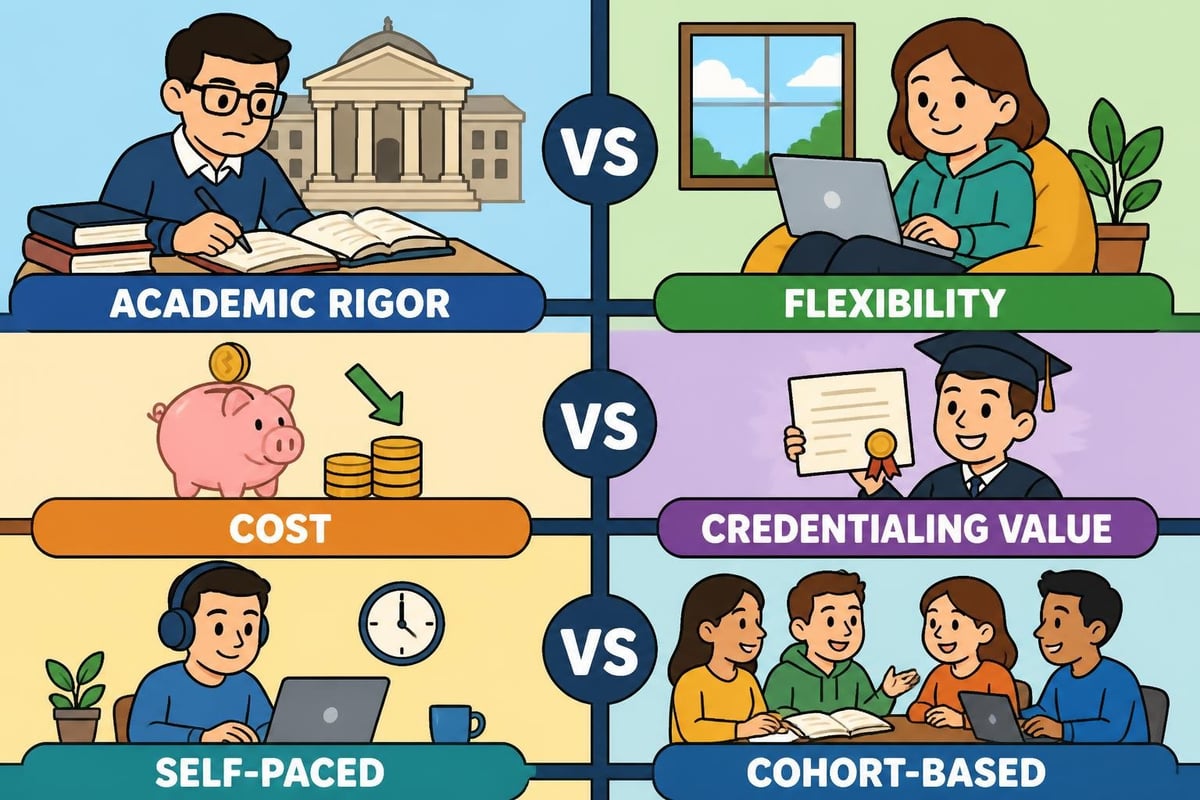
Self-Paced vs. Cohort-Based Learning
Your learning style and schedule constraints should guide format selection:
| Format | Advantages | Best For |
|---|---|---|
| Self-Paced | Flexible scheduling, pause/resume capability, personalized pace | Working professionals, irregular schedules, self-motivated learners |
| Cohort-Based | Peer accountability, networking, scheduled deadlines, live interaction | Career switchers, those needing structure, collaborative learners |
| Bootcamp | Intensive immersion, rapid skill acquisition, career services | Job seekers, career changers, those with time to dedicate |
| Corporate Programs | Team alignment, customized content, group certification | Organizations upskilling teams, leadership development |
MammothClub's platform accommodates both modalities, offering on-demand courses for independent learners and interactive bootcamps for those who thrive with structure and community support.
Certification Pathways and Career Impact
Completing an aiml course online is just the beginning. Certification demonstrates competency to employers and clients, but not all credentials carry equal weight in the job market.
Industry-Recognized Certifications
Technology companies have established certification programs that validate specific platform competencies. These credentials prove you can build, deploy, and maintain AI systems using particular tools and services:
- Microsoft Azure AI certifications covering cognitive services and ML operations
- AWS Machine Learning Specialty demonstrating cloud-based ML implementation
- Google Professional Machine Learning Engineer validating end-to-end ML workflow expertise
- NVIDIA certifications focused on GPU-accelerated computing and deep learning
The Microsoft AI certification course and NVIDIA AI certification pathways are particularly valuable for professionals working in enterprise environments where these technologies dominate.
Academic vs. Professional Credentials
Graduate certificates from institutions like Harvard provide academic credentials that may satisfy educational requirements for certain positions or graduate school applications. These programs typically require:
- Completion of 4-6 courses over 12-24 months
- Maintenance of minimum GPA standards
- Capstone projects demonstrating applied competency
- Investment of $10,000-$25,000 in tuition
Professional certifications from vendors and training platforms cost less ($300-$3,000) and can be completed faster (2-6 months) but may not carry academic credit. Choose based on your specific career objectives and credentialing needs.
Building Practical Skills Through Projects
Theory without application creates knowledge gaps that become apparent during technical interviews and on-the-job performance. The most effective aiml course online programs emphasize hands-on project work that simulates professional scenarios.
Essential Project Types
Your portfolio should demonstrate capability across diverse problem domains:
Supervised Learning Projects:
- Predictive modeling for business metrics (sales forecasting, customer churn)
- Classification problems (fraud detection, sentiment analysis, image recognition)
- Regression tasks (price prediction, demand forecasting)
Unsupervised Learning Projects:
- Customer segmentation using clustering algorithms
- Anomaly detection in system logs or transaction data
- Dimensionality reduction for visualization and feature engineering
Deep Learning Applications:
- Computer vision tasks (object detection, facial recognition, medical imaging)
- Natural language processing (chatbots, text generation, language translation)
- Time series forecasting (stock prices, energy consumption, weather prediction)
MammothClub's interactive bootcamps include industry-realistic projects that require you to manage the complete ML lifecycle, from problem definition and data collection through model deployment and monitoring.
Technical Infrastructure and Tools
Understanding the computational requirements and tool ecosystem is essential before starting an aiml course online. Modern machine learning requires specific technical capabilities that your learning platform should provide or guide you in setting up.
Required Technical Stack
Programming Languages and Frameworks:
- Python remains the dominant language, with libraries like NumPy, pandas, and matplotlib for data manipulation
- TensorFlow and PyTorch for deep learning development
- scikit-learn for traditional machine learning algorithms
- R for statistical computing in certain domains
Development Environments:
- Jupyter Notebooks for exploratory analysis and documentation
- Integrated Development Environments (PyCharm, VS Code) for production code
- Version control systems (Git) for code management
- Cloud-based notebooks (Google Colab, Kaggle Kernels) for GPU access
The GPU for AI training discussion becomes relevant as you progress to deep learning, where computational demands exceed typical laptop capabilities. Quality courses provide cloud-based GPU resources, eliminating the need for expensive hardware investments during learning.
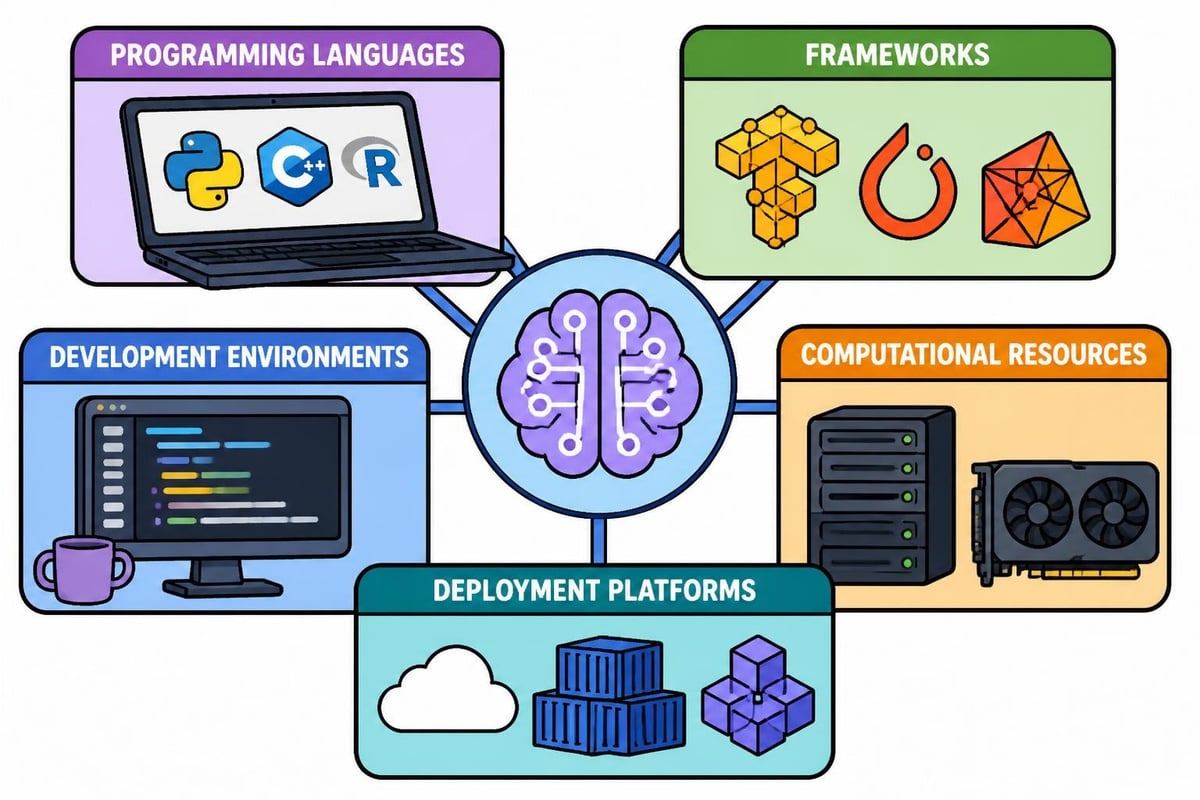
Cloud Platform Integration
Production AI systems operate in cloud environments, making cloud literacy essential. Modern aiml course online programs integrate:
- Infrastructure as Code for reproducible environments
- Containerization using Docker for consistent deployments
- MLOps pipelines automating training, testing, and deployment
- Model monitoring tracking performance degradation and drift
Understanding these operational aspects separates hobbyists from professionals capable of delivering business value. The AI ML full course approach encompasses these production considerations, not just algorithm development.
Specialized AIML Domains and Career Paths
As you advance beyond fundamentals, specialization opens doors to high-value roles in specific industries and application domains.
High-Demand Specializations
Different specializations command varying compensation levels and have distinct educational requirements:
| Specialization | Key Skills | Industry Demand | Average Salary Range |
|---|---|---|---|
| Computer Vision | CNNs, object detection, image segmentation | Healthcare, automotive, retail | $120K-$180K |
| Natural Language Processing | Transformers, sentiment analysis, LLMs | Technology, finance, customer service | $130K-$190K |
| Reinforcement Learning | Policy optimization, Q-learning, game theory | Robotics, finance, autonomous systems | $140K-$200K |
| MLOps | CI/CD, monitoring, containerization | All industries | $110K-$160K |
| AI Ethics & Governance | Fairness metrics, bias detection, compliance | Regulated industries | $100K-$150K |
The AI specialization courses you choose should align with your target industry and the problems you find most compelling. Research which companies and sectors invest heavily in your chosen specialization.
Industry-Specific Applications
Vertical expertise adds significant value to technical skills. Consider supplementing general aiml course online education with domain-specific knowledge:
Healthcare AI requires understanding regulatory requirements (HIPAA, FDA approval for medical devices), medical imaging standards, and clinical workflows. AI ethics courses become particularly relevant given the life-or-death implications of medical AI decisions.
Financial AI demands knowledge of market dynamics, regulatory compliance (FINRA, SEC), risk management, and the unique challenges of time-series data in non-stationary environments.
Robotics and autonomous systems combine AI with mechanical engineering, control theory, and real-time computing, as covered in specialized robotics AI courses.
Learning Strategy and Time Management
Successfully completing an aiml course online while managing professional and personal responsibilities requires strategic planning and disciplined execution.
Effective Study Approaches
Research on adult learning and technical skill acquisition suggests these evidence-based strategies:
- Spaced repetition reviewing concepts at increasing intervals rather than cramming
- Active recall testing yourself rather than passive re-reading
- Interleaving mixing different topics rather than blocking by subject
- Elaborative interrogation asking "why" and "how" questions about concepts
- Concrete examples connecting abstract theory to specific applications
The typical professional dedicating 10-15 hours weekly can complete a comprehensive aiml course online in 4-6 months. Those with more time can accelerate, while career professionals often extend timelines to 6-12 months.
Overcoming Common Learning Obstacles
Mathematical Anxiety: Many professionals feel intimidated by the calculus, linear algebra, and statistics underlying machine learning. Focus on intuition first, formal proofs second. Tools like Wolfram U provide computational approaches that build understanding through visualization and experimentation.
Impostor Syndrome: The rapid pace of AI advancement creates persistent feelings that you're falling behind. Remember that comprehensive understanding of fundamentals provides adaptability as specific techniques evolve.
Project Paralysis: Starting projects from scratch can feel overwhelming. Use structured assignments and gradually increase autonomy as confidence builds.
Investment ROI and Pricing Models
The financial investment in an aiml course online varies dramatically based on format, provider, and credential type. Understanding pricing models helps you budget appropriately and evaluate value.
Cost Comparison Across Providers
Free Resources: Platforms like Elements of AI and university opencourseware provide foundational knowledge at no cost but typically lack certification, personalized feedback, or career support.
Subscription Models: Monthly subscriptions ($30-$100/month) provide access to course libraries, allowing you to sample different topics and learn at your own pace. MammothClub's pricing offers unlimited access to 3,000+ courses through affordable subscription tiers.
Course-by-Course Purchase: Individual courses range from $50-$500, providing lifetime access to specific content without ongoing subscription costs.
Bootcamps and Intensive Programs: Structured bootcamps cost $5,000-$20,000 but include career services, mentorship, and cohort-based learning that accelerates skill development.
University Programs: Academic certificates and degrees range from $10,000-$50,000 but offer formal credentials and potential graduate school pathways.
Calculating Career ROI
The median salary for machine learning engineers in 2026 exceeds $140,000, with experienced professionals in major tech hubs earning $180,000-$250,000. Even modest salary increases of $20,000-$40,000 quickly justify educational investments under $10,000.
Consider these factors when evaluating ROI:
- Time to completion and opportunity cost of delayed career advancement
- Certification value in your target industry and geography
- Employer tuition reimbursement or professional development budgets
- Tax deductibility of education expenses for career enhancement
Corporate Training and Team Development
Organizations increasingly recognize that AI competency must extend beyond isolated specialists to entire teams. Corporate aiml course online programs serve different needs than individual learning paths.
Enterprise Learning Platforms
Companies deploying AI at scale require standardized training that ensures consistent competencies across teams. MammothClub's business solutions provide:
- Customized learning paths aligned with organizational AI strategy
- Team dashboards tracking progress and identifying skill gaps
- Bulk licensing reducing per-learner costs
- Integration with learning management systems and HR platforms
- Private cohorts maintaining confidentiality around proprietary applications
The AI management courses category addresses leadership needs, helping executives and managers understand AI capabilities, limitations, and strategic implications without requiring deep technical expertise.
Building Internal AI Capabilities
Organizations face a build-versus-buy decision regarding AI talent. Training existing employees offers advantages:
- Deep institutional knowledge applied to AI solutions
- Higher retention rates than external hiring
- Cultural fit and established team dynamics
- Lower total compensation costs in tight talent markets
Research from ArXiv on human-centered AI emphasizes the importance of interdisciplinary teams where domain experts collaborate with technical specialists to build systems that truly serve user needs.
Emerging Trends in AIML Education
The artificial intelligence field evolves rapidly, and educational approaches must adapt to prepare learners for future demands rather than yesterday's technologies.
Generative AI and Large Language Models
The 2022-2026 period witnessed explosive growth in generative AI applications, fundamentally changing the skills employers seek. Modern aiml course online programs now include:
- Prompt engineering and effective interaction with foundation models
- Fine-tuning techniques for domain-specific applications
- Retrieval-augmented generation (RAG) architectures
- Evaluation frameworks for generative model outputs
- Cost optimization strategies for API-based models
MammothClub's Complete AI Prompt Engineering & Automation Bundle addresses the growing need for professionals who can leverage existing models rather than building from scratch.
No-Code and Low-Code AI Tools
Democratization of AI extends capabilities to business users without programming backgrounds. No-code AI courses teach professionals to build intelligent applications using visual interfaces and pre-built components, expanding the talent pool beyond traditional technical roles.
Responsible AI and Ethics Integration
As AI systems make increasingly consequential decisions, understanding bias, fairness, transparency, and accountability becomes essential. Progressive courses integrate ethical considerations throughout rather than treating ethics as a standalone module, helping you develop reflexive practices that anticipate social implications.
Maximizing Learning Outcomes
Completion rates for online courses average only 5-15%, making completion itself an achievement that demonstrates discipline and commitment. These strategies improve your probability of success:
Create Environmental Cues: Establish dedicated study spaces and times that signal your brain to enter learning mode. Consistency builds automaticity.
Join Study Groups: Even in self-paced courses, forming peer accountability groups through forums, Slack channels, or local meetups increases motivation and provides diverse perspectives on challenging concepts.
Teach Others: Explaining concepts to peers or creating blog posts documenting your learning reinforces understanding and identifies gaps in your knowledge.
Build in Public: Share projects on GitHub, participate in Kaggle competitions, and contribute to open-source projects to gain visibility and feedback from the broader community.
Connect Theory to Practice: For every algorithm learned, identify a real-world application in your current role or industry, even if you can't implement it immediately.
Credential Stacking and Continuous Learning
AI expertise isn't a destination but an ongoing journey. Technology evolution, algorithm improvements, and new application domains emerge constantly, requiring continuous skill development.
Building a Learning Portfolio
Rather than pursuing a single comprehensive credential, consider accumulating focused certifications that demonstrate breadth and depth:
- Foundational certification establishing ML competency
- Cloud platform certification proving deployment capabilities
- Specialization certification in your target domain (NLP, computer vision, etc.)
- Advanced certification in MLOps or production systems
- Leadership certification for management career paths
This approach provides flexibility to pivot as market demands shift while building a comprehensive profile that signals both technical capability and commitment to growth.
Staying Current with Research and Practice
The gap between academic research and industry practice has narrowed dramatically. Professionals can now access cutting-edge developments through:
- ArXiv preprints providing immediate access to research papers
- Conference recordings from NeurIPS, ICML, CVPR, and ACL
- Company engineering blogs detailing production systems
- Podcast interviews with researchers and practitioners
- Open-source implementations of recent papers
Allocating 2-3 hours weekly to consuming current developments keeps your skills relevant and provides early awareness of techniques entering mainstream practice.
Choosing the right aiml course online in 2026 requires matching educational offerings to your career goals, learning style, and current skill level while considering the ROI of various credential types. The best programs combine rigorous theoretical foundations with hands-on practice, industry-relevant tools, and pathways to recognized certifications that validate your competencies to employers. Whether you're beginning your AI journey or specializing in advanced domains, structured learning accelerates your progress and provides the comprehensive understanding needed for long-term career success. MammothClub offers 3,000+ on-demand courses, interactive bootcamps, and corporate certification programs designed to help professionals and organizations build AI competencies efficiently, with AI-powered learning tools that personalize your educational experience and track measurable outcomes for sustained career advancement.