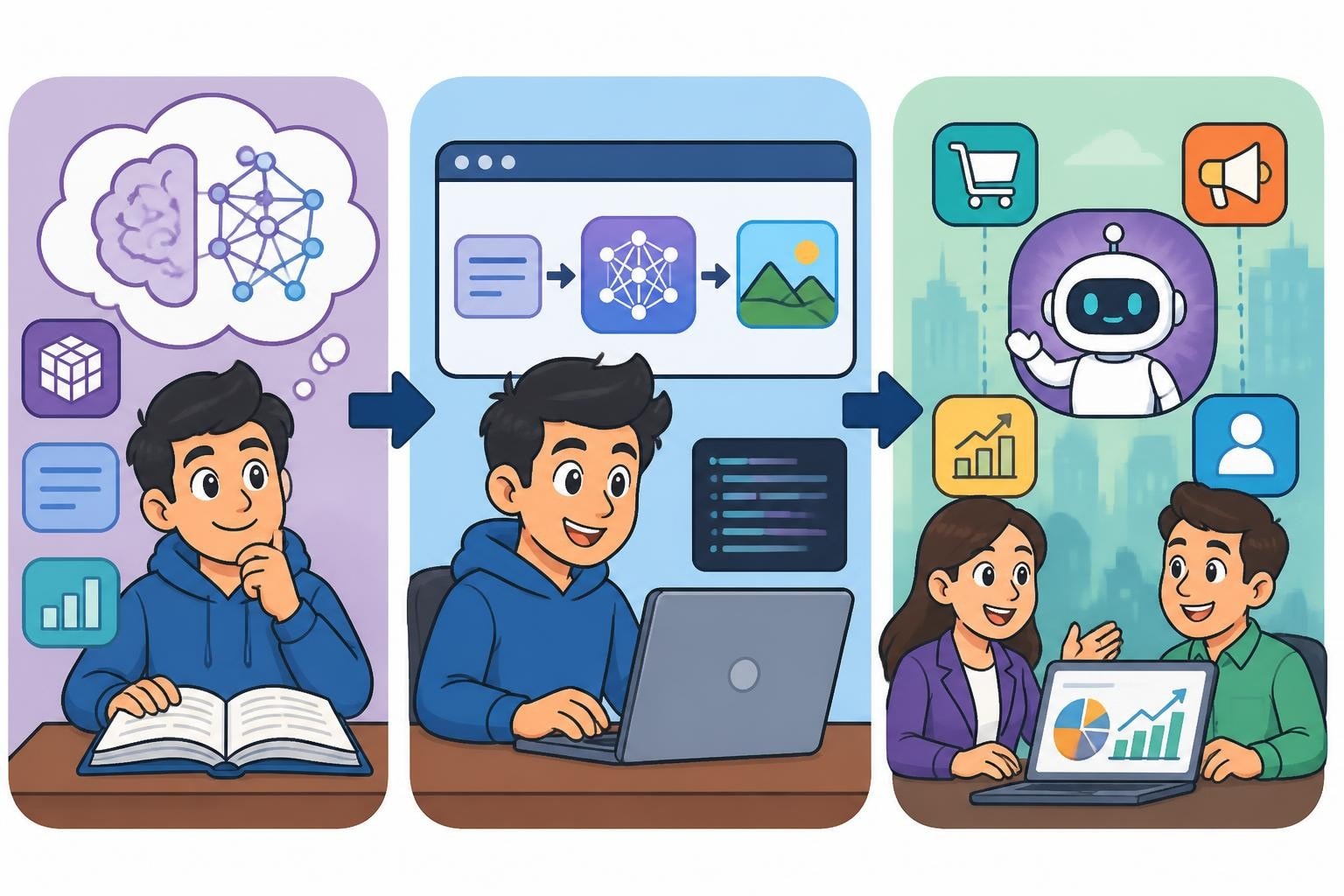
The intersection of robotics and artificial intelligence represents one of the most transformative technological frontiers of our time. As industries increasingly adopt autonomous systems, the demand for professionals who can design, program, and deploy intelligent robots has surged dramatically. Whether you're a software engineer looking to specialize, a recent graduate exploring career paths, or a business leader seeking to upskill your team, understanding what a robotics ai course offers can open doors to exciting opportunities in automation, manufacturing, healthcare, and beyond.
Understanding the Robotics AI Landscape
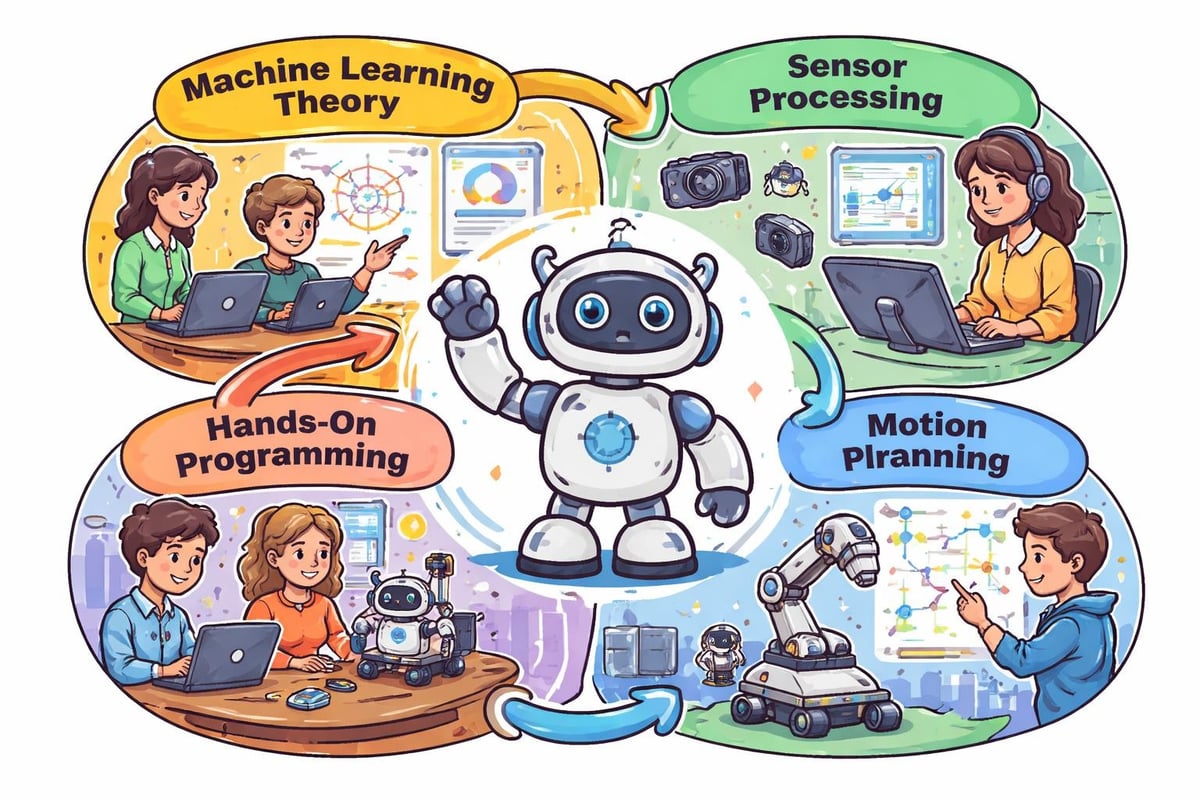
The field of robotics AI combines mechanical engineering, computer science, machine learning, and control systems into a cohesive discipline. A robotics ai course typically bridges theoretical knowledge with practical applications, ensuring learners can translate algorithms into real-world robotic behaviors.
Modern robotics education has evolved significantly from traditional industrial automation programs. Today's curricula emphasize adaptive learning systems, where robots can modify their behavior based on environmental feedback. This shift mirrors broader industry trends toward collaborative robots (cobots) and autonomous vehicles that must navigate unpredictable scenarios.
Core Components of Robotics AI Education
A comprehensive robotics ai course covers several foundational areas that professionals must master:
- Machine learning for perception: Teaching robots to interpret sensor data through computer vision and lidar processing
- Motion planning and control: Algorithms that enable safe, efficient movement through complex environments
- Reinforcement learning: Training robots through trial-and-error to optimize performance on specific tasks
- Natural language processing: Allowing robots to understand and respond to human commands
- Edge computing: Running AI models directly on robotic hardware for real-time decision making
The MIT hands-on robotics course focused on visual navigation exemplifies how academic institutions structure learning around practical challenges. Students work with actual autonomous vehicles, programming navigation systems that must interpret visual data in real time.
Technical Skills Developed in Robotics AI Programs
Professional robotics education goes far beyond basic programming. Participants in a robotics ai course develop a sophisticated technical toolkit that spans multiple disciplines.
Programming Languages and Frameworks
| Language/Framework | Primary Use Case | Industry Adoption |
|---|---|---|
| Python | Machine learning models, rapid prototyping | Very High |
| C++ | Real-time control systems, performance-critical code | High |
| ROS (Robot Operating System) | Robot middleware, sensor integration | Very High |
| TensorFlow/PyTorch | Deep learning model development | Very High |
| MATLAB/Simulink | Control system design, simulation | Medium-High |
Python dominates the field due to its extensive libraries for AI and machine learning, though C++ remains essential for embedded systems where millisecond response times matter. The PyRobot framework has become increasingly popular in educational settings because it provides hardware-independent APIs that let students focus on algorithms rather than low-level hardware interfaces.
Hardware and Sensor Technologies
Understanding physical components is crucial. Students learn to work with:
- LiDAR and depth cameras for 3D environment mapping
- IMUs (Inertial Measurement Units) for orientation tracking
- Force/torque sensors for manipulation tasks
- Motor controllers and actuator systems
- Embedded processors like Nvidia Jetson for edge AI
The practical experience gained through these technologies distinguishes robotics AI education from purely software-focused programs. Many courses now incorporate simulation environments first, allowing students to test algorithms virtually before deploying to physical robots.
Career Pathways and Industry Applications
Completing a robotics ai course opens diverse career opportunities across multiple sectors. The skills acquired translate directly into roles that are reshaping industries worldwide.
High-Demand Positions
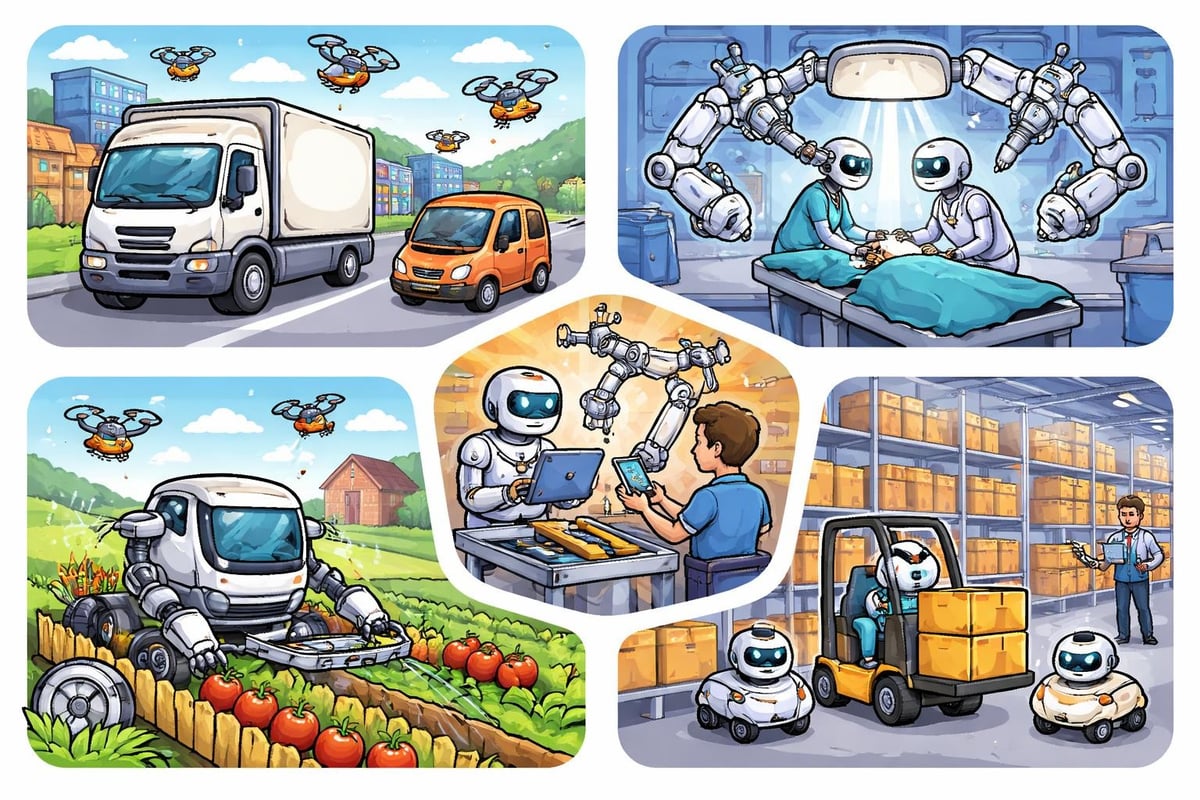
Autonomous Vehicle Engineer roles require expertise in perception systems, path planning, and real-time decision making. These positions command premium salaries, with senior engineers earning well into six figures at companies developing self-driving technology.
Manufacturing Automation Specialist positions focus on designing flexible production systems where robots collaborate with human workers. These professionals implement vision-guided robotic arms, quality inspection systems, and adaptive assembly lines.
Healthcare Robotics Developer careers involve creating surgical robots, rehabilitation devices, and assistive technologies. This sector particularly values professionals who understand both the technical and human factors aspects of robotics.
The growing emphasis on AI security in robotic systems has created demand for specialists who can protect autonomous systems from adversarial attacks and ensure safe operation in critical applications.
Emerging Application Areas
Beyond traditional sectors, robotics AI is transforming:
- Agriculture: Autonomous harvesters, crop monitoring drones, precision spraying systems
- Logistics: Warehouse robots, last-mile delivery vehicles, inventory management
- Construction: Autonomous excavators, bricklaying robots, building inspection drones
- Disaster response: Search and rescue robots, hazardous environment exploration
- Space exploration: Planetary rovers, orbital maintenance robots, autonomous landers
Choosing the Right Robotics AI Course
Selecting an appropriate program requires careful consideration of your background, goals, and learning preferences. The robotics ai course landscape offers options ranging from introductory bootcamps to advanced graduate certificates.
Curriculum Evaluation Criteria
When comparing programs, assess these critical elements:
Hands-on project work should constitute at least 40% of course time. Theory without practice leaves significant skill gaps. Look for programs that provide access to robot simulators or physical hardware.
Prerequisites and learning path vary significantly. Some courses expect strong mathematical foundations in linear algebra, calculus, and probability. Others offer foundational modules to bring learners up to speed. For those starting their AI journey, exploring an AI beginner course first may provide necessary groundwork.
Industry connections enhance career outcomes. Programs affiliated with robotics companies or research institutions often provide networking opportunities, guest lectures from practitioners, and potential internship pathways.
Format and Delivery Options
| Format | Duration | Best For | Typical Cost Range |
|---|---|---|---|
| Online Self-Paced | 3-6 months | Working professionals | $500-$2,000 |
| Live Online Bootcamp | 8-16 weeks | Career changers | $3,000-$12,000 |
| University Certificate | 6-12 months | Academic credentials | $5,000-$15,000 |
| Graduate Degree | 1.5-2 years | Research/leadership roles | $20,000-$60,000 |
The rise of platforms offering comprehensive computer science AI course options has democratized access to robotics education. Many professionals now combine shorter courses with continuous learning rather than committing to multi-year degree programs.
The open-source learning module approach that allows students to build robot companions demonstrates how accessible hands-on robotics education has become. These programs lower barriers to entry while maintaining educational rigor.
Essential Theoretical Foundations
While practical skills matter, a strong robotics ai course must build solid theoretical understanding. These concepts underpin every robotic system, from simple line-following robots to sophisticated autonomous platforms.
Mathematics for Robotics
Linear algebra forms the backbone of robotics transformations. Understanding how to represent robot positions, orientations, and sensor readings in different coordinate frames requires matrix operations and geometric intuition.
Probability theory becomes crucial when dealing with sensor uncertainty. Robots never have perfect information about their environment, so algorithms must reason probabilistically about location, object positions, and future states.
Calculus and optimization drive control systems. Whether computing torques for a robotic arm or planning energy-efficient paths, optimization techniques ensure robots operate effectively.
Machine Learning Architectures
Modern robotics relies heavily on deep learning approaches:
- Convolutional Neural Networks (CNNs) for visual perception tasks
- Recurrent Neural Networks (RNNs) for temporal sequence processing
- Transformer models for natural language understanding and decision making
- Generative models for simulation and synthetic training data
- Graph neural networks for reasoning about spatial relationships
Understanding when to apply each architecture separates competent practitioners from exceptional ones. Many professionals complement robotics studies with broader top machine learning courses to deepen their theoretical foundation.
Control Theory Fundamentals
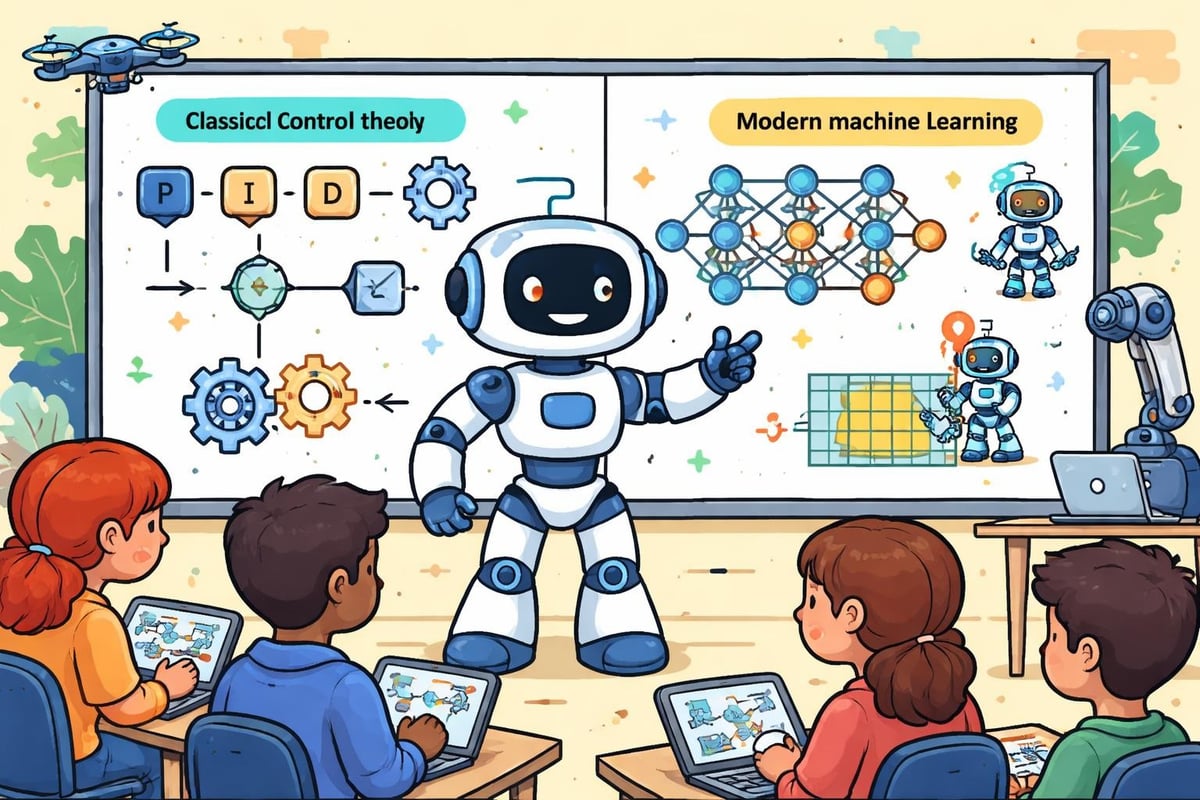
Classical control theory remains relevant despite AI advancements. PID controllers, state-space representations, and feedback loops provide reliable, interpretable robot behaviors where pure learning approaches might fail.
Modern robotics increasingly combines model-based control with learning-based approaches. This hybrid strategy leverages the strengths of both paradigms-physical models provide safety guarantees while learned components handle complex perception and adaptation.
Building Practical Projects and Portfolio Work
The transition from coursework to career success depends heavily on demonstrable skills. A robotics ai course should culminate in substantial projects that showcase your capabilities to potential employers or clients.
Project Categories and Complexity Levels
Beginner projects might include:
- Line-following robots using basic computer vision
- Object detection and classification systems
- Simple pick-and-place manipulation tasks
- Teleoperated robots with video feedback
Intermediate projects advance to:
- Autonomous navigation in unknown environments
- Multi-robot coordination systems
- Gesture recognition and human-robot interaction
- Sim-to-real transfer of learned behaviors
Advanced capstone projects tackle:
- Full autonomous driving stacks with perception, planning, and control
- Robotic manipulation of deformable objects
- Swarm robotics with emergent behaviors
- Safety-critical systems with formal verification
These projects build incrementally, with each layer adding complexity. The best programs structure progression so learners master fundamentals before tackling advanced challenges.
Industry Certifications and Professional Recognition
Credentials complement coursework by validating skills to employers. While a robotics ai course provides knowledge, certifications demonstrate mastery according to industry standards.
Recognized Certification Pathways
The IEEE Robotics and Automation Society supports professional development through conferences, publications, and networking. Active participation in this community enhances credibility and keeps professionals current with research advances.
Professional organizations like RoboNation promote STEM and robotics education through competitions that allow learners to demonstrate skills in public forums. Success in these venues provides concrete portfolio evidence.
Many professionals pursue vendor-specific certifications in platforms like ROS, Nvidia's robotics solutions, or cloud-based robot management systems. These credentials prove expertise with tools widely deployed in production environments.
Staying Current with Research
The robotics field evolves rapidly, with new techniques emerging regularly from academic conferences. The International Conference on Robotics and Automation serves as a premier venue where researchers present cutting-edge work. Following proceedings from such conferences helps practitioners incorporate latest methodologies.
Publications like the Annual Review of Control, Robotics, and Autonomous Systems provide curated summaries of significant advances, making it easier to track progress across the broad field without reading every individual paper.
Corporate Training and Organizational Upskilling
Businesses increasingly recognize that robotics AI literacy must extend beyond dedicated robotics teams. A robotics ai course tailored for organizational deployment serves different needs than individual career development.
Team-Based Learning Approaches
Corporate programs should accommodate diverse skill levels within teams. Engineers need deep technical training, while product managers require sufficient understanding to make informed decisions about robot capabilities and limitations.
Cohort-based learning where team members progress together builds shared vocabulary and understanding. This approach prevents knowledge silos and facilitates collaboration across disciplines.
Custom curriculum development addresses specific organizational challenges. Rather than generic content, tailored programs might focus on warehouse automation for logistics companies or agricultural robotics for farming enterprises.
Measuring ROI on Robotics Training
Organizations need clear metrics to justify training investments:
- Time to productivity for robotics engineers joining projects
- Innovation metrics such as patents filed or new product features enabled
- Efficiency gains from automated processes replacing manual operations
- Error reduction in manufacturing or quality control applications
- Employee retention as upskilling opportunities improve satisfaction
Companies that systematically track these outcomes demonstrate compelling business cases for continued education investment. The shift toward corporate certification programs reflects this data-driven approach to workforce development.
Learning Resources and Supplementary Materials
A robotics ai course forms the foundation, but self-directed learning accelerates skill development. The ecosystem of resources available to robotics students has expanded dramatically in recent years.
Open-Source Software and Datasets
The robotics community strongly embraces open-source development. Frameworks like ROS, simulation environments like Gazebo and PyBullet, and perception libraries like OpenCV and Point Cloud Library provide production-grade tools at no cost.
Public datasets enable machine learning without expensive data collection. ImageNet for object recognition, KITTI for autonomous driving, and various manipulation datasets let students train models on realistic scenarios.
Contributing to open-source robotics projects provides practical experience while building professional networks. Many employers value open-source contributions as highly as formal credentials.
Community and Peer Learning
Online forums, Discord servers, and robotics clubs connect learners globally. These communities provide troubleshooting help, project ideas, and motivation during challenging learning periods.
Local robotics meetups and maker spaces offer access to equipment and in-person collaboration. Building alongside others accelerates learning through shared problem-solving and diverse perspectives.
The influence of researchers like Daniela Rus, whose work spans soft robotics and swarm systems, inspires students to pursue ambitious projects. Following thought leaders provides role models and insight into frontier research.
Future Trends Shaping Robotics AI Education
The robotics ai course of 2026 looks substantially different from programs offered even five years ago. Several trends will continue reshaping how we teach and learn robotics AI.
Simulation-First Development
Cloud-based simulation platforms enable learners to test algorithms on virtual robots before deploying to hardware. This approach dramatically reduces costs and allows experimentation at scale impossible with physical robots.
Digital twins of real robotic systems let students program production robots without risking expensive equipment or halting operations. As simulation fidelity improves, more learning happens virtually with hardware reserved for final validation.
Human-Robot Interaction Focus
As robots move from factories into homes, offices, and public spaces, understanding human factors becomes crucial. Programs increasingly incorporate psychology, ethics, and user experience design alongside technical content.
Researchers like Angelica Lim advance our understanding of emotional AI in robotics, showing how robots can recognize and respond to human affect. These capabilities require interdisciplinary knowledge that modern curricula must address.
Edge AI and Embedded Systems
The shift from cloud-dependent robots to autonomous systems running AI locally drives curriculum changes. Students must understand:
- Model compression and quantization techniques
- Power-efficient computing architectures
- Real-time operating systems
- Hardware acceleration with GPUs and specialized AI chips
Those interested in the infrastructure side might explore GPU for AI training to understand computational requirements for developing robotics models.
Ethical and Safety Considerations
As robots gain autonomy, questions of safety, accountability, and ethical behavior intensify. Comprehensive programs now include modules on:
- Safety verification and testing methodologies
- Bias in perception systems and mitigation strategies
- Privacy considerations in robot data collection
- Regulatory compliance and certification processes
- Environmental impact of robotics manufacturing and operation
These topics reflect growing awareness that technical excellence alone doesn't ensure beneficial outcomes. Responsible robotics development requires intentional consideration of broader impacts.
Integration with Broader AI Curriculum
Robotics AI doesn't exist in isolation. The most effective learning pathways connect robotics specialization with broader artificial intelligence education, creating T-shaped professionals with both depth and breadth.
Complementary AI Disciplines
Natural language processing enables robots to understand verbal commands and communicate findings. As service robots become more common, conversational interfaces grow increasingly important. Professionals might explore conversational AI course options to build these skills.
Computer vision extends beyond robotics into medical imaging, satellite analysis, and content moderation. Skills transfer readily between domains, making vision expertise valuable across industries.
Reinforcement learning applies to game playing, recommendation systems, and resource allocation problems beyond robotics. Understanding these applications provides context for when robotic RL approaches might transfer to other domains.
Creating Custom Learning Paths
Rather than following rigid curricula, learners increasingly construct personalized paths aligned with career goals. Someone targeting autonomous vehicles might combine robotics fundamentals with specialized courses in sensor fusion and path planning.
Those interested in manufacturing automation might prioritize manipulation, machine vision for quality control, and industrial protocols. Medical robotics requires additional study in regulatory compliance and surgical techniques.
Platforms offering extensive course libraries enable this customization. With access to thousands of options, learners can pivot as interests evolve or market demands shift without starting from scratch.
The rapidly expanding field of robotics AI offers unprecedented opportunities for professionals willing to invest in comprehensive education. A well-designed robotics ai course provides both theoretical foundations and practical skills necessary to contribute meaningfully to this transformative technology. Whether you're exploring autonomous vehicles, manufacturing automation, or emerging applications in healthcare and agriculture, the right training program accelerates your journey from curiosity to capability. MammothClub delivers exactly this combination through our extensive library of AI and robotics courses, interactive bootcamps, and corporate training programs designed to help professionals and teams master the technologies shaping our automated future.