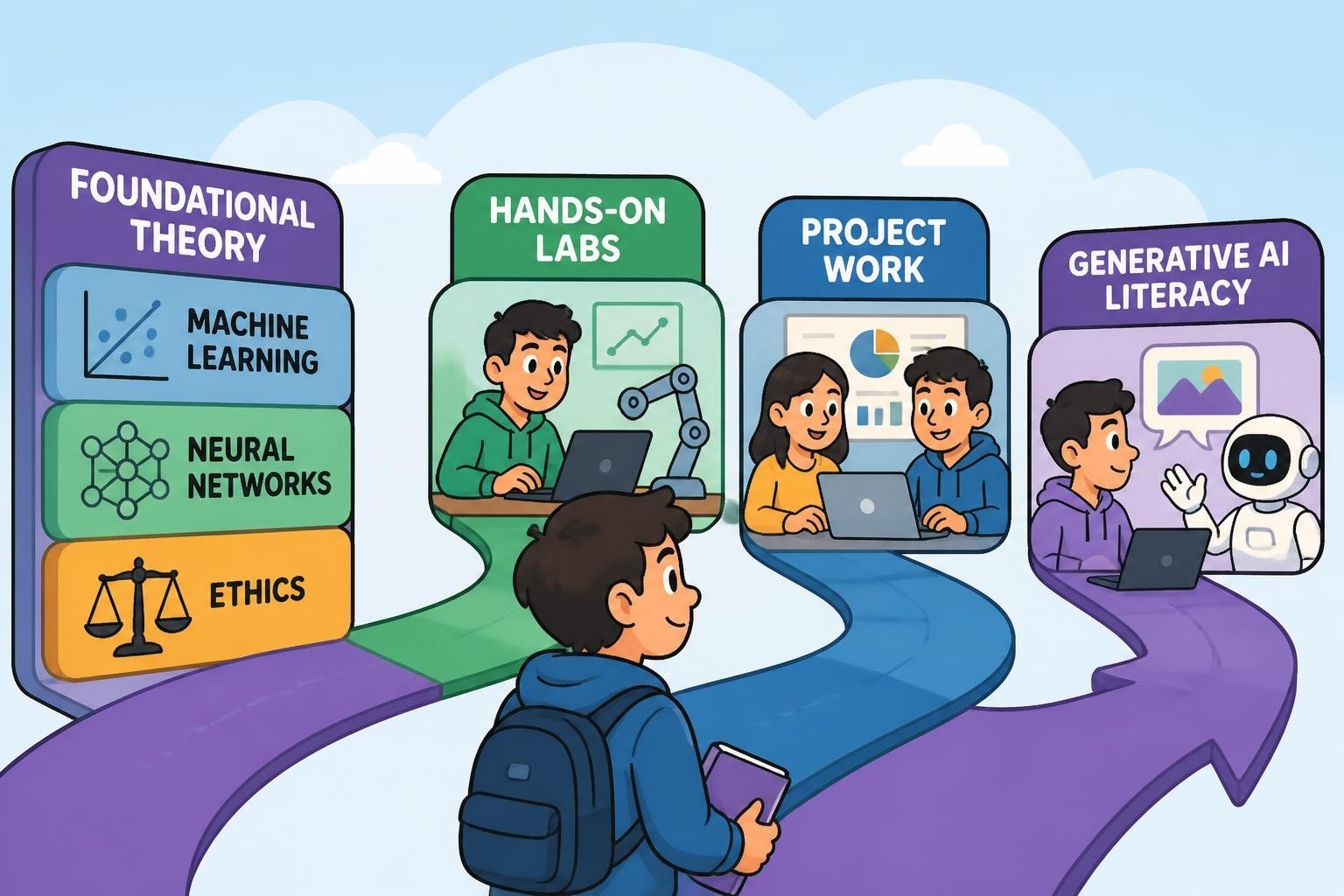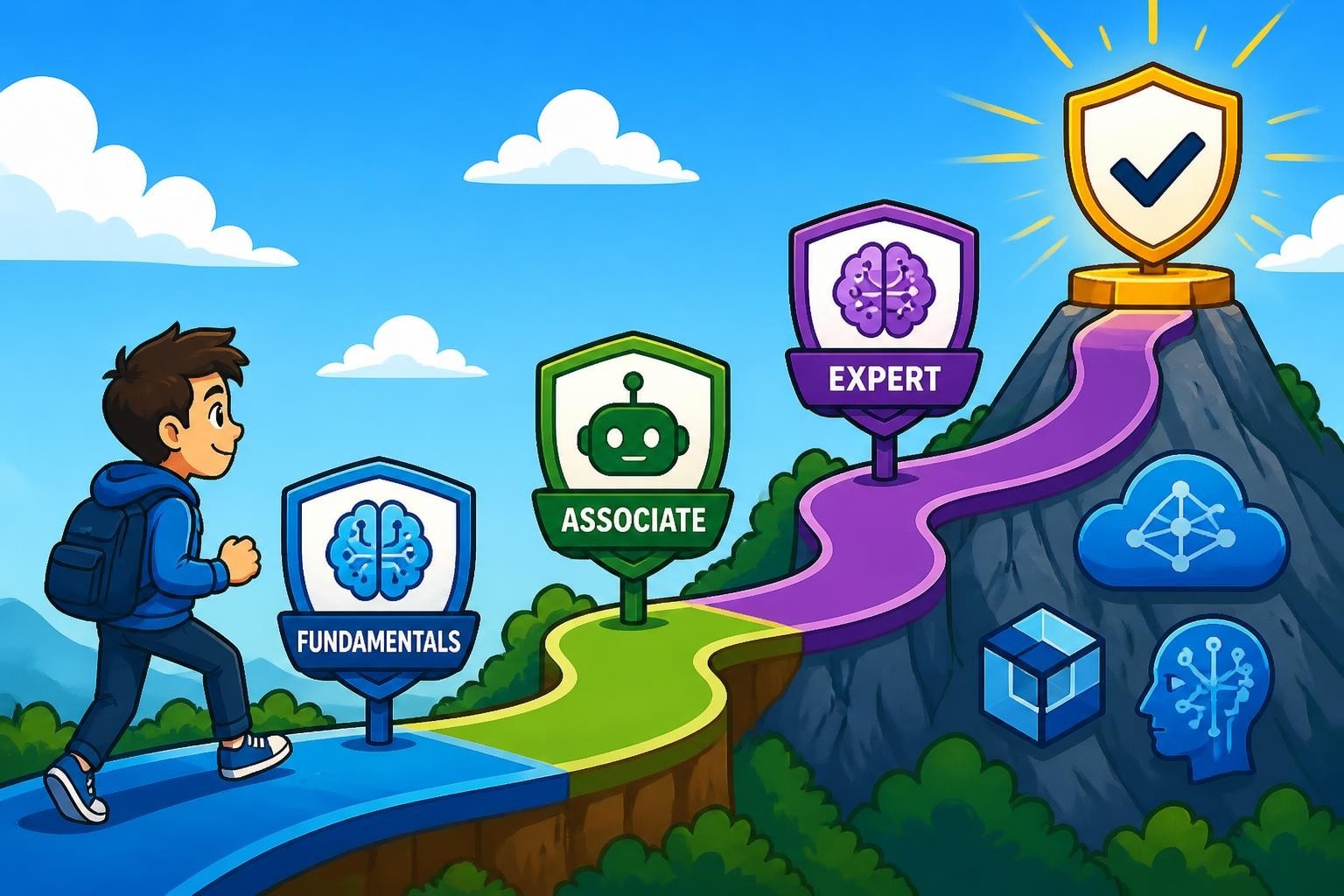
The demand for specialized AI and GPU computing skills has never been higher, and NVIDIA has positioned itself as the leading authority in hardware-accelerated computing education. As organizations worldwide race to implement AI solutions, professionals who understand how to leverage GPU architecture for deep learning, data science, and accelerated computing gain a significant competitive advantage. NVIDIA courses provide hands-on training that bridges the gap between theoretical knowledge and practical implementation, offering certifications that employers recognize and value in 2026's rapidly evolving tech landscape.
Understanding NVIDIA's Training Ecosystem
NVIDIA has developed a comprehensive educational framework that addresses the learning needs of individual professionals, academic institutions, and enterprise teams. The Deep Learning Institute (DLI) serves as the cornerstone of this ecosystem, delivering structured curricula across multiple specializations. Unlike generic programming courses, nvidia courses focus specifically on extracting maximum performance from GPU-accelerated systems.
The training architecture spans three primary delivery methods: self-paced online courses, instructor-led workshops, and enterprise solutions. Each format addresses different learning preferences and organizational requirements. Self-paced options allow professionals to build skills around demanding work schedules, while instructor-led sessions provide real-time guidance for complex implementations.
Self-Paced Learning Options
NVIDIA's self-paced training courses offer flexibility that traditional classroom settings cannot match. These programs include interactive labs running on NVIDIA DGX systems, providing learners with access to enterprise-grade hardware without infrastructure investment. Course completion typically requires 8-12 hours, though learners can progress at their own pace.
Key advantages of self-paced nvidia courses include:
- Cloud-based lab environments that eliminate local hardware requirements
- Immediate feedback through automated assessment systems
- Certificate of competency upon successful completion
- 90-day access to course materials and lab environments
- Latest framework updates reflecting current AI development practices
Core Curriculum Areas
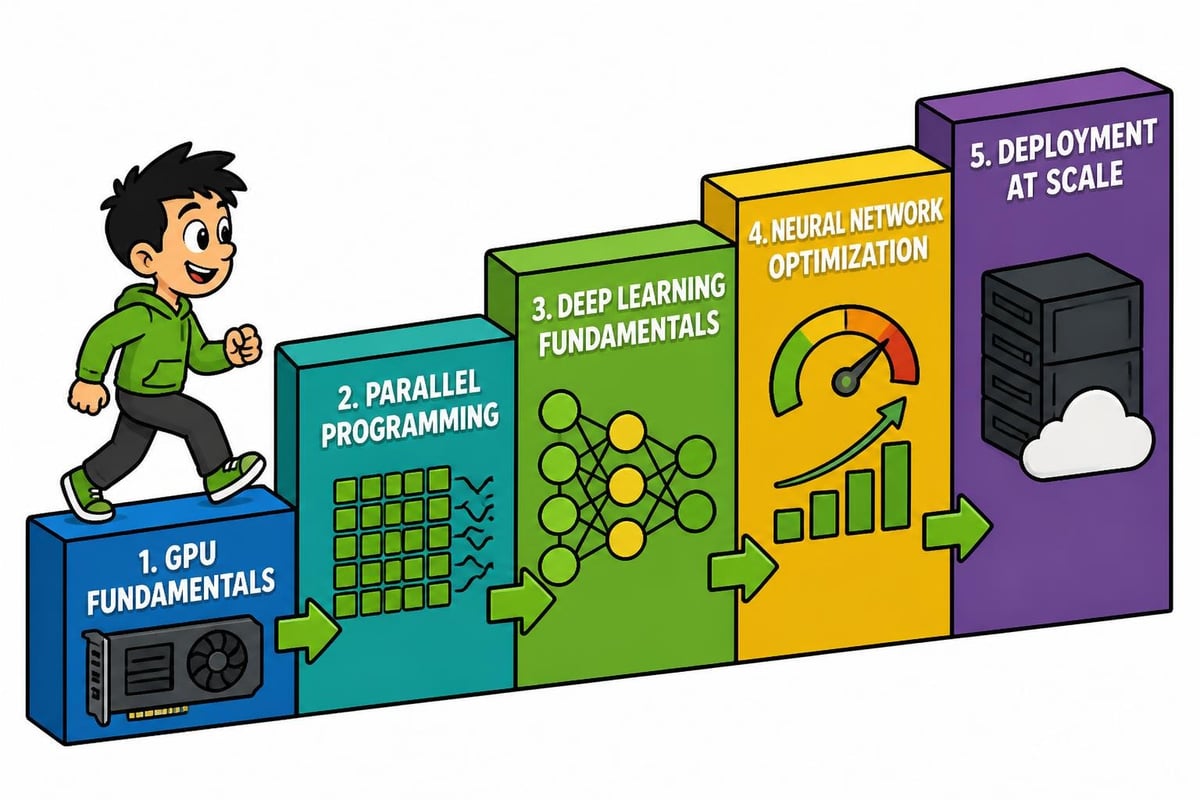
NVIDIA structures its educational offerings around four primary technical domains, each addressing critical industry needs. This specialization ensures learners develop deep expertise rather than superficial familiarity.
Accelerated Computing Fundamentals
This domain teaches professionals how to parallelize computational workloads across GPU cores. Topics include CUDA programming, memory optimization, and performance profiling. Engineers learn to identify bottlenecks in sequential code and redesign algorithms for parallel execution.
The accelerated computing track proves particularly valuable for professionals working with scientific computing, financial modeling, and high-performance computing applications. Students who complete this pathway understand how to achieve 10-100x performance improvements over CPU-only implementations.
Deep Learning and Neural Networks
Deep learning represents NVIDIA's most popular course category, reflecting industry-wide AI adoption. These nvidia courses cover convolutional neural networks, recurrent architectures, transformer models, and generative AI systems. Learners gain hands-on experience with PyTorch, TensorFlow, and NVIDIA's proprietary frameworks.
Advanced courses explore model optimization techniques including quantization, pruning, and knowledge distillation. Students learn to deploy models using TensorRT for production inference at scale. The curriculum emphasizes practical implementation rather than theoretical mathematics, though mathematical foundations receive adequate coverage.
Data Science and Analytics
Data science courses teach professionals to leverage GPU acceleration for exploratory data analysis, feature engineering, and machine learning pipelines. The RAPIDS ecosystem receives significant attention, demonstrating how to execute pandas-like operations at GPU speeds.
Curriculum components include:
- GPU-accelerated data preprocessing using cuDF
- Distributed computing with Dask on multiple GPUs
- Machine learning implementation through cuML
- Graph analytics for network analysis and recommendations
- Time series forecasting with GPU optimization
Generative AI and Large Language Models
As generative AI transforms industries in 2026, specialized courses on Generative AI and LLMs have become essential. These programs teach professionals to fine-tune foundation models, implement retrieval-augmented generation, and optimize inference costs.
Students learn prompt engineering techniques, model customization strategies, and deployment architectures for conversational AI applications. The curriculum addresses practical challenges like hallucination mitigation, context window management, and multi-modal model integration.
Enterprise Training Solutions
Organizations seeking to upskill entire teams benefit from NVIDIA's enterprise solutions, which deliver customized learning pathways aligned with business objectives. Unlike individual course purchases, enterprise programs provide volume licensing, dedicated support, and performance analytics.
| Feature | Individual Courses | Enterprise Solutions |
|---|---|---|
| Pricing | Per-course fees | Volume licensing |
| Support | Community forums | Dedicated account manager |
| Customization | Standard curriculum | Tailored content |
| Analytics | Individual certificates | Team dashboards |
| Duration | 90-day access | Annual subscriptions |
Enterprise customers receive learning management system integration, enabling seamless deployment within existing training infrastructures. Organizations can track completion rates, skill development, and certification achievements through comprehensive dashboards.
Partnership Programs and Accessibility
NVIDIA extends its educational reach through strategic partnerships with leading online learning platforms. Coursera's collaboration with NVIDIA makes courses accessible to millions of learners worldwide, often at reduced costs or through university partnerships. These nvidia courses maintain the same technical rigor as direct DLI offerings while benefiting from Coursera's learning management features.
Academic institutions leverage NVIDIA's University Ambassador Program to integrate GPU computing into computer science curricula. This initiative provides faculty with training resources, teaching materials, and access to hardware grants for establishing on-campus learning laboratories.
For professionals exploring AI certification pathways, understanding how NVIDIA credentials complement broader AI education proves valuable. While NVIDIA focuses on implementation and hardware optimization, comprehensive AI literacy requires additional study in ethics, business strategy, and domain applications.
Practical Implementation Strategies
Successfully applying knowledge from nvidia courses requires structured implementation planning. Organizations should establish clear learning objectives before enrolling team members, ensuring course selection aligns with project requirements.
Building a Learning Roadmap
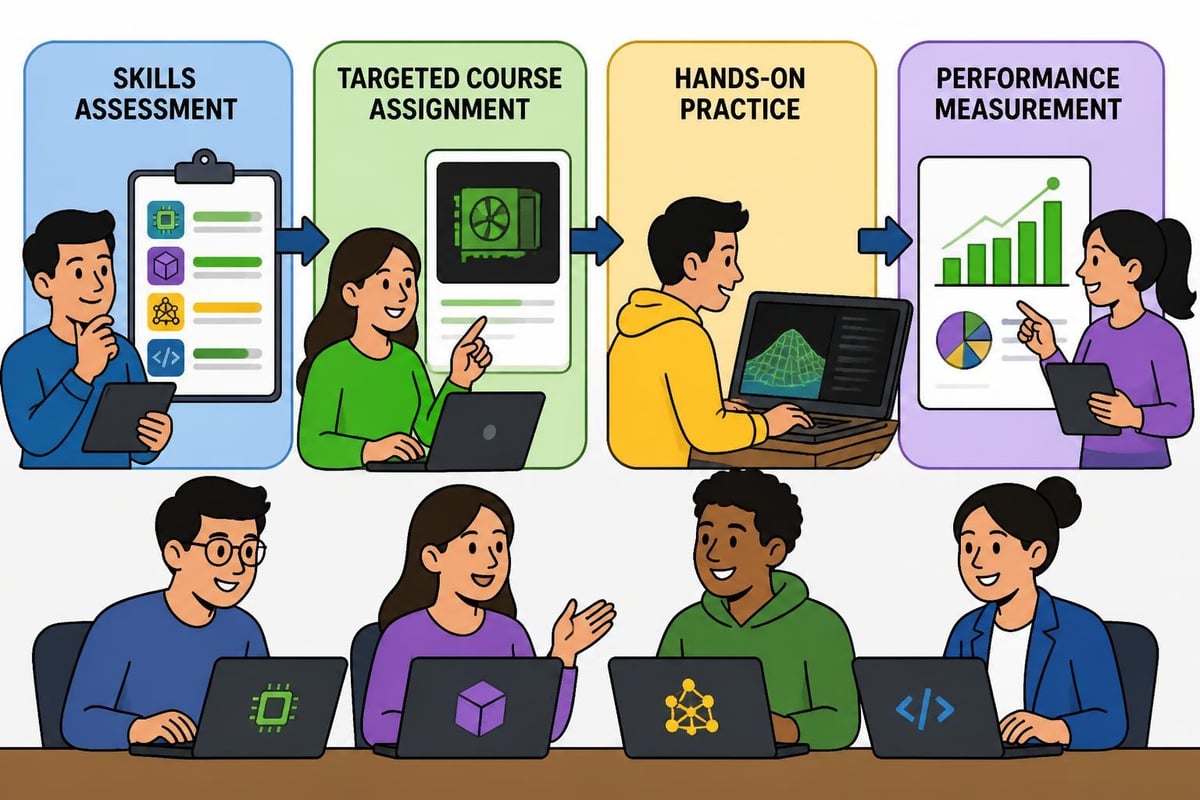
Effective skill development follows a logical progression:
- Assess current capabilities through technical evaluations
- Identify knowledge gaps related to upcoming projects
- Select appropriate courses matching skill levels and objectives
- Allocate dedicated learning time in work schedules
- Implement learned concepts in pilot projects
- Measure performance improvements against baseline metrics
Teams new to GPU computing should begin with foundational accelerated computing courses before advancing to specialized AI topics. This progression ensures students understand underlying architecture before tackling complex neural network implementations.
Laboratory Practice and Experimentation
The hands-on labs included in NVIDIA courses provide controlled environments for experimentation without infrastructure costs. Students should maximize lab time by testing variations beyond prescribed exercises. Modifying hyperparameters, adjusting architectures, and comparing performance metrics deepens understanding beyond passive learning.
For those interested in GPU infrastructure for AI training, NVIDIA courses demonstrate optimal hardware utilization patterns that inform purchasing decisions and resource allocation strategies.
Course Quality and Recognition
NVIDIA maintains educational quality through rigorous content development processes and regular curriculum updates. Courses reflect the latest framework versions, best practices, and research developments. This commitment to currency distinguishes nvidia courses from outdated educational materials that teach deprecated techniques.
Industry recognition of NVIDIA certifications continues growing as employers prioritize candidates with verified GPU computing skills. Job postings increasingly list NVIDIA DLI certificates as preferred qualifications, particularly for roles involving model optimization, inference deployment, and high-performance computing.
Assessment and Certification
Course completion requires demonstrating competency through practical assessments rather than multiple-choice testing. Students must successfully complete coding challenges, optimize model performance, or implement specific architectures. This assessment approach ensures certificate holders possess applicable skills rather than theoretical knowledge alone.
Common questions about NVIDIA training programs receive answers through their comprehensive FAQ, addressing topics like lab access duration, prerequisite requirements, and certificate validity.
Specialized Technical Tracks
Beyond core curriculum areas, NVIDIA offers specialized tracks addressing emerging technologies and niche applications.
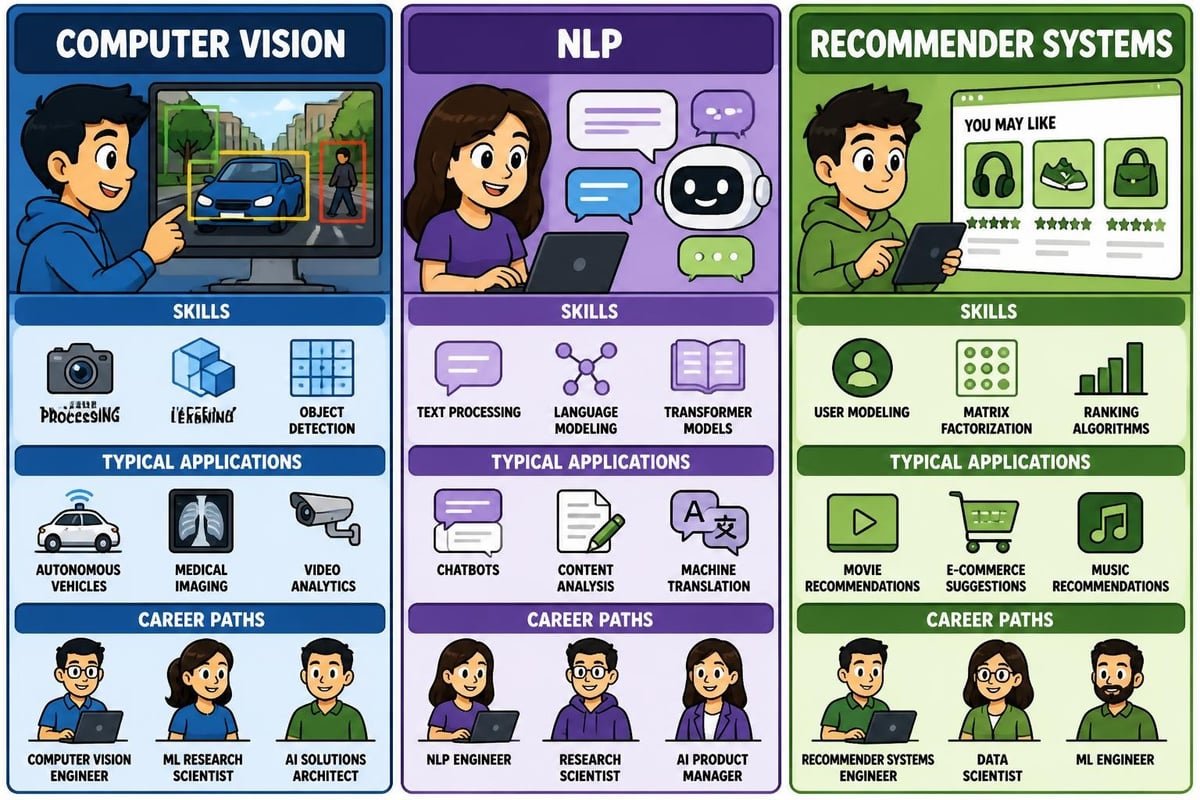
Computer Vision and Image Processing
Computer vision courses teach object detection, semantic segmentation, and image classification using state-of-the-art architectures. Students implement YOLO, Mask R-CNN, and vision transformer models while learning optimization techniques specific to visual data processing.
Real-world projects include autonomous vehicle perception systems, medical image analysis, and industrial quality inspection. These applications demonstrate how theoretical concepts translate into production deployments.
Natural Language Processing
NLP courses cover text classification, named entity recognition, sentiment analysis, and language translation. With transformer architectures dominating NLP in 2026, curriculum emphasis falls on attention mechanisms, positional encoding, and fine-tuning strategies.
Students learn to work with BERT, GPT variants, and domain-specific language models. Course projects often involve building chatbots, document classification systems, or text generation applications.
Recommender Systems and Personalization
Recommender system courses address collaborative filtering, content-based recommendations, and hybrid approaches. Students learn to leverage GPU acceleration for processing large-scale user-item interaction matrices and training deep learning recommendation models.
The curriculum covers:
- Matrix factorization techniques at scale
- Neural collaborative filtering architectures
- Context-aware recommendations using additional features
- Cold start problem mitigation strategies
- A/B testing for recommendation system evaluation
Integration with Broader AI Education
While nvidia courses excel at teaching GPU-accelerated computing and model implementation, comprehensive AI literacy requires broader study. Professionals should complement technical training with courses covering AI ethics, business strategy, and domain-specific applications.
For beginners establishing foundational knowledge, starting with AI basics courses before tackling advanced NVIDIA material ensures conceptual understanding supports technical implementation. Similarly, exploring complete AI/ML learning paths helps learners understand how GPU computing fits within the broader data science ecosystem.
Infrastructure Training and Deployment
NVIDIA extends education beyond software development to infrastructure management and deployment. Finding appropriate infrastructure training helps IT professionals optimize cluster configurations, implement monitoring solutions, and manage multi-GPU systems.
These courses address data center considerations including:
| Topic | Coverage | Target Audience |
|---|---|---|
| GPU Cluster Management | Resource scheduling, job orchestration | IT administrators |
| Network Optimization | InfiniBand, RDMA configuration | Network engineers |
| Storage Architecture | High-throughput data pipelines | Storage specialists |
| Containerization | Docker, Kubernetes for GPU workloads | DevOps engineers |
| Monitoring Solutions | Performance metrics, utilization tracking | Systems administrators |
Understanding deployment architecture proves as critical as model development for production AI systems. Infrastructure courses teach professionals to identify bottlenecks, optimize data transfer, and implement fault tolerance.
Cost Considerations and ROI
Individual nvidia courses typically range from $90-$500 depending on duration and specialization. Enterprise licensing provides volume discounts and unlimited access models. When evaluating training investments, organizations should consider:
Direct costs:
- Course registration fees
- Employee time during training
- Potential hardware purchases for practice
Indirect benefits:
- Reduced reliance on external consultants
- Faster project completion through optimized implementations
- Competitive advantage from cutting-edge technical capabilities
- Improved employee retention through professional development
Companies often see measurable returns within 6-12 months through performance improvements and reduced outsourcing needs. A data science team that completes GPU acceleration training might reduce model training time from days to hours, dramatically accelerating iteration cycles.
Future Developments and Emerging Topics
NVIDIA continuously expands its course catalog to address emerging technologies. Recent additions focus on quantum computing simulation, autonomous systems, and federated learning. As AI hardware evolves, course content adapts to cover new architectures and optimization techniques.
The 2026 curriculum increasingly emphasizes sustainable AI practices, teaching professionals to measure and minimize the environmental impact of large-scale model training. Energy-efficient computing receives growing attention as organizations balance performance requirements with sustainability goals.
For professionals tracking AI specialization trends, NVIDIA's curriculum roadmap provides insights into skills that will gain value in coming years. Early adoption of emerging technologies through preview courses creates competitive advantages as these capabilities become mainstream requirements.
Comparing Alternative Learning Resources
While nvidia courses provide exceptional GPU-specific education, professionals should consider how these offerings compare to alternative learning resources. University programs offer broader theoretical foundations but may lack current industry practices. Bootcamps provide intensive immersion but often sacrifice depth for speed.
NVIDIA's strength lies in combining vendor-specific optimization knowledge with hands-on practice on actual GPU infrastructure. This combination proves difficult for generic education providers to replicate without significant infrastructure investment.
Platforms like MammothClub's AI training programs complement NVIDIA courses by providing broader context, business applications, and soft skills development that technical certifications alone cannot address. A well-rounded AI professional combines technical implementation skills from specialized training with strategic thinking and communication abilities developed through comprehensive programs.
Maximizing Learning Outcomes
Students maximize value from nvidia courses by approaching education strategically rather than collecting certificates. Focus should remain on skill application and measurable performance improvements rather than credential accumulation.
Effective learning strategies include:
- Pre-course preparation reviewing prerequisite concepts
- Active experimentation beyond prescribed exercises
- Peer collaboration through study groups and forums
- Project application implementing concepts in real work
- Teaching others to reinforce understanding
- Continuous practice maintaining skills after course completion
Building a portfolio of implemented projects demonstrates competency more effectively than certificates alone. Employers value candidates who can discuss optimization decisions, performance trade-offs, and practical challenges overcome during real implementations.
NVIDIA courses provide specialized, hands-on training that equips professionals with the GPU computing skills essential for modern AI development and deployment. By combining theoretical knowledge with practical implementation experience on enterprise-grade hardware, these programs deliver measurable skill development that directly translates to workplace performance. Whether you're exploring specialized NVIDIA training or seeking a comprehensive AI education foundation, MammothClub offers 3,000+ courses, interactive bootcamps, and AI-powered learning tools that help professionals and organizations master the full spectrum of AI capabilities needed to thrive in 2026's competitive landscape.