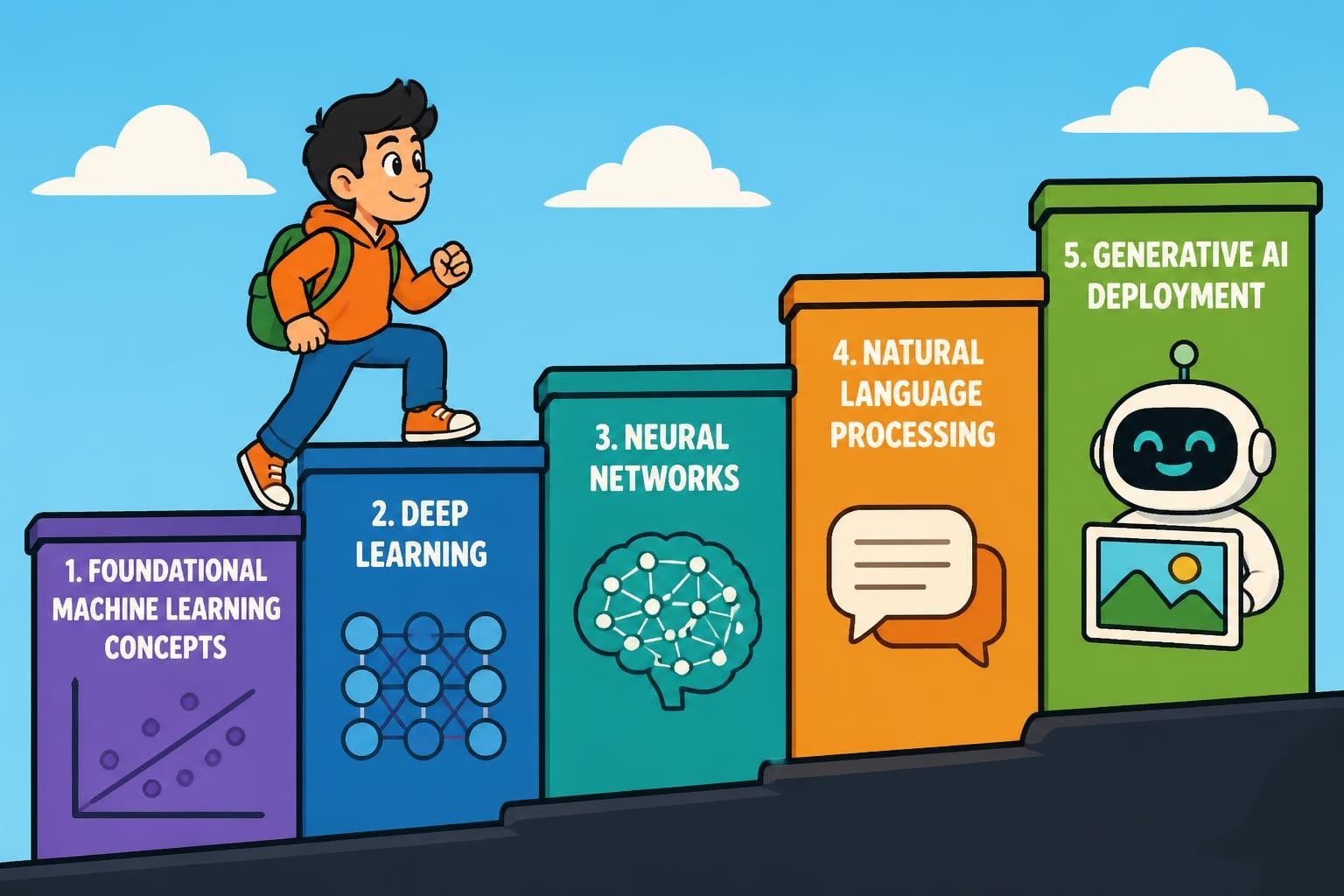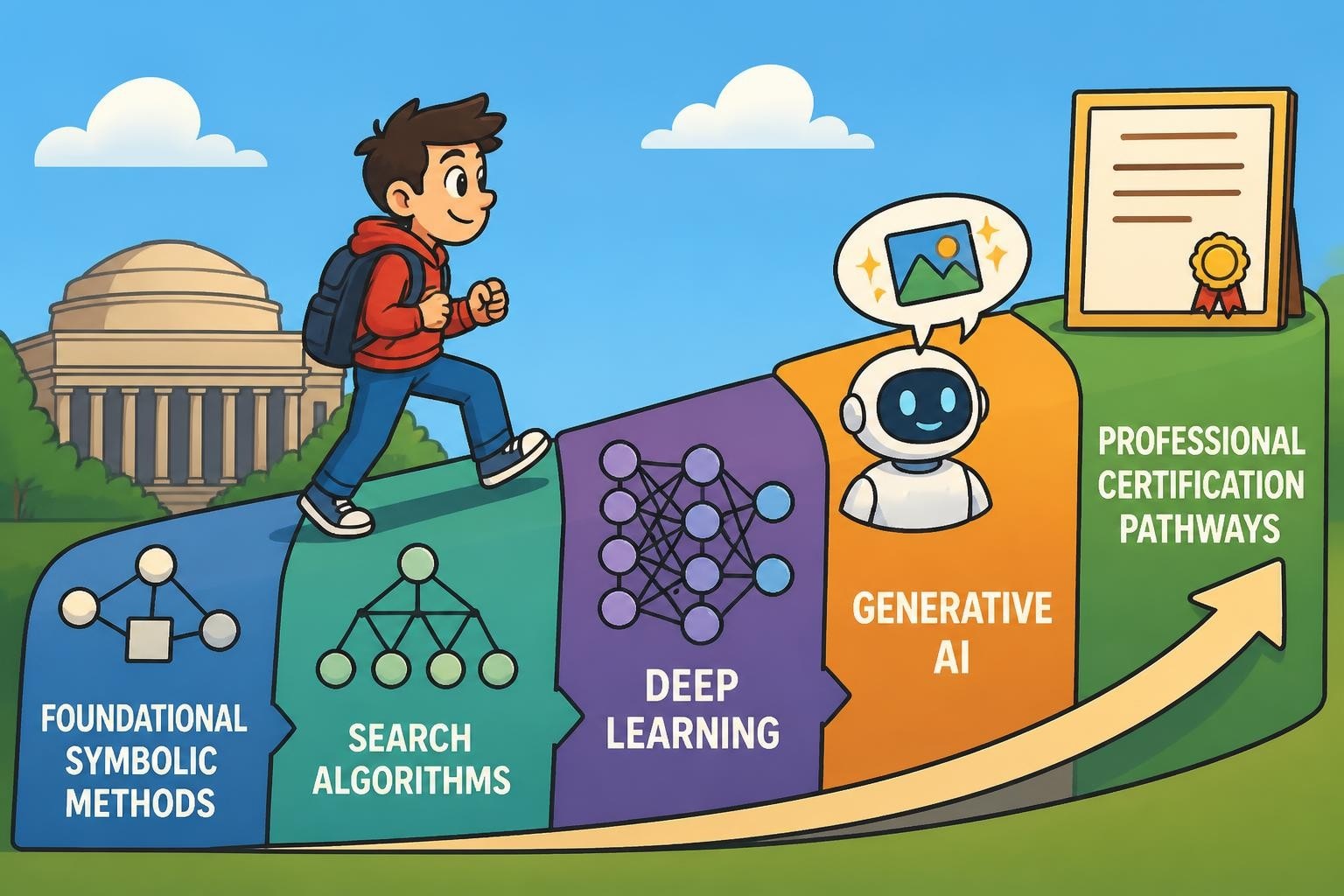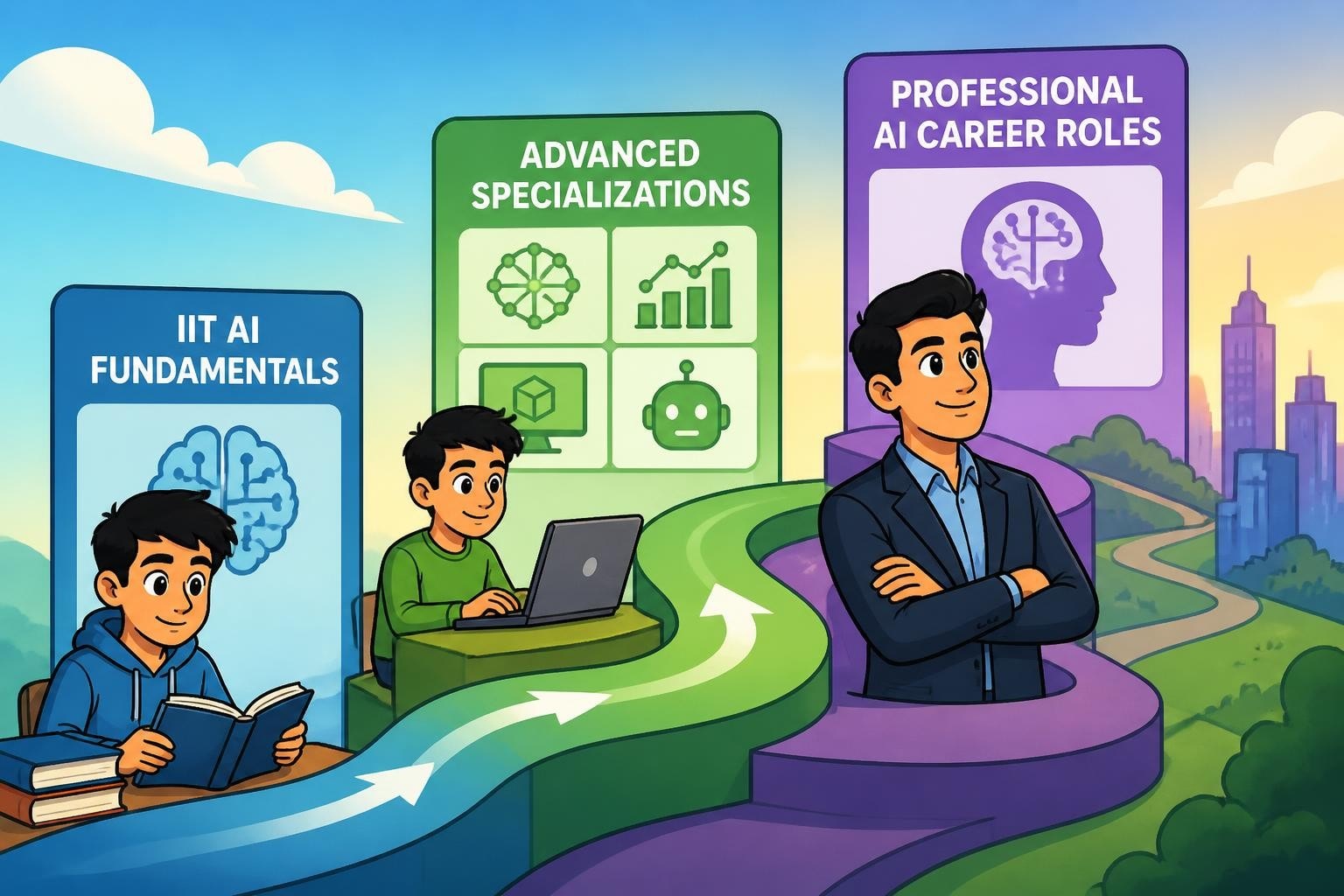
The artificial intelligence revolution has fundamentally transformed how professionals develop their careers and how organizations build competitive teams. As AI technologies continue to reshape industries at an unprecedented pace, the demand for structured ai training and placement programs has reached critical mass. Today's professionals need more than theoretical knowledge-they require comprehensive training ecosystems that seamlessly bridge education with employment outcomes, ensuring that newly acquired AI skills translate directly into meaningful career advancement and organizational value.
The Evolution of AI Training Programs in 2026
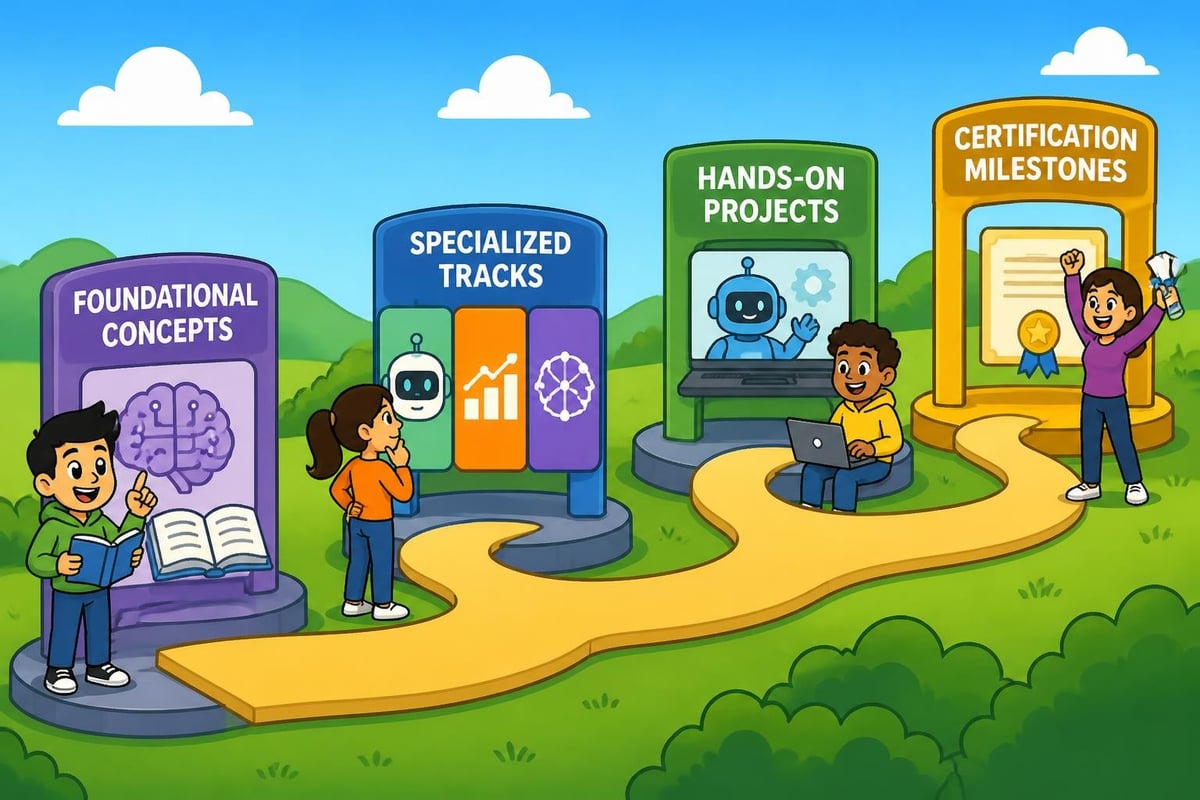
The landscape of AI education has matured significantly over the past few years. Traditional classroom-based approaches have given way to hybrid models that combine on-demand learning, interactive bootcamps, and hands-on project work. Modern ai training and placement initiatives now emphasize practical application over pure theory, recognizing that employers seek candidates who can immediately contribute to AI-driven projects.
Key characteristics of effective 2026 AI training programs include:
- Real-world datasets and business scenarios that mirror actual workplace challenges
- Modular learning paths that accommodate different skill levels and specialization areas
- Integration with industry-standard tools like TensorFlow, PyTorch, and cloud AI platforms
- Continuous assessment mechanisms that validate competency progression
- Career services embedded within the learning experience
The shift toward applied learning reflects employer feedback and market demands. Organizations increasingly partner with training providers to ensure curriculum alignment with their technical requirements. This collaboration has created a virtuous cycle where training content stays current with industry needs while placement outcomes improve through direct employer engagement.
Understanding Placement Success Metrics
Transparency in outcomes has become a cornerstone of credible ai training and placement programs. Prospective learners now demand verifiable data on graduation rates, job placement percentages, salary outcomes, and time-to-employment metrics. The Council on Integrity in Results Reporting has established standards that help learners evaluate program effectiveness based on transparent, verified data.
Critical Placement Indicators to Evaluate
| Metric | Industry Benchmark | What It Reveals |
|---|---|---|
| Placement Rate | 75-85% within 6 months | Program's employer network strength |
| Salary Increase | 30-50% post-completion | Market value of acquired skills |
| Job Relevance | 90%+ in AI-related roles | Curriculum alignment with market needs |
| Employer Satisfaction | 4.5/5.0 or higher | Quality of graduate preparation |
When examining ai training and placement options, professionals should scrutinize these metrics across different program formats. Bootcamp-style programs typically report faster placement timelines but may focus on specific AI domains, while comprehensive certification programs might show broader career mobility over longer timeframes.
Geographic factors also influence placement success. Major tech hubs like San Francisco, Seattle, and Austin demonstrate stronger immediate placement rates, though remote work trends have democratized access to AI opportunities. The Opportunity Data platform provides valuable insights into AI exposure across different occupations and regions, helping learners make informed decisions about specialization areas.
Certification Pathways and Industry Recognition
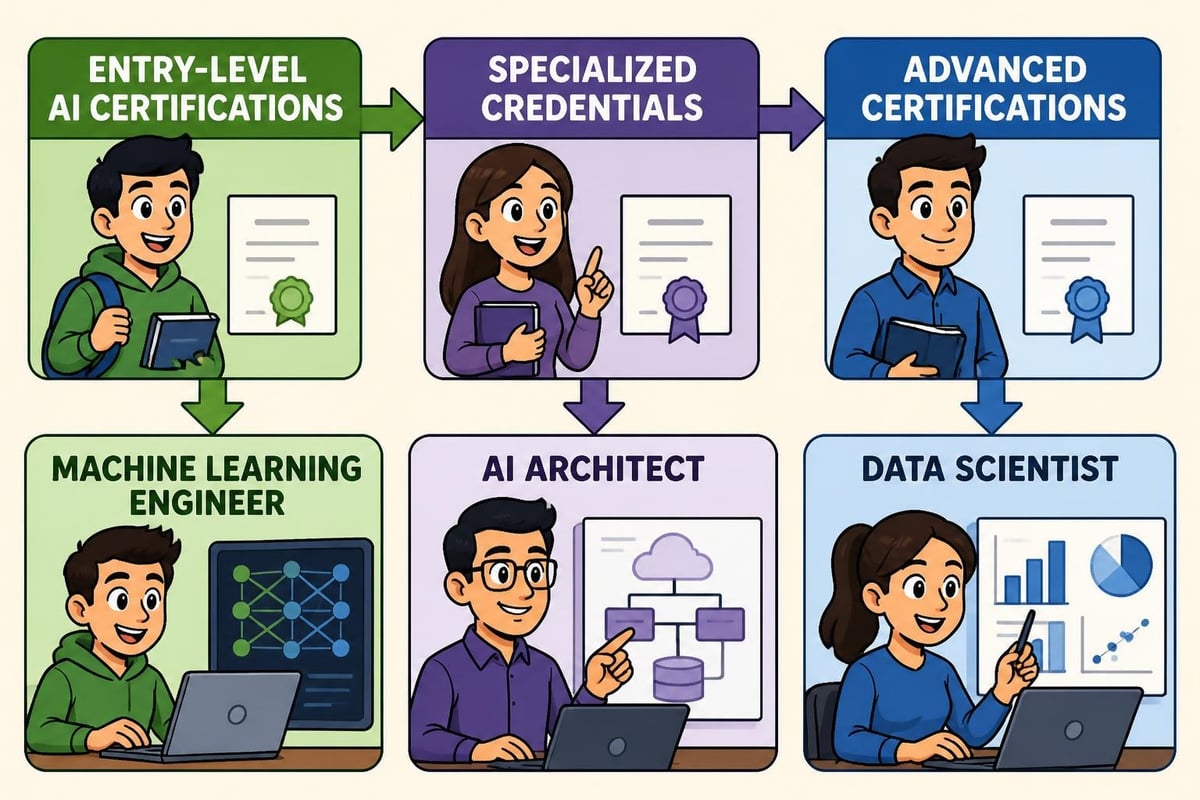
Professional certifications have become essential credentials in the AI job market. Organizations increasingly use certifications as screening criteria during recruitment, viewing them as validated proof of specific competencies. The ai training and placement ecosystem now encompasses multiple certification tracks, each serving distinct career objectives.
Enterprise Technology Association training programs partner with leading technology providers to offer industry-recognized credentials. These certifications span various expertise levels and specializations:
Foundational Certifications:
- AI fundamentals and ethics
- Machine learning basics
- Data literacy for AI applications
- Python programming for AI
Advanced Specializations:
- Deep learning architectures
- Natural language processing
- Computer vision applications
- AI system deployment and MLOps
Industry-Specific Credentials:
- Healthcare AI applications
- Financial services AI
- Manufacturing and robotics AI
- Marketing and customer analytics AI
When selecting certification paths through MammothClub's AI learning programs, professionals should align their choices with career goals and industry demands. For example, those targeting Azure cloud AI roles benefit from Microsoft-specific certifications, while broader AI engineering positions may require multiple credentials across different platforms.
Corporate AI Training and Workforce Development
Organizations face unique challenges when implementing ai training and placement strategies at scale. Corporate programs must balance business continuity with skill development, ensuring that teams acquire AI capabilities without disrupting ongoing operations. Successful enterprise initiatives typically follow structured frameworks that combine assessment, customized learning, and internal mobility opportunities.
Designing Effective Corporate AI Programs
The most successful corporate ai training and placement initiatives begin with comprehensive skills gap analysis. Organizations inventory current capabilities against strategic AI objectives, identifying specific competencies needed for planned initiatives. This assessment informs customized curriculum development that addresses organizational needs rather than generic market skills.
TDWI's data and analytics education resources provide frameworks that help organizations structure their AI upskilling efforts. These resources emphasize connecting technical training with business context, ensuring that employees understand not just the "how" of AI tools but the "why" behind their application to specific business challenges.
Essential components of corporate AI training:
- Executive AI literacy programs that build leadership buy-in
- Role-specific learning paths tailored to different departments
- Hands-on projects using company data and real business problems
- Mentorship connections between AI experts and learners
- Internal certification programs that validate skill acquisition
- Career pathing frameworks showing AI skill progression opportunities
Internal placement strategies prove particularly effective when organizations create dedicated AI roles and teams. Rather than expecting employees to add AI responsibilities to existing positions, forward-thinking companies establish new organizational structures around AI capabilities. This approach provides clear career advancement opportunities and signals organizational commitment to AI transformation.
Learning Methodologies and Pedagogical Innovation
The effectiveness of ai training and placement programs depends significantly on instructional design and learning methodologies. Traditional lecture-based approaches have proven insufficient for developing practical AI competencies. Instead, leading programs employ diverse pedagogical strategies that accommodate different learning styles and experience levels.
Research on community-based AI learning frameworks demonstrates the value of grounding AI education in learners' lived experiences and community contexts. This approach recognizes that effective AI training connects technical concepts to familiar domains, making abstract algorithms tangible through relevant applications.
| Learning Method | Best For | Effectiveness Rating |
|---|---|---|
| Interactive coding labs | Building technical fluency | Very High |
| Case study analysis | Understanding business applications | High |
| Capstone projects | Portfolio development | Very High |
| Peer collaboration | Problem-solving skills | High |
| Microlearning modules | Busy professionals | Medium-High |
| Live instructor sessions | Complex concept clarification | High |
The University of Florida's Practicum AI curriculum exemplifies hands-on applied learning designed for students with limited coding backgrounds. This accessibility-focused approach has proven particularly effective in ai training and placement programs targeting career changers and professionals from non-technical backgrounds.
Adaptive learning technologies now personalize the training experience based on individual progress and learning patterns. AI-powered platforms analyze engagement data, assessment results, and completion patterns to recommend optimal learning sequences and intervention points. This personalization improves both completion rates and competency development outcomes.
Market Trends Shaping AI Training Demand
Understanding current market dynamics helps professionals and organizations make strategic ai training and placement decisions. The Artificial Intelligence Index Report 2024 provides comprehensive data on AI trends, technical advancements, and shifting market demands that directly impact training priorities.
High-Growth AI Specializations for 2026
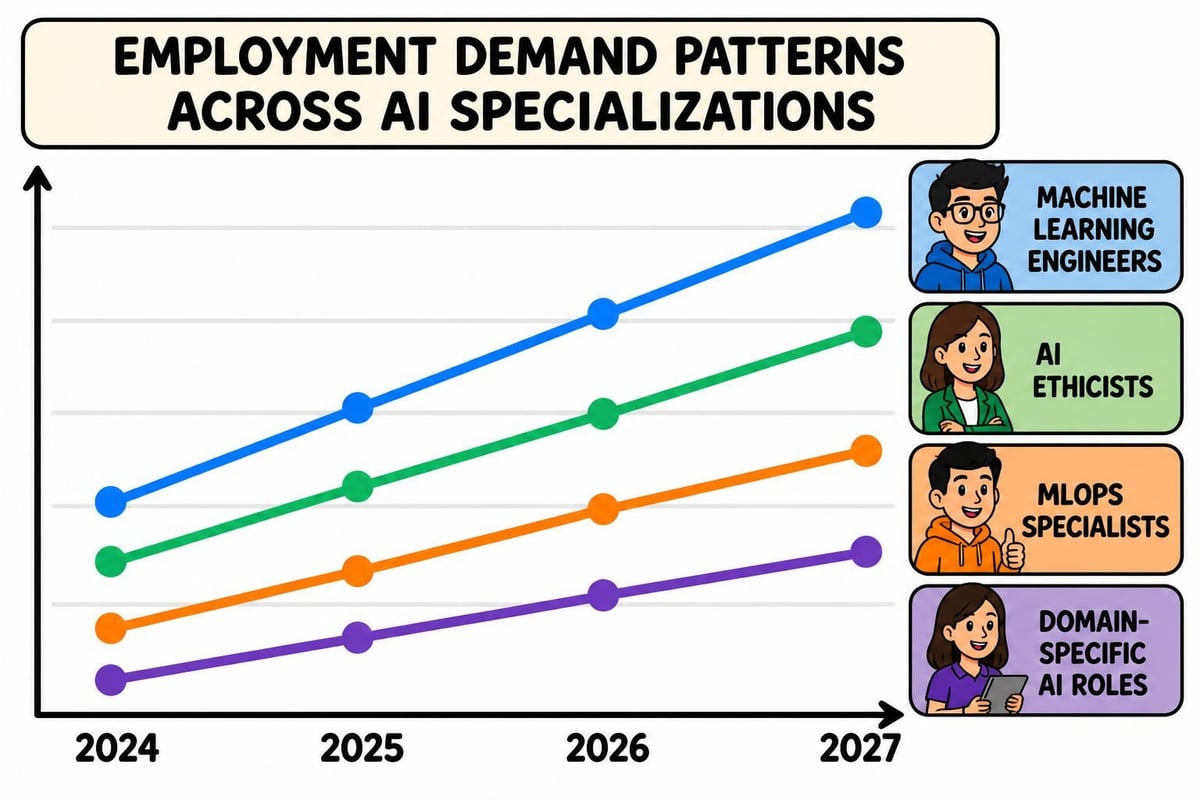
Certain AI domains demonstrate particularly strong employment demand and salary growth. Professionals focusing on these specializations through targeted AI learning paths position themselves for accelerated career advancement:
- Generative AI and large language models: The explosive growth of generative AI applications has created unprecedented demand for professionals who can fine-tune, deploy, and integrate LLM capabilities into business workflows
- AI ethics and governance: Organizations increasingly require specialists who can navigate regulatory compliance, bias mitigation, and responsible AI implementation
- MLOps and AI infrastructure: As AI moves from experimentation to production, demand surges for professionals skilled in AI system deployment, monitoring, and scaling
- Industry-specific AI applications: Specialized knowledge combining AI skills with domain expertise in healthcare, finance, or manufacturing commands premium compensation
NASWA's AI training resources provide workforce professionals with toolkits for understanding and applying these emerging AI capabilities, particularly around generative AI tools that are transforming knowledge work across industries.
Measuring ROI and Training Effectiveness
Organizations investing in ai training and placement programs require clear frameworks for evaluating return on investment. Effective measurement systems track both leading indicators during training and lagging indicators that demonstrate business impact after program completion.
Leading indicators include:
- Course completion rates and time-to-completion
- Assessment scores and competency progression
- Engagement metrics and platform usage patterns
- Learner satisfaction and Net Promoter Scores
Lagging indicators encompass:
- Internal mobility into AI roles
- Project outcomes and business value delivered
- Employee retention among AI-trained staff
- Productivity improvements in AI-augmented workflows
- Innovation metrics and new AI initiatives launched
Sophisticated organizations establish baseline measurements before training initiatives begin, enabling accurate before-and-after comparisons. This approach quantifies the specific impact of ai training and placement investments rather than attributing general business improvements to training programs.
Building Sustainable Learning Ecosystems
The most successful ai training and placement strategies extend beyond one-time programs to create continuous learning cultures. Rapid AI advancement means that skills developed today require ongoing updating to remain relevant. Organizations and professionals must therefore view AI education as an ongoing journey rather than a destination.
Sustainable learning ecosystems incorporate multiple reinforcement mechanisms:
- Regular skill refreshers that update knowledge as AI technologies evolve
- Community of practice networks connecting AI practitioners for knowledge sharing
- Access to cutting-edge research through academic partnerships and conference participation
- Experimentation sandboxes providing safe environments for testing new AI approaches
- Recognition systems celebrating AI skill development and application
Platforms offering comprehensive AI certification programs increasingly include continuous learning subscriptions that provide ongoing access to new courses, updated content, and emerging specialization tracks. This subscription approach acknowledges that AI expertise requires perpetual renewal rather than one-time acquisition.
The integration of AI-powered learning tools within training platforms creates meta-learning opportunities where AI systems personalize the AI education experience itself. These systems analyze individual learning patterns, recommend optimal content sequences, and predict knowledge gaps before they impact performance.
Global Perspectives on AI Education Access
While ai training and placement opportunities have expanded dramatically, significant access disparities persist across geographic regions, demographic groups, and economic segments. Addressing these gaps represents both a social imperative and an economic opportunity, as untapped talent pools could substantially expand AI workforce capacity.
Barriers to AI training access include:
- Cost constraints limiting participation in premium programs
- Language barriers in predominantly English-language content
- Limited internet connectivity in developing regions
- Time constraints for working professionals and caregivers
- Lack of prerequisite mathematical or programming knowledge
Leading platforms address these barriers through scholarships, translated content, offline learning options, flexible scheduling, and foundational skill-building modules. AI business courses that focus on AI literacy and strategic thinking rather than technical implementation provide accessible entry points for professionals from diverse backgrounds.
Research on regulatory and scientific knowledge integration in AI applications highlights the importance of authoritative content sources in training programs. This ensures that ai training and placement initiatives provide not just technical skills but also understanding of ethical frameworks, regulatory requirements, and responsible AI practices.
Future Directions in AI Education and Career Development
Looking beyond 2026, several emerging trends will reshape ai training and placement ecosystems. Professionals and organizations should monitor these developments to maintain competitive positioning:
The convergence of AI with other emerging technologies like quantum computing, edge AI, and brain-computer interfaces will create new specialization areas requiring interdisciplinary training approaches. Programs will increasingly blend AI expertise with domain knowledge from neuroscience, physics, and other fields.
Credential portability will improve through blockchain-based verification systems and standardized competency frameworks. This will enable professionals to build verified skill portfolios across multiple training providers while allowing employers to quickly validate capabilities during recruitment.
Virtual and augmented reality applications will enhance hands-on AI training through immersive simulations that provide practice opportunities currently limited by equipment costs or safety constraints. These technologies will particularly benefit specialized domains like robotics AI and autonomous systems.
The shift toward AI-augmented rather than AI-replaced roles will influence training priorities. Programs will emphasize human-AI collaboration skills, focusing on how professionals can leverage AI tools to amplify their capabilities rather than compete with automation.
The strategic importance of ai training and placement programs will only intensify as artificial intelligence becomes more deeply embedded in business operations and career requirements. Success in this evolving landscape demands continuous learning, strategic certification choices, and alignment between educational investments and market opportunities. MammothClub provides the comprehensive AI learning platform, interactive bootcamps, and certification programs that professionals and organizations need to build competitive AI capabilities quickly and measurably-turning training investments into tangible career advancement and business results.