Artificial intelligence has transformed from emerging technology to business-critical infrastructure in less than three years. Organizations now face a talent shortage as they race to implement AI solutions, creating unprecedented demand for professionals who can demonstrate validated expertise. NVIDIA, the dominant force in AI computing hardware and software, has responded by launching a comprehensive certification program that validates skills across generative AI, large language models, and AI infrastructure operations. These credentials offer professionals a strategic advantage in a competitive marketplace while helping employers identify qualified candidates capable of deploying and managing AI systems at scale.
Understanding the NVIDIA AI Certification Ecosystem
The nvidia ai certification program encompasses multiple credential levels and specialization tracks designed to meet diverse professional needs. Unlike vendor-neutral certifications that cover broad theoretical concepts, these credentials focus specifically on NVIDIA technologies and frameworks that power production AI systems worldwide.
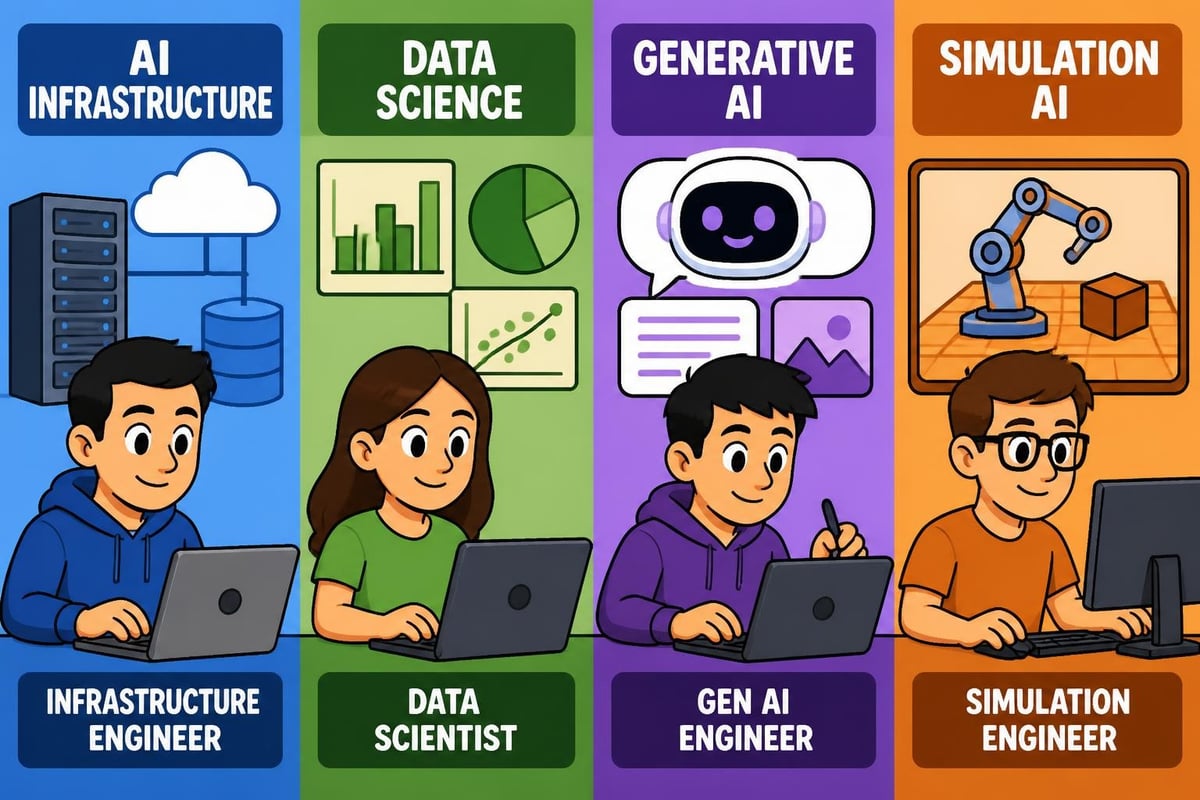
NVIDIA structures its certification offerings across four primary domains: AI Infrastructure, Data Science, Generative AI, and Simulation and Physical AI. Each domain addresses distinct skill sets and job roles, from infrastructure engineers managing GPU clusters to developers building generative AI applications.
The certification hierarchy includes two levels:
- Associate-level certifications validate foundational knowledge and practical skills for professionals entering specialized AI roles
- Professional-level certifications demonstrate advanced expertise in implementing and managing complex AI systems at enterprise scale
This tiered approach allows learners to start with accessible entry points while providing clear advancement pathways. The NVIDIA-Certified Associate: Generative AI LLMs credential, for instance, serves as an ideal starting point for developers transitioning into generative AI development.
Certification Value Proposition for Professionals
Professional credentials carry weight only when they translate into tangible career benefits. The nvidia ai certification program delivers measurable value through several mechanisms that extend beyond resume enhancement.
Market differentiation represents the most immediate benefit. As organizations deploy generative AI solutions, they need professionals who understand NVIDIA's CUDA platform, TensorRT optimization, and NIM microservices architecture. Certified professionals can demonstrate this expertise through third-party validation rather than relying solely on self-reported skills.
Salary impact shows promising trends. While comprehensive salary data specific to NVIDIA certifications remains limited given their recent introduction, professionals with specialized AI credentials command premium compensation. Organizations implementing AI infrastructure operations increasingly prioritize candidates who can demonstrate hands-on expertise with the technologies they've already invested in.
Skill validation matters particularly for career transitions. A software developer moving from traditional application development into AI engineering faces skepticism about their readiness for production AI work. An nvidia ai certification provides objective evidence of their capabilities, reducing perceived risk for hiring managers.
Generative AI LLM Associate Certification Deep Dive
The Generative AI LLM Associate credential targets developers, data scientists, and technical professionals working with large language models. This certification validates skills essential for building, customizing, and deploying generative AI applications using NVIDIA frameworks and tools.
Exam Structure and Content Coverage
The certification exam assesses practical knowledge across multiple domains that reflect real-world implementation challenges. Candidates should expect questions covering:
| Domain | Weight | Key Topics |
|---|---|---|
| LLM Fundamentals | 25% | Architecture, training concepts, inference optimization |
| NVIDIA AI Platform | 30% | NeMo framework, TensorRT-LLM, NIM microservices |
| Customization & Fine-tuning | 25% | Retrieval-augmented generation, parameter-efficient methods |
| Deployment & Operations | 20% | Model serving, monitoring, optimization strategies |
The exam format includes multiple-choice and scenario-based questions that test applied knowledge rather than memorization. Candidates receive 90 minutes to complete the assessment, with a passing score set at 70%.
NVIDIA designed this certification to validate capabilities that employers actively seek. When organizations deploy generative AI applications, they need team members who understand not just theoretical concepts but practical implementation details like GPU memory management during inference and techniques for reducing model serving costs.
Preparation Strategies and Resources
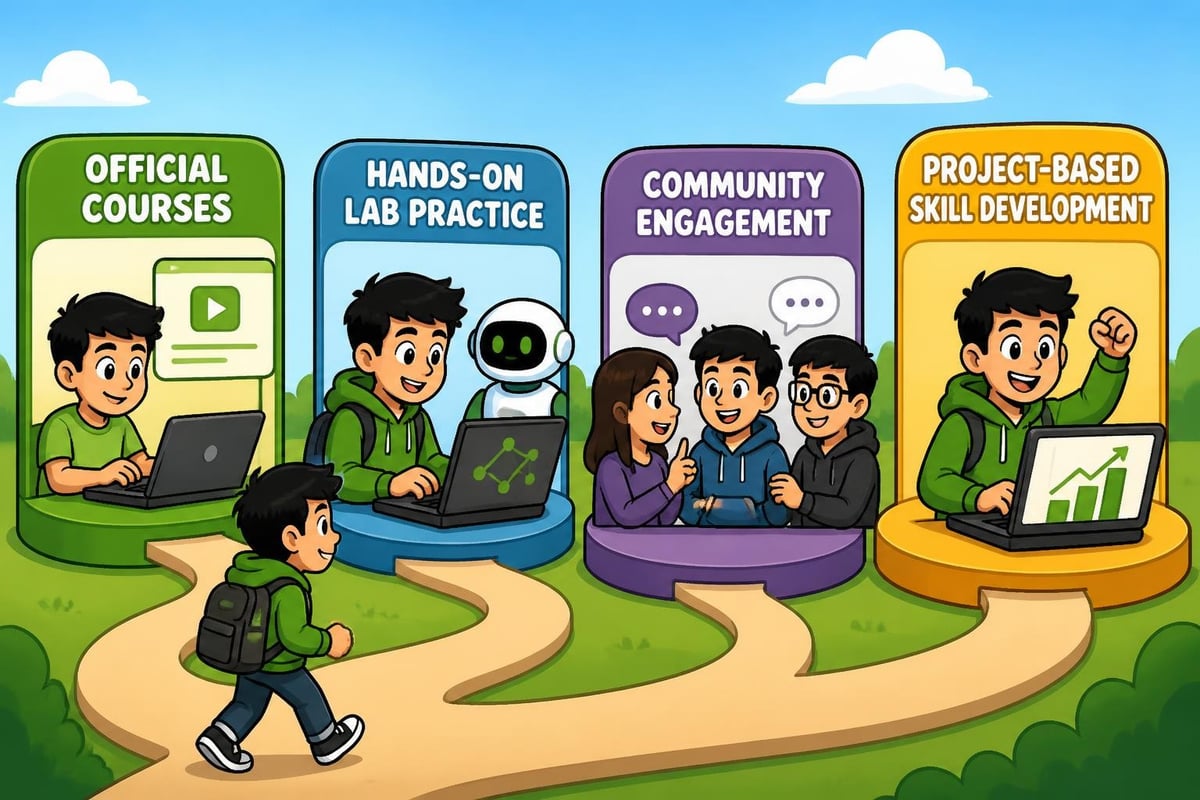
Effective preparation requires hands-on practice with NVIDIA tools rather than passive study. The certification blueprint published by NVIDIA outlines specific frameworks and concepts covered on the exam, providing a focused roadmap for preparation.
Official NVIDIA training offers the most direct preparation path. NVIDIA provides self-paced courses covering LLM fundamentals, the NeMo framework, and deployment best practices. These courses include lab environments where candidates work directly with NVIDIA tools, building the practical skills the exam assesses.
Supplement official materials with broader learning resources. Platforms like MammothClub offer comprehensive AI courses that provide foundational knowledge complementing NVIDIA-specific training. Understanding general AI and machine learning concepts creates context for NVIDIA's specific implementations.
Hands-on practice cannot be overstated. The certification validates practical skills, requiring candidates to understand command syntax, configuration options, and troubleshooting approaches. Set up a development environment using NVIDIA's free tier offerings or cloud-based GPU instances to gain direct experience.
Study tactics that maximize retention and application:
- Create implementation projects using NVIDIA NeMo to build custom LLM applications
- Document your learning process by maintaining a technical journal of challenges and solutions
- Join community forums where NVIDIA practitioners discuss real-world implementation scenarios
- Review performance optimization techniques specific to NVIDIA GPUs and TensorRT
- Practice explaining concepts to solidify understanding and identify knowledge gaps
AI Infrastructure and Operations Certifications
The professional-level infrastructure certifications represent NVIDIA's response to the operational challenges organizations face when deploying AI at scale. As companies move beyond pilot projects into production AI systems, they need specialists who can architect, deploy, and maintain the infrastructure supporting these workloads.
These credentials focus on practical expertise in areas that directly impact AI project success rates and operational costs. Topics include GPU cluster design, workload orchestration, monitoring and troubleshooting, and performance optimization across distributed systems.
Target Audience and Prerequisites
Infrastructure certifications suit IT professionals, DevOps engineers, and system administrators transitioning into AI-focused roles. The professional-level credentials assume candidates possess:
- Foundational understanding of Linux system administration
- Experience with containerization technologies like Docker and Kubernetes
- Basic networking knowledge for distributed computing environments
- Familiarity with data center operations or cloud infrastructure management
Unlike the associate-level credentials, professional certifications expect candidates to have real-world experience with production systems. The exams include complex scenarios requiring candidates to diagnose problems, recommend solutions, and justify technical decisions based on business constraints.
Business Impact and ROI Considerations
Organizations invest significantly in AI infrastructure, making certified professionals valuable assets. A single misconfigured GPU cluster can waste thousands of dollars monthly through inefficient resource utilization. Professionals with nvidia ai certification in infrastructure demonstrate they understand optimization techniques that directly impact operating costs.
Downtime prevention represents another critical value driver. When AI applications support customer-facing services or critical business processes, infrastructure failures create immediate revenue impact. Certified professionals bring validated troubleshooting skills that reduce mean time to resolution.
Companies implementing corporate training programs should consider infrastructure certifications as strategic investments. Upskilling existing IT staff with AI infrastructure expertise often delivers better ROI than hiring external specialists, particularly for organizations with complex legacy environments requiring institutional knowledge.
Strategic Certification Selection for Career Goals
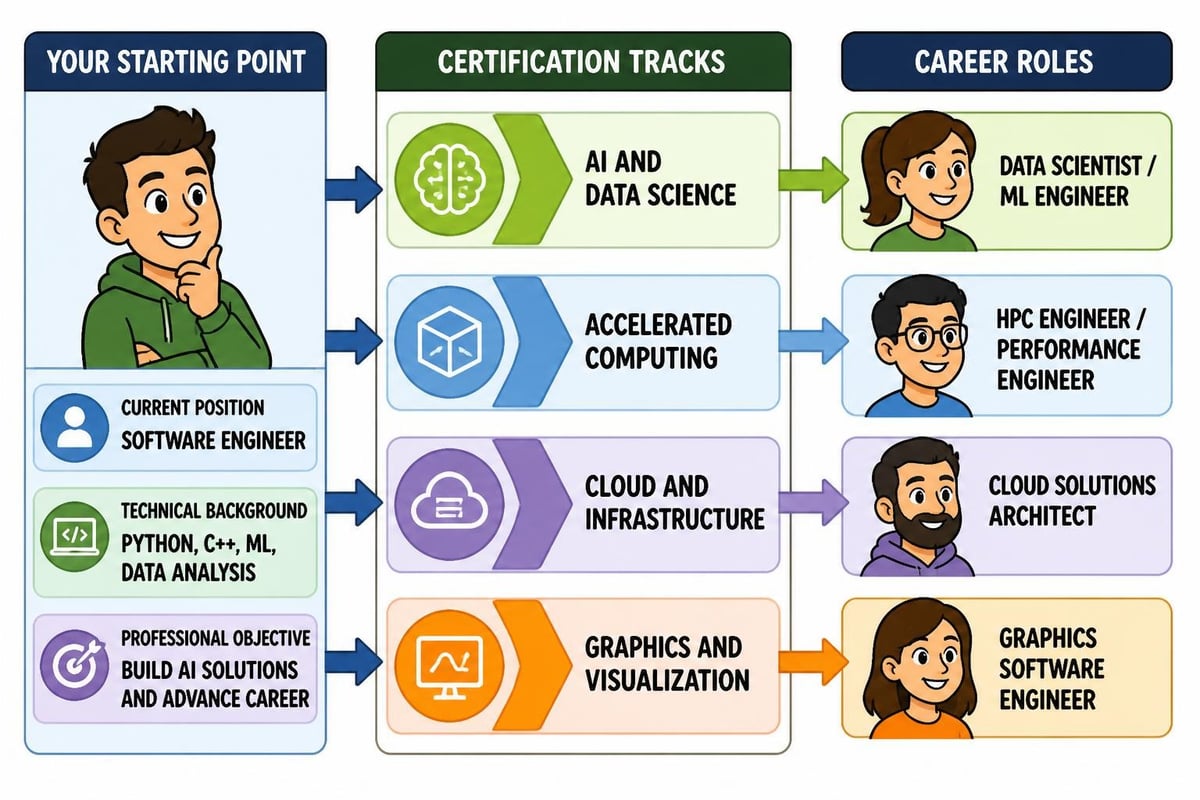
Choosing the right nvidia ai certification depends on current role, career objectives, and the specific AI applications most relevant to your industry. A thoughtful selection strategy maximizes certification ROI while building credentials that create genuine career opportunities.
Decision Framework for Certification Paths
For developers and data scientists building AI applications, the Generative AI LLM Associate certification aligns most directly with emerging job requirements. Organizations deploying chatbots, content generation systems, or AI-powered analytics need professionals who understand LLM implementation details.
For IT infrastructure professionals, the professional-level infrastructure certifications open doors to specialized roles in AI operations. As companies scale AI deployments, they create dedicated positions for GPU cluster management and AI infrastructure optimization, roles that command premium compensation.
For technical managers and architects, pursuing multiple certifications across domains demonstrates comprehensive AI expertise. A professional holding both generative AI and infrastructure credentials can bridge the gap between development teams and operations, a valuable capability as organizations adopt MLOps practices.
Consider these factors when selecting your certification path:
| Factor | Generative AI Track | Infrastructure Track |
|---|---|---|
| Primary role | Developer, data scientist | IT operations, DevOps |
| Day-to-day work | Building AI applications | Managing AI systems |
| Technical focus | Model development, fine-tuning | Performance, reliability |
| Typical next step | Senior AI engineer | AI infrastructure architect |
| Complementary skills | Python programming, ML algorithms | Linux administration, Kubernetes |
Certification Integration with Broader AI Learning
While nvidia ai certification validates specific technical skills, professionals maximize career impact by positioning these credentials within a comprehensive learning strategy. Certifications work best when combined with deeper theoretical knowledge and practical experience across multiple AI domains.
Building a Complete AI Skill Portfolio
Foundational AI knowledge creates context for NVIDIA-specific technologies. Understanding machine learning fundamentals, neural network architectures, and training methodologies helps professionals grasp why NVIDIA implements certain approaches in their frameworks. Courses covering artificial intelligence fundamentals provide this essential background.
Complementary vendor certifications demonstrate versatility valued by employers. While NVIDIA dominates AI hardware, organizations use diverse software platforms. Combining nvidia ai certification with credentials like Microsoft AI certifications shows proficiency across the AI technology stack.
Specialized domain expertise differentiates professionals in competitive markets. An nvidia ai certification combined with deep knowledge in healthcare AI, financial services applications, or autonomous systems creates a unique value proposition that few candidates can match.
Consider this integrated learning approach:
- Establish ML foundations through comprehensive courses covering algorithms, statistics, and programming
- Gain vendor-specific expertise with NVIDIA certifications validating hands-on platform skills
- Develop domain knowledge in the industries where you want to work
- Build a project portfolio demonstrating practical application of certified skills
- Maintain continuous learning as AI technologies evolve rapidly
Corporate Training Program Implementation
Organizations implementing nvidia ai certification programs for their teams should approach deployment strategically to maximize knowledge retention and business impact. Successful corporate training initiatives share common characteristics that differentiate them from individual learning efforts.
Cohort-based learning creates accountability and peer support. When multiple team members pursue certifications together, they can share insights, troubleshoot challenges collectively, and build internal expertise networks that persist after certification completion.
Hands-on lab environments prove essential for skill development. Organizations should provision access to NVIDIA GPU resources through cloud providers or on-premise infrastructure, allowing learners to practice without resource constraints. The investment in lab infrastructure pays dividends through deeper skill development.
Management support and recognition drive program success. When leadership celebrates certification achievements, provides study time during work hours, and connects certified skills to career advancement opportunities, completion rates and knowledge application improve dramatically. Platforms like MammothClub offer corporate training solutions that include progress dashboards and completion tracking, helping managers measure program effectiveness.
Exam Day Preparation and Success Strategies
Tactical preparation in the days before your nvidia ai certification exam can significantly impact performance. Beyond content mastery, exam technique and mental preparation contribute to success.
Pre-Exam Technical Review
Focus your final preparation on high-value topics and weak areas identified during practice tests. NVIDIA provides exam blueprints detailing the percentage weight of each domain, allowing strategic time allocation for final review.
Command syntax and tool usage deserve particular attention. Scenario-based questions may present configuration files or command outputs requiring candidates to identify errors or recommend improvements. Reviewing common commands and configuration patterns improves response speed and accuracy.
Create reference sheets summarizing key concepts, even though you cannot bring them into the exam. The process of creating condensed reference materials strengthens recall and helps identify remaining knowledge gaps.
Practice time management using sample questions or practice exams. Understanding how many minutes you can allocate per question helps prevent rushing through later sections or leaving questions unanswered.
Exam Day Tactics
NVIDIA delivers certifications through Pearson VUE testing centers or online proctoring. Each format presents unique considerations that affect performance.
For testing center exams, arrive 15 minutes early to complete check-in procedures without stress. Bring required identification and understand prohibited items policies. Testing centers provide scratch paper or dry-erase boards for calculations or diagramming during the exam.
For online proctored exams, test your computer setup and internet connection well before exam day. Complete the system check and familiarize yourself with the proctoring software interface. Ensure your testing environment meets requirements regarding lighting, background, and prohibited materials.
During the exam itself:
- Read questions completely before reviewing answer options to avoid misinterpretation
- Flag difficult questions for later review rather than spending excessive time on single items
- Eliminate obviously incorrect answers to improve odds on questions where you're uncertain
- Watch the time but don't panic if you're slightly behind pace at the halfway point
- Use all available time to review flagged questions and verify answers
Maintaining and Leveraging Your Certification
Earning your nvidia ai certification represents a significant achievement, but maximizing its value requires strategic leveraging and ongoing skill maintenance. Certifications lose relevance when holders fail to stay current with technology evolution or effectively communicate their validated expertise to employers and clients.
Credential Maintenance and Recertification
NVIDIA certifications remain valid for three years from the issue date. This time-limited validity reflects the rapid pace of AI technology evolution. Frameworks, best practices, and platform capabilities that define cutting-edge practice today may become outdated as new architectures and techniques emerge.
Recertification requirements ensure certified professionals maintain current knowledge. NVIDIA may require passing an updated exam or completing continuing education activities. Monitor NVIDIA's certification portal for announcements about recertification pathways as your expiration date approaches.
Continuous learning between certification cycles keeps skills sharp and prepares you for recertification. Follow NVIDIA's technical blog, participate in developer forums, and experiment with new framework releases. Organizations like MammothClub continuously update course catalogs to reflect emerging AI technologies, providing structured learning paths that complement certification maintenance.
Professional Branding and Visibility
Certifications create value only when relevant stakeholders know about them. Strategic visibility tactics amplify certification ROI across multiple channels.
LinkedIn optimization starts with adding credentials to your certifications section using NVIDIA's official certification names. Include your certification in your headline if it's particularly relevant to your target roles. Share a post announcing your achievement, explaining what you learned and how you plan to apply these skills professionally.
Digital badges provided by NVIDIA can be embedded in email signatures, personal websites, and portfolio materials. These verifiable credentials allow employers and clients to confirm your certification status while showcasing your expertise.
Practical application stories demonstrate certification value more effectively than simply listing credentials. When discussing your nvidia ai certification in interviews or proposals, reference specific projects where you applied certified skills to solve business problems or improve system performance.
Build visibility through:
- Contributing to technical forums and communities focused on NVIDIA technologies
- Writing blog posts or creating content demonstrating your expertise
- Speaking at local meetups or conferences about AI implementation
- Mentoring others pursuing similar certifications
- Participating in NVIDIA's developer programs and events
NVIDIA AI certifications provide validated pathways for professionals seeking to demonstrate expertise in the technologies powering modern AI applications, from generative AI development to infrastructure operations. These credentials carry significant weight in a marketplace where employers struggle to identify qualified talent capable of implementing and managing production AI systems. Whether you're building LLM applications or architecting GPU clusters, strategic certification investment positions you for emerging opportunities in the AI economy. MammothClub accelerates your certification journey with 3,000+ AI and technology courses, interactive bootcamps, and AI-powered learning tools that make preparation efficient and engaging. Our corporate certification programs help organizations upskill teams at scale with measurable results, keeping your business competitive in the rapidly evolving AI landscape.