The demand for artificial intelligence education has never been higher. As organizations across every sector deploy AI solutions, universities face mounting pressure to prepare graduates with practical AI skills and theoretical foundations. A well-designed artificial intelligence university course bridges the gap between academic rigor and industry relevance, equipping students to build, evaluate, and deploy intelligent systems while understanding their societal implications. This guide provides comprehensive strategies for curriculum design, learning outcomes, assessment methods, and integration of generative AI tools in 2026.
Core Components of an Effective AI University Course
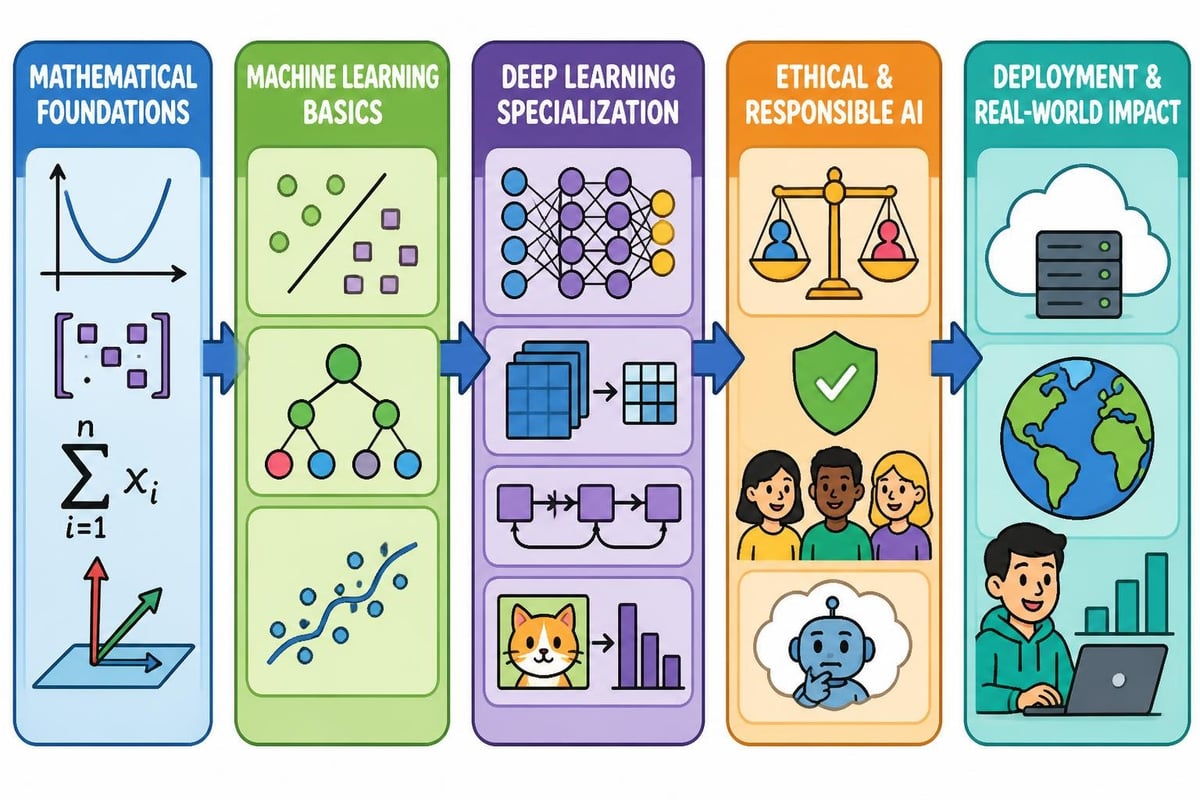
A successful artificial intelligence university course requires careful balance between theory and practice. Students need mathematical foundations in linear algebra, calculus, and probability alongside hands-on experience with frameworks, datasets, and real-world problems.
Fundamental Topic Coverage
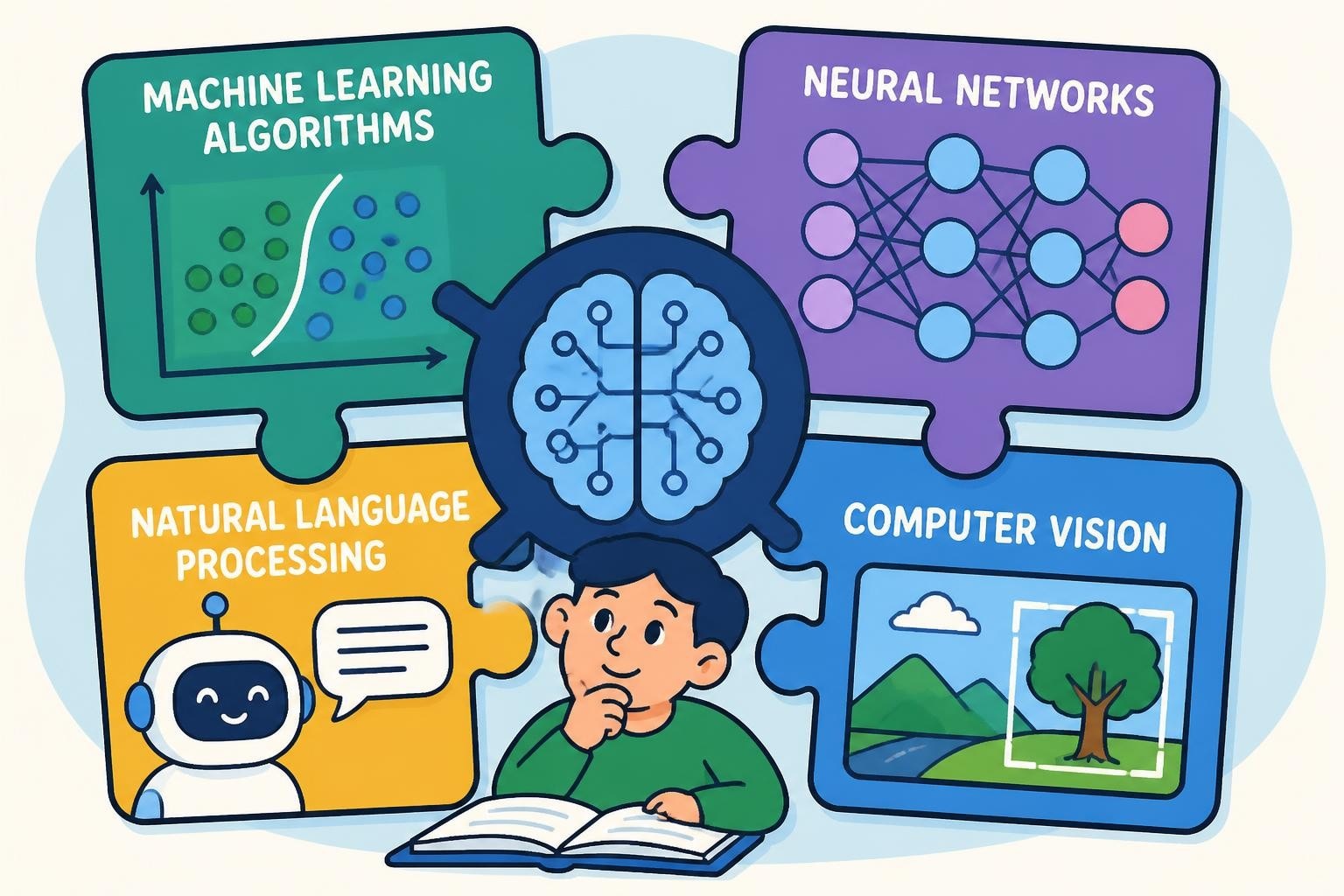
The curriculum should address essential AI domains systematically. Machine learning fundamentals form the backbone, covering supervised learning, unsupervised learning, and reinforcement learning paradigms. Students must understand decision trees, neural networks, support vector machines, and ensemble methods through both lectures and coding assignments.
Deep learning architectures deserve dedicated coverage, including:
- Convolutional neural networks for computer vision
- Recurrent networks and transformers for sequential data
- Attention mechanisms and modern architectures
- Transfer learning and fine-tuning strategies
- Practical frameworks like PyTorch and TensorFlow
Search and optimization techniques remain foundational. The MIT 6.034 course structure demonstrates effective sequencing of uninformed search, heuristic methods, adversarial search, and constraint satisfaction problems. Students should implement algorithms from scratch before using libraries.
Prerequisites and Student Preparation
Setting appropriate prerequisites ensures student success. Most universities require programming proficiency (typically Python), data structures, discrete mathematics, and introductory statistics. The Stanford CS221 course exemplifies clear prerequisite communication, listing specific prior courses and expected competencies.
Consider offering bridge modules for students from diverse backgrounds. A two-week intensive covering Python, NumPy, pandas, and basic probability can level the playing field. This inclusive approach broadens your talent pipeline while maintaining academic standards.
Designing Learning Outcomes and Competencies
Effective learning outcomes specify what students can do after completing your artificial intelligence university course, not just what they know. Use Bloom's taxonomy to craft outcomes across cognitive levels.
Knowledge and Comprehension Outcomes
Students should be able to:
- Explain fundamental AI concepts including agents, search spaces, and learning paradigms
- Describe how different algorithms solve specific problem types
- Compare strengths and limitations of various approaches
- Interpret model outputs, performance metrics, and error analyses
Application and Analysis Outcomes
Higher-level outcomes focus on practical skills:
- Implement core algorithms from mathematical descriptions
- Select appropriate techniques for given problem constraints
- Evaluate model performance using proper validation methods
- Debug and improve existing AI systems
- Analyze ethical implications of AI deployments
The ACM CS2023 curriculum guidelines provide detailed knowledge units and competency levels for AI topics, offering a research-backed framework for outcome design.
| Competency Level | Student Capability | Assessment Method |
|---|---|---|
| Familiarity | Recognize concepts, use terminology | Multiple choice, short answer |
| Usage | Apply techniques to standard problems | Coding assignments, problem sets |
| Assessment | Evaluate tradeoffs, select approaches | Project proposals, design reviews |
Structuring Lectures, Labs, and Projects
Course structure significantly impacts learning effectiveness. A typical 15-week artificial intelligence university course might allocate 60% to foundational concepts, 25% to specialized topics, and 15% to project work.
Weekly Rhythm and Pacing
Establish a predictable pattern. Many successful courses use:
- Monday: Conceptual lecture introducing new topics
- Wednesday: Technical deep-dive with mathematical derivations
- Friday: Lab session applying concepts to code
This rhythm allows students to build understanding incrementally. Provide skeleton code and datasets so lab time focuses on algorithm implementation rather than setup frustrations.
Hands-On Deep Learning Components
Modern artificial intelligence university courses must include substantial deep learning practice. The MIT 15.773 lecture materials demonstrate how to structure practical sessions covering model architecture design, hyperparameter tuning, and deployment considerations.
Consider these lab progressions:
- Week 3-4: Implement basic neural networks from scratch using NumPy
- Week 6-7: Build CNNs for image classification with PyTorch
- Week 9-10: Fine-tune transformer models for NLP tasks
- Week 12-13: Deploy models using cloud platforms or edge devices
Capstone Project Design
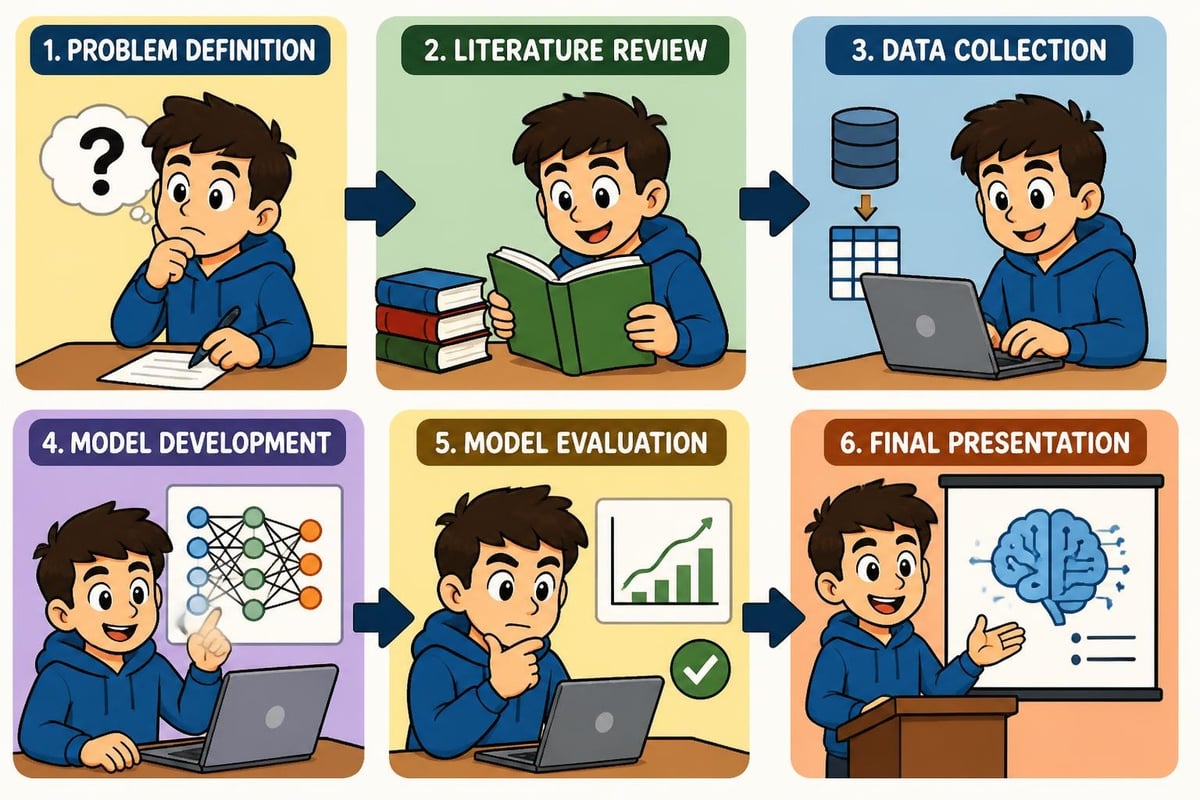
A substantial final project cements learning. Effective projects require students to:
- Formulate a well-defined AI problem
- Research and select appropriate techniques
- Implement and iterate on solutions
- Evaluate results rigorously
- Present findings to technical and non-technical audiences
Offer project options spanning computer vision, natural language processing, robotics, and game playing. Partner with industry platforms like MammothClub to expose students to real-world datasets and business constraints.
Assessment Strategies in the GenAI Era
Traditional assessment methods require rethinking now that students have access to powerful generative AI tools. The ACM Task Force guidance on GenAI and assessment offers practical recommendations for adapting evaluation methods.
Formative Assessment Approaches
Continuous assessment helps students identify knowledge gaps early:
- Weekly coding exercises with automated testing and feedback
- Peer code reviews developing critical evaluation skills
- Concept check quizzes after each major topic
- Algorithm explanation videos demonstrating deep understanding
Encourage students to use AI assistants during formative work while teaching them to verify and understand generated code. This mirrors professional practice.
Summative Evaluation Methods
High-stakes assessments should evaluate competencies that generative AI cannot fully replace:
Live coding exams where students implement algorithms under time constraints demonstrate genuine understanding. Provide problem descriptions and starter code, then evaluate correctness, efficiency, and code quality.
Design justification assignments require students to propose AI solutions for complex scenarios, defend their choices against alternatives, and anticipate failure modes. These exercises assess critical thinking and architectural judgment.
Oral examinations allow instructors to probe understanding through follow-up questions. Ask students to explain their project decisions, debug failing code live, or extend their implementations to new requirements.
| Assessment Type | Weight | GenAI Usage | Skills Evaluated |
|---|---|---|---|
| Weekly problem sets | 20% | Permitted with citation | Application, debugging |
| Midterm exam | 20% | Prohibited | Core knowledge, algorithms |
| Final project | 35% | Permitted strategically | Design, implementation, evaluation |
| Code reviews | 15% | Prohibited | Analysis, communication |
| Participation | 10% | N/A | Engagement, collaboration |
Integrating Generative AI Literacy
A contemporary artificial intelligence university course must address generative AI explicitly. Students will encounter ChatGPT, GitHub Copilot, and similar tools in their careers, so courses should teach effective and ethical usage.
Teaching Prompt Engineering and Tool Use
Dedicate 2-3 lectures to generative AI fundamentals. Cover transformer architectures, attention mechanisms, and training procedures for large language models. Students should understand capabilities and limitations at a technical level.
Incorporate prompt engineering exercises where students craft prompts for code generation, documentation, and debugging assistance. Compare AI-generated solutions against handwritten implementations, analyzing differences in efficiency, readability, and correctness.
The UNESCO guidance on GenAI in education emphasizes transparency and critical evaluation. Require students to document when and how they used AI assistance, fostering accountability and metacognitive awareness.
Academic Integrity Policies
Establish clear boundaries. Many artificial intelligence university courses adopt tiered policies:
- Green zone: Formative exercises where AI use is encouraged with citation
- Yellow zone: Projects where AI can assist with boilerplate but not core algorithms
- Red zone: Exams and specific assignments where AI use constitutes academic dishonesty
Communicate these boundaries explicitly in syllabi and assignment descriptions. Use plagiarism detection tools adapted for AI-generated code, and conduct random oral defenses to verify student understanding.
Industry Connections and Career Preparation
Universities increasingly measure success by graduate outcomes. Build industry relevance throughout your artificial intelligence university course to improve student career prospects.
Guest Lectures and Case Studies
Invite AI practitioners to present real-world projects. A machine learning engineer from a healthcare startup can explain model deployment challenges, regulatory constraints, and interdisciplinary collaboration. These sessions ground theoretical concepts in business realities.
Develop case study discussions based on published AI failures and successes. Analyze why Microsoft's Tay chatbot went wrong, how DeepMind's AlphaFold advanced protein structure prediction, or what ethical issues arose from facial recognition deployments. These discussions build critical thinking and professional judgment.
Certification and Skill Validation
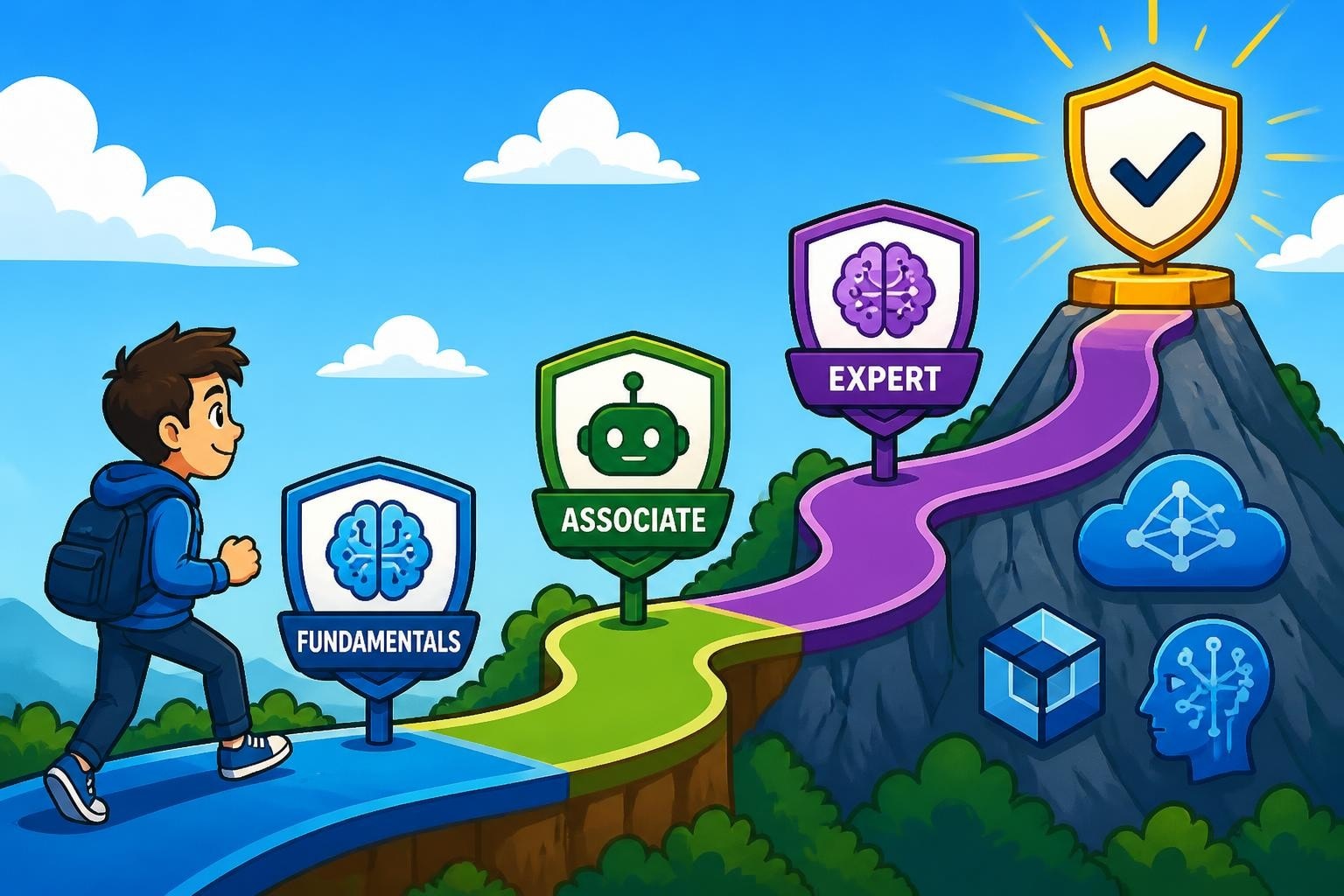
Many students pursue additional credentials alongside degrees. Partner with platforms offering AI certification programs that complement academic coursework. Industry-recognized certifications in Azure AI, AWS Machine Learning, or Google Cloud AI enhance student employability.
Consider designing your artificial intelligence university course to align with Microsoft AI certification or similar credential pathways. This alignment helps students understand how academic learning translates to professional competencies.
Curriculum Resources and Continuous Improvement
Building an excellent artificial intelligence university course requires ongoing refinement based on pedagogical research, student feedback, and industry evolution.
Leveraging Open Educational Resources
Take advantage of freely available materials. MIT OpenCourseWare, Stanford CS courses, and fast.ai content provide lecture videos, problem sets, and project ideas. Adapt these resources to your institutional context rather than creating everything from scratch.
The systematic literature review on AI in programming education synthesizes evidence on effective teaching practices, assessment design, and student outcomes. Use this research to inform your pedagogical choices.
Reference the JISE guide for instructors using GenAI when updating course materials each semester. This practical guidance helps instructors stay current with rapid tool evolution.
Student Feedback and Iterative Design
Collect feedback continuously, not just at semester end. Use:
- Weekly pulse surveys asking what's working and what's confusing
- Mid-semester course evaluations allowing major adjustments
- Exit interviews with top performers and struggling students
- Alumni surveys assessing long-term value and career impact
Track which assignments produce the strongest learning gains through pre/post testing. Identify where students consistently struggle and add supplementary materials or restructure explanations.
Advanced Topics and Specialization Tracks
As students master fundamentals, offer pathways into specialized domains. A modular artificial intelligence university course can accommodate diverse interests while maintaining core rigor.
Domain-Specific Applications
Create elective modules focusing on:
Computer vision: Image classification, object detection, semantic segmentation, generative models for images
Natural language processing: Text classification, machine translation, question answering, large language model fine-tuning
Robotics and control: Sensor fusion, path planning, reinforcement learning for autonomous systems
AI for business: Recommender systems, demand forecasting, customer segmentation, automated decision-making
Students in finance programs might take an AI for finance course focusing on algorithmic trading, risk modeling, and fraud detection. Business students could explore AI trading strategies and quantitative methods.
Research Methods and Ethics Integration
Advanced students should engage with AI research literature and ethical frameworks. Assign paper presentations where students explain recent publications from NeurIPS, ICML, or domain-specific conferences. This develops critical reading skills and exposure to cutting-edge techniques.
Integrate AI ethics throughout rather than relegating it to a single lecture. When teaching facial recognition, discuss surveillance implications. During recommendation system coverage, address filter bubbles and manipulation. Frame reinforcement learning projects around value alignment challenges.
| Specialization Track | Core Topics | Capstone Project Examples |
|---|---|---|
| Computer Vision | CNNs, object detection, GANs | Medical image diagnosis, autonomous vehicle perception |
| NLP | Transformers, embeddings, fine-tuning | Chatbot development, sentiment analysis pipeline |
| Robotics | Sensors, SLAM, RL | Warehouse automation, drone navigation |
| Business Analytics | Recommenders, forecasting, optimization | Customer churn prediction, inventory optimization |
Teaching Team and Resource Requirements
Delivering a high-quality artificial intelligence university course demands significant resources beyond a single instructor.
Staffing Considerations
Recruit teaching assistants with strong programming skills and patience for debugging sessions. Plan for one TA per 25-30 students to maintain reasonable office hours coverage and assignment grading turnaround.
Consider industry mentors who can review project proposals, conduct mock interviews, or evaluate final presentations. Many companies offer employee volunteer programs specifically for educational partnerships.
Infrastructure and Tools
Students need access to:
- Compute resources: Cloud credits for AWS, Google Cloud, or Azure to train large models
- Development environments: JupyterHub installations or cloud notebooks for consistent setup
- Datasets: Curated collections for assignments, respecting licensing and privacy
- Collaboration platforms: GitHub for version control, Slack/Discord for communication
Budget approximately $50-100 per student per semester for cloud computing, depending on course requirements. Pursue educational grants from cloud providers to reduce costs.
Adapting to Different Student Populations
The ideal artificial intelligence university course structure varies based on student background, program level, and institutional context.
Undergraduate vs. Graduate Approaches
Undergraduate courses emphasize breadth and foundational understanding. Students should emerge with solid intuition about when to apply different techniques, basic implementation skills, and awareness of AI's societal dimensions. Projects can be more guided with substantial starter code.
Graduate courses demand greater depth, mathematical rigor, and research engagement. Expect students to implement algorithms from papers, prove convergence properties, and design novel solutions. Projects should advance knowledge or solve open problems.
Accommodating Non-CS Majors
Many institutions offer artificial intelligence university courses for business, biology, or social science students. These require:
- Gentler mathematical prerequisites focusing on concepts over proofs
- Domain-specific examples relevant to student career paths
- Higher-level tools using scikit-learn before implementing from scratch
- Emphasis on interpretation and critical evaluation over optimization
A course for journalism students might focus on detecting deepfakes and misinformation. Biology students could explore protein folding and drug discovery applications.
Global Perspectives and Inclusive Design
AI education should prepare students to work in diverse, global contexts while addressing equity and access concerns.
Cultural and Regional Considerations
AI systems encode values through training data, objective functions, and deployment contexts. Teach students to recognize cultural assumptions in datasets and algorithms. A facial recognition system trained primarily on one demographic performs poorly on others, raising fairness concerns.
Include global case studies showing how AI impacts different societies. Discuss how language models perform across languages, how agricultural AI assists small farmers in developing nations, or how different regulatory frameworks govern AI deployment worldwide.
Accessibility and Universal Design
Ensure course materials accommodate students with disabilities:
- Video captions and transcripts for all lectures
- Screen-reader compatible code notebooks and documentation
- Flexible deadlines with accommodations for documented needs
- Alternative assessment formats for students with specific challenges
Design assignments that don't assume access to high-end hardware. Provide cloud resources or pre-trained models when computational requirements exceed typical laptop capabilities.
Designing an effective artificial intelligence university course in 2026 requires balancing theoretical foundations with practical skills, traditional pedagogy with generative AI integration, and academic rigor with industry relevance. By following evidence-based curriculum design principles, maintaining clear learning outcomes, adapting assessments for the GenAI era, and continuously incorporating student feedback, educators can prepare graduates who think critically about AI systems and build them responsibly. Whether you're developing undergraduate courses, graduate seminars, or professional upskilling programs, MammothClub offers 3,000+ AI and tech courses alongside corporate certification programs that complement academic learning with industry-focused training, helping your students and organization stay competitive in the rapidly evolving AI landscape.