
Artificial intelligence is rapidly transforming the finance sector, redefining the skills required for professionals to thrive. As AI-driven tools automate analysis, enhance decision-making, and streamline operations, mastering these technologies is no longer optional.
In this article, we reveal the top 7 ai for finance course options to consider in 2026. These programs are designed to give you the expertise to stay ahead of industry disruption and secure your future in finance.
Discover detailed course features, pricing, key benefits, and ideal audiences. Ready to advance your career? Explore how to select the right learning path and take the next step with confidence.
Why AI Skills Are Essential for Finance Professionals in 2026
The Rapid Evolution of AI in Finance
Artificial intelligence is reshaping the finance sector at an unprecedented pace. From automating repetitive tasks to powering predictive analytics, AI is now integral to daily operations. According to Statista: AI in Finance Statistics, global investment in AI for finance continues to surge, reflecting the industry's commitment to digital transformation.
A modern ai for finance course covers trends such as generative AI, natural language processing, and advanced machine learning. These technologies drive improvements in fraud detection, algorithmic trading, and risk management. As a result, skill requirements for analysts, managers, and decision-makers are evolving rapidly.
AI-Driven Competitive Advantage in the Financial Sector
AI empowers finance professionals to make faster, data-driven decisions. Use cases include automated portfolio management, real-time credit scoring, and personalized client advisory services. By integrating AI, organizations gain efficiency by automating routine processes and reducing the risk of human error.
To remain competitive, firms must invest in team upskilling through an ai for finance course. AI also supports regulatory compliance and streamlines complex reporting tasks, making it a critical asset for future-ready finance teams.
The Growing Demand for AI-Focused Finance Training
As AI adoption accelerates, the number of specialized courses for finance professionals has grown significantly. Employers now prioritize candidates with AI and data literacy, driving demand for certifications and ongoing education. In fact, hundreds of ai for finance course options were available by 2025.
Upskilling is essential for job security, helping professionals adapt to automation and avoid displacement. Continuous learning and recognized certificates ensure that finance experts stay current and relevant in a changing industry.
What to Look for in an AI for Finance Course
Selecting the right ai for finance course involves several considerations. A strong curriculum should cover AI fundamentals, machine learning, and real-world finance applications. Look for programs offering hands-on projects, case studies, and practical scenarios.
Learning formats vary, from self-paced online modules to instructor-led or hybrid models. Certification and career support add value, while flexibility and industry recognition are key for busy professionals. Assess pricing and choose a course that aligns with your career goals and learning style.
7 Must-Try AI For Finance Course Picks For 2026
Navigating the world of AI for finance course options can be overwhelming, given the surge in demand and diverse offerings. To help you make an informed decision, this guide presents seven standout programs tailored to various career stages and learning preferences. Each ai for finance course listed here offers unique features, pricing, and benefits, ensuring there is a fit for every finance professional looking to upskill for 2026.
Mammoth Club: AI for Finance & Business Learning Path
If you are seeking an all-in-one ai for finance course with broad coverage and adaptive learning, Mammoth Club stands out. With a Premium Club Membership priced at $199 (90% off, includes all courses and certifications), the platform offers more than 3,000 tech and AI courses, including over 101 AI career paths.

Key features include real-time AI-powered lessons, certification prep, and unlimited access to content. The adaptive training system personalizes your journey, making it easy to focus on critical finance AI skills. Members receive a free printed book and enjoy 24/7 community support, which is ideal for continuous engagement.
Pros:
- Massive course library with flexible, multi-format content
- Affordable, all-inclusive pricing
- Industry-recognized credentials
Cons:
- Not university-branded
- Best suited for practical skills and certification, rather than academic credit
The ai for finance course is perfect for finance professionals, teams, and organizations aiming for scalable, measurable upskilling. Whether you are an individual looking to transition into AI-enhanced roles or an organization planning rapid AI adoption, Mammoth Club provides the tools and support you need. For those wanting a deeper overview of foundational AI skills before diving in, consult this comprehensive Artificial intelligence course guide.
AI in Finance Specialisation – CFTE
The CFTE AI in Finance Specialisation is a strong contender for those targeting practical, up-to-date ai for finance course content. Priced at £600 (or three payments of £200), this four-course track delivers 72+ expert video lessons, case studies, quizzes, and a digital certificate.
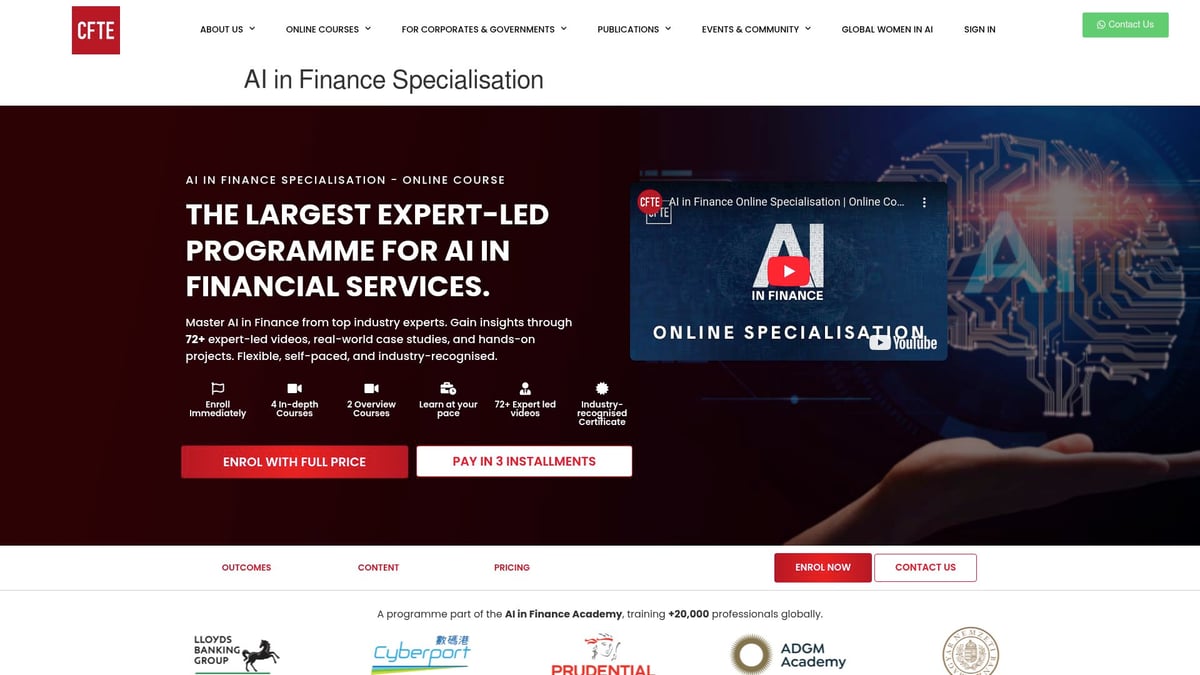
One of the standout benefits is the focus on real-world applications, covering banking, investments, and fintech. Over 30 industry leaders contribute, offering a diversity of perspectives and hands-on insights. The self-paced format accommodates different schedules, so you can learn at your own speed regardless of your career stage.
Pros:
- No prerequisites required
- Flexible learning schedule
- Industry-relevant case studies
Cons:
- Limited direct instructor interaction
- Certificate does not carry a university brand
This ai for finance course is ideal for finance professionals, analysts, managers, and fintech specialists eager to gain practical AI skills. The program is especially valuable for those who want to apply AI to specific business problems and stay current as the finance sector evolves.
AI for Business & Finance – Columbia Business School ExecEd x Wall Street Prep
For executives and senior professionals, the Columbia Business School ExecEd x Wall Street Prep ai for finance course delivers a prestigious credential and deep industry expertise. Pricing is available upon request, reflecting the premium nature of the program.

Core features include live instruction from Columbia faculty and Wall Street Prep experts, a curriculum focused on financial modeling and AI integration, and extensive industry case studies. The Ivy League certificate adds significant weight to your resume.
Pros:
- Ivy League recognition
- Strong networking opportunities
- Executive-level curriculum
Cons:
- Higher cost
- Selective admission
- Fixed course dates
This ai for finance course is tailored for senior finance professionals, executives, and aspiring leaders seeking to drive organizational AI transformation. The program is particularly valuable for those looking to advance into leadership roles or spearhead digital initiatives within their firms.
Finance AI Certificate Program – MIT Sloan Management Review Connections
The MIT Sloan Finance AI Certificate Program is designed for finance leaders and FP&A professionals who want a comprehensive, instructor-led ai for finance course. Pricing details are available upon inquiry.
The program consists of five live sessions covering data strategy, explainable AI, automation, and regulatory implications. Its collaboration with MIT ensures strong industry recognition and practical, up-to-date content.
Pros:
- Comprehensive curriculum
- Real-world, interactive modules
- MIT-backed certificate
Cons:
- Pricing not listed
- Requires a time commitment
This ai for finance course is perfect for professionals aiming to build AI literacy, lead finance transformation, and ensure regulatory compliance. The interactive format and focus on practical skills make it especially useful for those managing teams or overseeing digital change initiatives.
AI for Finance – Udemy
Udemy’s AI for Finance course offers an accessible entry point for professionals and aspiring data scientists. At just $34.69 for lifetime access, the course includes 18 lectures covering Python, Keras, Scikit-Learn, and Pandas, all within a finance context.
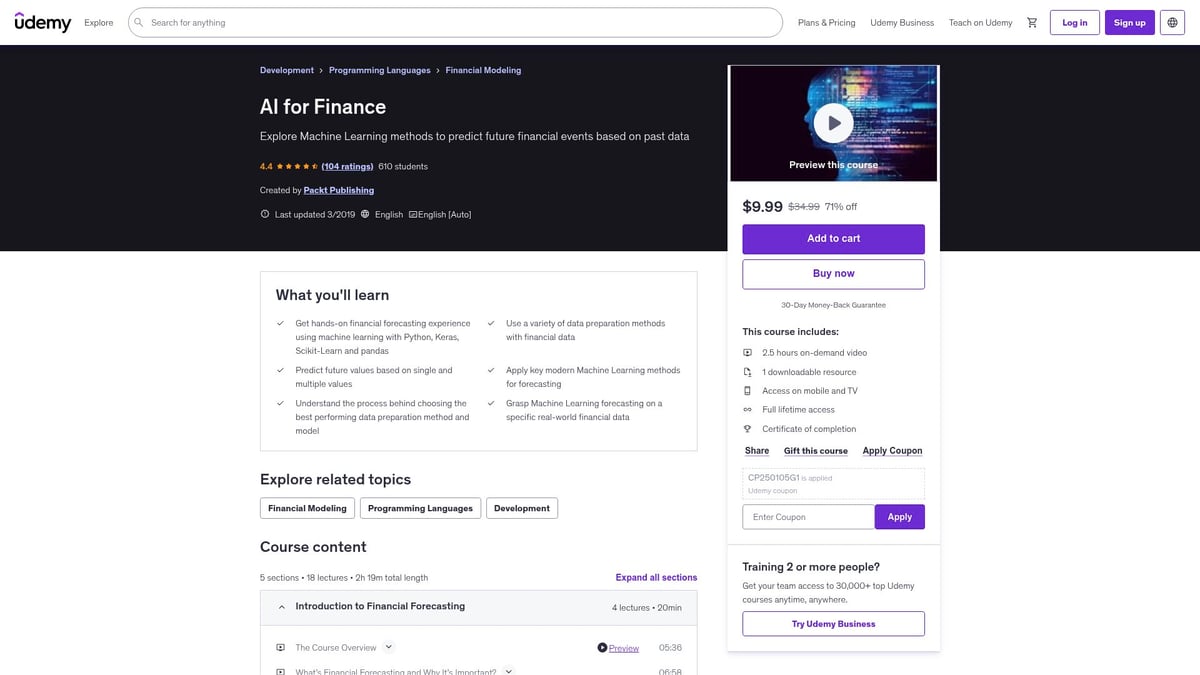
The course emphasizes hands-on learning with real-world data projects, making it a practical choice for those wanting to build a portfolio. While it is not accredited, the low cost and self-paced structure appeal to beginners and those updating their skills.
Pros:
- Affordable pricing
- Practical coding exercises
- Immediate application to finance scenarios
Cons:
- Not accredited by a university
- Limited instructor support
This ai for finance course is aimed at investment analysts, portfolio managers, and anyone eager to learn AI tools for finance at their own pace. It is a strong option for foundational upskilling or for building a project-based portfolio.
Machine Learning for Trading Specialization – Google Cloud & NYIF via Coursera
Offered free to Coursera members, this intermediate ai for finance course specializes in machine learning for trading. The three-course specialization covers trading strategies, reinforcement learning, and Google Cloud Platform tools.
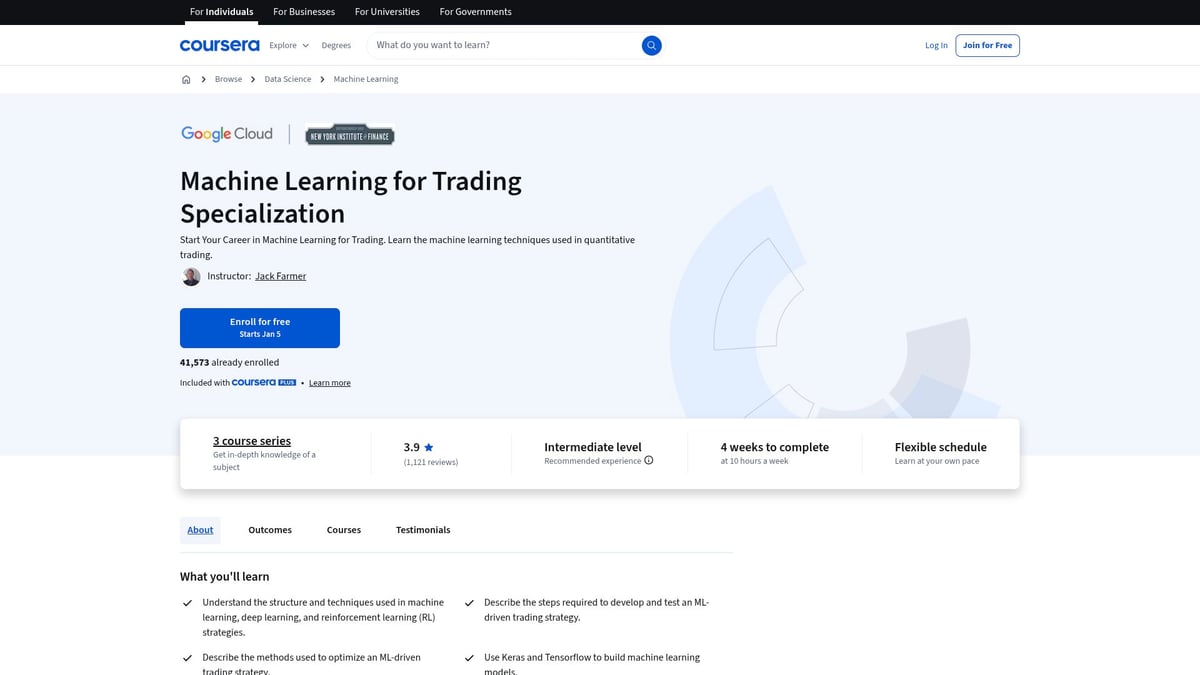
The partnership with NYIF and Google Cloud ensures strong industry alignment and practical relevance. The course is project-based, making it ideal for finance professionals with prior ML or SQL knowledge who want to advance into quantitative finance roles.
Pros:
- Free access for Coursera members
- Project-based, real-world learning
- Recognized Coursera certificate
Cons:
- Requires prior ML/SQL experience
- Intermediate difficulty level
This ai for finance course is designed for quantitative analysts, traders, and finance professionals looking to apply machine learning to trading strategies or pivot their careers toward data-driven finance.
Artificial Intelligence: Implications for Business Strategy – MIT Sloan x GetSmarter
MIT Sloan’s ai for finance course with GetSmarter is a six-week, online executive program priced at $3,200. It explores machine learning, NLP, robotics, and AI’s impact on business strategy, with content tailored to leaders and strategists.
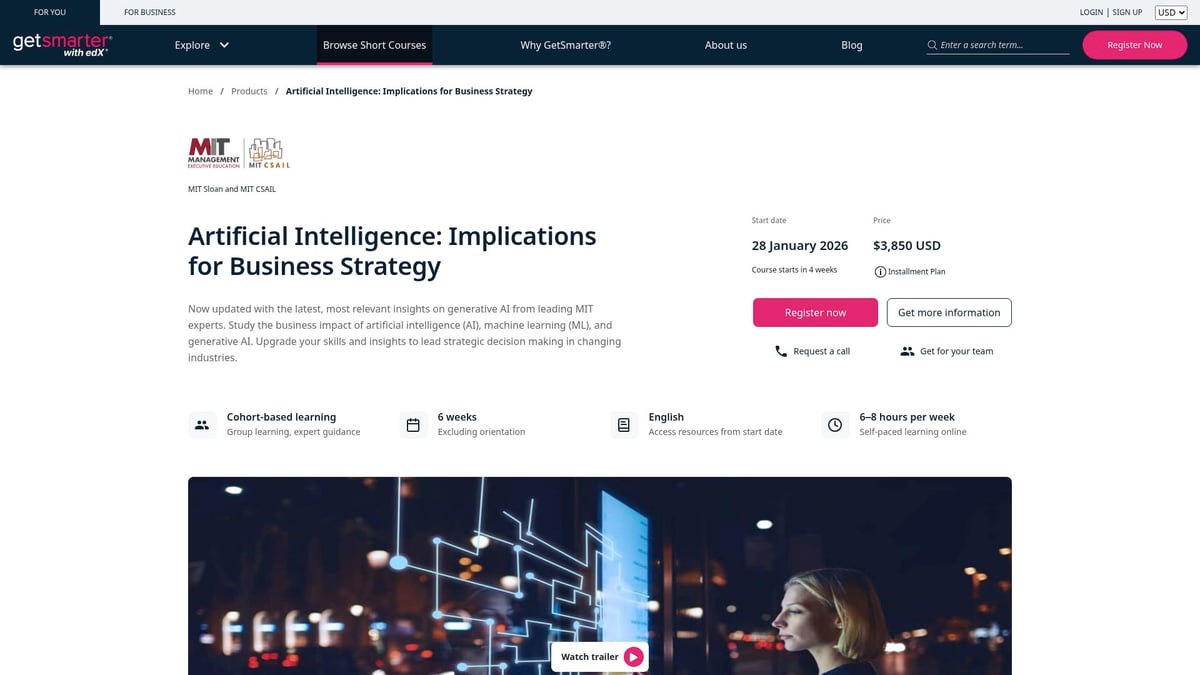
Key benefits include high academic rigor, a recognized MIT certificate, and a business-centric approach. The flexible payment plans and online delivery make it accessible, though the course requires 6–8 hours of study per week.
Pros:
- MIT faculty and branding
- Comprehensive, strategic content
- Flexible payment options
Cons:
- Higher price point
- Broader focus beyond just finance
This ai for finance course is perfect for finance leaders, strategists, and managers planning digital transformation or seeking to integrate AI into business operations.
Comparison Table: Top AI For Finance Course Picks
| Course & Provider | Pricing | Format | Credential | Target Audience | Best For |
|---|---|---|---|---|---|
| Mammoth Club | $199 | Self-paced, adaptive | Industry cert. | All levels, teams | Scalable upskilling |
| CFTE | £600 | Self-paced | Digital cert. | Pros, analysts | Practical AI in finance |
| Columbia ExecEd | Contact | Live, fixed dates | Ivy League cert. | Executives | Leadership, networking |
| MIT Sloan (Workday) | Contact | Live, interactive | MIT cert. | Leaders, managers | Transformation, compliance |
| Udemy | $34.69 | Self-paced | None | Beginners | Coding, portfolio |
| Coursera/NYIF | Free | Self-paced | Coursera cert. | Intermediates | ML trading skills |
| MIT x GetSmarter | $3,200 | Online, 6 weeks | MIT cert. | Leaders | Business strategy |
With so many ai for finance course options, you can select the right program based on your goals, experience, and budget. Each of these courses is designed to help you stay ahead in a rapidly changing industry, whether you are starting your AI journey or aiming to lead digital transformation in finance.
How to Choose the Right AI for Finance Course for Your Career Goals
Selecting the best ai for finance course can be a pivotal step for your career. With so many options, it is essential to align your choice with your goals, background, and the evolving demands of the finance industry. Here is how you can make a confident, informed decision.
Assessing Your Current Skills and Career Stage
Begin by evaluating your present experience. Are you a finance professional, a tech specialist, a leader, or just starting out? Matching your background with the prerequisites of each ai for finance course is crucial. For instance, beginners may benefit from a foundational program. If you need a primer, explore the AI foundation course overview to understand core concepts tailored for finance.
Consider your preferred learning format. Do you thrive in self-paced environments, or do you need instructor guidance? Also, reflect on your schedule and determine whether certification or hands-on skills matter more for your objectives.
Comparing Course Features and Outcomes
Not all courses are created equal. Analyze the curriculum of each ai for finance course: does it teach coding, business strategy, or both? Look for real-world projects, case studies, and industry networking opportunities, as these can boost your learning and career prospects.
Use this checklist when comparing options:
- Depth of content (technical vs. strategic)
- Quality of instructors and access to peers
- Project-based learning and portfolio development
- Recognition of certification by employers
- Flexibility in pacing and structure
Selecting a course rich in practical experience and industry connections can help you stand out in a competitive field.
Budgeting and ROI Considerations
Investing in an ai for finance course requires balancing cost and value. Prices range from free to several thousand dollars. Consider the return on investment: will the course help you advance, earn a higher salary, or transition roles?
All-inclusive platforms can offer substantial value, bundling multiple courses and certifications. Check if your employer supports professional development or offers reimbursement. For foundational upskilling, free and budget-friendly courses are excellent starting points, minimizing risk while building essential skills.
Maximizing Learning and Career Impact
Set clear intentions before enrolling in any ai for finance course. Define whether your goal is a promotion, a new job, or updating your expertise. Plan to apply what you learn through practical projects, portfolios, or direct integration into your work.
Take advantage of alumni networks and career support services offered by many programs. Combining several courses can provide a well-rounded skillset. Remember, the AI landscape evolves quickly—commit to continuous learning to maintain your edge in finance.
Frequently Asked Questions About AI for Finance Courses
Artificial intelligence is changing the finance landscape, and many professionals have questions before enrolling in an ai for finance course. Below, we answer the most common queries to help you make an informed decision about your upskilling journey.
What Skills Will I Learn in an AI for Finance Course?
Enrolling in an ai for finance course equips you with a blend of technical and financial expertise. Most programs cover AI fundamentals, machine learning, and data analysis, with hands-on modules in Python or R.
You will learn to build models for risk assessment, trading algorithms, and fraud detection. Courses also emphasize strategic thinking, teaching you to assess AI's ROI and navigate ethical and regulatory concerns.
A typical curriculum may include:
- Data preprocessing and financial data analysis
- Machine learning model development
- Real-world finance applications
- Communication and data storytelling
As AI adoption in finance grows, these skills are essential for future-ready professionals. For recent adoption statistics, see the Gartner Survey on Finance AI Adoption.
Are AI for Finance Courses Suitable for Beginners?
Yes, many ai for finance course options are designed for those new to AI or finance. Platforms like Udemy and CFTE offer self-paced, beginner-friendly tracks with no prerequisites.
These courses break down complex topics into manageable lessons, often starting with the basics of coding and financial concepts. Executive programs may require prior experience, so always review course requirements.
Beginner-friendly features include:
- Step-by-step tutorials
- Introductory coding modules
- Modular learning paths
- Support forums and community groups
For a broader look at entry-level options, explore this guide on AI and data science courses for finance professionals.
How Do Certifications from These Courses Help My Career?
Earning a certificate from an ai for finance course can significantly enhance your professional profile. Industry-recognized credentials show employers your commitment to learning and adapting to new technology.
Certification benefits include:
- Increased employability in finance, fintech, and investment roles
- Demonstrated expertise in AI applications
- Access to promotions and higher salaries
- Credibility with clients and stakeholders
Employers value certificates from reputable institutions, particularly those like MIT and Columbia. These credentials can open doors to advanced positions and leadership opportunities.
What Is the Time Commitment for These Courses?
The time required for an ai for finance course varies widely. Self-paced options like Udemy may take just a few hours, while executive programs from MIT or Columbia can span several weeks or months.
Consider your schedule and preferred pace:
| Course Type | Duration | Format |
|---|---|---|
| Self-paced (Udemy) | 3-10 hours | Flexible, on-demand |
| Specializations (CFTE) | 1-2 months | Modular, self-paced |
| Executive (MIT, Columbia) | 6+ weeks | Scheduled, instructor-led |
Balancing study with work and personal commitments is crucial. Choose a format that aligns with your learning style and career goals.
The Future of AI in Finance Careers: Trends to Watch in 2026
The landscape of finance is evolving rapidly, powered by advancements in artificial intelligence. As organizations seek future-ready talent, professionals must stay ahead by enrolling in an ai for finance course that covers the latest trends, technologies, and skills. Let’s explore what 2026 holds for finance careers and how ongoing education can keep you competitive.
Emerging Technologies Shaping Finance
By 2026, generative AI, natural language processing, and robotic process automation will be at the core of digital finance. Generative AI is transforming forecasting, reporting, and client service, allowing firms to personalize offerings and streamline operations. According to the McKinsey on Generative AI in Banking, the economic impact of these tools is expected to reshape banking and investment strategies worldwide.
Robo-advisors, blockchain integration, and AI-powered investment platforms are also becoming industry standards. As a result, an ai for finance course that includes hands-on exposure to these technologies will be vital for anyone seeking to future-proof their career.
Evolving Job Roles and Required Skillsets
The rise of AI is creating hybrid roles such as finance data scientists, AI product managers, and compliance experts. Employers now seek professionals who can bridge finance expertise with technical proficiency. Interdisciplinary knowledge is a must, combining data analysis, machine learning, and strategic thinking.
To meet these demands, enrolling in an ai for finance course is essential. These programs build both technical and soft skills, such as adaptability, communication, and critical thinking, ensuring professionals can thrive in evolving environments.
Table: In-Demand Roles and Skills
| Role | Key Skills |
|---|---|
| Finance Data Scientist | Python, ML, Financial Modeling |
| AI Product Manager | Strategy, Data Analysis, UX |
| Compliance Analyst (AI) | Regulation, Ethics, NLP |
Organizational AI Adoption and Transformation
Financial institutions are integrating AI into core functions, from risk management to client onboarding. Upskilling entire teams through an ai for finance course is now an organizational priority. According to the KPMG Report on AI in Finance, successful companies are focusing on data-driven cultures and change management to lead digital transformation.
However, organizations must address challenges like data privacy, ethical AI use, and regulatory compliance. Structured training helps teams navigate these complexities and ensures a smooth transition to AI-driven operations.
Staying Ahead: Continuous Learning and Networking
Continuous education is crucial as AI technologies and finance regulations evolve. Participating in an ai for finance course, attending industry events, and joining professional communities provide ongoing exposure to new developments.
Leveraging alumni networks from top programs offers access to mentorship and collaboration opportunities. Staying engaged with the latest research, news, and best practices will empower finance professionals to adapt quickly and maintain a competitive edge in 2026.
As you look to future proof your finance career and stay ahead of the rapid changes driven by AI, investing in the right skills is more important than ever. We’ve explored a range of top courses designed to help you master the latest tools, techniques, and strategies shaping the industry. If you want maximum flexibility and access to thousands of AI courses tailored for finance professionals, there’s an incredible opportunity to upskill without breaking the bank. You can Get 3000 AI coures for just 50 cents a day!
and start building your expertise for 2026 and beyond.