The demand for professionals who can design, implement, and manage AI solutions on cloud platforms has surged dramatically in 2026. Organizations across industries are racing to integrate artificial intelligence into their operations, creating an unprecedented need for certified experts who understand both AI fundamentals and enterprise-grade deployment. The microsoft azure ai engineer associate certification has emerged as one of the most valuable credentials for professionals seeking to validate their expertise in building production-ready AI systems on Microsoft's cloud platform. This certification demonstrates that you possess the technical skills to work with Azure AI services, implement machine learning models, and create intelligent applications that solve real business problems.
Understanding the Microsoft Azure AI Engineer Associate Certification
The microsoft azure ai engineer associate certification targets professionals who design and implement AI solutions using Azure Cognitive Services, Azure Machine Learning, and Azure AI Search. Unlike foundational certifications that cover basic concepts, this associate-level credential requires hands-on experience with Azure's AI ecosystem and the ability to architect complete solutions from requirements gathering through deployment.
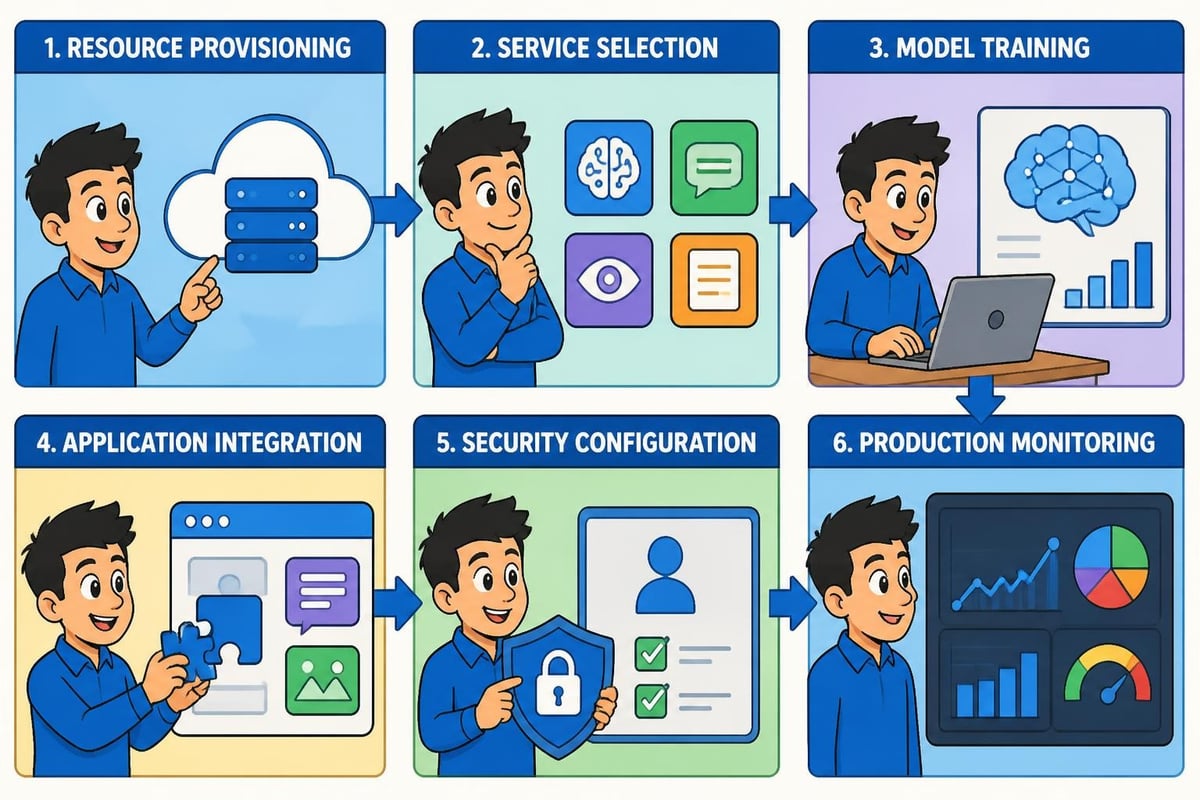
Microsoft designed this certification for AI engineers, data scientists, and solution architects who work directly with stakeholders to translate business requirements into technical implementations. The Azure AI Engineer Associate certification validates your ability to provision Azure AI resources, integrate AI models into applications, implement security protocols, and monitor AI solutions in production environments.
Core Competencies Measured
The certification exam evaluates five critical skill areas that reflect real-world responsibilities:
- Planning and managing Azure AI solutions including resource provisioning, cost optimization, and compliance requirements
- Implementing computer vision solutions using Azure Computer Vision, Custom Vision, and Face API services
- Natural language processing implementations with Language Understanding (LUIS), Text Analytics, and Azure OpenAI Service
- Knowledge mining and document intelligence through Azure Cognitive Search and Form Recognizer
- Conversational AI development using Azure Bot Service and QnA Maker
Each domain requires practical knowledge beyond theoretical understanding. You need to demonstrate proficiency in selecting appropriate services, configuring resources, implementing security measures, and troubleshooting common issues that arise during development and deployment.
Exam Requirements and Structure
The AI-102 exam serves as the assessment for the microsoft azure ai engineer associate certification. Microsoft structures the exam to test both breadth and depth of knowledge across Azure's AI portfolio. Understanding the exam format helps candidates prepare more effectively and manage their study time efficiently.
| Exam Component | Details |
|---|---|
| Exam Code | AI-102: Designing and Implementing a Microsoft Azure AI Solution |
| Duration | 120 minutes |
| Question Types | Multiple choice, case studies, drag-and-drop, build list |
| Passing Score | 700 out of 1000 |
| Cost | $165 USD |
| Renewal | Annual renewal through Microsoft Learn modules |
The exam employs adaptive testing methodology, adjusting question difficulty based on your responses. Case study questions present realistic business scenarios requiring you to evaluate requirements, design solutions, and make architectural decisions. This format tests your ability to apply knowledge rather than simply recall facts.
Prerequisites and Experience Level
While Microsoft does not mandate formal prerequisites, successful candidates typically possess:
- Six months to one year of hands-on experience with Azure AI services
- Proficiency in Python or C# programming languages
- Understanding of REST API architecture and JSON data structures
- Familiarity with Azure portal, Azure CLI, and Azure PowerShell
- Basic knowledge of machine learning concepts and model evaluation metrics
Professionals transitioning from the AI Azure fundamentals level find the associate certification significantly more challenging. The jump requires moving from conceptual understanding to practical implementation skills.
Career Impact and Professional Opportunities
Earning the microsoft azure ai engineer associate certification opens doors to specialized roles that command premium compensation in 2026's job market. Organizations implementing AI strategies actively seek certified professionals who can immediately contribute to projects without extensive onboarding.
High-Demand Career Paths
AI Solutions Architect positions involve designing end-to-end AI systems that integrate multiple Azure services. These professionals earn between $130,000 and $180,000 annually, depending on location and experience. They work closely with business stakeholders to translate requirements into technical architectures that balance performance, cost, and scalability.
Machine Learning Engineer roles focus on building, training, and deploying models using Azure Machine Learning. These positions require strong programming skills and deep understanding of ML algorithms. Certified engineers typically earn $120,000 to $165,000 per year, with opportunities for performance bonuses tied to project success.
Conversational AI Developer specialists create chatbots, virtual assistants, and voice-enabled applications using Azure Bot Service and Language Understanding. This niche has grown substantially as customer service organizations adopt AI-powered support systems. Salaries range from $110,000 to $150,000 annually.
Organizations value the certification because it provides measurable proof of capabilities. According to Global Knowledge's analysis, certified professionals complete AI projects 40% faster than non-certified counterparts, directly impacting return on investment.
Preparation Strategy and Learning Resources
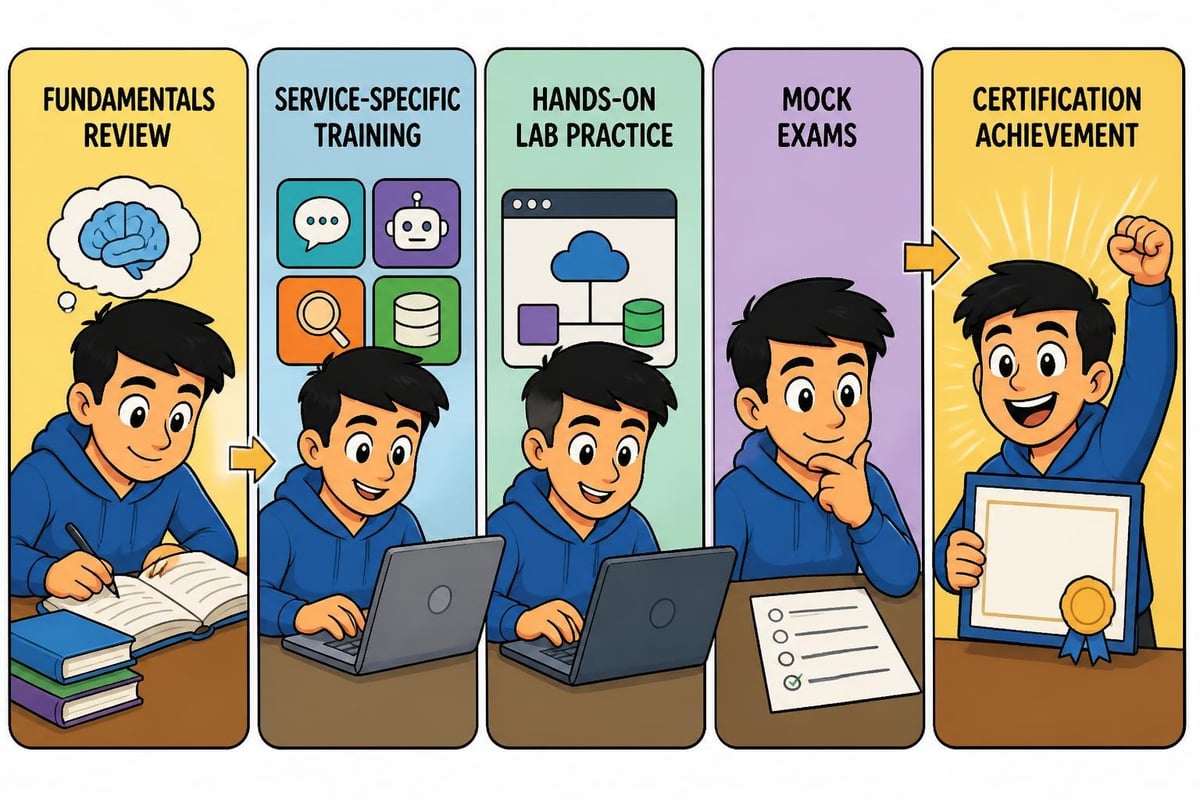
Success on the AI-102 exam requires structured preparation combining theoretical study, hands-on practice, and real-world application. The most effective approach integrates multiple learning modalities tailored to your current skill level and learning preferences.
Building Your Foundation
Start by assessing your current knowledge gaps. Microsoft provides a detailed skills outline covering each exam objective. Compare this against your practical experience to identify weak areas requiring focused study.
Hands-on labs form the cornerstone of effective preparation. Create an Azure subscription (free tier available) and work through scenarios building each type of AI service. Document your implementations, note configuration challenges, and practice troubleshooting common errors.
The Microsoft AI certification course offerings at MammothClub provide structured learning paths aligned with exam objectives. These courses combine video instruction, interactive exercises, and practice assessments that mirror actual exam question formats.
Practice Implementation Scenarios
| Scenario Type | Key Skills Practiced | Time Investment |
|---|---|---|
| Computer Vision Pipeline | Custom Vision training, model deployment, endpoint security | 8-12 hours |
| NLP Text Analytics | Sentiment analysis, entity extraction, language detection | 6-10 hours |
| Conversational Bot | LUIS intent design, dialog flow, channel integration | 10-15 hours |
| Search Solution | Index creation, skillset configuration, cognitive enrichment | 8-12 hours |
| Document Intelligence | Form recognition, custom models, data extraction | 6-10 hours |
These scenarios simulate real project requirements you'll encounter in professional settings. Document your approaches, decisions, and lessons learned. This documentation becomes valuable reference material during the exam and future work.
Technical Skills Development Areas
The microsoft azure ai engineer associate certification demands proficiency across multiple technical domains. Developing these skills requires intentional practice beyond passive learning.
Programming and SDK Mastery
Python and C# serve as primary languages for Azure AI development. Focus on using Azure SDK libraries rather than portal-based configuration. Understanding how to authenticate services, handle exceptions, and implement retry logic separates competent developers from exceptional ones.
Code examples should cover:
- Authentication patterns using Azure AD service principals and managed identities
- Asynchronous operations for improved application performance
- Error handling strategies including transient fault handling and circuit breakers
- Logging and monitoring integration with Application Insights
Azure Service Deep Dives
Each Azure AI service has unique characteristics, pricing models, and best practices. Surface-level familiarity proves insufficient during the exam and real-world implementations.
Azure Cognitive Services require understanding of API rate limits, regional availability, and data residency requirements. Practice configuring custom endpoints, implementing caching strategies, and managing API keys securely through Azure Key Vault.
Azure Machine Learning demands knowledge of workspaces, compute targets, datasets, experiments, and model registries. Learn to create training pipelines, implement automated ML runs, and deploy models to various endpoints including Azure Container Instances and Azure Kubernetes Service.
Azure Cognitive Search involves understanding indexers, skillsets, knowledge stores, and semantic search capabilities. Practice creating custom skills, implementing incremental indexing, and optimizing query performance.
Business Value and ROI Considerations
Organizations investing in certified professionals expect measurable returns. Understanding how to communicate business value differentiates technically proficient engineers from strategic AI leaders.
Cost Optimization Strategies
Azure AI services offer multiple pricing tiers and consumption models. Certified engineers should articulate cost-benefit analyses comparing:
- Reserved capacity versus pay-as-you-go pricing
- Multi-service versus single-service resource deployments
- Custom model training costs versus pre-built model usage
- Regional pricing variations and data transfer fees
These financial considerations directly impact project viability and long-term sustainability.
Performance Metrics and Monitoring
Implementing AI solutions without proper monitoring creates operational blind spots. The certification emphasizes establishing key performance indicators including:
- Response time percentiles (P50, P95, P99) for API calls
- Model accuracy metrics and drift detection
- Resource utilization and scaling patterns
- Error rates and failure mode analysis
Tools like Azure Monitor, Application Insights, and Log Analytics enable comprehensive observability. Course Report's overview emphasizes that certified professionals demonstrate 60% better incident response times through effective monitoring implementations.
Security and Compliance Implementation
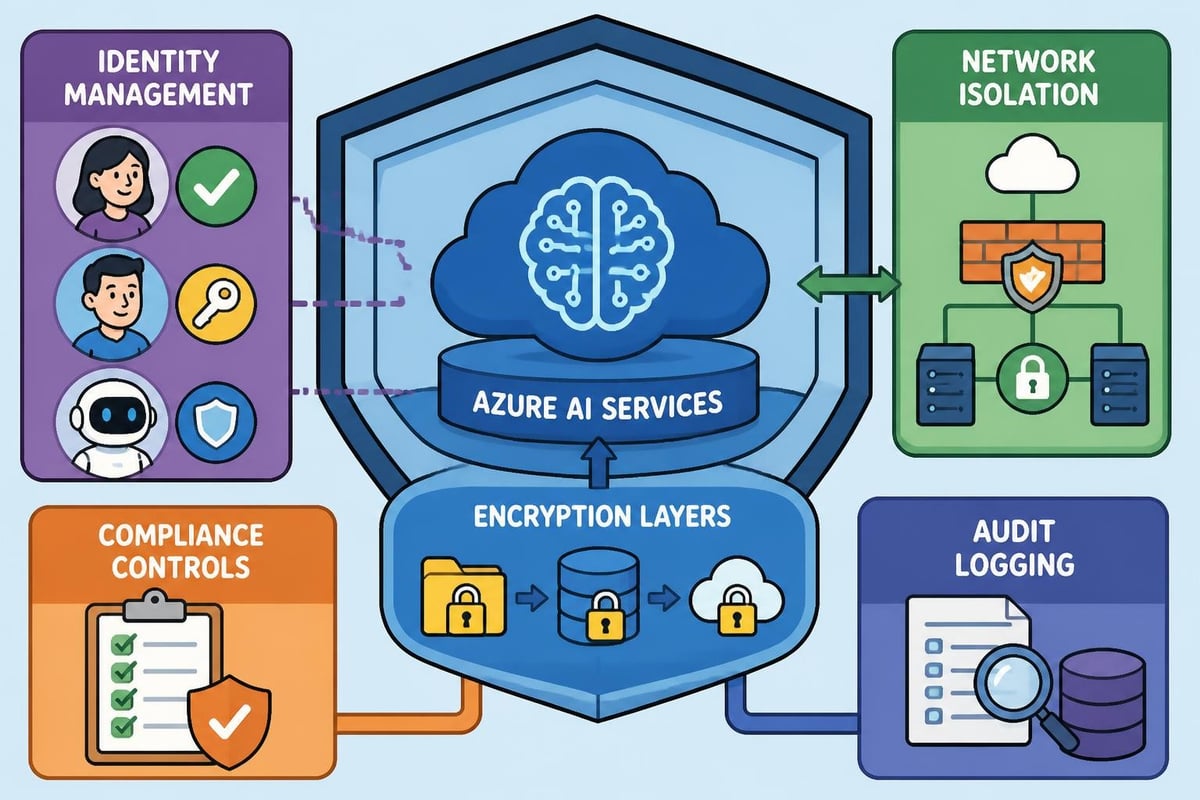
The microsoft azure ai engineer associate certification places significant emphasis on securing AI workloads and maintaining compliance with regulatory requirements. This focus reflects real-world priorities as organizations face increasing scrutiny over data privacy and AI ethics.
Identity and Access Management
Implementing proper authentication and authorization prevents unauthorized access to AI resources and sensitive data. Key concepts include:
Azure Active Directory integration for user authentication and conditional access policies. Configure service principals for application-level access with minimal required permissions following least-privilege principles.
Managed identities eliminate hard-coded credentials in application code. System-assigned and user-assigned identities provide secure authentication to Azure services without credential management overhead.
Role-based access control (RBAC) enables granular permission assignment. Understand built-in roles like Cognitive Services User, Cognitive Services Contributor, and how to create custom roles for specific organizational requirements.
Data Protection Strategies
- Encryption at rest using Azure-managed keys or customer-managed keys in Azure Key Vault
- Encryption in transit through TLS 1.2+ for all service communications
- Network isolation using virtual networks, private endpoints, and firewall rules
- Data residency compliance by selecting appropriate Azure regions for resource deployment
Organizations in regulated industries particularly value these security competencies when evaluating certified candidates.
Advanced Topics and Emerging Capabilities
The Azure AI platform evolves rapidly, with new services and capabilities launching quarterly. Staying current with emerging technologies ensures long-term certification value and professional relevance.
Azure OpenAI Service Integration
Microsoft's partnership with OpenAI brought GPT-3.5, GPT-4, and DALL-E models to Azure with enterprise-grade security and compliance. Understanding how to:
- Provision Azure OpenAI resources and manage deployment quotas
- Implement responsible AI content filters and moderation
- Design prompt engineering strategies for consistent outputs
- Monitor token consumption and optimize costs
These capabilities represent cutting-edge AI implementation scenarios increasingly common in enterprise environments.
MLOps and Production Deployment
Moving models from development to production requires engineering discipline beyond data science expertise. The certification covers:
CI/CD pipeline integration using Azure DevOps or GitHub Actions for automated model deployment. Implement testing stages, approval gates, and rollback capabilities.
Model versioning and registry practices ensuring traceability and reproducibility. Track model lineage, training datasets, and performance metrics across iterations.
A/B testing frameworks enabling safe model updates with controlled rollout percentages. Monitor champion versus challenger model performance before full deployment.
Professionals combining certification knowledge with AI ML learning path completion demonstrate comprehensive capabilities from model development through production operations.
Certification Maintenance and Continuous Learning
The microsoft azure ai engineer associate certification requires annual renewal to maintain active status. This ongoing requirement ensures certified professionals stay current with platform updates and new capabilities.
Renewal Process
Microsoft provides free renewal assessments through Microsoft Learn. These assessments cover new features, updated services, and deprecated capabilities introduced during the previous year. Completing the renewal maintains your certification status without retaking the full AI-102 exam.
Annual learning modules focus on:
- New Azure AI services and preview features
- Updated SDK versions and breaking changes
- Enhanced security capabilities and compliance features
- Performance improvements and cost optimization opportunities
Expanding Your Certification Portfolio
The associate-level credential serves as a foundation for advanced certifications and specialized expertise. Common progression paths include:
| Certification Path | Focus Area | Prerequisites |
|---|---|---|
| Azure Solutions Architect Expert | Enterprise architecture | Azure Administrator or Developer Associate |
| Azure Data Scientist Associate | Machine learning and data analysis | None required |
| Azure DevOps Engineer Expert | CI/CD and automation | Azure Administrator or Developer Associate |
Combining multiple certifications demonstrates breadth of expertise and commitment to professional development. Employers increasingly seek T-shaped professionals with deep AI engineering skills plus adjacent competencies in architecture, security, or data science.
Real-World Application Scenarios
Understanding certification concepts theoretically differs from applying them in production environments. These scenarios illustrate practical implementations that certified engineers encounter regularly.
Customer Service Automation
A retail organization needed to reduce call center costs while improving customer satisfaction. The solution involved:
- Azure Bot Service for multi-channel customer interaction
- Language Understanding (LUIS) to interpret customer intent across 15 common scenarios
- QnA Maker for knowledge base queries about product information and policies
- Text Analytics for sentiment analysis and escalation triggers
- Custom Vision for product identification from customer photos
The implementation reduced average handling time by 45% and enabled 24/7 customer support without proportional staffing increases. This project showcased skills across multiple certification domains in an integrated solution.
Document Processing Pipeline
A financial services company processed thousands of loan applications monthly, each containing multiple document types. The AI solution included:
- Form Recognizer for structured data extraction from applications, tax returns, and bank statements
- Computer Vision OCR for handwritten document processing
- Text Analytics for compliance keyword detection and risk flagging
- Azure Cognitive Search for document indexing and retrieval
- Azure Functions for orchestrating the processing pipeline
Processing time decreased from 48 hours to 6 hours per application while improving data accuracy by 92%. These results directly impacted business metrics including time-to-funding and operational costs.
Common Challenges and Solutions
Candidates preparing for the microsoft azure ai engineer associate certification frequently encounter specific obstacles. Understanding these challenges and proven solutions accelerates preparation.
Service Selection Confusion
Azure offers multiple overlapping services for similar use cases. For example, custom text classification can use Azure Machine Learning, Custom Text in Language service, or AutoML. The exam tests your ability to select appropriate services based on:
- Data volume and variety requirements
- Required accuracy versus development speed trade-offs
- Available technical expertise for model customization
- Budget constraints and pricing models
Solution approach: Create decision trees mapping business requirements to service recommendations. Practice justifying your choices based on quantifiable criteria rather than personal preferences.
SDK and API Version Management
Azure services update frequently, sometimes introducing breaking changes or deprecating features. Exam content reflects current service versions as of late 2025 and early 2026.
Solution approach: Reference official Microsoft documentation rather than third-party tutorials that may use outdated code examples. Subscribe to Azure updates blog and review monthly what's new announcements.
Hands-On Practice Environment Costs
Building comprehensive practice scenarios can generate Azure charges beyond free tier allocations.
Solution approach: Leverage Azure free trial credits ($200 for 30 days), use dev/test pricing when available, implement automatic shutdown for compute resources, and delete resources immediately after practice sessions. Many AI specialization courses include sandbox environments with practice credits.
The microsoft azure ai engineer associate certification represents a significant milestone for professionals building careers in cloud-based artificial intelligence. By validating your ability to design, implement, and manage production AI solutions, this credential opens doors to high-impact roles and competitive compensation. Whether you're advancing from foundational knowledge or deepening existing AI expertise, structured preparation combining hands-on practice with comprehensive learning resources ensures success. MammothClub provides the training infrastructure, expert-led courses, and practice environments you need to master Azure AI services and achieve certification confidently. Start your learning journey today with our certification-aligned programs designed for busy professionals who demand measurable results.