The artificial intelligence revolution demands professionals who understand both the theoretical foundations and practical applications of AI and machine learning. Organizations worldwide face a critical skills gap, with demand for AI expertise growing 74% annually while qualified talent remains scarce. Selecting the best AI ML courses online requires understanding your current skill level, career objectives, and the rapidly evolving landscape of educational platforms. This guide examines the most effective learning pathways, certification programs, and specialized training options available in 2026.
Understanding Modern AI ML Education Formats
The landscape of AI and machine learning education has transformed dramatically over the past three years. Traditional semester-long university courses now compete with intensive bootcamps, microlearning modules, and project-based certification programs. Each format serves distinct learning objectives and professional contexts.
On-Demand Course Platforms
Self-paced learning platforms offer flexibility for working professionals managing demanding schedules. These courses typically feature video lectures, interactive coding environments, and community forums. The asynchronous format allows learners to progress at their own speed while balancing professional commitments.
Key advantages include:
- Access to updated content reflecting current industry practices
- Ability to revisit complex topics multiple times
- Lower cost compared to traditional degree programs
- Global accessibility regardless of location
However, self-directed learning requires significant discipline. Without structured deadlines and peer accountability, completion rates average only 15-20% for free courses. Paid programs with certification incentives see completion rates near 65%.
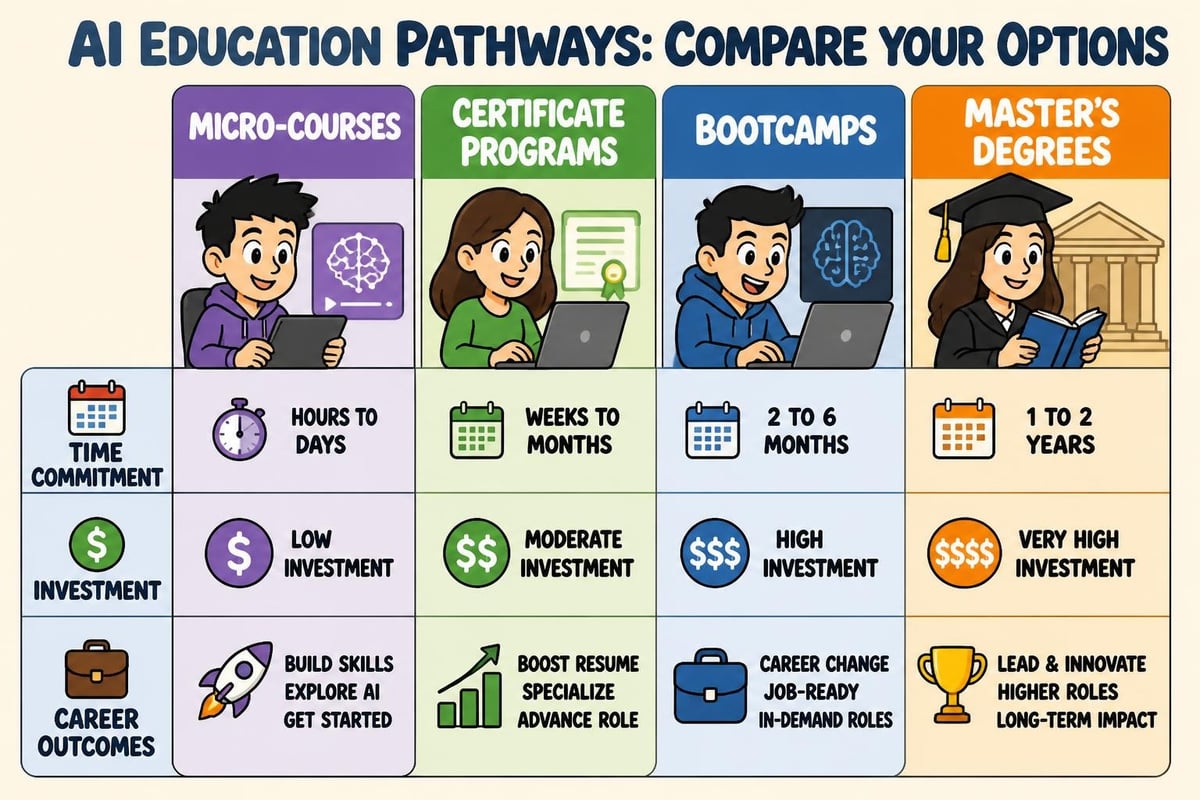
| Format Type | Duration | Investment | Best For |
|---|---|---|---|
| Micro-courses | 4-12 hours | $20-$200 | Specific skill acquisition |
| Certificate programs | 3-6 months | $300-$2,000 | Career transition preparation |
| Professional bootcamps | 8-16 weeks | $5,000-$15,000 | Intensive skill development |
| Master's degrees | 18-36 months | $15,000-$50,000 | Advanced research roles |
Interactive Bootcamp Experiences
Intensive bootcamp programs compress months of learning into focused 8-16 week experiences. These programs emphasize hands-on projects, live instruction, and cohort-based collaboration. The structured environment creates accountability while building professional networks.
Bootcamps excel at teaching applied skills. Rather than spending weeks on theoretical mathematics, students immediately begin building neural networks, training models, and deploying solutions. This practical approach aligns with employer expectations, as hiring managers increasingly prioritize demonstrable project portfolios over theoretical knowledge.
The artificial intelligence class format has evolved to include mentorship, career services, and employer partnerships. Leading programs guarantee job placement or offer tuition refunds, demonstrating confidence in their curriculum effectiveness.
Evaluating Course Quality and Curriculum Depth
Not all AI ML courses deliver equivalent value. The best AI ML courses online distinguish themselves through curriculum rigor, instructor expertise, hands-on projects, and industry recognition. Evaluating these factors before enrollment prevents wasted time and resources.
Curriculum Components That Matter
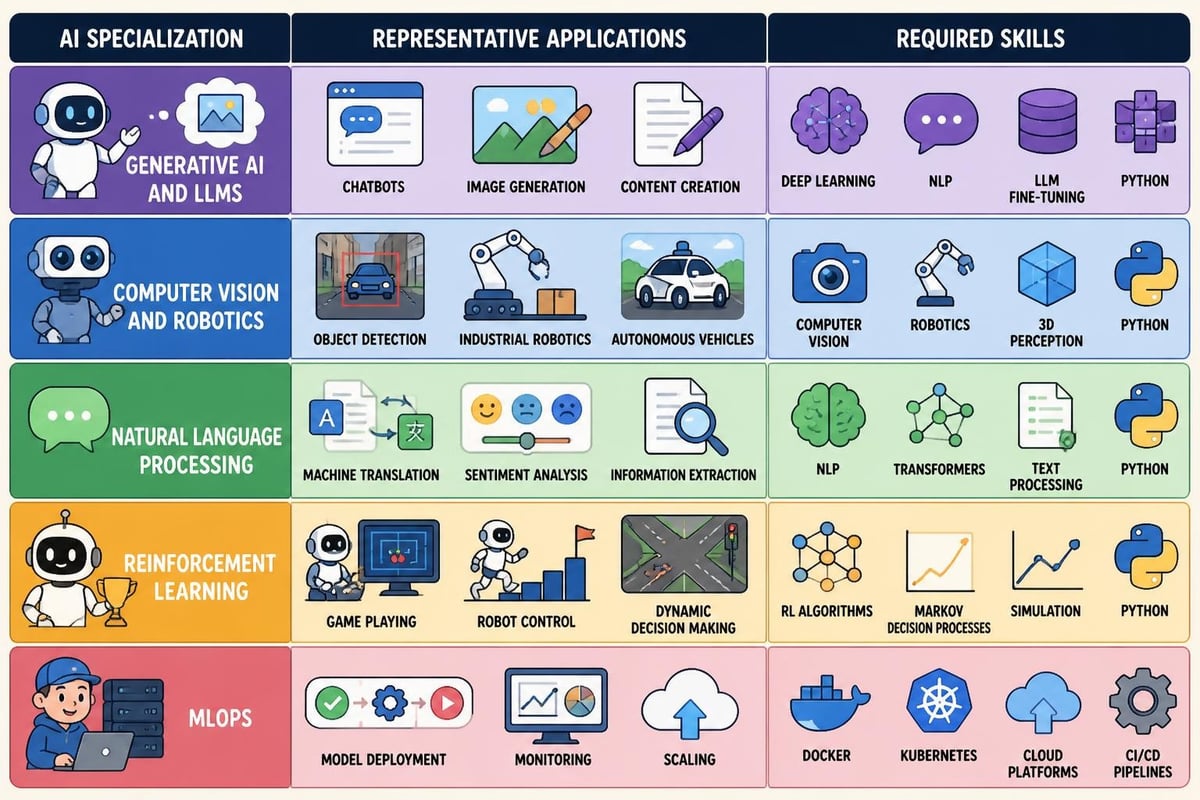
Comprehensive AI ML education requires building competency across multiple interconnected domains. Fundamental courses should cover supervised learning, unsupervised learning, neural networks, natural language processing, and computer vision. Advanced programs add reinforcement learning, generative AI, MLOps, and ethical AI considerations.
The progression from theory to practice separates exceptional courses from mediocre ones. Students should expect to:
- Learn mathematical foundations (linear algebra, calculus, probability)
- Master programming frameworks (Python, TensorFlow, PyTorch)
- Implement algorithms from scratch before using libraries
- Complete real-world projects with messy data
- Deploy models to production environments
- Optimize performance and monitor model drift
Courses that skip fundamental mathematics or avoid implementation details leave students unable to troubleshoot problems or customize solutions. Conversely, programs focused exclusively on theory without practical application fail to prepare learners for workplace demands.
Instructor Credentials and Teaching Effectiveness
Course quality correlates strongly with instructor background. The most effective teachers combine academic research experience with industry application. They translate complex concepts into understandable explanations while sharing practical insights from real-world projects.
When evaluating deep learning AI courses, examine whether instructors have published research, built production systems, or contributed to open-source frameworks. Teaching AI requires more than reading from slides-it demands deep understanding that only comes from solving difficult problems firsthand.
Student reviews provide valuable insights into teaching effectiveness. Look beyond star ratings to read detailed feedback about clarity, responsiveness, and practical value. The best instructors create supportive learning environments where students feel comfortable asking questions and exploring difficult concepts.
Platform-Specific Strengths and Specializations
Different learning platforms have developed distinct reputations and specialized focuses within AI ML education. Understanding these differences helps match your learning needs with platform strengths.
Comprehensive Catalog Platforms
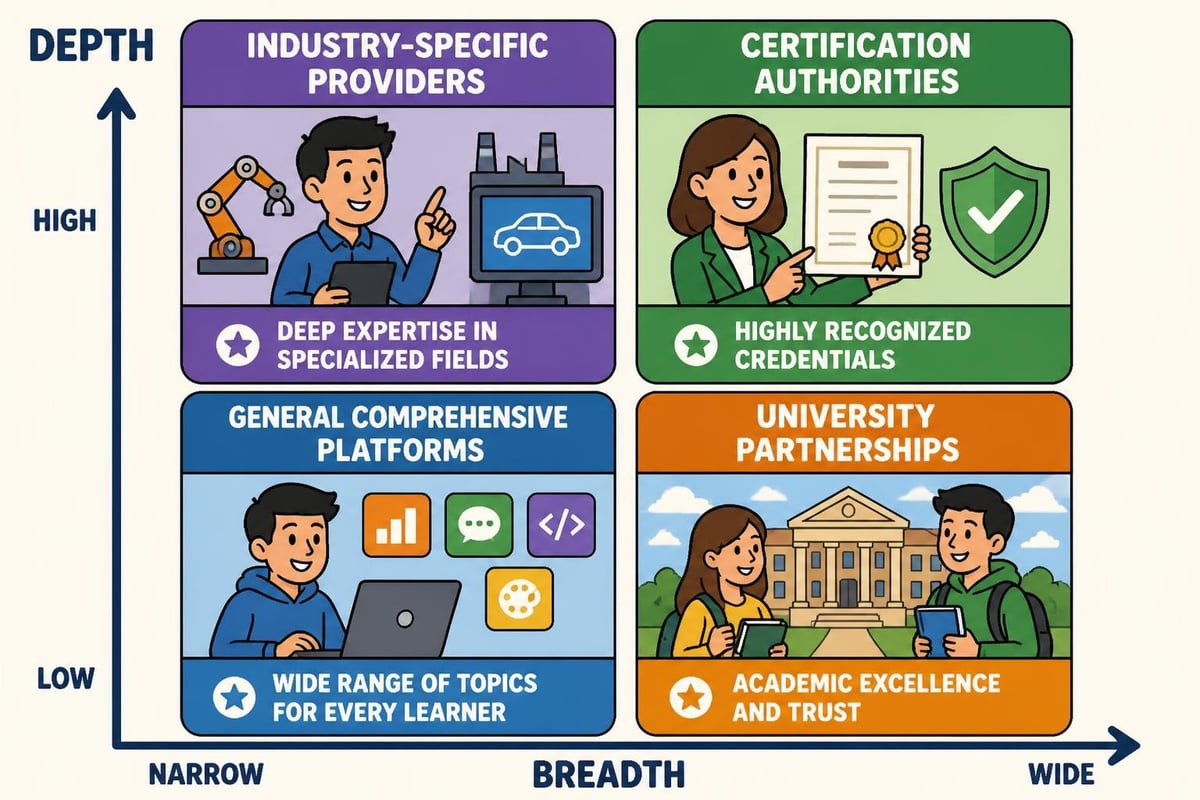
Some platforms prioritize breadth, offering hundreds or thousands of courses covering every AI subdomain. GenAICoursePath offers a comprehensive catalog of 767 verified AI courses from 37 providers, allowing learners to search and compare options based on specific goals and budget constraints.
Catalog platforms excel at providing choice but can overwhelm learners unfamiliar with the field. Without clear guidance, students may select courses misaligned with their objectives or prerequisite knowledge. These platforms work best for experienced learners who understand their specific skill gaps.
Specialized Certification Providers
Focused platforms concentrate on specific AI applications or certification pathways. They develop deep expertise in particular domains-whether computer vision, natural language processing, or reinforcement learning. This specialization enables curriculum depth impossible in generalist platforms.
Industry-specific AI training has grown significantly. Financial professionals seeking AI for finance course options find specialized programs teaching risk modeling, algorithmic trading, and fraud detection. Healthcare professionals access courses applying machine learning to diagnostic imaging, drug discovery, and patient outcome prediction.
The trade-off involves reduced flexibility. Specialized platforms may not address emerging AI applications outside their core focus. However, for learners with clear career objectives in specific industries, this focused approach accelerates skill acquisition.
Certification Value and Industry Recognition
Certificates demonstrate competency to employers and clients. However, not all certifications carry equal weight in hiring decisions. Understanding which credentials matter in your target industry prevents investing in low-value programs.
Vendor Certifications vs. Platform Certificates
Technology vendors like Microsoft, Google, AWS, and NVIDIA offer certifications validating expertise in their specific platforms and tools. These credentials signal practical ability to implement solutions using vendor ecosystems.
The Microsoft Azure AI 900 certification, for example, validates foundational understanding of Azure AI services. It appeals to organizations heavily invested in Microsoft infrastructure. Similarly, NVIDIA certifications demonstrate proficiency with GPU-accelerated computing and deep learning frameworks.
Vendor certifications provide immediate value when seeking positions requiring specific technology stacks. However, they may become obsolete as platforms evolve or organizations migrate to different tools.
Platform certificates from Coursera, edX, or Udacity signal course completion but lack standardization. Employers familiar with specific courses recognize their value, but these certificates carry less universal recognition than vendor certifications or academic degrees.
Academic Credentials and Professional Degrees
Traditional universities now offer online master's programs in AI and machine learning. Online Master's programs in Machine Learning provide comprehensive education combining theoretical rigor with practical application. These programs require significantly greater time and financial investment but deliver credentials with universal recognition.
Graduate degrees suit professionals targeting senior technical roles, research positions, or academic careers. They provide deep theoretical understanding and research experience impossible to replicate in shorter programs. However, the 18-36 month commitment and $15,000-$50,000 tuition represents substantial opportunity cost.
The emerging middle ground combines professional bootcamp intensity with university credibility. Several institutions now offer professional certificates and graduate certificates-shorter than master's degrees but more rigorous than typical online courses.
Building an Effective Learning Pathway
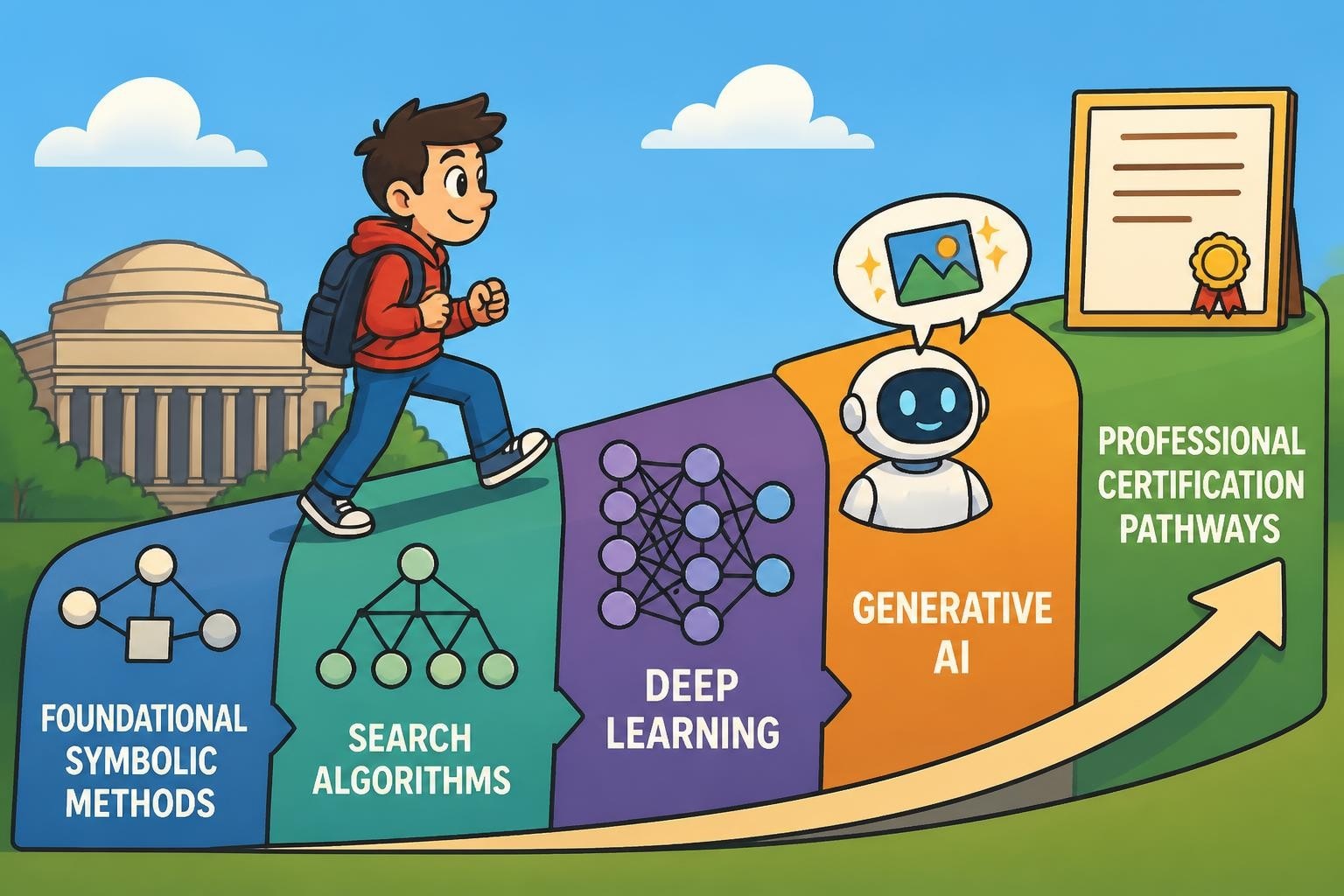
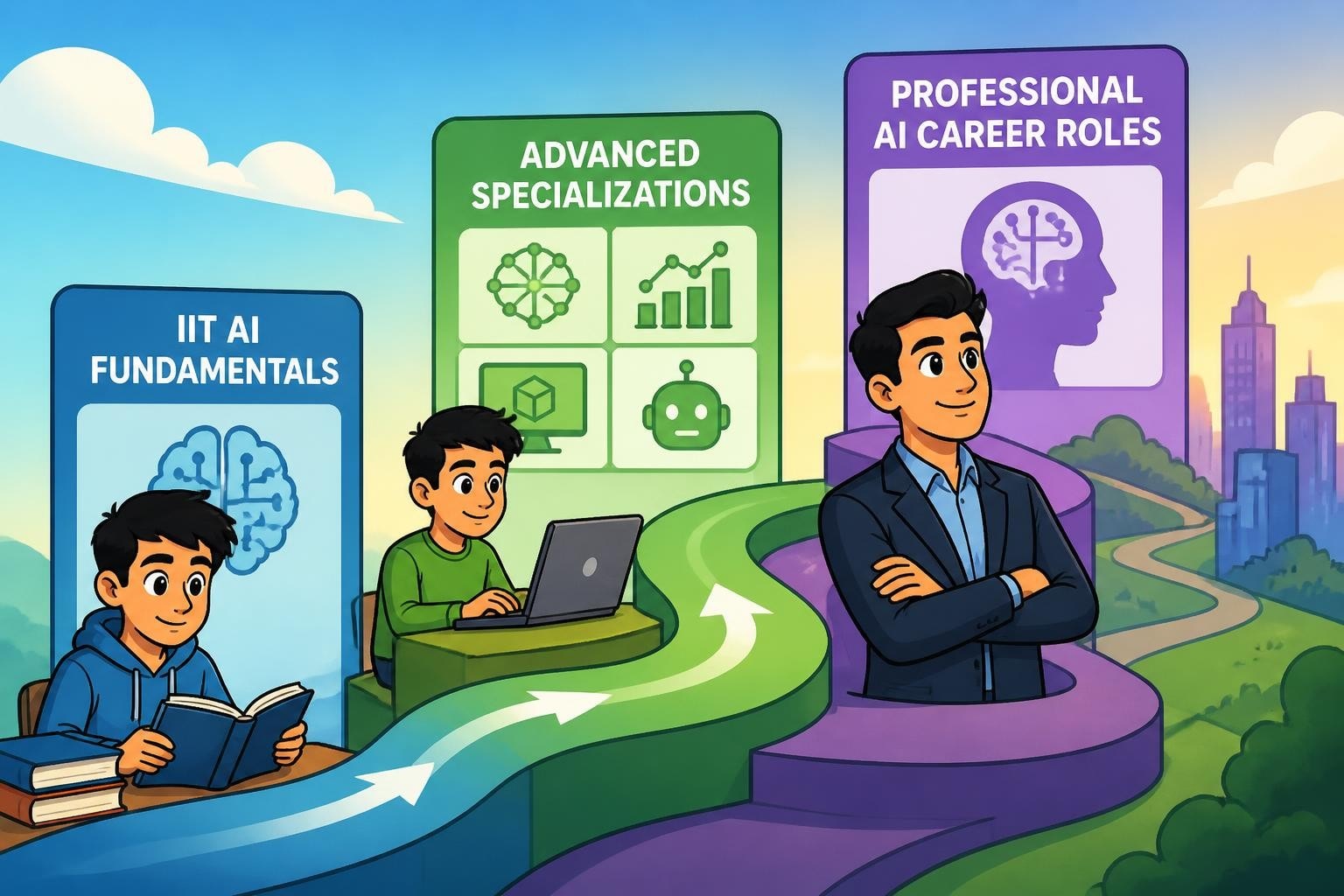
The most successful learners approach AI ML education strategically rather than randomly accumulating courses. A well-structured AI ML learning path progresses systematically from foundational concepts through specialized applications.
Starting Points for Different Experience Levels
Complete beginners should start with programming fundamentals before attempting AI-specific content. Python proficiency forms the foundation for nearly all AI ML work. Learners should master data structures, functions, object-oriented programming, and basic libraries (NumPy, Pandas) before tackling machine learning algorithms.
Recommended progression for beginners:
- Python programming fundamentals (4-6 weeks)
- Statistics and probability basics (2-3 weeks)
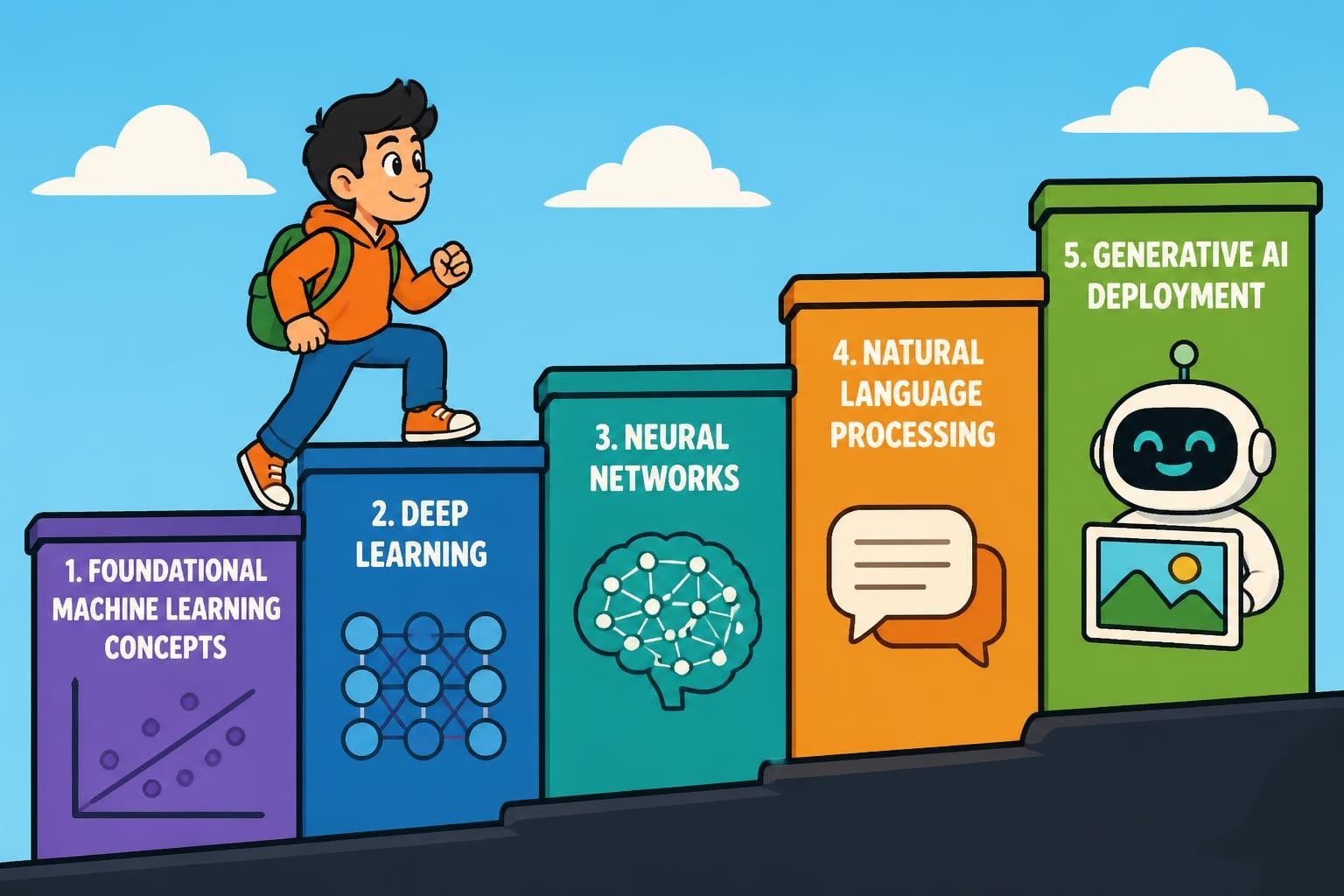
- Introduction to machine learning concepts (4-6 weeks)
- Supervised learning algorithms (6-8 weeks)
- Deep learning foundations (6-8 weeks)
- Specialized applications (computer vision, NLP, etc.)
Professionals with programming experience but no ML background can skip Python fundamentals and begin with mathematical foundations. Focus should emphasize the statistical thinking underlying machine learning rather than memorizing algorithm implementations.
Experienced data scientists or software engineers transitioning into AI require specialized rather than foundational courses. They benefit from advanced topics: transformer architectures, generative adversarial networks, reinforcement learning, or MLOps practices.
Balancing Theory and Practice
The optimal learning approach balances mathematical understanding with hands-on implementation. Pure theory without practice leaves learners unable to apply concepts. Pure practice without theory creates pattern-matching rather than genuine understanding.
Effective courses interleave explanation and application. After learning gradient descent mathematically, students should implement the algorithm, visualize the optimization process, and experiment with learning rates. This cycle of theory-practice-experimentation builds intuition impossible to achieve through either approach alone.
Projects should progress from guided tutorials to independent work. Early projects might provide starter code and detailed instructions. Later projects should present business problems requiring students to make architectural decisions, select appropriate algorithms, and evaluate trade-offs independently.
Specialized Tracks and Emerging Technologies
AI continues evolving rapidly. Courses covering 2023 best practices already feel outdated as transformer models, multimodal AI, and autonomous agents advance. The best AI ML courses online update content quarterly to reflect current techniques.
Generative AI and Large Language Models
Generative AI exploded into mainstream consciousness in 2023 and has since become foundational to AI applications. Professionals now need understanding of prompt engineering, fine-tuning techniques, retrieval-augmented generation, and responsible deployment practices.
Specialized courses address implementing chatbots, content generation systems, code assistants, and creative tools. These programs teach working with APIs from OpenAI, Anthropic, and Google while understanding underlying transformer architectures.
The responsible AI course emphasis has grown as organizations recognize ethical implications of generative systems. Training now addresses bias detection, hallucination mitigation, content filtering, and regulatory compliance.
Computer Vision and Multimodal Systems
Computer vision applications span autonomous vehicles, medical imaging, manufacturing quality control, and retail analytics. Specialized training covers convolutional neural networks, object detection frameworks, image segmentation, and 3D reconstruction.
Modern systems increasingly combine vision with other modalities. Courses now teach building systems processing images, text, audio, and sensor data simultaneously. These multimodal approaches enable richer understanding and more capable applications.
Natural Language Processing Beyond Chatbots
While conversational AI receives significant attention, NLP applications extend far beyond chatbots. Specialized courses cover sentiment analysis, named entity recognition, document classification, machine translation, and question answering systems.
Advanced NLP training addresses building domain-specific models, handling low-resource languages, and implementing efficient inference for production deployment. These practical considerations separate academic understanding from production-ready implementations.
Cost-Benefit Analysis and ROI Considerations
Evaluating the best AI ML courses online requires analyzing costs against expected career benefits. Educational investments range from free resources to $50,000 degree programs. Understanding realistic ROI helps make informed decisions.
Free vs. Paid Learning Resources
High-quality free resources exist throughout the AI education landscape. University lecture videos, open-source textbooks, and community tutorials provide substantial learning opportunities without financial investment. SkillScouter's article reviews top online machine learning courses, including both free and paid options suitable for different learning objectives.
Free resources work well for exploring interest, supplementing paid courses, or learning specific techniques. However, they lack structured curricula, hands-on projects with feedback, community support, and career services.
Paid courses justify their cost through several mechanisms:
- Structured learning paths preventing wasted time on irrelevant topics
- Projects with instructor feedback accelerating skill development
- Peer communities providing motivation and networking
- Certificates recognized by employers
- Career support including resume reviews and interview preparation
The optimal approach combines free resources for exploration with paid programs for structured skill development in priority areas.
Time Investment and Opportunity Costs
Course tuition represents only partial investment cost. Time commitment creates opportunity costs-hours spent learning cannot be used for paid work, family commitments, or other priorities.
A typical certificate program requiring 10-15 hours weekly over six months represents 240-360 total hours. At an opportunity cost of $50/hour (considering forgone income or leisure value), this represents $12,000-$18,000 in time investment beyond tuition costs.
This reality emphasizes selecting efficient, high-quality programs. Poor courses waste not just tuition but hundreds of hours that could have been invested more productively. The best AI ML courses online compress learning through excellent instructional design, eliminating filler content and focusing on high-value skills.
Corporate Training and Team Development
Organizations increasingly require team-wide AI literacy rather than isolated expertise. Corporate training programs address this need through standardized curricula, progress tracking, and business-relevant applications.
Organizational AI Upskilling Strategies
Successful corporate AI initiatives require capabilities at multiple levels. Leadership needs strategic AI understanding to identify opportunities and allocate resources. Product managers need sufficient technical literacy to design feasible features. Engineers require deep implementation skills. This breadth demands differentiated training approaches.
Many organizations adopt a three-tier approach:
| Audience | Training Focus | Format | Duration |
|---|---|---|---|
| Executives | AI strategy, business cases, ROI analysis | Workshops, seminars | 1-2 days |
| Product/Business | AI capabilities, limitations, ethics | Courses, certifications | 4-8 weeks |
| Technical teams | Implementation, deployment, optimization | Intensive bootcamps, ongoing learning | 12-24 weeks |
Corporate programs benefit from customization around company-specific use cases. Rather than generic examples, training incorporates actual business data, processes, and challenges. This relevance increases engagement and immediate applicability.
Measuring Training Effectiveness
Organizations investing in AI ML education need metrics demonstrating ROI. Completion rates provide initial signals but don't guarantee skill development. Progressive assessments throughout programs reveal knowledge retention and application ability.
Post-training outcomes matter most. Organizations should track:
- Time to implement first AI project after training
- Quality and performance of deployed models
- Employee retention and career progression
- Business impact of AI initiatives (revenue, cost reduction, efficiency gains)
Leading platforms provide analytics dashboards tracking individual and team progress, skill assessments, and learning patterns. These insights help organizations identify struggling learners, evaluate content effectiveness, and optimize training investments.
Platform Comparisons and Selection Criteria
Choosing among numerous platforms requires systematic evaluation against specific criteria. AI Compare Blog presents curated AI courses categorized by learner goals, helping narrow options based on starting point and objectives.
Key Evaluation Dimensions
When comparing platforms, consider these critical factors:
Content Quality and Currency
- Are courses updated to reflect 2026 best practices?
- Do instructors have relevant research or industry experience?
- Does curriculum balance theory with practical application?
- Are projects based on realistic business scenarios?
Learning Experience Design
- Is content structured logically with clear progression?
- Do interactive elements reinforce concepts effectively?
- Is feedback provided on projects and assessments?
- Does the platform adapt to individual learning pace?
Community and Support
- Can students connect with peers for collaboration?
- Do instructors or TAs respond to questions?
- Are office hours or live sessions available?
- Does a job-seeking community exist post-graduation?
Career Services and Outcomes
- Does the program offer resume reviews or interview prep?
- Are employer partnerships or hiring networks available?
- What percentage of graduates achieve career goals?
- How long does job placement typically take?
Understanding Your Learning Style
Effective platform selection matches your learning preferences and constraints. Visual learners benefit from video-heavy courses with diagrams and animations. Reading-focused learners prefer text-based materials they can highlight and annotate. Kinesthetic learners need hands-on projects and interactive exercises.
Time availability significantly influences format selection. Professionals working 50+ hour weeks need flexible, self-paced options. Those able to commit full-time thrive in intensive bootcamp environments. Parents managing childcare benefit from asynchronous formats allowing odd-hour study.
Budget constraints narrow choices but shouldn't eliminate quality training. Many excellent programs offer income-share agreements, allowing students to pay tuition from post-graduation salary increases. This model aligns platform incentives with student success-programs only profit when graduates secure better positions.
Emerging Trends Shaping AI Education
The AI education landscape continues evolving rapidly. Understanding emerging trends helps select programs remaining relevant as the field advances.
AI-Powered Learning Tools
Platforms increasingly use AI to personalize learning experiences. Adaptive systems analyze student performance, identifying knowledge gaps and adjusting content difficulty accordingly. AI tutors answer questions, provide hints, and explain concepts using natural language.
These tools accelerate learning by providing immediate feedback and customized explanations. Rather than waiting hours or days for instructor responses, students receive instant help. AI mentors never tire, remaining patient through multiple explanations of difficult concepts.
However, AI tutoring supplements rather than replaces human instruction. Complex debugging, architectural decisions, and nuanced feedback still require experienced practitioners. The most effective platforms blend AI assistance with human expertise.
Industry Partnerships and Real-World Projects
Leading programs increasingly partner with technology companies and enterprises to provide authentic project experiences. Students work with real datasets, business constraints, and production considerations rather than sanitized academic problems.
These partnerships benefit all parties. Students gain resume-worthy project experience. Companies access talent pipelines and fresh perspectives on problems. Educational platforms enhance curriculum relevance and employment outcomes.
Some programs have evolved into talent marketplaces. Top students receive introductions to hiring partners before graduation. Companies preview candidate abilities through project work rather than relying on resumes and interviews alone.
For professionals interested in connecting theory with real-world applications, attending industry events like those organized by TEAMZ provides valuable networking opportunities and insights into how companies implement AI solutions at scale.
Advanced Certifications and Continuing Education
AI expertise requires ongoing learning rather than one-time training. The field evolves too rapidly for any course to provide permanent knowledge. Successful professionals commit to continuous skill development.
Staying Current With Evolving Technologies
New techniques, frameworks, and applications emerge monthly. Transformer architectures that seemed cutting-edge in 2023 now represent baseline expectations. Professionals must continuously update skills to remain valuable.
Effective continuing education strategies include:
- Following key researchers and practitioners on social media
- Reading recent papers on arXiv and conference proceedings
- Participating in Kaggle competitions or open-source projects
- Attending conferences and workshops
- Taking focused courses on specific new techniques
Many platforms offer subscription models providing access to extensive course libraries. Rather than purchasing individual courses, learners pay monthly fees for unlimited access. This model encourages exploration and continuous learning.
Specialization vs. Generalization Strategies
Career progression requires choosing between deepening expertise in specific domains versus maintaining broad AI knowledge. Data scientists might specialize in time series forecasting, recommendation systems, or anomaly detection. ML engineers might focus on model optimization, distributed training, or edge deployment.
Specialization enables premium positioning. Experts in narrow domains command higher rates and face less competition than generalists. However, overspecialization risks obsolescence if domains decline in importance.
Balanced approaches combine deep expertise in 1-2 areas with working knowledge across AI subfields. This T-shaped skill profile enables leading specialized projects while collaborating effectively across broader initiatives.
Practical Implementation and Project Work
Theoretical knowledge alone provides limited career value. Employers prioritize candidates demonstrating ability to implement solutions, debug problems, and deploy systems. Project portfolios differentiate candidates in competitive hiring markets.
Building a Compelling Portfolio
Effective portfolios showcase progression from foundational implementations to sophisticated applications. Early projects might implement algorithms from scratch, demonstrating understanding of underlying mechanics. Advanced projects should address business problems using appropriate tools and frameworks.
Quality matters more than quantity. Three excellent projects demonstrating end-to-end capability outweigh ten tutorial-derived notebooks. Hiring managers can distinguish original work from copied solutions.
Strong projects include:
- Clear problem definitions explaining business context and objectives
- Data exploration revealing insights driving modeling decisions
- Model development documenting experiments, failed approaches, and selected solutions
- Performance evaluation using appropriate metrics and validation strategies
- Deployment considerations addressing scalability, monitoring, and maintenance
GitHub repositories should include comprehensive README files, well-commented code, and visualizations explaining results. This professionalism signals readiness for production environments.
Translating Courses Into Career Advancement
Course completion represents a beginning rather than endpoint. Translating education into career advancement requires strategic positioning and proactive networking.
Successful transitions involve:
- Updating resumes highlighting specific skills and projects
- Optimizing LinkedIn profiles with relevant keywords
- Contributing to open-source projects demonstrating expertise
- Writing blog posts or giving talks sharing knowledge
- Connecting with practitioners and hiring managers
- Applying to positions slightly beyond current qualifications
Many learners underestimate their readiness, applying only to entry-level positions despite having completed advanced training. Confidence in acquired skills enables targeting roles matching actual capabilities rather than previous experience.
AI training and placement programs increasingly combine education with job search support, recognizing that technical skills alone don't guarantee employment. Career coaching, mock interviews, and employer introductions bridge the gap between learning and earning.
Selecting the best AI ML courses online in 2026 requires matching program formats, specializations, and certification pathways to your specific career objectives and learning preferences. Whether you need foundational knowledge, specialized expertise, or team-wide organizational upskilling, understanding curriculum quality, instructor credentials, and practical application opportunities ensures educational investments deliver meaningful career returns. MammothClub offers 3,000+ AI and tech courses alongside interactive bootcamps and corporate certification programs, combining AI-powered learning tools with measurable outcomes to help professionals and organizations develop the capabilities needed to thrive in the AI era.