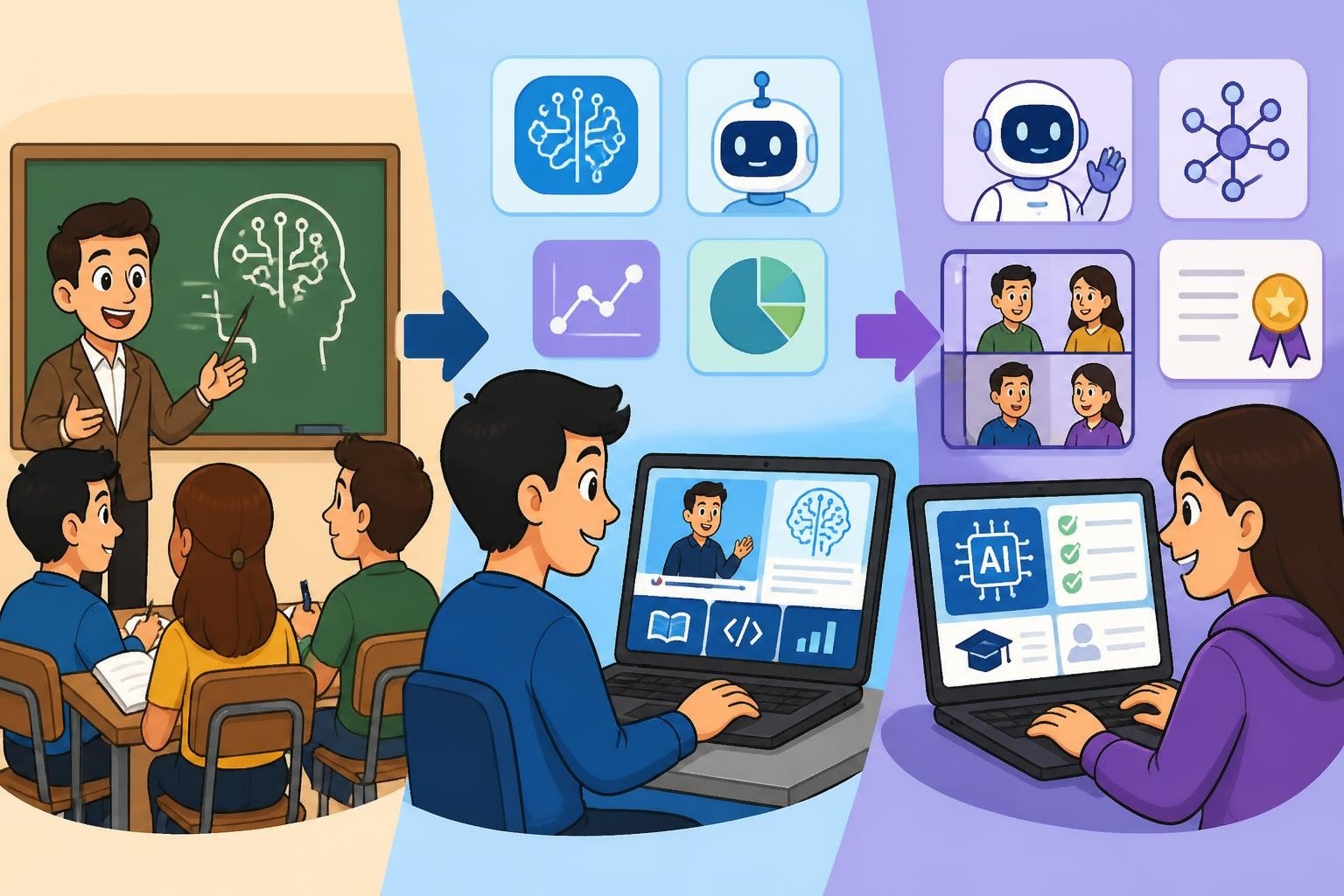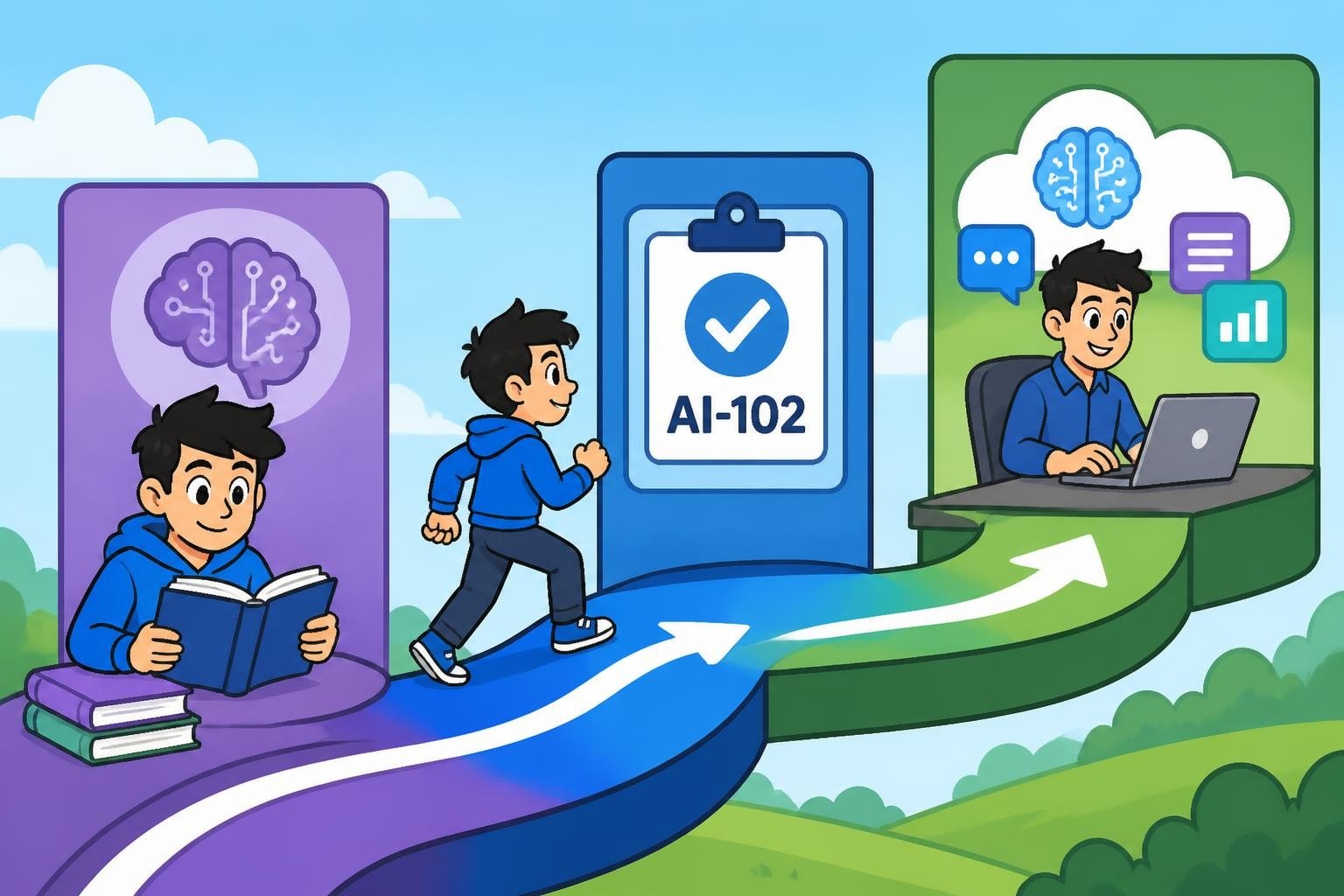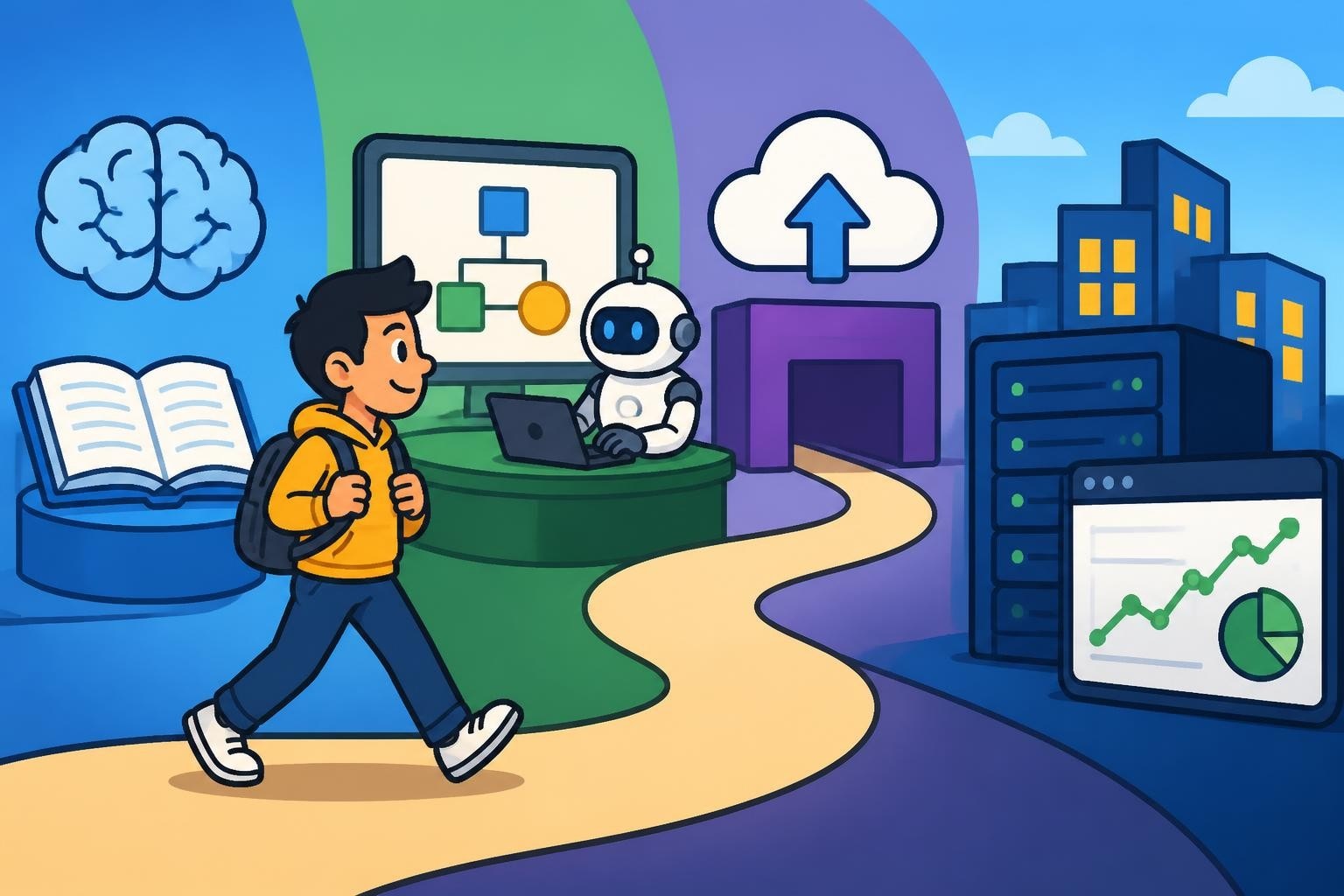
The artificial intelligence landscape has transformed dramatically over the past year, creating urgent demand for professionals who understand both the technical underpinnings and practical applications of AI systems. As organizations across every sector integrate AI into their operations, the need for foundational knowledge has never been greater. An ai fundamentals course provides the essential building blocks for anyone looking to understand, implement, or lead AI initiatives in their organization, regardless of their technical background.
Understanding What an AI Fundamentals Course Should Cover
A comprehensive ai fundamentals course must balance theoretical concepts with practical application. The curriculum should address core machine learning principles, neural network architectures, and the mathematics that powers modern AI systems. However, the most effective programs go beyond technical content to include ethics, governance, and real-world implementation strategies.
Core Technical Components
The technical foundation begins with understanding how machines learn from data. Students need exposure to supervised learning, unsupervised learning, and reinforcement learning paradigms. Each approach solves different types of problems, and understanding when to apply each method separates effective practitioners from those who merely understand the theory.
Essential topics include:
- Algorithm fundamentals and computational thinking
- Data preprocessing and feature engineering techniques
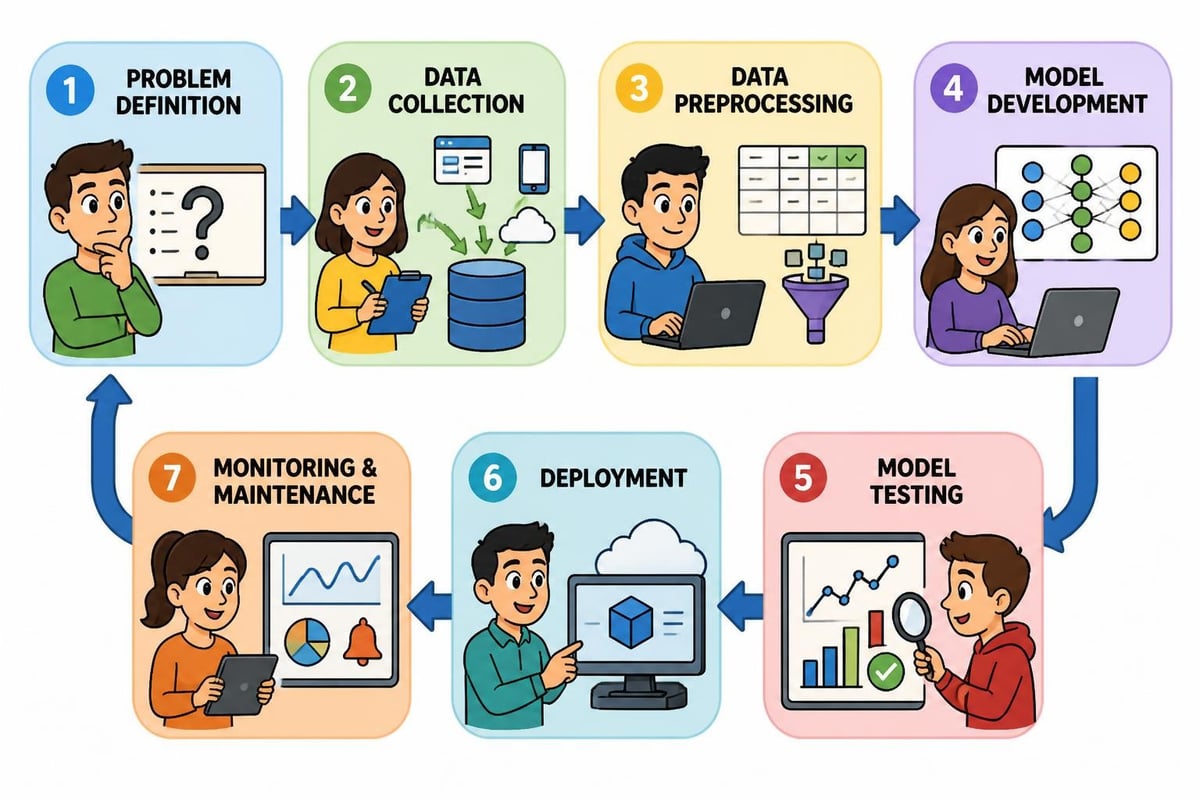
- Model training, validation, and testing procedures
- Neural network architectures and deep learning frameworks
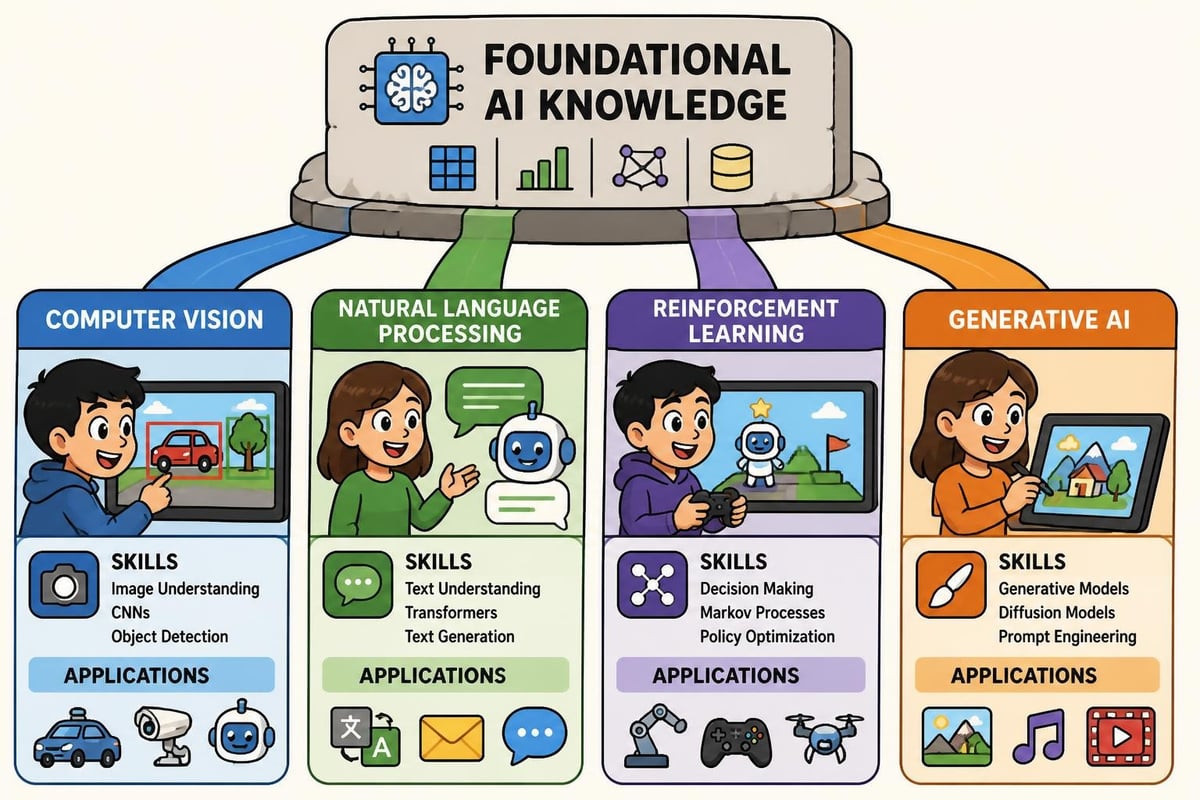
- Natural language processing and computer vision basics
- Generative AI and transformer models
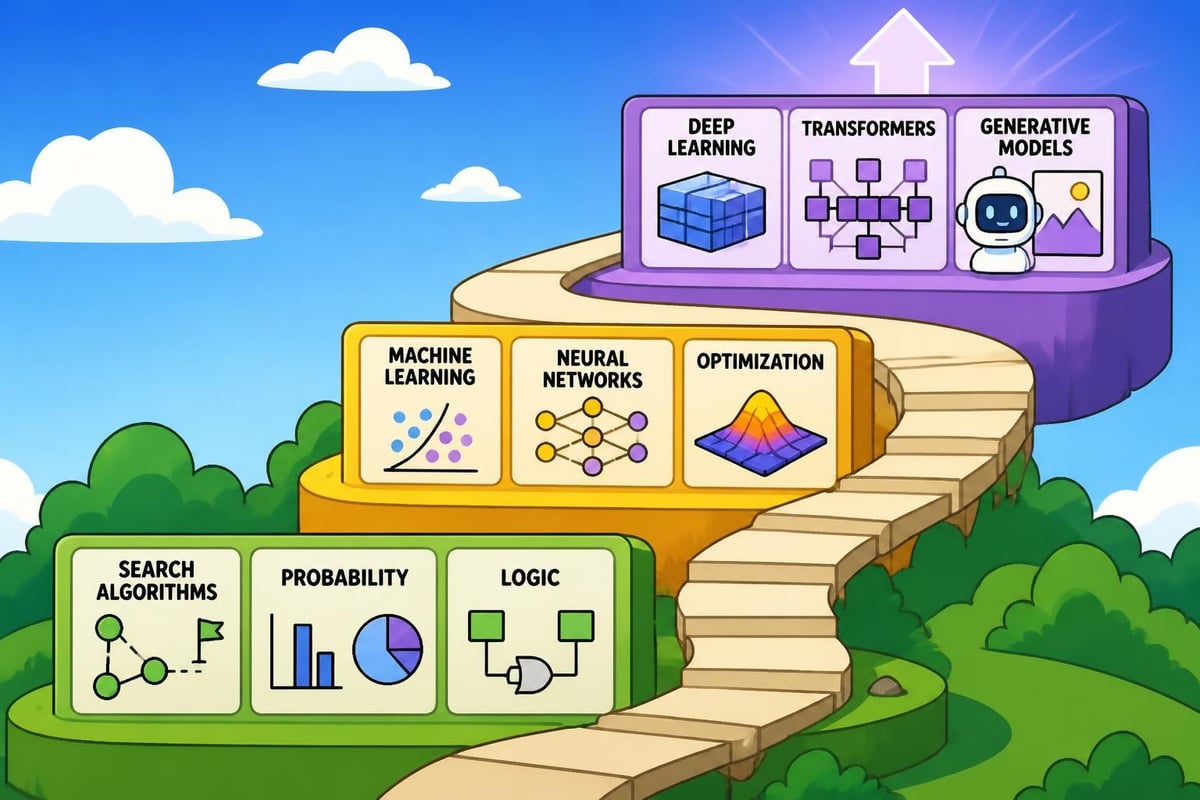
The Stanford CS221 course demonstrates how rigorous academic programs structure these concepts, building from search algorithms and logic through to modern machine learning techniques. This progression ensures students develop intuition about why algorithms work, not just how to implement them.
Non-Technical Essential Knowledge
Technical skills alone do not prepare professionals for real-world AI deployment. An effective ai fundamentals course incorporates business strategy, ethical considerations, and organizational change management. The AI For Everyone course by Andrew Ng exemplifies this approach, teaching executives and non-technical professionals to evaluate AI opportunities, understand capabilities and limitations, and lead AI transformation initiatives.
Risk management and governance have become critical components. The NIST AI Risk Management Framework provides authoritative guidance on building trustworthy AI systems. Any comprehensive curriculum should address bias detection, fairness metrics, transparency requirements, and regulatory compliance considerations that affect deployment decisions.
| Learning Component | Technical Focus | Business Focus |
|---|---|---|
| Algorithms & Models | Implementation, optimization | Use cases, ROI evaluation |
| Data Management | Processing, engineering | Privacy, governance |
| Deployment | Infrastructure, monitoring | Change management, adoption |
| Ethics & Risk | Bias mitigation, testing | Compliance, stakeholder trust |
Choosing the Right Learning Path for Your Goals
Different career objectives require different approaches to AI education. A data scientist needs deep technical skills in mathematics and programming, while a product manager needs to understand capabilities and constraints without necessarily writing code. The best ai fundamentals course aligns with your specific role and aspirations.
Paths for Technical Professionals
Software engineers, data analysts, and aspiring machine learning engineers benefit from hands-on, code-intensive programs. DeepLearning.AI courses offer specialized tracks covering neural networks, natural language processing, and computer vision with practical implementation exercises. These programs assume some programming knowledge and dive directly into frameworks like TensorFlow and PyTorch.
Technical learners should prioritize courses offering:
- Substantial coding projects and assignments
- Access to GPU-enabled cloud environments for training models
- Exposure to production deployment patterns
- Coverage of MLOps and model monitoring practices
- Peer code review and collaborative learning opportunities
The Microsoft Azure AI Fundamentals learning path combines conceptual learning with hands-on labs using cloud infrastructure. This approach bridges theory and practice while preparing learners for industry-recognized certifications that validate their skills to employers.
Paths for Business and Strategic Roles
Executives, product managers, and business analysts need a different curriculum focused on strategic decision-making. These professionals benefit from understanding AI capabilities without necessarily implementing algorithms themselves. An appropriate ai fundamentals course for this audience emphasizes use case evaluation, vendor assessment, team building, and change management.
For business-focused learners, look for programs that explore how different industries apply AI to solve specific problems. Understanding which techniques work best for customer segmentation versus predictive maintenance versus natural language interfaces helps leaders make informed investment decisions.
Building Practical Skills Through Project-Based Learning
Theoretical knowledge without application rarely translates to workplace value. The most effective ai fundamentals course incorporates real projects that mirror professional challenges. These projects force learners to make the messy decisions that separate academic exercises from production systems.
Project Types That Build Competence
Beginning projects typically involve supervised learning tasks with clean datasets. Predicting housing prices or classifying images teaches fundamental concepts without overwhelming complexity. As learners progress, projects should introduce messier data, ambiguous requirements, and multiple viable approaches.
Progressive project complexity might include:
- Beginner: Binary classification with prepared datasets
- Intermediate: Multi-class problems requiring feature engineering
- Advanced: End-to-end systems including data collection, model training, and deployment
- Expert: Production systems with monitoring, retraining, and performance optimization
The transition from notebook prototypes to deployed applications represents a significant learning leap. Understanding containerization, API design, scalability considerations, and monitoring strategies separates hobbyists from professionals ready to contribute to organizational AI initiatives.
Certification Value and Industry Recognition
Professional certifications validate skills and signal competence to employers. However, not all AI certifications carry equal weight. The value depends on the issuing organization's reputation, the rigor of assessment, and alignment with industry needs. An ai fundamentals course that prepares students for recognized certifications provides both knowledge and credible credentials.
Evaluating Certification Programs
Major cloud providers offer foundational AI certifications that employers recognize. These programs typically assess both conceptual understanding and practical implementation skills using the provider's tools and services. While vendor-specific, they demonstrate ability to work with production-grade infrastructure.
Industry-neutral certifications focus on concepts applicable across platforms. These credentials often appeal to consultants and professionals who work with multiple technology stacks. The breadth of coverage can provide stronger foundational knowledge, though they may lack the depth of hands-on platform experience.
According to the Stanford HAI AI Index Report 2024, demand for AI skills continues to outpace supply across industries. Professionals with verified credentials command salary premiums and experience faster career progression. However, the report also emphasizes that practical experience and demonstrable project work often matter more than certificates alone.
Integrating AI Fundamentals Into Corporate Training
Organizations investing in AI transformation need to upskill entire teams, not just technical staff. A scalable ai fundamentals course for corporate settings must accommodate diverse roles, varying technical backgrounds, and specific business contexts. The most successful programs customize content to organizational use cases while maintaining rigorous standards.
Designing Corporate Learning Programs
Effective enterprise training begins with skills assessment to understand current capabilities and identify gaps. Different departments require different depth. Engineering teams need technical implementation skills, while sales teams need to understand capabilities and limitations well enough to have credible customer conversations.
Corporate program components typically include:
- Role-specific learning tracks with customized content
- Industry-specific case studies and examples
- Integration with existing business processes and tools
- Measurable competency assessments and progress tracking
- Ongoing learning support and advanced specialization paths
Organizations partnering with MammothClub for AI training gain access to corporate certification programs that align learning outcomes with business objectives. The platform's AI-powered dashboards provide visibility into team progress, skill gaps, and training effectiveness metrics that inform ongoing development strategies.
| Training Approach | Advantages | Considerations |
|---|---|---|
| Self-paced online | Flexibility, scalability | Requires strong self-discipline |
| Live bootcamps | Intensive, collaborative | Higher cost, scheduling complexity |
| Hybrid programs | Balanced, accommodates diverse needs | Requires coordination |
| Custom corporate | Tailored to organization | Development time and expense |
Advanced Topics That Build on Fundamentals
Once learners master core concepts, specialized topics extend capabilities into emerging areas. An ai fundamentals course should prepare students for advanced study by building strong conceptual foundations. Understanding these progression paths helps learners plan long-term development strategies.
Emerging Areas of Specialization
Generative AI has captured enormous attention following breakthroughs in large language models and diffusion models. However, effective work with generative systems requires solid understanding of training dynamics, attention mechanisms, and prompt engineering techniques. These advanced topics build directly on fundamental concepts of neural networks and optimization.
Computer vision continues evolving with new architectures and applications. Medical imaging, autonomous vehicles, and quality control systems all rely on sophisticated vision models. Specialization in this area requires mastery of convolutional networks, object detection frameworks, and domain-specific data challenges.
Natural language processing has experienced revolutionary advances with transformer architectures. Working effectively with language models requires understanding tokenization, embeddings, attention mechanisms, and fine-tuning approaches. Professionals exploring DeepLearning.AI courses often progress from general fundamentals into specialized NLP or computer vision tracks based on career interests.
Reinforcement Learning and Decision Systems
Reinforcement learning represents a distinct paradigm where agents learn through interaction with environments. Applications range from game playing to robotics to financial trading strategies. The mathematical frameworks differ significantly from supervised learning, requiring understanding of Markov decision processes, policy optimization, and exploration-exploitation tradeoffs.
This specialization demands strong fundamentals in probability, optimization, and algorithm design. Learners without solid grounding in these areas often struggle with the conceptual leaps required. A thorough ai fundamentals course prepares students for these advanced topics by ensuring mathematical foundations are well-established.
Measuring Learning Outcomes and Skill Mastery
Effective education requires assessment that validates genuine understanding rather than rote memorization. The best ai fundamentals course incorporates multiple evaluation methods that test conceptual knowledge, practical implementation, and problem-solving capabilities. These assessments should mirror real-world challenges professionals encounter.
Assessment Approaches That Validate Skills
Traditional exams test conceptual understanding and mathematical foundations. While valuable, they represent only one dimension of competence. Coding assignments demonstrate ability to implement algorithms and debug solutions. Project work assesses end-to-end problem-solving including ambiguous requirements and design tradeoffs.
Comprehensive assessment includes:
- Conceptual exams covering theory and mathematical foundations
- Coding challenges implementing algorithms from scratch
- Applied projects using modern frameworks and tools
- Peer review exercises evaluating others' solutions
- Presentations explaining technical decisions to non-technical audiences
Portfolio development throughout the learning journey creates artifacts demonstrating capabilities to potential employers. Well-documented projects showing progression from simple to complex problems provide more credible evidence of skills than certificates alone. Platforms like MammothClub enable learners to showcase completed projects alongside certifications.
Implementation Challenges and How to Overcome Them
Learning AI fundamentals presents unique challenges that differ from other technical skills. The combination of mathematics, programming, and conceptual thinking requires persistence and strategic study approaches. Understanding common obstacles helps learners prepare effective strategies for success.
Mathematical Prerequisites and Remediation
Many learners struggle with the mathematical foundations underlying machine learning. Linear algebra, calculus, probability, and statistics form the theoretical basis for understanding how algorithms work. An effective ai fundamentals course either assumes this background or provides integrated remediation for students who need reinforcement.
Attempting to skip mathematical understanding and focus only on implementation creates fragile knowledge. Students may successfully run code but fail to debug problems, optimize performance, or adapt solutions to new contexts. The most successful learners embrace mathematics as essential rather than optional.
For those needing mathematical preparation, targeted review of specific concepts proves more effective than comprehensive math courses. Focus on the linear algebra needed for understanding neural networks, the calculus required for gradient descent, and the probability essential for understanding model uncertainty. This just-in-time learning approach maintains motivation while building necessary foundations.
Balancing Theory and Practice
Pure theory without implementation leaves learners unprepared for practical work. Conversely, implementing tutorials without understanding underlying principles creates cookbook knowledge that doesn't transfer to new problems. An optimal ai fundamentals course integrates theory and practice, using each to reinforce the other.
Hands-on learners should force themselves to work through mathematical derivations that explain why algorithms behave as they do. Theory-focused learners should implement algorithms from scratch before using high-level libraries. This deliberate practice in weaker areas accelerates overall competence.
Industry Trends Shaping AI Education in 2026
The AI field evolves rapidly, requiring educational programs to update content continuously. Curriculum designed even two years ago may miss critical developments in model architectures, training techniques, or deployment patterns. Understanding current trends helps learners choose programs that prepare them for the actual state of the industry.
The Shift Toward Practical AI Engineering
Early AI education focused heavily on research and novel algorithm development. While important, most professional roles involve applying existing techniques to new problems rather than inventing new methods. Current ai fundamentals course design reflects this reality, emphasizing engineering skills like data pipeline construction, model deployment, and production monitoring.
Cloud platforms have democratized access to powerful infrastructure, shifting emphasis from algorithm optimization to effective use of managed services. Understanding when to build custom solutions versus leverage pre-trained models and APIs has become a core competency. Programs incorporating cloud labs and industry tools better prepare learners for professional environments.
The rise of large language models and foundation models changes the skills professionals need. Rather than training models from scratch, many applications now involve fine-tuning, prompt engineering, and orchestration of multiple AI services. An up-to-date curriculum addresses these emerging patterns while maintaining solid foundations in core principles.
Continuous Learning Beyond the Fundamentals
Completing an ai fundamentals course marks the beginning rather than the end of the learning journey. The field advances too rapidly for any single program to provide all necessary knowledge for a career. Successful professionals develop habits of continuous learning and strategic skill development.
Building a Personal Learning Roadmap
After establishing fundamentals, learners should identify specialization areas aligned with career goals. A professional in healthcare might deepen expertise in medical imaging and regulatory compliance. Someone in finance might focus on time series analysis and algorithmic trading systems. This targeted development creates differentiated expertise rather than generalist knowledge.
Staying current requires engaging with research publications, attending conferences, and participating in practitioner communities. While not everyone needs to read every paper, understanding major developments and their implications helps professionals make informed decisions about which techniques to adopt.
For professionals exploring various learning platforms, comparing options like Coursera artificial intelligence courses or best AI courses on Udemy reveals different teaching approaches and content depth. The best choice depends on learning preferences, background knowledge, and specific objectives.
Engaging with open-source projects provides practical experience while contributing to the community. Implementing research papers, contributing to frameworks, or building applications for real users all accelerate learning beyond what structured courses alone can provide. This practical engagement solidifies theoretical knowledge through application.
Building AI expertise requires structured learning that balances theory, implementation, and strategic thinking. The right ai fundamentals course provides the conceptual framework and practical skills professionals need to contribute meaningfully to AI initiatives within their organizations.
Whether you're a technical professional looking to deepen implementation skills or a business leader seeking to understand AI's strategic implications, MammothClub offers comprehensive learning paths tailored to your goals. With over 3,000 on-demand courses, interactive bootcamps, and AI-powered learning dashboards, our platform makes upskilling efficient and measurable. Start building the AI expertise that will define your career in the years ahead.