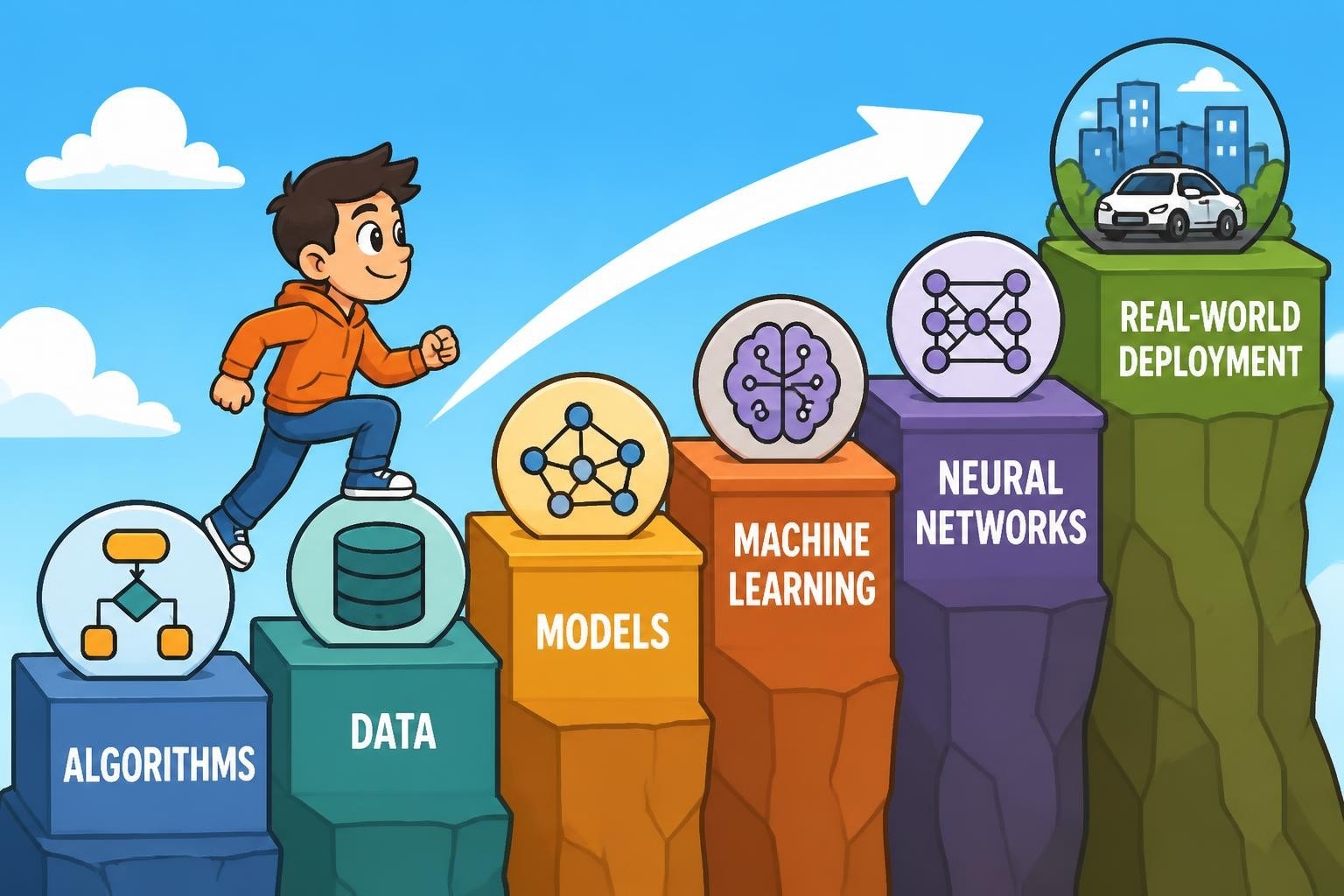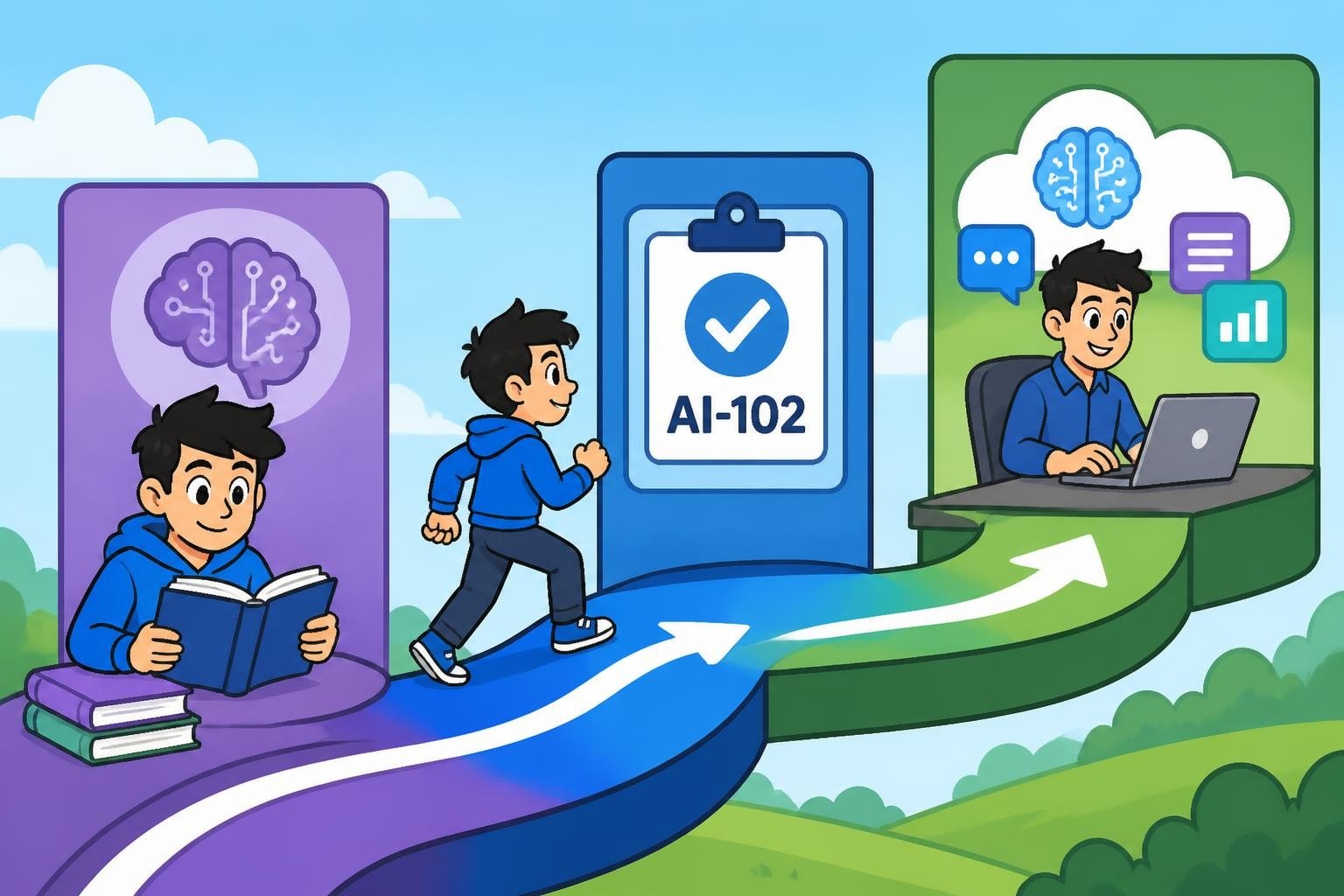
The demand for artificial intelligence expertise has reached unprecedented levels in 2026, with organizations across every sector racing to integrate AI into their operations. As the technology landscape evolves at breakneck speed, professionals need flexible, comprehensive learning solutions that keep pace with innovation. AI training online has emerged as the primary pathway for individuals and teams to acquire cutting-edge skills without the constraints of traditional education models. This shift represents more than convenience-it reflects a fundamental transformation in how technical knowledge is delivered, measured, and applied in real-world contexts.
Understanding the AI Training Online Landscape
The ecosystem of ai training online has matured significantly, offering learners everything from foundational concepts to advanced specializations in natural language processing, computer vision, and reinforcement learning. Modern platforms deliver content through multiple formats: on-demand video courses, interactive coding environments, live bootcamps, and peer-reviewed project assessments.
Core Components of Effective Online AI Training
Quality AI training programs share several distinguishing characteristics that separate superficial overviews from genuinely transformative learning experiences:
- Hands-on implementation projects that require building, training, and deploying models
- Framework-agnostic foundations before diving into TensorFlow, PyTorch, or specialized tools
- Real datasets and business scenarios rather than toy problems
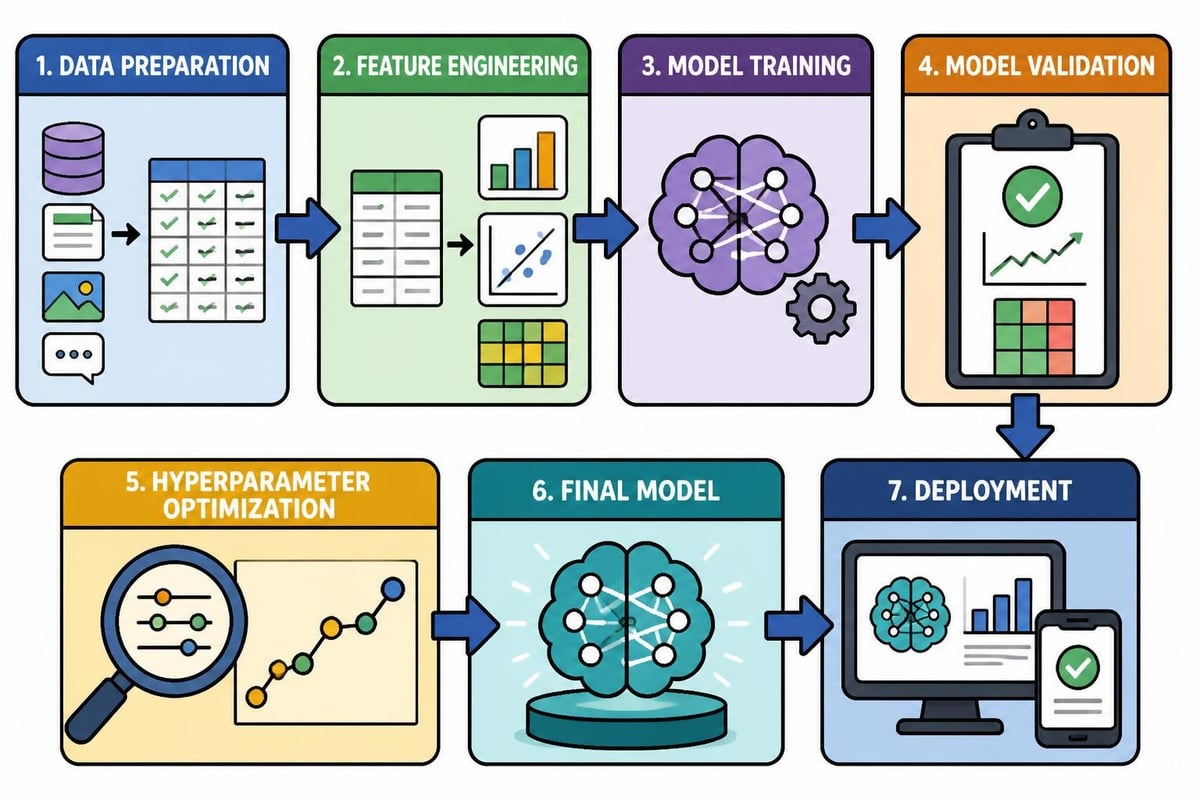
- Performance optimization techniques including hyperparameter tuning and distributed training
- Ethical considerations and responsible AI development practices
The best programs recognize that theoretical knowledge alone proves insufficient. Learners must grapple with actual training workflows, debugging model performance, and understanding the computational trade-offs inherent in different architectural choices.
Distinguishing Between Course Types and Learning Paths
Not all ai training online serves the same purpose or audience. Understanding the taxonomy helps learners select programs aligned with their goals:
| Course Type | Duration | Best For | Typical Outcomes |
|---|---|---|---|
| Foundations | 4-8 weeks | Beginners, career switchers | Basic ML concepts, Python proficiency |
| Specialized Tracks | 8-16 weeks | Practicing developers | Production-ready skills in NLP, CV, or RL |
| Certification Programs | 3-6 months | Corporate teams, career advancement | Vendor-specific credentials, enterprise deployment |
| Bootcamps | 12-24 weeks | Intensive skill acquisition | Portfolio projects, job placement support |
Organizations implementing AI in teaching and learning strategies benefit from understanding these distinctions when designing upskilling initiatives. The right match between employee experience levels and course structure determines program success far more than brand name recognition.
Selecting the Right AI Training Platform and Curriculum
The abundance of options in ai training online creates both opportunity and confusion. Decision-makers must evaluate platforms across multiple dimensions to ensure their investment delivers measurable results.
Technical Depth and Framework Coverage
Serious AI training requires engagement with industry-standard frameworks and tools. Programs that emphasize only conceptual understanding without implementation leave learners unprepared for practical challenges. The TensorFlow official tutorials and PyTorch documentation provide comprehensive, authoritative resources that quality courses should reference and build upon.
Leading platforms offer structured pathways through these frameworks, starting with basic tensor operations and progressing to advanced topics like custom training loops, mixed-precision training, and model quantization. The progression matters-jumping directly to transformer architectures without understanding backpropagation mechanics creates knowledge gaps that surface during troubleshooting.
Corporate Training Versus Individual Learning
Organizations purchasing ai training online for teams face different requirements than individual learners. Corporate programs need:
- Learning management systems with granular progress tracking and reporting
- Customizable content that aligns with specific business use cases
- Multi-tier curricula accommodating diverse technical backgrounds
- Certification pathways that validate skill acquisition and justify training investment
Business platforms like MammothClub's corporate programs address these needs through AI-powered dashboards that surface engagement patterns, knowledge gaps, and recommended interventions. This data-driven approach transforms training from a compliance checkbox into a strategic capability-building initiative.
Individual learners prioritize different factors:
- Flexibility to learn at their own pace and revisit difficult concepts
- Community access for peer support and collaborative problem-solving
- Career services including resume reviews and interview preparation
- Cost-effectiveness relative to traditional degrees or bootcamps
The best AI courses available balance these competing priorities, offering structured guidance without sacrificing the autonomy that makes online learning attractive.
Advanced Training Methodologies and Specializations
As AI capabilities expand, ai training online has evolved beyond general machine learning into highly specialized domains that address specific industry challenges and technical frontiers.
Natural Language Processing and Large Language Models
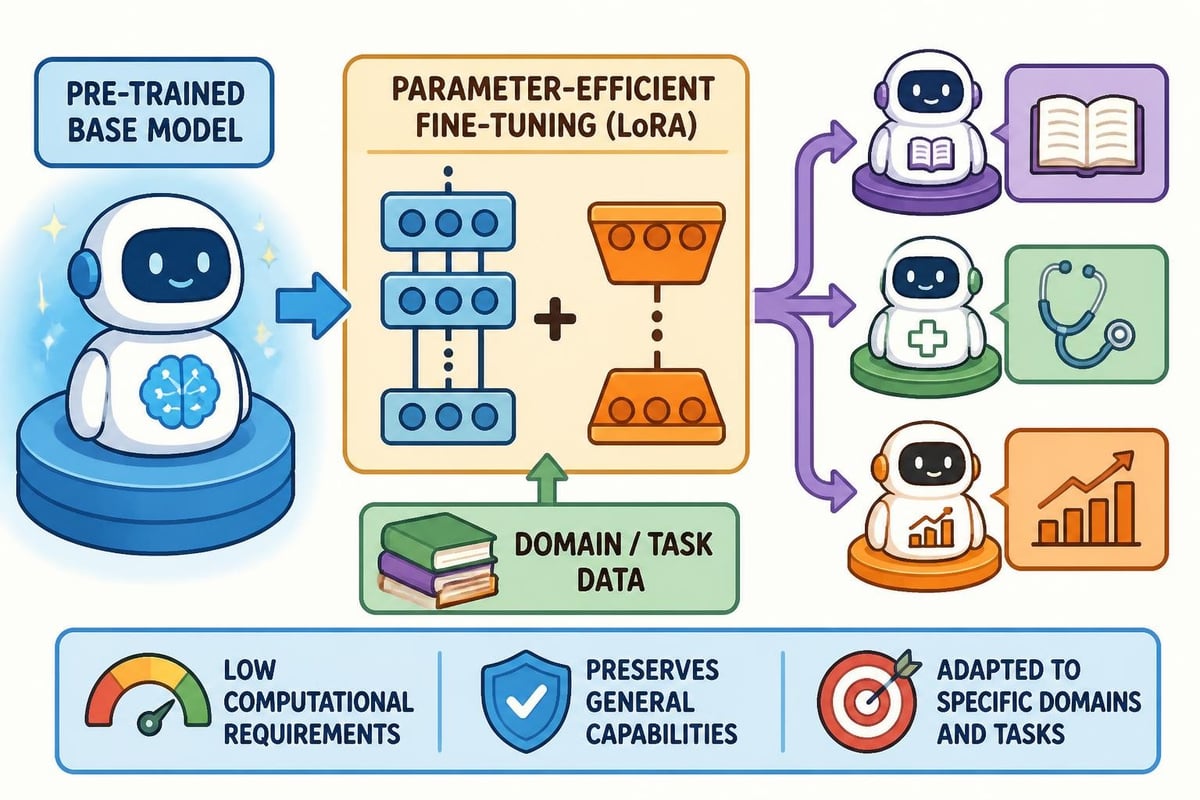
The explosion of generative AI has created urgent demand for NLP expertise. Modern training programs now incorporate fine-tuning techniques for large language models, including parameter-efficient methods like LoRA (Low-Rank Adaptation). The LoRA research paper introduced approaches that enable practitioners to adapt billion-parameter models using consumer hardware-a breakthrough that democratized LLM customization.
Effective NLP training online covers:
- Transformer architecture fundamentals including attention mechanisms and positional encoding
- Transfer learning strategies for domain adaptation with limited labeled data
- Prompt engineering techniques that maximize model performance without fine-tuning
- Retrieval-augmented generation combining vector databases with language models
These topics require hands-on experimentation with APIs, embedding models, and orchestration frameworks. Passive video consumption proves insufficient-learners must debug tokenization issues, optimize inference costs, and evaluate model outputs against business requirements.
Computer Vision and Multi-Modal Learning
Computer vision remains a cornerstone of AI applications, from medical imaging to autonomous systems. Quality ai training online in this domain builds from fundamentals to state-of-the-art architectures. The Stanford CS231n course provides rigorous theoretical grounding that online platforms extend through practical implementation projects.
Contemporary vision training addresses:
| Topic Area | Key Concepts | Practical Applications |
|---|---|---|
| Object Detection | YOLO, R-CNN families, anchor-free methods | Retail analytics, surveillance, robotics |
| Segmentation | U-Net, Mask R-CNN, transformers | Medical imaging, autonomous vehicles |
| Multi-Modal | CLIP, vision-language models | Content moderation, image generation |
| 3D Vision | NeRF, point clouds, mesh processing | AR/VR, industrial inspection |
Learners often underestimate the importance of data preprocessing and augmentation in vision tasks. Understanding how to construct robust training pipelines that handle class imbalance, domain shift, and edge cases separates hobbyists from practitioners capable of deploying production systems.
Distributed Training and Infrastructure Optimization
As model sizes grow, training efficiency becomes a competitive advantage. Advanced ai training online programs now incorporate distributed training concepts that were previously confined to research labs. Microsoft's distributed training documentation explains how frameworks like Horovod and DeepSpeed enable model training across multiple GPUs and nodes.
Training at scale requires understanding:
- Data parallelism versus model parallelism trade-offs
- Gradient accumulation for simulating larger batch sizes
- Mixed-precision training using FP16 or BF16 datatypes
- Checkpointing strategies for fault tolerance and experiment reproducibility
The NVIDIA Deep Learning Institute offers specialized training on GPU-accelerated workflows, covering topics from CUDA optimization to multi-node scheduling. For organizations training custom models on proprietary data, these infrastructure skills often determine project feasibility more than algorithm selection.
Certification Pathways and Professional Development
Credentials provide third-party validation of skills acquired through ai training online, offering employers objective benchmarks and professionals career differentiation.
Vendor-Specific Certifications
Major cloud providers and AI platforms offer certification programs that verify practical competency with their ecosystems. The Azure AI Engineer Associate certification demonstrates ability to design and implement AI solutions using Microsoft's cloud services, while programs from other vendors focus on their respective platforms and tools.
These certifications typically require:
- Passing proctored exams covering service capabilities and best practices
- Demonstrating hands-on skills through labs or portfolio reviews
- Maintaining credentials through continuing education as platforms evolve
Vendor certifications carry weight in enterprises standardized on specific cloud providers but may have limited relevance in heterogeneous or on-premises environments.
Framework and Methodology Certifications
Alternative certification paths focus on transferable skills rather than platform-specific implementations. Programs certifying TensorFlow, PyTorch, or MLOps expertise validate capabilities applicable across diverse deployment contexts.
The value proposition differs significantly:
Vendor Certifications:
- Prove expertise in specific product suites
- Often required for consulting or implementation roles
- May become obsolete as platforms deprecate features
Framework Certifications:
- Demonstrate fundamental technical competency
- Translate across job changes and technology migrations
- Require deeper conceptual understanding
Organizations building AI foundations for beginners typically emphasize framework skills early, deferring vendor-specific training until deployment platforms are selected. This sequencing prevents knowledge obsolescence and maintains strategic flexibility.
Practical Implementation and Real-World Applications
The ultimate test of ai training online effectiveness lies in applied outcomes-can learners successfully implement solutions to business problems they couldn't solve before training?
Building Production-Ready Models
Academic exercises using clean datasets bear little resemblance to production machine learning. Effective training programs bridge this gap by incorporating real-world complications:
- Missing and corrupted data requiring robust preprocessing pipelines
- Concept drift where model performance degrades as input distributions shift
- Inference latency requirements constraining model architecture choices
- Explainability demands from stakeholders requiring interpretable predictions
The fast.ai Practical Deep Learning course exemplifies pragmatic training that prioritizes working solutions over theoretical purity. This philosophy resonates with practitioners who need to ship products rather than publish papers.
Selecting Datasets and Benchmarks
Training AI models requires appropriate datasets for both learning and evaluation. The Papers With Code datasets repository curates thousands of benchmark datasets with associated baseline results, enabling learners to compare their implementations against published work.
Understanding dataset characteristics proves crucial:
- Size and diversity relative to problem complexity
- Label quality and potential annotation biases
- Licensing restrictions affecting commercial usage
- Test set contamination risks in pre-trained models
Many ai training online programs overlook dataset selection, presenting learners with pre-packaged examples. Developing judgment about data quality and representativeness separates competent practitioners from those who struggle with novel problems.
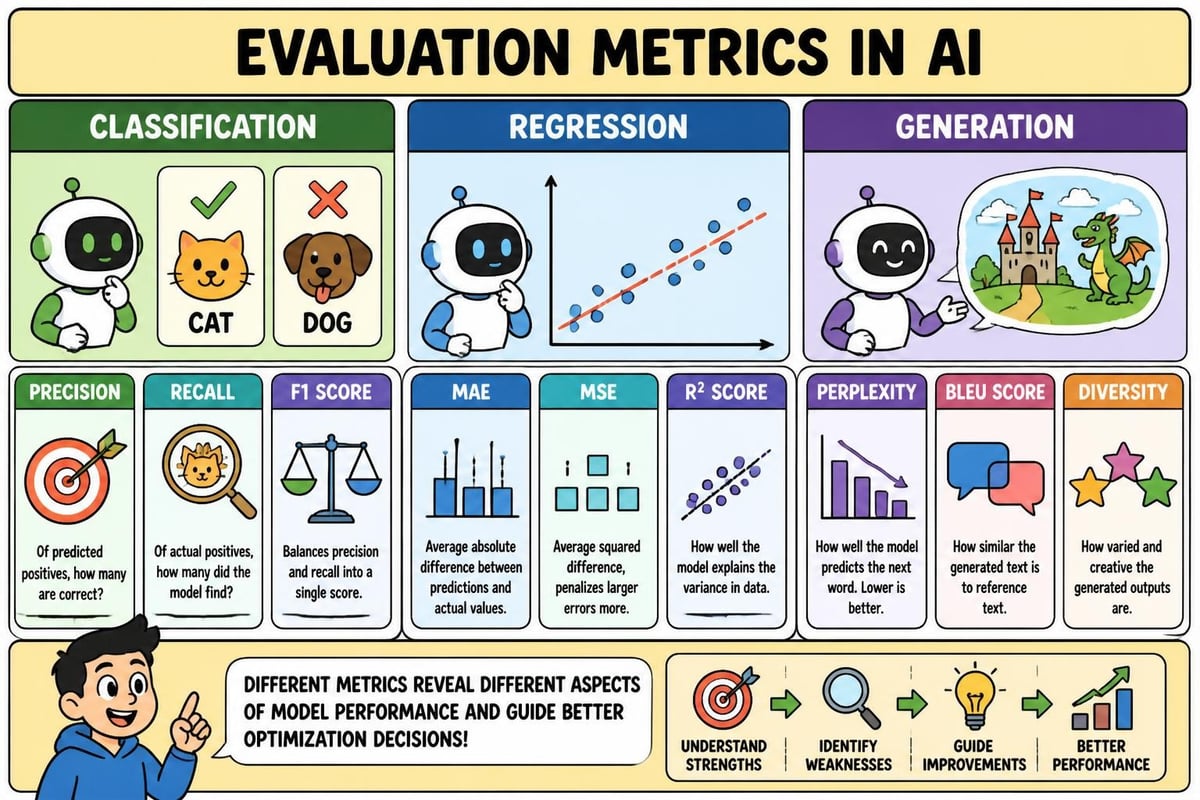
Measuring Training Efficiency and Cost
As compute costs escalate, training efficiency becomes an economic imperative. The MLPerf training benchmarks provide standardized measurements of training performance across hardware configurations, enabling data-driven infrastructure decisions.
Advanced learners benefit from understanding:
- Training throughput measured in samples processed per second
- Time-to-accuracy metrics balancing speed and model quality
- Cost per training run factoring in cloud charges or hardware amortization
- Carbon footprint considerations for responsible AI development
These operational concerns rarely appear in introductory courses but become critical as organizations scale AI initiatives from proof-of-concept to production deployment.
Emerging Trends and Future-Proof Skills
The AI field evolves continuously, making adaptability as valuable as current technical knowledge. Forward-looking ai training online emphasizes transferable problem-solving approaches over transient tool proficiency.
Automated Machine Learning and Neural Architecture Search
AutoML platforms increasingly handle tasks that previously required expert intervention-hyperparameter optimization, feature engineering, and even architecture design. Rather than making AI expertise obsolete, these tools shift the skill frontier toward meta-learning: understanding when automation suffices versus when human insight proves essential.
Training programs now incorporate:
- AutoML platform capabilities and their appropriate use cases
- Neural architecture search fundamentals and computational budgets
- Automated data preprocessing versus custom pipeline development
- Meta-learning concepts that enable rapid adaptation to new domains
This evolution parallels historical shifts in software development-higher-level abstractions didn't eliminate programming jobs but changed the nature of valuable expertise.
Reinforcement Learning and Multi-Agent Systems
While supervised learning dominates current AI applications, reinforcement learning represents the frontier for problems involving sequential decision-making and optimization under uncertainty. Advanced ai training online increasingly addresses RL fundamentals:
- Markov decision processes and Bellman equations
- Policy gradient methods including PPO and TRPO
- Value-based approaches like DQN and its variants
- Multi-agent scenarios with competitive and cooperative dynamics
These topics demand mathematical sophistication beyond typical data science backgrounds, but they unlock application domains from robotics to algorithmic trading. Organizations exploring AI trading applications particularly benefit from RL expertise as it directly models portfolio optimization and risk management.
Responsible AI and Ethical Considerations
Technical proficiency alone proves insufficient as AI systems impact consequential decisions. Comprehensive training programs integrate ethical frameworks throughout curricula rather than relegating them to optional modules:
- Bias detection and mitigation techniques for fair models
- Privacy-preserving machine learning including differential privacy and federated learning
- Model interpretability tools and techniques for regulated industries
- AI governance frameworks balancing innovation with risk management
These competencies increasingly appear in job requirements and certification standards, reflecting industry recognition that sustainable AI deployment requires responsible development practices from the outset.
Building Organizational AI Capabilities at Scale
Individual learning matters, but organizational transformation requires systematic approaches to capability development that ai training online uniquely enables through centralized platforms and standardized curricula.
Designing Corporate AI Academies
Leading organizations establish internal AI academies that blend external training providers with custom content addressing proprietary systems and business contexts. These initiatives typically follow a maturity model:
Phase 1: Awareness Building
- Executive briefings on AI capabilities and limitations
- Department-level workshops identifying automation opportunities
- Basic literacy training for non-technical stakeholders
Phase 2: Technical Upskilling
- Intensive training for data scientists and ML engineers
- Software engineering teams learning MLOps practices
- Domain experts developing AI product management skills
Phase 3: Innovation Enablement
- Advanced specialization in emerging techniques
- Cross-functional AI project teams
- Internal knowledge sharing and best practice dissemination
Platforms supporting these journeys provide learning paths for diverse roles, from executives needing strategic context to engineers requiring hands-on implementation skills. The ability to customize content while maintaining assessment rigor separates enterprise-grade solutions from consumer-oriented course marketplaces.
Measuring Training ROI and Business Impact
Training investments demand justification through measurable outcomes. Organizations track ai training online effectiveness across multiple dimensions:
| Metric Category | Example Indicators | Measurement Approach |
|---|---|---|
| Engagement | Course completion rates, time invested | LMS analytics |
| Knowledge Acquisition | Pre/post assessment scores, certification pass rates | Standardized testing |
| Application | Projects deployed, models in production | Project tracking systems |
| Business Impact | Process efficiency gains, revenue from AI products | Financial analysis |
The lag between training completion and business impact complicates attribution, but organizations with mature AI programs establish baseline metrics before training initiatives to isolate effects.
Creating Sustainable Learning Cultures
One-time training interventions rarely produce lasting change. Sustainable AI capability requires ongoing learning integrated into daily work. High-performing organizations foster this through:
- Communities of practice where practitioners share challenges and solutions
- Internal conferences and demo days showcasing successful implementations
- Dedicated learning time allocated in project schedules
- Mentorship programs pairing experienced practitioners with learners
These cultural elements transform ai training online from a discrete event into continuous capability building that keeps pace with technological change.
Platform Selection Criteria for Organizations
Choosing the right ai training online provider represents a strategic decision with long-term implications for organizational capability development.
Content Breadth and Depth Trade-offs
Platforms differ significantly in their content strategies. Some offer encyclopedic catalogs covering every conceivable technology, while others curate focused pathways in specific domains. Neither approach proves universally superior-the right choice depends on organizational needs:
Broad Platforms (3,000+ courses):
- Support diverse learning objectives across teams
- Enable exploration before committing to specializations
- Risk overwhelming learners with choice paralysis
- May sacrifice depth for coverage
Specialized Providers:
- Deliver expert-level content in focused domains
- Often include cutting-edge topics before broader adoption
- Require combining multiple providers for comprehensive coverage
- May have smaller learner communities
Organizations with heterogeneous upskilling needs typically favor broad platforms offering everything from Python programming fundamentals to advanced AI bootcamps, enabling centralized administration while serving diverse roles.
Assessment and Certification Rigor
Training without verification leaves organizations uncertain about actual skill acquisition. Evaluation approaches vary widely:
- Automated quizzes test recall but not application
- Coding challenges verify implementation ability within constrained environments
- Portfolio projects demonstrate end-to-end capability but require subjective review
- Proctored exams provide credentialing but may not reflect practical competency
The most effective programs combine multiple assessment types, ensuring learners can both explain concepts and implement solutions. Integration with professional certification programs adds external validation that carries weight with employers and clients.
Learning Experience and Engagement Tools
Content quality alone doesn't guarantee learning outcomes-delivery mechanisms significantly impact retention and application. Modern ai training online platforms incorporate:
- Interactive coding environments enabling experimentation without local setup
- Real-time collaboration features supporting peer learning and group projects
- AI-powered learning assistants answering questions and recommending resources
- Adaptive curricula adjusting difficulty based on demonstrated proficiency
These features particularly benefit remote teams and asynchronous learners who lack the immediate support structures of traditional classrooms. The investment in learning technology distinguishes premium platforms from basic video repositories.
Successfully navigating the ai training online landscape requires matching program characteristics with learning objectives, technical backgrounds, and organizational constraints. The convergence of comprehensive curricula, hands-on implementation projects, and flexible delivery models makes 2026 an ideal time for professionals and organizations to build AI capabilities that drive competitive advantage. MammothClub addresses these needs through 3,000+ on-demand courses, interactive bootcamps, and corporate certification programs powered by AI-driven learning tools that make training measurable and results-driven. Whether you're an individual seeking to master cutting-edge AI techniques or an organization building enterprise-wide capabilities, the right training platform transforms learning from a cost center into a strategic enabler of innovation and growth.