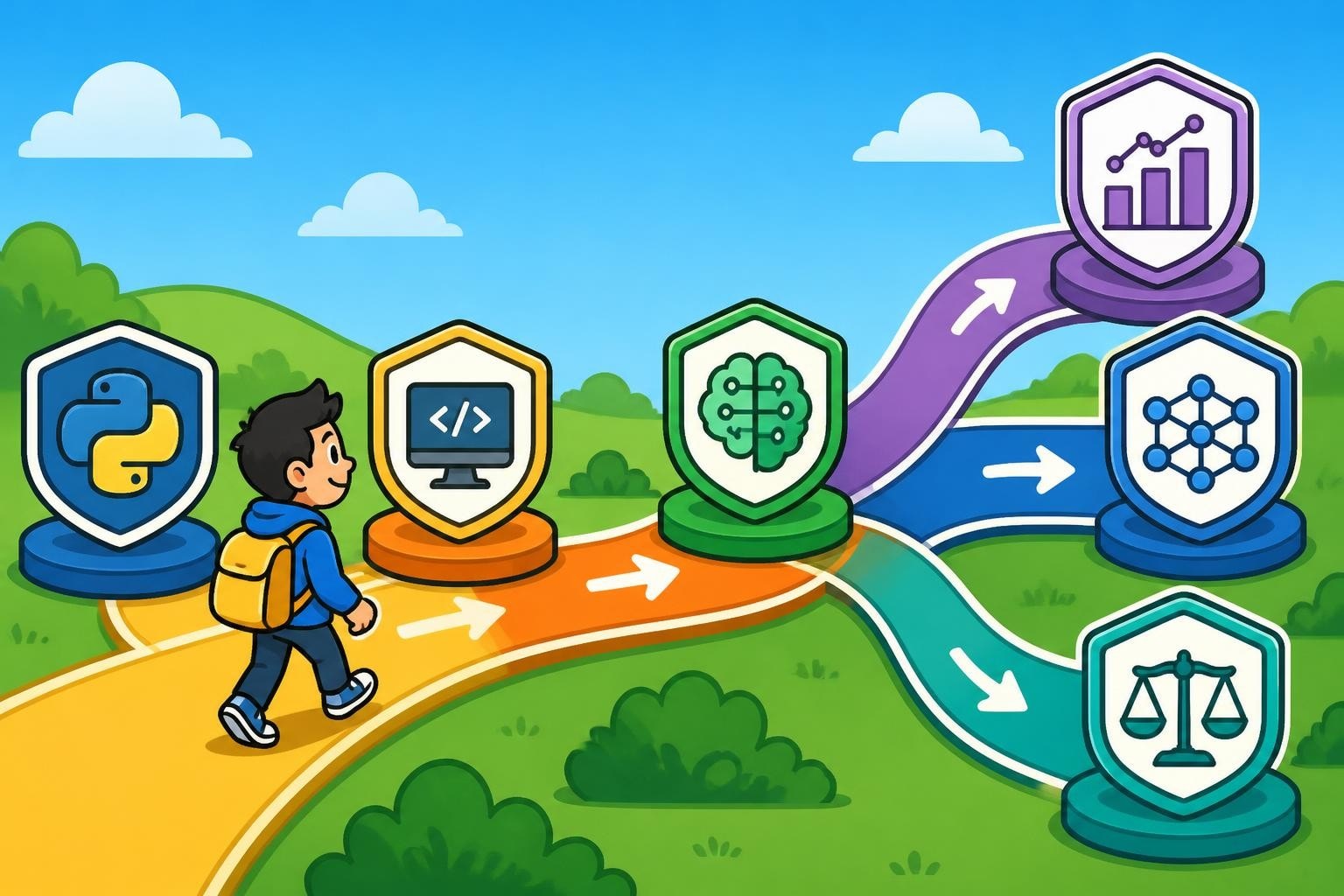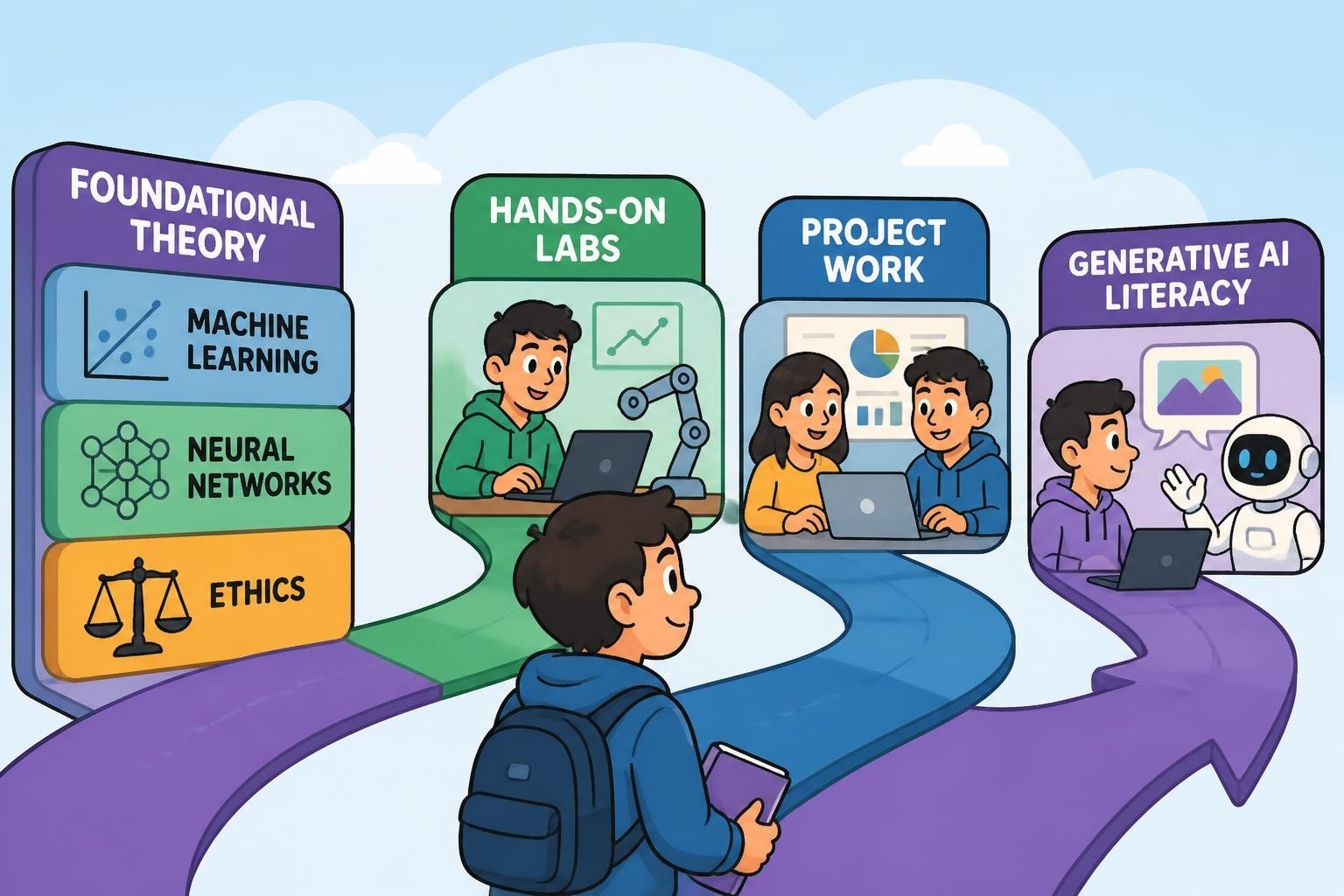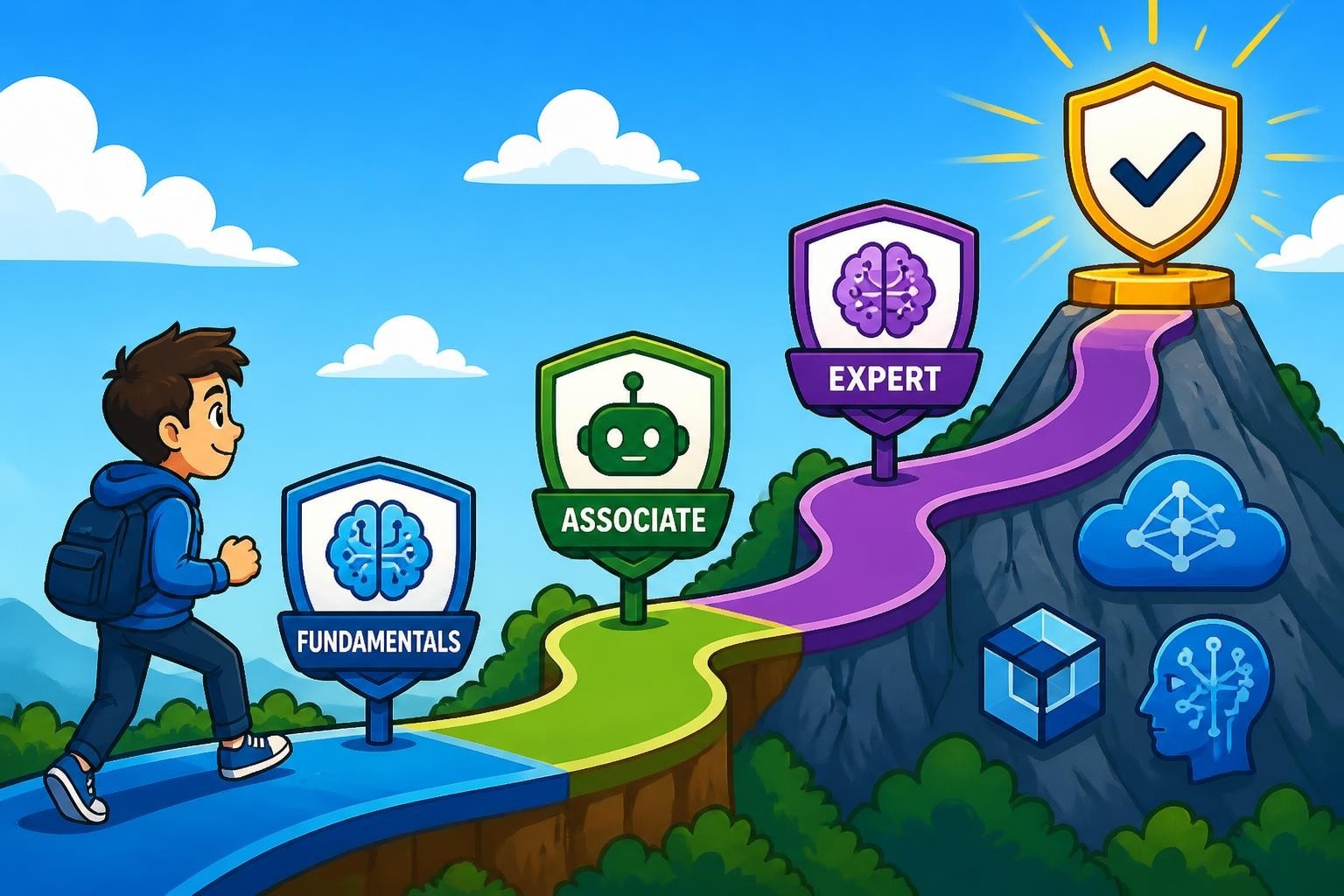
The integration of artificial intelligence into educational environments represents the most significant transformation in pedagogy since the introduction of the internet. In 2026, AI in teaching and learning has evolved from experimental pilot programs to mission-critical infrastructure supporting millions of students worldwide. Educational institutions now deploy AI systems that personalize curriculum delivery, provide instant formative feedback, and automate administrative burdens that previously consumed educators' time. This shift extends beyond K-12 and higher education into corporate training, where organizations demand measurable skill development and rapid upskilling to remain competitive. Understanding how to effectively implement these technologies while maintaining pedagogical integrity has become essential for educators, administrators, and learning professionals.
The Current State of AI Integration in Educational Environments
Educational institutions worldwide have moved past the debate of whether to adopt AI technologies and now focus on optimization and governance. According to research published in Nature Human Behaviour, generative AI presents both transformative opportunities and significant challenges that require careful navigation by educators and researchers.
The spectrum of ai in teaching and learning applications now includes intelligent tutoring systems, automated grading platforms, adaptive learning management systems, and AI-powered content creation tools. Major school districts have developed comprehensive policies governing AI usage, while universities integrate these tools into writing centers, research labs, and course delivery platforms.
Primary AI applications in education include:
- Personalized learning pathways that adapt to individual student pace and comprehension levels
- Automated assessment systems providing instant feedback on assignments and exams
- Virtual teaching assistants handling routine questions and administrative tasks
- Predictive analytics identifying at-risk students before performance deteriorates
- Content generation tools supporting curriculum development and resource creation
Implementation Challenges Across Educational Sectors
Despite widespread adoption, significant obstacles persist. The Brookings Institution's analysis highlights the ongoing tension between AI integration advocates and those concerned about academic integrity, equity, and fundamental skill development.
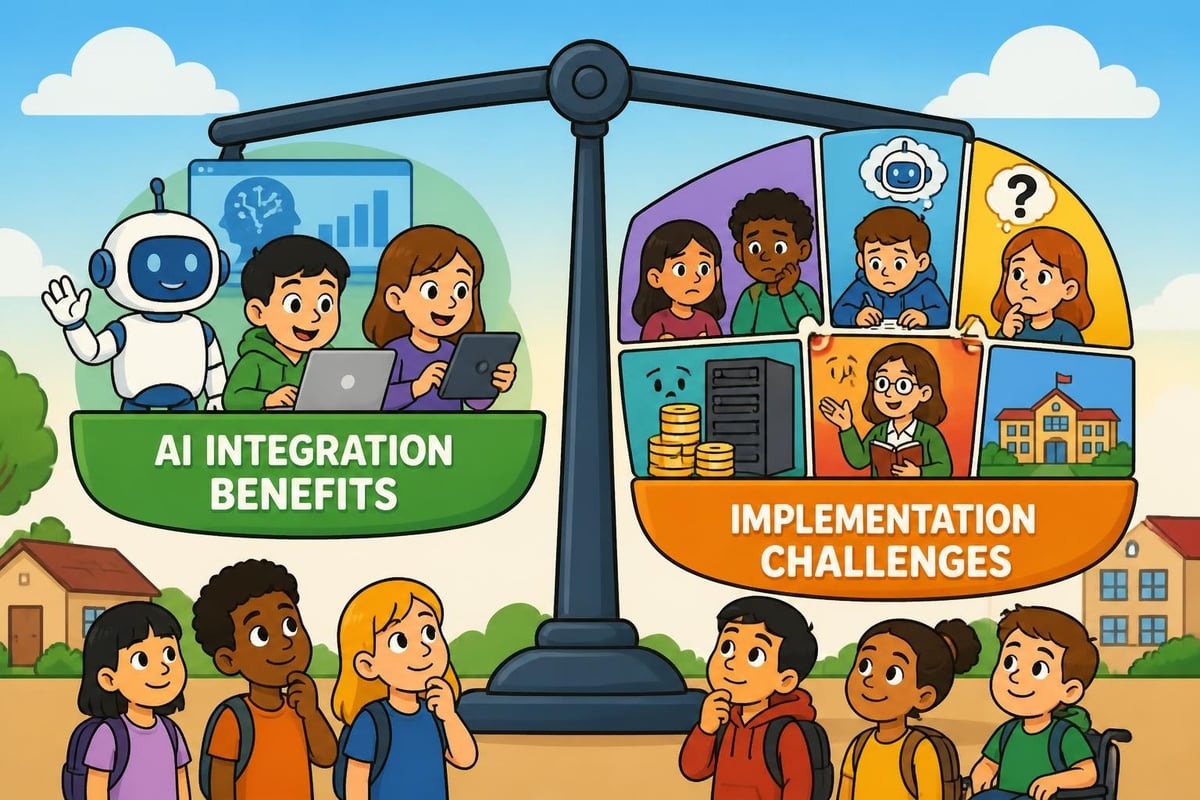
Infrastructure disparities create substantial equity concerns. Schools in affluent districts deploy sophisticated AI platforms while under-resourced institutions struggle with basic technology access. This digital divide threatens to exacerbate existing educational inequalities unless addressed through targeted policy interventions and funding mechanisms.
Teacher preparation remains insufficient. Most educators received minimal training on AI literacy, pedagogical integration strategies, or ethical considerations. Professional development programs must evolve rapidly to equip instructional staff with competencies necessary for effective AI-enhanced instruction.
| Challenge Category | Impact Level | Primary Mitigation Strategy |
|---|---|---|
| Equity and Access | High | Targeted funding, infrastructure grants |
| Teacher Preparation | High | Comprehensive professional development |
| Academic Integrity | Medium | Clear policies, detection systems |
| Data Privacy | High | Robust governance frameworks |
| Pedagogical Effectiveness | Medium | Evidence-based implementation research |
Personalized Learning Through Adaptive AI Systems
Adaptive learning platforms represent the most mature application of ai in teaching and learning. These systems analyze student interactions, identify knowledge gaps, and dynamically adjust content difficulty and presentation methods. Unlike traditional one-size-fits-all curricula, AI-powered platforms create individualized learning journeys for each student.
Carnegie Learning's MATHia platform demonstrates this approach effectively. The system monitors student problem-solving processes, identifies misconceptions in real-time, and provides targeted interventions precisely when students struggle. Data from implementations show measurable improvement in standardized test scores and student engagement metrics.
Real-Time Formative Assessment and Feedback Loops
Traditional assessment models suffer from delayed feedback cycles. Students complete assignments, wait days for graded returns, and often lack detailed guidance on improvement strategies. AI assessment tools eliminate these delays by providing immediate, actionable feedback.
Platforms analyzing written work identify not only grammatical errors but also argument structure weaknesses, evidence integration problems, and style inconsistencies. These systems generate specific revision suggestions while maintaining student ownership of the writing process.
Key benefits of AI-powered assessment:
- Immediate feedback enabling students to iterate and improve work quickly
- Consistent evaluation criteria applied across all submissions
- Detailed analytics revealing class-wide patterns and individual learning trajectories
- Educator time reclaimed for high-value instructional activities
The MIT Teaching Systems Lab explores practical applications of these technologies in K-12 environments, documenting both successes and areas requiring further development. Their research emphasizes the importance of human oversight in maintaining assessment validity and preventing algorithmic bias.
AI-Powered Content Creation and Curriculum Development
Educators spend countless hours developing lesson plans, creating supplementary materials, and adapting resources for diverse learner needs. AI content generation tools streamline these processes while maintaining instructional quality.
Teachers using AI assistants can generate differentiated reading passages at multiple complexity levels, create practice problems aligned to specific learning objectives, and produce multimedia resources supporting various learning modalities. This capability proves particularly valuable for educators serving students with disabilities or English language learners requiring customized materials.
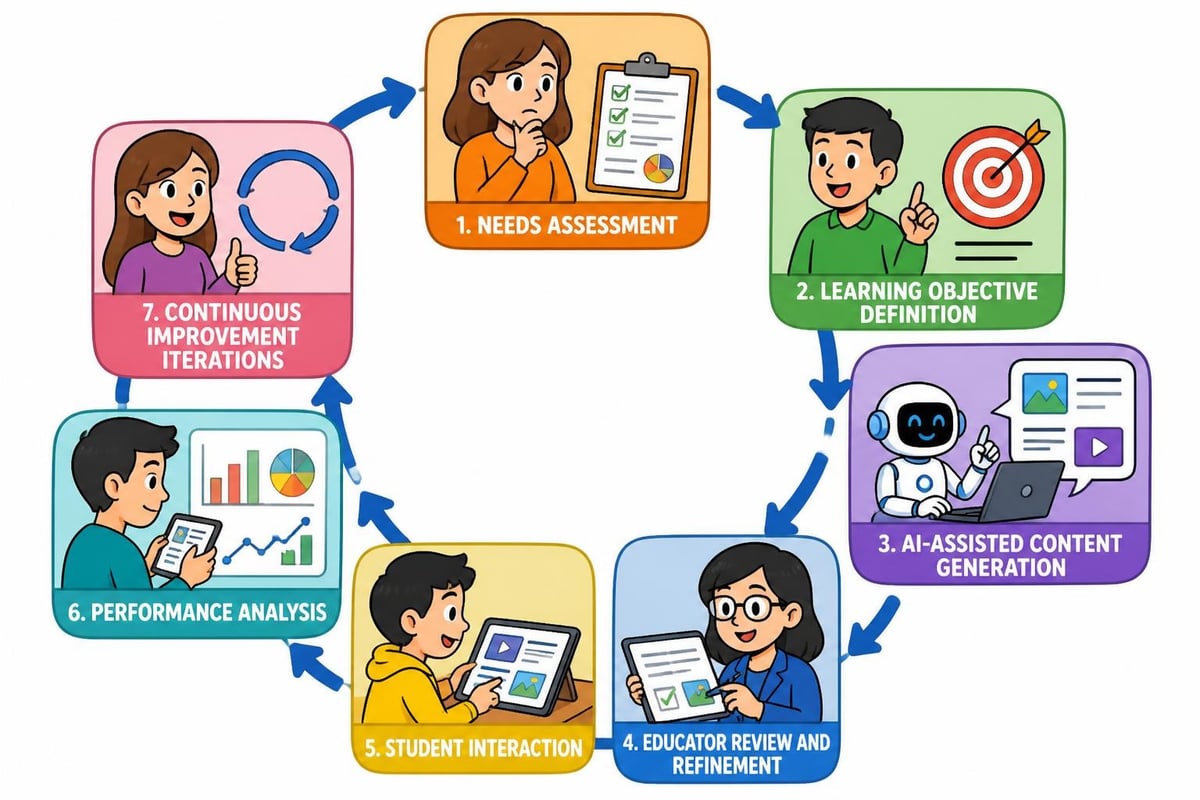
However, responsible implementation requires human judgment throughout the creation process. AI-generated content must undergo expert review to ensure accuracy, cultural responsiveness, and pedagogical soundness. The ISTE and ASCD collaboration provides practical frameworks for integrating AI tools while maintaining instructional integrity.
Supporting Multilingual and Inclusive Education
Language barriers significantly impact educational access and achievement. AI translation and localization tools enable educators to provide materials in students' native languages, facilitating comprehension while they develop English proficiency.
Speech recognition systems support students with physical disabilities affecting writing abilities. AI-powered captioning and transcription services make audio and video content accessible to deaf and hard-of-hearing learners. These assistive technologies promote inclusive education environments where all students can participate fully.
Professionals seeking to build expertise in these technologies can explore specialized training through programs like comprehensive AI courses that cover practical implementation strategies.
Institutional Governance and Policy Frameworks
Effective ai in teaching and learning implementation requires comprehensive governance structures addressing academic integrity, data privacy, algorithmic transparency, and equity considerations. Research on institutional AI policies reveals significant gaps in current governance frameworks, with many institutions lacking clear guidelines for acceptable use, data handling, and accountability mechanisms.
Successful policy frameworks establish several core principles:
- Transparency Requirements: Students and educators must understand when AI systems influence educational decisions
- Human Oversight Mandates: Critical decisions affecting student outcomes require human review and approval
- Data Protection Standards: Student information must be safeguarded through robust security measures and limited third-party sharing
- Equity Audits: Regular assessments ensure AI systems do not perpetuate or amplify existing biases
- Appeal Mechanisms: Students can contest AI-generated assessments or placement decisions through established processes
Building Responsible AI Literacy Programs
Both educators and students require foundational AI literacy to navigate these technologies effectively. Curriculum must address technical understanding, ethical considerations, practical skills, and critical evaluation capabilities.
Harvard Graduate School of Education resources outline comprehensive approaches to AI-aware curricula and teacher preparation, emphasizing the importance of developing critical perspectives on technology's role in learning.
Students learning to work alongside AI tools need explicit instruction on appropriate use cases, limitation awareness, and strategies for maintaining academic integrity. This education extends beyond rule compliance to cultivate thoughtful engagement with AI as collaborative tools rather than replacement for thinking.
Organizations prioritizing responsible AI education position themselves to leverage these technologies ethically and effectively while developing workforce capabilities aligned with industry demands.
Professional Development and Corporate Training Applications
The corporate sector has embraced ai in teaching and learning with particular enthusiasm, driven by urgent upskilling needs and measurable ROI expectations. Organizations deploy AI-powered learning platforms to deliver just-in-time training, assess skill gaps, and personalize professional development pathways.
| Application Area | Business Value | Implementation Complexity |
|---|---|---|
| Onboarding Automation | High - reduces time to productivity | Low - standardized processes |
| Skills Gap Analysis | High - identifies training needs | Medium - requires data integration |
| Personalized Learning Paths | Medium - improves engagement | High - needs content library |
| Performance Support | High - reduces support tickets | Medium - requires knowledge base |
| Compliance Training | Medium - ensures certification | Low - established standards |
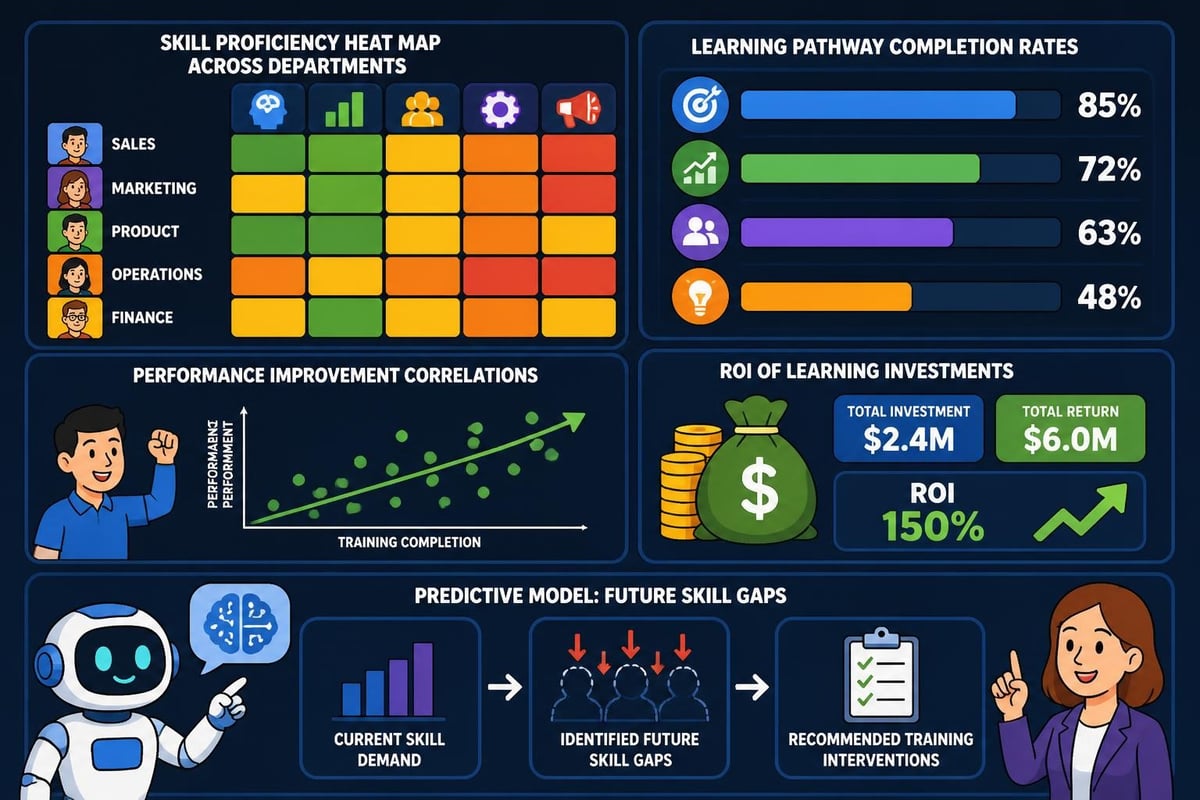
AI-driven training platforms analyze employee performance data, identify knowledge deficiencies, and recommend targeted learning interventions. This approach proves particularly valuable for technical skill development where proficiency gaps directly impact productivity and innovation capacity.
Measuring Learning Outcomes and Training Effectiveness
Traditional training metrics focus on completion rates and satisfaction scores, providing limited insight into actual learning transfer. AI analytics platforms track behavioral changes, skill application, and performance improvements resulting from training investments.
Predictive models identify which learning modalities and content formats produce optimal outcomes for different employee populations. This data enables L&D teams to optimize resource allocation, prioritizing high-impact interventions and eliminating ineffective programs.
For organizations building internal AI capabilities, specialized programs addressing AI engineering certification and applied machine learning provide structured pathways for workforce development.
Practical Implementation Strategies for Educational Leaders
Successfully integrating ai in teaching and learning requires strategic planning, stakeholder engagement, and phased deployment approaches. Educational leaders should begin with clearly defined objectives aligned to institutional priorities rather than adopting technology for its own sake.
Recommended implementation sequence:
- Conduct needs assessment identifying specific pain points AI might address effectively
- Establish governance committee representing diverse stakeholders including educators, students, IT staff, and administrators
- Develop comprehensive policies covering acceptable use, data privacy, and accountability measures
- Pilot with willing faculty in controlled settings allowing iterative refinement before broad deployment
- Provide robust professional development ensuring educators possess necessary competencies and confidence
- Implement feedback mechanisms capturing user experiences and identifying improvement opportunities
- Monitor equity impacts through disaggregated data analysis revealing differential effects across student populations
- Scale successful pilots while maintaining quality standards and support infrastructure
Selecting Appropriate AI Tools and Vendors
The educational technology marketplace offers hundreds of AI-powered solutions with varying capabilities, pedagogical approaches, and evidence bases. Selection criteria should emphasize:
Technical considerations: Integration with existing systems, data security standards, scalability, and reliability
Pedagogical alignment: Consistency with institutional teaching philosophies and learning outcome priorities
Evidence base: Documented effectiveness through peer-reviewed research or rigorous internal evaluations
Vendor stability: Financial health and long-term viability of provider organizations
Support quality: Training resources, technical assistance, and ongoing product development
Educational procurement processes must involve instructional staff early in evaluation cycles. Teachers and professors possess essential insights regarding pedagogical soundness and practical classroom applicability that administrative or IT perspectives alone cannot provide.
Emerging Trends Shaping Future Developments
As we progress through 2026, several trends will significantly influence ai in teaching and learning evolution. Multimodal AI systems integrating text, speech, images, and video enable richer interactive learning experiences. Students can engage with virtual tutors through natural conversation, receive explanations incorporating multiple representation modes, and access learning resources tailored to individual preferences.
Emotional AI capabilities analyzing student affect and engagement states allow systems to adjust instructional approaches when detecting frustration, boredom, or confusion. While raising important privacy and consent considerations, these technologies promise more responsive and supportive learning environments.
Blockchain-based credentialing systems integrated with AI learning platforms create verifiable, portable records of skill acquisition and competency demonstration. These micro-credentials enable learners to document capabilities gained through diverse educational experiences, supporting workforce mobility and continuous professional development.
Emerging capabilities to monitor:
- Advanced natural language understanding enabling sophisticated dialogue-based tutoring
- Computer vision applications supporting hands-on skill assessment in technical and vocational training
- Generative AI creating immersive simulations and scenario-based learning experiences
- Federated learning approaches protecting student privacy while enabling model improvement
- Edge computing deployment reducing latency and improving system responsiveness
The rapid pace of AI advancement requires educational institutions to maintain strategic flexibility, continuously evaluating new capabilities while remaining grounded in fundamental pedagogical principles and learner needs.
Professionals seeking to stay current with these developments can access specialized training through platforms offering no-code AI courses and AI specialization programs designed for practical application in educational contexts.
Addressing Ethical Considerations and Building Trust
The deployment of ai in teaching and learning raises profound ethical questions regarding algorithmic bias, student privacy, data ownership, and the fundamental purposes of education. Addressing these concerns transparently builds stakeholder trust essential for successful implementation.
Algorithmic bias poses particular risks in educational settings where AI systems increasingly influence high-stakes decisions including admissions, placement, grading, and resource allocation. Historical data used to train these models often reflects existing societal inequities, potentially perpetuating discrimination through automated systems.
Regular bias audits examining system outputs across demographic categories help identify problematic patterns. Diverse development teams and inclusive design processes reduce the likelihood of embedding harmful assumptions into educational AI systems.
Student data privacy protection requires stringent safeguards. Parents and students deserve clarity regarding what information systems collect, how institutions use this data, who can access it, and under what circumstances sharing occurs. Opt-out mechanisms and data minimization principles should guide collection practices.
Building trust demands ongoing communication with all stakeholders. Educational leaders must articulate clearly the rationale for AI adoption, acknowledge limitations and risks honestly, and demonstrate responsiveness to community concerns through policy adjustments and implementation modifications.
The transformation of education through AI technologies continues accelerating, creating both tremendous opportunities and significant responsibilities for institutions and educators. Successfully navigating this evolution requires balancing innovation with equity, efficiency with pedagogical soundness, and technological capability with human judgment. As organizations prepare their workforce for the AI era, comprehensive training becomes essential. MammothClub provides the courses, certifications, and learning infrastructure professionals need to develop AI competencies and help their organizations thrive in this rapidly changing educational landscape.