The demand for Python skills in artificial intelligence continues to surge as organizations accelerate their digital transformation initiatives. Professionals seeking to validate their expertise increasingly turn to structured credential programs that combine Python programming competency with AI-specific knowledge. A python ai certification serves as tangible proof of your ability to build, deploy, and maintain intelligent systems using the world's most popular language for machine learning and data science. Understanding which certification aligns with your career goals, technical background, and industry requirements has become essential for both individual contributors and teams responsible for enterprise AI adoption.
Why Python Dominates the AI Certification Landscape
Python's supremacy in artificial intelligence stems from its extensive ecosystem of libraries, frameworks, and community support. When evaluating certification programs, you will encounter repeated emphasis on libraries like TensorFlow, PyTorch, scikit-learn, pandas, and NumPy because these tools form the foundation of production AI systems.
Key advantages driving Python's certification popularity:
- Lower barrier to entry compared to compiled languages like C++ or Java
- Rapid prototyping capabilities that accelerate experimentation cycles
- Unified workflow from data preprocessing through model deployment
- Cross-domain applicability spanning computer vision, NLP, and reinforcement learning
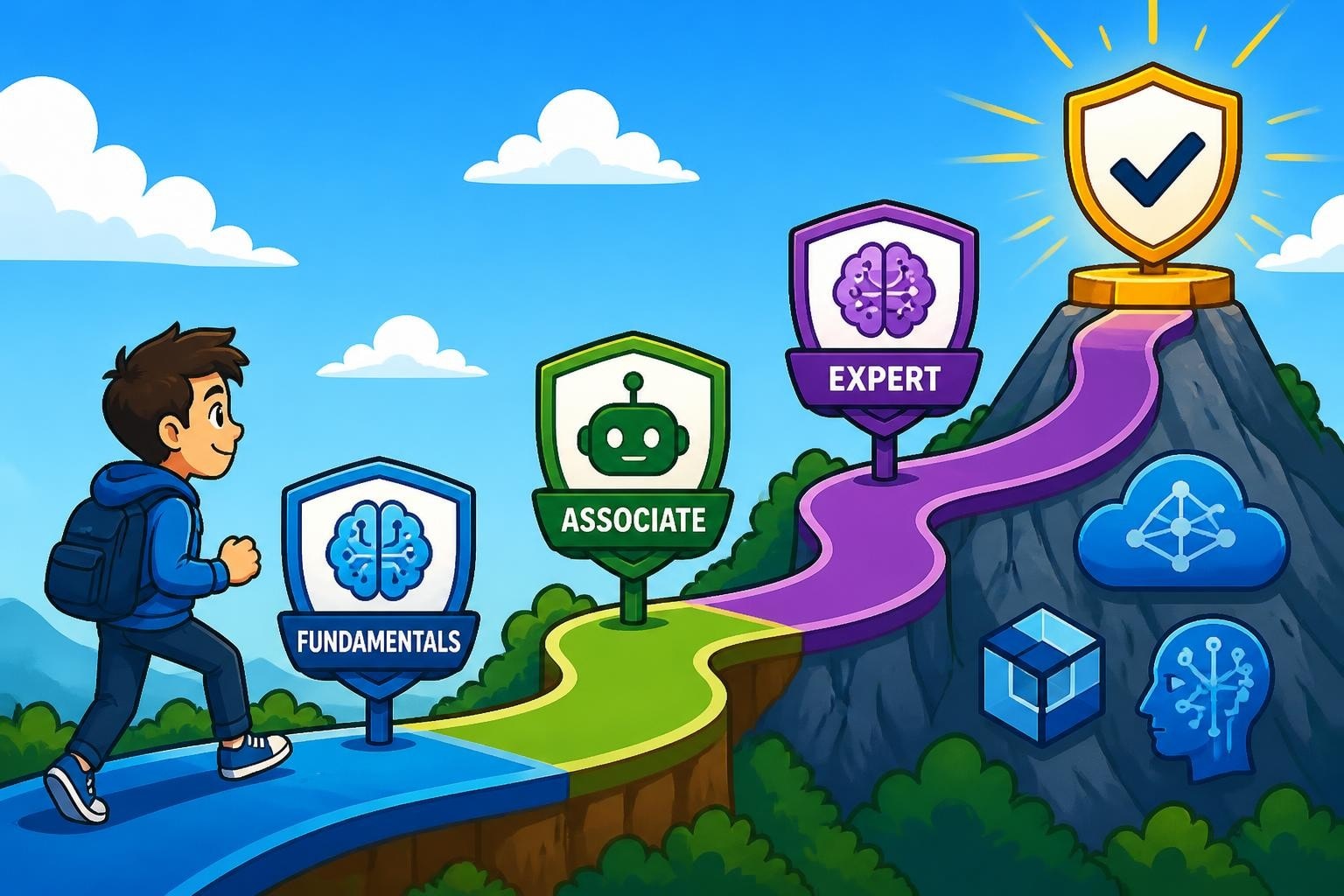
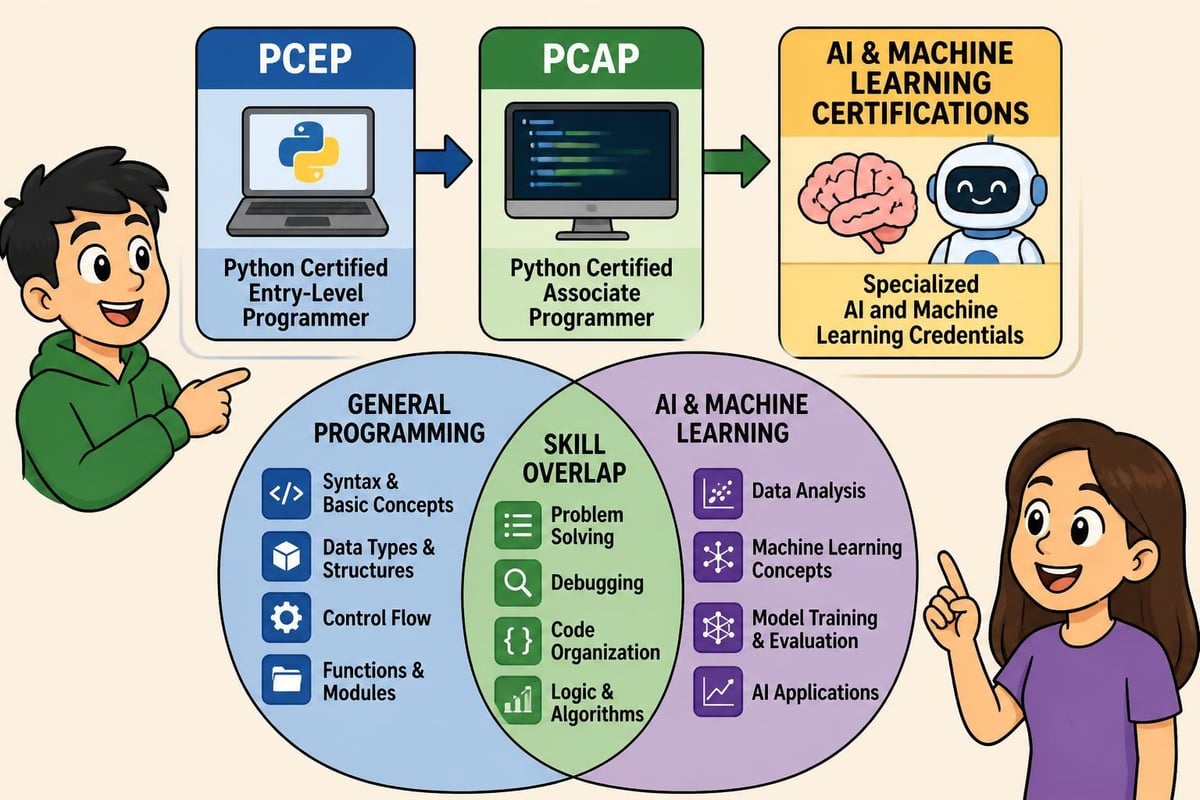
The Python Institute certification tracks establish baseline programming competency through credentials like PCEP (Entry Level) and PCAP (Associate), but these general Python certifications do not address AI-specific concepts. Bridging this gap requires specialized programs that layer machine learning, neural networks, and ethical AI principles onto core programming skills.
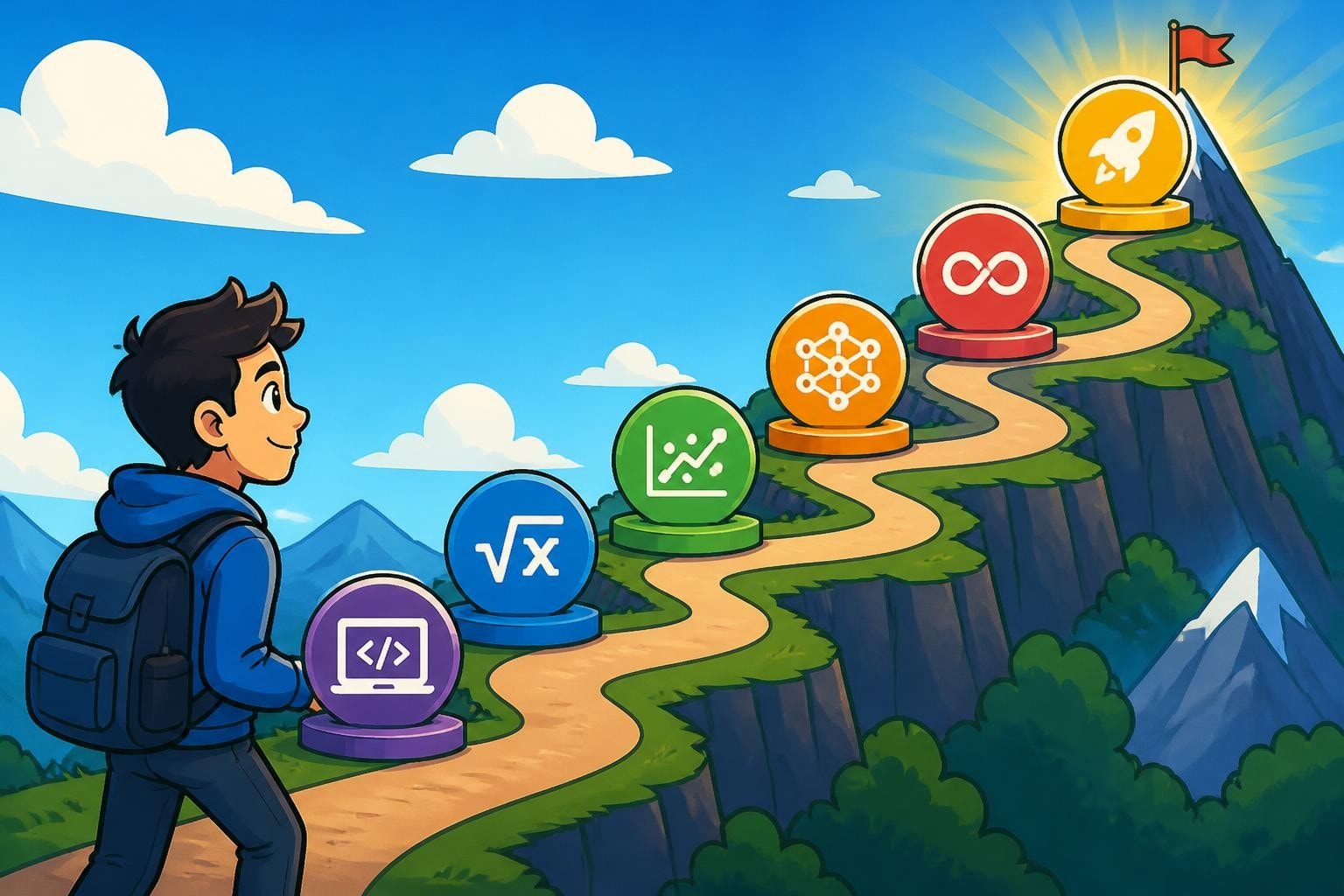
Organizations evaluating talent increasingly request candidates demonstrate both foundational Python fluency and domain-specific AI expertise. This dual requirement explains why many professionals pursue a tiered approach: first securing general Python credentials, then advancing to specialized AI certifications that assume programming proficiency.
Vendor-Specific vs. Vendor-Neutral Credentials
The python ai certification market divides into two distinct categories, each serving different professional objectives and organizational needs.
| Certification Type | Examples | Best For | Typical Cost |
|---|---|---|---|
| Vendor-Specific | Microsoft Azure AI Engineer, AWS Machine Learning Specialty | Cloud practitioners, platform-specific roles | $165-300 per exam |
| Vendor-Neutral | TensorFlow Developer Certificate, IBM Data Science Professional | Technology-agnostic positions, consultants | $100-400 program fee |
| Academic-Affiliated | HarvardX Python for Data Science, Stanford ML Certificate | Career changers, foundation building | $50-2,500 full program |
Vendor certifications like those in Microsoft's Azure AI certification path validate your ability to implement machine learning solutions within a specific cloud ecosystem. These credentials prove valuable when your organization has committed to a particular infrastructure provider or when job descriptions explicitly request platform expertise.
Vendor-neutral programs emphasize transferable skills and algorithmic understanding. The HarvardX Python for Data Science and Machine Learning certificate exemplifies this approach, teaching fundamental concepts applicable across any deployment environment. These programs typically include hands-on projects requiring you to implement algorithms from scratch, fostering deeper comprehension than cloud console navigation alone.
Essential Components of Comprehensive AI Certification Programs
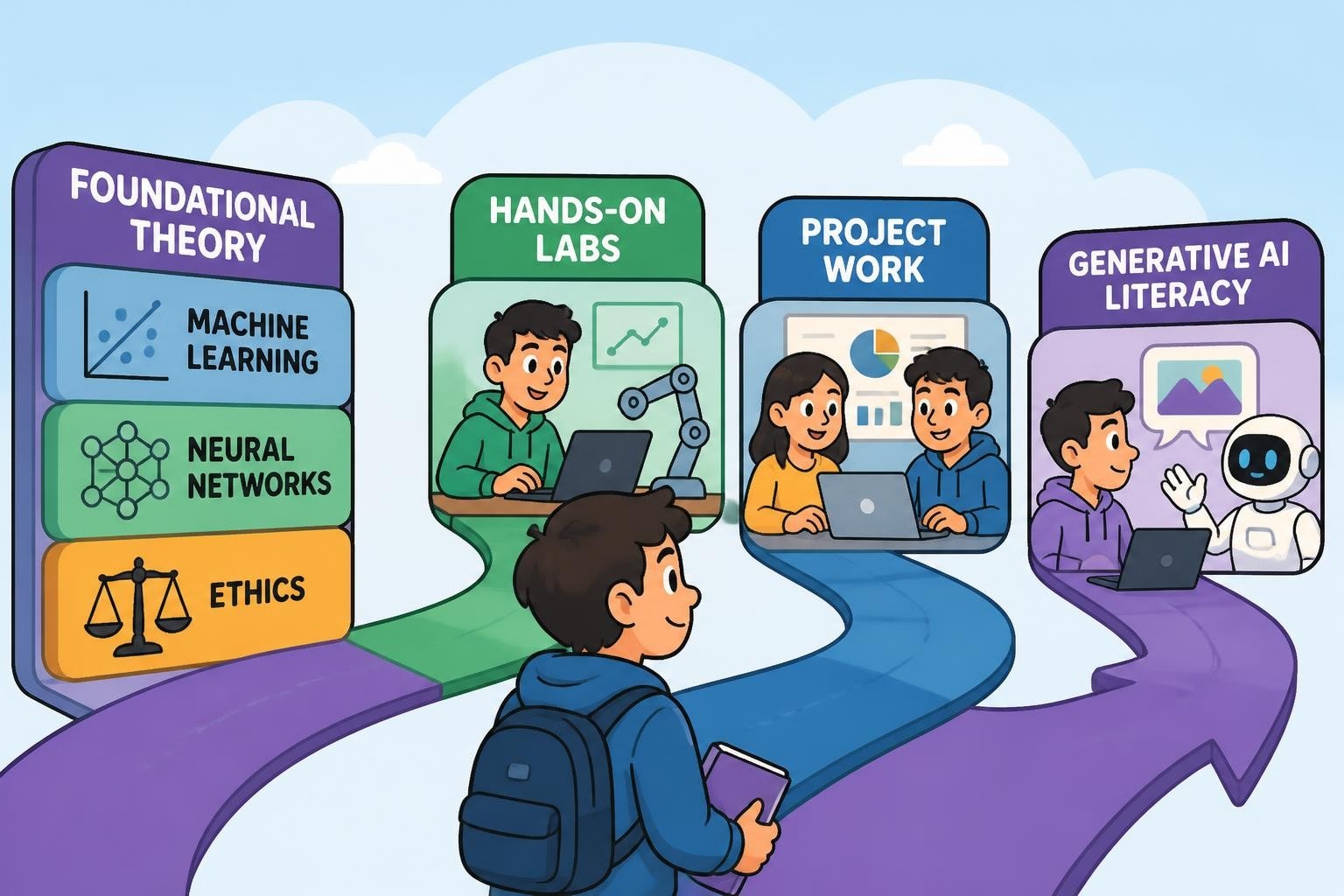
Modern python ai certification programs should address technical implementation, theoretical foundations, and responsible deployment practices. Incomplete programs that focus exclusively on coding mechanics without governance considerations leave practitioners unprepared for enterprise environments.
Technical Skill Requirements
Effective certification curricula balance breadth and depth across multiple competency areas:
- Data manipulation and preprocessing using pandas, NumPy, and data pipeline frameworks
- Statistical foundations including probability distributions, hypothesis testing, and regression analysis
- Supervised learning algorithms covering classification, regression, ensemble methods, and model selection
- Unsupervised learning techniques including clustering, dimensionality reduction, and anomaly detection
- Deep learning architectures spanning CNNs, RNNs, transformers, and attention mechanisms
- Model deployment patterns addressing API development, containerization, and monitoring systems
The Machine Learning with Python course on Coursera demonstrates how reputable programs structure these topics into coherent learning paths. Each module typically concludes with practical assessments requiring you to solve realistic problems using datasets similar to those encountered in professional settings.
Ethical AI and Governance Standards
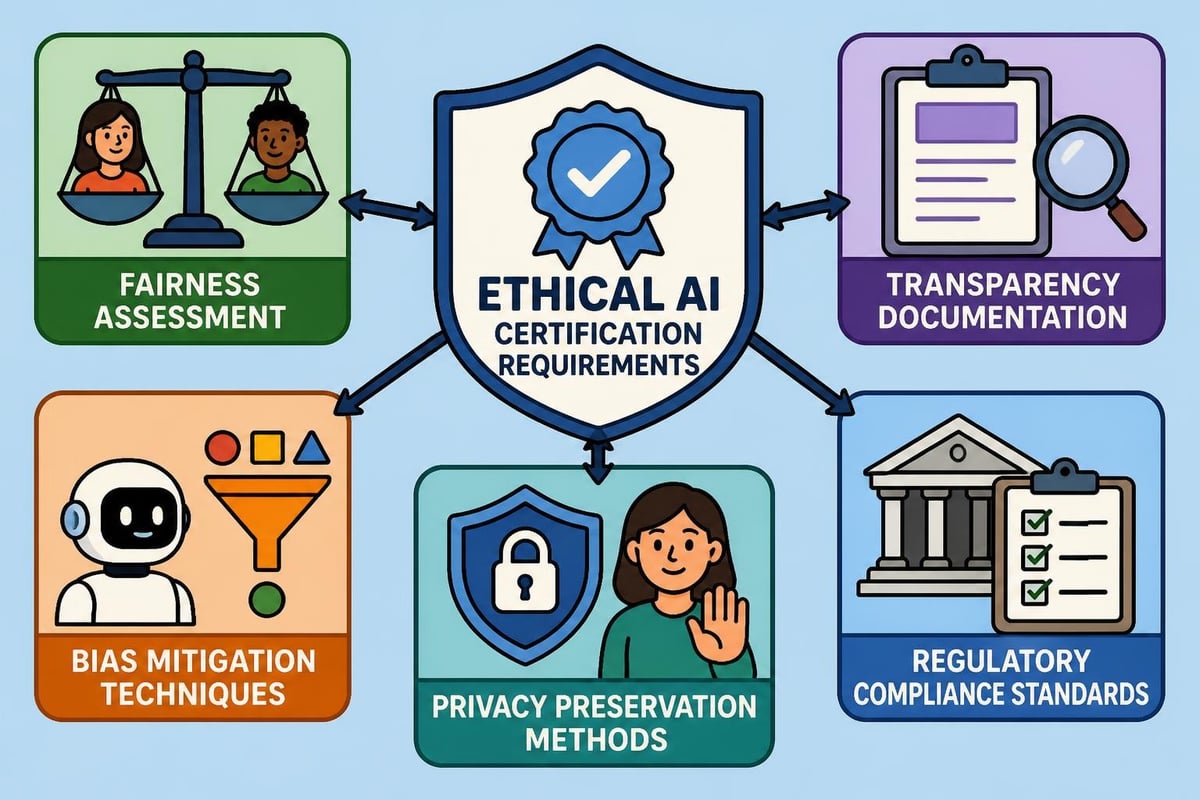
Organizations increasingly face regulatory scrutiny regarding algorithmic fairness, transparency, and accountability. Your python ai certification should incorporate principles outlined in frameworks like the NIST AI Risk Management Framework, which establishes trustworthy AI characteristics including validity, reliability, safety, and fairness.
Critical ethics topics certification programs should address:
- Bias detection and mitigation in training data and model predictions
- Explainability techniques for stakeholder communication and regulatory compliance
- Privacy-preserving machine learning approaches including differential privacy
- Model monitoring strategies to detect performance degradation and drift
- Documentation requirements for audit trails and reproducibility
The IEEE standards for trustworthy AI systems provide assessment criteria that certification bodies increasingly incorporate into exam objectives. Professionals who understand these frameworks demonstrate greater value to risk-conscious organizations navigating AI deployment at scale.
Comparing Popular Certification Pathways
Selecting the appropriate python ai certification requires matching program characteristics to your current skill level, career trajectory, and learning preferences.
Entry-Level Certifications for Career Changers
Professionals transitioning from non-technical roles or adjacent fields benefit from programs emphasizing accessibility over advanced theory. These certifications assume minimal programming background and introduce Python syntax alongside basic machine learning concepts.
MammothClub's Complete AI Foundations for Beginners bootcamp exemplifies this approach, combining Python fundamentals with introductory AI concepts through interactive labs and real-world projects. Entry-level programs typically span 40-120 hours of instruction and include multiple checkpoints validating comprehension before advancing to complex topics.
These foundations courses serve as prerequisites for more rigorous certifications, establishing the programming fluency and mathematical intuition required for intermediate study. Attempting advanced credentials without this groundwork frequently results in incomplete understanding and exam failure.
Intermediate Certifications for Practicing Developers
Software engineers, data analysts, and IT professionals with Python experience pursue certifications that deepen AI specialization without redundant programming instruction. These programs assume you can write functions, work with libraries, and debug code independently.
The Complete Python Data Science and Machine Learning Mastery program targets this audience, focusing on algorithm implementation, hyperparameter tuning, and production deployment patterns rather than basic syntax. Intermediate certifications typically require capstone projects demonstrating your ability to execute complete ML pipelines from data acquisition through model serving.
These credentials differentiate practitioners who can implement existing solutions from those capable of designing novel approaches to domain-specific problems. Exam formats frequently include scenario-based questions requiring you to select appropriate algorithms, identify data quality issues, or troubleshoot underperforming models.
Advanced Specialization Credentials
Senior practitioners, research engineers, and technical leaders pursue certifications addressing cutting-edge architectures, optimization techniques, and system design patterns. Advanced programs assume thorough understanding of fundamental algorithms and focus on state-of-the-art developments.
Specialization areas for advanced python ai certification include:
- Computer vision covering object detection, semantic segmentation, and generative models
- Natural language processing addressing transformer architectures, prompt engineering, and retrieval systems
- Reinforcement learning including policy optimization, multi-agent systems, and simulation environments
- MLOps and production systems focusing on continuous training, A/B testing, and infrastructure automation
Organizations pursuing Microsoft AI certification at the expert level seek professionals capable of architecting enterprise solutions that balance performance, cost, and governance requirements. These advanced credentials often require documented professional experience and recommendation letters alongside technical examinations.
Practical Exam Preparation Strategies
Successfully obtaining a python ai certification demands structured preparation beyond casual study. Understanding exam formats, resource selection, and time management significantly impacts outcomes.
Understanding Assessment Formats
Certification bodies employ various testing methodologies, each requiring different preparation approaches:
| Format | What It Tests | Preparation Focus |
|---|---|---|
| Multiple choice | Conceptual knowledge, algorithm selection | Theory review, practice exams |
| Code challenges | Implementation ability, debugging | Timed coding exercises, algorithmic practice |
| Project portfolio | End-to-end capability, documentation | Complete ML pipelines, technical writing |
| Proctored lab | Cloud platform navigation, tool fluency | Hands-on sandboxes, vendor documentation |
The Pearson VUE exam delivery system administers many professional certifications through both test centers and online proctoring. Familiarizing yourself with the testing environment reduces anxiety and technical difficulties during actual examinations.
Project-based assessments typically provide datasets, problem statements, and evaluation criteria, then allow several days or weeks for completion. These formats better reflect real-world work but require stronger time management and self-direction than timed examinations.
Resource Selection and Study Planning
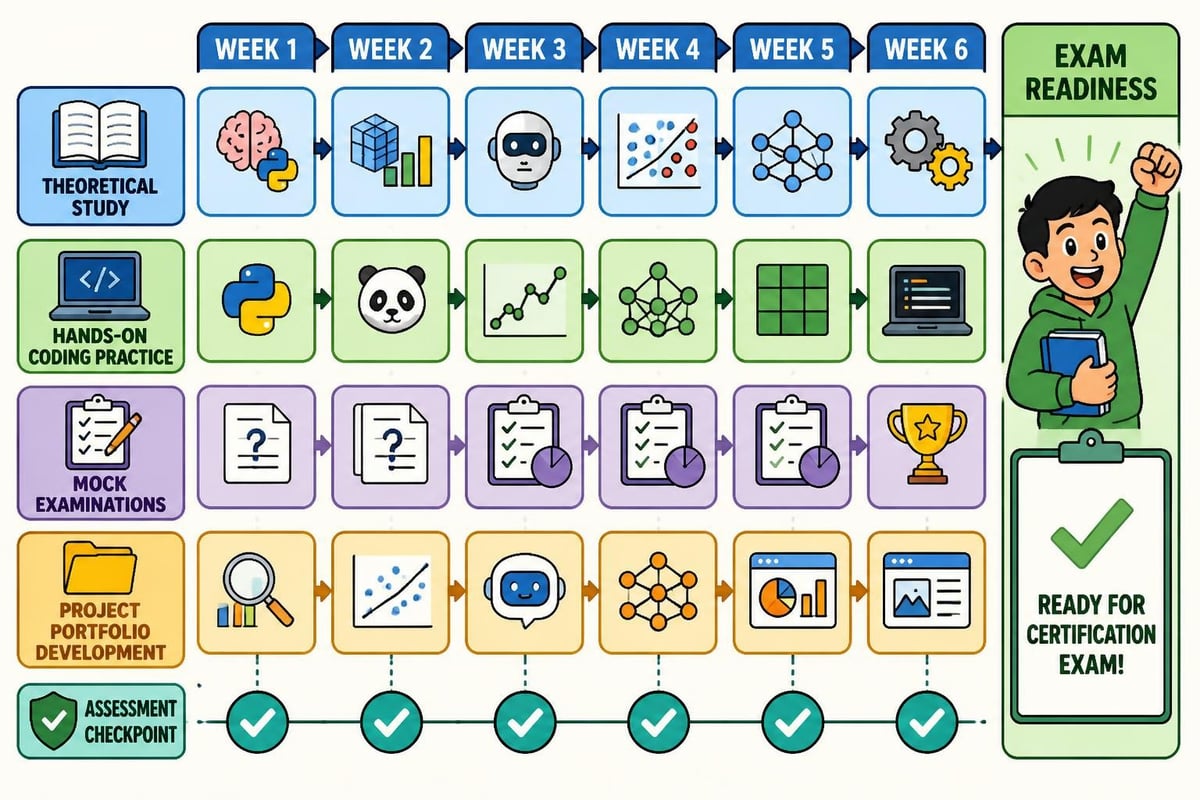
Effective preparation combines official curriculum materials, supplementary resources, and practical experience. Relying exclusively on any single source creates knowledge gaps that emerge during examinations.
Recommended study resource categories:
- Official study guides from the certification body establishing authoritative content scope
- Video courses providing visual explanations of complex algorithms and architectures
- Practice datasets allowing hands-on implementation without exam pressure
- Community forums offering peer support and clarification on ambiguous topics
- Research papers for advanced certifications requiring current literature knowledge
The community discussion on what constitutes an official Python certification highlights an important consideration: unlike closed ecosystems such as Microsoft or AWS, Python itself lacks a single authoritative credential. This fragmentation means you must research individual certification providers' industry recognition and employer acceptance before investing time and money.
MammothClub's AI certification bundle aggregates multiple vendor paths, allowing you to compare program requirements and select credentials aligned with your target roles. Bundled approaches often provide better value than purchasing individual courses while exposing you to diverse AI platforms and methodologies.
Career Impact and ROI Considerations
Pursuing a python ai certification represents significant investment of time, effort, and money. Understanding potential returns helps justify this commitment and guides credential selection.
Salary Premiums and Job Placement
Industry salary surveys consistently show compensation advantages for certified AI professionals. While correlation does not prove causation, employers often use certifications as screening criteria during high-volume hiring processes.
Observed market patterns in 2026:
- Entry-level AI roles increasingly require demonstrated Python proficiency through projects or credentials
- Mid-career professionals with certifications report 12-18% higher salary offers compared to equivalent experience without credentials
- Freelance consultants command premium rates when certifications validate specialized expertise
- Enterprise procurement teams reference certifications when evaluating vendor qualifications for AI implementation projects
The actual value delivered by your python ai certification depends heavily on complementary experience, portfolio quality, and communication skills. Credentials alone rarely substitute for demonstrated ability to solve business problems using AI, but they provide valuable signaling when combined with practical accomplishments.
Certification Maintenance and Continuing Education
Many modern credentials require periodic renewal through continuing education, exam retakes, or professional development activities. Understanding maintenance requirements prevents certification lapses that undermine your investment.
Common renewal requirements:
- Annual continuing education credits earned through approved courses or conference attendance
- Triennial exam retakes validating current knowledge of evolving technologies
- Active community participation through blog posts, open-source contributions, or mentorship
- Employer attestation confirming ongoing professional practice in the certified domain
The academic integration of AI into computer science curricula documented by ACM and IEEE reflects how rapidly the field evolves. Your certification preparation should emphasize learning methodologies and research fluency alongside specific techniques, ensuring you can adapt as algorithms and best practices advance.
Building Certification into Professional Development Plans
Organizations implementing systematic AI upskilling initiatives structure certification programs within broader competency frameworks rather than treating credentials as isolated achievements.
Team-Based Certification Strategies
Enterprise learning programs combine individual certifications with collaborative knowledge sharing, creating multiplicative value beyond individual achievement. Successful strategies include:
- Cohort-based learning where teams progress through certification curricula together
- Internal knowledge repositories capturing lessons learned and exam preparation resources
- Mentorship pairings connecting recently certified professionals with those preparing for examinations
- Project-based application requiring teams to deploy certified skills in production systems
- Recognition programs celebrating certification milestones and incentivizing continued learning
MammothClub's corporate programs provide AI-powered dashboards tracking team progress across certification pathways, enabling managers to identify skill gaps and allocate resources effectively. This measurable approach transforms certification from individual credentialing into strategic workforce development.
Aligning Certifications with Business Objectives
The most valuable python ai certification programs address specific organizational needs rather than pursuing credentials for resume building alone. Strategic alignment questions include:
For individual contributors:
- Which certification addresses the biggest skill gap preventing my next project contribution?
- Does this credential validate expertise my target employers explicitly request?
- Will this certification enable me to lead initiatives beyond my current responsibilities?
For team leaders:
- Which certifications build capabilities required for our roadmap in the next 12-24 months?
- Do vendor-specific credentials lock us into particular ecosystems or create flexibility?
- How do certification investments compare to alternative talent acquisition strategies?
Organizations exploring AI trading platforms or finance applications benefit from certifications emphasizing time-series analysis, quantitative methods, and regulatory compliance specific to financial services. Domain-specific certification tracks deliver greater immediate value than general-purpose programs when targeting particular industries.
Evaluating Certification Quality and Industry Recognition
Not all python ai certification programs deliver equivalent value. Distinguishing rigorous credentials from superficial completion certificates requires examining multiple quality indicators.
Accreditation and Industry Endorsement
Reputable certifications maintain transparent relationships with industry bodies, academic institutions, or professional organizations that validate curriculum quality and assessment rigor.
Quality indicators to investigate:
- Certification body membership in standards organizations or educational consortia
- Published exam blueprints detailing specific competencies assessed and weighting
- Psychometric validation data showing exam reliability and validity across candidate populations
- Employer surveys documenting certification recognition during hiring and promotion decisions
- Third-party reviews from professionals who completed the certification program
The absence of a unified Python credentialing authority means individual certification providers establish their own standards and assessment methodologies. This decentralization creates variability in quality, making due diligence essential before committing to any program.
Hands-On Assessment Requirements
Certifications requiring practical demonstration of skills through projects, labs, or coding challenges provide stronger validation than multiple-choice examinations alone. Look for programs that assess your ability to:
- Clean and preprocess realistic datasets containing missing values and outliers
- Implement algorithms without relying exclusively on high-level library abstractions
- Debug underperforming models through systematic experimentation
- Document code and findings for technical and non-technical audiences
- Deploy models using appropriate serving infrastructure and monitoring
Programs like MammothClub's AI and Machine Learning bundle emphasize project portfolios that demonstrate end-to-end capabilities rather than isolated skill fragments. These comprehensive assessments better predict job performance than knowledge recall examinations.
Emerging Trends Reshaping AI Certification
The python ai certification landscape continues evolving as new architectures, deployment patterns, and ethical requirements emerge. Staying informed about these shifts ensures your credential investments remain relevant.
Large Language Model Integration
Recent breakthroughs in transformer architectures and foundation models are reshaping certification curricula. Updated programs now include:
- Fine-tuning techniques for domain-specific applications
- Prompt engineering strategies for task optimization
- Retrieval-augmented generation patterns combining search and generation
- Responsible deployment practices addressing hallucination and bias
Certifications developed before 2023 may inadequately address these capabilities, creating knowledge gaps for practitioners working with modern AI systems. Verify that your chosen program includes current architectures rather than exclusively focusing on classical machine learning approaches.
MLOps and Production Deployment
The maturation of AI systems from research experiments to production infrastructure drives certification emphasis toward operational excellence. Modern programs address:
- Continuous training pipelines enabling model updates without manual intervention
- Feature stores centralizing data preparation across multiple models
- Model registries tracking versions, lineage, and deployment status
- Observability systems detecting performance degradation and bias drift
- A/B testing frameworks measuring business impact of model changes
These operational capabilities distinguish professionals capable of supporting production systems from those limited to notebook-based experimentation. MammothClub's AI and certification bundle incorporates these production-focused topics throughout the curriculum rather than treating deployment as an afterthought.
Cross-Domain Specialization
As AI permeates diverse industries, specialized certification tracks emerge addressing sector-specific requirements and constraints. Domain-focused programs cover:
| Industry | Specialized Topics | Regulatory Considerations |
|---|---|---|
| Healthcare | Medical imaging, diagnostic support, patient privacy | HIPAA, FDA approval processes |
| Finance | Credit scoring, fraud detection, algorithmic trading | Fair lending, SEC regulations |
| Manufacturing | Predictive maintenance, quality control, supply chain | Safety standards, IP protection |
| Retail | Recommendation systems, demand forecasting, personalization | Consumer privacy, advertising law |
Professionals targeting specific industries benefit from certifications incorporating domain knowledge alongside technical AI skills. These specialized credentials often command premium compensation compared to general-purpose certifications.
Selecting and completing the right python ai certification requires aligning program characteristics with your career objectives, technical background, and industry requirements. The most valuable credentials combine rigorous technical assessment with ethical AI principles and practical deployment skills, preparing you for real-world challenges beyond examination success. Whether you're beginning your AI journey or deepening specialized expertise, MammothClub offers over 3,000 courses and interactive bootcamps designed to help professionals and teams upskill efficiently. Our AI-powered learning platform provides personalized pathways, hands-on projects, and corporate dashboards that transform certification preparation into measurable business results.