The artificial intelligence skills gap has never been more urgent. By mid-2026, organizations across every sector are racing to train their workforce in machine learning, neural networks, and generative AI systems. Choosing the right ai related courses can transform your career trajectory or give your team the competitive edge needed to thrive. This comprehensive guide examines the landscape of AI education, from foundational programs to advanced specializations, helping you navigate the thousands of options available and select training that delivers measurable results.
Understanding the AI Course Ecosystem in 2026
The market for ai related courses has evolved dramatically over the past two years. What began as niche computer science programs has exploded into a diverse ecosystem serving everyone from business executives to healthcare professionals. Today's AI training spans multiple delivery formats, skill levels, and specialization areas.
Core Components of Modern AI Curricula
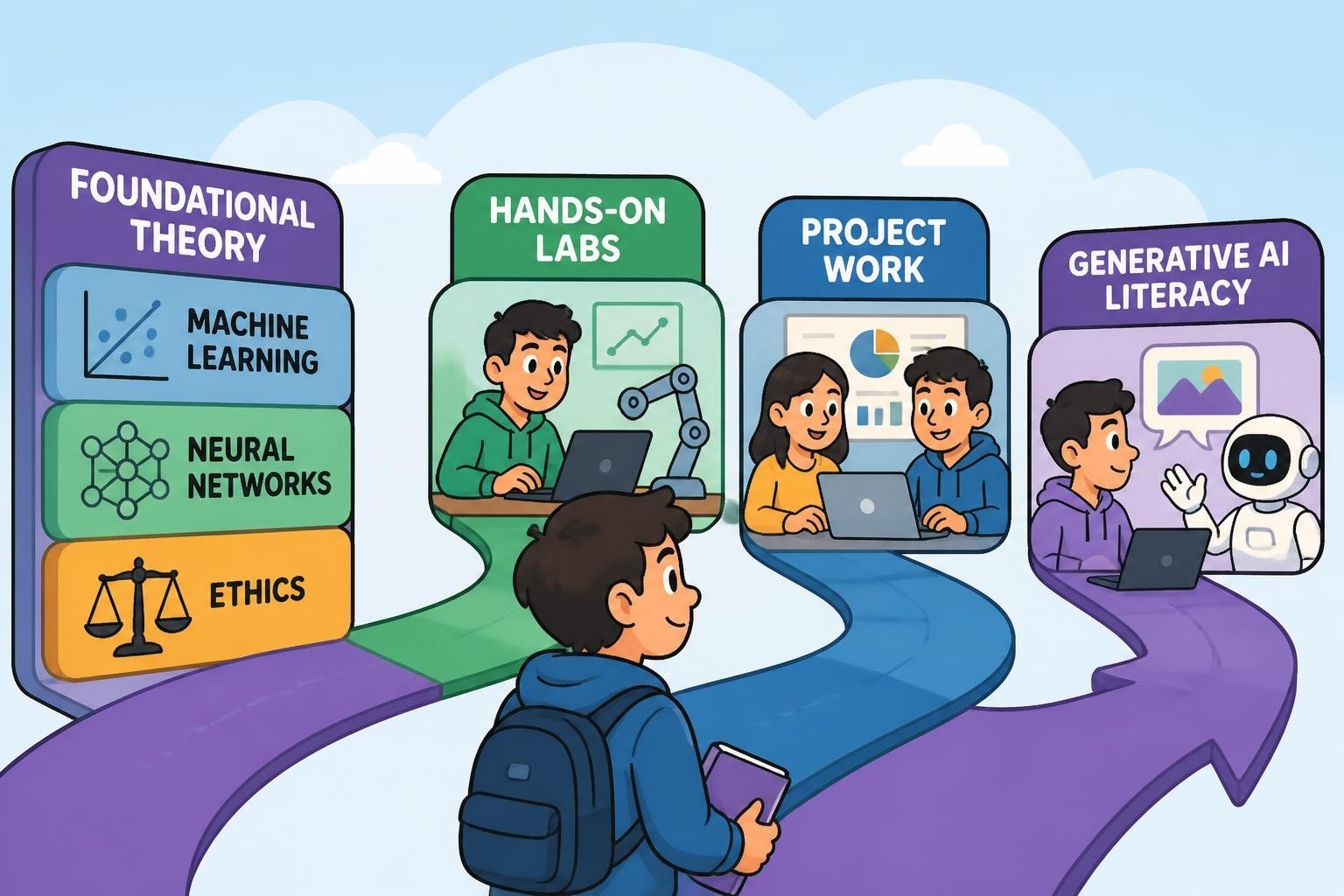
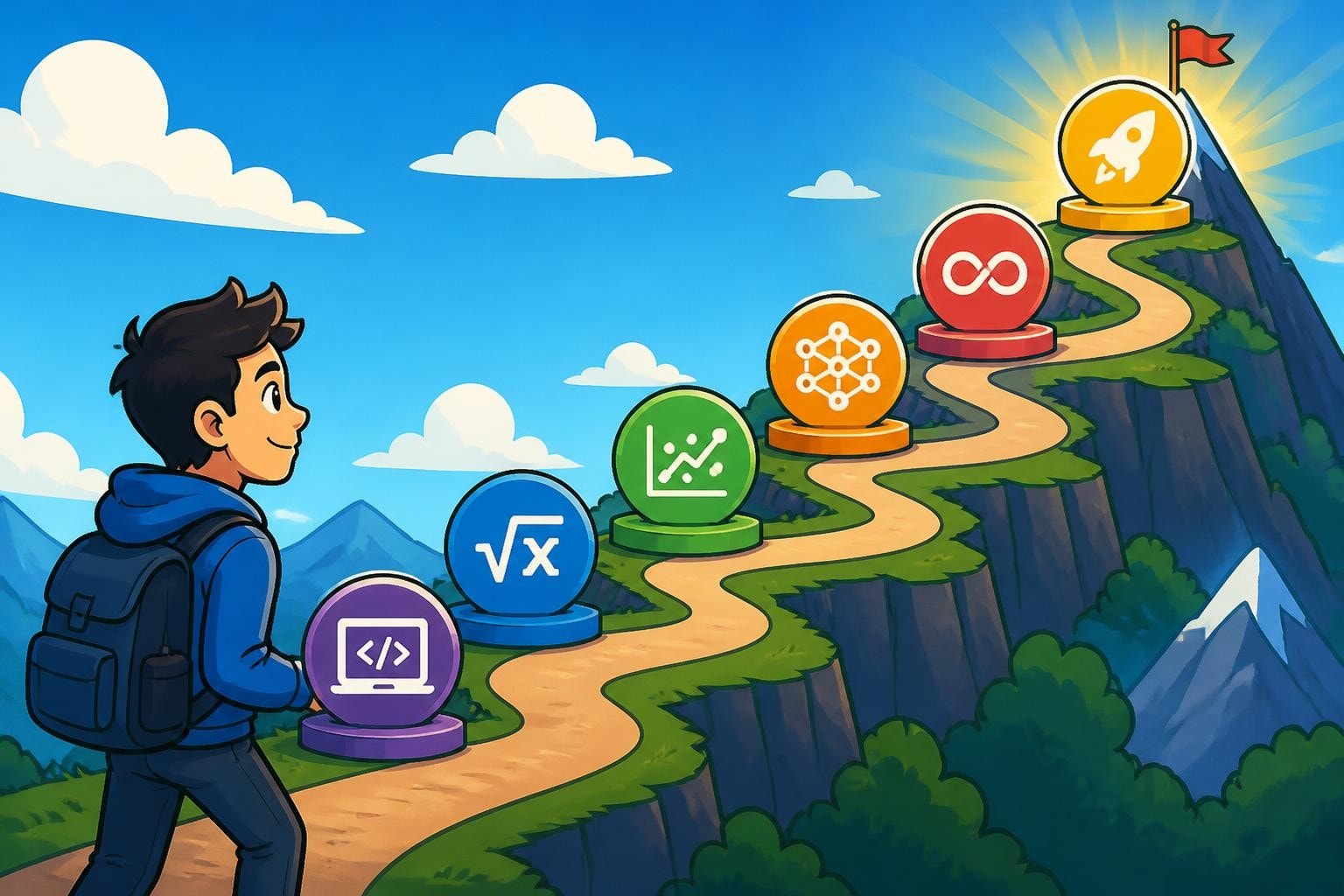
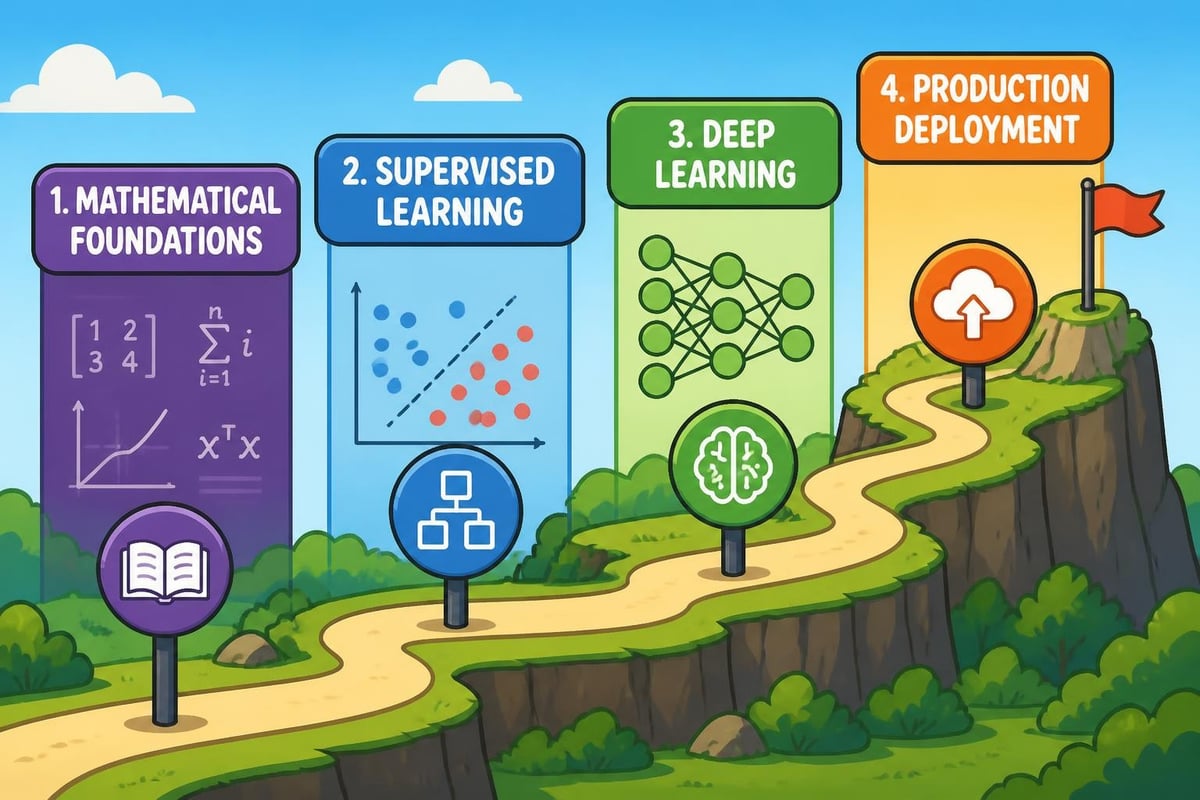
Most comprehensive ai related courses now follow a structured progression that builds from mathematical foundations through practical implementation:
- Mathematical fundamentals: Linear algebra, calculus, probability, and statistics
- Programming proficiency: Python, R, and specialized libraries like TensorFlow and PyTorch
- Machine learning concepts: Supervised learning, unsupervised learning, reinforcement learning
- Neural network architectures: Deep learning, convolutional networks, transformers
- Model deployment: MLOps, production systems, monitoring, and scaling
- Ethics and governance: Responsible AI, bias detection, regulatory compliance
This structured approach ensures learners develop both theoretical understanding and hands-on skills. The best ai related courses combine video lectures, interactive labs, real-world projects, and peer collaboration to create engaging learning experiences.
Certificate vs. Degree Programs: Making the Right Choice
Professional certificates have emerged as the fastest-growing segment of AI education. Unlike traditional degrees that require years of commitment, certificate programs typically run 3-12 months and focus on job-ready skills.
| Program Type | Duration | Cost Range | Best For | Credential Value |
|---|---|---|---|---|
| Online Certificate | 3-12 months | $500-$5,000 | Career switchers, upskilling | High for specific roles |
| Professional Bootcamp | 8-24 weeks | $8,000-$20,000 | Intensive skill building | High for entry positions |
| Master's Degree | 1.5-2 years | $20,000-$60,000 | Research, senior roles | Highest overall |
| Executive Program | 3-6 months | $10,000-$30,000 | Leaders, strategists | High for management |
| Self-Paced Courses | 1-6 months | $0-$2,000 | Exploration, basics | Moderate |
The edX AI certificates offer university-backed credentials that combine academic rigor with practical application, making them particularly valuable for professionals seeking credibility with employers.
Choosing AI Courses Based on Your Goals
Your learning objectives should drive your course selection. Different ai related courses serve distinct professional needs, and understanding these differences prevents wasted time and resources.
For Complete Beginners: Building Strong Foundations
If you're new to AI, start with courses that assume no prior experience. Google's Machine Learning Crash Course provides an excellent free introduction with interactive visualizations and real-world examples. This foundational approach helps you understand core concepts before investing in advanced programs.
Beginner-focused ai related courses typically cover:
- Introduction to AI concepts: Understanding what AI can and cannot do
- Python programming basics: Variables, functions, data structures, libraries
- Data manipulation: Working with datasets, cleaning, visualization
- Supervised learning fundamentals: Regression, classification, model evaluation
- First neural network: Building and training a simple model
- Practical project: Applying skills to solve a real problem
These programs emphasize hands-on practice over theoretical depth. The no-code AI course options have also gained traction, allowing non-programmers to understand AI principles through visual interfaces and pre-built tools.
For Technical Professionals: Deepening Expertise
Engineers and data scientists need ai related courses that dive into advanced architectures, optimization techniques, and production systems. The DeepLearning.AI courses catalog includes specialized programs on generative AI, computer vision, and natural language processing that assume programming competency.
Advanced learners should prioritize:
- Model architecture design: Creating custom neural networks for specific problems
- Transfer learning: Leveraging pre-trained models efficiently
- Hyperparameter optimization: Systematic tuning for peak performance
- Distributed training: Scaling across multiple GPUs and clusters
- Production deployment: Container orchestration, API design, monitoring systems
- MLOps pipelines: Version control, automated testing, continuous deployment
The fast.ai Practical Deep Learning course has earned recognition for its top-down teaching approach, which gets students building real models immediately before explaining the underlying mathematics.
For Business Leaders: Strategic AI Understanding
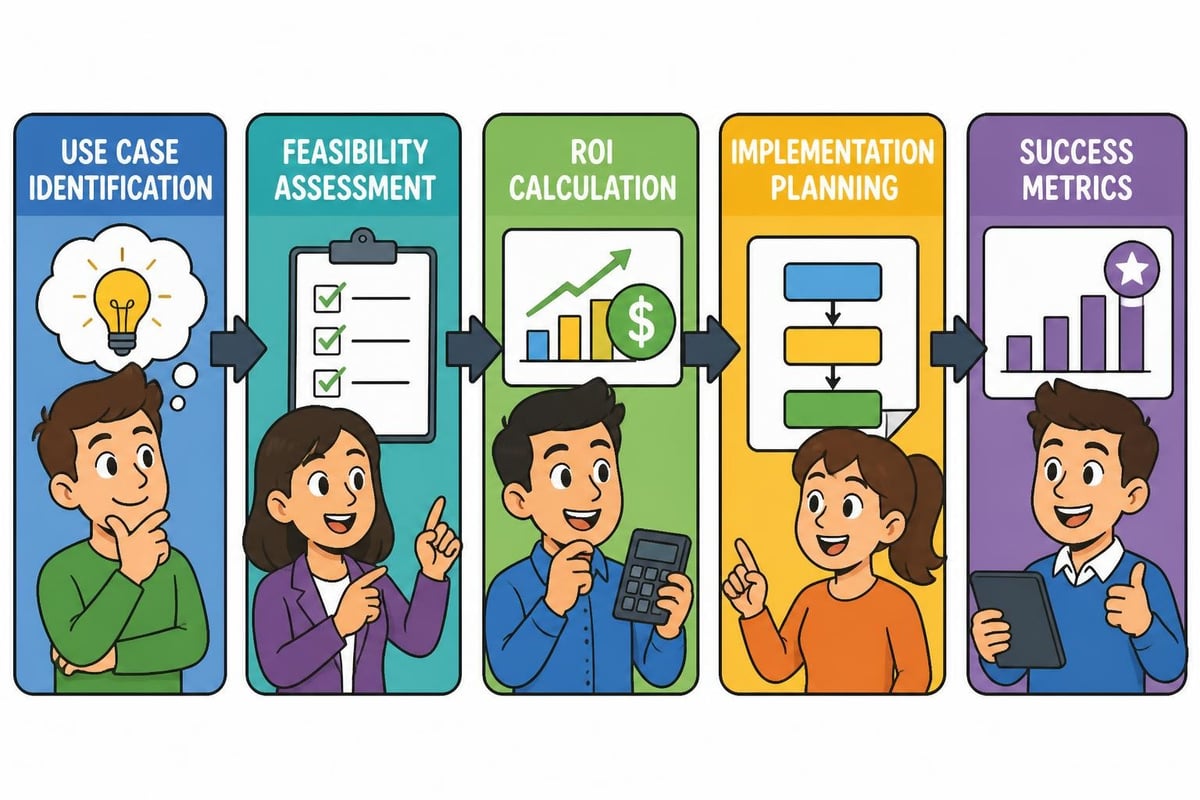
Executives don't need to code neural networks, but they must understand AI's business implications. Specialized ai related courses for leaders focus on strategy, ROI assessment, team building, and change management.
Executive programs address questions like:
- How do we identify high-value AI use cases in our organization?
- What infrastructure and talent do we need to succeed?
- How do we measure AI project success and manage risks?
- What governance frameworks ensure ethical AI deployment?
- How do we build AI-literate teams across departments?
Top Providers and Platforms for AI Training
The explosion of ai related courses has created a competitive marketplace where quality varies significantly. Understanding provider strengths helps you match your needs with the right platform.
University-Backed Programs
Academic institutions bring research credibility and structured curricula to online AI education. Stanford, MIT, and Carnegie Mellon have partnered with online platforms to offer certificate programs that mirror on-campus rigor.
These programs excel in:
- Theoretical depth: Mathematical proofs, algorithmic analysis, research methodology
- Cutting-edge research: Access to latest papers and experimental techniques
- Academic networking: Connections with professors and research labs
- Brand recognition: Credentials that carry weight globally
The Coursera top AI content collection features university partnerships alongside industry providers, giving learners access to both academic and practical perspectives.
Industry-Led Training
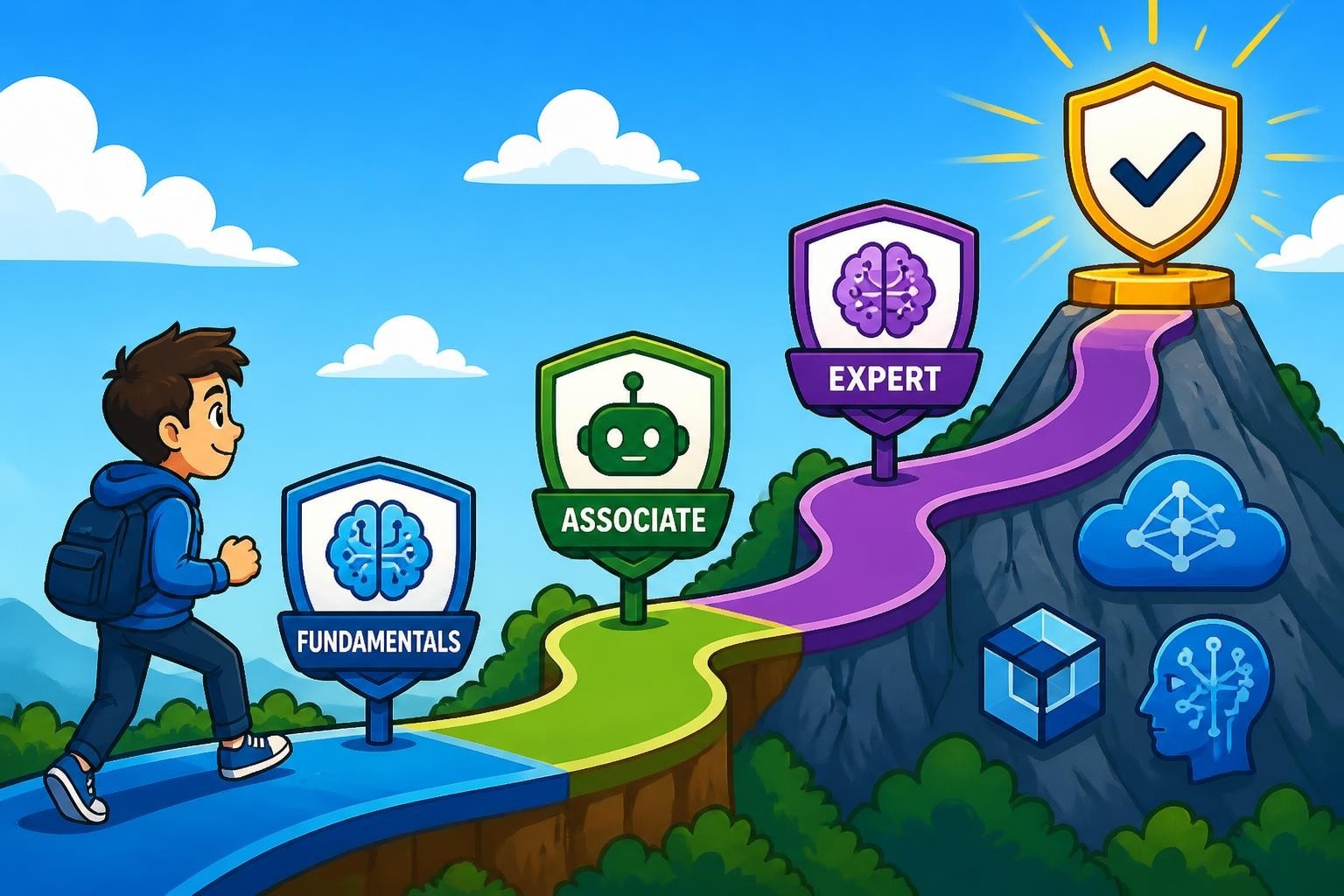
Technology companies like Google, Microsoft, IBM, and NVIDIA offer ai related courses based on their internal tools and real-world implementations. These programs provide direct pathways to using production systems and earning vendor-specific certifications.
The NVIDIA AI certification programs focus on GPU-accelerated computing and deep learning infrastructure, essential skills as organizations scale their AI initiatives. Similarly, IBM AI certification paths emphasize enterprise deployment and Watson platform integration.
Industry courses prioritize:
- Tool-specific training: Mastering proprietary platforms and frameworks
- Best practices: Learning from companies running AI at scale
- Career pathways: Clear progression from fundamentals to expert level
- Job market alignment: Skills that match current hiring demand
Specialized Learning Platforms
Dedicated AI education platforms like MammothClub have emerged to fill gaps between academic programs and industry certifications. These platforms aggregate thousands of ai related courses, creating personalized learning paths with AI-powered recommendations.
Key advantages of comprehensive platforms:
- Access to 3,000+ courses covering niche specializations
- Interactive bootcamps with live instruction and peer collaboration
- Corporate training programs with team dashboards and progress tracking
- Flexible pricing models including subscriptions and enterprise licenses
- Regular content updates reflecting latest AI developments
The DeepLearning.AI courses available through aggregator platforms combine Andrew Ng's expertise with flexible scheduling and affordable pricing.
Domain-Specific AI Training Opportunities
Generic AI courses provide foundational knowledge, but domain-specific ai related courses accelerate expertise in particular industries or applications. These specialized programs have grown substantially as AI transforms every sector.
Healthcare and Life Sciences
Medical AI applications require understanding both machine learning and clinical contexts. Specialized courses cover:
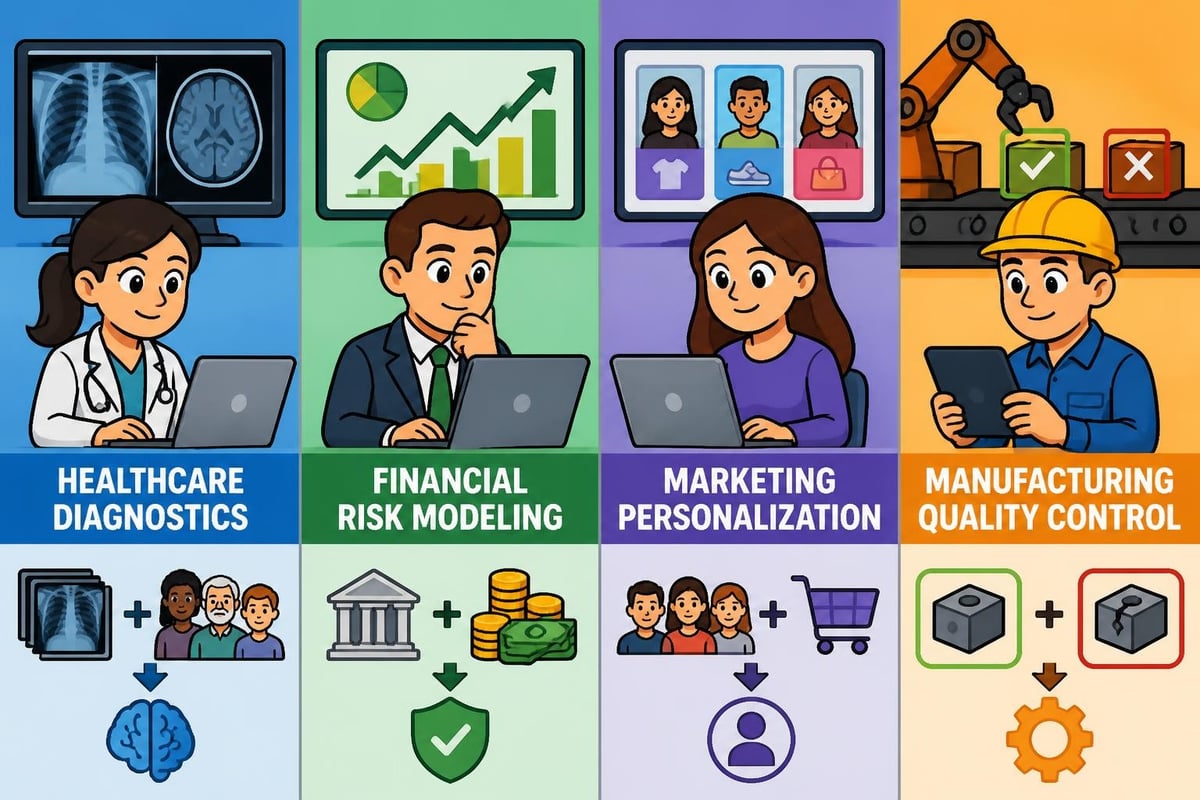
- Medical imaging analysis: Computer vision for radiology, pathology, dermatology
- Drug discovery: Molecular modeling, protein folding, compound screening
- Clinical decision support: Diagnostic assistance, treatment recommendation systems
- Genomics: Sequence analysis, variant interpretation, personalized medicine
- Healthcare operations: Scheduling optimization, resource allocation, fraud detection
The AI in drug discovery course options have expanded significantly as pharmaceutical companies invest heavily in computational approaches to molecule design and clinical trial optimization.
Finance and Trading
Financial services were early AI adopters, creating demand for specialized ai related courses in quantitative finance. Programs address:
- Algorithmic trading: Strategy development, backtesting, execution systems
- Risk modeling: Credit scoring, portfolio optimization, stress testing
- Fraud detection: Anomaly detection, transaction monitoring, network analysis
- Customer service: Chatbots, robo-advisors, personalized recommendations
- Regulatory compliance: Automated reporting, surveillance, audit trails
The AI trading course offerings range from introductory programs on technical indicators to advanced reinforcement learning for strategy optimization.
Marketing and Customer Experience
Marketing teams increasingly rely on AI for personalization, content generation, and campaign optimization. Specialized ai related courses teach:
- Customer segmentation: Clustering algorithms, behavioral analysis, lifetime value prediction
- Content personalization: Recommendation engines, A/B testing, dynamic optimization
- Generative AI for marketing: Text generation, image creation, video production
- Sentiment analysis: Social listening, review analysis, brand monitoring
- Attribution modeling: Multi-touch attribution, marketing mix modeling
The AI in digital marketing courses have proliferated as generative AI tools like ChatGPT and DALL-E democratize creative automation.
Manufacturing and Robotics
Industrial AI applications combine machine learning with physical systems, requiring unique skills covered in specialized ai related courses:
- Predictive maintenance: Sensor data analysis, failure prediction, scheduling optimization
- Quality control: Computer vision inspection, defect detection, process monitoring
- Supply chain optimization: Demand forecasting, inventory management, logistics planning
- Robot control: Path planning, object manipulation, human-robot collaboration
- Process automation: RPA integration, workflow optimization, exception handling
The AI robotics course programs often include simulation environments where students program virtual robots before deploying to physical systems.
Emerging Trends in AI Education for 2026
The ai related courses landscape continues evolving rapidly as new technologies emerge and teaching methodologies improve. Several trends are reshaping how professionals learn AI skills.
Generative AI and Large Language Models
The explosion of generative AI has created enormous demand for specialized training. New ai related courses focus exclusively on:
- Prompt engineering: Crafting effective instructions for language models
- Fine-tuning: Customizing pre-trained models for specific domains
- Retrieval-augmented generation: Combining LLMs with knowledge bases
- Agent systems: Building autonomous AI assistants with tool use
- Multimodal models: Working with text, image, audio, and video
These specialized programs recognize that generative AI requires different skills than traditional machine learning. Understanding transformer architectures, attention mechanisms, and prompt optimization has become essential.
Responsible AI and Ethics
As AI systems affect billions of people, ai related courses increasingly emphasize ethical development and deployment:
- Bias detection and mitigation: Identifying unfair patterns in data and models
- Explainability: Making AI decisions interpretable and auditable
- Privacy preservation: Differential privacy, federated learning, secure computation
- Regulatory compliance: GDPR, AI Act, industry-specific regulations
- Impact assessment: Evaluating societal effects of AI systems
The responsible AI course options have moved from optional ethics modules to comprehensive programs covering technical and governance aspects.
Adaptive Learning Technologies
Modern ai related courses increasingly use AI to personalize the learning experience itself. Adaptive platforms analyze student performance and adjust:
- Content difficulty: Progressively challenging material based on mastery
- Learning pace: Allowing faster progression when concepts are understood
- Resource recommendations: Suggesting supplementary materials for struggling areas
- Practice problems: Generating exercises targeting specific weaknesses
- Study schedules: Optimizing review timing for long-term retention
This meta-application of AI to education represents a significant improvement over traditional one-size-fits-all approaches.
Hands-On Project Portfolios
Employers increasingly value practical AI experience over theoretical knowledge. Modern ai related courses emphasize portfolio-building through:
- Capstone projects: Substantial end-to-end implementations demonstrating multiple skills
- Kaggle competitions: Real-world datasets and benchmark challenges
- Open-source contributions: Collaborative work on established projects
- Industry partnerships: Projects addressing actual business problems
- Research replication: Implementing papers to understand cutting-edge techniques
These portfolio pieces provide concrete evidence of capabilities that transcends certificate credentials alone.
Implementation Strategies for Corporate AI Training
Organizations face unique challenges when deploying ai related courses for their workforce. Successful corporate training programs share several characteristics.
Assessing Organizational Readiness
Before selecting ai related courses, companies must evaluate their current state:
| Assessment Area | Key Questions | Action Items |
|---|---|---|
| Skill Baseline | What AI knowledge exists today? Who has data science background? | Survey employees, identify champions, map skills |
| Infrastructure | Do we have compute resources, data pipelines, development tools? | Audit systems, plan upgrades, budget resources |
| Business Cases | What problems could AI solve? What's the expected ROI? | Workshop priorities, calculate benefits, rank opportunities |
| Cultural Readiness | Is leadership committed? Are teams open to change? | Executive alignment, change management, communication |
| Learning Capacity | Can employees dedicate time? What support do they need? | Schedule planning, manager buy-in, success metrics |
This assessment informs which ai related courses match organizational needs and how to structure the training program.
Building Learning Paths by Role
Different roles require different AI competencies. Effective programs create targeted paths:
Data Scientists and ML Engineers need deep technical ai related courses covering algorithm development, model optimization, and production deployment. These professionals should pursue advanced specializations and hands-on projects.
Software Engineers benefit from ai related courses focused on AI integration, API development, model serving, and MLOps. They need practical skills for embedding AI into applications without becoming research scientists.
Business Analysts require ai related courses emphasizing problem framing, data interpretation, and AI project management. They should understand capabilities and limitations without deep technical implementation.
Product Managers need strategic ai related courses covering use case identification, requirement gathering, ethics, and cross-functional collaboration. Their training emphasizes decision-making frameworks.
Executives should take concise ai related courses focused on strategy, governance, investment decisions, and organizational transformation. Time efficiency matters more than technical depth.
Measuring Training Effectiveness
Corporate AI education requires clear success metrics beyond course completion rates:
- Skill assessments: Pre and post-training evaluations measuring knowledge gains
- Project outcomes: Tracking AI initiatives launched by trained employees
- Business impact: Measuring cost savings, revenue increases, or efficiency gains from AI
- Retention and engagement: Monitoring continued learning and application of skills
- Certification rates: Tracking professional credentials earned
- Time to competency: Measuring how quickly employees become productive with AI tools
Leading platforms provide dashboards tracking these metrics across the organization, helping training managers demonstrate ROI and identify areas needing additional support.
Continuous Learning Infrastructure
AI evolves too rapidly for one-time training. Sustainable programs establish ongoing learning systems:
- Quarterly skill refreshers: Short courses on new techniques and tools
- Brown bag sessions: Peer learning where team members share projects
- Conference attendance: Sending employees to industry events
- Research reviews: Monthly discussions of important new papers
- External partnerships: Collaborations with universities or research labs
- Innovation time: Protected hours for experimentation and learning
This creates a culture of continuous improvement where AI capabilities grow over time rather than stagnating after initial training.
Maximizing ROI from Your AI Education Investment
Whether you're an individual learner or corporate training manager, strategic approaches maximize the value derived from ai related courses.
Active Learning Strategies
Passive video watching produces minimal retention. Effective learners engage actively:
- Implement immediately: Apply concepts to real problems within 24 hours
- Teach others: Explaining concepts solidifies understanding
- Modify examples: Don't just run provided code; adapt it to different scenarios
- Debug deliberately: When code fails, investigate why rather than copying solutions
- Read source material: Explore referenced papers and documentation
- Join communities: Participate in forums, Discord servers, or study groups
These techniques transform ai related courses from information exposure into genuine skill development.
Building on Existing Knowledge
AI intersects with many domains, and the most valuable ai related courses connect to what you already know. A real estate professional exploring AI-powered property intelligence can leverage domain expertise while learning technical skills. Understanding property valuation fundamentals makes learning predictive modeling more intuitive.
Similarly, marketers learning AI benefit from their understanding of customer psychology, while healthcare professionals bring clinical knowledge that accelerates medical AI learning. The best education builds bridges between existing expertise and new technical capabilities.
Creating Learning Accountability
Self-directed learning fails without accountability mechanisms:
- Public commitments: Announce learning goals to colleagues or social networks
- Study partners: Find peers pursuing similar ai related courses for mutual support
- Scheduled blocks: Calendar dedicated learning time like any important meeting
- Progress tracking: Maintain a learning journal documenting concepts and projects
- Milestone rewards: Celebrate completion of modules or certifications
- Application deadlines: Set dates for implementing new skills in real projects
These structures combat procrastination and maintain momentum through challenging material.
Balancing Breadth and Depth
The proliferation of ai related courses creates analysis paralysis. Should you sample many topics or specialize deeply?
Early-career professionals benefit from breadth, sampling computer vision, NLP, reinforcement learning, and other subfields before specializing. This exploration reveals interests and market opportunities.
Mid-career specialists should pursue depth in areas aligning with career goals. Deep expertise in specific domains like medical imaging AI or financial forecasting creates competitive advantage.
Leaders and generalists need strategic breadth understanding AI capabilities across domains without implementation expertise. Survey courses covering multiple applications suit this need.
The top machine learning courses and best AI ML courses online guides can help identify quality programs at different depth levels.
Certification and Credential Considerations
Completing ai related courses often results in certificates or badges, but not all credentials carry equal weight with employers or clients.
Recognized Industry Certifications
Certain certifications have established market recognition:
- Google Professional Machine Learning Engineer: Validates ML implementation skills on Google Cloud
- AWS Certified Machine Learning: Demonstrates expertise with Amazon's AI services
- Microsoft Azure AI Engineer: Covers Microsoft's AI platform and cognitive services
- TensorFlow Developer Certificate: Tests hands-on deep learning implementation skills
- NVIDIA Deep Learning Institute: Specializes in GPU-accelerated computing
These vendor certifications prove proficiency with specific platforms widely used in enterprise settings. The NVIDIA AI training credentials particularly valuable as GPU computing dominates AI infrastructure.
Academic vs. Professional Credentials
University certificates carry academic prestige but may lack cutting-edge techniques. Industry certifications demonstrate current tool expertise but less theoretical foundation.
Combining both creates the strongest profile. An academic certificate in machine learning theory paired with professional certifications in TensorFlow and cloud platforms signals both depth and practical capability.
Portfolio Over Certificates
Increasingly, demonstrated work matters more than credentials alone. When selecting ai related courses, prioritize those producing portfolio pieces:
- GitHub repositories: Well-documented projects showing code quality
- Kaggle profiles: Competition rankings and published notebooks
- Research papers: Publications or pre-prints demonstrating original work
- Blog posts: Technical writing explaining complex concepts
- Open-source contributions: Commits to established projects
These artifacts provide concrete evidence of capabilities that supplement certificates.
Navigating Cost and Time Constraints
Ai related courses span from free to tens of thousands of dollars, creating accessibility challenges and requiring strategic planning.
Free and Low-Cost Options
Quality AI education doesn't require massive budgets. Excellent free resources include:
- Google's ML Crash Course: Comprehensive introduction at no cost
- Fast.ai courses: Practical deep learning with minimal prerequisites
- YouTube channels: 3Blue1Brown, StatQuest, Yannic Kilcher for concepts
- University OpenCourseWare: MIT, Stanford materials freely available
- Research papers: ArXiv provides cutting-edge research immediately
These resources work well for motivated self-learners comfortable with less structure and no credential.
Time Management for Working Professionals
Full-time employees struggle finding time for ai related courses. Successful strategies include:
- Micro-learning: 15-30 minute daily sessions rather than marathon weekends
- Commute optimization: Audio content or reading papers during travel
- Lunch-and-learns: Using break time for structured study
- Project integration: Applying AI to current work responsibilities
- Family scheduling: Negotiating protected study time with household
- Efficiency techniques: Pomodoro sessions, spaced repetition, active recall
The key is consistency over intensity. Daily practice produces better results than sporadic binges.
Corporate Sponsorship and Reimbursement
Many employers support professional development. Maximizing this benefit requires:
- Proposal preparation: Document how training aligns with business objectives
- ROI demonstration: Show expected value from improved capabilities
- Application plans: Explain how you'll use skills in current role
- Timeline clarity: Specify training duration and time commitment
- Success metrics: Define how you'll measure and report outcomes
Well-presented requests for ai related courses funding succeed more often than casual asks.
The landscape of ai related courses has matured into a comprehensive ecosystem serving learners at every level and across every industry. Success requires matching your specific goals with appropriate programs, actively engaging with material, and applying skills to real problems rather than passively consuming content.
MammothClub provides the comprehensive platform professionals and organizations need to navigate this complex landscape efficiently. With 3,000+ on-demand courses, interactive bootcamps, corporate certification programs, and AI-powered learning dashboards, we help individuals and teams build job-ready AI skills that drive measurable business results. Whether you're starting your AI journey or deepening specialized expertise, our platform accelerates your path from learning to implementation in 2026's competitive environment.