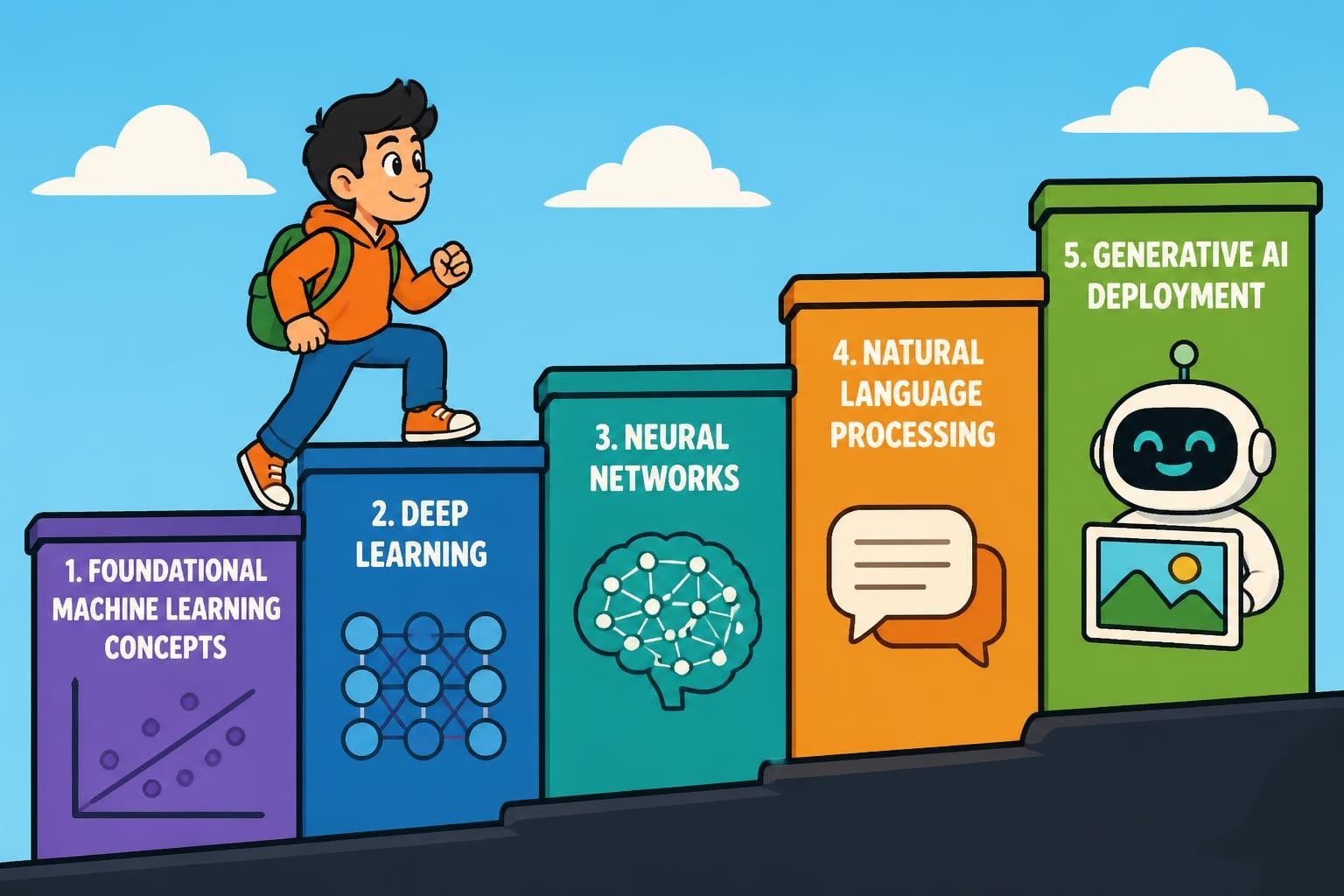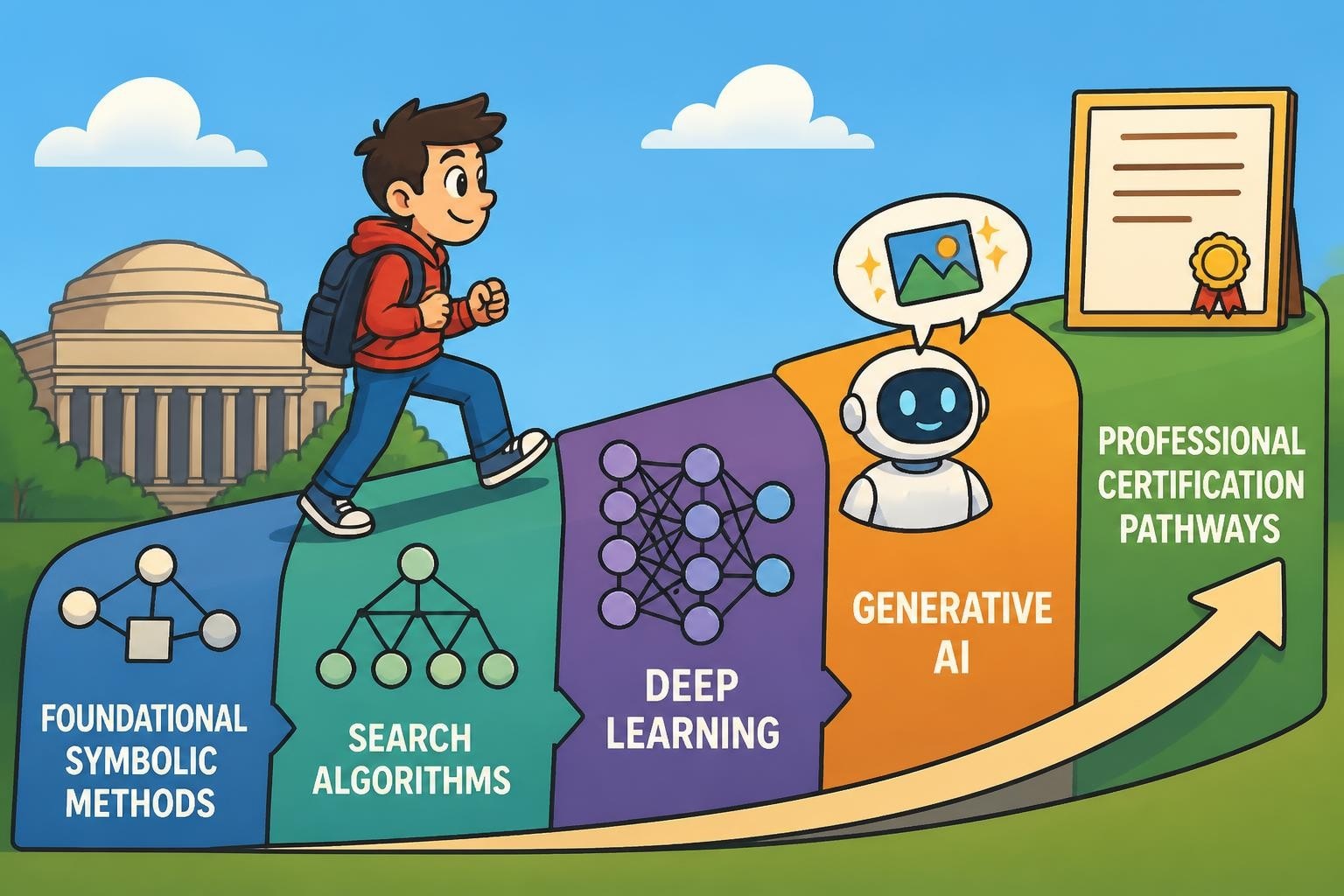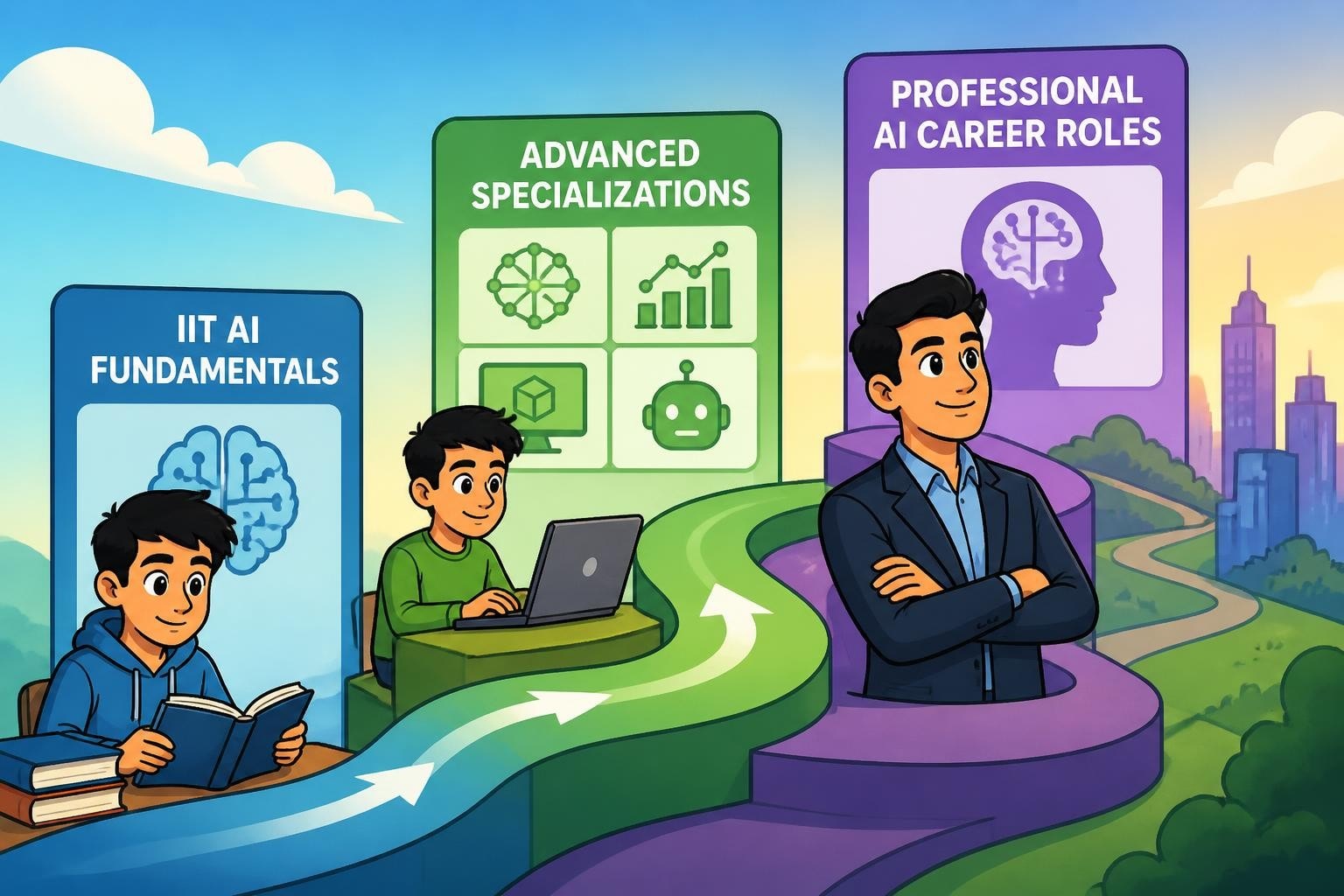
The artificial intelligence landscape has evolved dramatically, and deeplearning ai courses have become essential for professionals seeking to master neural networks, computer vision, natural language processing, and other cutting-edge technologies. These specialized programs offer structured pathways for learners at every level, from beginners exploring foundational concepts to experienced practitioners refining their expertise. Understanding which courses align with your career goals and learning style can significantly accelerate your journey into this transformative field.
Understanding the DeepLearning AI Course Ecosystem
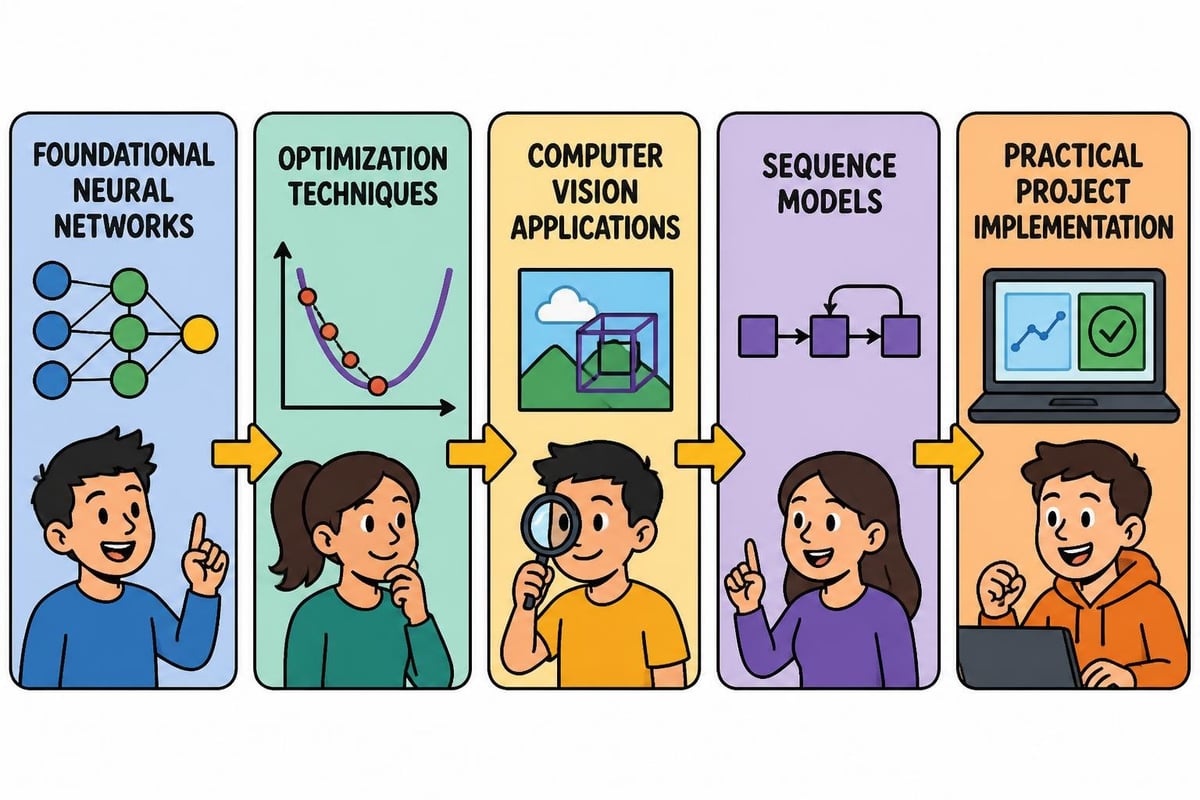
DeepLearning AI courses represent a comprehensive educational framework developed by industry leaders to address the growing demand for AI expertise. Founded by Andrew Ng, one of the most influential figures in machine learning education, these courses provide rigorous training across multiple specializations. The curriculum covers essential topics including neural network architecture, optimization algorithms, convolutional networks, sequence models, and practical implementation strategies.
Core Curriculum Components
The foundational structure includes several key specializations that build upon each other:
- Neural Networks and Deep Learning: Introduction to forward and backward propagation, activation functions, and gradient descent optimization
- Improving Deep Neural Networks: Hyperparameter tuning, regularization techniques, batch normalization, and optimization algorithms
- Structuring Machine Learning Projects: Strategic approaches to building AI applications, error analysis, and transfer learning
- Convolutional Neural Networks: Image recognition, object detection, neural style transfer, and face recognition systems
- Sequence Models: Recurrent neural networks, LSTM, GRU, attention mechanisms, and transformer architectures
Each module combines video lectures with hands-on programming assignments using Python, TensorFlow, and PyTorch. This practical approach ensures learners develop both theoretical understanding and implementation skills.
Learning Outcomes and Skill Development
Completing deeplearning ai courses equips professionals with measurable competencies. Graduates typically master building and training neural networks from scratch, implementing state-of-the-art architectures, diagnosing model performance issues, and applying transfer learning to real-world problems. These skills directly translate to roles in machine learning engineering, data science, research, and AI product development.
The time commitment varies based on prior experience and learning pace. Most learners complete individual courses within four to six weeks when dedicating 5-10 hours weekly. Full specializations typically require three to four months of consistent effort.
Comparing Deep Learning Education Options
| Provider | Format | Duration | Prerequisites | Best For |
|---|---|---|---|---|
| DeepLearning AI | Video + Assignments | 3-4 months | Basic Python | Structured specializations |
| NVIDIA DLI | Hands-on Labs | 8-16 hours | Programming experience | GPU-accelerated computing |
| Fast.ai | MOOC + Forum | 7 weeks per part | Minimal | Practical coding first |
| Harvard Extension | Academic Course | 1 semester | Advanced math | Theoretical foundations |
The NVIDIA Deep Learning Institute provides complementary training focused on GPU-accelerated applications, making it valuable for learners interested in deploying models at scale. Meanwhile, Harvard's deep learning courses offer academic rigor with emphasis on mathematical foundations and research applications.
Strategic Learning Paths for Different Career Goals
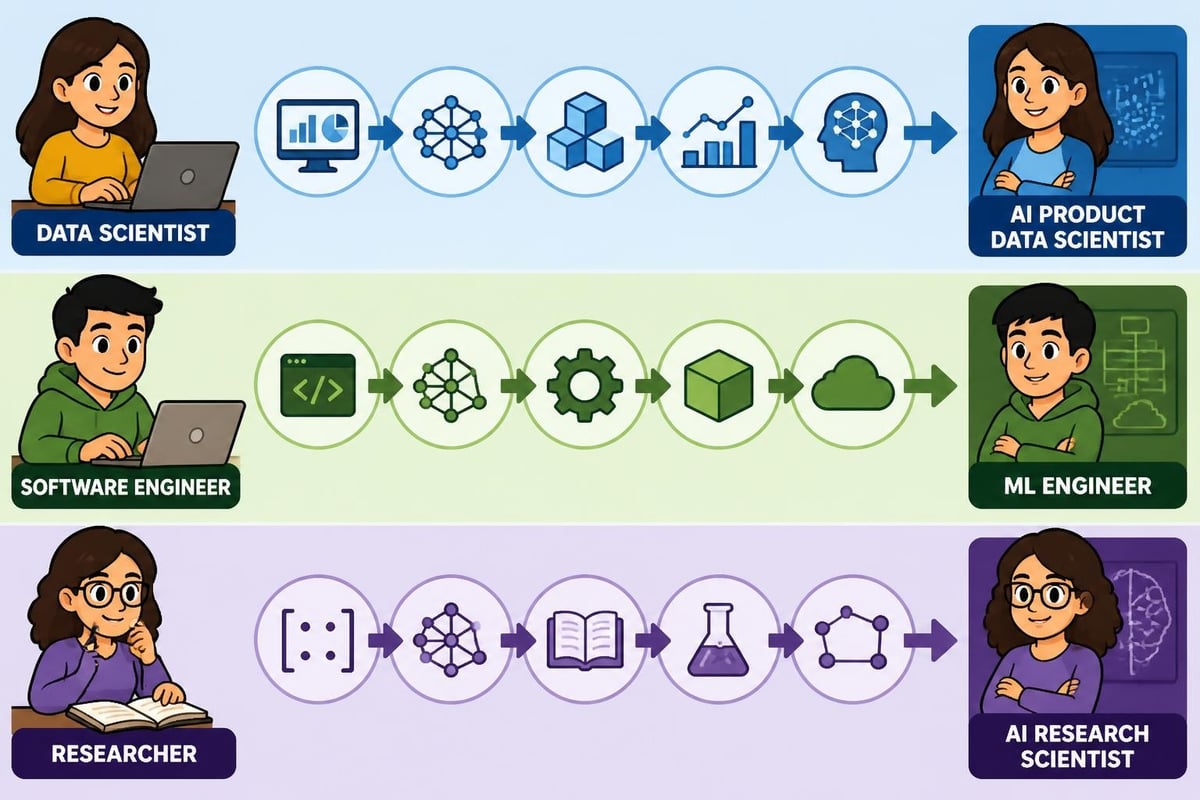
Machine Learning Engineers
Professionals targeting ML engineering roles should prioritize hands-on implementation skills. Start with fundamental deeplearning ai courses covering neural network basics, then progress to specialized tracks in computer vision or natural language processing based on industry focus. Supplement with cloud platform certifications like Azure AI certification to demonstrate deployment capabilities.
The recommended sequence includes:
- Complete Neural Networks and Deep Learning fundamentals
- Master optimization and hyperparameter tuning techniques
- Specialize in either CNN or RNN architectures depending on target applications
- Build portfolio projects demonstrating end-to-end model development
- Gain experience with production deployment tools and frameworks
Data Scientists Transitioning to AI
Data scientists already familiar with traditional machine learning can accelerate their deep learning journey by focusing on architectural differences and neural network-specific techniques. These professionals benefit from understanding when deep learning offers advantages over classical approaches and how to integrate neural networks into existing data pipelines.
Key focus areas include:
- Transfer learning: Leveraging pre-trained models for domain-specific applications
- Feature engineering: Understanding how deep learning automates feature extraction
- Model interpretation: Techniques for explaining neural network predictions
- Production considerations: Scaling models, monitoring performance, and managing computational resources
Maximizing Course Effectiveness
Active Learning Strategies
Simply watching lectures produces limited results. Effective learners engage deeply with course material through multiple techniques. Code along with every demonstration rather than passively watching. Implement concepts from scratch before reviewing provided solutions. Participate in community forums to discuss challenging concepts and alternative approaches.
Research on community-based AI learning demonstrates that collaborative approaches significantly enhance retention and application. Study groups, peer code reviews, and project collaborations reinforce theoretical knowledge through practical application.
Practical Implementation Projects
Building real-world applications cements learning more effectively than completing standardized assignments. After mastering each module, design custom projects addressing actual problems. For computer vision courses, develop applications for medical image analysis, agricultural monitoring, or quality control. For sequence models, create chatbots, translation systems, or sentiment analysis tools.
Documentation matters as much as code quality. Maintain clear README files, comment complex sections thoroughly, and explain design decisions. This practice prepares you for collaborative development environments and builds a professional portfolio that demonstrates capabilities to potential employers.
Advanced Specialization Topics
Beyond foundational courses, deeplearning ai courses expand into specialized domains requiring additional expertise. These advanced tracks address specific industry applications and emerging research areas.
Natural Language Processing Specializations
NLP-focused programs dive deep into transformer architectures, attention mechanisms, BERT, GPT variants, and modern language models. Professionals working with text data, conversational AI, or content generation find these specializations particularly valuable. Topics include tokenization strategies, embedding techniques, fine-tuning approaches, and prompt engineering for large language models.
Applications span customer service automation, content moderation, document analysis, and multilingual translation systems. The rapid evolution of language models means continuous learning remains essential even after completing formal coursework.
Computer Vision Applications
Vision-focused deeplearning ai courses explore architectures from AlexNet through ResNet, EfficientNet, and vision transformers. Practical applications include object detection using YOLO and R-CNN variants, semantic segmentation, pose estimation, and generative models for image synthesis.
Industry applications range from autonomous vehicle perception systems to medical diagnostic assistance, retail analytics, and security monitoring. Understanding the GPU requirements for AI training becomes crucial when working with large-scale image datasets and complex vision models.
Integration with Broader AI Education
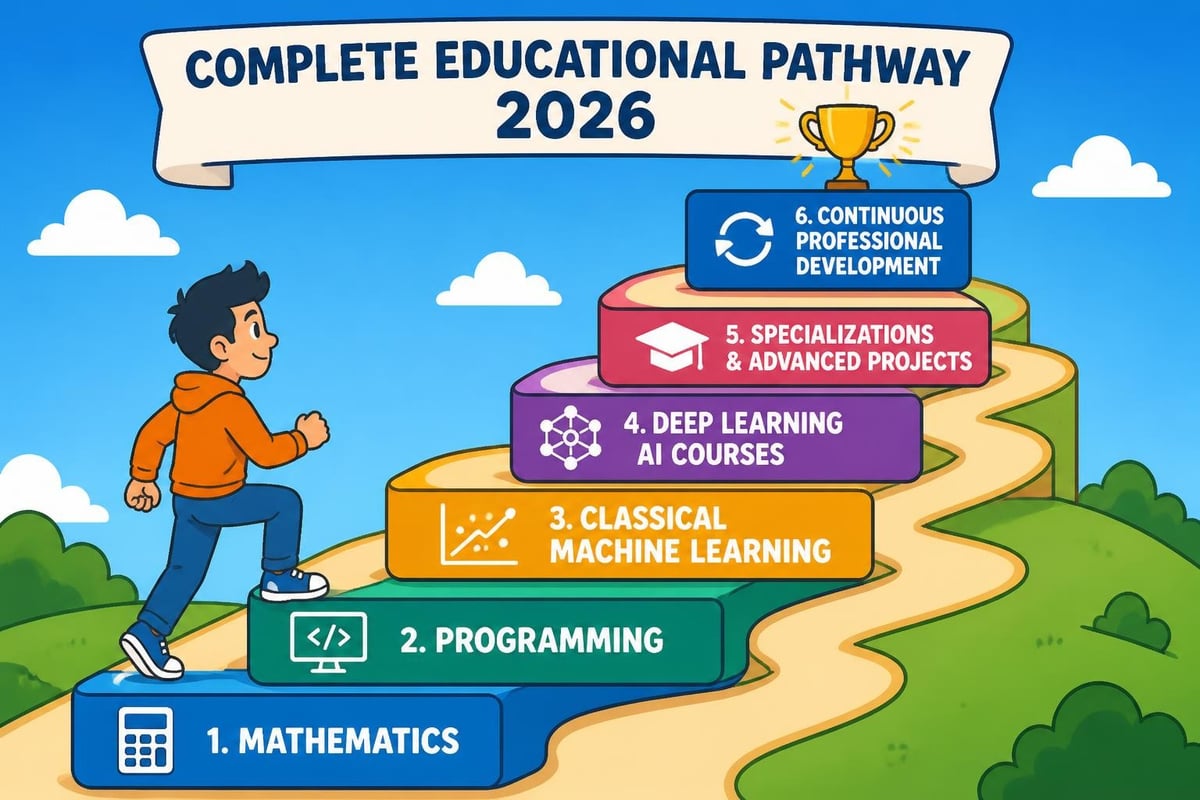
| Learning Path Component | Purpose | Typical Duration |
|---|---|---|
| Foundational Math | Linear algebra, calculus, probability | 2-3 months |
| Programming Fundamentals | Python, data structures, algorithms | 1-2 months |
| Machine Learning Basics | Classical ML algorithms, evaluation | 1-2 months |
| Deep Learning Core | Neural networks, optimization | 3-4 months |
| Specialization | Domain-specific applications | 2-3 months |
| Capstone Projects | Portfolio development | 1-2 months |
DeepLearning ai courses form one component of comprehensive AI education. Platforms like MammothClub offer broader catalogs including AI specialization courses across multiple domains, enabling learners to customize their education based on specific career objectives.
The AI and ML learning path typically begins with mathematical foundations, progresses through classical machine learning, then advances to deep learning techniques. This sequential approach builds intuition about when neural networks provide advantages and when simpler methods suffice.
Certification Value and Career Impact
Professional certifications validate expertise and signal commitment to potential employers. Completing deeplearning ai courses typically awards certificates recognized across the technology industry. These credentials carry particular weight when combined with portfolio projects demonstrating practical application.
Credential Stacking Strategy
Strategic learners combine multiple certifications to demonstrate breadth and depth. Pair deep learning credentials with cloud platform certifications, specialized domain knowledge, or complementary skills like data engineering. This approach positions professionals for senior technical roles requiring cross-functional expertise.
Consider these combinations:
- Deep learning + best AI courses on Coursera for comprehensive theoretical and practical knowledge
- Neural networks + AI engineer certification for implementation-focused roles
- Computer vision + domain expertise in healthcare, automotive, or retail for specialized positions
Industry Applications and Real-World Impact
Understanding practical applications helps maintain motivation and guides project selection. DeepLearning ai courses prepare professionals to work on transformative technologies across multiple sectors.
Healthcare and Medical Imaging
Medical applications leverage convolutional neural networks for diagnostic assistance, disease detection, and treatment planning. Professionals in this space apply computer vision techniques to analyze X-rays, MRIs, CT scans, and pathology slides. Sequence models assist with electronic health record analysis, patient outcome prediction, and personalized treatment recommendations.
Regulatory considerations and ethical implications require additional attention in healthcare contexts. Models must meet stringent accuracy requirements, provide interpretable results, and avoid perpetuating biases in medical decision-making.
Financial Services and Risk Management
Financial institutions deploy deep learning for fraud detection, algorithmic trading, credit risk assessment, and customer service automation. Time series analysis using recurrent networks helps predict market movements and optimize portfolio allocation. Natural language processing extracts insights from financial reports, news articles, and social media sentiment.
The combination of deeplearning ai courses with financial domain knowledge creates particularly valuable skill sets. Professionals who understand both neural network architectures and financial markets command premium compensation.
Autonomous Systems and Robotics
Self-driving vehicles, delivery drones, and industrial robots depend on deep learning for perception, planning, and control. Computer vision processes sensor data from cameras, lidar, and radar. Reinforcement learning optimizes decision-making in complex environments with multiple objectives and constraints.
These applications require real-time inference, edge deployment, and robust performance under varying conditions. Engineers working on autonomous systems benefit from understanding model optimization, quantization, and efficient architectures suitable for resource-constrained hardware.
Staying Current with Rapid Evolution
The deep learning field advances continuously, with new architectures, techniques, and applications emerging regularly. Completing foundational deeplearning ai courses provides essential knowledge, but sustained career success requires ongoing education.
Research Paper Reading Practices
Following current research keeps practitioners informed about cutting-edge developments. Papers like this exploration of graph networks and relational inductive biases reveal emerging approaches that may become standard practice within months. Similarly, critical appraisals of deep learning limitations by researchers like Gary Marcus help maintain realistic expectations about current capabilities.
Effective reading strategies include focusing on abstract and conclusion sections first, identifying key contributions, and implementing novel techniques in small experiments. Not every paper requires deep understanding, but tracking trends helps anticipate skill requirements.
Community Engagement and Knowledge Sharing
Active participation in AI communities accelerates learning through exposure to diverse perspectives and practical challenges. Platforms like GitHub, Kaggle, and specialized forums host competitions, open-source projects, and technical discussions. Contributing to these communities builds reputation while refining skills.
Resources like curated AI learning roadmaps help navigate the overwhelming volume of available materials. Similarly, collections of deep learning resources provide starting points for exploring specific topics.
Cost Considerations and Learning Investment
Educational investment requires balancing financial cost, time commitment, and expected career returns. DeepLearning ai courses typically operate on subscription models, with monthly fees ranging from $39 to $79 depending on platform and access level. Financial aid and institutional partnerships sometimes reduce costs for eligible learners.
Free alternatives exist, including Fast.ai's practical deep learning course, which emphasizes coding-first approaches with minimal prerequisites. Academic papers like this summary of machine learning and deep learning fundamentals provide theoretical grounding without financial barriers.
Return on Investment Analysis
Calculate ROI by comparing course costs against salary increases, career advancement opportunities, and skill marketability. Machine learning engineers with deep learning expertise typically earn 15-30% more than those with only classical ML skills. Senior positions often require demonstrated neural network implementation experience.
Time investment matters equally. Rushed learning produces superficial understanding, while excessive perfectionism delays practical application. Most successful learners balance thorough comprehension of core concepts with rapid iteration on projects.
Building a Sustainable Learning Practice
Consistency outperforms intensity in long-term skill development. Establish regular study schedules rather than sporadic intensive sessions. Even 30 minutes daily produces better results than weekend marathons followed by weeks of inactivity.
Environmental Optimization
Create dedicated learning spaces free from distractions. Invest in comfortable seating, adequate lighting, and reliable internet connectivity. Many learners benefit from dual monitors for simultaneous code editing and lecture viewing. Noise-canceling headphones help maintain focus in shared environments.
Physical health significantly impacts cognitive performance. Regular exercise, adequate sleep, and proper nutrition enhance memory retention and problem-solving capabilities. Treating education as an athletic endeavor requiring physical preparation often yields surprising benefits.
Progress Tracking and Motivation
Maintain learning journals documenting concepts mastered, challenges encountered, and insights gained. This practice reinforces memory while creating reference materials for future review. Celebrate small victories like successfully debugging complex code or achieving accuracy improvements on personal projects.
External accountability through study partners, mentor relationships, or public commitment declarations helps maintain momentum during difficult periods. Share progress on professional networks, write blog posts explaining learned concepts, or mentor newer learners to solidify understanding.
Preparation for Advanced Topics
DeepLearning ai courses establish foundations for exploring cutting-edge research areas. Professionals completing core specializations often continue into reinforcement learning, generative adversarial networks, neural architecture search, or federated learning.
These advanced topics build directly on fundamental concepts. Strong understanding of backpropagation, optimization algorithms, and regularization techniques proves essential when tackling complex architectures and training procedures.
Research-oriented learners benefit from understanding mathematical proofs, experimental design, and statistical analysis. Industry-focused professionals prioritize deployment skills, production monitoring, and business value demonstration.
Deeplearning ai courses provide structured pathways for mastering neural networks and positioning yourself at the forefront of artificial intelligence innovation. The combination of rigorous curriculum, practical implementation, and industry-recognized certification creates powerful credentials for career advancement. MammothClub expands on this foundation with over 3,000 on-demand courses, interactive bootcamps, and corporate certification programs designed to help professionals and organizations master AI technologies rapidly. Our AI-powered learning tools and comprehensive dashboards ensure your educational investment translates directly into measurable skills and competitive advantage in 2026's AI-driven marketplace.