The explosion of generative AI has created unprecedented demand for professionals who can build, deploy, and optimize AI systems. Whether you're exploring OpenAI's official training programs or broader AI education offerings, selecting the right open AI course requires understanding your goals, current skill level, and how different programs align with industry needs. This comprehensive guide examines what makes an effective AI learning path in 2026, from foundational concepts to advanced implementation strategies that drive real business value.
Understanding the Open AI Course Landscape
The term "open AI course" encompasses multiple learning pathways. Some professionals seek training specifically focused on OpenAI's technologies-GPT models, API integration, prompt engineering, and fine-tuning. Others interpret it more broadly as courses covering open-source AI tools, machine learning fundamentals, and deep learning architectures that underpin modern language models.
OpenAI Academy offers official public courses designed for different audiences, from developers new to API integration to data scientists exploring advanced model customization. These structured programs provide direct access to OpenAI's recommended practices and emerging capabilities.
Beyond vendor-specific training, universities and tech companies have developed comprehensive curricula. MIT's Introduction to Deep Learning covers transformers and large language models with academic rigor, while Google's Machine Learning Crash Course offers practical, interactive training suitable for practitioners at any level.
Key Components of Effective AI Training
Modern AI education must balance theoretical foundations with hands-on application. The most valuable programs include:
- API integration and practical implementation using real-world scenarios
- Prompt engineering techniques that maximize model performance
- Model evaluation frameworks for measuring accuracy, bias, and safety
- Cost optimization strategies for production deployments
- Security and compliance considerations specific to generative AI
MammothClub's platform addresses these requirements through 3,000+ on-demand tech and AI courses that combine expert instruction with interactive labs and certification tracks aligned with industry standards.
Choosing Between Official and Third-Party Programs
When evaluating an open AI course, consider the source and pedagogical approach. Official OpenAI training provides authoritative guidance on their specific platforms but may not cover competitive tools or broader ML concepts. University programs like Stanford's CS224n Natural Language Processing offer deep theoretical grounding but require significant time investment.
| Course Type | Best For | Typical Duration | Focus Area |
|---|---|---|---|
| OpenAI Academy | Developers using OpenAI APIs | 4-12 hours | Implementation & best practices |
| University Programs | Computer science students | 10-15 weeks | Theory & research foundations |
| Platform Courses | Working professionals | 6-40 hours | Practical skills & certification |
| Corporate Bootcamps | Team upskilling | 1-5 days intensive | Role-specific applications |
Third-party platforms like MammothClub excel at bridging theory and practice. Our AI courses combine foundational concepts with project-based learning, allowing professionals to apply new skills immediately within their organizations.
Foundational Prerequisites and Learning Paths
Most effective open AI course programs assume baseline technical literacy. Complete beginners benefit from starting with programming fundamentals in Python, basic statistics, and an understanding of how APIs function. Harvard's CS50 AI with Python provides an excellent on-ramp for those building foundational knowledge.
For developers with existing coding experience:
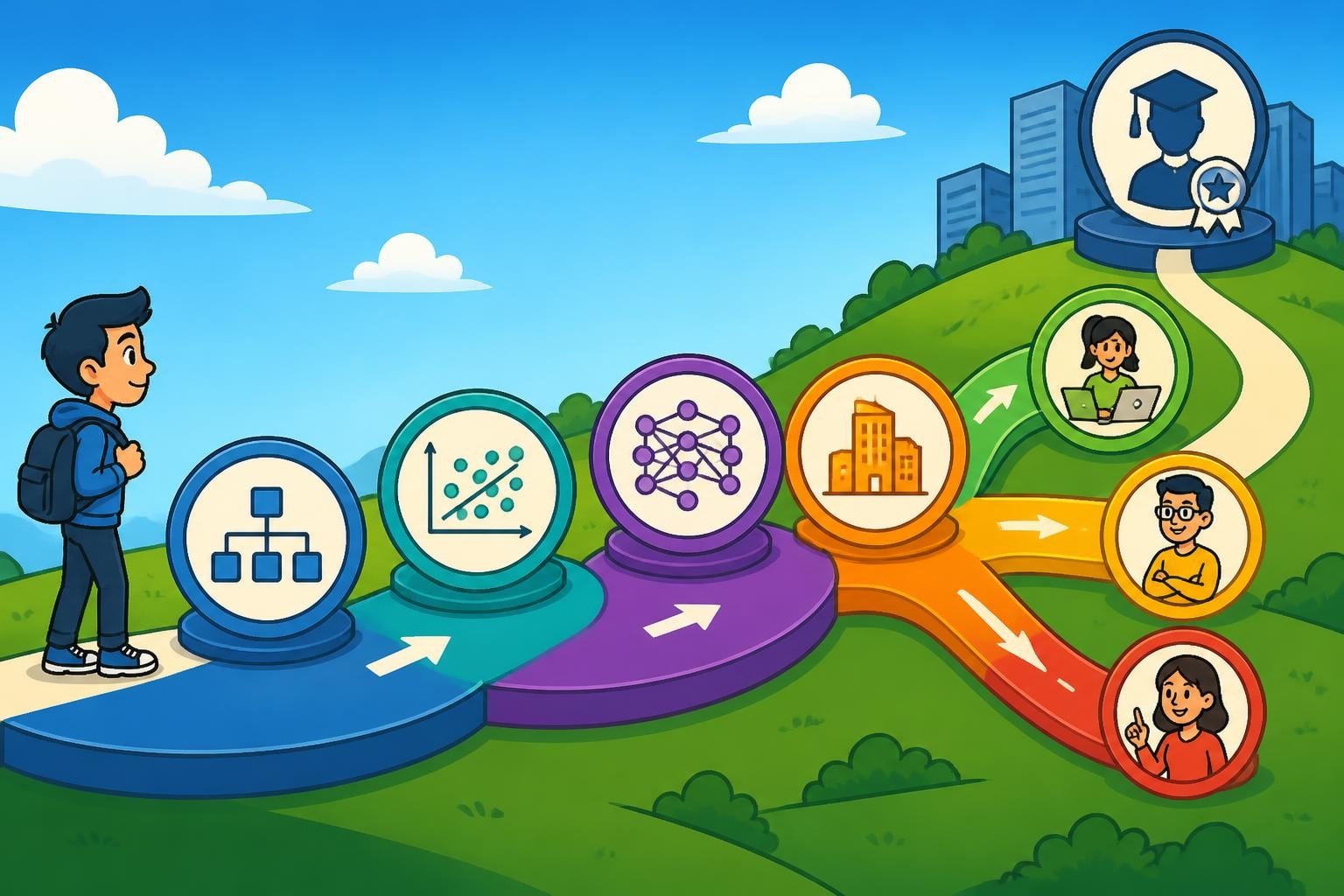
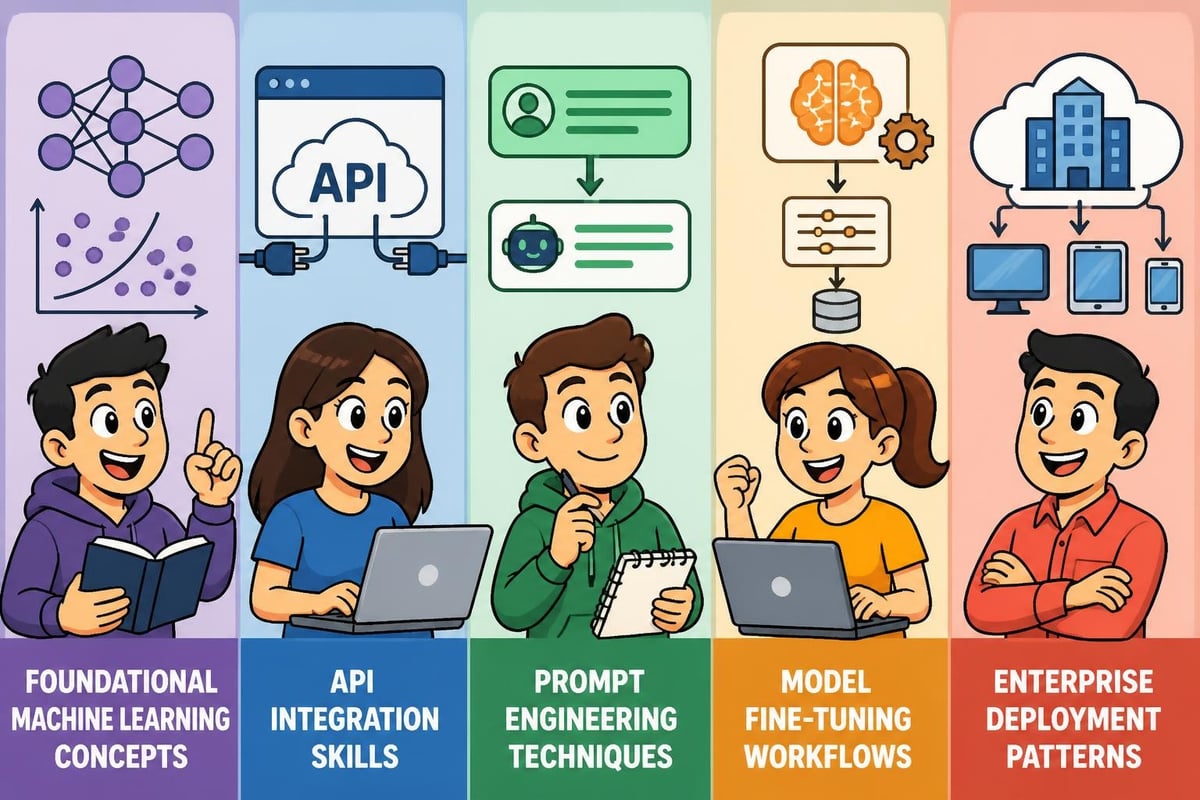
- Begin with machine learning fundamentals (regression, classification, neural networks)
- Progress to natural language processing concepts
- Master API integration and prompt engineering
- Explore model fine-tuning and advanced customization
- Implement production-ready solutions with monitoring and governance
For business professionals and decision-makers:
- Understand AI capabilities and limitations through executive briefings
- Learn prompt engineering for productivity applications
- Study use case development and ROI measurement
- Explore governance frameworks and ethical considerations
- Develop vendor evaluation criteria and procurement strategies
The best AI courses available today recognize these different starting points and provide modular pathways that let learners skip redundant material while ensuring they master essential concepts.
Technical Skills Developed Through Quality AI Training
An effective open AI course transforms theoretical knowledge into practical capabilities. The most valuable programs emphasize hands-on projects that mirror real-world challenges.
API Integration and Development Skills
Modern AI applications rely heavily on API-driven architectures. Quality training covers:
- Authentication and security patterns for API keys and access control
- Rate limiting and quota management to optimize costs
- Error handling and retry logic for production resilience
- Response parsing and data transformation for downstream systems
- Asynchronous processing for high-volume applications
These skills apply whether you're working with OpenAI's GPT models, competing platforms, or building hybrid architectures that combine multiple AI services.
Advanced Prompt Engineering Techniques
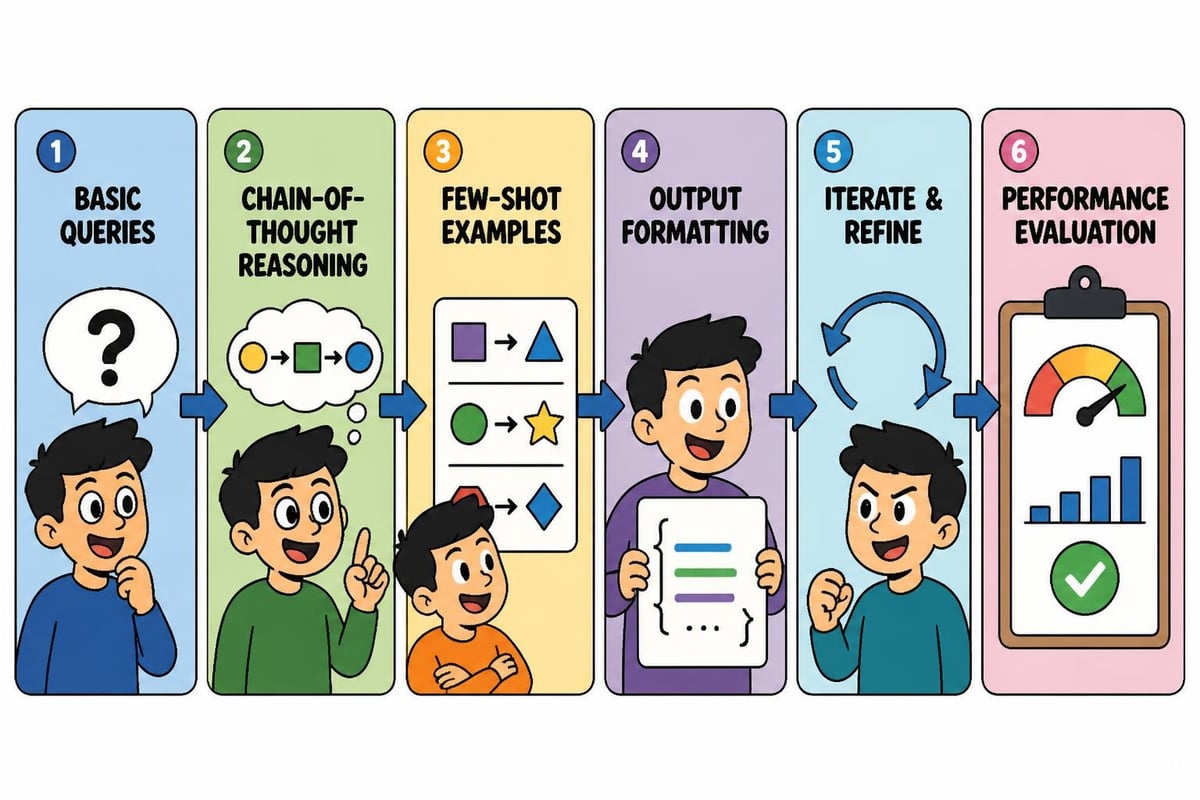
Prompt engineering has evolved from simple trial-and-error to a systematic discipline. Professional-grade courses teach:
- Chain-of-thought prompting for complex reasoning tasks
- Few-shot learning to guide model behavior with examples
- System message optimization for consistent assistant behavior
- Output format control using structured templates
- Context window management for long-form interactions
MammothClub's prompt engineering bootcamps provide interactive labs where learners experiment with different approaches and receive immediate feedback on effectiveness.
Certification Pathways and Career Impact
Professional certifications validate expertise and signal competency to employers. The open AI course market now includes multiple certification tracks, each serving different career objectives.
Vendor-specific certifications demonstrate platform expertise. OpenAI Academy programs often conclude with assessments that verify implementation skills. Similarly, cloud providers like Microsoft, Google, and Amazon offer AI certifications focused on their respective platforms.
Role-based certifications align with job functions:
- AI Application Developer (focused on integration and deployment)
- ML Engineer (emphasizing model training and optimization)
- AI Product Manager (covering use case development and strategy)
- AI Ethics and Governance Specialist (addressing safety and compliance)
According to recent industry surveys, professionals with AI certifications command salary premiums of 15-25% compared to peers with equivalent experience but no formal credentials. The most valuable certifications combine theoretical assessment with practical project work that demonstrates real-world application skills.
Measuring Learning Outcomes and Skill Acquisition
The ACM Computer Science Curricula 2023 guidelines emphasize measurable outcomes for AI education. Quality programs should enable learners to:
- Design and implement AI-powered applications that solve specific business problems
- Evaluate model performance using appropriate metrics for the use case
- Identify and mitigate bias, safety, and ethical concerns
- Estimate costs and optimize resource utilization for production systems
- Communicate AI capabilities and limitations to non-technical stakeholders
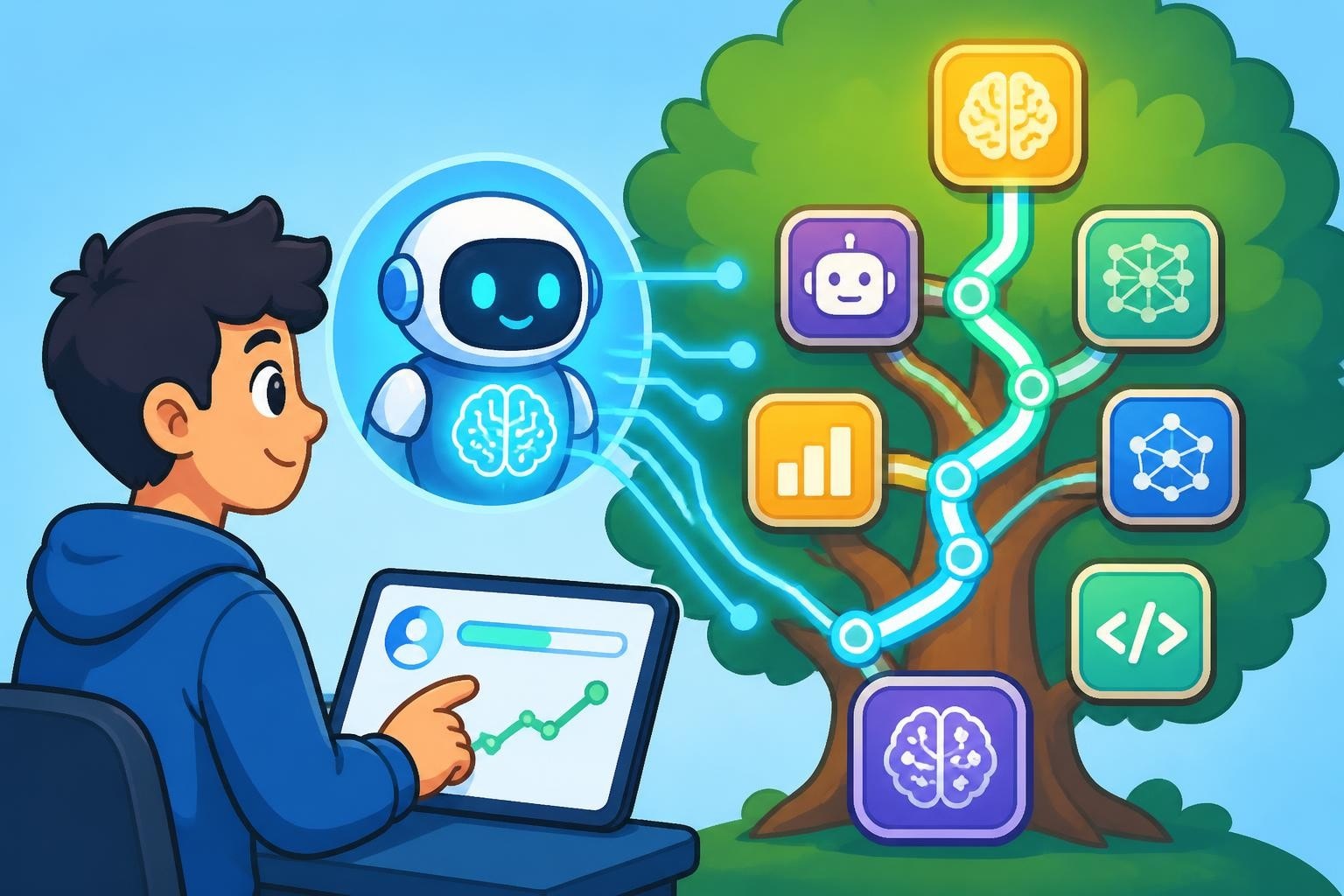
MammothClub's AI-powered learning dashboards track these competencies, providing learners and managers with clear visibility into skill development and readiness for real-world projects.
Enterprise Applications and Team Training
Organizations increasingly need to upskill entire teams, not just individual practitioners. An effective open AI course for corporate training must address unique enterprise requirements.
| Enterprise Need | Training Approach | Success Metrics |
|---|---|---|
| Developer productivity | Hands-on API integration labs | Time-to-first-deployment |
| Customer service automation | Use case workshops + implementation | Response quality & containment rate |
| Content creation workflows | Prompt engineering for brand voice | Output consistency & efficiency gains |
| Data analysis acceleration | Python integration + visualization | Analysis cycle time reduction |
Corporate bootcamp programs compress essential skills into intensive formats. MammothClub's corporate certification programs deliver role-specific training that teams can immediately apply to current projects, maximizing ROI on education investment.
Building Internal AI Capabilities
Forward-thinking organizations are developing internal centers of excellence around AI. This requires structured learning paths that create both specialists and AI-literate generalists across the organization.
Specialist development tracks might include:
- MLOps engineers who manage model lifecycle and deployment pipelines
- Prompt engineers who optimize model interactions for specific domains
- AI safety specialists who implement governance frameworks
- Integration architects who connect AI capabilities with existing systems
Generalist enablement programs ensure that product managers, designers, marketers, and other functions understand how to leverage AI tools effectively. These shorter courses focus on practical application rather than technical implementation details.
Recent research on integrating emerging AI applications in education highlights the importance of continuous learning frameworks. AI capabilities evolve rapidly-what works today may be superseded by better approaches within months. Organizations need ongoing training programs, not one-time events.
Practical Implementation Strategies
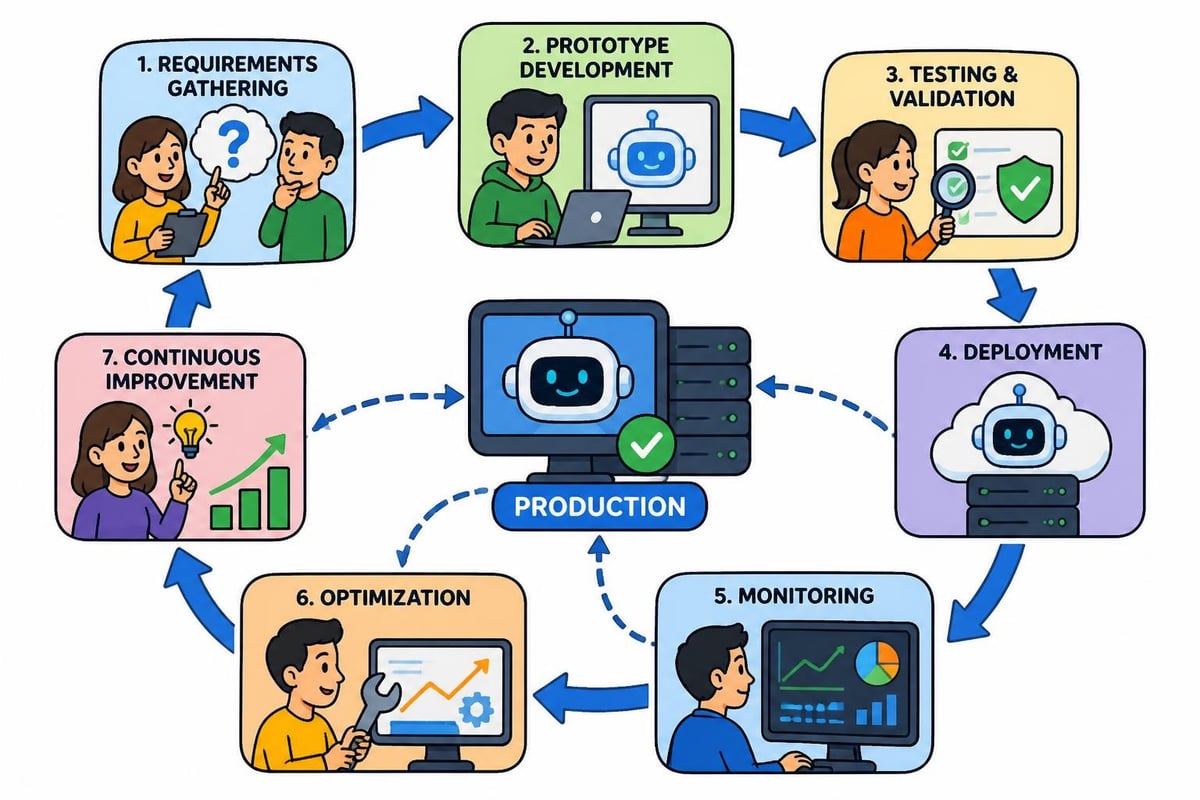
The gap between completing an open AI course and successfully deploying production AI systems often surprises learners. Effective training programs bridge this gap with implementation-focused content.
From Prototype to Production
Most courses teach prototyping and experimentation. Fewer address the complexities of production deployment:
- Monitoring and observability to track model performance and user interactions
- Cost management as usage scales beyond development quotas
- Latency optimization for user-facing applications
- Fallback strategies when APIs are unavailable or rate-limited
- Version management as models and APIs evolve
Quality training includes case studies of real deployments, common pitfalls, and battle-tested solutions. MammothClub's project-based courses require learners to build production-ready implementations that include error handling, logging, and performance optimization from the start.
Domain-Specific Applications
Generic AI skills become valuable when applied to specific domains. Specialized courses address industry-specific requirements:
- Financial services: AI trading course content covering compliance, risk management, and market analysis
- Healthcare: Clinical decision support with HIPAA compliance and bias mitigation
- Manufacturing: Robotics and AI integration for automation and quality control
- Marketing: Content generation aligned with brand guidelines and campaign objectives
Domain expertise combined with AI skills creates particularly valuable career profiles in 2026's job market.
Comparing Learning Formats and Time Commitments
Different learning formats suit different situations and learning styles. Understanding the tradeoffs helps you select the right open AI course format for your needs.
Self-paced online courses offer maximum flexibility. Learners progress on their own schedule, revisiting difficult concepts as needed. This format works well for motivated individuals with clear learning objectives but requires strong self-discipline to complete.
Live cohort-based programs provide structure, peer interaction, and direct access to instructors. The scheduled format creates accountability and enables collaborative learning. MammothClub's interactive bootcamps combine expert-led sessions with hands-on labs and peer project reviews.
Hybrid models blend self-paced content with periodic live sessions for Q&A, project reviews, and deeper dives into complex topics. This approach optimizes for both coverage and cost-effectiveness.
Time commitments vary significantly:
- Sprint courses (4-8 hours): Introduction to specific tools or techniques
- Comprehensive programs (20-40 hours): Foundation through intermediate implementation
- Professional certificates (60-120 hours): Deep expertise with multiple projects and assessments
- Degree programs (400+ hours): Academic rigor with research components
According to IEEE workforce alignment research, employers increasingly value demonstrated project work over credentials alone. Programs that emphasize portfolio development alongside theoretical knowledge provide the strongest career outcomes.
Evaluating Course Quality and Instructor Expertise
Not all open AI course offerings deliver equivalent value. Discerning learners should evaluate several quality indicators before committing time and resources.
Instructor Credentials and Industry Experience
The best instructors combine academic credentials with practical industry experience. Look for:
- Direct experience deploying production AI systems at scale
- Contributions to open-source AI projects or research publications
- Active involvement in the AI community through conferences, blogs, or forums
- Teaching evaluations and student outcomes from previous cohorts
MammothClub vets all instructors for both technical expertise and teaching ability, ensuring engaging delivery alongside accurate, current content.
Curriculum Currency and Relevance
AI moves faster than traditional educational publishing cycles. Quality courses demonstrate:
- Recent updates reflecting the latest models and capabilities
- Practical examples using current API versions and best practices
- Acknowledgment of limitations and evolving understanding
- Forward-looking content that prepares for near-term developments
- Flexibility to incorporate breaking changes as platforms evolve
Courses last updated in 2024 or earlier may miss critical developments in capabilities, pricing, safety features, and recommended implementation patterns.
Hands-On Learning Components
Passive video watching creates false confidence. Effective training requires active practice:
- Coding exercises with automated feedback on correctness
- Project assignments that mirror real-world complexity
- Code reviews from instructors or peers
- Debugging challenges that build troubleshooting skills
- Architecture decisions with tradeoff analysis
The MIT Hands-On Deep Learning course exemplifies this project-focused approach, requiring students to build and train models from scratch rather than simply consuming lecture content.
Strategic Skill Development for 2026 and Beyond
The AI landscape continues evolving rapidly. Strategic learners develop both current capabilities and the meta-skills needed to adapt as the field advances.
Core technical competencies with enduring value include:
- Programming proficiency in Python and understanding of software architecture
- Statistical literacy and ability to interpret experimental results
- System design skills for building scalable, reliable applications
- Data pipeline development for preparing and managing training data
- Debugging and troubleshooting methodology for complex systems
Emerging focus areas gaining importance:
- Multimodal AI combining text, images, audio, and video
- Agent-based systems that plan and execute complex tasks
- Fine-tuning and customization for domain-specific applications
- AI safety and alignment techniques
- Efficient inference and cost optimization strategies
MammothClub's curriculum roadmap tracks these trends, regularly introducing new content that keeps learners ahead of market demands. Our platform's AI-powered recommendations suggest relevant courses based on your existing skills and career trajectory.
Building a Learning Portfolio
Employers and clients increasingly request portfolios demonstrating practical AI capabilities. An effective open AI course should result in portfolio-worthy projects that showcase:
- Problem identification and requirements gathering for real business challenges
- Technical implementation with well-architected, documented code
- Performance evaluation using appropriate metrics and baselines
- Iteration and optimization based on testing and user feedback
- Deployment and monitoring in production-like environments
Projects that combine multiple skills-prompt engineering, API integration, data analysis, and user interface design-demonstrate the cross-functional capabilities organizations value most.
Integrating AI Learning with Career Development
Taking an open AI course represents an investment in your career. Maximizing ROI requires strategic planning beyond simply completing coursework.
Before starting training:
- Identify specific career objectives (new role, promotion, business launch)
- Research required skills and credentials for target positions
- Assess current skill gaps and prioritize learning focus
- Allocate realistic time for study given other commitments
- Plan how you'll apply new skills immediately after learning
During the learning process:
- Document your work and build a public portfolio on GitHub or similar platforms
- Engage with course communities to build professional networks
- Seek opportunities to apply new skills to current work projects
- Share your learning journey through blog posts or social media
- Connect concepts across different courses and experiences
After course completion:
- Update your resume and LinkedIn profile with new credentials
- Pursue relevant certification exams while knowledge is fresh
- Contribute to open-source projects to demonstrate ongoing engagement
- Mentor others learning similar material to deepen your own understanding
- Continue learning as new capabilities and techniques emerge
MammothClub's learning dashboards help you track progress toward career goals, identifying skill gaps and recommending next steps based on your target role requirements.
Selecting the right open AI course in 2026 requires matching program content, format, and depth to your specific goals and starting point. The most effective learning paths combine theoretical foundations with extensive hands-on practice, current content that reflects the latest capabilities, and clear pathways to demonstrable career outcomes. MammothClub delivers all these elements through our comprehensive AI learning platform, offering 3,000+ courses, interactive bootcamps, and corporate programs designed to help professionals and organizations stay competitive in the rapidly evolving AI landscape. Whether you're just starting your AI journey or looking to master advanced techniques, our AI-powered learning tools and expert instruction provide the structured, measurable training you need to succeed.