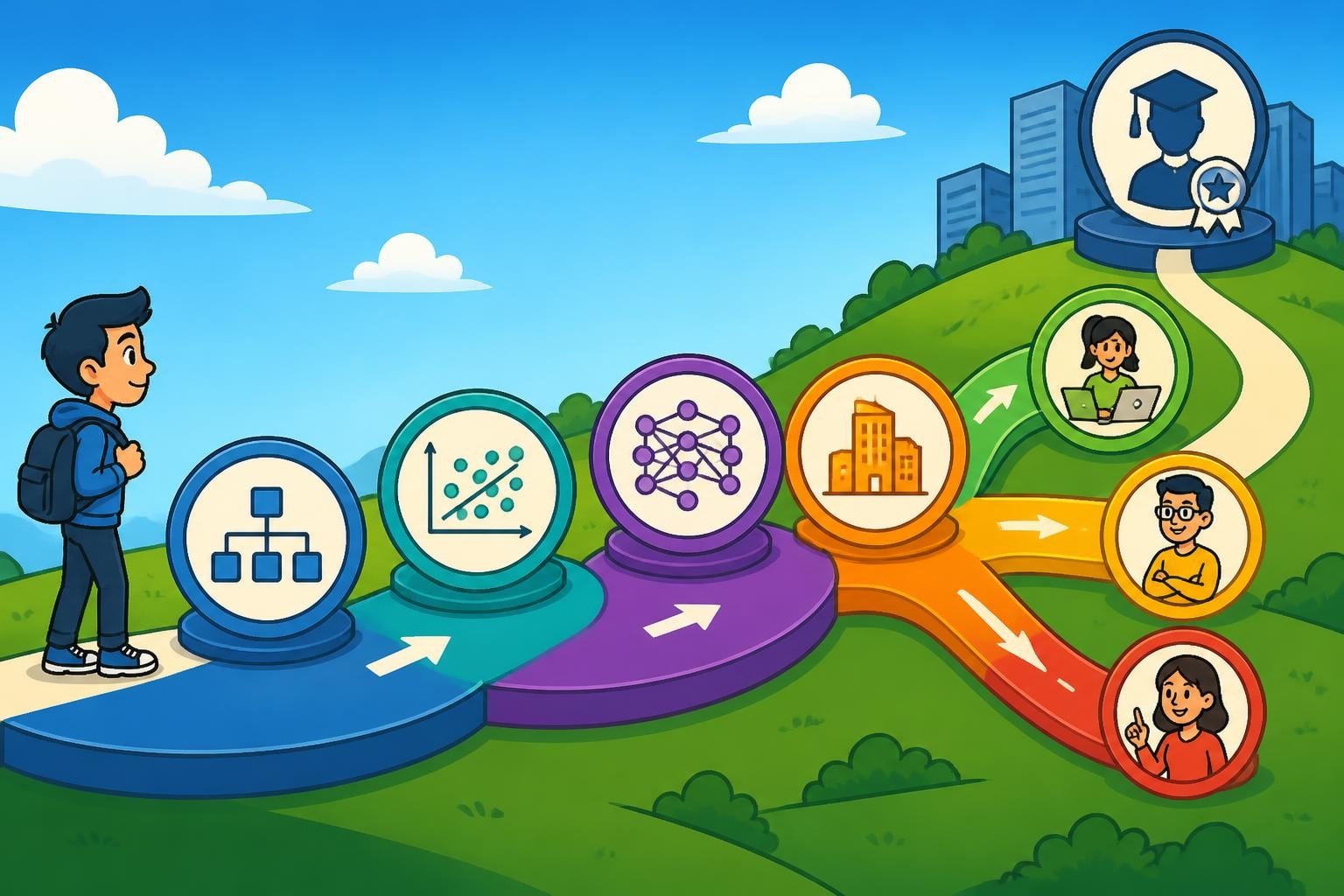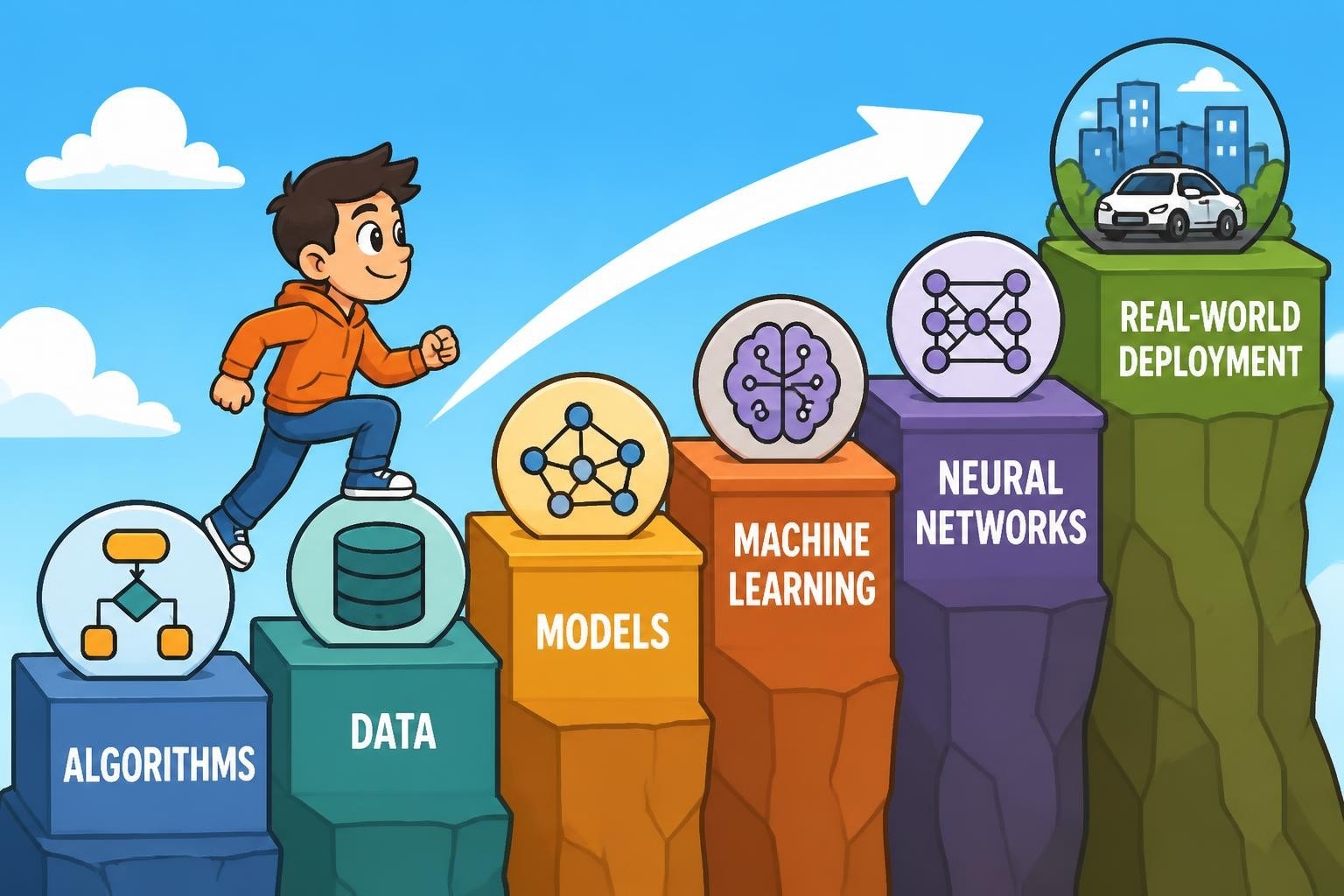
The landscape of artificial intelligence education has evolved dramatically, and the ai ka course framework represents a paradigm shift in how professionals acquire and master AI skills. Knowledge acceleration (KA) in AI training leverages adaptive learning technologies, personalized curriculum paths, and real-time performance analytics to compress learning timelines while improving retention and application. This approach addresses the critical skills gap identified in the Stanford HAI AI Index Report 2025, which documents accelerating demand for AI-competent professionals across every industry sector.
Understanding the AI Knowledge Acceleration Framework
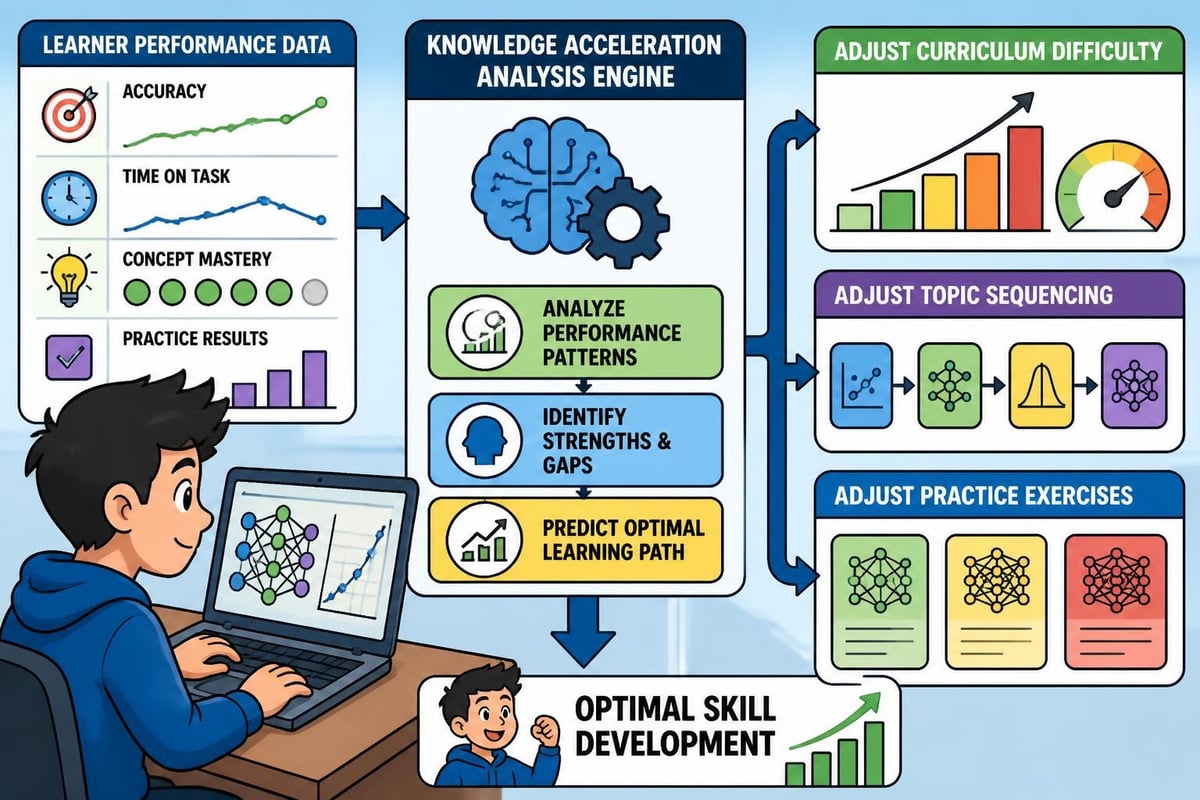
An ai ka course differs fundamentally from traditional AI education models. Rather than presenting a linear, one-size-fits-all curriculum, knowledge acceleration courses employ intelligent systems that continuously assess learner comprehension, identify knowledge gaps, and dynamically adjust content delivery.
Core Components of Knowledge Acceleration
The ai ka course methodology integrates several essential elements that work synergistically:
- Adaptive assessment engines that evaluate understanding at granular skill levels
- Personalized learning paths that bypass mastered concepts and focus on knowledge gaps
- Spaced repetition algorithms that optimize long-term retention
- Real-world application projects that bridge theory and practice
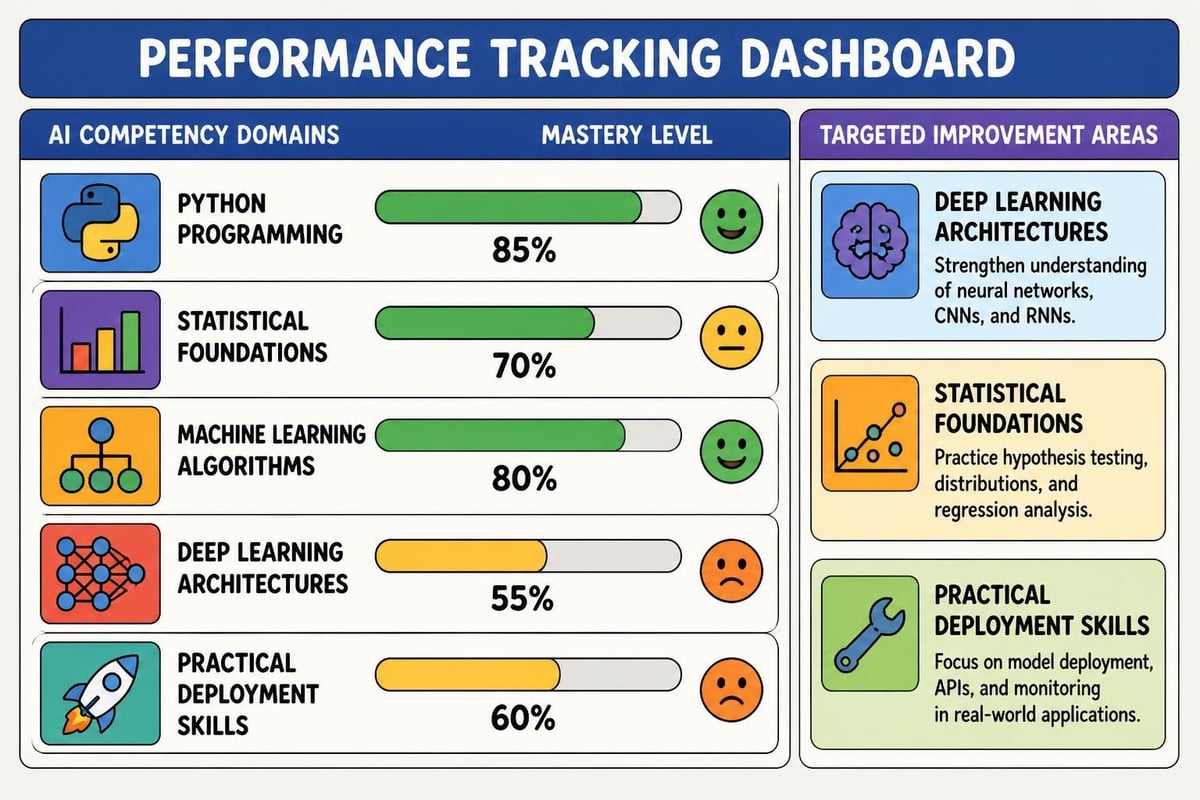
- Performance dashboards that provide measurable progress metrics
These components create a feedback loop where each interaction refines the learning experience. For professionals seeking artificial intelligence computer science courses, this acceleration framework can reduce time-to-competency by 40-60% compared to conventional programs.
The Science Behind Accelerated Learning
Knowledge acceleration in AI training draws from cognitive science research on how adults learn complex technical subjects. An ai ka course applies retrieval practice, interleaving, and elaborative interrogation-evidence-based techniques that enhance neural pathway formation.
Spaced repetition ensures concepts move from short-term to long-term memory through precisely timed review intervals. Interleaving mixes topics rather than blocking them, improving discrimination between similar concepts like supervised versus unsupervised learning.
The curriculum structure in an ai ka course mirrors proven frameworks from institutions like MIT and Stanford. The MIT Introduction to Deep Learning course demonstrates how combining theoretical foundations with hands-on laboratory work accelerates comprehension of complex topics like backpropagation and convolutional architectures.
Building Your AI Knowledge Acceleration Curriculum
Creating an effective ai ka course requires careful attention to curriculum design, technology infrastructure, and learner support systems. The following framework has proven successful across corporate training programs and individual upskilling initiatives.
Essential Topic Progression
| Learning Phase | Core Topics | Duration Range | Assessment Method |
|---|---|---|---|
| Foundation | Python, statistics, linear algebra | 2-4 weeks | Coding challenges, concept checks |
| Core AI Concepts | Search algorithms, optimization, probability | 3-5 weeks | Project implementations, peer review |
| Machine Learning | Supervised/unsupervised learning, model evaluation | 4-6 weeks | Kaggle-style competitions, case studies |
| Deep Learning | Neural networks, CNNs, RNNs, transformers | 5-8 weeks | Research paper replication, original projects |
| Specialization | NLP, computer vision, reinforcement learning, or robotics | 4-6 weeks | Capstone project, portfolio development |
This progression allows learners to build competency systematically while maintaining flexibility for individual pacing. The ai ka course approach recognizes that professionals enter with varying backgrounds-a data analyst may accelerate through statistics while spending more time on neural architecture concepts.
Integrating Industry-Standard Resources
An effective ai ka course curates best-in-class external resources rather than reinventing proven content. Stanford's CS221 Artificial Intelligence course provides exceptional foundational materials on search, constraint satisfaction, and Markov decision processes that can be integrated into knowledge acceleration pathways.
For practitioners seeking hands-on implementation skills, fast.ai's Practical Deep Learning for Coders offers project-based modules that emphasize reproducible workflows and modern best practices. This practical orientation complements theoretical understanding and accelerates the path to productive AI development.
Learners interested in AI robotics courses should ensure their ai ka course includes sensor fusion, control systems, and embodied AI topics that bridge software and physical systems.
Laboratory and Practice Components
Theoretical knowledge without application fails to produce job-ready AI professionals. An ai ka course must include:
- Structured coding exercises that reinforce each concept immediately after introduction
- Guided projects with scaffolding that gradually reduces as competency increases
- Open-ended challenges that require creative problem-solving and research
- Code review cycles that teach professional development practices
- Portfolio documentation that demonstrates mastery to potential employers
The MIT Deep Learning lab materials repository provides excellent examples of progressive laboratory exercises that balance structure with creative exploration. These materials can be adapted for knowledge acceleration frameworks with appropriate pacing adjustments.
Technology Infrastructure for Knowledge Acceleration
The ai ka course model depends on sophisticated learning technology that traditional lecture-based programs lack. Organizations implementing knowledge acceleration must invest in platforms that support adaptive delivery and comprehensive analytics.
Learning Management System Requirements
Modern ai ka course delivery requires LMS capabilities beyond basic content hosting:
- Real-time learner analytics with drill-down to specific skill gaps
- Adaptive content sequencing based on assessment performance
- Integrated development environments for hands-on coding practice
- Automated code evaluation with immediate feedback
- Collaborative features for peer learning and code review
- API integrations with external tools like Jupyter, GitHub, and cloud platforms
These technical requirements ensure the learning experience remains engaging and personalized. Professionals exploring best AI courses should verify that programs offer these interactive capabilities rather than passive video consumption.
Assessment and Analytics Architecture
An ai ka course generates massive quantities of learner interaction data that must be captured, analyzed, and acted upon. Effective systems track:
Micro-level metrics: Time spent per concept, quiz attempts, code compilation errors, debugging patterns, help resource access
Macro-level indicators: Module completion rates, project quality scores, peer comparison rankings, predicted competency timelines
Behavioral patterns: Learning session frequency, optimal study duration, topic preference sequences, collaboration engagement
This data feeds machine learning models that continuously refine the ai ka course experience for each individual. Google's Machine Learning Crash Course demonstrates how adaptive exercises can adjust difficulty based on learner performance, keeping content challenging but achievable.
Corporate AI Knowledge Acceleration Programs
Organizations face unique challenges when implementing ai ka course frameworks at scale. Corporate programs must balance individual learning needs with business objectives, team coordination, and ROI measurement.
Enterprise Implementation Strategy
Successful corporate ai ka course deployments follow a structured rollout:
- Skills gap analysis identifying current AI capabilities versus business requirements
- Cohort segmentation grouping learners by role, background, and development goals
- Custom curriculum mapping aligning learning paths with strategic initiatives
- Blended delivery model combining self-paced modules with live expert sessions
- Project-based capstones solving actual business problems during training
- Certification and credentialing validating competency for internal talent mobility
This approach ensures training investment translates to measurable business outcomes. Companies implementing AI certification programs report 73% higher employee retention when credentials align with career advancement opportunities.
Measuring Knowledge Acceleration ROI
Corporate ai ka course programs must demonstrate value through quantifiable metrics:
| Success Metric | Measurement Method | Target Benchmark |
|---|---|---|
| Time to competency | Pre/post skills assessment | 40-50% reduction vs. traditional training |
| Knowledge retention | 30/60/90-day follow-up testing | >80% retention at 90 days |
| Application to work | Manager evaluation of on-job AI utilization | >65% applying skills within 60 days |
| Project outcomes | Business impact of capstone implementations | >3:1 ROI on training investment |
| Employee satisfaction | Net Promoter Score for training program | NPS >50 |
These metrics provide accountability and enable continuous program improvement. Organizations offering IBM AI certification tracks have established industry benchmarks that demonstrate the effectiveness of knowledge acceleration versus traditional semester-long courses.
Advanced Topics in AI Knowledge Acceleration
As learners progress through foundational and intermediate content, an ai ka course must provide pathways to cutting-edge specializations that maintain engagement and career relevance.
Specialization Tracks and Emerging Technologies
Advanced ai ka course content addresses rapidly evolving domains:
- Large language models and prompt engineering: Architecture understanding, fine-tuning strategies, responsible deployment
- Computer vision and multimodal AI: Object detection, segmentation, vision-language models, 3D understanding
- Reinforcement learning: Policy optimization, multi-agent systems, real-world control applications
- AI safety and alignment: Interpretability, robustness, fairness, privacy-preserving machine learning
- Edge AI and deployment: Model optimization, quantization, hardware acceleration, production monitoring
The ArXiv survey on state-of-the-art deep learning applications provides comprehensive coverage of recent research directions that should inform advanced ai ka course curriculum development. Staying current with academic literature ensures training remains relevant as the field evolves.
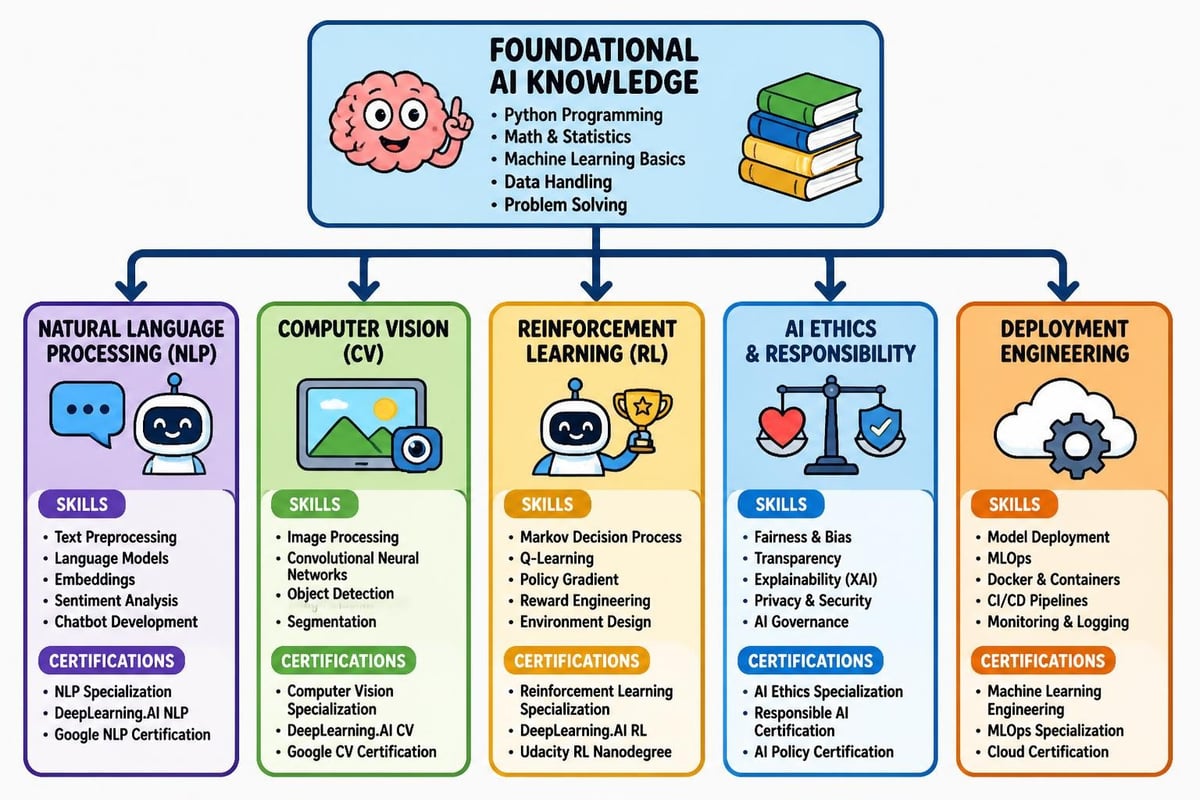
Professionals interested in AI trading courses represent one such specialization requiring domain-specific knowledge beyond general AI principles. An effective ai ka course allows learners to branch into these niches while maintaining core competencies.
Research Integration and Continuous Learning
The most sophisticated ai ka course programs incorporate active research participation, teaching learners to stay current as AI advances:
- Paper reading seminars where cohorts discuss recent publications
- Replication projects implementing algorithms from research papers
- Conference participation attending virtual presentations from NeurIPS, ICML, CVPR
- Open-source contribution collaborating on public AI projects
- Mentorship connections linking learners with experienced practitioners
This research orientation transforms passive consumers of AI education into active participants who can independently navigate future developments. The ai ka course framework evolves from finite training program to sustainable learning practice.
Global Perspectives on AI Knowledge Acceleration
The ai ka course model adapts to diverse cultural, linguistic, and regional contexts while maintaining quality standards. Understanding these variations helps learners and organizations select appropriate programs.
Regional AI Education Ecosystems
Different geographic regions have developed distinct approaches to AI training:
North America emphasizes entrepreneurial application, startup creation, and industry partnerships. Programs often integrate venture development alongside technical skills.
Europe focuses on ethical AI, regulatory compliance (GDPR, AI Act), and human-centered design principles integrated throughout the curriculum.
Asia-Pacific prioritizes scale, efficiency, and rapid deployment, with strong government support for AI workforce development initiatives.
The NPTEL Introduction to Artificial Intelligence materials demonstrate how regional academic institutions create culturally relevant AI education while maintaining international quality standards. An effective ai ka course acknowledges these perspectives and incorporates global best practices.
Language and Accessibility Considerations
Knowledge acceleration must remain accessible across linguistic and socioeconomic boundaries. Forward-thinking ai ka course providers offer:
- Multi-language interfaces and subtitling for video content
- Culturally adapted examples and case studies
- Flexible pricing models including income-based tuition
- Offline-capable modules for areas with limited connectivity
- Mobile-optimized experiences for smartphone-primary learners
These accessibility features democratize AI education, enabling talent development regardless of geography or background. Organizations exploring Andrew Ng AI courses have demonstrated how thoughtful design can reach millions of learners worldwide while maintaining pedagogical effectiveness.
Practical Implementation Guide
Starting an ai ka course journey requires strategic planning whether you're an individual professional or organizational leader. The following implementation framework ensures successful outcomes.
Individual Learner Roadmap
For professionals beginning their AI knowledge acceleration:
Months 1-2: Foundation building
- Complete Python programming fundamentals if needed
- Refresh linear algebra, calculus, probability concepts
- Set up development environment (Python, Jupyter, Git)
- Join AI learning community for peer support
Months 3-5: Core AI and machine learning
- Work through structured curriculum on supervised/unsupervised learning
- Complete 3-5 guided projects implementing classic algorithms
- Participate in Kaggle competitions for practical experience
- Build portfolio documentation for completed work
Months 6-8: Deep learning and specialization
- Study neural network architectures and training techniques
- Choose specialization area aligned with career goals
- Complete substantial capstone project demonstrating mastery
- Obtain relevant certifications to validate competency
This timeline represents accelerated learning compared to traditional academic programs. The ai ka course approach compresses multi-year degree content into focused, intensive study that produces job-ready skills in 6-9 months for dedicated learners.
Organizational Deployment Checklist
Companies implementing ai ka course programs should address:
- Executive sponsorship securing budget and strategic alignment
- Learning technology platform selection and configuration
- Curriculum customization mapping business AI applications
- Expert instructor recruitment for live mentorship sessions
- Learner cohort identification and enrollment communication
- Manager training on supporting employee development
- Success metrics definition and tracking dashboard setup
- Capstone project scoping addressing real business challenges
- Certification and credentialing process establishment
- Graduate placement strategy for AI-enabled roles
This structured approach ensures corporate ai ka course initiatives deliver measurable business value rather than becoming isolated training exercises. Companies successfully implementing these programs report significant improvements in AI project success rates and innovation velocity.
Quality Assurance and Continuous Improvement
The ai ka course model thrives on data-driven optimization. Programs must establish feedback loops that continuously enhance effectiveness.
Learner Feedback Integration
Effective ai ka course programs systematically collect and act on learner input:
- Real-time difficulty ratings after each module allowing immediate content adjustment
- Quarterly curriculum reviews with learner advisory panels
- Exit surveys capturing comprehensive program experience feedback
- Alumni follow-up tracking long-term career outcomes and skill application
- A/B testing of instructional approaches to identify optimal methods
This continuous improvement process ensures the ai ka course remains relevant, engaging, and effective as both technology and learner needs evolve.
Industry Alignment and Currency
AI advances so rapidly that curriculum obsolescence poses constant risk. Quality ai ka course programs maintain relevance through:
- Quarterly content updates reflecting latest frameworks, tools, and techniques
- Industry advisory boards providing strategic direction on emerging skill requirements
- Practitioner-instructors who actively work in AI development and deployment
- Current research integration incorporating recent breakthroughs and methodologies
- Tool ecosystem updates ensuring hands-on practice uses production-standard technologies
Organizations examining robotics and AI courses should verify that programs demonstrate these currency mechanisms, particularly in fast-moving domains like embodied AI and human-robot interaction.
The ai ka course framework represents the future of professional AI education, combining adaptive technology, evidence-based pedagogy, and practical application to accelerate skill development. By personalizing learning paths, focusing on hands-on implementation, and maintaining currency with rapidly advancing AI capabilities, knowledge acceleration programs deliver competency in months rather than years. Whether you're an individual seeking career transformation or an organization building AI capabilities at scale, MammothClub offers comprehensive knowledge acceleration courses with 3,000+ on-demand modules, interactive bootcamps, and AI-powered learning dashboards that make your journey measurable and results-driven.