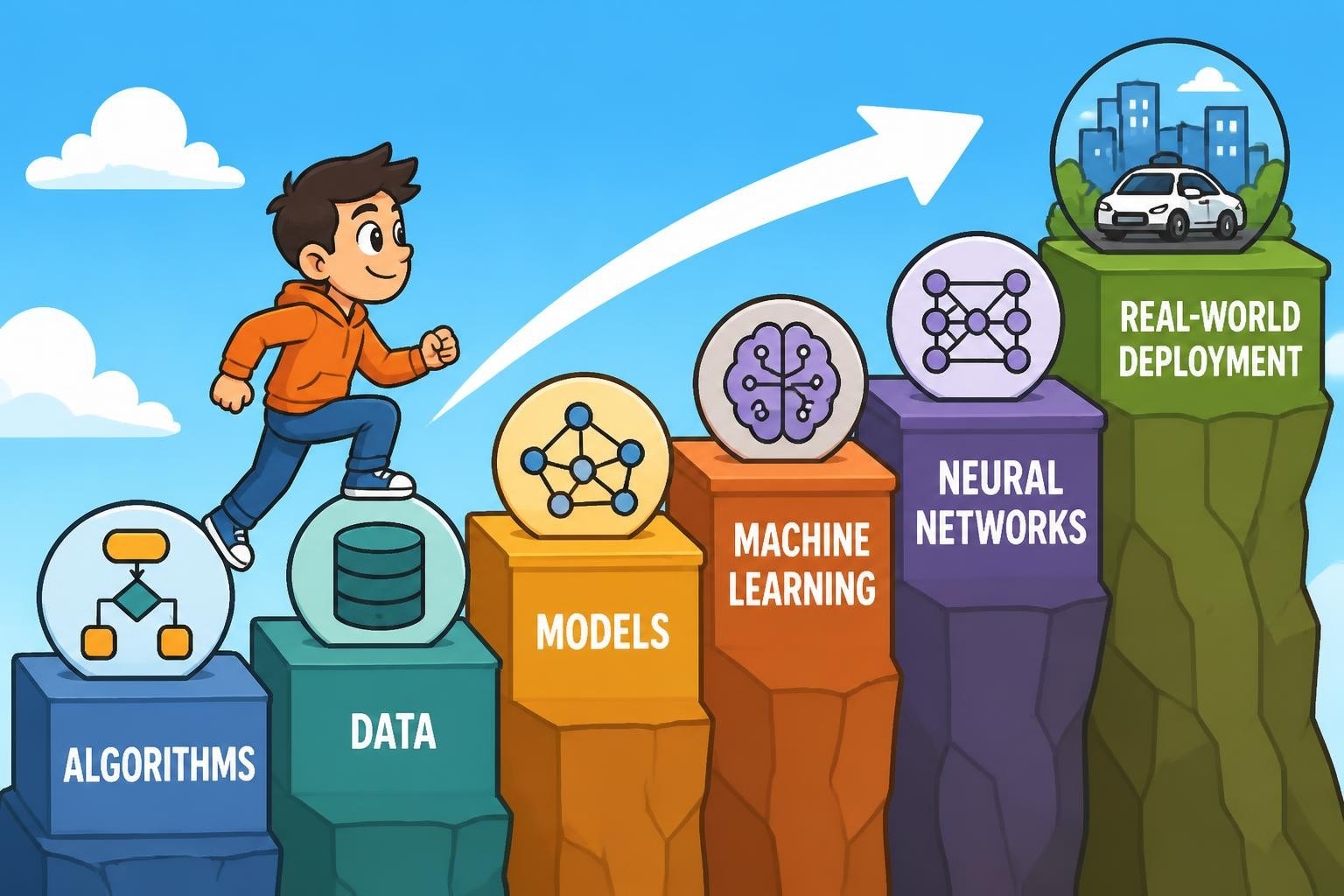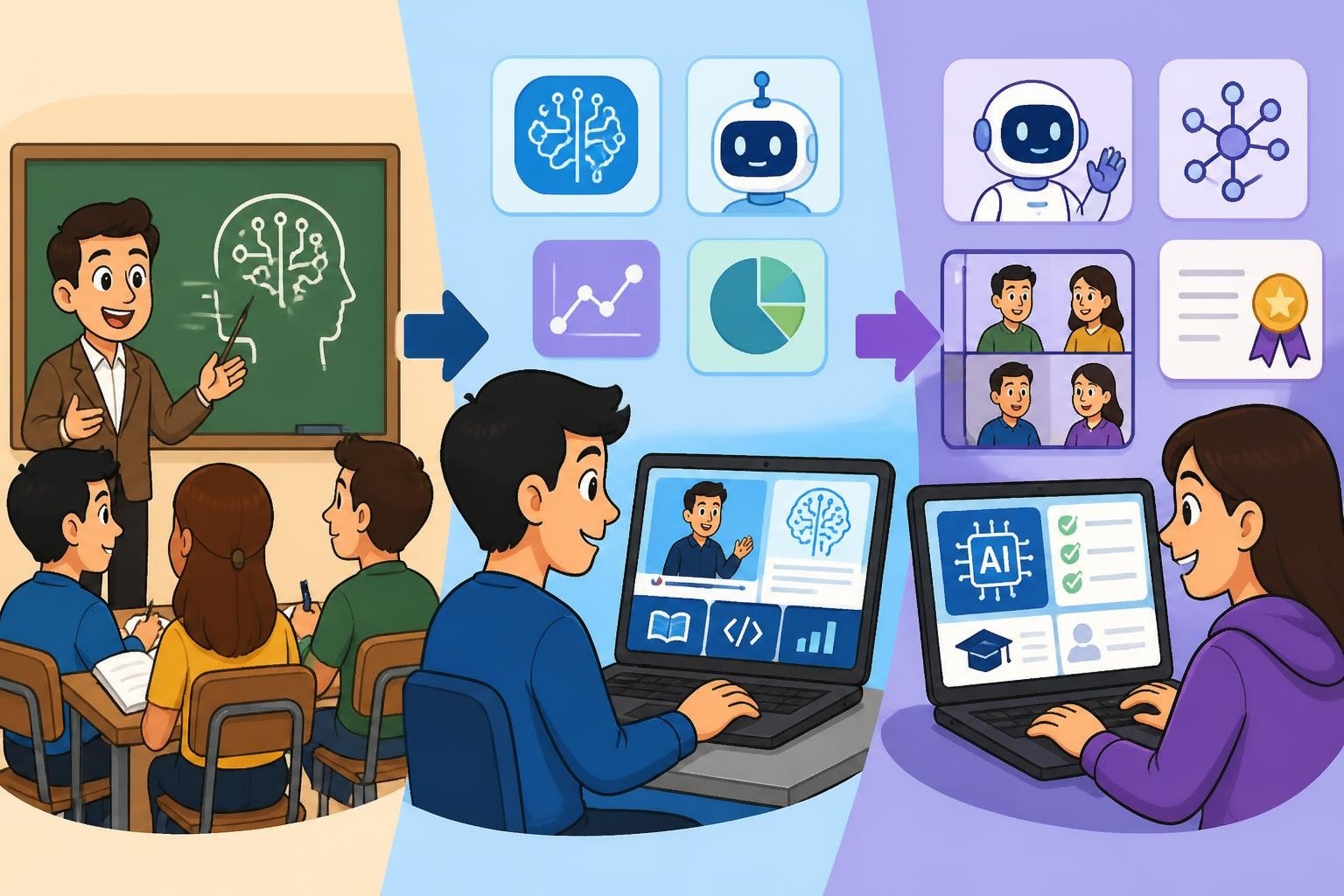
Artificial intelligence skills have become essential for professionals across every industry, and choosing the right training program can accelerate your career trajectory significantly. IBM offers several AI learning pathways that range from free introductory modules to comprehensive professional certificates, each designed to build practical skills through hands-on projects and industry-recognized credentials. This guide examines what makes the ibm ai course offerings unique, who benefits most from these programs, and how they compare to other AI training options available in 2026.
Understanding IBM's AI Course Ecosystem
IBM has built a multi-tiered AI education framework that serves learners at different stages of their professional journey. The ibm ai course portfolio includes free resources through IBM SkillsBuild, university partnerships, and premium professional certificates hosted on major learning platforms.
The flagship offering is the IBM AI Engineering Professional Certificate, which combines theoretical foundations with applied machine learning techniques. This program consists of six courses covering machine learning, deep learning, neural networks, and deployment strategies using Python libraries like TensorFlow, Keras, and PyTorch.
Course Structure and Learning Objectives
Each module within the ibm ai course framework follows a progressive structure:
- Foundational concepts introducing AI terminology and applications
- Hands-on coding exercises using Jupyter notebooks and cloud platforms
- Real-world case studies from IBM's client work and research
- Capstone projects that simulate enterprise AI challenges
- Assessment checkpoints to verify comprehension and skill mastery
The curriculum emphasizes practical implementation over theoretical abstraction. Learners build recommendation systems, computer vision applications, and natural language processing models that mirror actual business use cases.
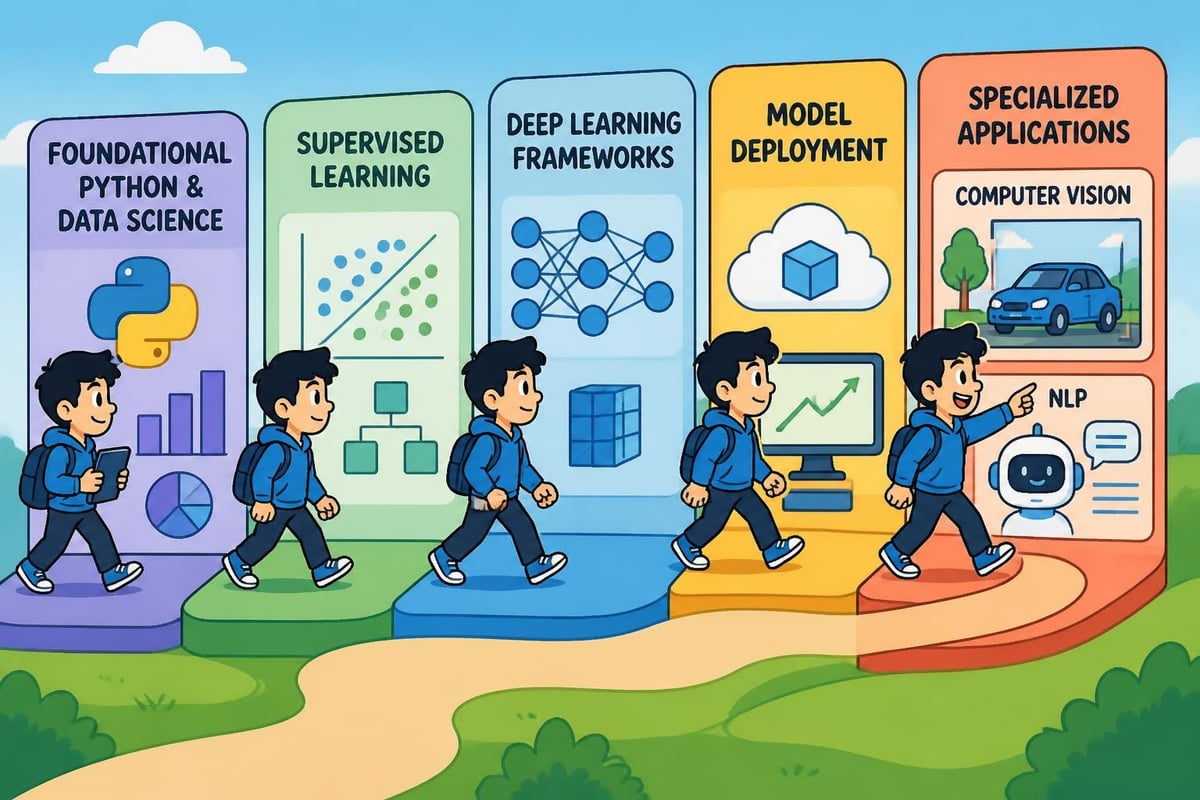
| Course Component | Time Commitment | Skill Level Required | Primary Tools |
|---|---|---|---|
| Machine Learning with Python | 25 hours | Beginner | scikit-learn, SciPy |
| Deep Learning and Neural Networks | 30 hours | Intermediate | TensorFlow, Keras |
| Building Deep Learning Models | 15 hours | Intermediate | PyTorch, CNN architectures |
| AI Capstone Project | 20 hours | Intermediate-Advanced | Full ML stack |
Who Should Enroll in an IBM AI Course
The ibm ai course programs serve distinct professional audiences with specific learning goals. Understanding which track aligns with your career objectives ensures you invest time in the right program.
Software developers and engineers represent the primary audience for IBM's professional certificates. These learners already possess programming fundamentals and want to add AI capabilities to their technical toolkit. The courses assume Python proficiency and basic statistics knowledge, allowing instructors to move quickly into machine learning algorithms and neural network architectures.
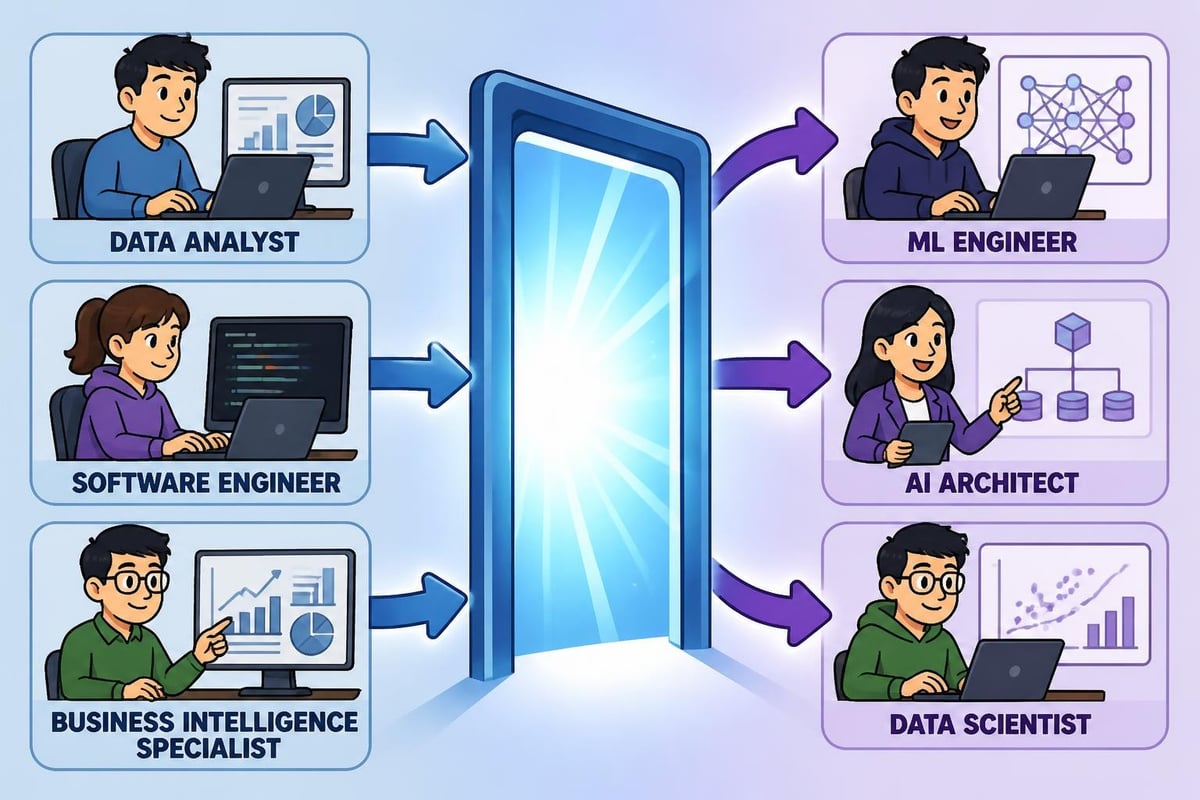
Data analysts transitioning to data science roles benefit from the structured progression through supervised and unsupervised learning techniques. The curriculum bridges the gap between descriptive analytics and predictive modeling, teaching professionals how to move from reporting what happened to forecasting what will happen.
Business professionals seeking AI literacy can start with IBM's free SkillsBuild offerings before committing to paid certificates. IBM's initiatives to expand AI skills include beginner-friendly modules that explain AI concepts without requiring coding experience, making the technology accessible to project managers, product owners, and executives.
Corporate Training Considerations
Organizations implementing AI solutions often sponsor employees through the ibm ai course sequence as part of upskilling initiatives. The certificate programs integrate well with corporate learning management systems and provide completion tracking for HR departments.
Research shows significant regional disparities in AI readiness. A Forrester study on AI skills gaps highlights how European employees lag behind U.S. workers in AI competencies, creating urgent demand for structured training programs like IBM's offerings. Companies addressing these gaps through systematic education programs gain competitive advantages in AI adoption and innovation capacity.
Curriculum Deep Dive: What You Actually Learn
The ibm ai course content goes beyond surface-level introductions to deliver production-ready skills. Let's examine the specific competencies developed in each major module.
Machine Learning Fundamentals
The foundational course introduces regression, classification, and clustering algorithms through practical implementations. You'll build models that predict continuous values, categorize discrete outcomes, and discover patterns in unlabeled data.
Key algorithms covered:
- Linear and polynomial regression for predictive modeling
- Decision trees and random forests for classification tasks
- K-means and hierarchical clustering for pattern discovery
- Support vector machines for complex boundary problems
- Recommendation engines using collaborative filtering
Each algorithm includes hands-on exercises where you manipulate real datasets, tune hyperparameters, and evaluate model performance using metrics like accuracy, precision, recall, and F1 scores.
Deep Learning Architectures
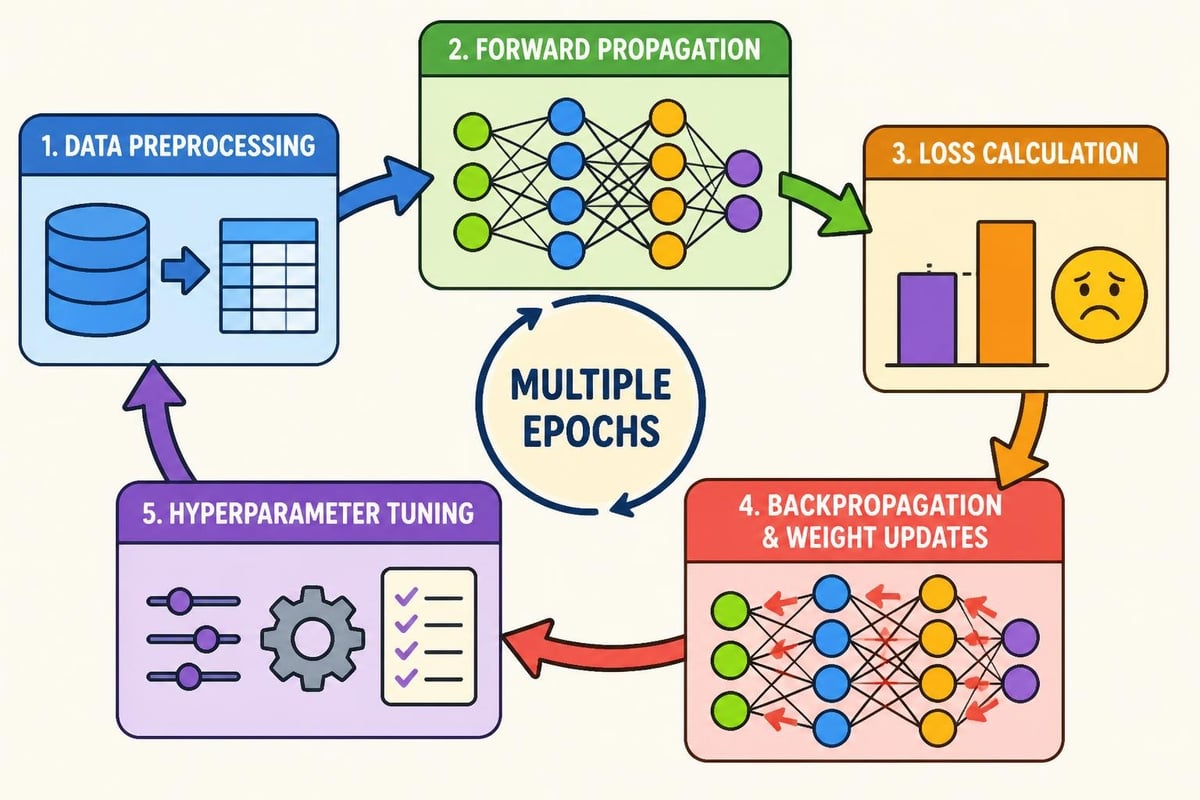
Advanced modules explore neural network design and optimization. The ibm ai course teaches you to construct networks from scratch using TensorFlow and Keras, then apply pre-trained models for transfer learning scenarios.
Neural network topics include:
- Feedforward networks and backpropagation mechanics
- Convolutional neural networks (CNNs) for image recognition
- Recurrent neural networks (RNNs) for sequence modeling
- Long short-term memory (LSTM) networks for time series
- Generative adversarial networks (GANs) for synthetic data creation
You'll implement these architectures to solve problems like handwritten digit recognition, sentiment analysis, and image generation. The curriculum emphasizes understanding when to use each architecture rather than just memorizing formulas.
Comparing IBM AI Courses to Alternative Platforms
The AI education market offers numerous options, each with distinct advantages. Understanding how the ibm ai course compares to competitors helps learners make informed decisions.
| Platform | Cost | Duration | Hands-on Projects | Job Placement Support | Certificate Value |
|---|---|---|---|---|---|
| IBM (Coursera) | $39-49/month | 3-6 months | 10+ labs | Limited | High (enterprise recognition) |
| Google Cloud | $49/month | 4-6 months | 8-12 projects | Moderate | Very High (cloud focus) |
| Microsoft | Free-$99 | 2-4 months | 6-10 exercises | Limited | High (Azure ecosystem) |
| Fast.ai | Free | Self-paced | Multiple | None | Moderate (community-driven) |
Professionals exploring AI courses on Coursera will find IBM's offerings emphasize enterprise applications and production deployment. While Andrew Ng's AI courses provide exceptional theoretical foundations, the ibm ai course focuses more heavily on implementation using specific frameworks and tools.
The IBM AI certification carries particular weight in industries where IBM maintains strong consulting presence, including financial services, healthcare, and manufacturing. Organizations already using IBM Cloud or Watson services value credentials that demonstrate platform-specific expertise.
Practical Projects and Real-World Applications
Theory alone doesn't build AI competency. The ibm ai course integrates projects that simulate actual business challenges and require end-to-end solution development.
Capstone Project Structure
The final capstone requires you to:
- Define a business problem amenable to AI solutions
- Source and clean relevant datasets
- Design appropriate model architectures
- Train and validate models using proper techniques
- Deploy models to production-like environments
- Document your methodology and results
Past capstone projects have included customer churn prediction systems, fraud detection models, medical image classification tools, and natural language interfaces for customer service automation.
Example deliverables include:
- Jupyter notebooks with documented code and analysis
- Model performance reports with evaluation metrics
- Deployment recommendations for production environments
- Presentations explaining technical decisions to non-technical stakeholders
These artifacts become portfolio pieces that demonstrate practical AI skills to prospective employers or clients.
Certification Value and Career Impact
Professional certificates signal competency to hiring managers, but their value varies by industry and role. The ibm ai course certification demonstrates specific technical capabilities that align with enterprise AI needs.
Market Recognition
IBM's brand recognition in enterprise technology translates to certificate credibility. Companies implementing AI solutions often prefer candidates with formal training from established technology vendors over self-taught practitioners with equivalent skills.
The certificate appears on LinkedIn profiles, resumes, and digital credential platforms like Credly. It verifies that you've completed hands-on projects and passed assessments covering machine learning algorithms, neural network architectures, and deployment practices.
Career Trajectory Data
While IBM doesn't publish comprehensive job placement statistics for the ibm ai course, learners report positive career outcomes across several pathways:
- Career transitions: Business analysts and software developers moving into machine learning engineering roles
- Skill expansion: Existing data scientists adding deep learning and neural network expertise
- Salary increases: Professionals reporting 15-30% salary growth after adding AI credentials to existing technical skills
- Project opportunities: Certificate holders gaining access to AI implementation projects within their organizations
These outcomes align with broader industry trends showing strong demand for AI skills across sectors.
Standards, Ethics, and Responsible AI
Modern AI education must address ethical implications and governance frameworks. The ibm ai course incorporates responsible AI principles throughout its curriculum, though dedicated ethics modules remain limited compared to technical content.
IBM collaborates with academic institutions on AI ethics research. The Notre Dame–IBM Technology Ethics Lab produces frameworks for ethical AI development that inform curriculum updates and case study selections.
Regulatory and Standards Alignment
As AI systems face increasing regulatory scrutiny, understanding compliance requirements becomes essential. The NIST AI standards activities provide frameworks that inform course content on model validation, risk assessment, and documentation practices.
The NIST AI measurement and evaluation programs establish benchmarks for model performance and safety that advanced ibm ai course modules reference when teaching evaluation methodologies.
Ethics topics covered include:
- Bias detection and mitigation in training data
- Fairness metrics for classification models
- Explainability techniques for complex models
- Privacy-preserving machine learning approaches
- Transparency requirements for regulated industries
These considerations help learners build AI systems that meet both technical performance targets and ethical standards.
Cost Analysis and Return on Investment
The ibm ai course professional certificate costs approximately $39-49 per month through Coursera, with most learners completing the program in three to six months. Total investment ranges from $120 to $300, significantly less expensive than university courses or bootcamp programs.
Comparison to Alternative Training Options
- University master's programs: $15,000-$50,000 for 18-24 month programs
- Coding bootcamps: $8,000-$20,000 for 12-16 week intensive programs
- Self-paced online courses: $0-$500 for individual courses without formal certificates
- Corporate training programs: $2,000-$10,000 per employee for customized instruction
The ibm ai course represents a middle path between free resources and expensive formal education. It provides structured learning, credential value, and guided projects at a fraction of bootcamp costs.
Hidden Costs and Time Investment
Beyond subscription fees, consider these additional investments:
- Computing resources: Cloud credits for training large models (some included with course enrollment)
- Time commitment: 8-12 hours per week for 3-6 months
- Prerequisite knowledge: Potential need for Python and statistics courses before starting
- Certification maintenance: Staying current as AI technologies evolve
Calculate your opportunity cost based on current salary and available study time to determine true program investment.
Learning Experience and Platform Features
The ibm ai course delivery through Coursera provides robust learning infrastructure with some limitations compared to dedicated AI learning platforms.
Platform strengths:
- Video lectures with downloadable transcripts and slides
- Jupyter notebook integration for interactive coding exercises
- Discussion forums moderated by teaching assistants
- Mobile app for video content consumption
- Flexible deadlines with self-paced progression options
Platform limitations:
- Limited real-time instructor interaction compared to bootcamps
- Forum response times vary by instructor engagement
- Some labs require specific browser configurations
- Cloud resource limitations during peak usage periods
For professionals comparing platforms, MammothClub offers AI-powered learning tools that adapt to individual progress and provide personalized recommendations across 3,000+ technical courses, including advanced AI specializations beyond the scope of single-vendor certifications.
Prerequisites and Technical Requirements
Success in the ibm ai course depends on meeting baseline technical competencies before enrollment. The program assumes you arrive with specific foundational knowledge.
Required Technical Skills
Programming proficiency:
- Python syntax, data structures, and functions
- Experience with Jupyter notebooks
- Familiarity with libraries like NumPy and pandas
- Basic version control using Git
Mathematics foundations:
- Linear algebra (vectors, matrices, operations)
- Calculus (derivatives, gradients, optimization)
- Probability and statistics (distributions, hypothesis testing)
- Basic graph theory for neural network understanding
Computing environment:
- Reliable internet connection for cloud-based labs
- Modern browser supporting Jupyter notebook integration
- Optional local Python development environment
- Access to cloud platforms (free tiers typically sufficient)
Learners lacking these prerequisites should complete foundational courses first. IBM's academic programs include beginner resources that build toward professional certificate readiness.
Integration with Corporate Learning Programs
Organizations implementing AI strategies frequently adopt the ibm ai course as part of structured employee development initiatives. The certificate program offers features that support corporate training objectives.
Enterprise Learning Management
Corporate-friendly features include:
- Bulk enrollment options for team-based learning
- Progress tracking dashboards for L&D departments
- Certificate verification for HR records
- Customizable completion timelines for cohort scheduling
- Integration with popular LMS platforms through APIs
Companies can combine IBM's standardized curriculum with internal case studies and domain-specific datasets to create hybrid training programs. This approach balances credential value with organizational context.
Implementation strategies:
- Baseline skill assessment to identify knowledge gaps
- Cohort formation with mixed experience levels for peer learning
- Internal mentorship pairing course participants with AI practitioners
- Capstone projects aligned with actual business challenges
- Post-completion application planning to deploy new skills
Organizations using this structured approach report higher completion rates and better skill transfer to workplace applications than individuals studying independently.
Advanced Topics and Specialization Paths
After completing the core ibm ai course sequence, professionals often pursue specialized knowledge in particular AI domains. IBM's curriculum connects to several advanced learning paths.
Post-Certificate Specializations
Computer vision applications:
- Advanced CNN architectures (ResNet, YOLO, Mask R-CNN)
- Object detection and semantic segmentation
- Medical imaging analysis techniques
- Video understanding and action recognition
Natural language processing:
- Transformer architectures and attention mechanisms
- Large language model fine-tuning approaches
- Named entity recognition and relation extraction
- Conversational AI and chatbot development
Reinforcement learning:
- Q-learning and policy gradient methods
- Deep reinforcement learning with neural networks
- Multi-agent systems and game theory applications
- Robotics control and autonomous systems
These specialized areas build on foundational knowledge from the ibm ai course but require additional study through research papers, advanced courses, and hands-on experimentation.
Measuring Learning Outcomes and Skill Verification
Education effectiveness depends on measurable skill development. The ibm ai course includes assessment mechanisms, but learners should supplement these with additional verification methods.
Built-in Assessment Methods
- Weekly quizzes: Multiple-choice questions testing conceptual understanding
- Coding assignments: Automated grading of Python implementations
- Peer-reviewed projects: Structured evaluation using rubrics
- Capstone evaluation: Instructor assessment of final project quality
These assessments verify completion but may not fully capture job-ready competency. Research on evaluating AI standards impact suggests that learning programs should measure both knowledge acquisition and practical application capability.
Supplementary verification approaches:
- Contributing to open-source AI projects on GitHub
- Participating in Kaggle competitions to benchmark skills
- Building portfolio projects solving novel problems
- Teaching concepts to others through blog posts or presentations
- Obtaining additional certifications from complementary providers
These activities demonstrate practical competency beyond course completion certificates.
Platform Updates and Curriculum Evolution
AI technologies evolve rapidly, creating challenges for educational content that quickly becomes outdated. The ibm ai course undergoes periodic updates to incorporate new techniques and frameworks.
Recent Curriculum Changes
2025-2026 updates included:
- Expanded coverage of transformer architectures and attention mechanisms
- Integration of large language model fine-tuning techniques
- Updated TensorFlow and PyTorch versions with new APIs
- Additional modules on AI safety and alignment concepts
- Deployment patterns for edge devices and mobile platforms
IBM typically refreshes course content annually, with minor updates occurring more frequently when major framework versions release. Learners who completed earlier versions can access updated materials to maintain currency.
Staying Current Post-Certification
The field's rapid pace requires continuous learning beyond formal coursework:
- Following AI research publications through arXiv and conferences
- Experimenting with new models and frameworks as they release
- Participating in AI community forums and local meetups
- Reading technical blogs from leading AI research labs
- Building side projects that explore emerging techniques
Professionals treating the ibm ai course as a starting point rather than endpoint position themselves for long-term success in AI careers.
Free Alternatives and Supplementary Resources
While the professional certificate requires payment, IBM offers free resources that complement or substitute for paid programs depending on learning goals.
IBM SkillsBuild Free Programs
IBM's SkillsBuild platform provides no-cost AI education through:
- Introductory AI and data science courses
- Cloud computing fundamentals relevant to AI deployment
- Professional skills development for tech careers
- Access to IBM Cloud free tier for hands-on practice
- Digital badges recognizing specific competency achievements
These resources serve learners exploring AI before committing to paid programs or supplementing certificate coursework with additional practice.
Community Learning Resources
Free alternatives to consider:
- Fast.ai's practical deep learning course (code-first approach)
- Google's machine learning crash course (TensorFlow focus)
- Stanford CS229 lectures (theoretical foundations)
- MIT OpenCourseWare AI materials (academic rigor)
- Papers with Code implementations (cutting-edge research)
Combining the structured ibm ai course with these free resources creates comprehensive AI education that balances credential value with depth of knowledge.
IBM's AI course offerings provide structured, credential-backed training that builds production-ready machine learning and deep learning skills through hands-on projects and industry-recognized certificates. For professionals and organizations seeking to accelerate AI adoption with measurable learning outcomes, MammothClub delivers 3,000+ on-demand courses, AI-powered learning tools, and corporate certification programs that complement specialized vendor training with comprehensive technical upskilling across the full AI technology stack.