Managers face an unprecedented challenge in 2026: leading teams and making strategic decisions in organizations increasingly powered by artificial intelligence. An ai for managers course has become essential infrastructure for professional development, yet many leaders struggle to identify which skills matter most and how to translate AI literacy into tangible business outcomes. The right training program doesn't just teach technical concepts-it transforms how managers think about risk, collaboration, resource allocation, and competitive advantage in an AI-augmented environment.
Why Management Competency in AI Differs from Technical Training
Traditional AI education focuses on data science, machine learning algorithms, and model development. Management-focused AI training addresses an entirely different question: how do leaders create value, mitigate risk, and drive adoption when AI systems become operational tools across their organizations?
Strategic Decision-Making vs. Technical Implementation
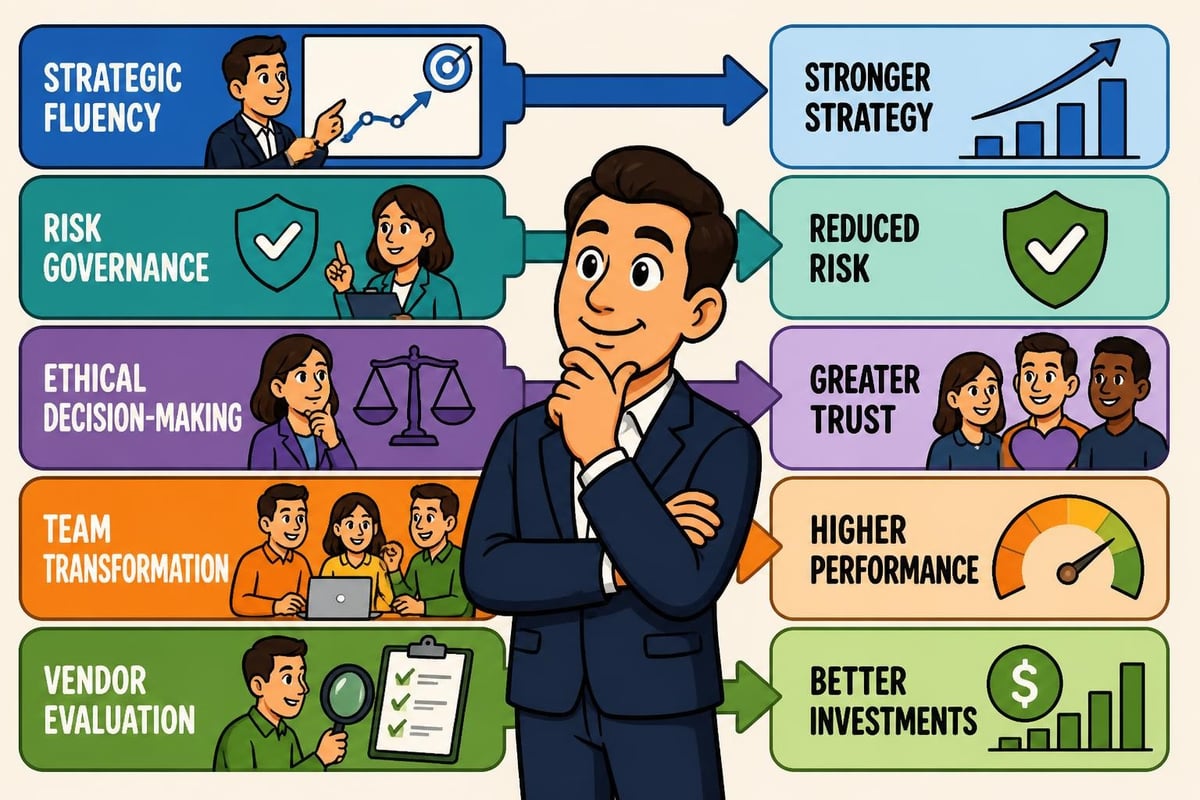
Managers need fluency in AI capabilities without becoming data scientists. This means understanding when to deploy predictive analytics for demand forecasting, how to evaluate vendor claims about natural language processing accuracy, and which tasks benefit from automation versus human judgment.
An effective ai for managers course builds mental models for assessing AI opportunities. Participants learn to ask critical questions: What problem does this AI tool solve? What data does it require? How do we measure success? Where could it fail?
The Chartered Management Institute's 2026 report on AI leadership identifies three core competencies: AI fluency (understanding capabilities and limitations), ethical judgment (navigating bias and accountability), and change leadership (driving organizational adoption). These form the foundation of management-specific curricula.
Building Risk Awareness and Governance Skills
Managers carry accountability for AI system failures even when they don't build the models themselves. Training must address governance frameworks, compliance requirements, and risk mitigation strategies.
Key risk literacy topics include:
- Data privacy and regulatory compliance across jurisdictions
- Algorithmic bias detection and mitigation in hiring, lending, and customer service
- Model drift and performance degradation over time
- Explainability requirements for high-stakes decisions
- Vendor dependency and technology lock-in risks
The NIST AI Risk Management Framework provides authoritative guidance that courses should incorporate into governance modules. Managers learn to implement risk registers, conduct impact assessments, and establish accountability structures before deployment.
Essential Curriculum Components for Manager-Focused AI Training
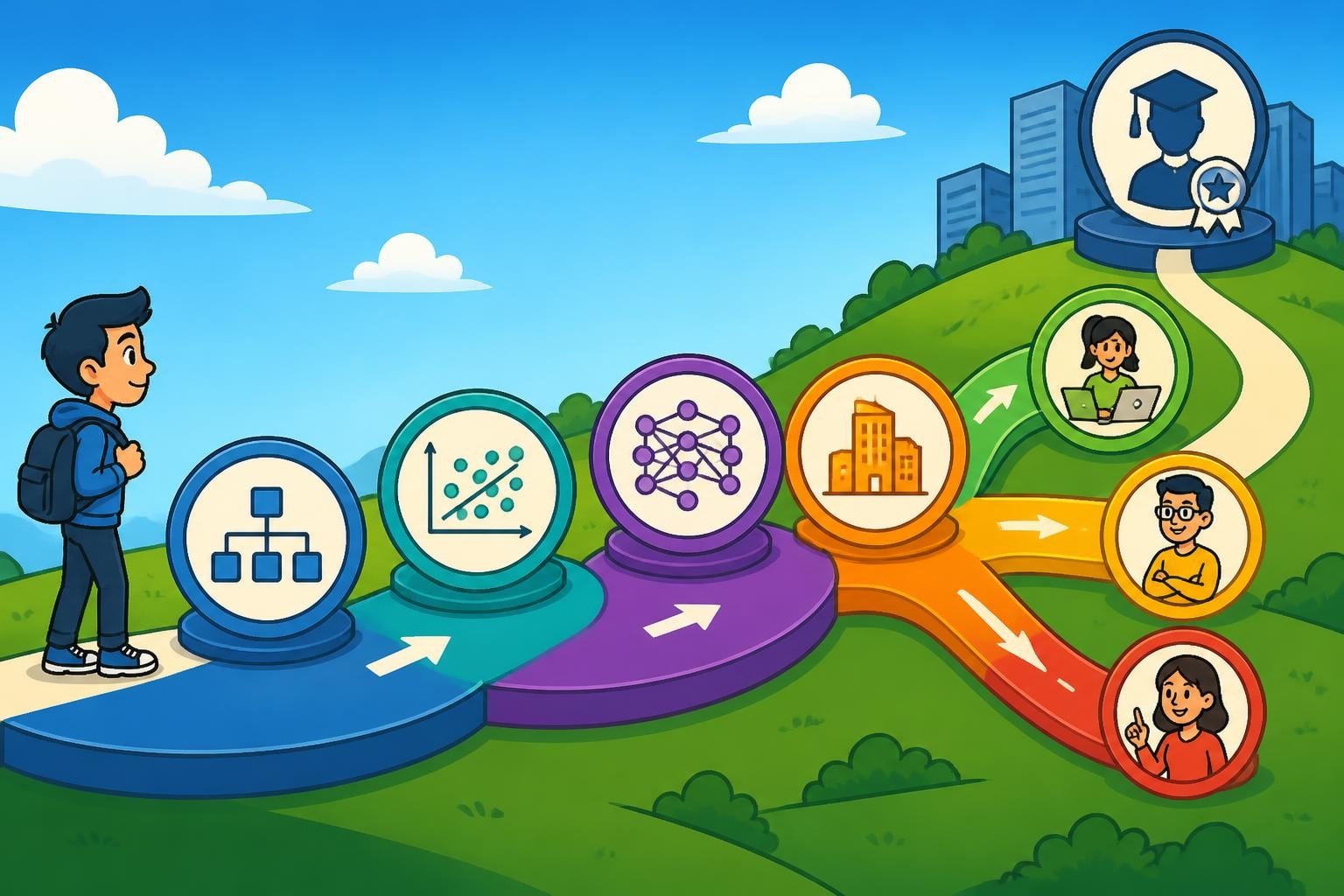
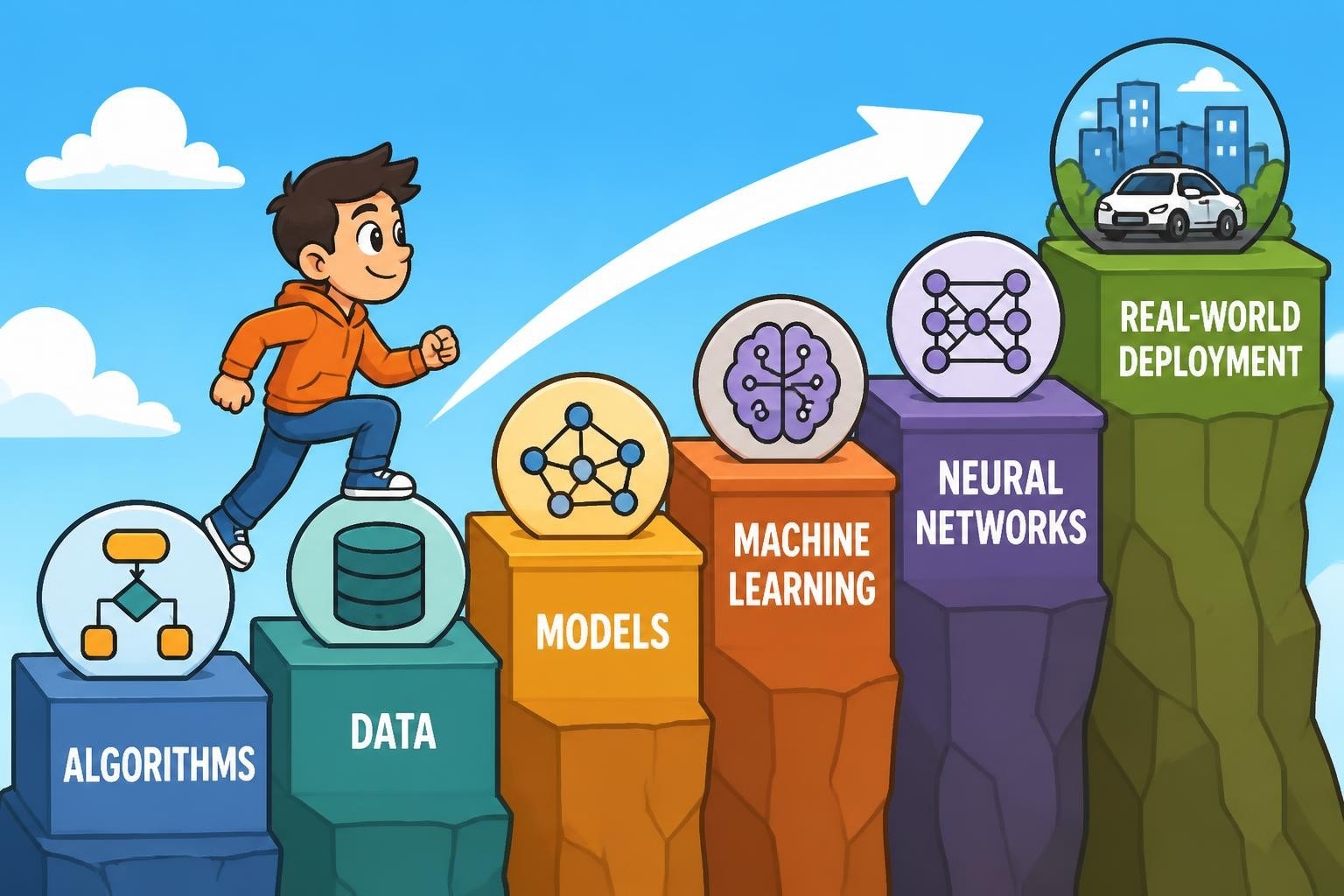
A comprehensive ai for managers course balances conceptual understanding with practical application. The curriculum should progress from foundational literacy through strategic planning to organizational change management.
Foundation Module: AI Literacy and Business Context
This opening section establishes shared vocabulary and mental models. Participants explore:
- Core AI technologies and their business applications (machine learning, natural language processing, computer vision, generative AI)
- Use case analysis across functions (marketing personalization, supply chain optimization, customer service automation)
- Capability assessment frameworks for evaluating AI readiness
- Cost-benefit analysis methods specific to AI investments
Effective courses use industry-specific case studies rather than generic examples. A retail manager needs different context than a healthcare administrator or manufacturing operations leader.
| AI Technology | Primary Business Application | Manager Decision Points |
|---|---|---|
| Predictive Analytics | Demand forecasting, churn prediction | Data quality, forecast accuracy thresholds |
| Natural Language Processing | Customer service, document analysis | Response quality standards, escalation rules |
| Computer Vision | Quality control, safety monitoring | Error tolerance, human oversight requirements |
| Generative AI | Content creation, code generation | Brand guidelines, review processes |
Strategic Planning and Implementation Design
Once managers understand capabilities, training shifts to strategic application. This module teaches participants to identify high-value opportunities, build business cases, and design implementation roadmaps.
Critical skills include:
- Process analysis to identify automation candidates
- ROI modeling that accounts for development costs, change management, and ongoing maintenance
- Pilot design with clear success metrics and learning objectives
- Stakeholder mapping to build cross-functional support
The Harvard Business Review research on how next-generation managers use generative AI demonstrates that effective leaders start with small, measurable pilots rather than enterprise-wide transformations. Course exercises should mirror this incremental approach.
Team Leadership and Change Management
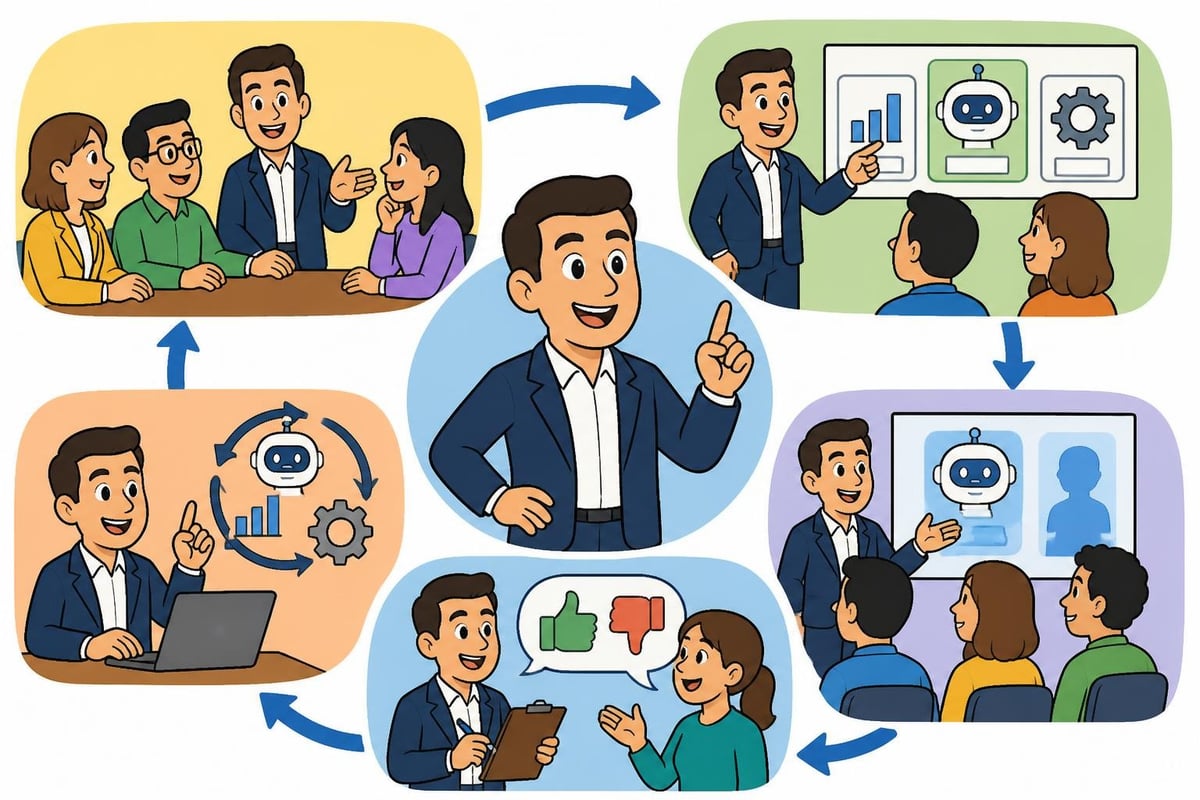
AI adoption fails more often from human factors than technical limitations. An ai for managers course must prepare leaders to guide teams through workflow changes, address job security concerns, and maintain productivity during transitions.
Change leadership training covers:
- Communicating AI strategy and vision to diverse audiences
- Identifying roles that will transform versus those at risk
- Designing reskilling pathways for displaced workers
- Managing resistance and building adoption champions
- Creating feedback loops for continuous improvement
Practical exercises might include role-playing difficult conversations, analyzing change management case studies, or developing communication plans for hypothetical AI deployments.
Competency Frameworks and Skills Assessment
Professional development requires clear learning outcomes and measurable progress indicators. Leading ai for managers course providers align curricula with established competency frameworks.
Industry-Standard Skills Taxonomies
The SFIA AI Skills Framework describes AI-related competencies across proficiency levels, providing a roadmap for skill development. For managers, relevant competencies include:
- AI strategy and planning (Level 5-6): Defining AI vision and aligning with business objectives
- Technology service management (Level 4-5): Overseeing AI system delivery and performance
- Stakeholder relationship management (Level 4-6): Building support and managing expectations
- Change implementation (Level 4-5): Driving organizational adoption
Courses should map learning objectives to specific framework levels, allowing participants to assess their current proficiency and chart development paths. Pre- and post-training assessments demonstrate skill gains and identify areas for continued learning.
Role-Based Learning Paths
Not all managers need identical AI competencies. Product managers require different depth than HR directors or finance controllers. Sophisticated training programs offer specialized tracks:
| Management Role | AI Priorities | Specialized Topics |
|---|---|---|
| Product Managers | Feature development, user experience | AI capability roadmaps, customer impact analysis |
| Operations Leaders | Process optimization, quality control | Workflow automation, performance monitoring |
| HR Directors | Talent strategy, employee experience | Skills gap analysis, ethical AI in hiring |
| Marketing Directors | Customer insight, campaign optimization | Personalization ethics, attribution modeling |
Role-based approaches ensure training translates directly to participants' daily responsibilities and strategic priorities.
Practical Application Methods and Learning Design
Adult learners retain information through application, not passive consumption. Well-designed ai for managers course experiences emphasize active learning, peer collaboration, and real-world problem-solving.
Scenario-Based Learning and Case Studies
Realistic scenarios force participants to apply concepts under constraints. Examples include:
- Evaluating three AI vendor proposals with incomplete information and budget limitations
- Responding to a data breach in an AI-powered customer service system
- Building a business case for AI investment that competes with other strategic initiatives
- Addressing team concerns when automation threatens specific job roles
Case studies from recognizable organizations make abstract concepts concrete. Analyzing how companies successfully (or unsuccessfully) deployed AI provides pattern recognition that transfers to participants' own contexts.
Cohort-Based Learning and Peer Exchange
Management challenges rarely have single correct answers. Cohort structures enable peer learning, where participants share perspectives from different industries, company sizes, and functional areas.
Discussion forums, breakout sessions, and peer review exercises leverage collective experience. A manufacturing operations manager might share lessons about safety monitoring AI with a construction project manager facing similar challenges.
Hands-On Experimentation with AI Tools
Managers don't need to code, but they should experience AI capabilities firsthand. Interactive exercises using no-code platforms build intuition about what AI can and cannot accomplish.
Sample activities include:
- Using a chatbot builder to create a customer service assistant
- Training a simple classification model to categorize support tickets
- Testing different prompt engineering approaches with generative AI
- Reviewing AI-generated content for accuracy and brand alignment
These experiences demystify AI and build confidence in evaluating vendor claims and assessing team proposals. Platforms like MammothClub's interactive learning environment provide guided experimentation without requiring technical setup.
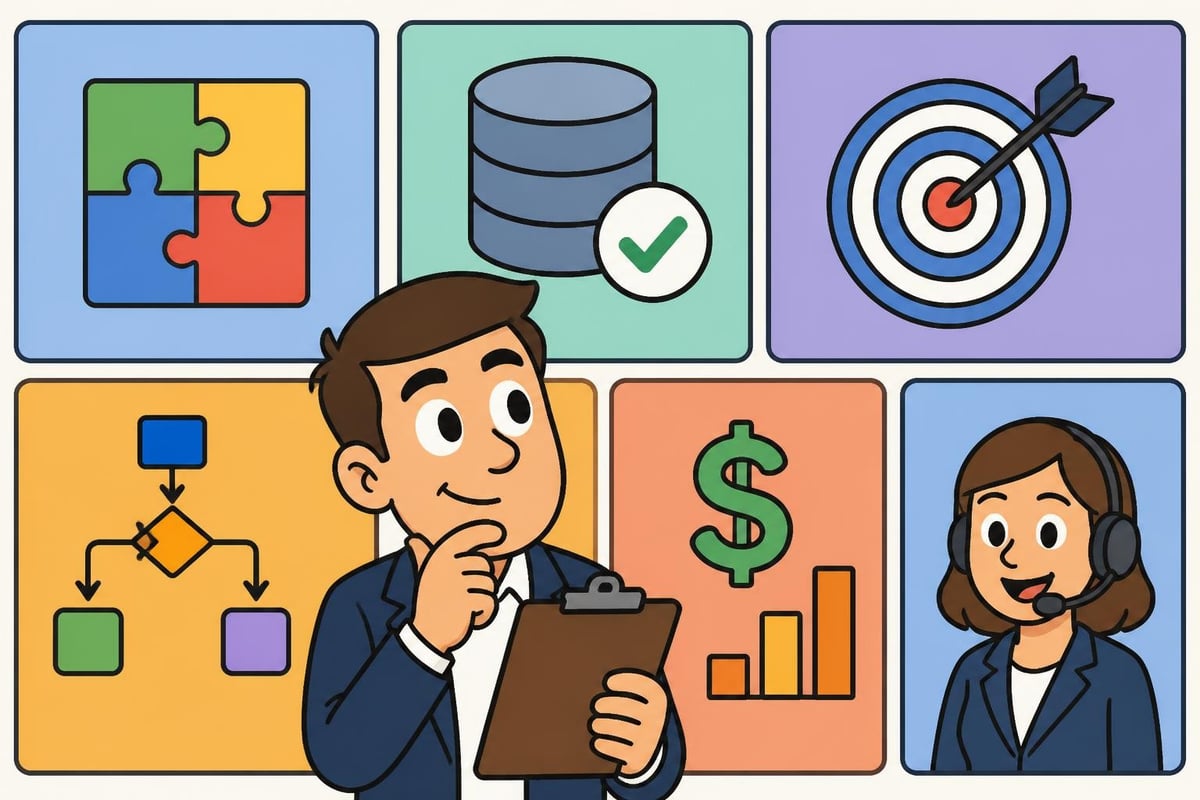
Building Ethics and Responsible AI Practices
AI systems amplify both human judgment and human bias. Managers must recognize ethical challenges and implement safeguards before problems reach customers or regulators.
Identifying and Mitigating Algorithmic Bias
Training should include concrete exercises in bias detection. Participants analyze real examples of AI systems that produced discriminatory outcomes in lending, hiring, criminal justice, and healthcare.
Managers learn to ask critical questions during development and deployment:
- What data trained this model, and does it reflect historical discrimination?
- Which demographic groups might experience different accuracy or service quality?
- What testing protocols verify fair outcomes across populations?
- Who reviews decisions that significantly impact individuals?
The World Economic Forum's guidance on closing AI skills gaps emphasizes that addressing bias requires both technical interventions and organizational accountability structures that managers must establish.
Privacy, Transparency, and Accountability Standards
Managers set expectations for how AI systems handle personal information, explain decisions, and assign responsibility when errors occur. An ai for managers course should address:
- Data minimization principles and privacy-preserving techniques
- Explainability requirements for different stakeholder audiences
- Documentation standards for model development and deployment decisions
- Incident response protocols when AI systems malfunction
Role-playing exercises where participants navigate privacy complaints, regulatory inquiries, or public relations crises build practical judgment for high-pressure situations.
Measuring Business Impact and Continuous Improvement
Training investments should produce measurable organizational outcomes. Sophisticated programs include evaluation frameworks and post-training support structures.
Defining Success Metrics for AI Initiatives
Managers need tools to distinguish genuine business impact from vanity metrics. Training covers both leading indicators (adoption rates, user satisfaction) and lagging indicators (cost savings, revenue growth, quality improvements).
A framework for metrics selection includes:
- Alignment with strategic objectives: Does this metric connect to broader business goals?
- Actionability: Can we influence this metric through our decisions?
- Measurability: Do we have reliable data collection methods?
- Timeliness: Will we receive feedback quickly enough to adjust course?
Participants practice writing clear success criteria for hypothetical AI projects, learning to avoid common pitfalls like measuring activity rather than outcomes.
Building Continuous Learning Cultures
AI technology evolves rapidly. A single training event cannot sustain competency over time. Leading programs include:
- Refresher modules on emerging capabilities and regulatory changes
- Community access for ongoing peer exchange and problem-solving
- Office hours with AI strategy experts for specific challenges
- Resource libraries with updated case studies, templates, and tools
Organizations that treat an ai for managers course as the beginning of a learning journey, not a one-time event, achieve better adoption outcomes and sustained competitive advantage.
Selecting the Right Training Provider and Format
The market for AI management education has expanded dramatically. Managers and L&D professionals must evaluate options against specific organizational needs and learning preferences.
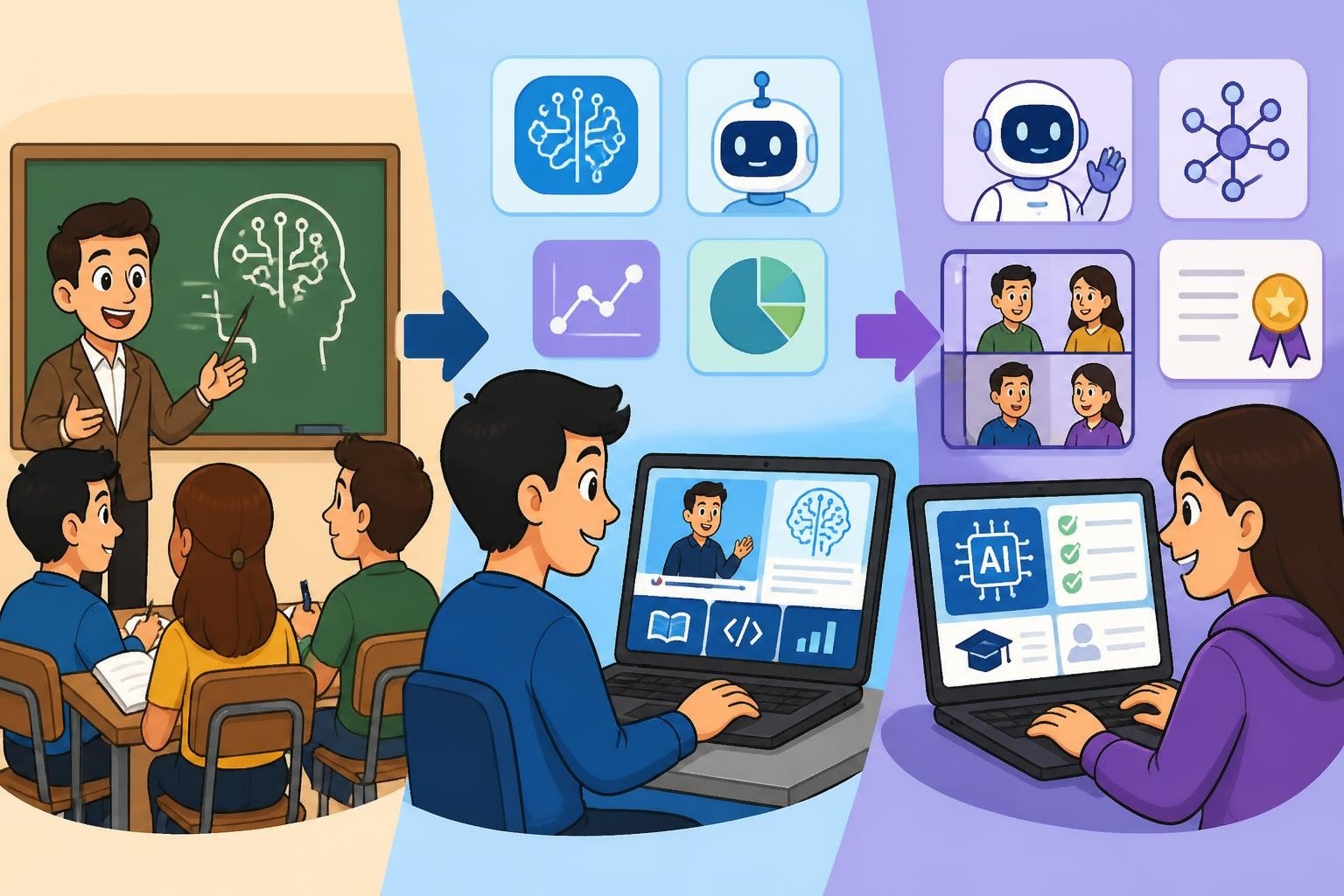
Comparing Delivery Models and Learning Formats
| Format | Advantages | Considerations |
|---|---|---|
| Self-Paced Online | Flexible scheduling, lower cost | Requires self-discipline, limited peer interaction |
| Live Virtual Cohorts | Real-time discussion, peer learning | Fixed schedule, time zone challenges |
| In-Person Bootcamps | Intensive immersion, networking | Travel costs, time away from work |
| Blended Programs | Combines flexibility with interaction | Coordination complexity |
Self-paced courses work well for foundational knowledge building, while cohort formats excel for complex problem-solving and change management skills. Many organizations combine approaches, using on-demand courses for baseline literacy before intensive workshops.
Evaluating Curriculum Quality and Instructor Expertise
Not all AI training delivers equivalent value. Assessment criteria include:
- Instructor credentials: Do facilitators have management experience, not just technical backgrounds?
- Case study relevance: Are examples industry-specific and current?
- Framework alignment: Does curriculum map to recognized competency standards?
- Practical application: How much time involves hands-on exercises versus lectures?
- Post-training support: What resources remain accessible after course completion?
Request sample modules, speak with alumni, and review published curricula before committing significant training budgets.
Integrating AI Management Skills into Organizational Development
Individual manager competency creates limited impact without organizational reinforcement. Leading companies embed AI literacy into broader talent strategies.
Building Manager AI Fluency at Scale
Enterprise-wide competency requires systematic approaches beyond isolated training events. Strategies include:
- Role-based certification pathways tied to promotion criteria
- AI fluency assessments integrated into performance reviews
- Shadowing programs pairing managers with data science teams
- Innovation labs where managers prototype AI solutions
- Cross-functional AI councils sharing lessons and setting standards
Resources like MIT Sloan Management Review's AI coverage provide research-backed approaches for scaling AI capabilities across management ranks.
Creating Internal Communities of Practice
Peer learning extends beyond formal training. Organizations establish:
- Monthly AI roundtables where managers share experiments and learnings
- Internal case study databases documenting AI successes and failures
- Mentorship programs connecting experienced AI leaders with newcomers
- Innovation challenges rewarding creative AI applications
These structures sustain momentum, prevent knowledge silos, and accelerate organizational learning curves.
Future-Proofing Management Careers Through AI Competency
Management roles will continue evolving as AI capabilities expand. Professionals who develop strategic AI fluency position themselves for leadership opportunities while those who ignore these skills risk obsolescence.
Career Advancement Through AI Leadership
Organizations increasingly seek managers who can bridge business strategy and technical possibility. Demonstrated AI competency opens paths to:
- Digital transformation leadership roles guiding enterprise-wide initiatives
- Product innovation positions defining AI-powered offerings
- Strategic advisory functions evaluating emerging technology investments
- Executive positions where AI fluency becomes table-stakes for credibility
An ai for managers course provides foundation for these opportunities, particularly when combined with hands-on implementation experience and measurable business outcomes.
Staying Current in a Rapidly Evolving Field
AI capabilities that seem cutting-edge today become commoditized within months. Managers must establish ongoing learning habits:
- Subscribe to management-focused AI publications and research
- Attend quarterly webinars on emerging applications and regulations
- Experiment regularly with new AI tools in low-risk contexts
- Participate in professional communities focused on AI leadership
- Revisit foundational concepts as understanding deepens
Platforms offering continuous learning paths, like MammothClub's certification programs, support sustained competency development as technologies and best practices evolve.
Developing AI fluency has become a strategic imperative for managers across industries and functions in 2026, requiring structured learning that balances conceptual understanding, practical skills, and organizational change leadership. Whether you're preparing for your first AI project or scaling enterprise adoption, the right training foundation accelerates impact while reducing costly missteps. MammothClub delivers comprehensive AI management training through expert-designed courses, interactive bootcamps, and corporate certification programs that build the strategic, ethical, and technical competencies today's leaders need to drive measurable results in AI-powered organizations.