The demand for OpenAI expertise has reached unprecedented levels in 2026, with organizations across every sector racing to integrate GPT-4, ChatGPT, and other foundation models into their operations. Whether you're a developer building AI-powered applications, a business leader implementing intelligent automation, or an educator exploring AI-assisted teaching, understanding how to work effectively with OpenAI technologies has become a critical professional skill. OpenAI courses now span a diverse landscape-from university programs and vendor certifications to hands-on bootcamps and self-paced tutorials-each designed to address different learning objectives, technical backgrounds, and career trajectories.
Understanding the OpenAI Course Ecosystem
The market for openai courses has evolved dramatically since ChatGPT's public launch. Today's learners face a complex landscape of training options, each targeting specific competencies and professional contexts.
Academic Programs and University Offerings
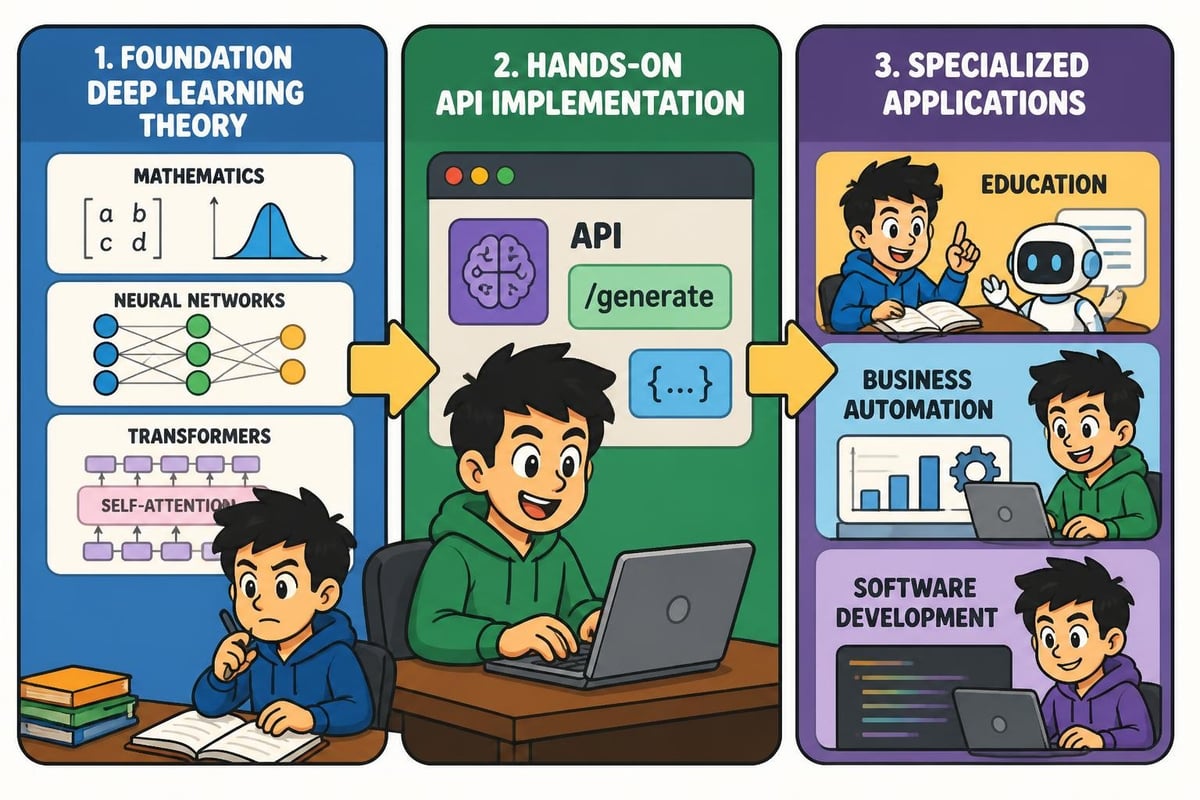
Leading universities have rapidly integrated OpenAI technologies into their curricula. Stanford's machine learning and large-scale model systems courses now include dedicated modules on transformer architectures, prompt engineering, and responsible AI deployment. These academic programs typically span 10-16 weeks and combine theoretical foundations with practical implementation projects.
MIT's Introduction to Deep Learning provides freely accessible course materials that cover the mathematical underpinnings of models like GPT-4. While not exclusively focused on OpenAI, these university courses offer rigorous training that prepares learners to understand and extend foundation model capabilities.
Key characteristics of academic OpenAI courses:
- Comprehensive theoretical grounding in neural networks and transformer architecture
- Access to cutting-edge research and faculty expertise
- Substantial time commitment (typically 8-16 weeks)
- Focus on first-principles understanding rather than tool-specific training
- Often include capstone projects and peer collaboration
Professional Certification and Vendor Training
Microsoft has emerged as a major provider of enterprise-focused OpenAI training through Azure. The Azure OpenAI Service learning paths offer modular courses covering deployment, security, responsible AI practices, and integration with existing cloud infrastructure. These programs particularly appeal to IT professionals and enterprise architects responsible for scaling AI across organizations.
The Wharton School recently launched an innovative program developed in collaboration with OpenAI itself. Their 'AI in Education: Leveraging ChatGPT for Teaching' course represents a new category of openai courses specifically designed for educators seeking to integrate generative AI into their teaching practice.
| Course Type | Duration | Best For | Technical Depth |
|---|---|---|---|
| University Programs | 10-16 weeks | Deep theoretical understanding | Very High |
| Vendor Certifications | 4-8 weeks | Enterprise deployment | Medium-High |
| Bootcamps | 1-4 weeks | Rapid skill acquisition | Medium |
| Self-Paced Tutorials | Flexible | Specific task mastery | Variable |
Hands-On Technical Workshops
For developers who need to build production applications quickly, technical workshops offer concentrated, project-based learning. O'Reilly's hands-on courses using OpenAI APIs provide live instruction on prompt engineering, API integration, and application architecture. These sessions typically run 3-6 hours and focus exclusively on practical implementation.
The advantage of workshop-style openai courses lies in their immediate applicability. Participants often complete a working prototype during the training itself, receiving real-time feedback from instructors with production deployment experience.
Essential Skills Covered in OpenAI Courses
Effective openai courses must address a layered skill set that spans from conceptual understanding to technical implementation and ethical deployment.
API Integration and Development
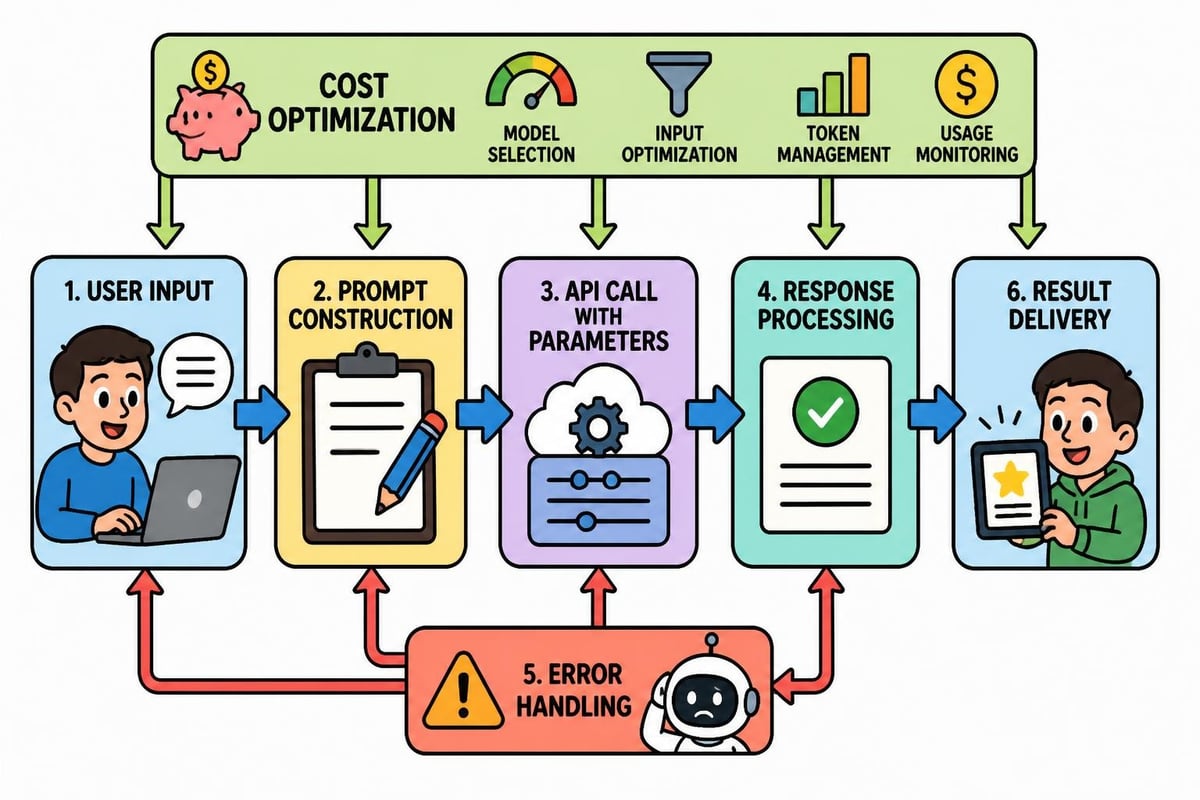
At the foundation of most technical OpenAI training sits API literacy. The OpenAI API documentation serves as the authoritative reference, but courses add pedagogical structure, common pitfall guidance, and architecture patterns.
Core API competencies include:
- Authentication and environment setup
- Request formatting and parameter optimization
- Response handling and error management
- Token counting and cost optimization
- Rate limiting and asynchronous processing
- Model selection for specific use cases
Advanced courses extend into fine-tuning, embeddings for semantic search, and building retrieval-augmented generation (RAG) systems that combine OpenAI models with proprietary knowledge bases.
Prompt Engineering Mastery
Prompt engineering has emerged as a distinct professional competency. Quality openai courses dedicate substantial time to systematic prompt design, moving beyond trial-and-error approaches to evidence-based strategies.
Research from Mollick & Mollick on assigning AI in educational contexts demonstrates that structured prompt frameworks significantly improve output quality and consistency. Professional courses teach:
- Few-shot learning patterns and example selection
- Chain-of-thought reasoning for complex tasks
- Role-based prompting and persona assignment
- Output formatting and structured data extraction
- Iterative refinement and testing methodologies
The difference between novice and expert prompt engineering often determines whether an AI implementation delivers business value or disappoints stakeholders.
Responsible AI and Safety Considerations
Every reputable OpenAI course now includes substantial coverage of safety, bias mitigation, and ethical deployment. This reflects both regulatory requirements and professional best practices as AI systems move from experimental to mission-critical status.
Training in this domain covers content filtering, user safety mechanisms, handling sensitive data, compliance with privacy regulations like GDPR, and implementing human-in-the-loop review processes for high-stakes decisions.
Choosing the Right OpenAI Course for Your Goals
The proliferation of training options creates both opportunity and confusion. Selecting the optimal openai courses requires aligning your current capabilities, learning objectives, and professional context.
Assessment of Current Technical Level
Your programming background fundamentally shapes which courses will be most valuable. Developers comfortable with Python, API consumption, and asynchronous programming can immediately engage with advanced implementation courses. Those newer to software development benefit from programs that scaffold basic programming concepts alongside AI-specific training.
Recommended pathways by background:
- Experienced developers: Direct API courses, fine-tuning workshops, production architecture programs
- Intermediate programmers: Comprehensive bootcamps covering fundamentals through deployment
- Non-technical professionals: Business-focused courses emphasizing use cases, vendor selection, and team management
- Educators and trainers: Pedagogy-specific programs like the Wharton-OpenAI collaboration
- Researchers and academics: University courses with theoretical depth and research methodology
Time Investment and Learning Format
The intensive bootcamp model appeals to professionals needing rapid upskilling, while semester-long university courses suit those pursuing career transitions or academic credentials. For those exploring AI and ML courses more broadly, platforms like MammothClub offer flexible on-demand alternatives with over 3,000 courses accessible on learners' own schedules.
Self-paced courses provide maximum flexibility but require substantial self-discipline. Live cohort-based programs offer accountability, peer learning, and direct instructor access but demand schedule commitment.
Credential Value and Recognition
Not all OpenAI course certificates carry equal weight with employers. University credentials from recognized institutions command respect, particularly for mid-career transitions. Vendor certifications from Microsoft Azure prove competency in enterprise deployment. Bootcamp completion demonstrates practical skills but varies widely in rigor.
When evaluating credentials, consider:
- Instructor backgrounds and industry recognition
- Capstone project requirements and portfolio outcomes
- Employer awareness of the certification
- Alignment with job descriptions in your target roles
- Cost relative to career impact
Advanced OpenAI Course Topics
As the field matures, specialized openai courses address increasingly sophisticated implementation challenges and domain-specific applications.
Fine-Tuning and Model Customization
Fine-tuning allows organizations to adapt base OpenAI models to specialized vocabularies, writing styles, or task-specific performance improvements. Advanced courses teach data preparation, training parameter selection, evaluation methodologies, and cost-benefit analysis of fine-tuning versus prompt engineering.
This training proves particularly valuable for enterprises with proprietary terminology or highly specialized use cases where general-purpose models underperform.
Multimodal Applications and Vision Integration
With GPT-4's vision capabilities, courses now cover image analysis, document understanding, and multimodal workflows. Training includes image preprocessing, prompt strategies for visual tasks, combining text and image inputs, and building applications like automated report generation from charts or accessibility tools for visual content.
Enterprise Architecture and Deployment
Large organizations face challenges that individual developers never encounter: security review processes, integration with existing authentication systems, managing API costs at scale, monitoring and observability, and governance frameworks.
Enterprise-focused openai courses address these operational realities. Content includes Azure OpenAI Service deployment, private endpoint configuration, content filtering policies, audit logging, and building internal developer platforms that abstract API complexity for non-specialist teams.
| Enterprise Challenge | Course Coverage | Typical Tools |
|---|---|---|
| Security & Compliance | Data handling, encryption, audit logs | Azure Private Link, content filters |
| Cost Management | Token optimization, caching strategies | Usage dashboards, budget alerts |
| Scalability | Load balancing, rate limit handling | API gateways, queue systems |
| Governance | Approval workflows, usage policies | Internal platforms, policy engines |
Specialized OpenAI Training for Different Roles
Different professional roles require distinct competency sets when working with OpenAI technologies.
Developers and Engineers
Technical professionals need deep expertise in API integration, system architecture, and production deployment. Courses emphasize code examples, debugging strategies, performance optimization, and integration with frameworks like LangChain or LlamaIndex.
Those working with applied AI course content benefit from training that bridges theoretical concepts with production implementation patterns. The ability to move from proof-of-concept to reliable production system separates effective AI engineers from hobbyists.
Product Managers and Business Leaders
Non-technical professionals benefit from openai courses focused on use case identification, vendor evaluation, team composition, and ROI measurement. Training covers understanding model capabilities and limitations, writing effective requirements for AI features, and managing cross-functional AI projects.
Business-focused courses often include case studies from real implementations, frameworks for prioritizing AI opportunities, and change management strategies for AI adoption.
Educators and Instructional Designers
The education sector faces unique opportunities and challenges with OpenAI technologies. Specialized training helps educators design assignments that leverage AI appropriately, detect and address academic integrity concerns, and use AI tools to enhance rather than replace teaching.
Courses in this category incorporate pedagogical research, practical classroom applications, and ethical frameworks for AI in education.
Data Scientists and ML Engineers
Professionals with existing machine learning expertise pursue advanced openai courses covering embeddings for semantic search, fine-tuning methodologies, evaluation frameworks, and hybrid systems that combine traditional ML with foundation models.
This audience benefits from technical depth on model architecture, training data considerations, and benchmarking against alternative approaches.
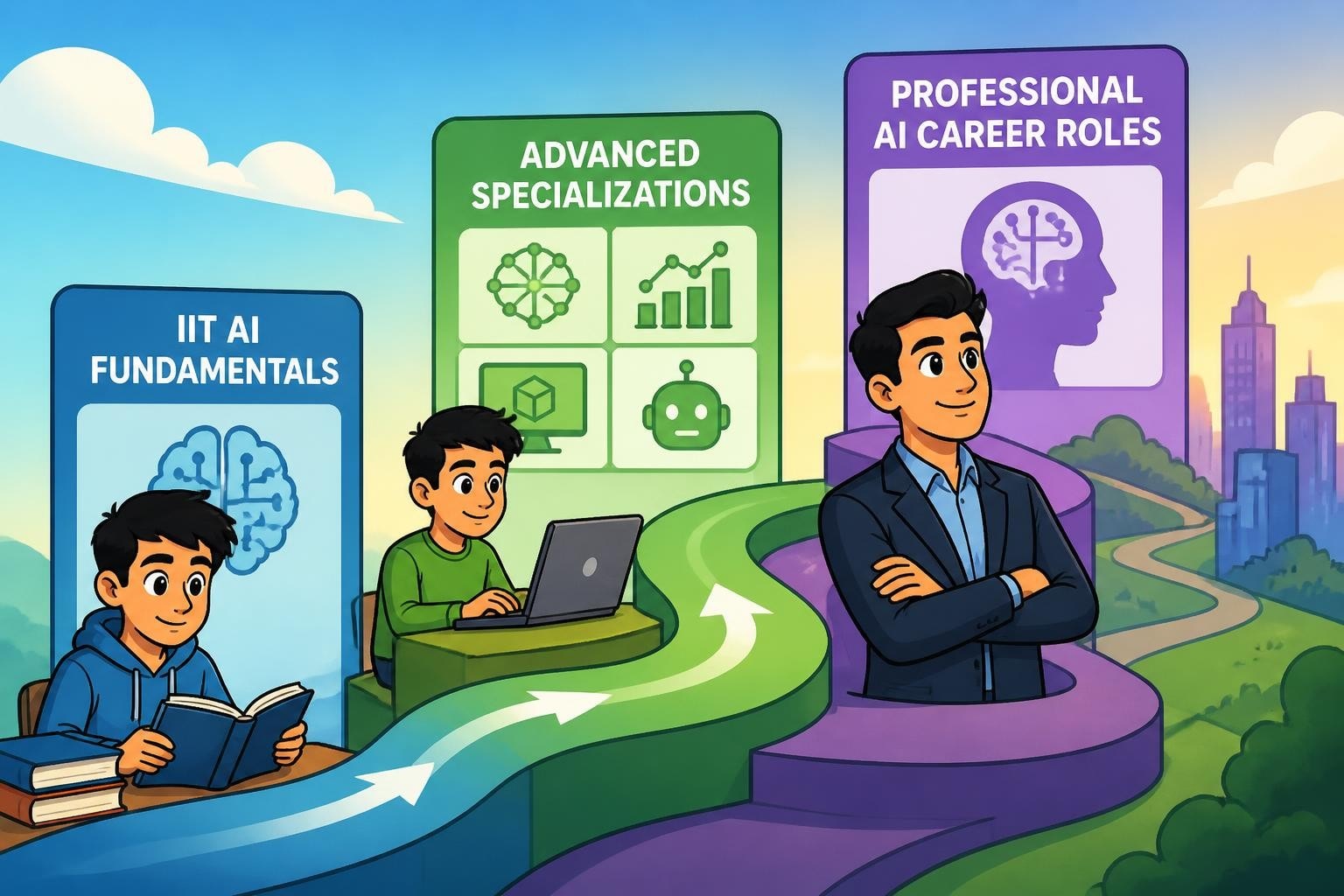
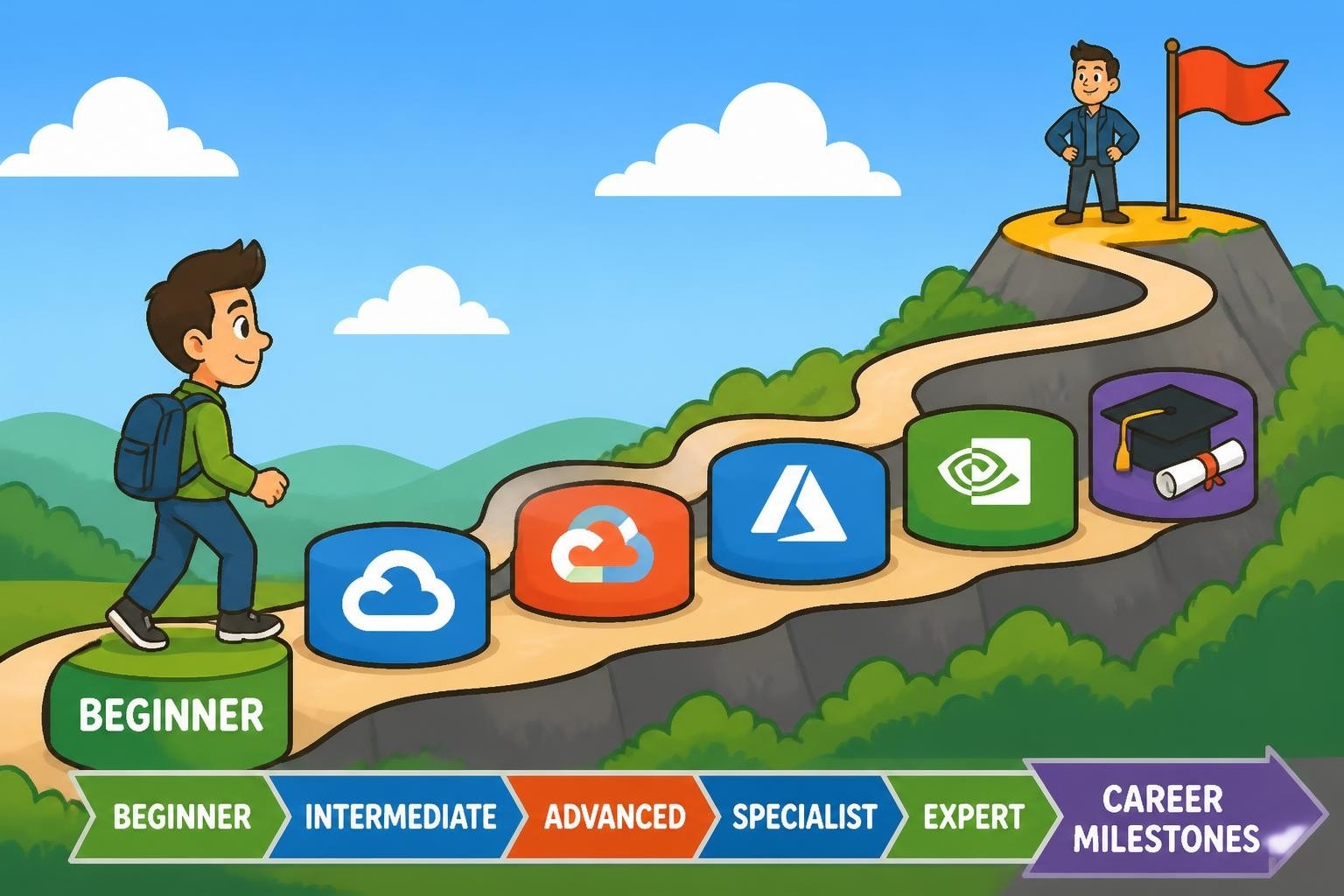
Building a Comprehensive OpenAI Learning Path
Rather than viewing openai courses as isolated training events, successful learners construct progressive learning pathways that build competency over time.
Foundation Phase (Weeks 1-4)
Begin with conceptual understanding of large language models, transformer architecture basics, and the ChatGPT interface. Hands-on experimentation with the ChatGPT web interface builds intuition for model capabilities and limitations before diving into programming.
Foundation learning objectives:
- Understand what large language models can and cannot do
- Write effective prompts for common tasks
- Recognize hallucination and quality issues
- Grasp basic concepts: tokens, temperature, context window
- Explore use cases relevant to your professional domain
Technical Implementation Phase (Weeks 5-12)
Developers progress to API integration, starting with simple completions and advancing to complex workflows. This phase emphasizes hands-on coding, debugging, and building increasingly sophisticated prototypes.
Structured learning through platforms offering AI artificial intelligence course libraries provides comprehensive coverage without gaps. MammothClub's interactive bootcamps combine video instruction, hands-on labs, and project work in cohesive learning sequences.
Specialization Phase (Weeks 13-20)
After establishing core competency, learners branch into specializations aligned with career goals: enterprise deployment, education applications, creative tools, customer service automation, or research assistance.
Specialized training goes deeper into domain-specific challenges, best practices, and advanced techniques. This phase often includes capstone projects that become portfolio pieces demonstrating real-world capability.
Continuous Learning and Updates
The rapid evolution of OpenAI's models and capabilities makes continuous learning essential. New features like GPT-4 Turbo, improved vision capabilities, and updated API endpoints require ongoing skill development.
Professional learners maintain currency through:
- Regular review of OpenAI's official documentation and changelog
- Participation in community forums and practitioner groups
- Experimentation with new model releases and features
- Attending webinars and conference sessions on emerging patterns
- Contributing to open-source projects using OpenAI APIs
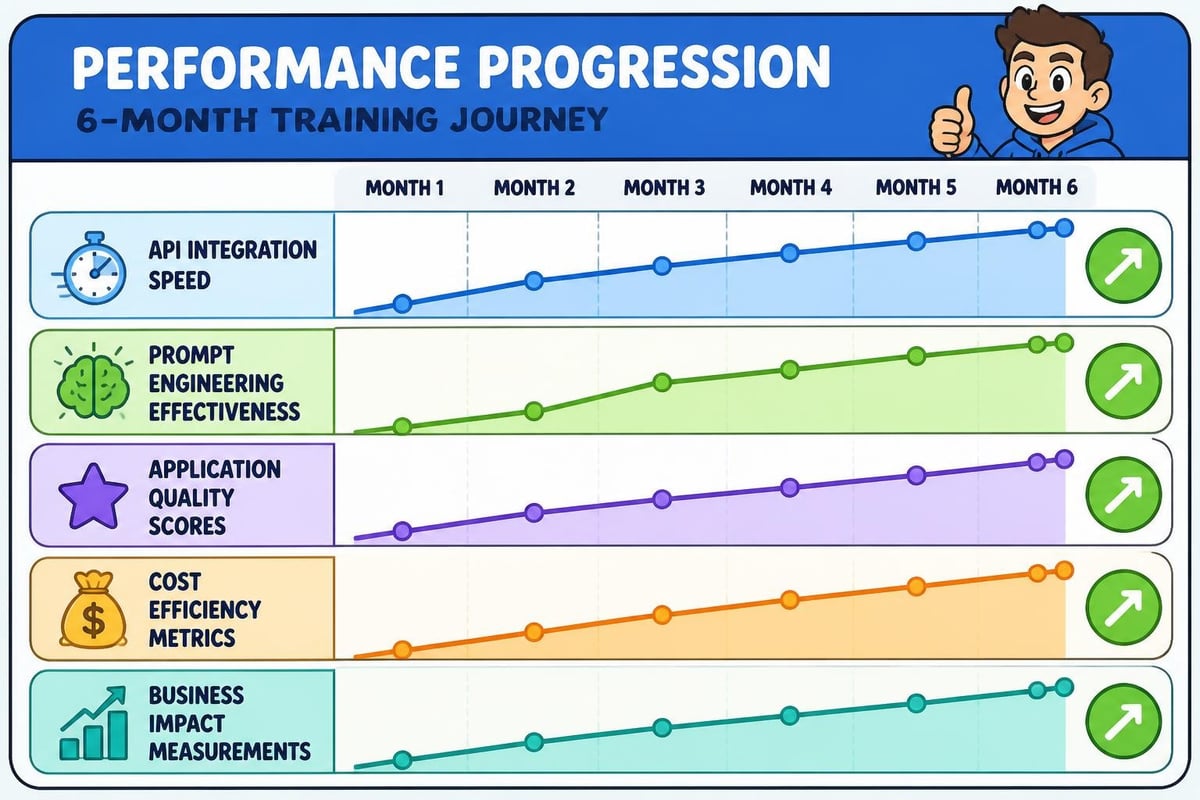
Measuring Learning Outcomes and ROI
Organizations investing in openai courses for teams need frameworks to assess training effectiveness and business impact.
Skill Assessment and Certification
Pre- and post-training assessments quantify knowledge gain. Practical projects demonstrate ability to apply concepts to real problems. Code reviews verify quality of API integration and adherence to best practices.
Certification programs typically require passing examinations that test both conceptual understanding and practical implementation ability.
Business Impact Metrics
Training ROI becomes visible through metrics like:
- Time saved on tasks now automated with AI
- Quality improvements in content creation or analysis
- Cost reductions from process optimization
- Revenue from new AI-enabled products or features
- Customer satisfaction improvements from AI-enhanced services
Sample ROI calculation:
If a marketing team of 10 people saves 5 hours per week through AI-assisted content creation after completing openai courses, that represents 50 hours weekly or 2,600 hours annually. At a $75/hour fully-loaded cost, the annual value is $195,000-easily justifying training investment of a few thousand dollars per person.
Portfolio Development
The most tangible outcome of quality OpenAI training is a portfolio of working applications or documented implementations. These projects serve dual purposes: they deliver business value while providing proof of competency for career advancement.
Strong portfolios include deployed applications, documented code repositories, case studies describing problem-solution-outcome, and reflections on lessons learned and alternative approaches considered.
Common Pitfalls in OpenAI Training
Even well-designed courses can fail to deliver value if learners fall into common traps.
Overreliance on Copying Code Examples
Many learners copy-paste tutorial code without understanding underlying patterns. This creates fragile knowledge that breaks when requirements change slightly. Effective learning requires modifying examples, breaking and fixing code, and explaining logic to others.
Neglecting Cost Management
OpenAI APIs charge per token, and costs scale rapidly with production use. Training that omits cost optimization strategies leaves learners unprepared for real-world deployment. Essential cost management includes prompt compression techniques, caching strategies, model selection appropriate to task difficulty, and monitoring tools.
Ignoring Failure Modes
Tutorials often show ideal scenarios where everything works perfectly. Production systems must handle API errors, rate limiting, malformed responses, and edge cases. Courses that skip error handling and resilience patterns leave critical gaps.
Treating AI as Magic
Understanding that large language models are statistical pattern-matching systems rather than reasoning entities prevents unrealistic expectations and inappropriate applications. Quality openai courses demystify the technology while maintaining appropriate respect for its capabilities.
Future Directions in OpenAI Education
The landscape of OpenAI training continues rapid evolution, shaped by new model capabilities, emerging use cases, and pedagogical innovation.
Personalized Learning Pathways
AI-powered learning platforms now use OpenAI models themselves to create personalized course sequences based on learner background, goals, and progress. Adaptive assessments identify knowledge gaps and recommend targeted content.
MammothClub's AI-powered learning tools exemplify this trend, using intelligent dashboards to guide learners through 3,000+ courses with personalized recommendations and progress tracking.
Integration with Domain-Specific Training
Rather than standalone openai courses, training increasingly integrates AI capabilities into domain-specific programs. Marketing courses include AI content creation modules. Software engineering bootcamps incorporate AI coding assistants. Healthcare training addresses clinical decision support applications.
This contextualized approach helps learners immediately connect capabilities to professional challenges.
Emphasis on Responsible AI and Ethics
As AI systems impact more critical decisions, training increasingly emphasizes responsible development practices, bias detection and mitigation, transparency requirements, and ethical frameworks for AI deployment.
Leading programs now require completion of ethics modules and demonstrated understanding of safety considerations before advancing to implementation training.
The landscape of openai courses in 2026 offers unprecedented opportunities for professionals and organizations to build AI capabilities that drive competitive advantage. From academic programs providing theoretical depth to hands-on bootcamps delivering immediate practical skills, the diversity of training options ensures pathways for every learning style and career goal. Success requires moving beyond superficial familiarity to deep competency in API integration, prompt engineering, and responsible deployment-skills that transform AI from experimental technology into reliable business tools. MammothClub accelerates this journey with 3,000+ on-demand courses, interactive bootcamps, and AI-powered learning tools that make upskilling measurable, engaging, and results-driven for both individuals and enterprise teams navigating the AI era.