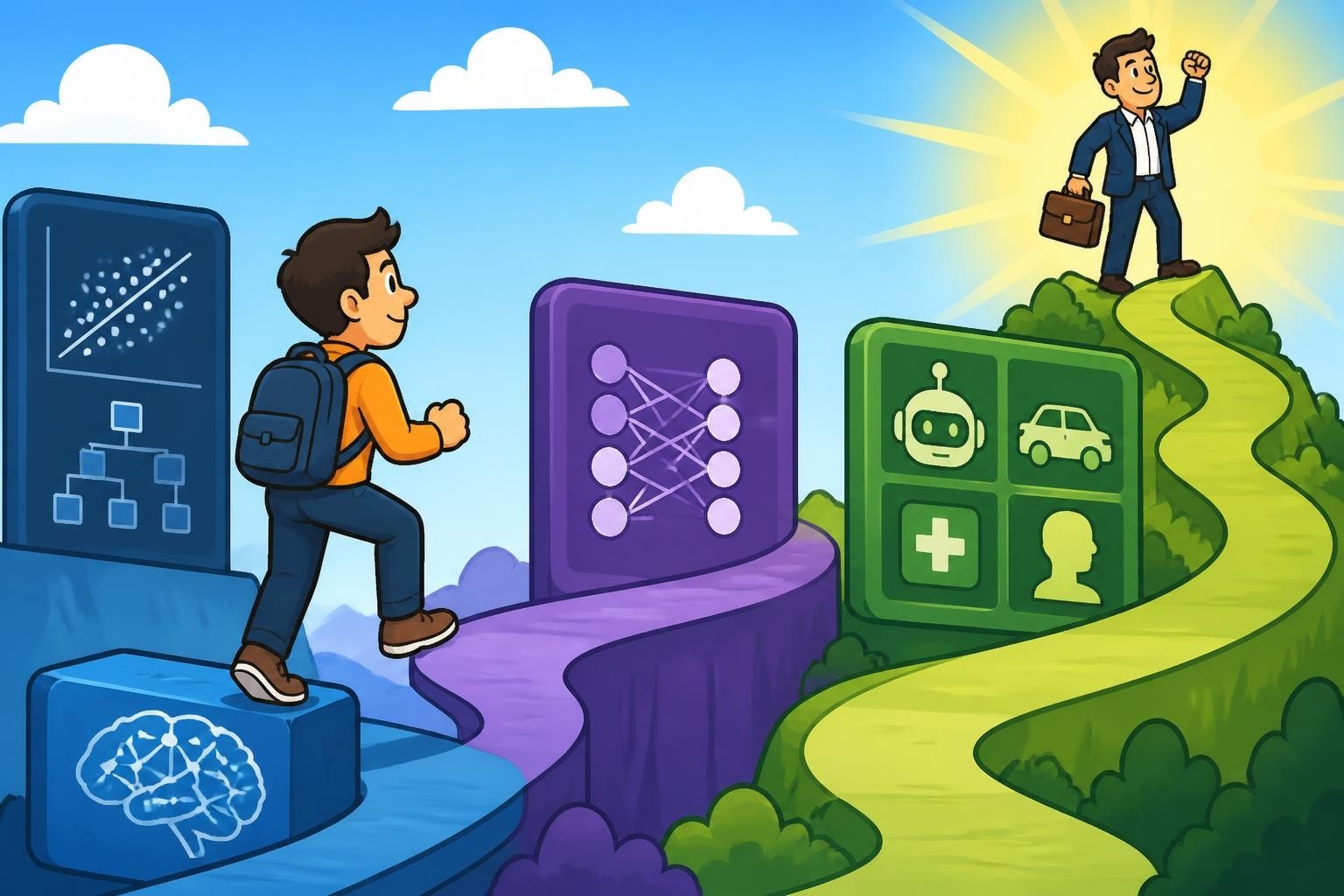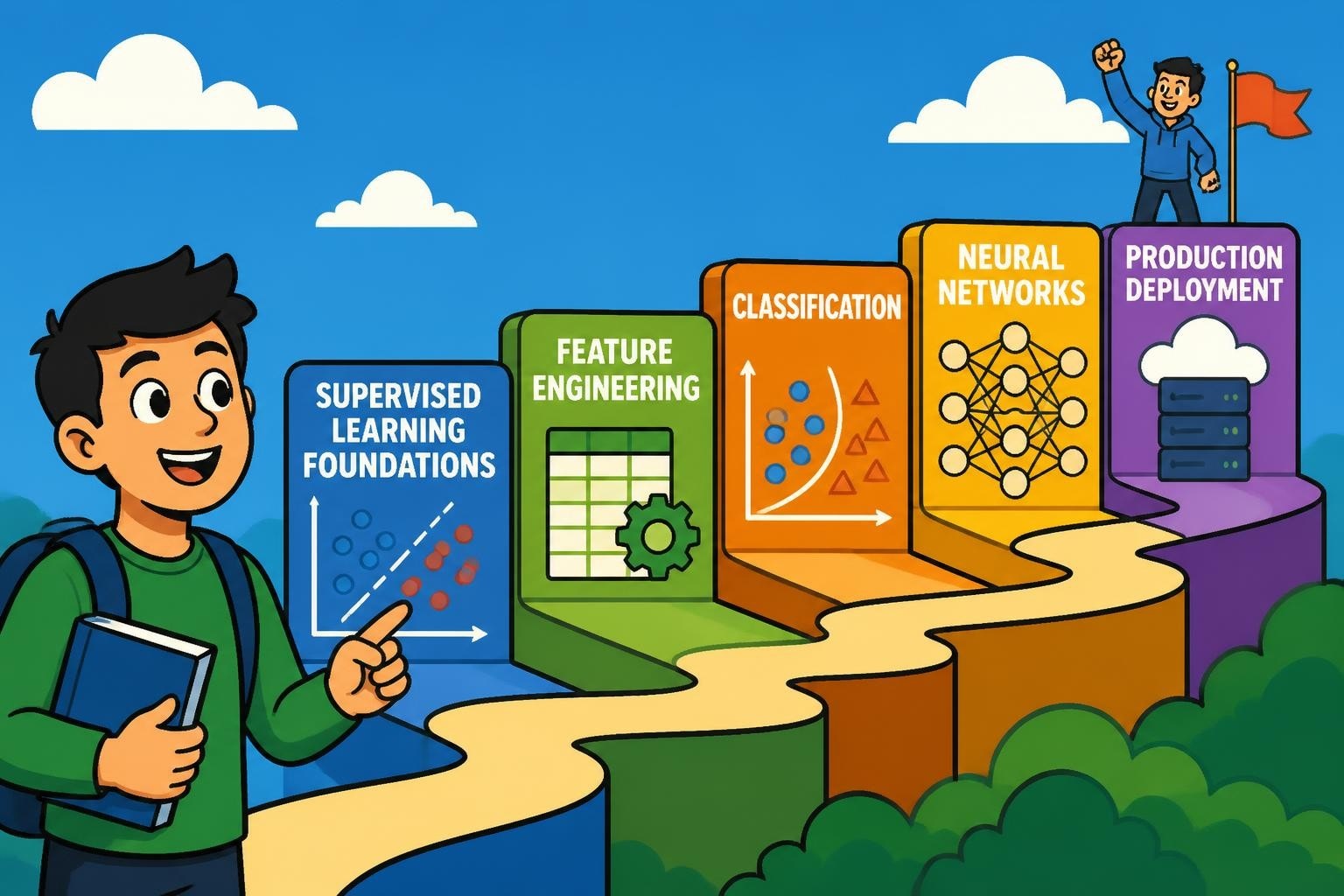
Machine learning certifications have become critical career assets as organizations invest billions in AI transformation. With over 400,000 machine learning job openings globally in 2026, professionals need credentials that validate skills, demonstrate practical expertise, and align with employer requirements. Choosing the best certification for machine learning depends on your career stage, technical background, industry focus, and whether you need vendor-specific expertise or broader theoretical foundations. This guide analyzes leading certifications across cloud platforms, academic institutions, and specialized training providers to help you select the credential that accelerates your machine learning career.
Understanding Machine Learning Certification Categories
Machine learning certifications fall into distinct categories, each serving different professional needs and career trajectories. Recognizing these categories helps you target credentials that match your objectives.
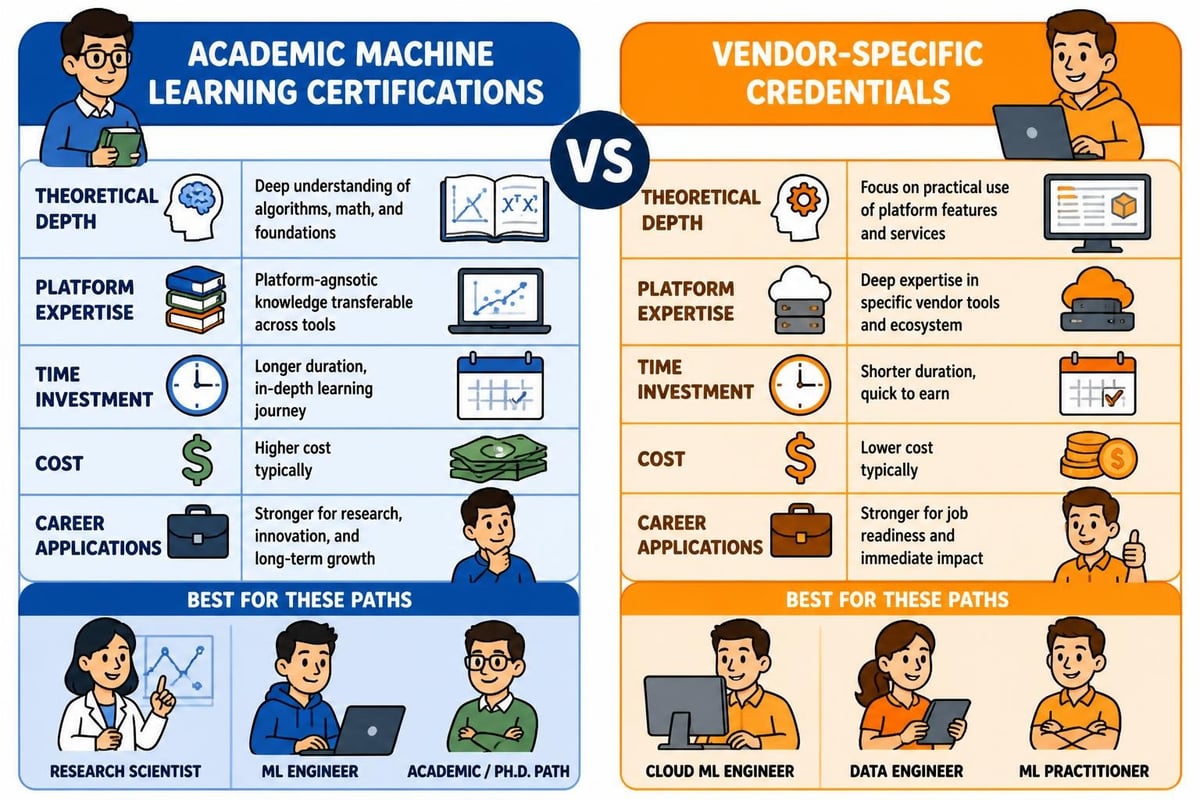
Vendor-specific certifications focus on implementing ML solutions using particular cloud platforms or frameworks. These credentials validate your ability to deploy production-grade systems using AWS, Google Cloud, Microsoft Azure, or NVIDIA technologies. They're particularly valuable for professionals working in enterprise environments where specific platforms dominate.
Vendor-neutral certifications emphasize fundamental concepts, algorithms, and mathematical foundations that apply across all platforms. These credentials typically come from universities, professional organizations, or independent training providers and demonstrate theoretical depth alongside practical application.
Specialized domain certifications target specific ML applications such as computer vision, natural language processing, or reinforcement learning. These credentials position you as a subject matter expert in high-demand niches.
The AWS Machine Learning Specialty certification exemplifies vendor-specific credentials, requiring deep knowledge of SageMaker, AWS AI services, and cloud architecture patterns. Meanwhile, academic programs through platforms like edX's technical microcredentials offer university-backed pathways that emphasize transferable knowledge.
Job Market Alignment and Employer Recognition
Employers prioritize different certifications based on their technology stack and business requirements. Fortune 500 companies using AWS infrastructure specifically seek candidates with AWS ML certifications, while startups might value broader academic credentials or demonstrated project portfolios.
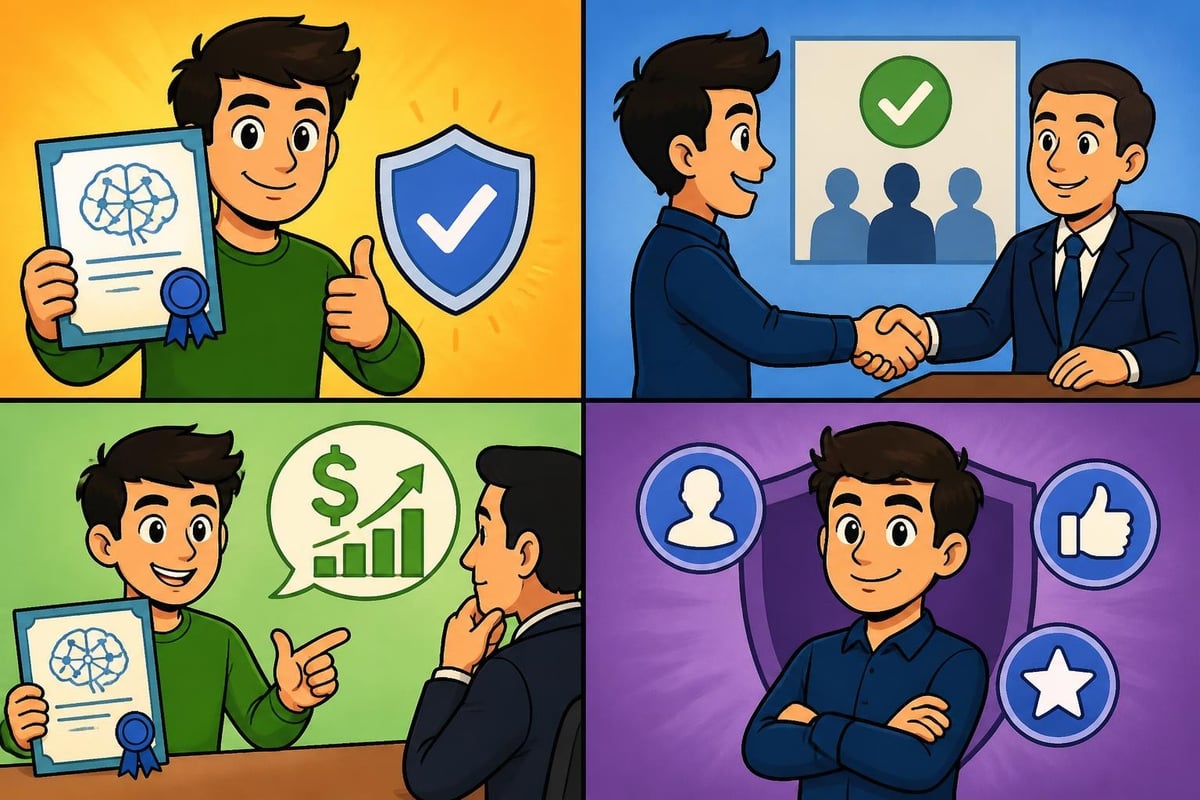
Research from the World Economic Forum highlights how certification builds trusted AI systems, particularly for procurement decisions and cross-border standards compliance. Organizations increasingly require verified credentials when hiring for regulated industries or mission-critical applications.
Top Vendor-Specific Certifications
AWS Certified Machine Learning Specialty
Amazon's flagship ML certification targets professionals implementing end-to-end machine learning solutions on AWS infrastructure. The exam covers data engineering, exploratory analysis, modeling, and ML implementation and operations.
Key requirements:
- Understanding of basic ML algorithms and hyperparameter optimization
- Experience with AWS SageMaker for model development and deployment
- Knowledge of AWS data stores, security practices, and cost optimization
- Familiarity with ML frameworks including TensorFlow, PyTorch, and MXNet
The certification requires passing a 170-minute exam with multiple-choice and multiple-response questions. AWS recommends 1-2 years of hands-on experience developing ML workloads on their platform.
Best for: Cloud engineers, data scientists, and ML practitioners working primarily in AWS environments or organizations standardized on Amazon infrastructure.
Google Cloud Professional Machine Learning Engineer
This certification validates ability to design, build, and productionize ML models using Google Cloud technologies. The exam emphasizes ML solution architecture, data preparation pipelines, model development, automation, and monitoring.
| Certification Aspect | AWS ML Specialty | Google Cloud ML Engineer |
|---|---|---|
| Exam Duration | 170 minutes | 120 minutes |
| Prerequisites | ML fundamentals + AWS experience | ML fundamentals + GCP experience |
| Primary Platform | SageMaker | Vertex AI |
| Renewal Period | 3 years | 2 years |
| Cost | $300 | $200 |
Google's certification particularly emphasizes AutoML capabilities, feature engineering at scale using BigQuery ML, and responsible AI practices. The shorter exam duration reflects more focused questioning on production deployment scenarios.
Best for: Data scientists and ML engineers in organizations using Google Cloud Platform, particularly those leveraging TensorFlow Enterprise and Vertex AI pipelines.
Microsoft Azure AI Engineer Associate
Microsoft's certification focuses on designing and implementing AI solutions using Azure Cognitive Services, Azure Machine Learning, and knowledge mining capabilities. The exam balances computer vision, NLP, and knowledge mining workloads.
The credential emphasizes integration scenarios where ML models connect with existing enterprise applications, databases, and business processes. Microsoft's approach reflects typical enterprise adoption patterns where AI augments rather than replaces existing systems.
Best for: Enterprise developers, solution architects, and AI engineers working in Microsoft-centric organizations or roles requiring integration with Power Platform, Dynamics 365, or Microsoft 365.
Academic and University-Backed Certifications
Academic certifications provide theoretical depth and mathematical rigor that vendor certifications typically don't cover. These credentials often carry graduate-level academic credit and can contribute toward advanced degrees.
Stanford Machine Learning Specialization
Stanford's program through Coursera offers comprehensive coverage of supervised learning, unsupervised learning, and best practices in ML. The specialization includes three courses covering regression, classification, neural networks, decision trees, and recommender systems.
Program highlights:
- Taught by Andrew Ng, pioneering ML researcher and educator
- Hands-on programming assignments in Python and TensorFlow
- Emphasis on understanding when and why algorithms work
- Project-based assessments demonstrating practical application
The specialization requires approximately 10 weeks at 10 hours per week, making it accessible for working professionals. The credential carries significant industry recognition due to Stanford's academic reputation and Andrew Ng's influence in the ML community.
MIT MicroMasters in Statistics and Data Science
MIT's MicroMasters program provides graduate-level training in probability, statistics, machine learning, and data analysis. The program includes four courses plus a comprehensive capstone exam.
This credential offers the deepest theoretical foundation among popular ML certifications. Successful completion can count toward MIT's on-campus Master of Science in Data Science, creating a pathway to advanced degrees.
Best for: Professionals seeking rigorous mathematical foundations, those planning advanced academic study, or individuals transitioning from research roles into applied ML positions.
Specialized and Emerging Certifications
NVIDIA Deep Learning Institute Certifications
The NVIDIA Deep Learning Institute offers specialized certifications in GPU-accelerated computing, computer vision, natural language processing, and intelligent video analytics. These credentials emphasize hands-on implementation using NVIDIA hardware and software ecosystems.
NVIDIA certifications particularly benefit professionals working with:
- Real-time inference requirements
- Large-scale model training
- Edge deployment scenarios
- Computer vision applications in manufacturing, healthcare, or autonomous systems
The hands-on nature of NVIDIA training makes these credentials valuable for practitioners who need to optimize performance and reduce inference latency in production environments.
TensorFlow Developer Certificate
Google's TensorFlow Developer Certificate validates your ability to build and train neural networks using TensorFlow. The exam is a 5-hour coding assessment performed in PyCharm where candidates solve ML problems across computer vision, NLP, and time series forecasting.
Key advantages:
- Completely hands-on assessment with no multiple-choice questions
- Validates practical coding skills employers can verify
- Platform-agnostic despite using TensorFlow (principles transfer to PyTorch)
- Relatively affordable at $100 for the exam
The certificate demonstrates you can move beyond tutorials to implement complete ML solutions independently. However, it focuses exclusively on TensorFlow ecosystem tools rather than broader ML engineering practices.
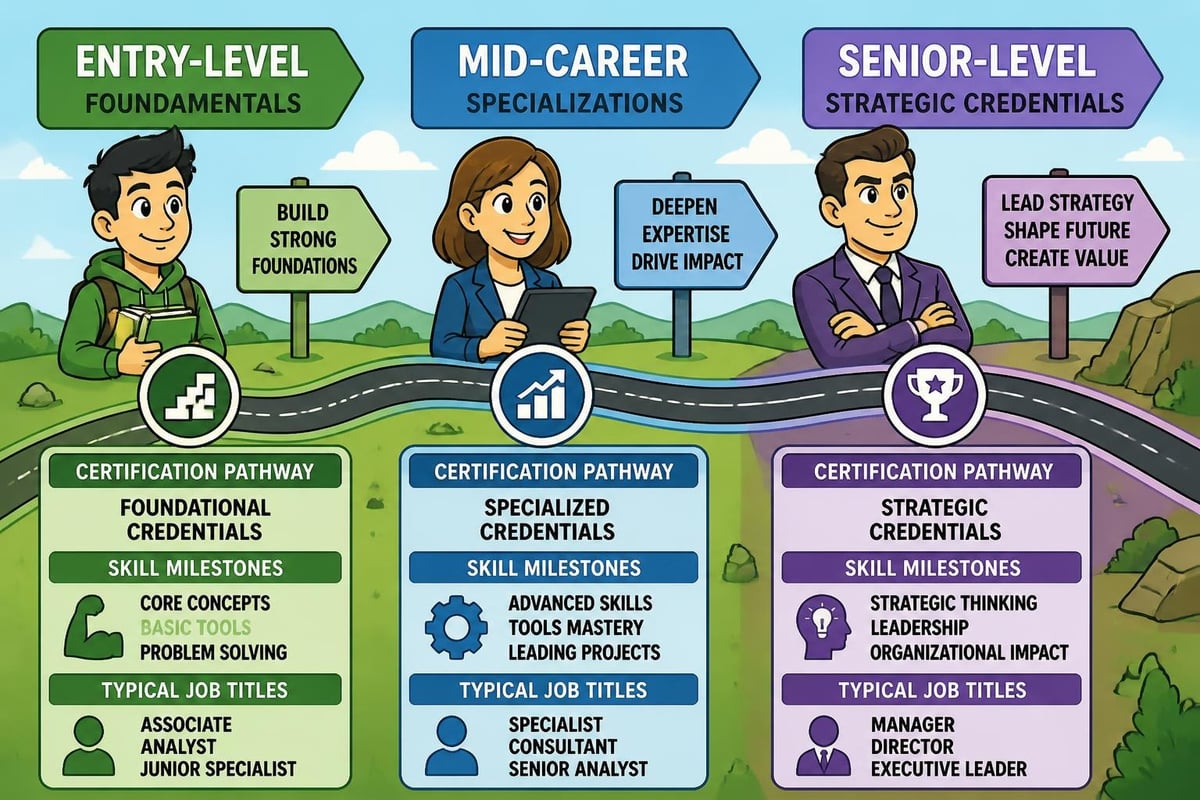
Choosing the Best Certification for Your Career Stage
Your optimal certification path depends significantly on your current experience level and career objectives.
Entry-Level Professionals (0-2 years ML experience)
Beginners should prioritize certifications that build fundamental understanding before specializing in particular platforms or domains. The Stanford Machine Learning Specialization or similar AI and ML courses provide essential foundations in supervised and unsupervised learning.
Recommended path:
- Complete foundational courses covering Python, statistics, and basic algorithms
- Pursue vendor-neutral certifications emphasizing core concepts
- Build a project portfolio demonstrating practical application
- Add vendor-specific credentials once you've selected a career direction
Entry-level professionals benefit from credentials that provide broad exposure rather than deep specialization. Consider exploring applied AI courses that emphasize practical implementation alongside theoretical understanding.
Mid-Career Professionals (2-5 years ML experience)
Mid-career practitioners should select certifications that align with their organization's technology stack or desired career direction. If you're working primarily in cloud environments, vendor-specific certifications significantly boost credibility and advancement opportunities.
This stage is optimal for pursuing multiple certifications that create a comprehensive skill profile. For example, combining AWS ML Specialty with the TensorFlow Developer Certificate demonstrates both infrastructure expertise and implementation capabilities.
Professionals at this level should also consider specialized certifications in domains where they have existing projects or interests, positioning themselves as subject matter experts.
Senior Professionals and Technical Leaders (5+ years ML experience)
Senior practitioners benefit most from certifications that demonstrate architectural thinking and strategic implementation capabilities. Advanced credentials from academic institutions carry particular weight when transitioning into research, advisory, or executive roles.
Senior professionals should evaluate certifications based on:
- Leadership signal: Does the credential demonstrate advanced strategic thinking?
- Differentiation: How does it distinguish you from peers with similar experience?
- Thought leadership: Does it position you for speaking, writing, or advisory opportunities?
At this career stage, certification value comes less from proving competence and more from professional positioning and network access. University programs often provide alumni networks and research connections that create ongoing value beyond the credential itself.
Cost, Time Investment, and ROI Analysis
Understanding the financial and time commitments required for different certifications helps you make informed decisions aligned with your circumstances.
| Certification Type | Typical Cost | Study Time | Exam Duration | Validity Period |
|---|---|---|---|---|
| AWS ML Specialty | $300 | 60-120 hours | 170 minutes | 3 years |
| Google Cloud ML | $200 | 50-100 hours | 120 minutes | 2 years |
| Stanford Specialization | $49/month | 100 hours | Self-paced | Lifetime |
| TensorFlow Developer | $100 | 40-80 hours | 5 hours | 3 years |
| MIT MicroMasters | $1,350 | 600+ hours | Multiple exams | Lifetime |
Return on investment for ML certifications typically manifests through salary increases, promotion opportunities, and expanded job options. Data from 2026 salary surveys shows certified ML professionals earn 15-25% more than non-certified peers with equivalent experience.
The best certification for machine learning balances cost-effectiveness with career impact. Entry-level certifications like the TensorFlow Developer Certificate offer exceptional value for beginners, while senior professionals see greater returns from prestigious academic credentials despite higher costs.
Time investment varies significantly based on your existing knowledge. Professionals with strong Python and statistics backgrounds can prepare for vendor certifications in 60-80 hours, while those building foundational skills may need 150+ hours of study time.
Certification Preparation Strategies
Successful certification requires structured preparation beyond simply reviewing exam guides. Effective study strategies combine multiple learning modalities and emphasize hands-on practice.
Building a Study Plan
Month 1: Foundation building
- Review exam blueprints and identify knowledge gaps
- Complete prerequisite courses in areas of weakness
- Set up development environments for hands-on practice
- Join study groups or online communities
Month 2: Focused study
- Work through official training materials systematically
- Complete practice labs and coding exercises daily
- Document solutions to common problems and patterns
- Review mathematical concepts underlying algorithms
Month 3: Exam preparation
- Take practice exams under timed conditions
- Review incorrect answers and understand why other options were wrong
- Build cheat sheets summarizing key concepts
- Schedule exam and complete final review
Hands-On Practice Requirements
All worthwhile ML certifications emphasize practical application over memorization. Dedicate at least 60% of study time to coding, experimentation, and project work.
Essential hands-on activities:
- Implement common algorithms from scratch to understand mechanics
- Work with real datasets encountering messy data, missing values, and outliers
- Deploy models to production environments using relevant platforms
- Optimize model performance through hyperparameter tuning and feature engineering
- Document your work in GitHub repositories demonstrating progressive learning
Platforms like MammothClub offer machine learning fundamentals courses that combine theory with practical implementation, helping you develop skills that translate directly to certification exams and professional practice.
Beyond Certification: Building Comprehensive ML Expertise
While certifications validate knowledge, they represent just one component of professional development. Comprehensive ML expertise requires ongoing learning, practical experience, and community engagement.
Supplementing Certifications with Project Work
Employers value demonstrated capability over credentials alone. Build a portfolio showcasing:
- End-to-end ML pipelines from data collection through deployment
- Solutions to business problems with measurable outcomes
- Experimentation with different algorithms and approaches
- Documentation explaining methodology and results
Your portfolio should demonstrate judgment in model selection, understanding of trade-offs, and ability to communicate technical decisions to non-technical stakeholders. These soft skills matter as much as technical proficiency when advancing into senior roles.
Continuous Learning and Specialization
Machine learning evolves rapidly, with new architectures, frameworks, and best practices emerging constantly. The best certification for machine learning provides a foundation, but staying current requires ongoing education.
Effective continuous learning strategies:
- Follow leading researchers and practitioners on social media
- Read recent papers from conferences like NeurIPS, ICML, and CVPR
- Experiment with new frameworks and tools as they're released
- Participate in competitions on Kaggle or similar platforms
- Contribute to open-source ML projects
Recent academic work such as the paper on rethinking certification for ML-based applications highlights important discussions about what certification can and cannot guarantee, particularly for safety-critical applications. Engaging with this research deepens understanding beyond exam preparation.
Industry-Specific Certification Considerations
Different industries prioritize different ML capabilities and certifications. Tailoring your credential path to industry requirements maximizes career impact.
Healthcare and Life Sciences
Healthcare ML applications require understanding of regulatory compliance, patient privacy, and clinical validation processes. Certifications should emphasize:
- Explainable AI and model interpretability
- HIPAA compliance and data security
- FDA approval processes for ML medical devices
- Bias detection and fairness in healthcare algorithms
Professionals in healthcare benefit from combining ML certifications with domain-specific credentials in clinical informatics or health data science.
Financial Services and Fintech
Financial applications prioritize model reliability, risk management, and regulatory compliance. Relevant certifications emphasize:
- Time series forecasting and anomaly detection
- Model monitoring and performance degradation detection
- Fair lending compliance and bias mitigation
- Production ML systems with 99.9%+ uptime requirements
Financial institutions often require vendor-specific certifications matching their cloud providers, as these organizations typically standardize on single platforms for security and compliance reasons.
Manufacturing and Industrial Applications
Industrial ML focuses on computer vision, predictive maintenance, and process optimization. NVIDIA certifications provide particular value given the prevalence of GPU-accelerated inference in manufacturing environments.
Key capabilities for industrial applications include:
- Edge deployment and inference optimization
- Integration with industrial protocols and legacy systems
- Real-time processing with latency constraints
- Robust operation in challenging physical environments
Professionals in manufacturing should consider certifications that include hands-on work with edge devices, computer vision, and industrial IoT platforms.
Alternative Pathways and Bootcamp Programs
Traditional certifications aren't the only path to validated ML expertise. Intensive bootcamp programs and alternative credentials serve specific needs and learning preferences.
ML Engineering Bootcamps
Intensive bootcamps compress 6-12 months of learning into 12-16 week immersive programs. These programs typically include:
- Full-time instruction with industry practitioners
- Capstone projects solving real business problems
- Career services including resume review and interview preparation
- Networking opportunities with hiring partners
Bootcamps work best for career changers making rapid transitions into ML roles. They provide structure, accountability, and career support that self-study certifications don't offer. However, they require significant time commitment and typically cost $10,000-$20,000.
Micro-Credentials and Nanodegrees
Platforms offer modular credentials targeting specific ML skills or tools. These programs typically require 3-6 months of part-time study and cost $500-$2,000.
Micro-credentials provide middle ground between individual certifications and comprehensive degree programs. They work well for:
- Professionals upskilling in specific areas without full career changes
- Individuals testing interest in ML before committing to extensive programs
- Supplementing existing degrees with practical implementation skills
Organizations like MammothClub offer flexible alternatives to traditional platforms, providing access to 3,000+ courses and corporate certification programs that adapt to individual learning paths and organizational requirements.
Making Your Final Decision
Selecting the best certification for machine learning requires evaluating multiple factors specific to your situation. Use this decision framework to clarify your optimal path.
Primary decision factors:
- Career stage: Entry-level professionals need foundations; senior practitioners need differentiation
- Current role: Cloud engineers benefit from platform certifications; researchers need academic credentials
- Industry focus: Regulated industries require specific compliance knowledge
- Learning style: Self-paced study versus structured programs with deadlines
- Budget constraints: Balance cost against expected career impact
- Time availability: Intensive bootcamps versus extended part-time study
Create a shortlist of 2-3 certifications that align with these factors, then evaluate based on:
- Employer recognition in your target companies or industries
- Community size and networking opportunities
- Quality and accessibility of preparation materials
- Alignment with technologies you're currently using or want to learn
The best certification for machine learning ultimately depends on how well it advances your specific career objectives. A $100 TensorFlow certificate might deliver more value than a $2,000 program if it validates exactly the skills your target employers require.
Consider starting with foundational certifications that provide broad exposure, then adding specialized credentials as your career direction becomes clearer. This approach minimizes risk while building comprehensive expertise over time.
Choosing the right machine learning certification requires balancing technical requirements, career objectives, and practical constraints. Whether you pursue vendor-specific credentials like AWS ML Specialty, academic programs from institutions like Stanford or MIT, or specialized certifications from NVIDIA, the key is selecting pathways that align with your professional goals and learning style. MammothClub provides comprehensive access to preparation resources, practice environments, and certification programs across all major ML platforms, helping professionals and organizations build verified expertise efficiently. Our AI-powered learning platform makes it easy to explore multiple certification paths, track progress across different programs, and achieve measurable results that advance your AI career.