Artificial intelligence has evolved from an academic curiosity into the defining technology of our generation. As organizations across every industry rush to integrate AI capabilities, the demand for skilled practitioners has never been higher. Finding the best course artificial intelligence offering for your specific goals requires understanding not just what content is covered, but how that knowledge translates into real-world applications. Whether you're a software engineer looking to transition into machine learning, a business professional seeking AI literacy, or a data scientist aiming to specialize in deep learning, the right educational pathway can accelerate your career trajectory by years.
Understanding AI Course Categories and Learning Paths
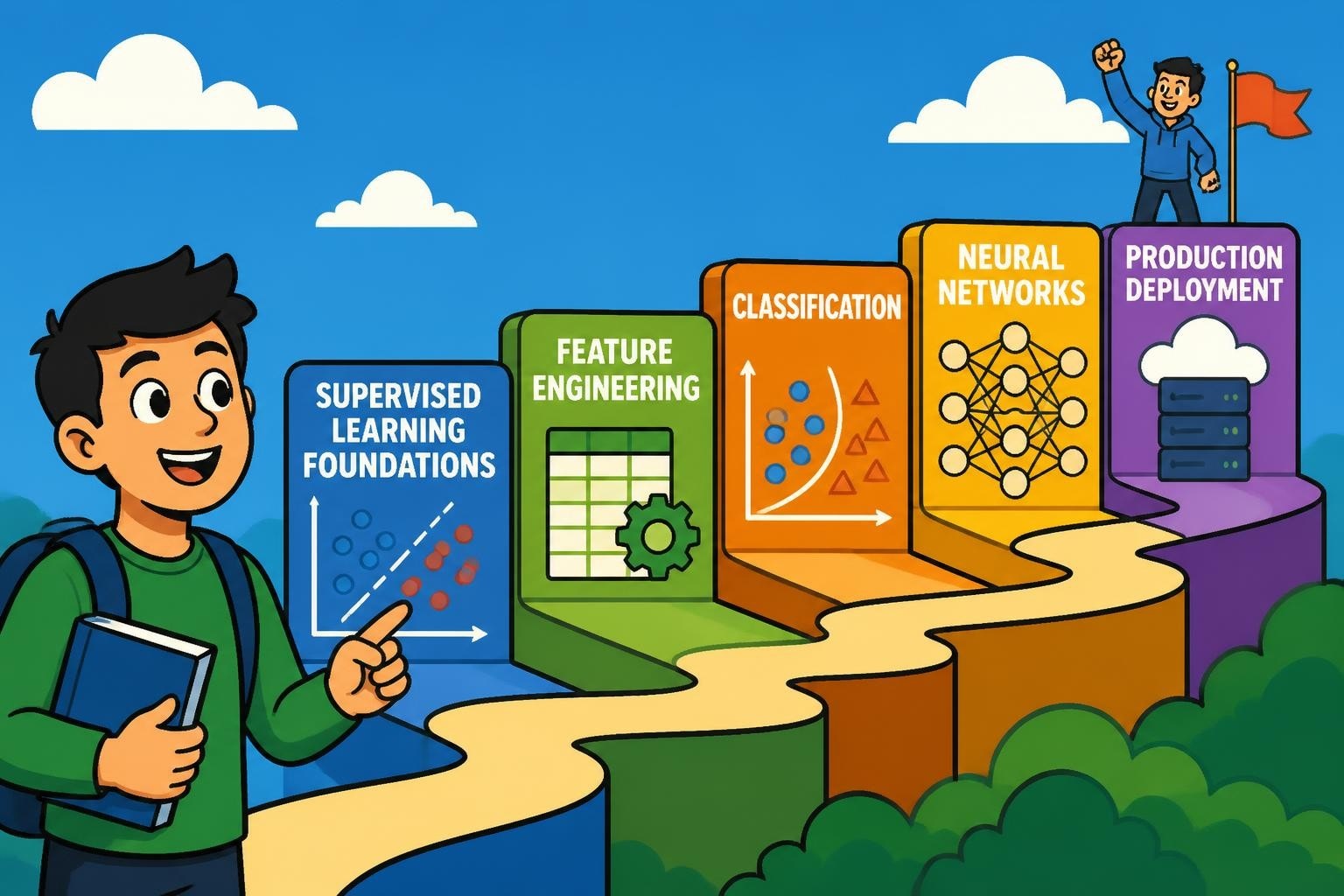
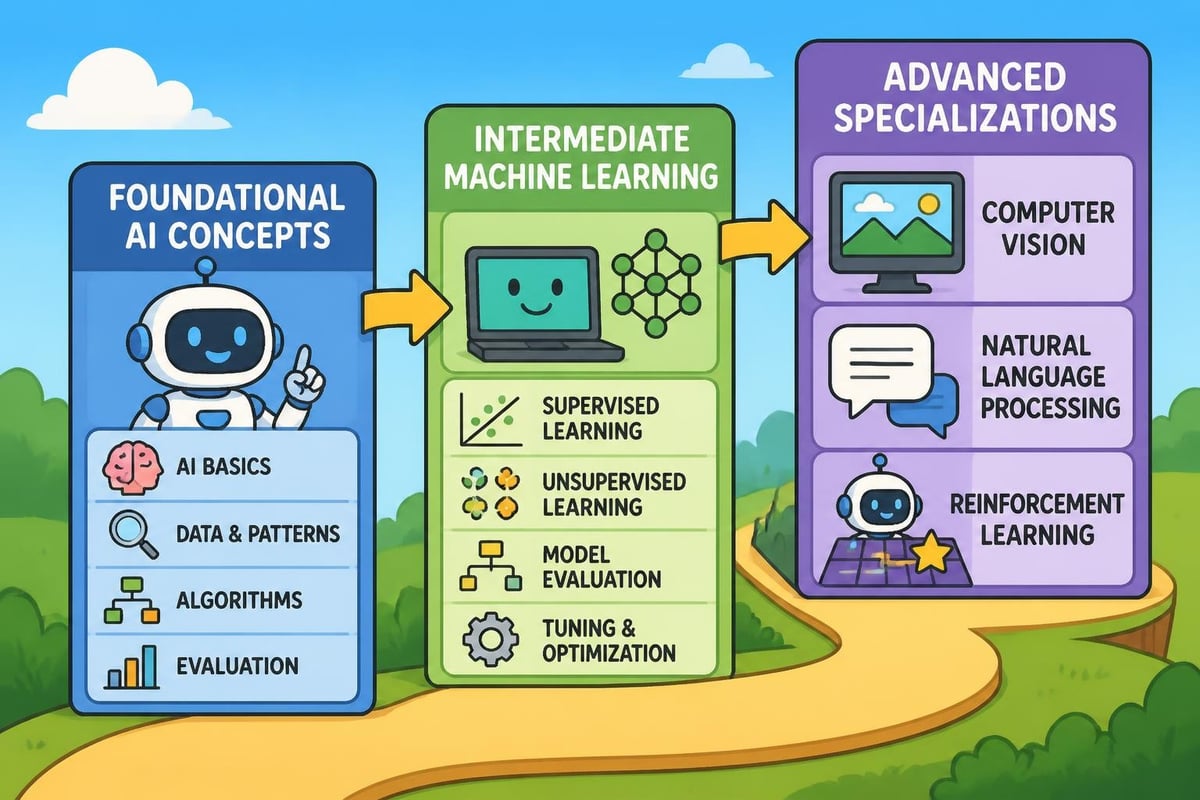
The landscape of AI education has fragmented into distinct tiers, each serving different learner profiles and objectives. Foundational courses introduce core concepts like supervised learning, neural networks, and basic algorithms without requiring advanced mathematics. Intermediate programs dive into frameworks like TensorFlow and PyTorch, demanding comfort with calculus, linear algebra, and Python programming. Advanced specializations focus on cutting-edge research areas including transformer architectures, reinforcement learning, and multimodal AI systems.
When evaluating options to find the best course artificial intelligence path for your situation, consider these critical dimensions:
- Prerequisites and mathematical rigor – Some courses assume graduate-level mathematics, while others teach necessary concepts from scratch
- Hands-on project work – The ratio of theory to implementation varies dramatically across programs
- Certification value – Industry recognition differs significantly between providers and credential types
- Time commitment – Options range from weekend bootcamps to year-long master's degree programs
- Cost structure – Pricing models include free audit tracks, monthly subscriptions, and five-figure bootcamps
Academic Versus Industry-Focused Programs
University courses like Stanford's CS231n on convolutional neural networks and MIT's introduction to deep learning offer rigorous theoretical foundations backed by peer-reviewed research. These programs excel at teaching first principles, mathematical proofs, and research methodologies. Students gain deep understanding of why algorithms work, not just how to implement them.
Industry-focused platforms prioritize practical skills and rapid deployment capabilities. These courses emphasize framework proficiency, MLOps practices, and production-ready code. The trade-off involves less theoretical depth but faster time-to-productivity for working professionals.
| Program Type | Theoretical Depth | Practical Skills | Time Investment | Best For |
|---|---|---|---|---|
| University Courses | Very High | Moderate | 12-16 weeks | Research, deep understanding |
| Industry Bootcamps | Moderate | Very High | 8-12 weeks | Career transitions |
| Self-Paced Platforms | Variable | High | Flexible | Working professionals |
| Corporate Training | Moderate | High | 4-8 weeks | Team upskilling |
Evaluating Course Quality and Instructor Credentials
The best course artificial intelligence offering combines expert instruction with current content and proven pedagogical methods. Instructor background matters significantly – look for educators who have published research, built production AI systems, or led teams at major tech companies. Academic credentials provide theoretical rigor, while industry experience ensures practical relevance.
Content currency presents a unique challenge in AI education. A course created in 2023 may already be outdated by 2026, given the field's rapid evolution. Transformer architectures, diffusion models, and large language models have revolutionized the landscape in just three years. Verify that course materials reflect recent breakthroughs and current best practices.
Hands-On Learning and Project Quality
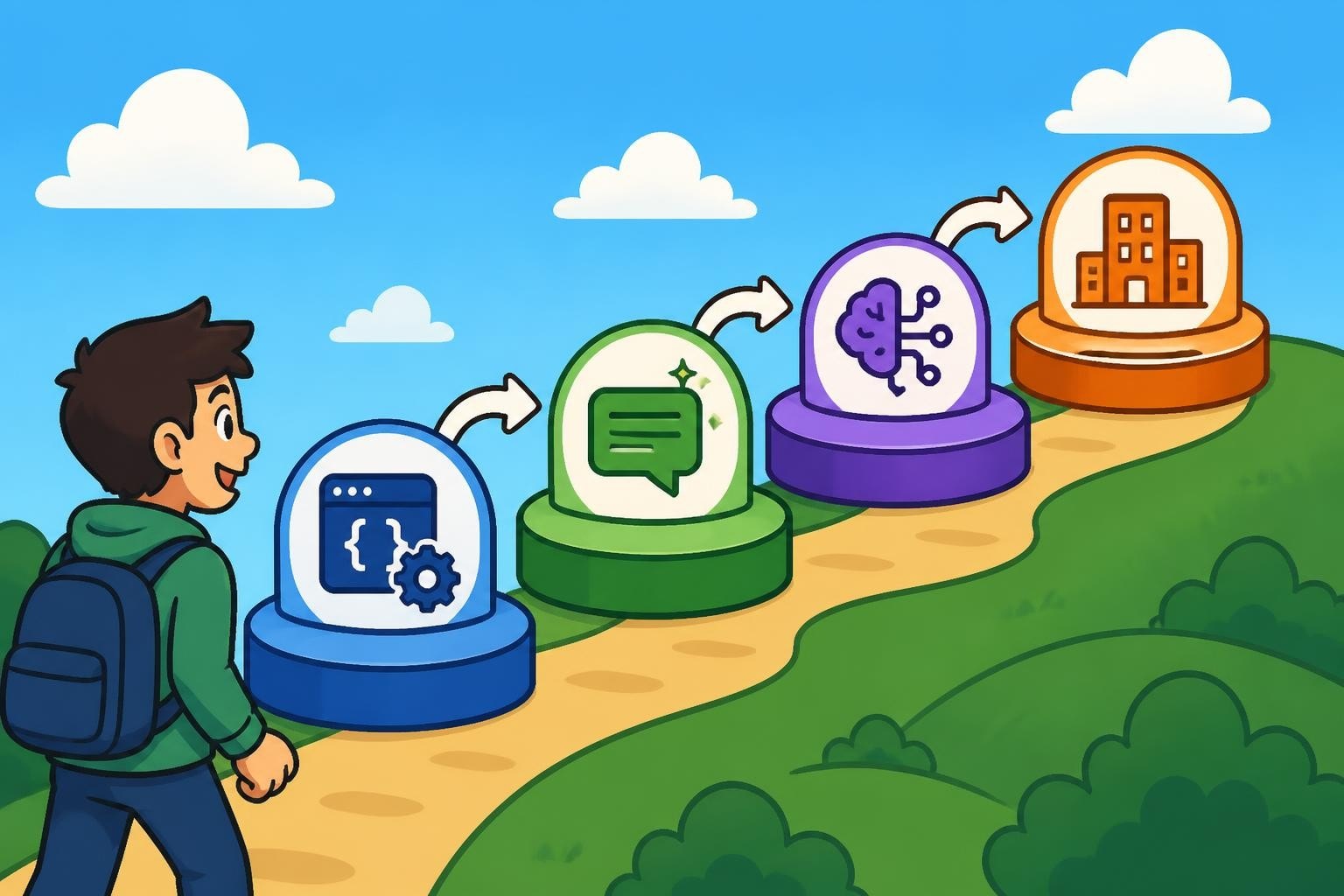
Theory without application produces shallow understanding. The most effective AI courses structure learning around progressive projects that increase in complexity. Introductory modules might cover image classification with pre-trained models, while advanced sections require building custom architectures or fine-tuning large language models.
Quality projects share these characteristics:
- Real datasets with messy, imperfect data requiring cleaning and preprocessing
- Business context explaining why the problem matters and how solutions create value
- Evaluation criteria beyond accuracy scores, including inference speed and resource efficiency
- Deployment considerations addressing model serving, monitoring, and maintenance
Platforms like MammothClub structure their curriculum around outcome-based projects that mirror workplace scenarios. This approach bridges the gap between academic exercises and production requirements.
Certification Programs and Career Impact
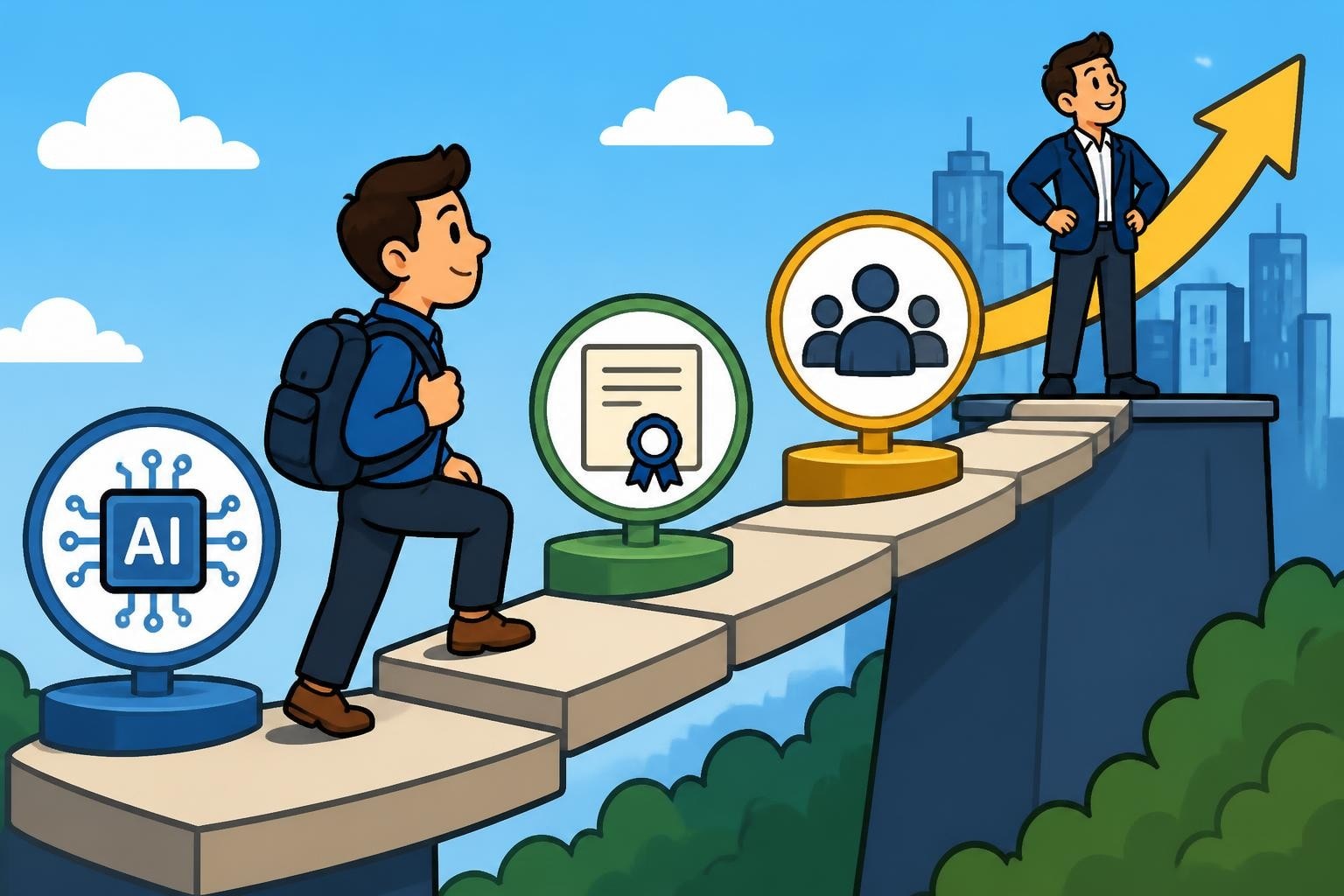
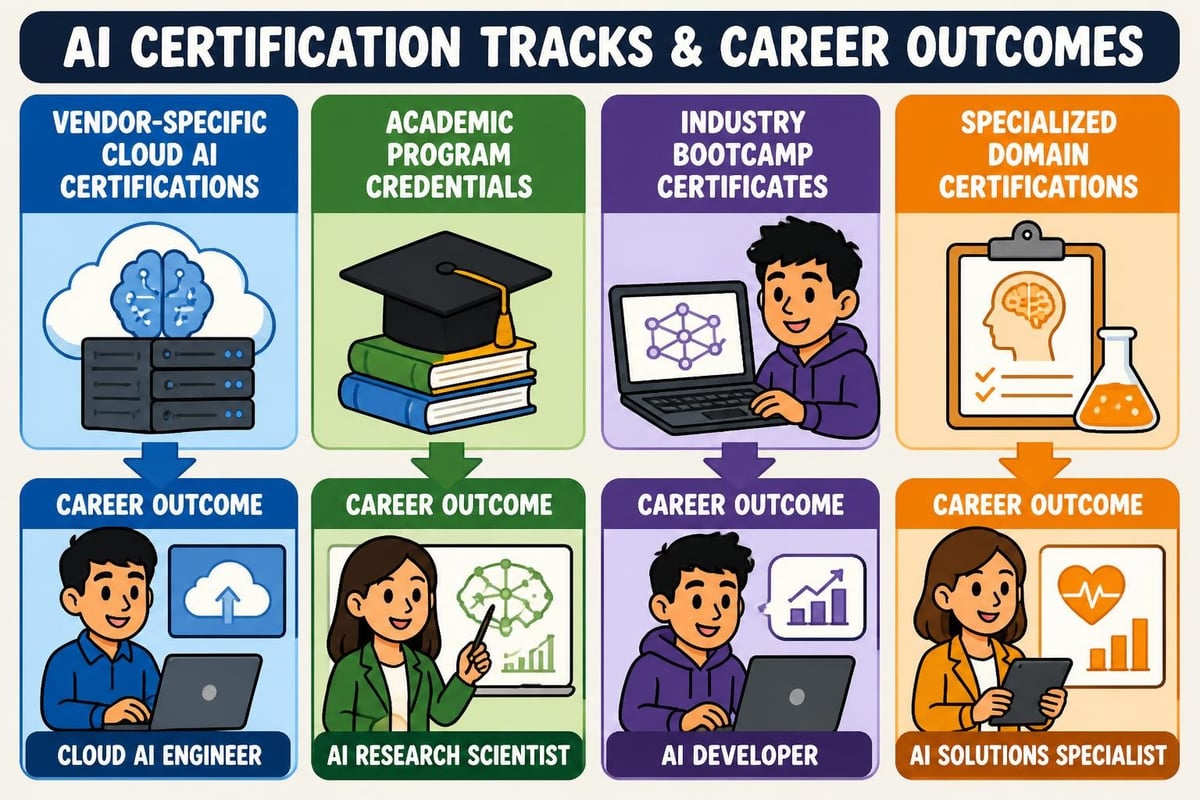
Professional certifications signal competency to employers but vary dramatically in market recognition. Vendor-specific certifications from AWS, Google Cloud, and Microsoft Azure demonstrate platform expertise valuable for cloud-based AI deployment. Course completion certificates from online platforms carry less weight unless backed by portfolio projects showcasing actual skills.
The ethics and responsible AI curriculum has become increasingly important as organizations face regulatory scrutiny and societal pressure. Forward-thinking programs now integrate bias detection, fairness metrics, and governance frameworks throughout technical training. If you're exploring AI ethics courses, look for content addressing real case studies and regulatory compliance.
ROI Considerations for Different Investment Levels
Financial investment in AI education ranges from completely free to over $50,000 for immersive bootcamps. Free resources including Harvard's CS50 AI course provide excellent foundations but lack structured support and credentialing. Subscription platforms ($20-80 monthly) offer extensive libraries and certificates at low cost. Bootcamps ($8,000-20,000) promise career services and outcomes guarantees. Degree programs ($30,000-100,000) provide comprehensive credentials and alumni networks.
Calculate ROI by considering:
- Current salary and target compensation in AI roles
- Time required to complete the program while working
- Opportunity cost of intensive full-time bootcamps
- Employer tuition reimbursement policies
- Credential recognition in your target industry
Many professionals discover that the best course artificial intelligence investment combines free foundational learning with targeted paid training in specialized areas.
Specialized AI Domains and Course Selection
Artificial intelligence encompasses diverse subfields requiring distinct skill sets. Computer vision engineers need expertise in convolutional architectures, image preprocessing, and visual feature extraction. Natural language processing specialists must understand transformer models, tokenization strategies, and language model fine-tuning. Robotics AI combines perception, planning, and control systems. For those interested in this intersection, exploring robotics and artificial intelligence courses provides targeted pathways.
The TensorFlow official tutorials offer framework-specific training essential for implementation work. However, framework knowledge alone doesn't constitute deep AI expertise – understanding underlying algorithms and when to apply them matters more than API memorization.
Domain-Specific Applications
Industry-specific AI applications require blending technical skills with domain knowledge:
- Healthcare AI demands understanding of medical imaging standards, HIPAA compliance, and clinical workflows
- Financial AI requires knowledge of market dynamics, risk management, and regulatory constraints – see AI trading courses for specialized content
- Marketing AI combines customer analytics, content generation, and personalization engines – explore AI in digital marketing courses for this niche
- Manufacturing AI integrates computer vision, predictive maintenance, and quality control systems
The best course artificial intelligence strategy often involves pairing general ML knowledge with domain-specific applications training.
Corporate Training Programs and Team Development
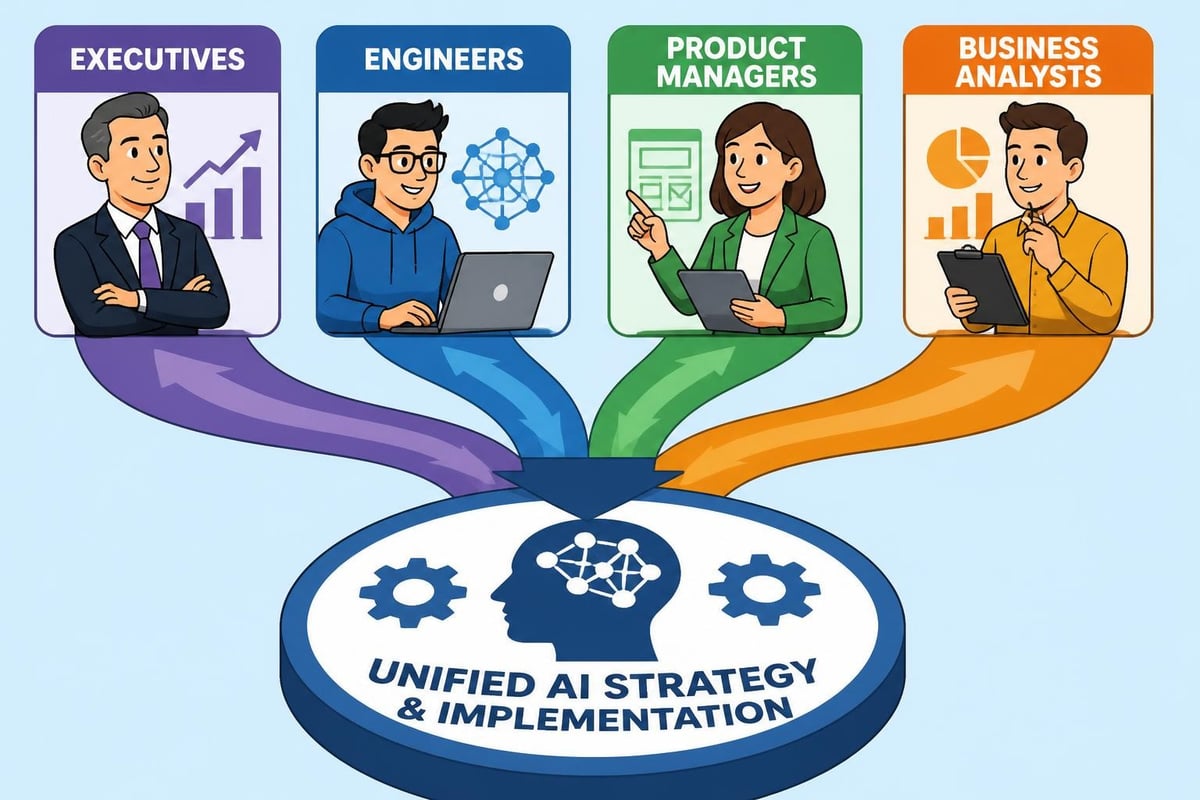
Organizations deploying AI at scale face unique training challenges. Individual upskilling differs fundamentally from building organizational AI capabilities. Corporate programs must address varying technical backgrounds, align training with business objectives, and create shared vocabularies across functions.
Effective enterprise AI training includes these components:
| Component | Purpose | Target Audience | Duration |
|---|---|---|---|
| Executive AI Literacy | Strategic decision-making | C-suite, directors | 1-2 days |
| Technical Deep Dives | Hands-on implementation | Engineers, data scientists | 8-12 weeks |
| Applied AI for Business | Use case identification | Product, operations | 4-6 weeks |
| Ethics and Governance | Risk management | Legal, compliance | 2-3 days |
MammothClub's corporate certification programs address these needs through customizable learning paths, AI-powered dashboards tracking team progress, and measurable outcomes tied to business objectives. Organizations benefit from standardized training that scales across global teams while allowing role-specific customization.
Measuring Training Effectiveness
Training ROI in AI requires metrics beyond completion rates. Organizations should track:
- Project deployment velocity – Time from training completion to production AI systems
- Model performance improvements – Accuracy gains and efficiency increases
- Cost reduction – Decreased reliance on external consultants
- Innovation metrics – New AI use cases identified and implemented
- Retention rates – Employee satisfaction and career development
The ACM curriculum guidance provides frameworks for structuring comprehensive AI education programs aligned with industry standards.
Self-Paced Learning Versus Structured Bootcamps
Learning style and life circumstances heavily influence which format produces the best results. Self-paced platforms offer maximum flexibility, allowing professionals to learn during evenings and weekends without career disruption. However, this format demands exceptional self-discipline and problem-solving independence when facing technical obstacles.
Structured bootcamps provide accountability through cohort learning, scheduled deadlines, and instructor support. Live sessions enable real-time question answering and collaborative problem-solving. The intensive format accelerates learning but requires significant time commitment, often necessitating career breaks.
Hybrid models combine self-paced content consumption with live workshops and office hours. This approach preserves flexibility while providing critical support structures. When searching for the best course artificial intelligence option, consider your learning preferences, available time, and support needs honestly.
Advanced Topics and Research-Oriented Learning
Professionals pursuing AI research careers or highly specialized roles require exposure to cutting-edge developments. Recent surveys like this comprehensive review of self-supervised learning demonstrate the rapid pace of innovation in the field. Courses covering advanced topics should incorporate recent papers, emerging architectures, and open research problems.
Advanced AI curriculum typically addresses:
- Transformer variants including efficient attention mechanisms and sparse models
- Multimodal learning combining vision, language, and other data types
- Few-shot learning enabling models to generalize from limited examples
- Adversarial robustness defending against attacks and ensuring reliable predictions
- Causal inference moving beyond correlation to understand true relationships
These topics appear in graduate-level courses but are increasingly accessible through specialized online programs. Platforms offering deeplearning.ai courses frequently update content to reflect research breakthroughs within months of publication.
Platform Ecosystems and Learning Resources
The best course artificial intelligence experience extends beyond video lectures to encompass discussion forums, project galleries, career resources, and continuing education. Platform ecosystems create learning communities where students collaborate, share insights, and build professional networks.
Key ecosystem features include:
- Discussion forums with active instructor and peer participation
- Code repositories containing starter templates and solution examples
- Project showcases demonstrating high-quality work for portfolio inspiration
- Job boards connecting graduates with hiring companies
- Alumni networks facilitating mentorship and career advice
Some learners benefit from exploring multiple platforms. For example, someone might complete IBM AI certification for vendor-specific credentials while supplementing with academic courses for theoretical depth. Cross-platform learning prevents knowledge silos and exposes students to diverse teaching approaches.
Continuing Education and Skill Maintenance
AI expertise requires continuous learning as the field evolves. The best course artificial intelligence plan includes mechanisms for ongoing education beyond initial certification. Microlearning modules covering new frameworks, research paper reading groups, and practical workshops on emerging techniques help professionals maintain cutting-edge skills.
Annual technology shifts in AI surpass most other fields. Professionals who completed comprehensive training in 2024 must update their knowledge to remain current in 2026. Subscription-based platforms provide perpetual access to new content, while bootcamp graduates may need periodic refresher courses or specialty workshops.
Making Your Final Course Selection
Choosing among dozens of highly-rated AI courses requires systematic evaluation. Create a decision matrix weighing factors most relevant to your situation:
Critical factors:
- Alignment with career goals (research, engineering, leadership)
- Time availability (full-time immersion vs. part-time study)
- Budget constraints and payment options
- Prerequisite match with current skills
- Certification value in your target industry
Secondary considerations:
- Instructor reputation and teaching style
- Platform usability and mobile access
- Community size and engagement level
- Course update frequency
- Refund policies and satisfaction guarantees
Request sample lessons or trial periods before committing significant resources. Most platforms offer preview content or money-back guarantees within initial weeks. Use this opportunity to assess teaching quality, technical depth, and overall fit with your learning preferences.
Complementary Skills for AI Professionals
Technical AI knowledge alone rarely suffices for career success. The best course artificial intelligence curriculum incorporates these complementary capabilities:
Software engineering practices including version control, testing frameworks, and code review processes ensure AI systems meet production quality standards. Data engineering skills covering pipeline construction, data warehousing, and ETL processes enable effective model training at scale. Communication abilities help translate technical concepts for non-technical stakeholders and justify AI investments to leadership.
Business acumen increasingly differentiates successful AI practitioners. Understanding how AI creates value, identifying high-impact use cases, and estimating project ROI determines which professionals advance into strategic roles versus remaining individual contributors.
Professionals who combine technical expertise with domain knowledge and business skills command premium compensation and advancement opportunities. Structure your learning path to develop this full skill stack rather than focusing exclusively on algorithms and frameworks.
Finding the best course artificial intelligence offering depends on your specific goals, current skill level, and career trajectory. The most effective approach combines rigorous technical training with practical project work, complementary skills development, and ongoing education as the field evolves. MammothClub delivers exactly this comprehensive learning experience through our library of 3,000+ AI and tech courses, interactive bootcamps, and corporate certification programs designed for measurable results. Our AI-powered learning tools and personalized dashboards help professionals and organizations master artificial intelligence efficiently, translating education into competitive advantage in today's rapidly evolving landscape.