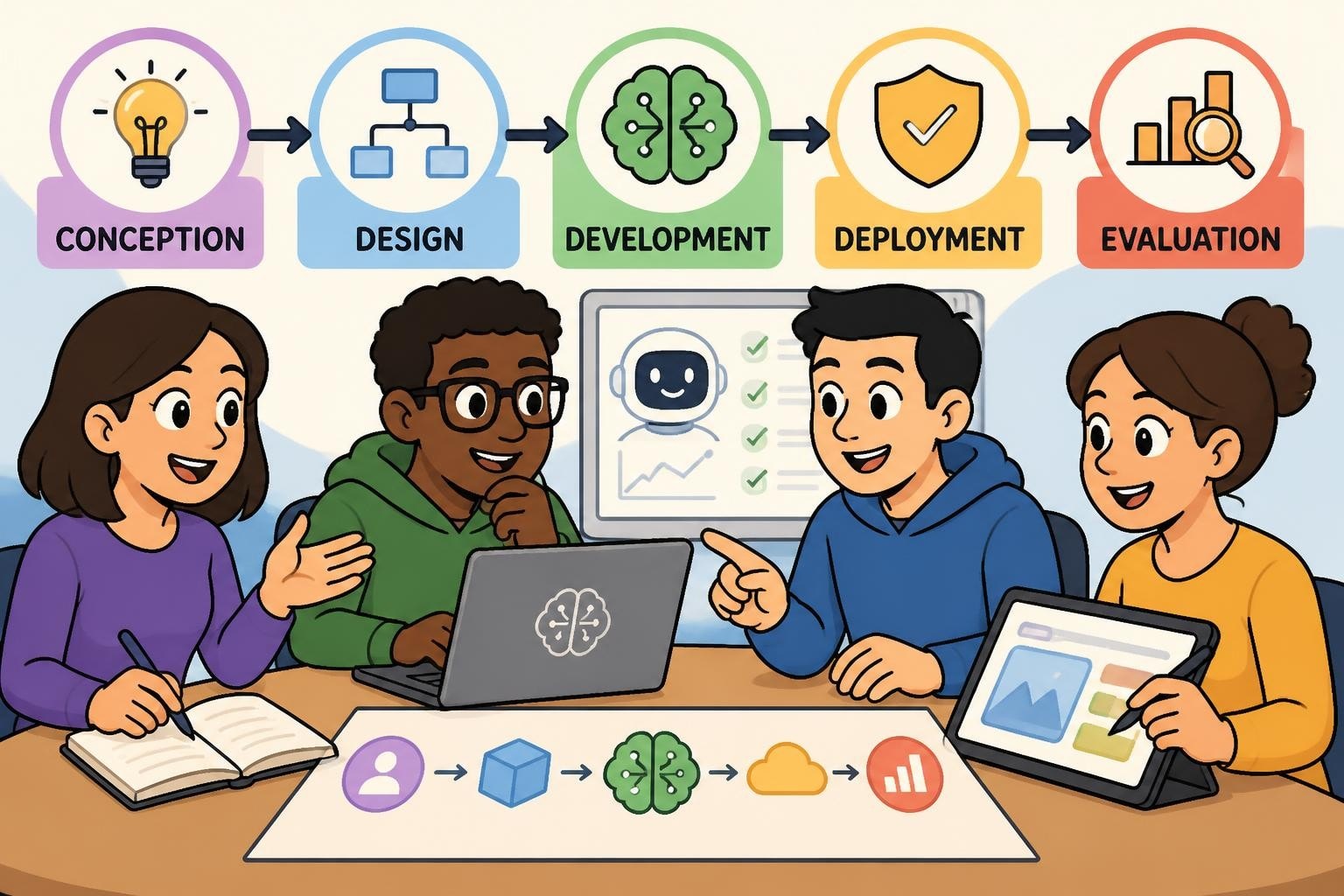
Professional credentials in artificial intelligence have become essential differentiators in today's technology marketplace. As organizations accelerate their AI adoption strategies, validated expertise in enterprise-grade AI platforms carries significant weight. The IBM artificial intelligence certification portfolio addresses this demand by offering structured pathways for professionals seeking recognized credentials in AI engineering, machine learning deployment, and intelligent automation. These certifications bridge the gap between theoretical AI knowledge and practical implementation skills required in production environments.
Understanding the IBM AI Certification Ecosystem
IBM approaches AI certification through multiple delivery channels and credential levels. The company has expanded beyond traditional exam-based certifications to include comprehensive professional certificates, digital badges, and micro-credentials. This diversified strategy reflects the evolving nature of AI skills validation in 2026.
The IBM training and certification catalog encompasses several AI-focused credentials, each targeting distinct skill levels and use cases. Associate-level certifications establish foundational competency, while professional and advanced certifications validate specialized expertise in areas like natural language processing, computer vision, and AI governance.
Primary IBM AI Credential Types
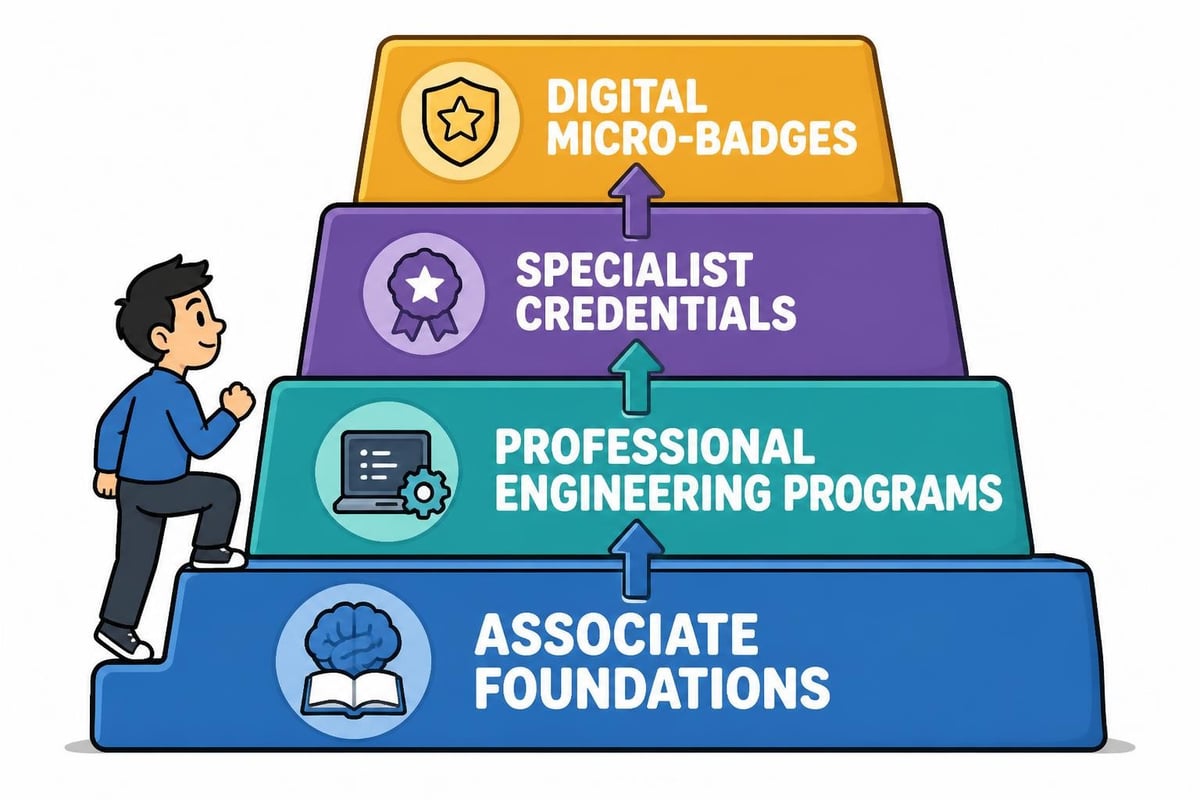
IBM structures its AI credentials across four main categories:
- Associate certifications: Entry-level credentials validating core AI concepts and basic implementation skills
- Professional certificates: Multi-course programs delivered through partnerships with online learning platforms
- Digital badges: Micro-credentials recognizing specific competencies in focused AI domains
- Specialist certifications: Advanced credentials for experienced practitioners in specialized AI applications
The IBM AI Engineering Professional Certificate on Coursera exemplifies IBM's partnership strategy. This program combines video instruction, hands-on labs, and capstone projects to build practical AI engineering skills. Upon completion, learners earn both a professional certificate and verifiable digital credentials.
IBM Certified Artificial Intelligence v1 – Associate
The IBM Certified Artificial Intelligence v1 – Associate credential serves as the foundational certification in IBM's AI portfolio. This exam-based certification validates understanding of AI concepts, machine learning fundamentals, and IBM's watsonx platform capabilities.
Exam Structure and Content
| Component | Details |
|---|---|
| Exam Code | C9008700 |
| Questions | 60 multiple-choice items |
| Duration | 90 minutes |
| Passing Score | 70% (42 correct answers) |
| Delivery | Pearson VUE testing centers or online proctoring |
| Cost | $200 USD |
The exam covers six primary domains:
- AI and Machine Learning Fundamentals (20%): Core concepts, supervised and unsupervised learning, neural networks
- Data Preparation and Feature Engineering (15%): Data cleaning, normalization, feature selection techniques
- Model Development and Training (25%): Algorithm selection, hyperparameter tuning, model evaluation metrics
- IBM watsonx Platform (20%): watsonx.ai capabilities, prompt engineering, foundation model deployment
- AI Ethics and Governance (10%): Bias detection, fairness principles, responsible AI practices
- Production Deployment (10%): Model serving, monitoring, MLOps fundamentals
Candidates should possess practical experience with Python, familiarity with common ML libraries (scikit-learn, TensorFlow, PyTorch), and hands-on exposure to IBM's AI platforms. The exam emphasizes real-world application over theoretical memorization.
Preparation Strategies for IBM AI Certifications
Effective preparation for an IBM artificial intelligence certification requires structured learning combined with practical application. The certification exam tests both conceptual understanding and implementation knowledge, making hands-on practice essential.
Recommended Learning Path
Start with foundational AI concepts before advancing to platform-specific training. MammothClub's AI course catalog offers comprehensive preparation materials aligned with IBM certification objectives, including interactive labs and scenario-based exercises.
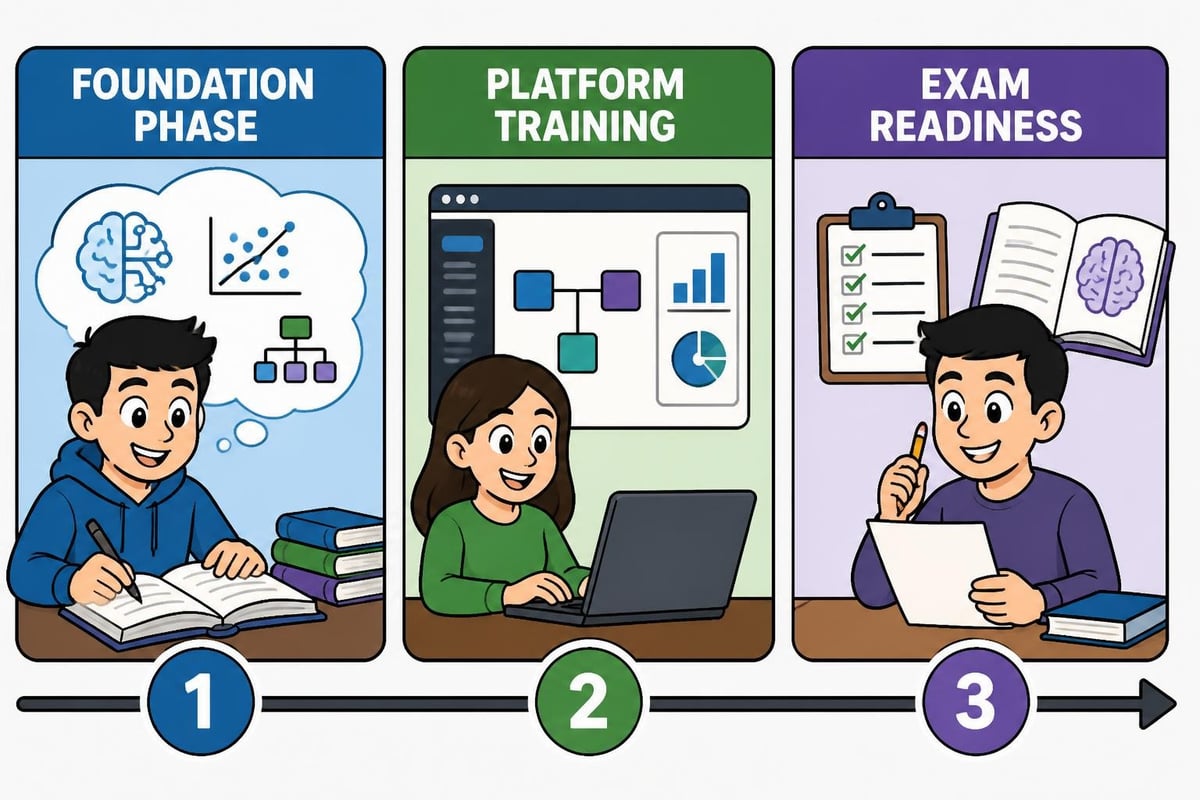
Phase 1: Foundation Building (4-6 weeks)
- Complete introductory machine learning courses covering supervised and unsupervised learning
- Master Python programming essentials for data science
- Study linear algebra, statistics, and probability fundamentals
- Practice with Jupyter notebooks and common data science libraries
Phase 2: Platform-Specific Training (3-4 weeks)
- Engage with IBM watsonx documentation and tutorials
- Complete hands-on labs in prompt engineering and foundation model fine-tuning
- Explore IBM Cloud AI services and deployment workflows
- Review IBM's position on trustworthy AI and governance frameworks
Phase 3: Exam Preparation (2-3 weeks)
- Take practice exams to identify knowledge gaps
- Review exam objectives and weight each domain appropriately
- Join study groups or online communities focused on IBM certifications
- Schedule your exam and complete final review materials
IBM's expanded partnership with Coursera provides structured learning paths with built-in assessments. These programs offer the advantage of sequential learning modules that progressively build competency.
Digital Badges and Micro-Credentials
IBM has embraced digital badges as verifiable, shareable credentials that complement traditional certifications. The IBM SkillsBuild Artificial Intelligence Fundamentals badge demonstrates this approach to micro-credentialing.
Benefits of IBM Digital Badges
Digital badges offer several advantages over traditional paper certificates:
- Verifiable metadata: Each badge contains embedded information about skills validated, issuing organization, and completion date
- Portable credentials: Easily shared on LinkedIn, digital resumes, and professional portfolios
- Stackable achievements: Multiple badges can demonstrate comprehensive skill coverage
- Real-time validation: Employers can verify badge authenticity instantly through Credly or similar platforms
The rise of micro-credentials reflects broader shifts in how organizations validate technical skills. As industry reporting on vendor academies indicates, technology companies are increasingly shaping professional development through proprietary training ecosystems.
IBM SkillsBuild also offers free AI fundamentals training that can be completed in approximately 10 hours. This accessibility democratizes AI education and provides entry points for professionals exploring AI career transitions.
Career Impact and ROI Analysis
Earning an IBM artificial intelligence certification delivers measurable career benefits, though the specific return on investment varies by role, industry, and geographic location.
Salary Implications
| Role | Average Salary Without Certification | Average Salary With IBM AI Cert | Percentage Increase |
|---|---|---|---|
| AI Engineer | $112,000 | $128,000 | 14.3% |
| Machine Learning Developer | $118,000 | $135,000 | 14.4% |
| Data Scientist | $120,000 | $132,000 | 10.0% |
| AI Solutions Architect | $145,000 | $165,000 | 13.8% |
Salary data based on 2026 U.S. market averages; actual compensation varies by location, experience, and employer
Beyond salary impact, IBM certifications provide strategic career advantages:
Enhanced Credibility: Vendor certifications from established technology leaders carry weight with hiring managers evaluating AI talent. IBM's 100+ year history in enterprise technology adds gravitas to its credentials.
Internal Mobility: Organizations already invested in IBM platforms often prioritize certified professionals for AI project leadership roles. Certification can accelerate advancement within IBM-centric technology environments.
Client-Facing Confidence: Consultants and solutions architects leverage certifications to establish expertise when engaging enterprise clients. Validated credentials reduce perceived risk in vendor selection processes.
Continuous Learning Framework: Certification preparation creates structured learning habits that extend beyond exam preparation. This disciplined approach to skill development compounds over time.
Integration with Corporate Training Programs
The IBM artificial intelligence certification portfolio aligns well with enterprise upskilling initiatives. Organizations implementing AI transformation strategies often incorporate IBM credentials into formal learning and development roadmaps.
Corporate Deployment Considerations
Forward-thinking companies structure AI certification programs around business objectives rather than treating credentials as isolated achievements. Effective corporate programs include:
- Skills gap analysis: Assess current team capabilities against AI project requirements
- Cohort-based learning: Group employees at similar skill levels for collaborative preparation
- Dedicated study time: Allocate work hours for certification preparation rather than expecting after-hours study
- Mentorship pairings: Connect certification candidates with experienced AI practitioners
- Performance metrics: Track certification completion rates and subsequent project contributions
MammothClub's corporate certification programs provide tailored learning pathways that map to IBM certification objectives while incorporating organization-specific use cases. This contextualized approach improves knowledge retention and accelerates time-to-productivity.
Many enterprises combine vendor certifications like IBM's AI credentials with internal competency frameworks. This hybrid approach validates both platform-specific skills and organization-specific AI implementation methodologies.
Ethical AI and Governance Components
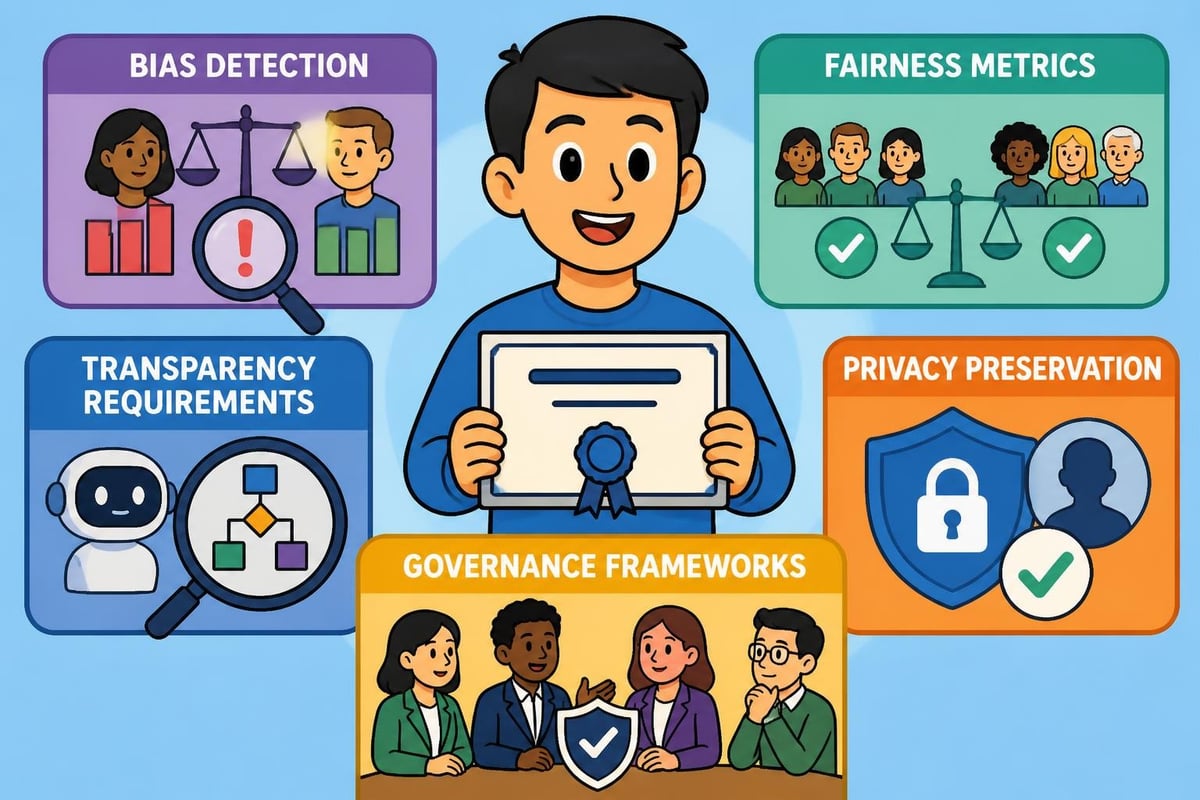
Modern AI certifications must address responsible AI practices. IBM's certification content increasingly emphasizes ethical considerations, bias mitigation, and governance frameworks-reflecting enterprise demands for trustworthy AI systems.
The academic perspective on AI certification ethics outlines baseline requirements that certification programs should incorporate:
- Transparency requirements: Understanding how AI models make decisions
- Fairness evaluation: Detecting and mitigating bias in training data and model outputs
- Accountability frameworks: Establishing clear responsibility for AI system behavior
- Privacy preservation: Implementing techniques like differential privacy and federated learning
- Human oversight: Maintaining human-in-the-loop decision processes for high-stakes applications
IBM certification exams test knowledge of these principles through scenario-based questions. Candidates must demonstrate ability to identify ethical risks and recommend appropriate governance controls.
Certification Maintenance and Recertification
IBM AI certifications remain valid for three years from the date of achievement. As AI technologies evolve rapidly, IBM requires certified professionals to demonstrate continued competency through recertification.
Recertification Options
IBM offers flexible pathways for maintaining certification status:
Option 1: Pass Current Exam Version
- Take the latest version of the certification exam
- Demonstrates knowledge of updated platform features and emerging AI capabilities
- Standard exam fees apply
Option 2: Complete Continuing Education Credits
- Earn 30 professional development units (PDUs) over three years
- Activities include conference attendance, published research, teaching, or advanced coursework
- Submit documentation to IBM Training for review
Option 3: Achieve Higher-Level Certification
- Earning a professional or specialist certification automatically renews lower-level credentials
- Encourages continuous skill advancement
- Most cost-effective path for career progression
The three-year certification cycle aligns with technology refresh patterns in enterprise AI. Organizations upgrading to newer platform versions benefit from having recently recertified team members familiar with current capabilities.
Comparing IBM AI Certification to Alternatives
The AI certification market includes offerings from multiple vendors, cloud providers, and industry organizations. Understanding how IBM credentials compare helps professionals make informed investment decisions.
Vendor Certification Landscape
| Certification | Focus Area | Cost | Duration | Platform Dependency |
|---|---|---|---|---|
| IBM AI v1 Associate | Enterprise AI, watsonx | $200 | 90 min | IBM platforms |
| Microsoft Azure AI Engineer | Cloud AI services | $165 | 120 min | Azure ecosystem |
| Google Cloud Professional ML Engineer | Production ML systems | $200 | 120 min | GCP ecosystem |
| AWS Machine Learning Specialty | Cloud ML deployment | $300 | 180 min | AWS ecosystem |
| CompTIA AI+ | Vendor-neutral AI concepts | $349 | 90 min | Platform agnostic |
IBM certifications excel in environments where watsonx, Watson products, or IBM Cloud form the foundation of AI infrastructure. Organizations with existing IBM investments gain maximum value from certified professionals who deeply understand the platform ecosystem.
For professionals building multi-cloud expertise, combining IBM credentials with Azure AI certifications or AWS machine learning certifications demonstrates versatility across major enterprise platforms.
Practical Applications and Use Cases
IBM artificial intelligence certification preparation develops skills immediately applicable to real-world AI projects. The certification content emphasizes production deployment rather than academic exercises.
Common Implementation Scenarios
Customer Service Automation: Deploying watsonx Assistant for intelligent chatbot implementations requires understanding natural language processing, intent classification, and dialog management-all covered in IBM AI certification curricula.
Document Intelligence: Organizations processing unstructured documents use Watson Discovery for content extraction, classification, and knowledge mining. Certified professionals design extraction pipelines that handle diverse document formats and languages.
Predictive Maintenance: Industrial clients implement ML models that predict equipment failures based on sensor data. IBM certification preparation includes time series analysis, anomaly detection, and model deployment to edge devices.
Risk Assessment: Financial services firms leverage AI for credit risk evaluation, fraud detection, and regulatory compliance. IBM certifications address model interpretability and audit requirements essential for regulated industries.
Healthcare Analytics: Clinical decision support systems require specialized AI implementations that meet HIPAA compliance and clinical validation standards. IBM's healthcare-specific AI tools and certification content address these unique requirements.
These use cases demonstrate why practical, hands-on experience complements certification study. MammothClub's interactive bootcamps provide project-based learning that mirrors real implementation challenges.
Advanced Learning Pathways Beyond Certification
Certification represents a milestone rather than a destination. Professionals who earn IBM artificial intelligence certification typically continue skill development through specialized training in emerging AI domains.
Post-Certification Skill Development
Generative AI and Foundation Models: As large language models transform enterprise applications, certified professionals explore prompt engineering, retrieval-augmented generation, and fine-tuning techniques. Understanding OpenAI integration patterns and multi-model orchestration extends IBM certification foundations.
MLOps and Production Systems: Moving from model development to production deployment requires expertise in continuous integration/continuous deployment (CI/CD) for ML, model monitoring, and performance optimization. These operational skills complement certification knowledge.
Domain Specialization: Industry-specific AI applications demand vertical expertise. Healthcare AI requires understanding of clinical workflows, regulatory requirements, and interoperability standards. Financial services AI needs knowledge of risk modeling, fraud patterns, and compliance frameworks.
AI Research and Innovation: Some certified professionals pursue research roles exploring novel architectures, training methodologies, or application domains. Academic programs and industry research labs value practical certification combined with theoretical depth.
Strategic Timing and Market Considerations
The decision to pursue IBM artificial intelligence certification should align with career objectives, market conditions, and organizational AI adoption timelines.
Optimal Certification Timing
Early-Career Professionals: Entry-level technologists benefit from certification as a credibility builder when lacking extensive project experience. The structured learning path accelerates competency development and improves employment prospects.
Mid-Career Transitions: Professionals pivoting from traditional software development, data analysis, or IT operations use certifications to validate AI skills and facilitate role transitions. Certification combined with portfolio projects demonstrates commitment to the new career direction.
Enterprise AI Adoption Phases: Organizations in planning or early implementation stages gain maximum value from certified team members who can guide tool selection, architecture decisions, and initial deployments. Late-stage implementations may prioritize hands-on experience over credentials.
Technology Refresh Cycles: Companies upgrading to newer IBM AI platform versions need certified professionals familiar with current capabilities. Timing certification to coincide with organizational platform upgrades maximizes immediate applicability.
The AI skills market in 2026 shows sustained demand across industries. While certification alone doesn't guarantee employment, it significantly strengthens candidacy when combined with practical experience and demonstrable project contributions.
IBM artificial intelligence certification provides structured validation of enterprise AI skills that employers recognize and value. The combination of foundational knowledge, platform-specific expertise, and ethical AI principles prepares professionals for production AI implementation challenges. Whether you're starting your AI career or advancing to specialized roles, MammothClub offers the comprehensive training resources, hands-on labs, and certification preparation tools you need to succeed. Our AI-powered learning platform tracks your progress across 3,000+ courses, ensuring you build job-ready skills efficiently and achieve your certification goals faster.