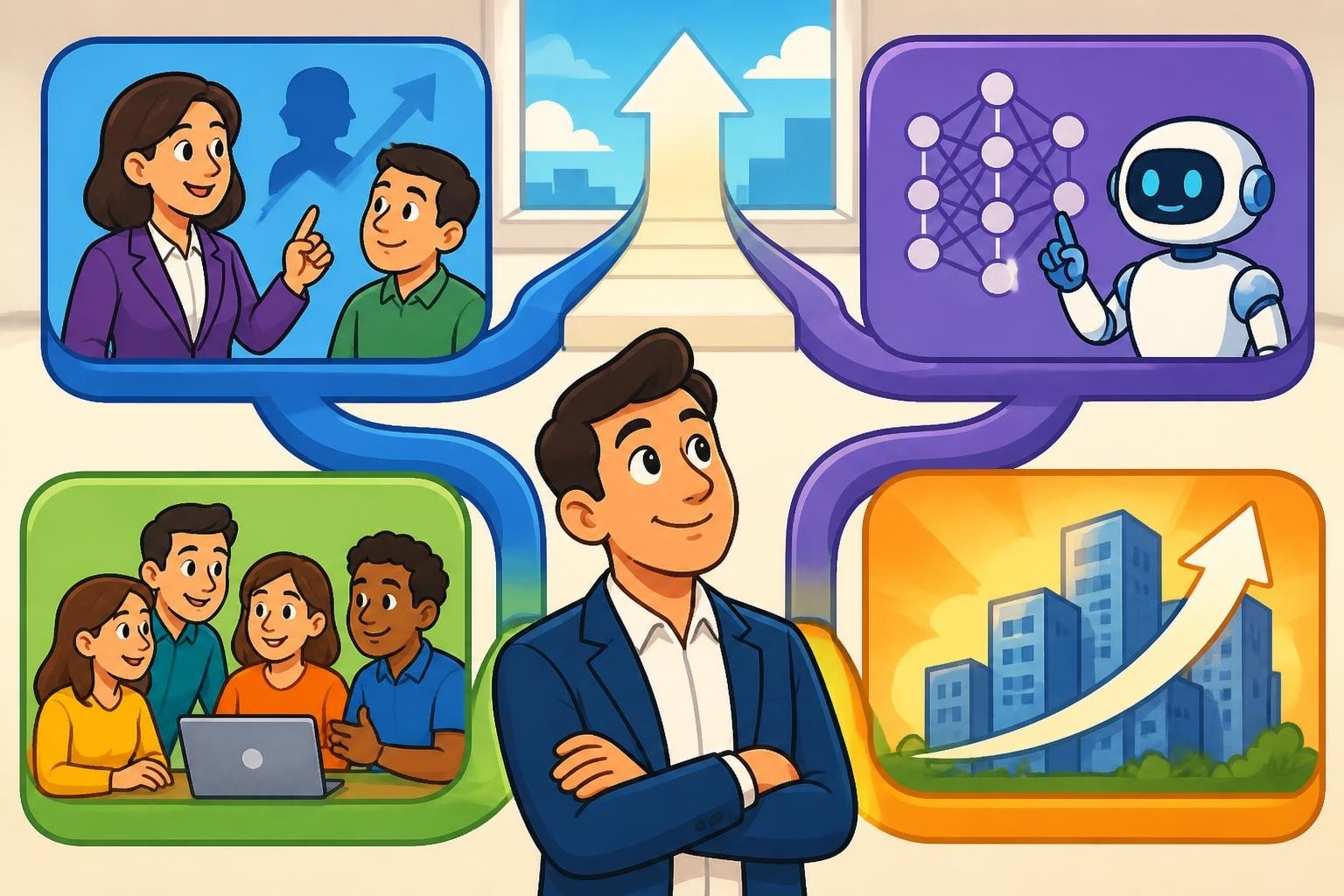
The demand for artificial intelligence and machine learning expertise has reached unprecedented levels in 2026, with organizations across every sector racing to integrate intelligent systems into their operations. Professionals who invest in the best AI ML courses today position themselves at the forefront of this technological revolution, commanding premium salaries and shaping the future of their industries. With thousands of training options available, from university programs to vendor certifications and self-paced platforms, choosing the right learning path requires careful evaluation of curriculum quality, practical application, credential recognition, and alignment with your career goals.
Understanding the AI ML Learning Landscape
The artificial intelligence and machine learning education ecosystem has evolved dramatically over the past few years. Where traditional computer science degrees once dominated, we now see a rich tapestry of learning options designed for different experience levels, time commitments, and career objectives.
Modern AI ML training typically falls into five categories:
- University-affiliated programs offering rigorous theoretical foundations
- Professional bootcamps focused on rapid skill acquisition
- Vendor certification tracks tied to specific platforms and tools
- Self-paced online courses providing flexible, on-demand learning
- Corporate training programs customized for organizational needs
Each format serves distinct purposes. Academic programs like Harvard's CS50 AI with Python excel at building deep conceptual understanding, while intensive bootcamps accelerate practical deployment skills. The best choice depends on your current knowledge level, available time, budget constraints, and whether you need formal credentials for career advancement.
Evaluating Course Quality and Relevance
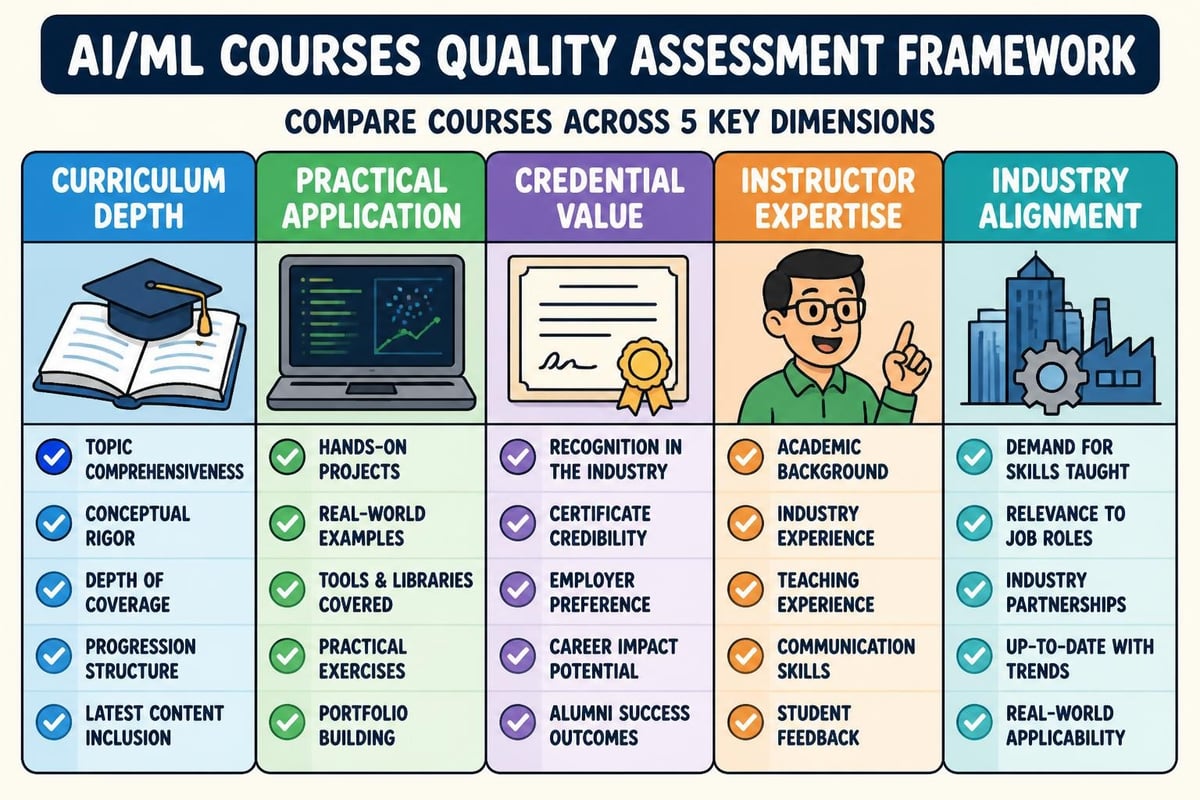
Not all AI ML training delivers equal value. The best AI ML courses share several distinguishing characteristics that separate effective programs from superficial overviews.
Quality indicators include:
- Hands-on projects using real-world datasets and business scenarios
- Current curriculum covering 2026 technologies like large language models and generative AI
- Industry-recognized credentials that employers actively seek
- Expert instructors with both academic credentials and practical experience
- Active learning communities for peer support and networking
- Regular content updates reflecting rapid field evolution
The IEEE-USA provides comprehensive guidance on AI education standards that help learners evaluate program quality against professional workforce requirements. These benchmarks prove particularly valuable when comparing self-study options against formal degree programs.
Top-Tier University and Academic Programs
Academic institutions continue to produce some of the best AI ML courses available, particularly for learners seeking comprehensive theoretical foundations alongside practical skills.
Stanford's Machine Learning Specialization
Stanford's offerings, including CS229, represent the gold standard for mathematical rigor and algorithmic depth. These programs dive deep into statistical learning theory, optimization techniques, and the mathematical underpinnings that make modern AI possible.
The curriculum covers:
- Supervised learning (regression, classification, support vector machines)
- Unsupervised learning (clustering, dimensionality reduction)
- Deep learning fundamentals and neural network architectures
- Reinforcement learning and decision-making systems
- Practical advice for applying ML in production environments
While demanding, Stanford's approach builds the foundational knowledge that enables career-long adaptation as the field evolves. Students who complete these programs can read research papers, understand novel architectures, and reason about model behavior at a fundamental level.
MIT's Generative AI Programs
MIT has responded to recent AI advances with specialized professional education. Their Driving Innovation with Generative AI course targets working professionals who need to understand and deploy generative models in business contexts.
This professional certificate emphasizes:
- Transformer architectures and attention mechanisms
- Prompt engineering and fine-tuning strategies
- Ethical considerations and bias mitigation
- Business case development and ROI measurement
- Integration with existing enterprise systems
The MIT approach combines CSAIL research insights with practical case studies, making it particularly valuable for professionals who need to evaluate generative AI investments and lead implementation projects.
Professional Bootcamps and Intensive Programs
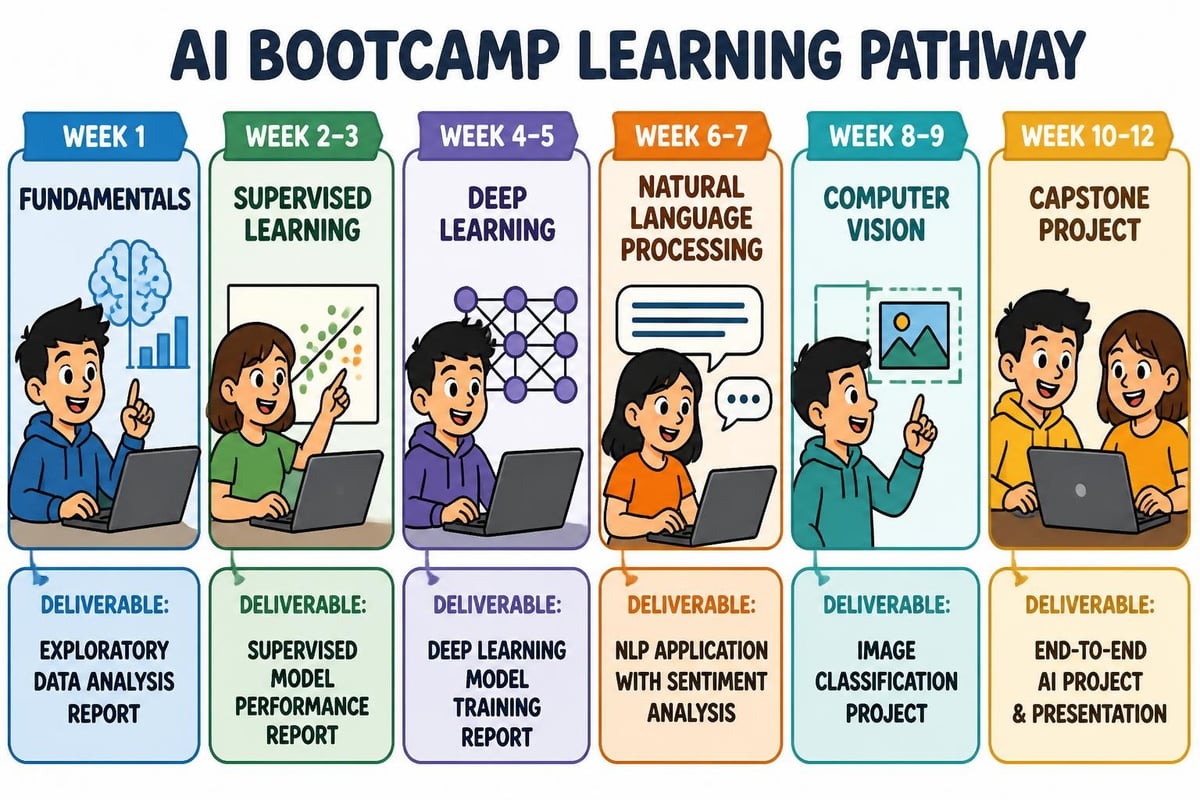
Intensive bootcamps have emerged as powerful alternatives to traditional education for professionals who need rapid skill acquisition. These programs compress months of learning into weeks through full-time immersion and project-based curricula.
Benefits of bootcamp-style learning:
- Accelerated timelines (8-16 weeks versus 1-2 years)
- Career services including resume review and interview prep
- Cohort learning with peer collaboration and networking
- Industry partnerships providing direct employer connections
- Practical focus on immediately deployable skills
Platforms offering AI specialization courses through bootcamp formats typically emphasize portfolio development, where students build 4-6 substantial projects demonstrating competency across the AI ML stack. These portfolios often prove more valuable during interviews than traditional credentials alone.
| Program Type | Duration | Time Commitment | Best For |
|---|---|---|---|
| Full-time bootcamp | 12-16 weeks | 40+ hrs/week | Career changers, unemployed learners |
| Part-time bootcamp | 24-32 weeks | 15-20 hrs/week | Working professionals |
| Self-paced intensive | 3-6 months | Flexible | Self-motivated learners with technical background |
| Corporate cohort | 8-12 weeks | 10-15 hrs/week | Teams upskilling together |
The intensive nature creates both challenge and opportunity. Students must be prepared for demanding schedules, but the immersive environment often produces faster skill development than part-time study spread over years.
Selecting the Right Bootcamp
Quality varies significantly across bootcamp providers. The best AI ML courses in this category maintain high admission standards, employ experienced practitioners as instructors, and provide extensive support throughout the learning journey.
MammothClub's interactive bootcamps, for example, combine expert-led instruction with AI-powered learning tools that personalize the experience based on individual progress and learning patterns. This hybrid approach maintains the benefits of cohort learning while adapting to each participant's needs.
Vendor Certifications and Platform-Specific Training
Technology vendors offer specialized training tied to their platforms and tools. While sometimes dismissed as marketing, the best vendor programs provide authoritative instruction on production deployment and real-world implementation.
Cloud Provider AI Certifications
Major cloud platforms offer comprehensive AI ML training:
- Azure AI certifications cover Microsoft's cognitive services and ML tools
- AWS Machine Learning certifications focus on SageMaker and production workflows
- Google Cloud ML certifications emphasize TensorFlow and Vertex AI
These credentials demonstrate platform-specific expertise that directly translates to job opportunities. Organizations hiring for cloud ML roles often require or strongly prefer relevant certifications. Those pursuing AI engineer certification paths frequently combine vendor credentials with broader educational programs.
NVIDIA Deep Learning Institute
NVIDIA's Deep Learning Institute provides particularly strong training on GPU-accelerated computing, model optimization, and deployment at scale. Their hands-on labs use actual GPU resources, giving students experience with the infrastructure they'll use in production environments.
The curriculum addresses:
- GPU-accelerated deep learning workflows
- Model optimization and inference acceleration
- Multi-GPU and distributed training strategies
- Foundation model deployment and fine-tuning
- MLOps practices for production systems
For professionals working in high-performance computing environments or deploying models requiring significant computational resources, NVIDIA certifications complement broader AI ML education with specialized infrastructure knowledge.
Free and Open Educational Resources
Cost need not be a barrier to accessing high-quality AI ML education. Several world-class institutions and organizations provide the best AI ML courses entirely free, democratizing access to cutting-edge knowledge.
Google's Machine Learning Crash Course
Google's Machine Learning Crash Course offers an exceptional starting point for beginners. This free program includes video lectures, interactive visualizations, and hands-on exercises covering fundamental concepts through practical implementation.
The curriculum progresses logically through:
- ML fundamentals and problem framing
- Data preparation and feature engineering
- TensorFlow basics and model building
- Neural networks and deep learning concepts
- Production ML and deployment considerations
- Fairness, bias, and responsible AI practices
Google regularly updates the course to reflect current best practices, including recent additions on large language models and embeddings. The practical focus and industry perspective make this particularly valuable for self-taught learners building foundational knowledge.
Fast.ai's Practical Deep Learning
The fast.ai Practical Deep Learning for Coders course takes a unique top-down approach, starting with working code and building conceptual understanding through implementation. This philosophy makes deep learning accessible to programmers without advanced mathematics backgrounds.
Students begin building useful models in the first lesson, then progressively develop deeper understanding of the underlying theory. This approach maintains motivation and demonstrates practical value while building theoretical foundations.
The course emphasizes:
- Rapid prototyping and experimentation
- Transfer learning and pre-trained models
- Practical techniques for model improvement
- Real-world deployment considerations
- Ethical AI development practices
For coders who learn best by doing, fast.ai represents one of the best AI ML courses available, particularly given its completely free access to comprehensive materials and community support.
Specialized AI ML Learning Paths
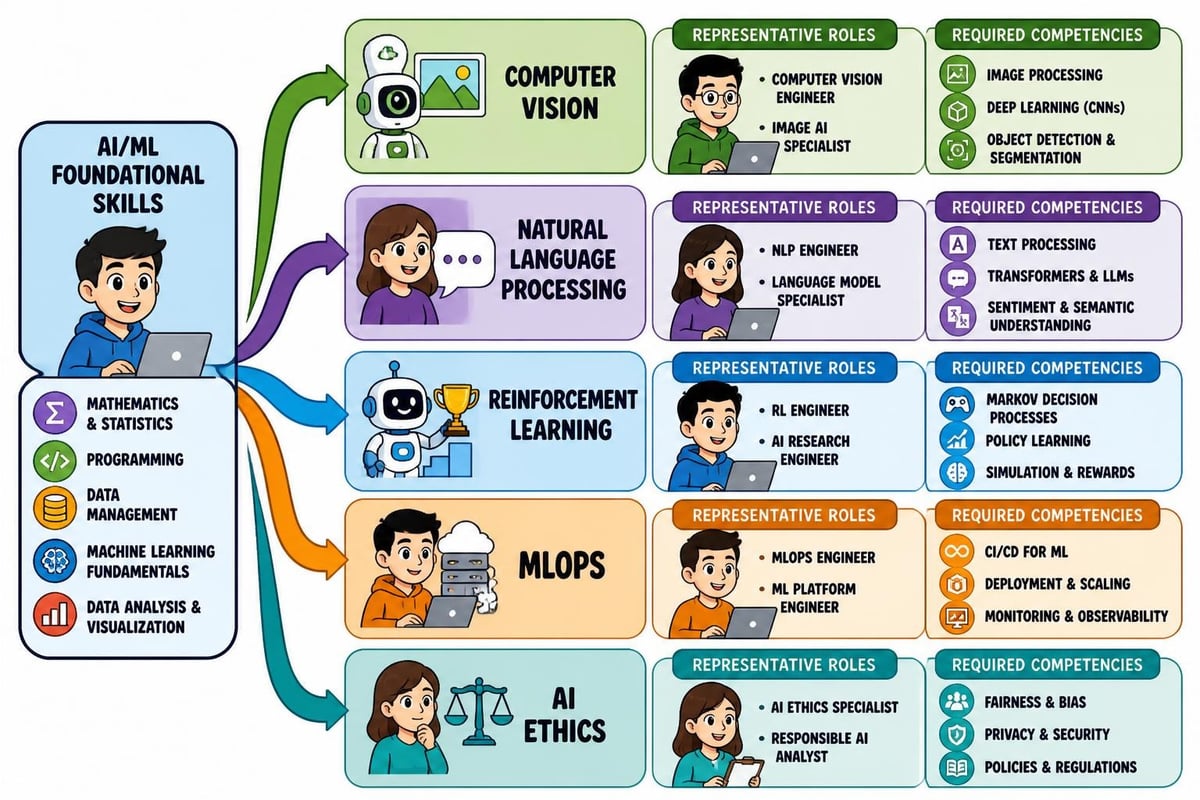
As the field matures, specialization becomes increasingly important. While foundational knowledge remains essential, many professionals achieve greatest career impact by developing deep expertise in specific AI ML domains.
Computer Vision and Image Processing
Computer vision applications drive massive value across industries from healthcare to autonomous vehicles. Specialized training in this domain covers:
- Convolutional neural networks and modern architectures
- Object detection and instance segmentation
- Image classification and feature extraction
- Video analysis and temporal modeling
- Generative models for image synthesis
Professionals pursuing advanced AI courses in computer vision typically need strong Python programming skills and solid linear algebra foundations before tackling specialized material.
Natural Language Processing and LLMs
The explosion of large language models has made NLP expertise exceptionally valuable. Specialized NLP training addresses:
- Transformer architectures and attention mechanisms
- Pre-training, fine-tuning, and prompt engineering
- Semantic understanding and reasoning
- Multimodal models combining text and images
- Retrieval-augmented generation and knowledge integration
These programs often include substantial project work building chatbots, document analysis systems, and other language-centric applications that demonstrate mastery to potential employers.
MLOps and Production Systems
Deploying models to production requires distinct skills beyond model development. MLOps specializations cover:
| MLOps Component | Key Skills | Common Tools |
|---|---|---|
| Model versioning | Experiment tracking, reproducibility | MLflow, Weights & Biases |
| Pipeline automation | Workflow orchestration, scheduling | Airflow, Kubeflow |
| Model serving | API development, scaling | TensorFlow Serving, TorchServe |
| Monitoring | Performance tracking, drift detection | Prometheus, custom dashboards |
| Governance | Compliance, documentation | Custom frameworks, audit tools |
Organizations increasingly recognize that model development represents only a fraction of successful AI implementation. Professionals with MLOps expertise command premium compensation because they bridge the gap between research and production value.
Corporate and Team Training Solutions
Organizations need different approaches than individual learners. The best AI ML courses for corporate contexts prioritize team alignment, organizational knowledge building, and measurable business outcomes.
Building Internal AI Capabilities
Successful corporate AI training programs share several characteristics:
- Customized curriculum addressing specific organizational challenges
- Cohort-based delivery enabling cross-functional collaboration
- Executive sponsorship ensuring resources and accountability
- Practical projects using actual company data and use cases
- Progress measurement through assessments and skill demonstrations
MammothClub's corporate certification programs exemplify this approach, combining 3,000+ on-demand courses with customized bootcamps and AI-powered dashboards that track team progress and skill development. This enables training leaders to demonstrate ROI and identify knowledge gaps requiring additional attention.
Scaling AI Education Across Organizations
Different roles require different depths of AI ML knowledge. Effective organizational programs typically provide:
Three-tier learning architecture:
- Executive awareness (4-8 hours): Strategic implications, use case identification, investment decisions
- Practitioner skills (40-120 hours): Hands-on model development, deployment, and optimization
- Specialist expertise (200+ hours): Deep technical mastery in specific domains
This tiered approach ensures everyone understands AI's potential while concentrating intensive training resources on roles that directly build and deploy models. Organizations can explore MammothClub's pricing options to find corporate training solutions matching their scale and objectives.
Continuing Education and Staying Current
AI ML evolves so rapidly that initial training represents only the beginning. Professionals must commit to continuous learning to maintain expertise and career competitiveness.
Effective Strategies for Ongoing Learning
Sustainable approaches to staying current include:
- Research paper reading through arXiv and conference proceedings
- Project-based learning implementing new techniques in practice applications
- Community participation in forums, meetups, and online discussions
- Conference attendance at NeurIPS, ICML, CVPR, and other major events
- Micro-credentials through short courses on emerging topics
- Teaching and mentoring to solidify understanding through explanation
The ACM's CS2023 curriculum guidance provides valuable perspective on how computing education adapts to rapid technological change, offering insights applicable to professional development planning.
Balancing Depth and Breadth
Career stage influences optimal learning strategy. Early-career professionals typically benefit from broad exposure across AI ML domains, while experienced practitioners often gain more by deepening expertise in narrower specializations.
MammothClub's extensive course catalog enables both approaches, allowing learners to explore broadly through 3,000+ on-demand offerings while diving deep through specialized bootcamps and certification tracks. The platform's AI-powered recommendations help learners navigate this breadth efficiently.
Making Your Course Selection Decision
Choosing among the best AI ML courses requires honest assessment of your current situation, goals, and constraints.
Decision framework:
| Factor | Questions to Ask | Impact on Choice |
|---|---|---|
| Current knowledge | Do I understand programming? Linear algebra? Calculus? | Determines starting level |
| Time availability | Can I commit full-time or only evenings/weekends? | Suggests format (bootcamp vs. self-paced) |
| Budget | What can I invest? Does my employer sponsor training? | Narrows options |
| Career goals | Do I need credentials? Specific platform skills? | Identifies required certifications |
| Learning style | Do I learn best through projects, theory, or videos? | Matches to teaching approach |
| Timeline | How quickly do I need these skills? | Balances depth vs. speed |
Most successful learners combine multiple resources rather than relying on a single program. For example, pairing Google's Machine Learning Crash Course with a specialized bootcamp and vendor certifications creates comprehensive preparation spanning theory, practice, and platform-specific expertise.
Investment Return Considerations
AI ML skills command significant salary premiums across industries. According to recent compensation data, professionals with verified AI ML expertise earn 30-50% more than peers in comparable roles without these skills.
When evaluating programs, calculate total cost including:
- Direct tuition and course fees
- Opportunity cost of time spent learning
- Credential maintenance and renewal fees
- Supplementary resources (books, hardware, cloud credits)
Compare these costs against expected salary increases, expanded career opportunities, and enhanced job security. Most professionals recoup educational investments within 6-18 months through increased compensation or new role opportunities.
Building Your AI ML Learning Journey
The path to AI ML mastery spans months or years, not weeks. Sustainable success requires strategic planning, consistent effort, and adaptive learning approaches.
Recommended Learning Sequence
Progressive skill development typically follows this pattern:
- Foundations (2-3 months): Python programming, statistics, linear algebra
- ML fundamentals (2-3 months): Classical algorithms, model evaluation, basic deployment
- Deep learning (3-4 months): Neural networks, common architectures, frameworks
- Specialization (4-6 months): Domain focus (vision, NLP, etc.) with substantial projects
- Production skills (2-3 months): MLOps, scaling, monitoring, governance
- Continuous learning (ongoing): New techniques, tools, and best practices
This timeline assumes part-time study (10-15 hours weekly). Full-time learners can compress this sequence significantly through intensive bootcamps and focused practice.
Those pursuing certification in machine learning should integrate credential preparation throughout their learning journey rather than treating certifications as separate activities. This approach reinforces learning while building formal credentials.
Creating Accountability and Momentum
Self-directed learning requires discipline and structure. Effective strategies include:
- Study schedules with specific time blocks and deliverables
- Learning partners for accountability and discussion
- Public commitments through blog posts or social media
- Project deadlines creating urgency and forcing completion
- Progress tracking celebrating milestones and identifying struggles
Platforms offering structured learning paths and progress dashboards help maintain momentum. MammothClub's AI-powered tracking tools, for instance, provide visibility into skill development and suggest next steps based on individual progress patterns.
Platform and Format Comparison
Understanding how different platforms deliver the best AI ML courses helps match learning preferences to program characteristics.
Self-Paced Online Platforms
Strengths:
- Ultimate flexibility in timing and pace
- Lower cost than intensive programs
- Broad topic coverage and multiple instructors
- Ability to preview courses before committing
Limitations:
- Requires strong self-discipline
- Limited direct instructor interaction
- Variable content quality across courses
- May lack comprehensive career services
Popular platforms in this category include Coursera, edX, and specialized AI learning platforms. MammothClub's 3,000+ on-demand courses provide extensive choice while maintaining consistent quality standards through curated content and expert review.
Live Instructor-Led Programs
Strengths:
- Real-time feedback and question answering
- Structured schedule maintaining momentum
- Peer interaction and networking
- Higher completion rates than self-paced options
Limitations:
- Fixed schedules may conflict with other commitments
- Higher cost reflecting instructor time
- Less flexibility to revisit difficult concepts
- Geographic or time zone constraints for live sessions
Hybrid models combining recorded content with live office hours and project reviews often provide optimal balance between flexibility and support.
Choosing Based on Learning Style
Different learners thrive in different environments. Reflective learners who need time to absorb concepts often prefer self-paced formats allowing repeated review. Active learners who understand through discussion benefit from cohort-based programs with peer interaction.
Honest self-assessment of past learning experiences guides format selection. Consider when you've successfully learned complex material and what environmental factors contributed to that success.
Selecting the best AI ML courses requires balancing program quality, learning format, cost, and personal circumstances against career objectives and timeline constraints. The strongest preparation typically combines rigorous foundational training, specialized domain expertise, hands-on project experience, and recognized credentials that signal competency to employers. Whether you choose university programs, intensive bootcamps, vendor certifications, or self-paced learning, consistent effort and practical application matter more than any single credential. Ready to accelerate your AI ML journey with expert-designed curriculum, interactive learning tools, and measurable skill development? Explore how MammothClub's 3,000+ courses, bootcamps, and AI-powered dashboards help professionals and teams master AI faster and achieve results that drive competitive advantage.