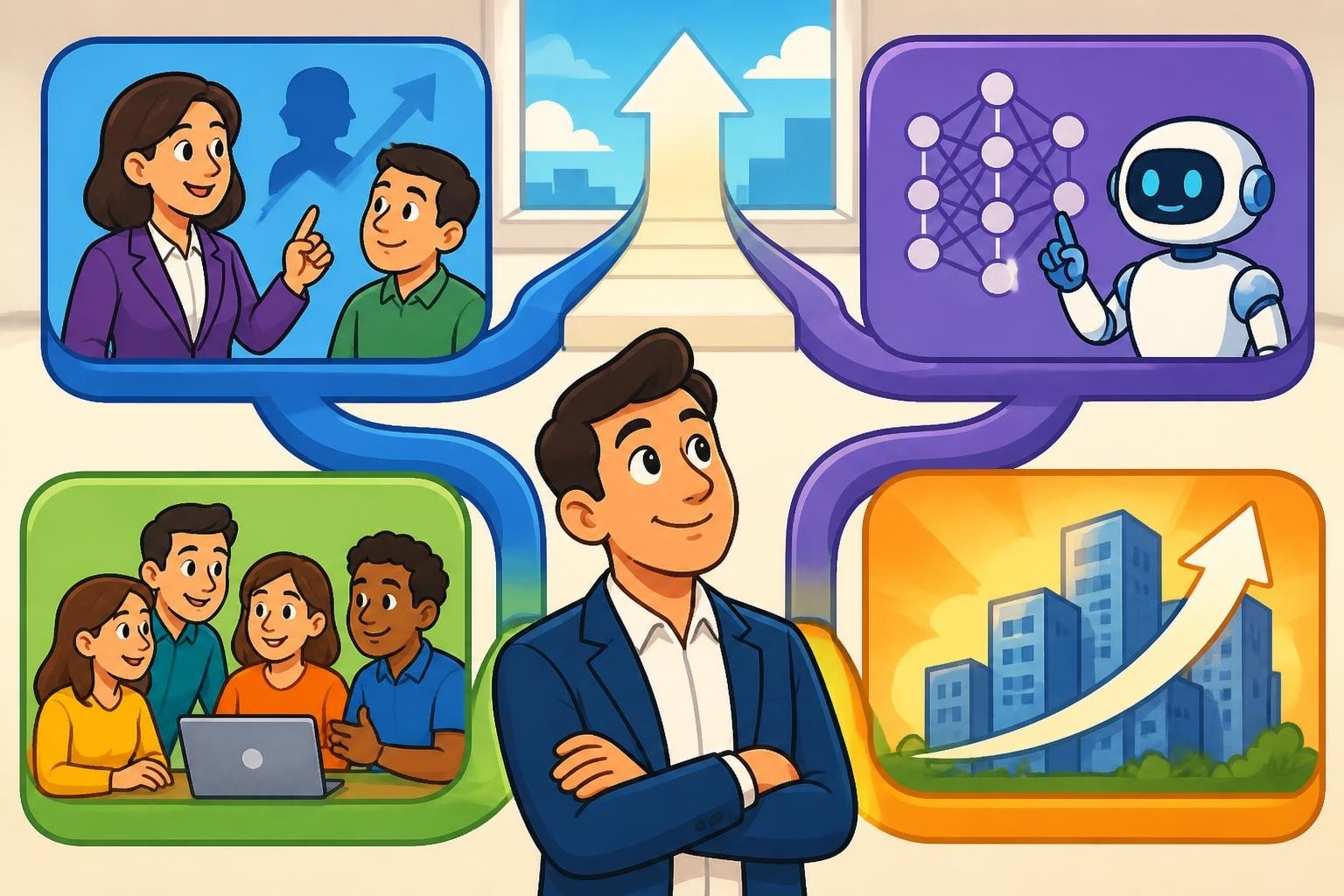
The artificial intelligence revolution has created unprecedented demand for skilled AI programmers who can build, deploy, and maintain intelligent systems. An effective ai programming course bridges the gap between theoretical understanding and practical implementation, equipping learners with the tools to develop machine learning models, neural networks, and AI-powered applications that solve real business problems. Whether you're a software developer transitioning into AI or a professional seeking to upskill in this transformative field, selecting the right training program determines your success in this rapidly evolving domain.
Core Components of an Effective AI Programming Curriculum
A comprehensive ai programming course must balance theoretical foundations with hands-on coding experience. The curriculum should start with essential prerequisites including Python programming, linear algebra, probability, and statistics, then progress through supervised and unsupervised learning algorithms before advancing to deep learning architectures.
Mathematical Foundations and Programming Fundamentals
Mathematics forms the backbone of AI development. Learners need solid grounding in:
- Linear algebra (vectors, matrices, eigenvalues)
- Calculus (derivatives, gradients, optimization)
- Probability theory and statistics
- Information theory basics
Python dominates the AI programming landscape due to its rich ecosystem of libraries and frameworks. A quality course dedicates substantial time to NumPy for numerical computing, Pandas for data manipulation, and Matplotlib/Seaborn for visualization before introducing specialized AI libraries.
The Google Machine Learning Crash Course provides an excellent foundation for understanding these core concepts through interactive exercises that reinforce mathematical principles alongside practical coding.
Machine Learning Algorithms and Implementation
Traditional machine learning algorithms remain essential building blocks that every AI programmer must master. Your course should include implementation exercises for:
- Supervised Learning: Linear regression, logistic regression, decision trees, random forests, support vector machines
- Unsupervised Learning: K-means clustering, hierarchical clustering, principal component analysis, autoencoders
- Ensemble Methods: Boosting algorithms, gradient boosting machines, stacking techniques
- Model Evaluation: Cross-validation, confusion matrices, ROC curves, precision-recall metrics
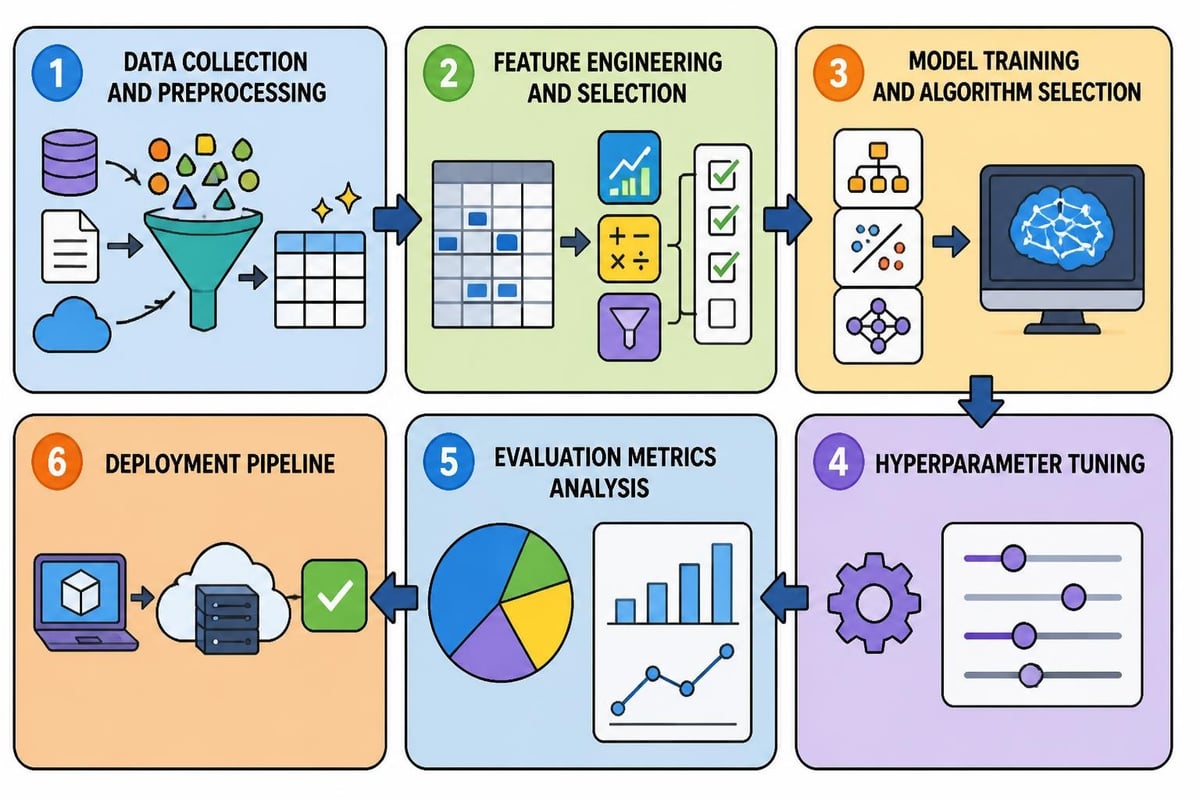
Each algorithm should be taught through a combination of theoretical explanation, mathematical derivation, and practical coding exercises using scikit-learn. The fast.ai approach demonstrates how code-first instruction accelerates learning by letting students see results quickly before diving deeper into underlying theory.
Deep Learning Frameworks and Neural Network Architectures
Modern AI programming requires proficiency in deep learning frameworks that enable rapid prototyping and production deployment. An ai programming course must provide extensive hands-on experience with these tools and architectural patterns.
TensorFlow and PyTorch Mastery
Both TensorFlow and PyTorch have become industry standards, each with distinct advantages. Professional AI programmers should be comfortable with both frameworks.
| Framework | Strengths | Best Use Cases |
|---|---|---|
| TensorFlow | Production deployment, mobile/edge AI, comprehensive ecosystem | Large-scale systems, enterprise applications, TensorFlow Serving |
| PyTorch | Research flexibility, intuitive debugging, dynamic computation graphs | Research projects, rapid prototyping, academic work |
| JAX | High-performance computing, automatic differentiation | Scientific computing, performance-critical applications |
Your training should include building neural networks from scratch before leveraging high-level APIs like Keras or PyTorch Lightning. This progression builds deep understanding of backpropagation, gradient descent variants, and optimization techniques that separate competent programmers from those who merely apply black-box solutions.
Neural Network Architectures and Applications
Different problems require different architectural approaches. Comprehensive coverage should include:
Convolutional Neural Networks (CNNs) for computer vision tasks including image classification, object detection (YOLO, R-CNN families), semantic segmentation, and image generation. Students should implement networks from foundational architectures like LeNet and AlexNet through modern designs like ResNet, EfficientNet, and Vision Transformers.
Recurrent Neural Networks (RNNs) and Transformers for sequential data and natural language processing. The curriculum must cover LSTMs and GRUs before transitioning to attention mechanisms and transformer architectures that power modern language models.
Generative Models including Variational Autoencoders (VAEs) and Generative Adversarial Networks (GANs) for creative AI applications. Advanced courses should explore diffusion models that have revolutionized image generation since 2022.
Working with Large Language Models and Modern AI APIs
The explosion of large language models since 2023 has fundamentally changed AI programming. A current ai programming course must teach students how to effectively work with these powerful tools rather than building everything from scratch.
API Integration and Prompt Engineering
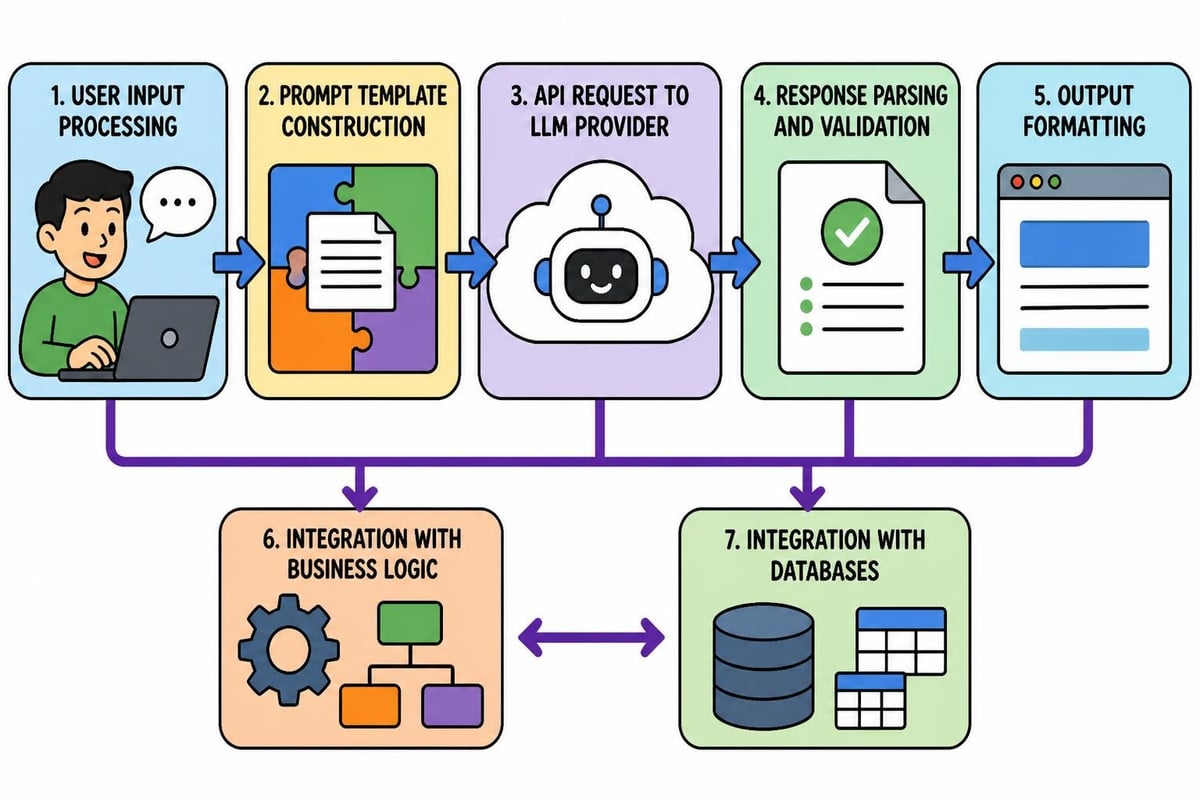
Professional AI developers increasingly orchestrate pre-trained models through APIs rather than training custom models for every task. The OpenAI API documentation provides comprehensive guidance for integrating state-of-the-art language models into applications.
Key skills include:
- Crafting effective prompts for different tasks (classification, generation, reasoning)
- Managing conversation context and memory
- Implementing function calling and tool use
- Handling rate limits, errors, and fallback strategies
- Cost optimization through caching and prompt compression
Beyond OpenAI, students should gain experience with Anthropic's Claude, Google's Gemini, and open-source alternatives through Hugging Face, learning to select the appropriate model for specific requirements based on cost, latency, capability, and privacy considerations.
Fine-Tuning and Retrieval-Augmented Generation
While API access suffices for many applications, advanced developers need skills in model customization. Your course should cover:
- Fine-tuning techniques: Parameter-efficient methods like LoRA and QLoRA that enable customization without massive compute resources
- Retrieval-Augmented Generation (RAG): Combining language models with external knowledge bases through vector databases and semantic search
- Evaluation frameworks: Systematic approaches to measuring model performance beyond simple accuracy metrics
The MIT Artificial Intelligence course materials provide theoretical grounding in knowledge representation that supports understanding how RAG systems bridge symbolic and neural approaches.
Practical Projects and Portfolio Development
Theory and isolated exercises don't create job-ready AI programmers. An exceptional ai programming course requires substantial project work that mirrors real-world development challenges.
Progressive Complexity in Projects
Effective project sequences build confidence while introducing increasingly sophisticated concepts:
Beginner Projects focus on applying single algorithms to well-defined problems: spam classification, house price prediction, customer segmentation, or sentiment analysis using pre-processed datasets.
Intermediate Projects require end-to-end development including data collection, preprocessing, feature engineering, model selection, and evaluation. Examples include building a recommendation system, creating a chatbot with intent classification, or developing an image classifier for a specific domain.
Advanced Capstone Projects should address open-ended problems requiring architectural decisions, multiple integrated components, and deployment considerations. Strong options include:
- Building a multimodal search engine combining text and image embeddings
- Creating an AI-powered content generation pipeline with quality controls
- Developing a real-time fraud detection system with model monitoring
- Implementing a RAG-based question-answering system for enterprise documentation
Portfolio projects demonstrate capabilities to potential employers far more effectively than certificates alone. Encourage students to publish code on GitHub with comprehensive documentation and write blog posts explaining their design decisions and lessons learned.
Industry-Specific Applications and Specializations
Generic AI programming knowledge forms the foundation, but specialization in specific domains significantly increases career opportunities and earning potential. Modern ai programming course offerings should provide pathways into high-demand sectors.
Healthcare and Biomedical AI
Medical imaging analysis, drug discovery, genomics, and clinical decision support systems require specialized knowledge of regulatory requirements (HIPAA, FDA approval processes), medical data formats (DICOM, FHIR), and domain-specific challenges like class imbalance and interpretability requirements.
Specialized modules should cover privacy-preserving techniques including federated learning and differential privacy that enable AI development while protecting sensitive patient information.
Financial Technology and Trading
AI applications in finance span fraud detection, algorithmic trading, credit scoring, and risk management. Financial AI programming requires understanding market microstructure, regulatory compliance, and real-time inference constraints.
For professionals interested in this specialization, exploring an ai trading course provides focused training on building and backtesting trading algorithms with appropriate risk management frameworks.
Natural Language Processing and Conversational AI
The conversational AI sector has exploded with applications ranging from customer service automation to virtual assistants. Specialized training should cover dialogue management, entity extraction, multi-turn conversation handling, and integration with business systems.
Students building conversational applications benefit from dedicated training in ChatGPT course content that explores prompt engineering, fine-tuning for specific domains, and production deployment patterns for LLM-based applications.
Assessment, Certification, and Career Progression
Effective learning requires robust assessment that validates skill acquisition and identifies knowledge gaps. An ai programming course should employ multiple evaluation methods throughout the curriculum.
Multi-Modal Assessment Approaches
| Assessment Type | Purpose | Implementation |
|---|---|---|
| Coding Challenges | Verify programming proficiency | Automated testing, time-boxed exercises |
| Theoretical Exams | Ensure conceptual understanding | Multiple choice, short answer questions |
| Project Reviews | Assess end-to-end capabilities | Code review, documentation evaluation |
| Peer Reviews | Develop critical analysis skills | Structured rubrics, collaborative feedback |
| Presentations | Practice communicating technical concepts | Video submissions, live demonstrations |
Progressive difficulty ensures learners build confidence while being appropriately challenged. Early assessments should focus on fundamentals with generous time limits, while later evaluations introduce time pressure and ambiguous requirements that mirror real-world constraints.
Certification Value and Industry Recognition
Professional certification demonstrates competence to employers but varies significantly in market value. Certifications from major technology companies (Google, Microsoft, AWS) carry weight due to rigorous requirements and industry recognition.
Academic credentials from accredited institutions provide foundational credibility, while specialized certifications in frameworks (TensorFlow Developer Certificate) or domains (healthcare AI) signal deep expertise in specific areas.
The CS2023 curricular guidelines from ACM and IEEE-CS provide frameworks for evaluating curriculum comprehensiveness and alignment with industry needs, helping learners assess program quality before investing time and money.
Ethical AI Development and Responsible Practices
AI systems impact millions of lives, making ethical considerations essential rather than optional. Every ai programming course must integrate responsible AI development practices throughout the curriculum rather than treating ethics as an afterthought.
Bias Detection and Mitigation
Algorithmic bias emerges from training data, model architecture, and deployment context. Practical training should include:
- Data auditing techniques: Identifying representation gaps and statistical imbalances before training
- Fairness metrics: Understanding precision parity, equalized odds, and demographic parity
- Mitigation strategies: Pre-processing interventions, in-processing constraints, and post-processing adjustments
- Testing protocols: Evaluating model performance across demographic subgroups
Students should work with real datasets exhibiting known biases, implementing detection and mitigation techniques while understanding that technical solutions cannot fully address societal inequities.
Privacy, Security, and Transparency
AI systems often process sensitive information and make consequential decisions requiring appropriate safeguards. Essential topics include:
- Data privacy: Anonymization techniques, differential privacy, encrypted computation
- Model security: Adversarial robustness, backdoor detection, secure deployment
- Explainability: SHAP values, LIME, attention visualization, counterfactual explanations
- Documentation: Model cards, data sheets, system documentation standards
The survey on Generative AI for Education examines ethical considerations when AI systems are used in high-stakes educational contexts, providing frameworks applicable to diverse deployment scenarios.
Learning Resources and Community Engagement
Self-directed learning requires access to quality resources beyond structured coursework. Successful AI programmers cultivate learning habits that keep pace with rapid technological change.
Essential Learning Platforms and Resources
Beyond formal course materials, students should leverage:
Research Paper Repositories: ArXiv for cutting-edge research, Papers with Code for implementations alongside publications, and domain-specific journals for specialized applications.
Open-Source Projects: Contributing to established projects on GitHub builds practical skills while networking with experienced developers. Students should start with documentation improvements before progressing to bug fixes and feature development.
Technical Communities: Engaging with Stack Overflow, Reddit's r/MachineLearning, and specialized Discord servers provides problem-solving support and exposure to diverse approaches.
The comprehensive survey on Large Language Models for Education offers insights into how LLMs can augment learning while highlighting limitations that necessitate human expertise and critical thinking.
Continuous Learning and Skill Maintenance
AI technology evolves rapidly, making continuous learning essential for career longevity. Establish habits including:
- Weekly reading: Dedicating time to recent papers, blog posts, and technical documentation
- Monthly projects: Building small implementations of new techniques or papers
- Conference attendance: Following NeurIPS, ICML, CVPR (virtually or in-person) for field-wide developments
- Teaching others: Writing tutorials, answering questions, or mentoring beginners to solidify understanding
Professionals seeking comprehensive training across AI and machine learning disciplines can explore the full range of AI and ML courses online that cover emerging technologies alongside established foundations.
Corporate Training and Team Development
Organizations deploying AI solutions require cohesive teams with complementary skills. Corporate ai programming course implementations differ significantly from individual learning paths.
Customized Learning Pathways for Organizations
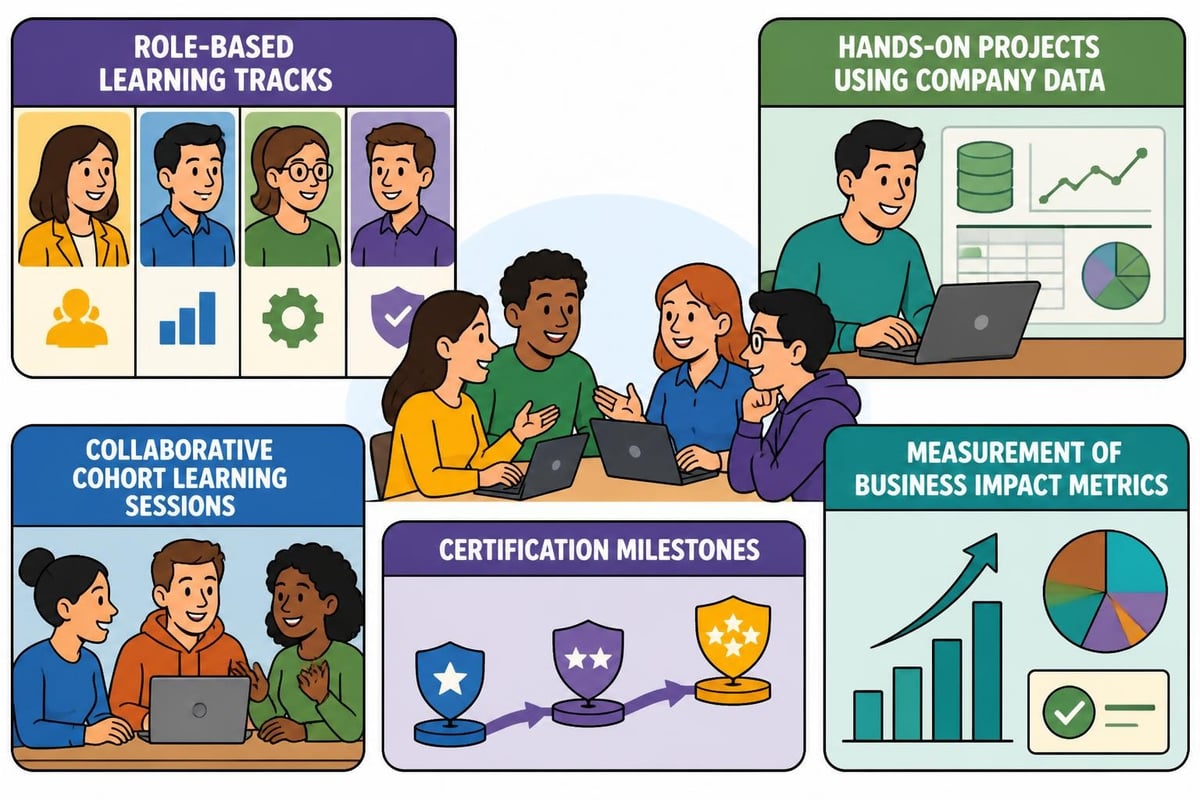
Effective corporate programs assess existing team capabilities before designing curricula that address specific skill gaps and business objectives. Key considerations include:
Role-Based Tracks: Data scientists need different skills than ML engineers or AI product managers. Customized paths ensure relevant training without overwhelming learners with unnecessary content.
Business Context Integration: Using company data, actual use cases, and organizational constraints in exercises increases engagement and immediate applicability.
Cohort Learning: Synchronized schedules enable peer learning, collaborative projects, and knowledge sharing that persist beyond formal training.
Measurement Frameworks: Defining success metrics (project completion rates, deployment frequency, business impact) ensures training investments demonstrate ROI.
Organizations seeking structured upskilling programs benefit from platforms offering AI engineer certification that validates team capabilities while providing learning pathways aligned with business goals.
Building Internal AI Capabilities
Beyond external training, organizations should develop:
- Internal knowledge bases: Documenting institutional knowledge, best practices, and lessons learned
- Code review processes: Establishing standards for AI code quality, testing, and documentation
- Experimentation platforms: Providing sandboxes for safe exploration without production consequences
- Mentorship programs: Pairing experienced practitioners with those developing skills
Investment in team development creates competitive advantages that individual hires cannot match, building organizational capability that persists despite personnel changes.
Selecting the Right AI Programming Course for Your Goals
The proliferation of AI training options creates choice paralysis. Systematic evaluation ensures you invest time and resources in programs aligned with your objectives.
Evaluation Criteria for Course Selection
Curriculum Depth and Currency: Review detailed syllabi to ensure coverage of modern techniques rather than outdated approaches. Courses updated in the past six months reflect current best practices, while those last revised before 2023 likely miss transformer architectures and LLM integration patterns.
Instructor Credentials: Evaluate teaching staff's practical experience, research contributions, and industry involvement. Instructors actively building AI systems bring insights that pure academics cannot match.
Project Quality: Examine capstone projects from previous cohorts. Sophisticated implementations addressing realistic problems indicate rigorous standards, while trivial exercises suggest superficial coverage.
Community and Support: Active student communities, responsive instructors, and ongoing alumni networks provide crucial support when encountering obstacles.
Flexibility and Format: Consider learning style preferences, time availability, and scheduling constraints. Self-paced courses suit working professionals, while structured bootcamps benefit those needing external accountability.
For comprehensive exploration of available options, reviewing resources on advanced AI course offerings helps identify programs matching your experience level and career aspirations.
Avoiding Common Pitfalls in AI Education
Many learners make predictable mistakes that delay mastery:
Tutorial Hell: Endlessly consuming courses without building original projects creates illusions of competence without developing problem-solving abilities. Limit tutorial time to 30% of learning hours, dedicating the remainder to hands-on building.
Theory Without Practice: Understanding mathematics without implementing algorithms leaves skills underdeveloped. Every concept should be coded, tested, and debugged to achieve deep comprehension.
Specialization Too Early: Focusing narrowly before establishing broad foundations limits adaptability as the field evolves. Build comprehensive skills across traditional ML, deep learning, and LLM applications before specializing.
Ignoring Software Engineering: AI programming isn't just algorithms; production systems require version control, testing, logging, monitoring, and deployment pipelines. Integrate software engineering best practices from the beginning.
Mastering AI programming in 2026 requires structured learning that balances theoretical foundations with extensive hands-on practice across traditional machine learning, deep learning, and modern LLM applications. Whether you're an individual professional upskilling for career advancement or an organization building team capabilities, selecting the right training program determines your success in leveraging AI's transformative potential. MammothClub offers comprehensive AI programming courses, interactive bootcamps, and corporate certification programs with AI-powered learning tools that make training engaging and measurable, helping you stay competitive in the rapidly evolving AI landscape.