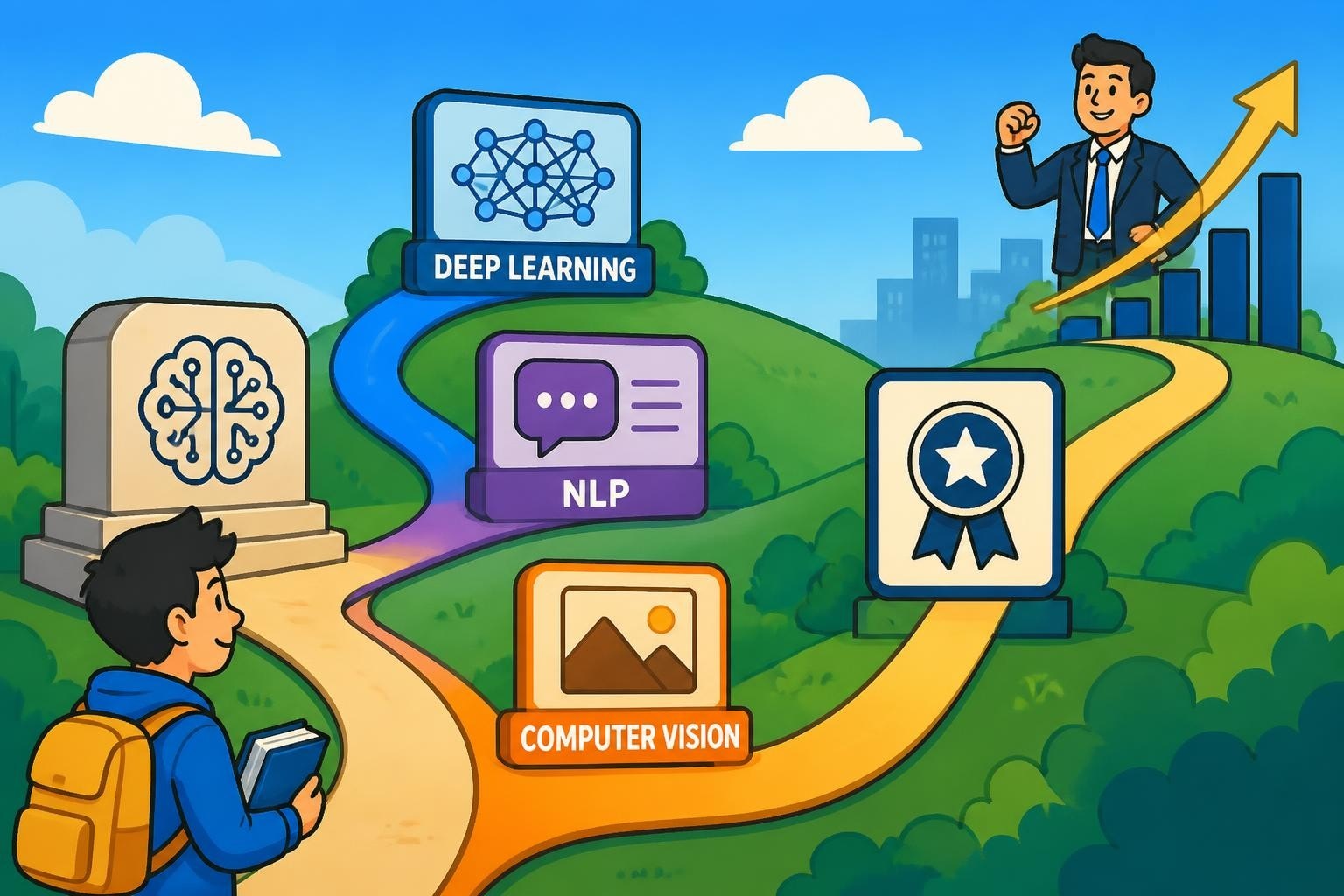
The artificial intelligence revolution has created unprecedented demand for credentialed machine learning professionals. Organizations across every sector need validated expertise to deploy AI systems safely and effectively. A certification on machine learning serves as third-party validation of your technical competencies, demonstrating mastery of algorithms, model deployment, ethics frameworks, and operational best practices. Whether you're transitioning into AI roles or advancing your existing career, choosing the right credential requires understanding the landscape of available certifications, their technical focus areas, and alignment with your professional objectives.
Understanding the Machine Learning Certification Landscape
The certification ecosystem for machine learning has matured significantly over the past three years. Unlike general IT certifications, credentials in this domain assess both theoretical understanding and practical implementation skills across the full ML lifecycle.
Professional certifications focus on platform-specific expertise and operational deployment. Cloud providers like AWS and Microsoft offer certifications that validate your ability to design, train, and deploy models using their infrastructure. The AWS Certified Machine Learning credential tests proficiency in data engineering, exploratory data analysis, modeling, and machine learning implementation using AWS services.
Meanwhile, specialty certifications address critical aspects of ML systems beyond model development. The ISTQB Certified Tester - AI Testing certification focuses specifically on validation, testing strategies, and quality assurance for AI applications. This addresses a critical gap in the market, as many organizations struggle with systematic testing of non-deterministic ML systems.
Ethics and trustworthiness certifications represent the newest category. The IEEE CertifAIEd program validates professionals who can apply ethical frameworks and assess AI systems for bias, transparency, and societal impact. These credentials respond to growing regulatory pressure and corporate governance requirements.

Technical Domains Assessed Across ML Certifications
Every certification on machine learning covers core technical domains, though emphasis varies by credential. Understanding these domains helps you prepare effectively and choose certifications aligned with your role.
| Domain | Platform Certs | Testing Certs | Ethics Certs | Typical Weight |
|---|---|---|---|---|
| Data Engineering & Preparation | High | Medium | Low | 20-30% |
| Algorithm Selection & Tuning | High | Medium | Low | 25-35% |
| Model Deployment & Operations | High | Low | Low | 15-25% |
| Testing & Validation | Medium | High | Medium | 10-20% |
| Ethics & Bias Detection | Low | Medium | High | 10-15% |
| Monitoring & Maintenance | High | Medium | Low | 10-15% |
Platform certifications typically weight algorithm implementation and deployment most heavily. You'll need hands-on experience building pipelines, selecting appropriate algorithms for different problem types, and optimizing hyperparameters for production workloads.
Testing-focused credentials dig deep into validation methodologies specific to ML systems. This includes strategies for test data generation, handling class imbalance, detecting data drift, and establishing acceptable performance thresholds for non-deterministic outputs.
Ethics certifications assess your ability to identify algorithmic bias, implement fairness metrics, ensure model transparency, and evaluate systems against frameworks like NIST's AI Risk Management Framework. These skills are becoming mandatory for organizations deploying customer-facing AI applications.
Cloud Platform Certifications: AWS and Azure Credentials
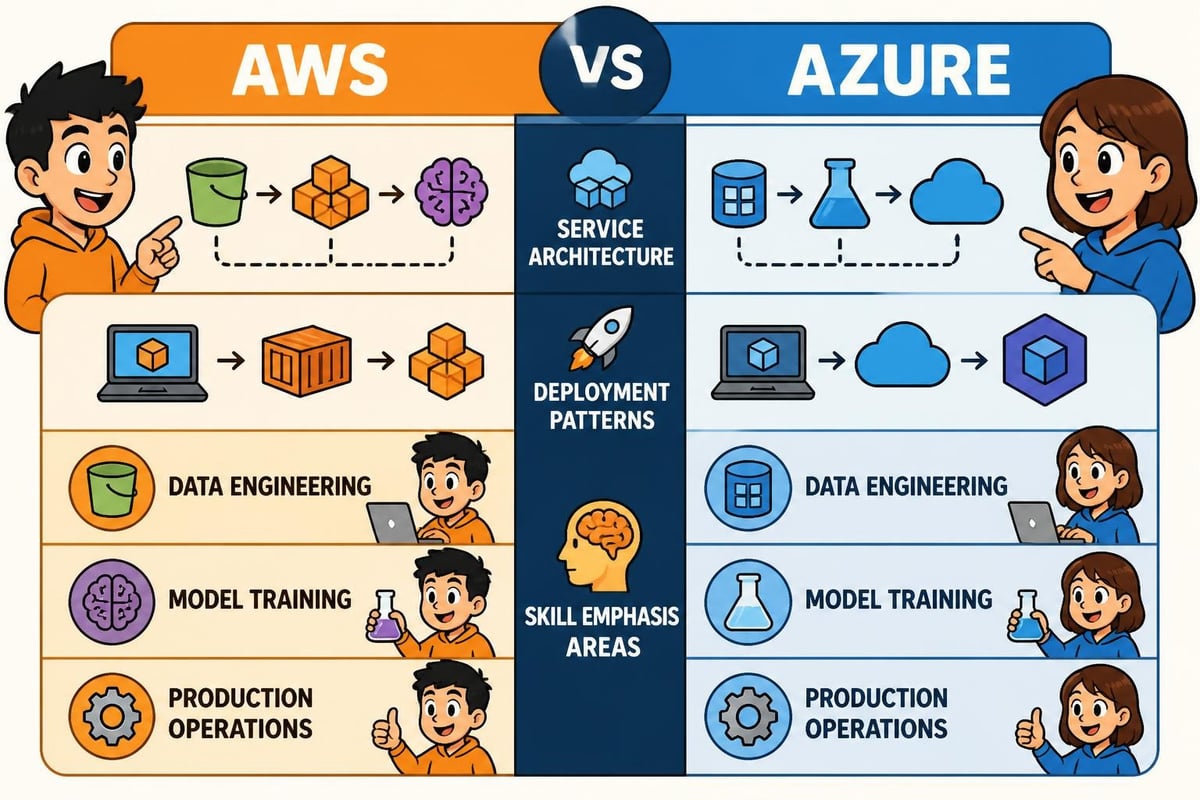
The two dominant cloud providers offer distinct approaches to machine learning certification. Both validate practical skills but differ in their technical ecosystems and service architectures.
AWS Certified Machine Learning Specialty
Amazon's ML certification targets practitioners who design, implement, and maintain machine learning solutions on AWS infrastructure. The exam assumes you already understand ML fundamentals and focuses on AWS-specific implementation patterns.
Prerequisites and preparation requirements:
- 1-2 years of hands-on experience developing ML workloads on AWS
- Deep familiarity with SageMaker, including training jobs, endpoints, and pipelines
- Understanding of AWS data services (S3, Glue, Athena, Kinesis)
- Knowledge of ML algorithm selection for classification, regression, clustering, and forecasting problems
The exam tests four key domains: data engineering (20%), exploratory data analysis (24%), modeling (36%), and machine learning implementation and operations (20%). Most candidates report the modeling section as most challenging, requiring deep understanding of when to apply specific algorithms and how to optimize them.
Preparation typically requires 2-3 months of dedicated study if you're already working with AWS ML services regularly. The best course in machine learning preparation includes hands-on labs, practice exams, and real-world project implementation.
Microsoft Azure AI Certifications
Microsoft offers multiple AI certification paths, with the Azure AI certifications structured as progressive learning journeys. The AI Engineer Associate certification validates your ability to design and implement AI solutions using Azure Cognitive Services, Azure Machine Learning, and Azure OpenAI Service.
Key differences from AWS certification:
- Stronger emphasis on pre-built cognitive services and APIs
- Greater focus on responsible AI implementation and monitoring
- Integration with broader Azure ecosystem (Active Directory, DevOps, Databricks)
- More extensive coverage of natural language processing and computer vision services
The Azure approach favors composition of existing services over building custom algorithms from scratch. This reflects Microsoft's enterprise focus, where organizations often prefer managed services with built-in security and compliance features.
Professionals pursuing Azure AI Engineer Associate certification typically spend 40-60 hours in structured learning, supplemented with hands-on practice deploying models through Azure ML Studio and implementing MLOps pipelines.
Specialized Testing and Quality Assurance Certifications
As AI systems move into production, systematic testing and validation become critical. Traditional software testing approaches don't adequately address the unique challenges of ML systems, creating demand for specialized testing credentials.
ISTQB Certified Tester - AI Testing (CT‑AI)
The International Software Testing Qualifications Board developed this certification to address quality assurance gaps in AI deployments. Unlike platform certifications that focus on building models, CT‑AI validates your ability to ensure ML systems perform reliably and safely in production.
The certification covers six core testing domains:
- AI system testing fundamentals - Understanding how testing differs for ML versus traditional software, including handling of non-deterministic outputs and probabilistic behavior
- Test data quality and management - Ensuring training, validation, and test sets are representative, balanced, and free from data leakage
- Model testing strategies - Validating accuracy, precision, recall, and domain-specific metrics across different population segments
- Testing for bias and fairness - Identifying algorithmic discrimination and implementing fairness testing protocols
- Robustness and adversarial testing - Evaluating model behavior under edge cases, outliers, and adversarial inputs
- ML system integration testing - Validating data pipelines, model serving infrastructure, and monitoring systems
This certification proves particularly valuable for quality assurance professionals transitioning into AI testing roles and for developers who need to implement comprehensive testing frameworks. Academic research on rethinking certification for trustworthy ML-based applications highlights how testing-focused credentials address critical gaps in current ML deployment practices.
Organizations implementing AI in teaching and learning applications find CT‑AI certified professionals invaluable for ensuring educational AI systems perform fairly across diverse student populations.
Ethics, Trustworthiness, and Compliance Credentials
Regulatory frameworks and corporate governance requirements have created urgent demand for professionals who can assess AI systems for ethical risks and ensure compliance with emerging standards.
IEEE CertifAIEd: Professional Certification in AI Ethics
The IEEE Standards Association offers this credential for practitioners who implement and assess AI systems against established ethics frameworks. This certification focuses on practical application rather than theoretical philosophy.
Core competency areas:
- Applying IEEE's Ethically Aligned Design framework to real-world AI projects
- Conducting algorithmic impact assessments before deployment
- Implementing transparency and explainability requirements
- Designing human oversight mechanisms for automated decision systems
- Documenting AI systems for regulatory compliance and audit requirements
The certification requires demonstrating how you've applied ethical frameworks to actual projects. Case study analysis forms a significant portion of the assessment, testing your judgment in navigating competing ethical considerations.
Research on implementing certification schemes for AI trustworthiness shows that structured credentials combining technical assessment with ethical frameworks produce more robust AI implementations than technical skills alone.
For professionals working in regulated industries like finance or healthcare, pairing a technical certification on machine learning with an ethics credential demonstrates comprehensive competency. The responsible AI course offerings provide foundational preparation for these advanced credentials.
Industry-Specific ML Certifications
Beyond general platform and ethics certifications, industry-specific credentials address domain knowledge requirements for sectors with unique regulatory or technical constraints.
Financial services certifications combine ML skills with regulatory compliance knowledge (KYC/AML requirements, fair lending laws, model risk management frameworks). These credentials appeal to professionals building credit scoring models, fraud detection systems, or algorithmic trading platforms.
Healthcare AI certifications validate understanding of HIPAA compliance, clinical trial design, medical imaging analysis, and FDA regulatory requirements for medical devices incorporating ML algorithms.
Autonomous systems certifications focus on safety-critical ML applications in automotive, aerospace, and robotics domains, emphasizing verification, validation, and fail-safe design patterns.
The AI for business leaders course content often covers when industry-specific certifications provide competitive advantage versus general ML credentials.
Preparation Strategies and Resource Planning
Success on a certification on machine learning requires strategic preparation beyond simply watching video courses. The technical depth and breadth of these exams demand hands-on practice and systematic study.
Building Your Study Plan
Effective preparation typically spans 8-12 weeks for platform certifications and 6-8 weeks for specialized credentials, assuming you have relevant baseline experience. Structure your preparation across four phases:
Phase 1: Knowledge Assessment (Week 1-2)
- Take a diagnostic practice exam to identify weak areas
- Review exam blueprets and content outlines
- Inventory your existing skills against certification requirements
- Create a prioritized study list focusing on gaps
Phase 2: Structured Learning (Week 3-7)
- Complete official training courses or equivalent content
- Work through hands-on labs for every major topic
- Build at least three end-to-end projects demonstrating core skills
- Document your implementations for future reference
Phase 3: Practice and Refinement (Week 8-10)
- Complete full-length practice exams under timed conditions
- Review incorrect answers and research underlying concepts
- Focus additional study time on consistently weak areas
- Join study groups or forums to discuss challenging topics
Phase 4: Final Preparation (Week 11-12)
- Take final practice exams until consistently scoring above passing threshold
- Review documentation for key services, algorithms, and frameworks
- Prepare quick reference sheets for exam day
- Ensure technical setup for online proctored exams
Many professionals underestimate the importance of hands-on practice. Reading documentation or watching videos creates familiarity but not mastery. Building actual ML pipelines, troubleshooting deployment issues, and optimizing model performance develops the deep understanding these certifications test.
Learning Resources and Cost Considerations
Budget both time and money when planning certification preparation. Direct costs include exam fees, training materials, and practice lab environments.
| Expense Category | AWS ML | Azure AI | ISTQB CT‑AI | IEEE CertifAIEd |
|---|---|---|---|---|
| Exam Fee | $300 | $165 | $199 | $495 |
| Official Training | $600-2,000 | $500-1,500 | $400-800 | $600-1,200 |
| Practice Exams | $40-80 | $40-80 | $30-60 | Included |
| Lab Environment | $100-300 | $100-300 | Minimal | Minimal |
| Total Estimate | $1,040-2,680 | $805-2,045 | $629-1,059 | $1,095-1,695 |
These costs represent direct expenses. Opportunity cost of study time typically exceeds direct expenses significantly, particularly for working professionals.
Platforms like MammothClub offer cost-effective alternatives to expensive official training, with comprehensive preparation paths for multiple certifications at a fraction of individual course costs. Corporate certification programs often include bundled access to training libraries, making organization-sponsored certification more economical than individual pursuit.
Career Impact and ROI Analysis
Investing months of time and thousands of dollars in certification only makes sense if it produces meaningful career returns. Data from 2026 shows clear differentiation in outcomes based on certification type and career stage.
Salary Impact by Certification Type
Machine learning certifications demonstrate measurable salary impact, though magnitude varies by credential and role:
- Entry-level professionals (0-2 years experience) see 12-18% salary increases after earning their first ML certification
- Mid-career practitioners (3-7 years experience) typically gain 8-12% compensation growth, with larger increases when changing employers
- Senior professionals (8+ years experience) see smaller direct salary impact (4-7%) but gain access to leadership roles with significantly higher compensation bands
Platform certifications from AWS and Azure tend to produce immediate salary returns because organizations actively seek these skills for cloud migration and AI implementation projects. The AI engineer certification path demonstrates particularly strong ROI for professionals in DevOps or software engineering roles transitioning to ML operations.
Ethics and testing certifications show slower initial salary impact but create competitive differentiation as AI governance becomes mandatory. Organizations building enterprise AI programs increasingly require team members with formal ethics training and testing expertise.
Role Advancement and Opportunity Creation
Beyond direct compensation, certifications unlock opportunities otherwise inaccessible. Many organizations filter candidates by certifications during initial screening, meaning uncredentialed professionals never reach human review regardless of actual skill level.
Specific opportunities enabled by ML certifications:
- Lead architect roles for enterprise AI transformation projects
- Technical consultant positions advising organizations on ML strategy and implementation
- Specialist roles in AI ethics, compliance, or model governance
- Technical trainer and enablement positions at technology companies
- Independent consulting engagements at premium rates
The AI specialization courses track demonstrates how professionals combine multiple credentials to create unique value propositions. For example, pairing AWS ML certification with ISTQB AI Testing creates expertise in both building and validating ML systems end-to-end.
Industry-Specific Certification Value
Certain industries place higher premiums on ML certifications than others. Financial services, healthcare technology, autonomous vehicle development, and government contractors often require specific credentials for role eligibility.
Organizations selling AI products or services particularly value customer-facing professionals with relevant certifications. Solutions architects, customer success engineers, and technical account managers command premium compensation when they hold certifications matching their supported platforms.
The Oracle AI certification demonstrates value in enterprise environments where Oracle databases and analytics infrastructure predominate, even though it attracts less general market attention than AWS or Azure credentials.
Strategic Certification Path Planning
Rather than pursuing certifications randomly, successful professionals plan credential sequences that build logically on each other while addressing market demands.
Foundational to Advanced Progression
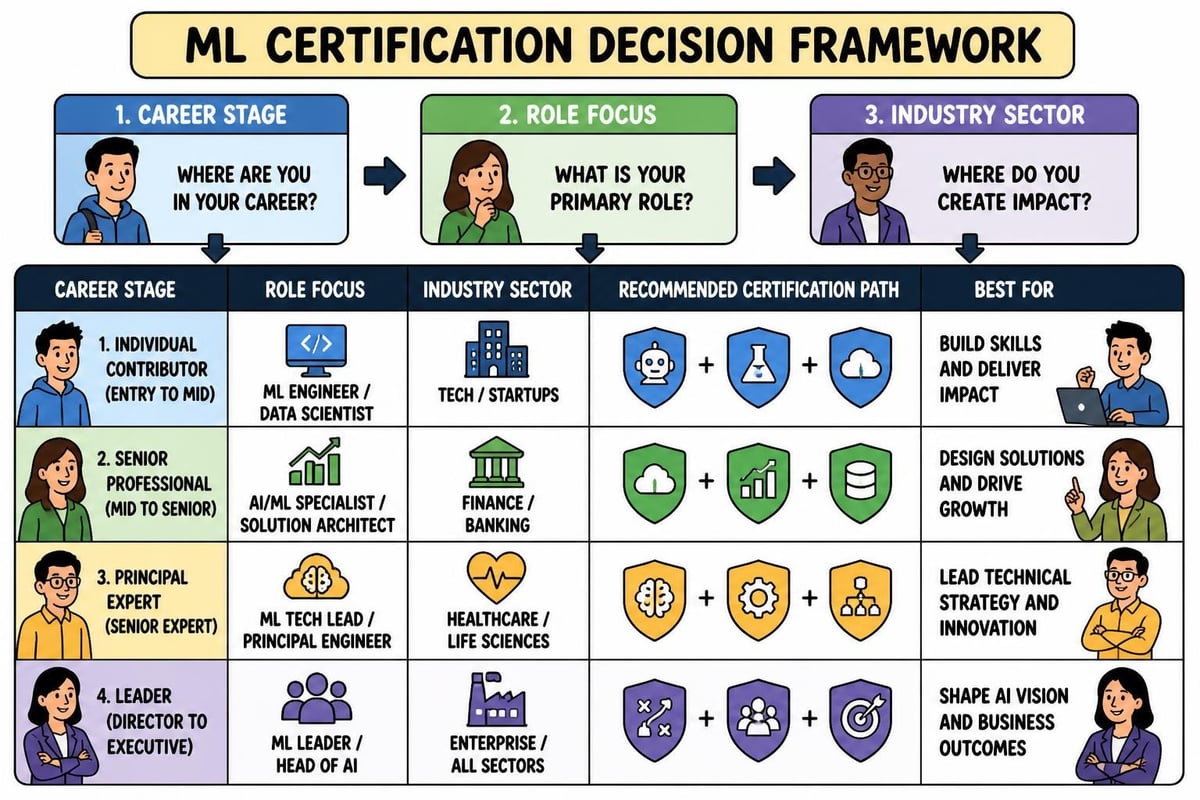
For professionals early in their ML careers, the optimal certification sequence typically follows this pattern:
- Foundation credential - Establish core ML knowledge through a vendor-neutral or entry-level certification
- Platform specialization - Gain deep expertise in one major cloud platform (AWS or Azure)
- Specialty certification - Add testing, ethics, or domain-specific credentials that differentiate you
- Advanced or leadership credentials - Pursue architect-level or strategic certifications as you move into leadership
This progression builds expertise systematically while maintaining marketability at each stage. Professionals who jump directly to advanced certifications without foundational credentials often struggle with knowledge gaps that undermine their exam performance and practical application.
The AI learning path for beginners provides structured guidance for professionals starting their certification journey.
Multi-Cloud Credential Strategies
Organizations increasingly adopt multi-cloud strategies, creating demand for professionals credentialed across multiple platforms. Strategic approaches to multi-cloud certification include:
Parallel specialization - Pursue AWS and Azure certifications within the same timeframe, leveraging conceptual overlap while maintaining platform differentiation. This approach works best for consultants or solutions architects supporting diverse client environments.
Sequential depth - Master one platform thoroughly before adding a second platform certification. This builds deep expertise that transfers conceptually even though specific implementations differ.
Complementary pairing - Combine platform certification with specialty credentials. For example, AWS ML Specialty paired with ISTQB AI Testing creates comprehensive expertise in both building and validating ML systems.
Budget at least 6 months between major platform certifications to allow adequate preparation time. Attempting to prepare for multiple complex certifications simultaneously typically produces poor outcomes on both.
Machine learning certifications provide validated expertise that accelerates career advancement, increases compensation, and opens opportunities in the rapidly evolving AI economy. Whether you pursue platform-specific credentials, specialized testing certifications, or ethics and governance qualifications, strategic selection aligned with your career goals produces the strongest returns. MammothClub helps professionals and organizations navigate this complex landscape with 3,000+ on-demand courses, interactive bootcamps, and comprehensive certification preparation programs powered by AI-driven learning tools that make upskilling efficient and measurable.