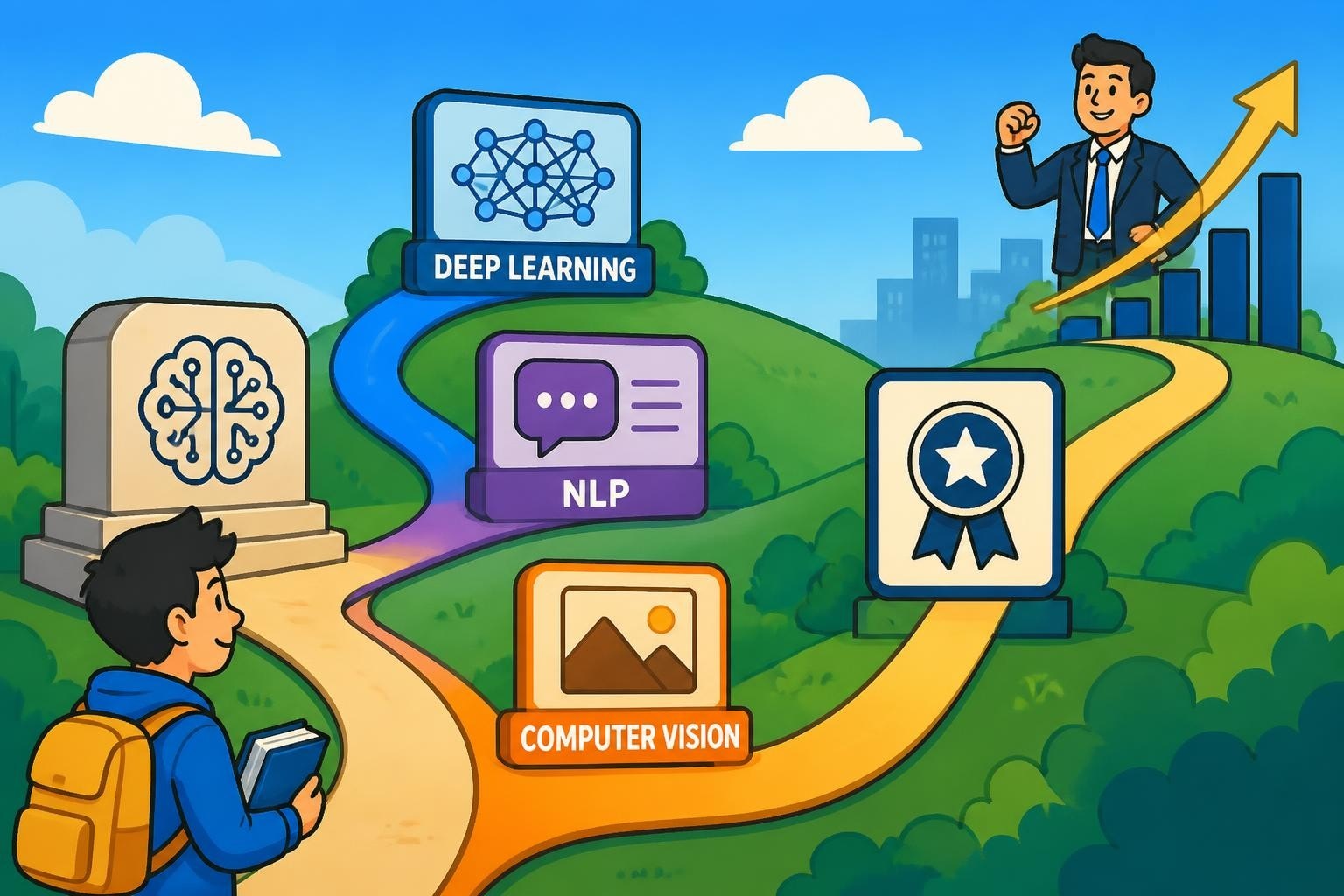
Business leaders face unprecedented pressure to adopt artificial intelligence while managing risks, aligning teams, and delivering measurable results. An ai for business leaders course has evolved from a nice-to-have credential into a strategic necessity for executives who want to guide their organizations through digital transformation. Unlike technical AI training for engineers, these programs focus on strategic deployment, ethical governance, workforce readiness, and building business cases that demonstrate ROI. The right course equips leaders to make informed decisions about AI investments, understand limitations of machine learning systems, and communicate effectively with technical teams while maintaining responsibility for organizational outcomes.
Why Business Leaders Need Specialized AI Training
The gap between technical AI capabilities and executive understanding creates organizational friction. Leaders who lack foundational AI knowledge struggle to evaluate vendor proposals, assess project timelines, or identify which business problems AI can realistically solve.
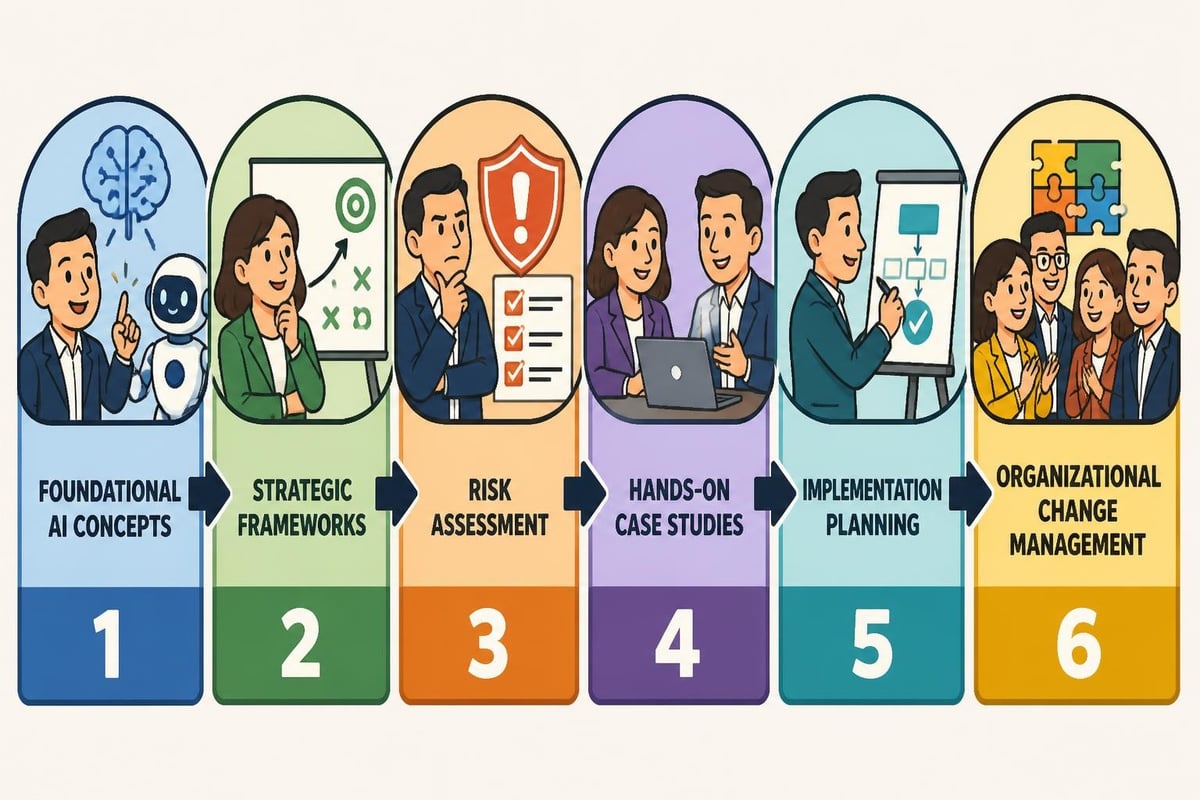
An ai for business leaders course bridges this gap by teaching:
- Strategic frameworks for identifying high-impact AI opportunities
- Risk assessment methodologies for AI deployment
- Governance structures that balance innovation with compliance
- Change management approaches for AI-driven transformation
- Financial modeling techniques to calculate AI project ROI
According to the World Economic Forum's roadmap for AI transformation, leadership involvement stands as one of the key enablers for responsible AI adoption across industries. Organizations where executives actively participate in AI strategy outperform competitors who delegate these decisions entirely to technical teams.
The most effective programs combine theoretical foundations with practical application. Leaders need exposure to real case studies, hands-on exercises with AI tools, and frameworks they can immediately apply to current business challenges.
Core Competencies for AI-Ready Executives
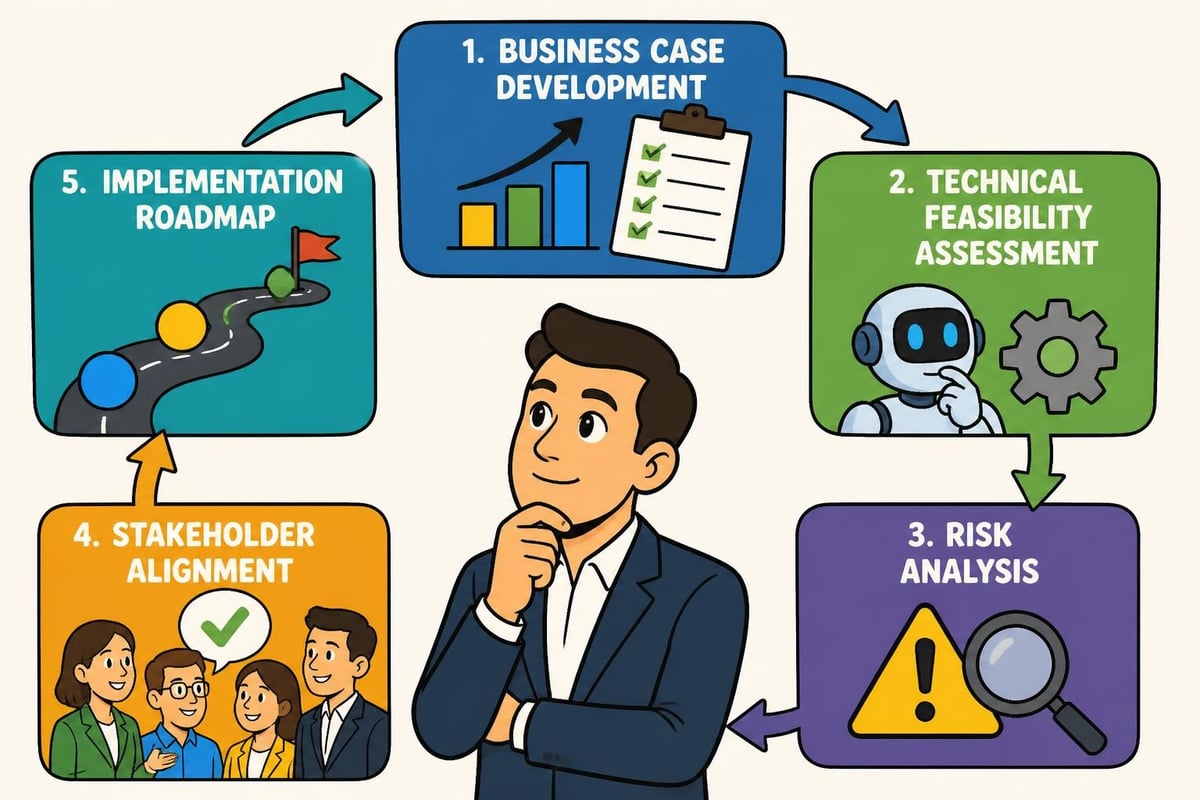
Modern business leadership requires fluency in AI concepts without demanding technical expertise. An ai for business leaders course typically develops five core competencies that translate directly to organizational performance.
Strategic vision enables leaders to identify where AI creates competitive advantage versus where it merely automates existing processes. This involves understanding the difference between narrow AI applications and more complex machine learning systems, then matching capabilities to business objectives.
Risk literacy has become essential as AI systems introduce new categories of operational, reputational, and regulatory risk. Harvard Business Review's analysis of organizations' unreadiness for agentic AI risks highlights how autonomous AI systems create accountability challenges that traditional governance frameworks struggle to address.
Ethical decision-making frameworks help leaders navigate bias, privacy, transparency, and fairness concerns. The IEEE Standards Association provides practical guidance on AI ethics and governance that many executive programs incorporate into their curricula.
| Competency | Business Impact | Development Timeline |
|---|---|---|
| Strategic Vision | Identify high-ROI opportunities | 4-6 weeks |
| Risk Literacy | Mitigate deployment failures | 3-4 weeks |
| Ethical Decision-Making | Build stakeholder trust | 2-3 weeks |
| Technical Communication | Align cross-functional teams | 3-5 weeks |
| Change Leadership | Drive adoption at scale | 6-8 weeks |
Technical communication skills allow executives to engage productively with data science teams, ask informed questions, and translate technical constraints into business implications. This doesn't require coding ability but does demand conceptual understanding of how algorithms learn, what training data affects, and why certain AI applications work better than others.
Change leadership capabilities determine whether AI initiatives deliver promised value or stall during implementation. Leaders must prepare workforces for role evolution, address automation anxiety, and create cultures where experimentation with AI tools is encouraged rather than feared.
Selecting the Right AI for Business Leaders Course
The market offers dozens of executive AI programs with varying quality, depth, and practical relevance. Choosing the right ai for business leaders course requires evaluating several critical factors beyond brand reputation and price.
Program Structure and Time Commitment
Executive schedules demand flexible learning formats. Top-tier programs typically range from intensive multi-day workshops to semester-long hybrid experiences.
Intensive bootcamps (3-5 days) work well for leaders seeking rapid orientation to AI strategy fundamentals. These compressed formats provide broad exposure but limit depth in specialized topics like AI ethics or implementation methodologies.
Modular online programs (8-12 weeks) offer greater flexibility for working executives. Participants engage with content asynchronously while attending live sessions for discussion and case analysis. This format allows deeper exploration of complex topics like responsible AI frameworks and organizational change management.
Hybrid executive programs combine online learning with on-campus immersion experiences. MIT Sloan's Leading the AI-Driven Organization exemplifies this approach, blending remote coursework with in-person sessions that facilitate peer networking and collaborative problem-solving.
The optimal time commitment depends on current knowledge level and learning objectives. Leaders with no technical background benefit from longer programs that build foundational understanding before addressing strategic applications.
Faculty Expertise and Practical Relevance
Instructor qualifications significantly impact program value. The most effective ai for business leaders course offerings feature faculty who combine academic credentials with real-world implementation experience.
Look for programs where instructors have:
- Published research in AI strategy, ethics, or organizational transformation
- Led AI initiatives in enterprise environments
- Advised companies on AI adoption challenges
- Maintained active consulting or advisory practices
Academic pedigree alone doesn't guarantee practical relevance. The best programs incorporate guest speakers from industry, include real case studies from diverse sectors, and provide opportunities to analyze actual AI deployment challenges.
Curriculum Depth and Business Focus
Generic AI overviews waste executive time. Quality programs dive deep into topics that directly impact business outcomes while avoiding unnecessary technical detail.
Essential curriculum components include:
- AI Strategy Development - Frameworks for portfolio analysis, opportunity assessment, and build-versus-buy decisions
- Business Case Construction - Financial modeling approaches specific to AI investments, including ROI calculation methods and risk-adjusted valuations
- Vendor Evaluation - Criteria for assessing AI solution providers, understanding service-level agreements, and managing third-party AI risks
- Workforce Transformation - Strategies for reskilling employees, redesigning roles, and managing the human side of AI adoption
- Governance and Ethics - Establishing oversight committees, defining acceptable use policies, and implementing bias detection protocols
- Implementation Roadmaps - Phase-gate methodologies, success metrics, and common failure modes in AI deployment
Programs like MIT Sloan's Navigating AI course excel at blending these elements into cohesive learning experiences that build both strategic thinking and practical execution skills.
Key Learning Outcomes and Skills Development
An effective ai for business leaders course transforms how executives think about technology's role in business strategy. The learning outcomes extend beyond knowledge acquisition to capability development that changes organizational decision-making.
Strategic AI Thinking
Leaders develop the ability to evaluate AI opportunities through multiple lenses simultaneously. This involves assessing technical feasibility, business value, organizational readiness, and competitive implications as an integrated analysis rather than sequential checkboxes.
Strategic AI thinking means recognizing when not to pursue AI solutions. Many business problems are better solved through process improvement, organizational redesign, or simpler automation technologies. Executives who complete quality programs can distinguish genuine AI opportunities from overhyped applications that waste resources.
Risk Management Frameworks
Understanding AI risk categories helps leaders establish appropriate governance structures before deploying systems. An ai for business leaders course should cover operational risks (system failures, data quality issues), strategic risks (competitive response, technology obsolescence), and societal risks (bias, privacy violations, job displacement).
Practical risk management includes:
- Establishing AI ethics review boards with clear authority
- Implementing algorithmic impact assessments for high-stakes decisions
- Creating transparency requirements for AI system recommendations
- Designing human-in-the-loop processes for critical applications
- Developing incident response protocols for AI system failures
The Future of Jobs Report 2025 emphasizes how leadership must proactively address workforce concerns while pursuing AI capabilities, balancing productivity gains against employee anxiety and skills gaps.
Cross-Functional Communication
Technical teams and business leaders often speak different languages when discussing AI projects. Executive training develops translation skills that enable productive collaboration across organizational boundaries.
This competency includes understanding:
- What questions to ask data scientists about model performance
- How to interpret common AI metrics like accuracy, precision, and recall
- Why certain AI approaches require more data or computing power
- When pilot results will generalize to production environments
- How to align technical milestones with business objectives
Leaders who can bridge this communication gap dramatically increase AI project success rates. They catch unrealistic assumptions early, ensure technical solutions address actual business needs, and maintain stakeholder alignment throughout implementation.
Application to Organizational Transformation
Knowledge without application delivers limited value. The best ai for business leaders course experiences emphasize immediate applicability to participants' current organizational challenges.
Building AI Capabilities at Scale
Individual AI projects rarely transform organizations. Leaders must develop systematic approaches to building AI capabilities across business units, functions, and geographies.
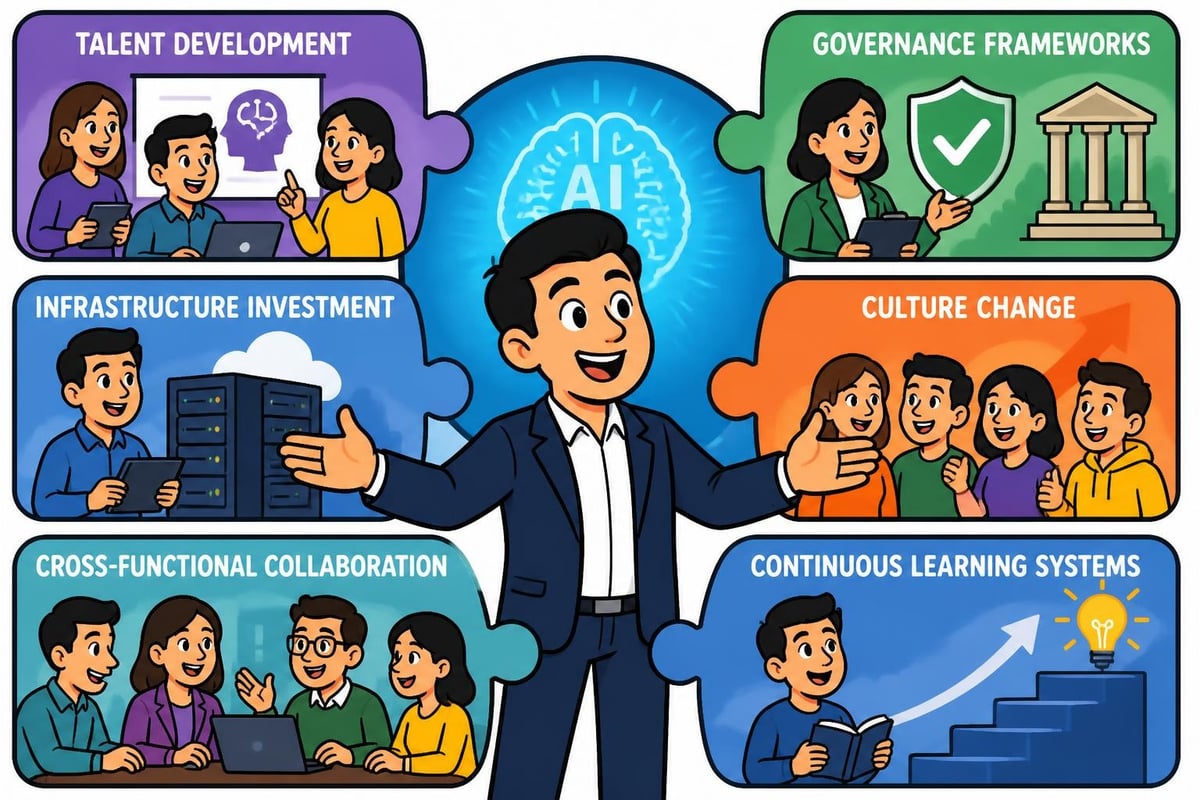
Capability building involves:
- Identifying and developing internal AI talent
- Establishing centers of excellence that share best practices
- Creating reusable data infrastructure and model libraries
- Implementing consistent governance frameworks
- Building cultures that encourage experimentation
Small and medium enterprises face unique challenges when building AI capabilities. Research on leveraging AI as a strategic growth catalyst for SMEs demonstrates how resource-constrained organizations can achieve competitive advantages through focused AI investments aligned with core business strengths.
Change Management for AI Adoption
Technology deployment rarely fails for technical reasons. An ai for business leaders course must address the human dimensions of AI transformation, including resistance to change, skills anxiety, and cultural barriers to adoption.
Effective change management approaches include:
- Transparent communication about AI's impact on roles and responsibilities
- Inclusive design processes that involve affected employees in solution development
- Targeted upskilling programs that prepare teams for AI-augmented work
- Quick wins that demonstrate value and build organizational confidence
- Feedback mechanisms that surface concerns and adaptation challenges early
Leaders who invest in change management alongside technical implementation achieve higher adoption rates, better employee satisfaction, and more sustainable transformation outcomes.
Measuring AI Initiative Success
Defining success metrics before launching AI initiatives prevents scope creep and enables objective evaluation. An ai for business leaders course should provide frameworks for selecting appropriate metrics based on project objectives.
| Initiative Type | Primary Metrics | Secondary Metrics |
|---|---|---|
| Process Automation | Cost reduction, time savings | Error rate reduction, employee satisfaction |
| Customer Experience | NPS improvement, resolution time | Customer effort score, retention rate |
| Revenue Generation | Revenue growth, conversion rate | Customer lifetime value, market share |
| Risk Mitigation | Incident reduction, compliance rate | Detection accuracy, false positive rate |
| Innovation | New product revenue, patent filings | Time to market, experimentation velocity |
Balanced scorecards that include financial, operational, customer, and learning metrics provide comprehensive views of AI initiative performance. Leaders must resist the temptation to focus exclusively on easily quantified outcomes while ignoring harder-to-measure impacts like employee morale or organizational learning.
Industry-Specific Applications and Case Studies
Generic AI knowledge becomes powerful when applied to specific industry contexts. Quality programs incorporate case studies and applications relevant to participants' sectors, whether healthcare, financial services, manufacturing, retail, or professional services.
Financial Services AI Applications
Banks and insurance companies face unique regulatory requirements when deploying AI systems. An ai for business leaders course with financial services focus addresses compliance with fair lending laws, explainability requirements for credit decisions, and fraud detection system validation.
Common financial AI applications include:
- Credit risk modeling with transparent decision logic
- Fraud detection systems balancing accuracy and false positives
- Customer service chatbots navigating complex product offerings
- Trading algorithms with appropriate risk controls
- Regulatory compliance monitoring and reporting
Leaders in this sector must understand how to validate AI model fairness, document decision processes for regulatory review, and manage reputational risks from algorithm errors.
Healthcare and Life Sciences
Medical AI applications involve life-and-death stakes that demand exceptional rigor in development and deployment. Executive training for healthcare leaders emphasizes clinical validation, patient safety protocols, and integration with existing medical workflows.
Organizations exploring AI in drug discovery need leaders who understand both the scientific promise and practical limitations of computational approaches to molecule design and clinical trial optimization.
Manufacturing and Supply Chain
Industrial AI applications focus on operational efficiency, predictive maintenance, and supply chain optimization. Leaders must evaluate trade-offs between automation benefits and workforce impacts, while managing complex technology integrations with legacy systems.
Successful manufacturing AI initiatives require executives who can assess equipment sensor requirements, understand edge computing architectures, and design phased rollouts that minimize production disruption.
Continuing Education and Staying Current
AI technology evolves rapidly, making continuous learning essential for business leaders. An initial ai for business leaders course provides foundations, but maintaining relevance requires ongoing education through multiple channels.
Building a Personal Learning Network
Executives benefit from diverse information sources that combine academic research, industry analysis, and peer experiences.
Effective learning networks include:
- Industry-specific AI communities and forums
- Academic journals publishing business-focused AI research
- Analyst reports from firms covering AI market developments
- Podcasts featuring AI practitioners and researchers
- Professional associations offering AI-focused events
Platforms like MammothClub provide access to thousands of on-demand AI courses that enable leaders to explore emerging topics like no-code AI tools or AI in digital marketing as these areas evolve.
Advanced Executive Programs
After completing foundational training, many leaders pursue specialized programs addressing specific aspects of AI leadership. MIT's Making AI Work program exemplifies advanced offerings that explore societal impacts, strategic deployment challenges, and the intersection of technical and leadership perspectives.
Senior executives may benefit from immersive experiences like MIT xPRO's AI for Senior Executives program, which combines online learning with in-person sessions focused on implementation strategy and complex organizational challenges.
Translating Learning to Action
Knowledge retention improves dramatically when executives immediately apply concepts to real business problems. The most effective learning approach involves selecting one AI initiative as a pilot project during or immediately after completing an ai for business leaders course.
This application-focused approach:
- Tests conceptual frameworks against organizational reality
- Reveals gaps in understanding that require additional learning
- Builds credibility for future AI initiatives
- Creates organizational momentum for broader transformation
Leaders who treat education as an ongoing practice rather than a one-time event position themselves and their organizations for sustained competitive advantage in AI-driven markets.
Comparing Leading Program Options
Multiple institutions offer high-quality ai for business leaders course options, each with distinct strengths. Understanding these differences helps executives select programs aligned with their learning preferences and organizational needs.
Top university executive education programs provide academic rigor and peer networking with other senior leaders. Corporate training platforms offer flexibility and breadth across multiple AI topics. Industry associations deliver sector-specific content with practical implementation focus.
Selection criteria should include:
- Relevance to current business challenges and industry context
- Faculty expertise in both AI technology and business strategy
- Program format compatibility with schedule constraints
- Opportunities for peer learning and networking
- Post-program support and continuing education resources
- Total investment including tuition, time, and travel costs
Organizations seeking to upskill multiple leaders simultaneously may find greater value in corporate certification programs that provide consistent frameworks, shared vocabulary, and economies of scale compared to individual executive education enrollments.
The proliferation of best AI courses creates both opportunity and confusion. Leaders benefit from platforms that curate high-quality content, provide learning pathways matched to roles and objectives, and offer analytics to track organizational skill development.
Business leaders who invest in AI education position their organizations to capture competitive advantages while managing risks responsibly. An ai for business leaders course provides the strategic frameworks, risk management capabilities, and cross-functional communication skills executives need to guide successful AI transformation. Whether you're launching your first AI initiative or scaling existing capabilities, continuous learning remains essential as technology and best practices evolve. MammothClub offers comprehensive AI training solutions for individual leaders and entire organizations, with 3,000+ on-demand courses, interactive bootcamps, and corporate certification programs designed to build measurable AI capabilities fast. Our AI-powered learning dashboards and expert-curated content help business leaders stay ahead in the rapidly changing AI landscape.